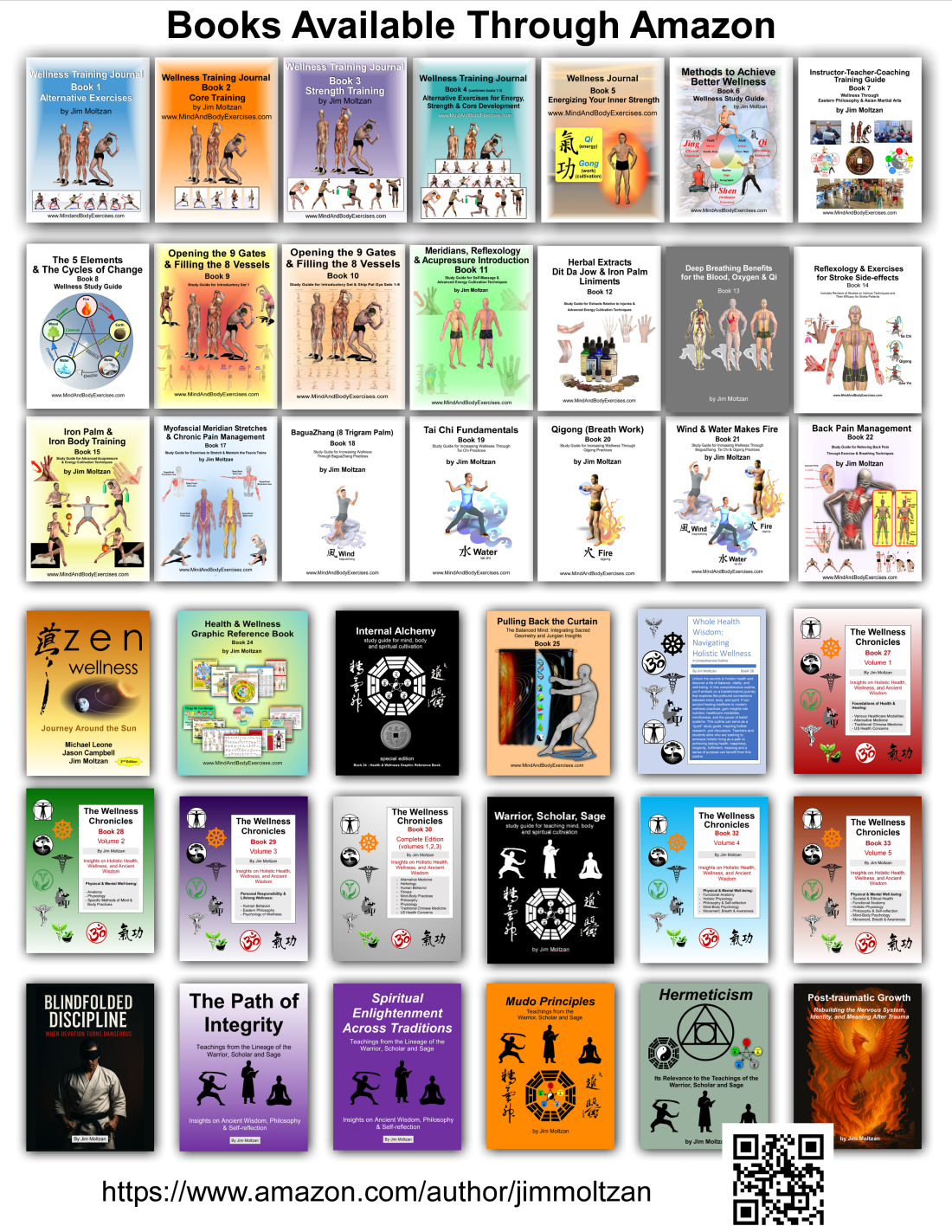
Still Looking for Gifts for Others?

Maybe consider giving a gift of knowledge.

Remember the Indiana Jones films, when Indiana discovers his father’s diary containing clues to the Holy Grail? The book itself was knowledge. Wisdom came from applying that knowledge through experience. Without knowledge and lived practice, wisdom is difficult to cultivate.

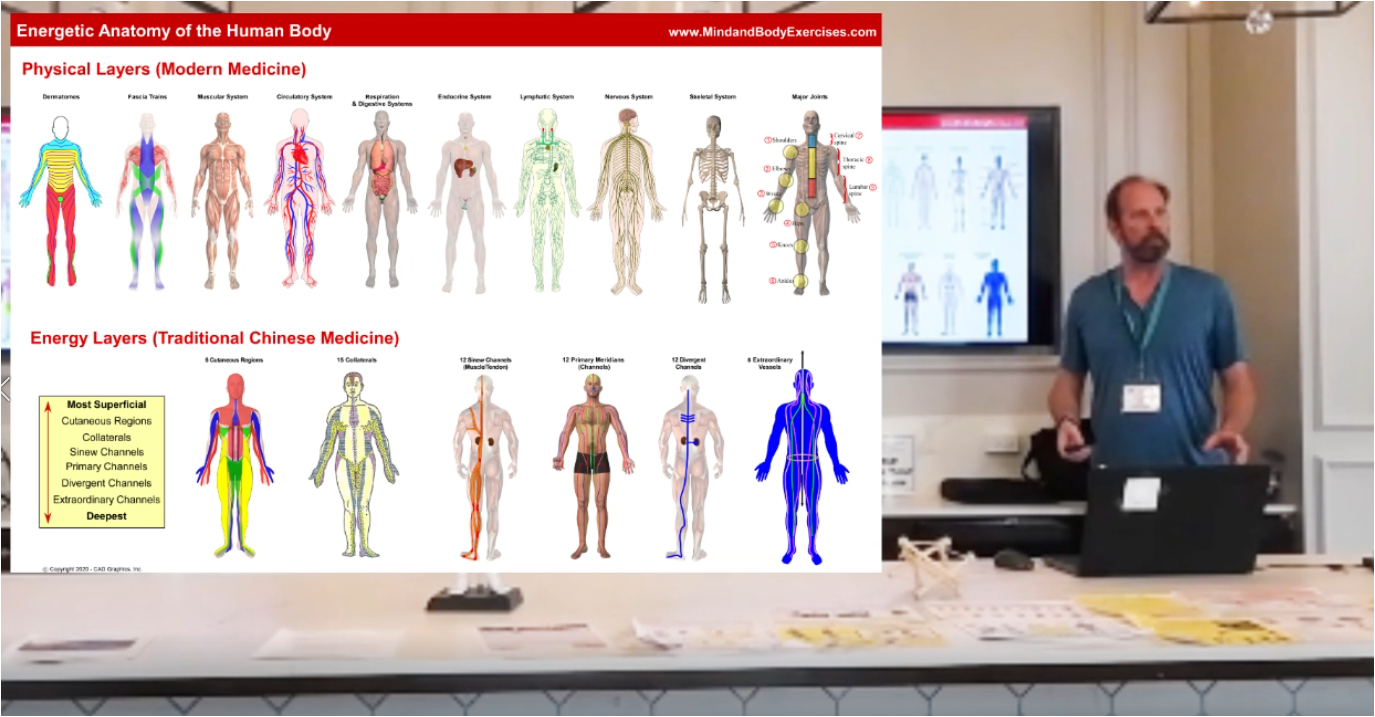
For over 40 years, I have been on my own search for a “Holy Grail” of health, wellness, fitness, and self-awareness. Along that journey, I have created a series of books and study guides that visually and conceptually map what I believe to be the essential components of a healthy, balanced, and meaningful life.

My books are comprehensive, deeply researched, and feature original, full-color illustrations designed to make complex ideas clear and accessible. Each volume reflects decades of firsthand learning, practice, teaching, and illustration across disciplines including holistic health, fitness, psychology, Traditional Chinese Medicine, qigong, martial arts, and yoga philosophy. These are not mass-market publications. They are intentionally crafted for thoughtful readers, practitioners, and lifelong learners who value depth, clarity, and authenticity.

To date, I have published 39 books and study guides on Amazon. Some are primarily visual references that distill complex systems into clear graphic formats. Others explore theories of human development, psychology, movement, breathwork, rehabilitation, longevity, and overall quality of life. Many include practical exercise sets designed to support recovery, resilience, and long-term well-being.

These works represent the summation of more than four decades of training, education, teaching, and public speaking. Much of the qigong and breathing work draws from Chinese Kung Fu and Korean Dong Han medical qigong lineages, alongside extensive study with Traditional Chinese Medicine practitioners and martial arts masters. My background also includes acupressure, acupuncture principles, moxibustion, herbal preparation, and medical qigong, as well as formal academic training culminating in a Bachelor of Science degree in Holistic Health.

Similar in concept to Quick Study or PermaCharts, these guides are designed to “cut to the chase,” minimizing the time spent searching through dense textbooks while preserving the essential root knowledge of each subject. This format serves both beginners seeking a solid foundation and experienced practitioners looking for concise, high-quality reference materials.

If you are looking for a meaningful gift, one that supports health, awareness, and lifelong learning, these books are intended to be resources that grow with the reader over time.

My titles are available on Amazon at: https://www.amazon.com/author/jimmoltzan
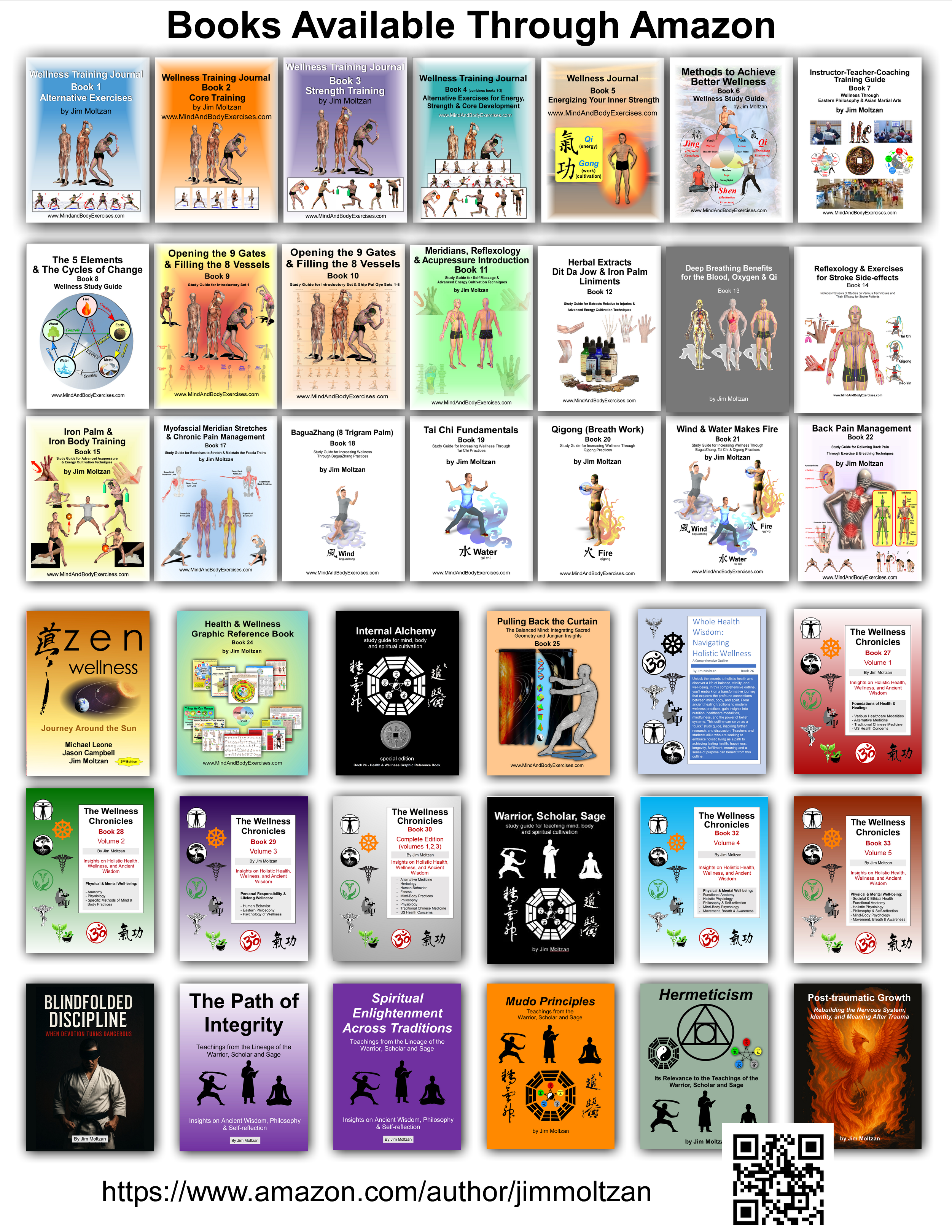
My titles are available on Amazon at: https://www.amazon.com/author/jimmoltzan

Book 1 – Alternative Exercises

Book 2 – Core Training

Book 3 – Strength Training

Book 4 – Combo of 1-3

Book 5 – Energizing Your Inner Strength

Book 6 – Methods to Achieve Better Wellness

Book 7 – Coaching & Instructor Training Guide

Book 8 – The 5 Elements & the Cycles of Change

Book 9 – Opening the 9 Gates & Filling 8 Vessels-Intro Set 1

Book 10 – Opening the 9 Gates & Filling 8 Vessels-sets 1 to 8

Book 11 – Meridians, Reflexology & Acupressure

Book 12 – Herbal Extracts, Dit Da Jow & Iron Palm Liniments

Book 13 – Deep Breathing Benefits for the Blood, Oxygen & Qi

Book 14 – Reflexology for Stroke Side Effects:

Book 15 – Iron Body & Iron Palm

Book 17 – Fascial Train Stretches & Chronic Pain Management

Book 18 – BaguaZhang

Book 19 – Tai Chi Fundamentals

Book 20 – Qigong (breath-work)

Book 21 – Wind & Water Make Fire

Book 22 – Back Pain Management

Book 23 – Journey Around the Sun-2nd Edition

Book 24 – Graphic Reference Book

Book 25 – Pulling Back the Curtain

Book 26 – Whole Health Wisdom: Navigating Holistic Wellness

Book 27 – The Wellness Chronicles (volume 1) 

Book 28 – The Wellness Chronicles (volume 2)

Book 29 – The Wellness Chronicles (volume 3)

Book 30 – The Wellness Chronicles (complete edition, volumes 1-3)

Book 31 – Warrior, Scholar, Sage

Book 32 – The Wellness Chronicles (volume 4)

Book 33 – The Wellness Chronicles (volume 5)

Book 34 – Blindfolded Discipline

Book 35 – The Path of Integrity

Book 36 – Spiritual Enlightenment Across Traditions

Book 37 – Mudo Principles: Teachings from the Warrior, Scholar, and Sage

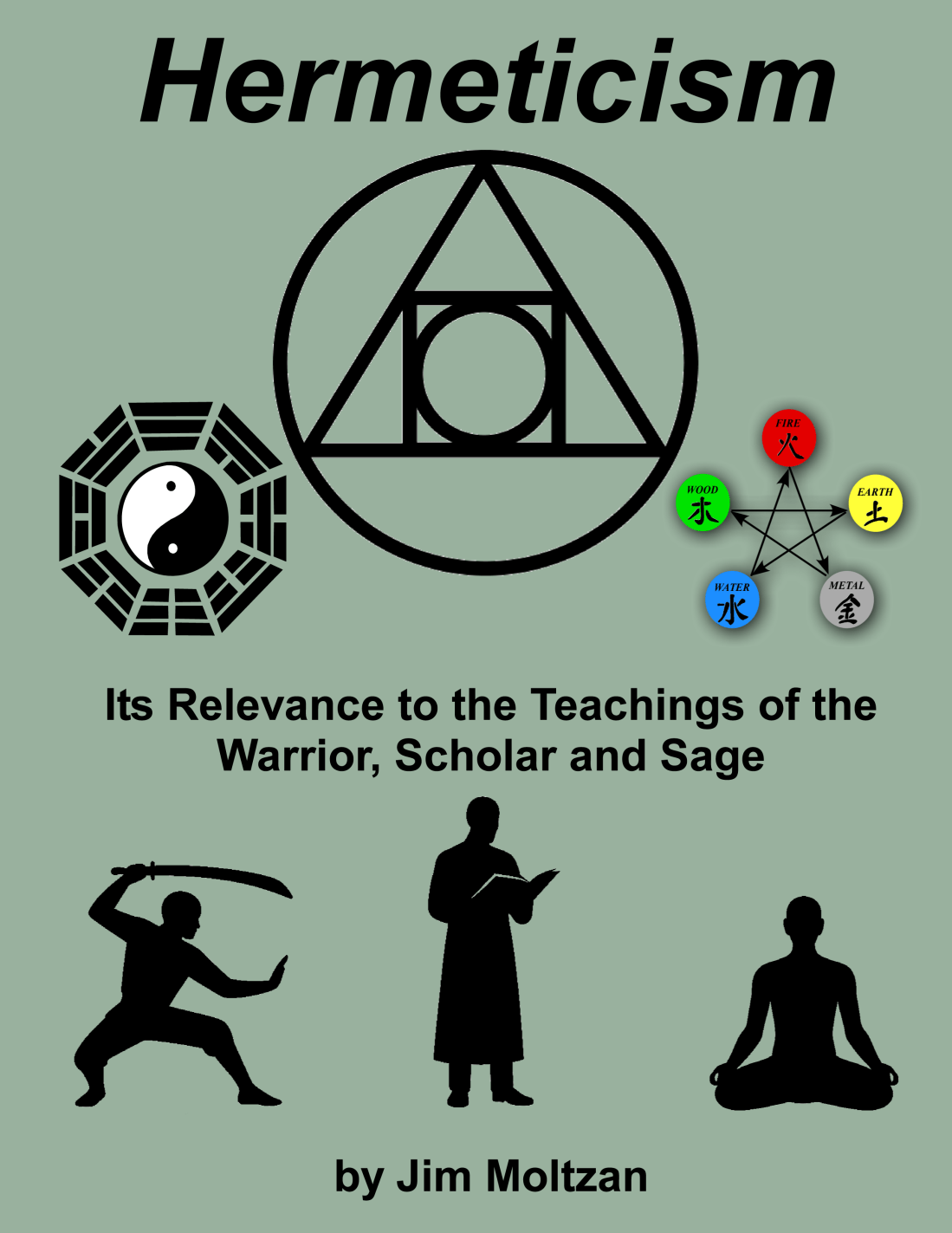
Book 38 – Hermeticism: Its Relevance to the Teachings of the Warrior, Scholar and Sage

Book 39 – Post-traumatic Growth


Distance Between Words, Space Between Thoughts

The phrase “distance between words, space between thoughts” invites contemplation of both communication and consciousness. It suggests that meaning and wisdom arise not merely from the words or thoughts themselves but from the intervals between them, in the pauses, silences, and moments of reflection that allow comprehension to deepen. Just as music depends on silence to shape melody, awareness depends on mental stillness to reveal insight.

Silence Within Speech

Philosophically, language is a double-edged instrument. It enables expression but also confines it. Ludwig Wittgenstein (2013) argued that the limits of our language are the limits of our world; yet within those limits, silence holds a special power, where it points to what words cannot capture. The distance between words represents this silent gap where meaning crystallizes. In conversation, it is the pause that allows listening; in poetry, it is the rhythm that gives emotion room to breathe.

In mindfulness traditions, similar emphasis is placed on the pause between breaths or thoughts. The Yoga Sutras of Patanjali describe mental control not as suppression but as recognition of the stillness between modifications of the mind (citta-vṛtti nirodha). This stillness parallels the spaces between words: both act as boundaries that define expression while inviting contemplation beyond it (Feuerstein, 1989).

The Space Between Thoughts

The space between thoughts is where consciousness reclaims its sovereignty. Neuroscientific studies on meditation suggest that when the brain transitions from active thinking to a resting state, networks associated with self-referential processing, such as the default mode network (DMN), quiet down and allowing awareness to expand beyond habitual mental chatter (Brewer et al., 2011). In this spacious awareness, thoughts can be observed rather than obeyed.

From a Taoist perspective, this reflects the concept of wu wei, oreffortless action” that arises from harmony with the natural flow of existence. When thought pauses, intuition and spontaneous wisdom emerge. Lao Tzu’s Tao Te Ching reminds us that “the usefulness of a pot lies in its emptiness” (Mitchell, 2006). The space is not absence but potential as it allows all forms to exist.

Communication, Presence, and Mindful Dialogue

Applied practically, the distance between words cultivates mindfulness in communication. Modern life is saturated with noise. Such as digital, emotional, and informational, leaving little room for genuine listening. Yet, when one learns to pause before responding, the conversation gains depth. Marshall Rosenberg (2015) emphasized that nonviolent communication begins with awareness of one’s inner state before speaking; silence becomes an ally rather than an awkward void.

Similarly, in contemplative psychology, the space between thoughts allows the practitioner to discern reaction from response. Viktor Frankl (1959) famously wrote, “Between stimulus and response there is a space. In that space lies our power to choose our response.” This power to pause, to inhabit the space between thoughts, grants freedom from reflexive conditioning and opens the door to wisdom.

The Aesthetic of Intervals

Artists, writers, and martial artists alike understand that mastery lies not in constant motion but in timing and the intervals that define rhythm and flow. In calligraphy, the beauty of each stroke depends on the proportion of blank space around it; in tai chi or qigong, the pauses between movements express the continuity of energy rather than its cessation (Shahar, (2008). In both language and life, pacing and silence create balance.

__________

__________

The Presence Beyond Thought

Ultimately, distance between words and space between thoughts converge in the practice of presence. When we learn to honor the intervals, whether in speech, thought, or action, we align with a deeper rhythm of consciousness that underlies all form. The wisdom of silence is not emptiness but awareness itself. In those spaces, the mind becomes clear, the heart receptive, and communication authentic.

To live with awareness of the spaces between words, between breaths, between thoughts, is to step into the fullness of being. In that quiet expanse, truth is not spoken but known.

References:

Brewer, J. A., Worhunsky, P. D., Gray, J. R., Tang, Y.-Y., Weber, J., & Kober, H. (2011). Meditation experience is associated with differences in default mode network activity and connectivity. Proceedings of the National Academy of Sciences, 108(50), 20254–20259. https://doi.org/10.1073/pnas.1112029108

Feuerstein, G. (1989). The Yoga-Sūtra of Patañjali: A New Translation and Commentary. Shambhala Publications. https://archive.org/details/yogasutraofpatan00pata

Frankl, V. E. (1959). Man’s Search for Meaning. Beacon Press.

Mitchell, S. (Trans.). (2006). Tao Te Ching. Harper Perennial.

Rosenberg, M. B. (2015). Nonviolent Communication: A Language of Life (3rd ed.). PuddleDancer Press.

Shahar, M. (2008). The Shaolin Monastery: History, Religion, and the Chinese Martial Arts. University of Hawai‘i Press. https://archive.org/details/shaolinmonastery0000shah

Wittgenstein, L. (2013). Tractatus Logico-Philosophicus (1st ed.). Taylor and Francis. Retrieved from https://www.perlego.com/book/1557526/tractatus-logicophilosophicus-pdf

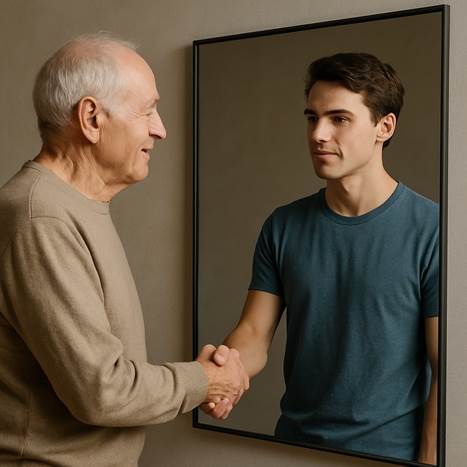
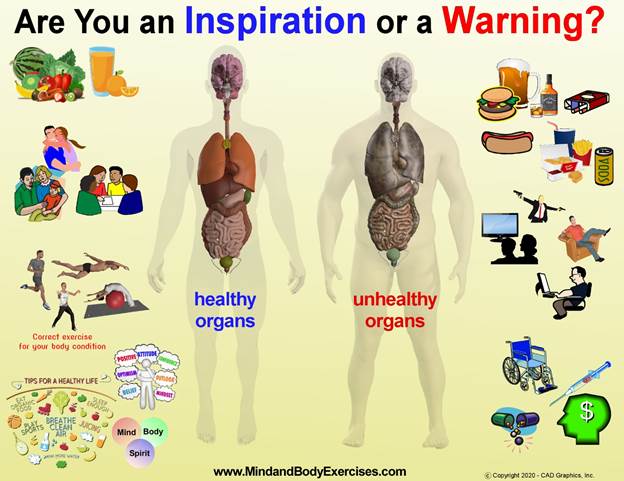
An Inner Dialogue Across Time – Warning or Inspiration?

A Holistic Reflection on Inspiration, Warning, and the Evolving Self

Human beings often imagine what it would be like to travel back and speak to a younger version of themselves. This idea appears in philosophy, psychology, and narrative storytelling because it symbolizes the universal desire to reflect, correct, and integrate one’s life experiences. Beyond the fantasy of time travel lies a powerful metaphor for holistic health: the encounter between the “older self” and the “younger self” represents an inner dialogue between potential and maturity, between innocence and insight, and between raw possibility and lived wisdom.

A central question arises: if the older self could appear before the younger, would they be seen as an inspiration or a warning? In reality, a person is always both. The meeting highlights the continuity of human development and the opportunity for conscious self-direction at every age.

The Younger Self: A Vessel of Possible Selves

Developmental psychology emphasizes that adolescents and young adults form “possible selves,” internal images of who they might become, who they hope to be, and who they fear becoming (Markus & Nurius, 1986). These imagined futures strongly influence motivation, health behaviors, coping strategies, and identity formation.

The younger self typically carries:

  • Curiosity
  • Imagination
  • Flexibility
  • A broad horizon of potential
  • Sensitivity to validation and guidance

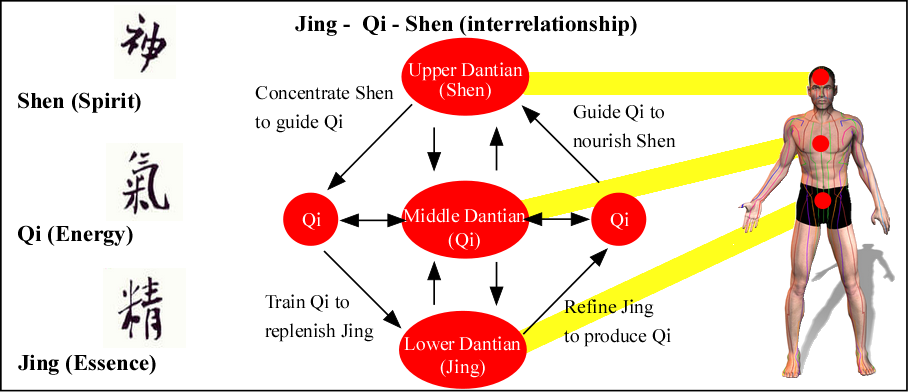
From a holistic perspective, this early stage corresponds to Jing, the foundational essence and latent potential a person enters life with. The younger self is fertile ground for direction. If an older version appeared, the younger self might interpret them as evidence of what is achievable or as a signal of what must be avoided to preserve well-being.

The emotional impact would depend largely on how well the older self embodies the younger self’s hoped-for qualities (Oyserman & James, 2011).

The Older Self: Integration, Insight, and Embodied Lessons

With age comes the accumulation of experiences, patterns, consequences, and lessons. While aging itself does not guarantee wisdom, reflective integration does. We all grow older, however we do not all grow up. Research in adult development shows that meaning-making, emotional regulation, and resilience tend to strengthen across the lifespan—particularly through processes of cognitive appraisal and narrative reconstruction (Charles, 2010; Park, 2010).

The older self represents:

  • Lived consequences of habits
  • Emotional intelligence gained through adversity
  • Patterns of health, self-care, and neglect
  • Wisdom derived from integrating experiences
  • Clarity about purpose and personal truth

In holistic terms, this corresponds to Qi and Shen: the active life force shaped by choices (Qi) and the clarity, awareness, and purpose that emerge through integration (Shen).

Depending on the life lived, the younger self might see the older one as:

  • Inspiration if they embody calm, vitality, meaning, and self-possession
  • Warning if they carry bitterness, physical decline from neglect, or unhealed patterns
  • A realistic combination of both, which is the most human and psychologically accurate view

The Dual Truth: We Are Always Inspiration and Warning

Self-reflection research shows that individuals learn most effectively when they can hold both positive and negative self-assessments simultaneously, a process known as integrative self-reflection (Morin, 2017). The older self naturally embodies this duality:

1. A Lighthouse

Showing what is possible when discipline, compassion, and health practices accumulate over time.

2. A Signpost

Revealing which choices, habits, or relationships lead to stagnation or suffering.

3. A Mirror

Reflecting truths the younger self could not yet see but might have recognized earlier if guidance were available.

4. A Bridge

Demonstrating that healing, resilience, and transformation remain possible even decades later. Research on post-traumatic growth shows that meaning-making and growth often occur long after adversity has passed (Tedeschi & Calhoun, 2004).

In Taoist terms, this mirrors the dynamic interplay of yin and yang, where apparent opposites coexist, complement one another, and create a fuller picture of the truth.

Holistic Health and the Self Across Time

Holistic health recognizes the interdependence of body, mind, and spirit. The meeting of younger and older selves highlights how long-term well-being is shaped through consistent, incremental choices.

Body / Jing

Long-term research in public health demonstrates that consistent health behaviors such as sleep quality, physical activity, balanced nutrition, stress management, and avoiding harmful habits, predict well-being and longevity across the lifespan. These lifestyle factors, when adopted earlier, form a stable foundation for later-life physical vitality and resilience (Belloc & Breslow, 1972).

Mind / Qi

Emotional regulation, coping strategies, and thought patterns evolve through practice. Individuals who learn adaptive regulation earlier show greater life satisfaction and resilience in adulthood (Gross, 2015).

Spirit / Shen

Meaning, alignment, and ethical coherence develop through reflection. Life review processes help individuals construct narratives that support psychological well-being (Westerhof & Bohlmeijer, 2014).

Thus, the older self is the embodied outcome of how Jing was preserved, how Qi was cultivated, and how Shen was refined.

A Practical Thought Experiment for Personal Growth

Imagine your future self walking into the room today. Would they thank you or warn you? Would they:

  • Ask you to slow down?
  • Encourage you to keep going?
  • Remind you to take better care of your body?
  • Urge you to set boundaries?
  • Suggest that your purpose needs revisiting?
  • Praise your discipline, courage, or compassion?

Research shows that visualizing one’s future self increases motivation, improves decision-making, and strengthens long-term thinking (Hershfield, 2011). The time-travel metaphor becomes a tool for conscious alignment.

Your younger self is gone, but your older self is still being shaped now, through today’s decisions. Holistic health is the conversation between past potential, present choice, and future embodiment. The point is not to change the past but to ensure that the future becomes a version of yourself you would be proud to meet.

References:

Belloc, N. B., & Breslow, L. (1972). Relationship of physical health status and health practices. Preventive Medicine, 1(3), 409–421. https://doi.org/10.1016/0091-7435(72)90014-x

Charles, S. T. (2010). Strength and vulnerability integration: A model of emotional well-being across adulthood. Psychological Bulletin, 136(6), 1068–1091. https://doi.org/10.1037/a0021232

Gross, J. J. (2015). Emotion regulation: Current status and future prospects. Psychological Inquiry, 26(1), 1–26. https://doi.org/10.1080/1047840X.2014.940781

Hershfield, H. E. (2011). Future self-continuity: How conceptions of the future self transform intertemporal choice. Annals of the New York Academy of Sciences, 1235(1), 30–43. https://doi.org/10.1111/j.1749-6632.2011.06201.x

Markus, H., & Nurius, P. (1986). Possible selves. American Psychologist, 41(9), 954–969. https://doi.org/10.1037/0003-066X.41.9.954

Morin, A. (2017). Toward a glossary of self-related terms. Frontiers in Psychology, 8, 280. https://doi.org/10.3389/fpsyg.2017.00280

Oyserman, D., & James, L. (2011). Possible identities. In S. J. Schwartz, K. Luyckx, & V. L. Vignoles (Eds.), Handbook of identity theory and research (pp. 117–145). Springer Science + Business Media. https://doi.org/10.1007/978-1-4419-7988-9_6

Park, C. L. (2010). Making sense of the meaning literature: An integrative review. Psychological Bulletin, 136(2), 257–301. https://doi.org/10.1037/a0018301

Tedeschi, R. G., & Calhoun, L. G. (2004). Posttraumatic growth: Conceptual foundations and empirical evidence. Psychological Inquiry, 15(1), 1–18. https://doi.org/10.1207/s15327965pli1501_01

Westerhof, G. J., & Bohlmeijer, E. T. (2014). Celebrating fifty years of research and applications in reminiscence and life review: state of the art and new directions. Journal of aging studies29, 107–114. https://doi.org/10.1016/j.jaging.2014.02.003

The Still Mind and the Snow Globe

The human mind can be likened to a Christmas snow globe. When resting in stillness, it is calm and transparent, revealing its contents clearly. When shaken, the glittering particles obscure the view until motion ceases and calm returns. In much the same way, the human mind loses clarity when it is agitated by thought, emotion, or distraction. Yet, when stillness is restored, insight becomes visible again.

This analogy is ancient in spirit though modern in form. Taoist, Buddhist, and contemplative traditions have long taught that the unsettled mind is filled with “ten thousand thoughts” and is like muddy water that cannot reflect the sky. When the water is left alone, sediment sinks and the surface becomes clear, mirroring reality without distortion. Neuroscience has since confirmed that mental agitation disrupts attentional networks and self-regulation, whereas calm awareness engages prefrontal regions that enhance clarity and emotional balance (Vago & Silbersweig, 2016).

Agitation, Clarity, and the Nature of Mind

Just as the snowflakes in a globe swirl when shaken, so do thoughts and emotions when the mind is disturbed by stress, fear, or overstimulation. The more one reacts, the longer the “flakes” take to settle. Mindfulness teacher Jillian Pransky (2023) uses this same metaphor to describe how meditation allows the inner “snow” to fall to rest and thus revealing stillness and depth beneath the surface.

In a similar vein, meditation research shows that repeated exposure to calm awareness enhances the brain’s ability to disengage from habitual thinking and recover from agitation (Fox et al., 2016). Thus, stillness is not passivity; it is active regulation, a physiological return to balance. This capacity for returning to center is what Tai Chi and Qigong practitioners seek to cultivate daily.

The Snow Globe and the Internal Arts

In Qigong and Tai Chi, movement arises from stillness and returns to it. Between each form lies a subtle pause or an internal settling. When agitation arises, practitioners are taught to “let the mind sink to the dantian,” mirroring how snow settles to the bottom of the globe. Breath slows, the nervous system calms, and the clarity of awareness expands.

Daoist classics such as the Qingjing Jing emphasize this principle: “If the mind is pure and still, all things will become clear of themselves” (Li, 1981). Stillness (jing) is not an absence of life but the foundation for transformation. Without it, internal energy (qi) becomes scattered, and consciousness (shen) clouded. With it, harmony between body, breath, and mind is restored, a concept echoed in modern psychophysiology as “parasympathetic dominance,” when calm awareness stabilizes physiological rhythms (Mayo Clinic, 2023).

From this lens, the snow globe becomes a teaching instrument:

  • The glass represents the body—transparent but containing.
  • The water symbolizes consciousness.
  • The flakes represent thoughts, memories, and emotions.
  • The base is the dantian—the center of gravity, both physical and spiritual.
    When the practitioner “shakes” with stress or emotion, the particles rise and obscure vision. When stillness returns, the scene or the true nature of mind becomes visible once again.

Table: Mind States vs. Snow-Globe States

AspectSnow Globe StateMind State EquivalentPractical Cultivation Method
UnsettledShaken; snow whirling chaoticallyAgitated thoughts, anxiety, scattered focusPause; deep diaphragmatic breathing; grounding awareness in body
SettlingFlakes gradually fallThoughts subside; awareness re-centersGentle movement; slow Qigong; rhythmic breathing
StillWater clear and unmovingCalm mind; perceptual clarity; inner balanceMeditation; standing post; mindful observation
Re-agitatedGlobe shaken againEmotional disturbance or overstimulationRecognize trigger; respond with patience and non-reactivity
Restored ClarityScene visible againInsight, creativity, emotional regulationContinued practice of calm-abiding (samatha) and mindful awareness

Embodied Awareness and the Settling of Qi

In Tai Chi, teachers often say, “Where the mind goes, qi follows.” When the mind is disturbed, the qi scatters; when the mind is calm, qi gathers. The settling of mental “snow” mirrors the condensation of energy within the body’s core. The nervous system reflects this change: heart rate variability improves, cortisol decreases, and attention stabilizes (Fox et al., 2016; Mayo Clinic, 2023).

This internal stillness is not a withdrawal from life, but rather it is refinement. It allows the practitioner to perceive without distortion and to respond without haste. It is what the Zen tradition calls mushin, “no-mind,” where thought does not vanish but becomes transparent and responsive rather than turbulent (Li, 1981). The snow globe thus offers a contemporary bridge between contemplative science and ancient practice, a visualization of how calm leads to wisdom.

Transmutation Through Stillness

The deeper message of this metaphor lies in transformation. When one repeatedly allows the snow to settle, a new pattern of being forms. Neural pathways shift; emotional reactivity decreases; intuition sharpens. In Taoist alchemy, this is nei dan or the refinement of essence (jing) into energy (qi), and energy into spirit (shen). What begins as calming the surface mind evolves into inner transmutation or the awakening of clarity that is no longer dependent on circumstance.

Therefore, to train the mind is not to eliminate its contents but to see through them, to let every swirl of snow reveal rather than obscure. Through stillness, awareness refracts light instead of scattering it. Through daily practice, one learns to set down the globe and simply watch the snow fall.

References:

Fox, K. C. R., Dixon, M. L., Nijeboer, S., Girn, M., Lifshitz, M., Ellamil, M., Sedlmeier, P., & Christoff, K. (2016). Functional neuroanatomy of meditation: A review and meta-analysis of 78 functional neuroimaging investigations. arXiv preprint arXiv:1603.06342. https://arxiv.org/abs/1603.06342

Fox, K. C. R., Kang, Y., Lifshitz, M., & Christoff, K. (2016). Increasing cognitive-emotional flexibility with meditation and hypnosis: The cognitive neuroscience of de-automatization. arXiv preprint arXiv:1605.03553. https://arxiv.org/abs/1605.03553

Li, J. (1981). Qingjing Jing (清靜經): The Scripture of Clarity and Stillness. Beijing: Zhonghua Shuju. https://archive.org/details/daoist-scripture-qing-jing-jing-louis-komjathy/QJJ%20-%20Louis%20Komjathy%20%28Editor%29/

Mayo Clinic. (2023, December 14). Meditation: A simple, fast way to reduce stress. https://www.mayoclinic.org/tests-procedures/meditation/in-depth/meditation/art-20045858

Pransky, J. (2023, June 11). a meditation to create space in the midst of chaos — jillian pransky. Jillian Pransky. https://www.jillianpransky.com/blog/creating-space-snowglobe-meditation

Vago, D. R., & Zeidan, F. (2016). The brain on silent: mind wandering, mindful awareness, and states of mental tranquility. Annals of the New York Academy of Sciences1373(1), 96–113. https://doi.org/10.1111/nyas.13171

As Above, So Within – The Hermetic Thread of the Warrior, Scholar & Sage

Every comprehensive system of human transformation contains a bridge, one that links the physical body to the invisible dimensions of mind and spirit. In the Eastern traditions this bridge is expressed through Jing (essence), Qi (vital energy), and Shen (consciousness). In the developmental framework I teach, it appears as the Warrior, Scholar, and Sage. In the Western esoteric lineage, the same bridge is known as Hermeticism, a philosophical and spiritual system attributed to Hermes Trismegistus, the “Thrice-Great” master of physical, intellectual, and spiritual wisdom.

These are not parallel systems by coincidence. They are structurally identical expressions of the same universal process of human refinement, or the ascent from embodiment to insight, and from insight to integrated wisdom. Across cultures and centuries, the language changes, but the architecture remains.

Hermeticism arises from Hellenistic Egypt, a fusion of Greek philosophy, Egyptian spirituality, early science, medicine, astronomy, and metaphysics (Copenhaver, 1992; Fowden, 1993). Its core message is simple but profound: reality is mental, patterned, cyclical, lawful, and capable of conscious transformation. The most famous Hermetic maxim from the Emerald Tablet expresses this truth succinctly:

This is not merely poetic symbolism. It is a functional statement of psychospiritual law: what is refined in the body shapes the mind; what is clarified in the mind refines the spirit; what is awakened in the spirit returns to illuminate the body.

The Eight Hermetic Principles and Their Living Expression

Hermetic philosophy is traditionally organized into eight fundamental principles (seven classical principles plus the unifying axiom of Integration & Moral Alignment). These principles are not abstract metaphysics; they describe how transformation actually happens in daily life.

Below is a brief, applied summary of each.

1. Mentalism – “All is Mind.”

Reality originates in consciousness.

Example:
Thought hygiene, attention control, emotional regulation, and metacognition all reflect the fact that perception shapes experience. In practice, this is where the Scholar refines Qi through disciplined awareness.

2. Correspondence – “As above, so below; as within, so without.”

Patterns repeat across all levels of existence.

Example:
Organ–emotion relationships, archetypal symbolism, and synchronicity reflect this principle. The Sage expresses it through Shen-based integration and purpose.

3. Vibration – “Nothing rests; everything moves.”

All things exist in motion and frequency.

Example:
Breath rhythm, posture, nervous system tone, and muscular tension all shape consciousness. This is the foundational work of the Warrior, refining Jing through somatic calibration.

4. Polarity – “Opposites are identical in nature, differing only in degree.”

All dualities exist on a spectrum.

Example:
Fear and courage, stress and resilience, pain and growth are not opposites but transformations of the same continuum. This principle governs emotional alchemy and shadow integration.

5. Rhythm – “Everything flows in and out.”

Nature moves in cycles.

Example:
Circadian rhythms, seasonal cycles, recovery cycles in training, and emotional tides all operate under rhythmic law. Ignoring rhythm leads to burnout; honoring it leads to longevity.

6. Cause and Effect – “Every cause has its effect.”

Nothing is random.

Example:
Consistent practice compounds. Discipline produces capacity. Neglect produces decay. This principle governs training progression, psychological habit formation, and destiny itself.

7. Gender – “Masculine and feminine principles exist in everything.”

All creation arises from active and receptive forces.

Example:
Stillness and motion, force and yielding, analysis and intuition are necessary partners. In internal alchemy this corresponds to Kan and Li, or the inner marriage of fire and water.

8. The Unifying Principle – Integration & Moral Alignment

(Implicit throughout the Hermetic texts)

This is the alchemical ascent itself:
Matter → Energy → Consciousness → Unity
Warrior → Scholar → Sage
Jing → Qi → Shen

It describes the return of the fragmented human being to wholeness.

Hermeticism and Eastern Internal Alchemy: One Process, Two Languages

Western Hermeticism and Daoist Neidan (internal alchemy) describe the same three-stage refinement:

  1. Refining Jing (Warrior) – stability, grounding, structure, breath, stance
  2. Refining Qi (Scholar) – insight, emotional regulation, meaning
  3. Refining Shen (Sage) – awareness, wisdom, unity, purpose

In Hermetic terms this mirrors:

  • Earth → Air → Fire → Ether
  • Body → Mind → Spirit → Divine Mind
  • Alchemy → Knowledge → Illumination → Union

The training of the body becomes the furnace of consciousness. The mind becomes the instrument of refinement. The spirit becomes the field of meaning.

Jung and Psychology as Modern Hermetic Science

Carl Jung recognized Western and Eastern alchemy as symbolic maps of individuation, or the integration of the unconscious and conscious psyche (Jung, 1968). He interpreted alchemical stages as:

  • Shadow purification
  • Integration of opposites
  • Inner marriage (coniunctio)
  • Emergence of the unified Self

This is precisely the Warrior–Scholar–Sage progression expressed in psychological language.

Why Hermeticism Matters Now

Modern culture suffers from a dangerous fragmentation:

  • The Warrior has been reduced to stress and survival
  • The Scholar to data without wisdom
  • The Sage to abstraction without embodiment

Hermeticism restores their unity as a single ascending current of human evolution. It re-establishes the coherence between:

  • Body and breath
  • Thought and emotion
  • Discipline and compassion
  • Knowledge and service
  • Identity and purpose

This blog summary introduces the deeper work now fully developed in my newest release:

Book 38 – Hermeticism: Its Relevance to the Teachings of the Warrior, Scholar & Sage

This volume stands at the architectural center of my entire body of work. It reveals:

  • How the Warrior becomes the Scholar
  • How the Scholar becomes the Sage
  • How the Sage returns to unity
  • And how all three operate simultaneously as a single living process

It is not a theoretical book. It is a map of transformation, as it seeks to integrate Hermetic law, Eastern internal alchemy, Jungian psychology, nervous system science, breathwork, ethics, and the meaning-making process of human life.

Hermeticism is not something to believe. It is something to practice, embody, and become.

Available on Amazon at: https://a.co/d/fbD2mU0

References:

Copenhaver, B. P. (1992). Hermetica: The Greek Corpus Hermeticum and the Latin Asclepius. Cambridge University Press.

Faivre, A. (1994). Access to Western Esotericism. SUNY Press.

Fowden, G. (1993). The Egyptian Hermes: A historical approach to the late pagan mind. Princeton University Press. https://archive.org/details/egyptianhermeshi0000fowd

Jung, C. G. (1968). Alchemical studies (R. F. C. Hull, Trans.). Princeton University Press. https://www.jungiananalysts.org.uk/wp-content/uploads/2018/07/C.-G.-Jung-Collected-Works-Volume-13_-Alchemical-Studies.pdf

Mahé, J.-P. (1998). The treatise on the “Emerald Tablet.” Journal of the Warburg and Courtauld Institutes, 61, 1–20.

Principe, L. M. (2013). The Secrets of Alchemy. University of Chicago Press.