
Can you easily stand on one leg? Why would you even care to do this?
If you can easily stand and balance on one leg for more than a few seconds, chances are you can balance even better on two legs where you spend time standing, walking, running, etc. From my research, most people do not exercise or train themselves to improve or maintain balance until an event presents itself of where the individual loses their physical balance, stumbles, and/or falls and becomes injured. Then the search begins for them to find ways to improve their balance: physical therapy, medications or even refraining from activities that are now hazardous to the individual. The following is information I have gained from my own practicing and studying of martial arts and wellness methods spanning almost 40 years. Hopefully this will put readers on a path to achieving and maintaining better balance.
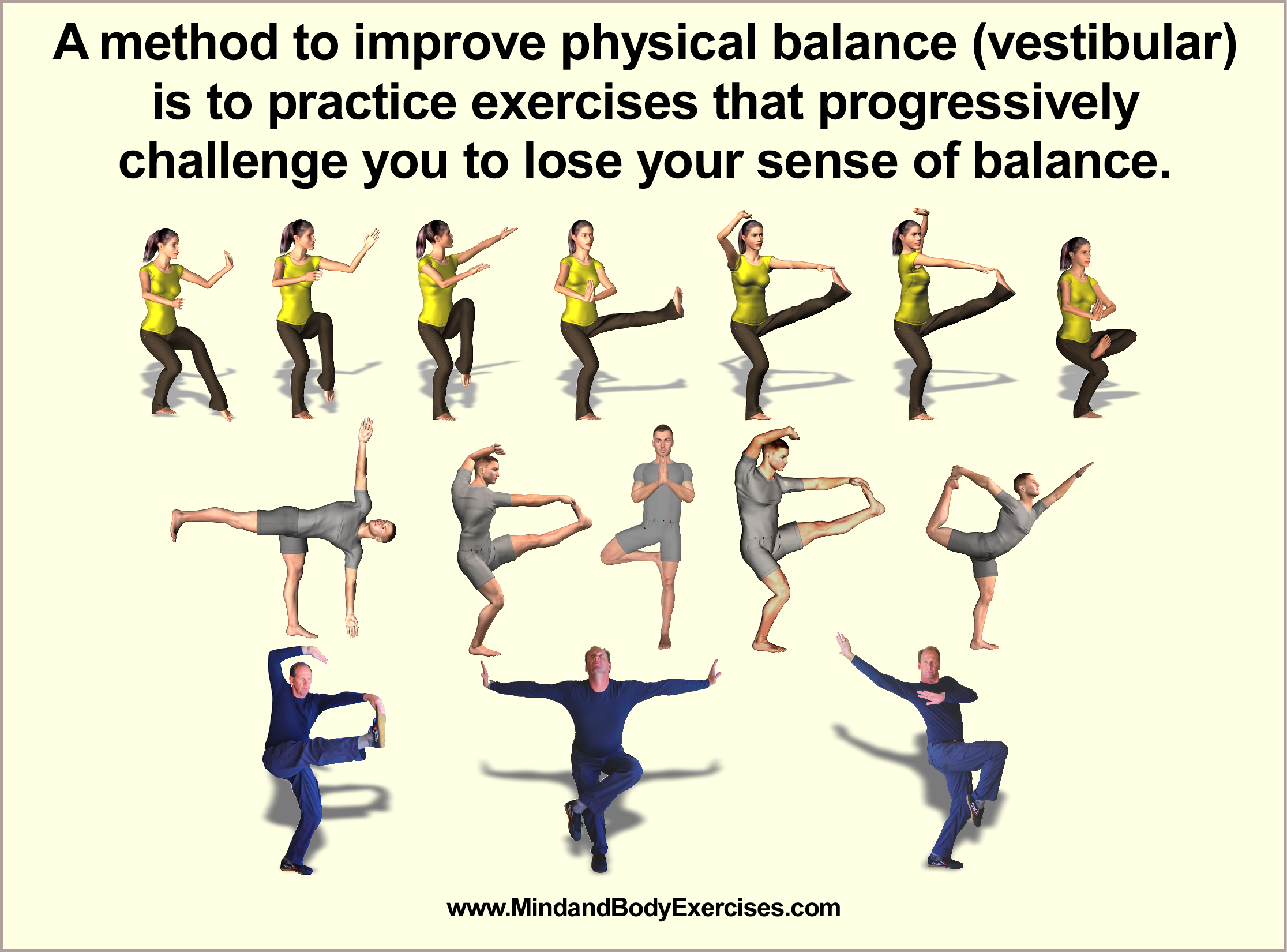
The human body contains many examples of balance. We have exterior symmetry in having 2 arms, 2 legs, 2 eyes, etc. We have interior symmetry within our bodies in the way of the muscular and skeletal systems being mostly equal from left to right sides. The external body protects the internal organs, while the organs provide for the exterior. The mind governs the body while the body protects the mind. Vestibular balance is what most people think of as our spatial positioning and equilibrium in relation to standing, walking and general movement.

Let’s go into some basic anatomy and physiology relative to what allows the human body to not fall over with every movement we may execute.
Body Components Connected to Balance
Brain – the brain processes the signals from the eyes, inner ear and the sensory systems (skin, joints, muscles, nerves) of the human body.
Eyes – the eyes relate information to the brain such as spatial orientation and environmental conditions.
Inner Ear – the inner ear and the Vestibular system, regulates equilibrium while providing directional information to the brain to process.
Sensory Receptors -nerves in the joints called proprioceptors, sense vibrations that flow through joints, muscles and skin sending the information to the brain to process.
Skeletal Muscles – the muscular system provides strength and stability to the skeletal systems, while maintaining flexibility in movement.
Joints – healthy joints help form a strong foundation for the body to navigate daily activities. Vibrations in movement are transferred through the bones and muscles to the brain to process.

Factors in Maintaining Balance
Awareness – understanding where ones center of gravity sits, greatly helps to become more sensitive to correct body positioning. Also, being more observant of environmental changes such as lighting, weather, terrain, etc. can prevent loss of balance.
Focus – keeping the eyes steady, helps keep the mind focused to be able to better control the bodies fine tuning of muscle control and body positioning leading to better balance.
Muscular Strength – maintaining muscle tone contributes to having stability whether the body is in motion or stationary.
Range of Motion (flexibility) – when the limbs, muscles and joints are free to move,
it is much easier to adjust ones center of gravity to a more balanced position.

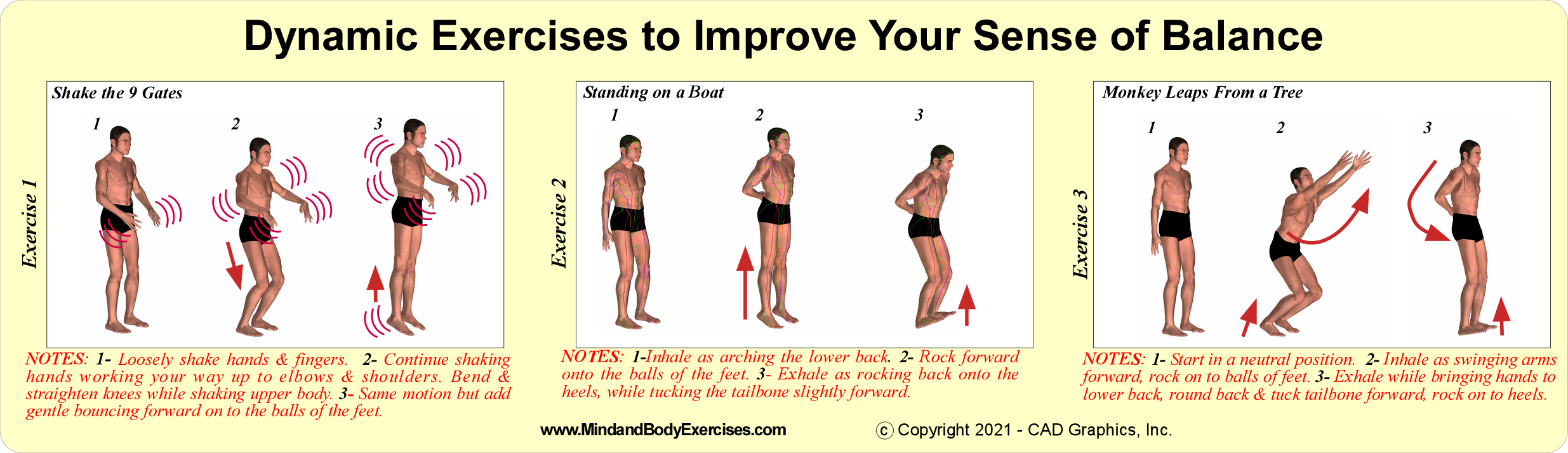
I have found and studied 2 types of balance exercises, being dynamic and static.
Dynamic Balance – maintaining stability with ones center of gravity situated outside an axis of vertical rotation, with body movement or the body in motion.
Static Balance – maintaining stability with ones center of gravity situated on an axis of vertical rotation, with little or no body movement.

Be well, stay healthy, be wise.
I can help. I have almost 40 years worth of experience in practicing and teaching others to take control of their health and well-being.
Wellness lectures, classes, study guides & booklets.For more information, contact Jim Moltzan at 407-234-0119 or www.MindAndBodyExercises.com
https://www.facebook.com/MindAndBodyExercises/
https://www.youtube.com/c/MindandBodyExercises
 United Martial Arts Association