Holistic Health & Wellness Discussions

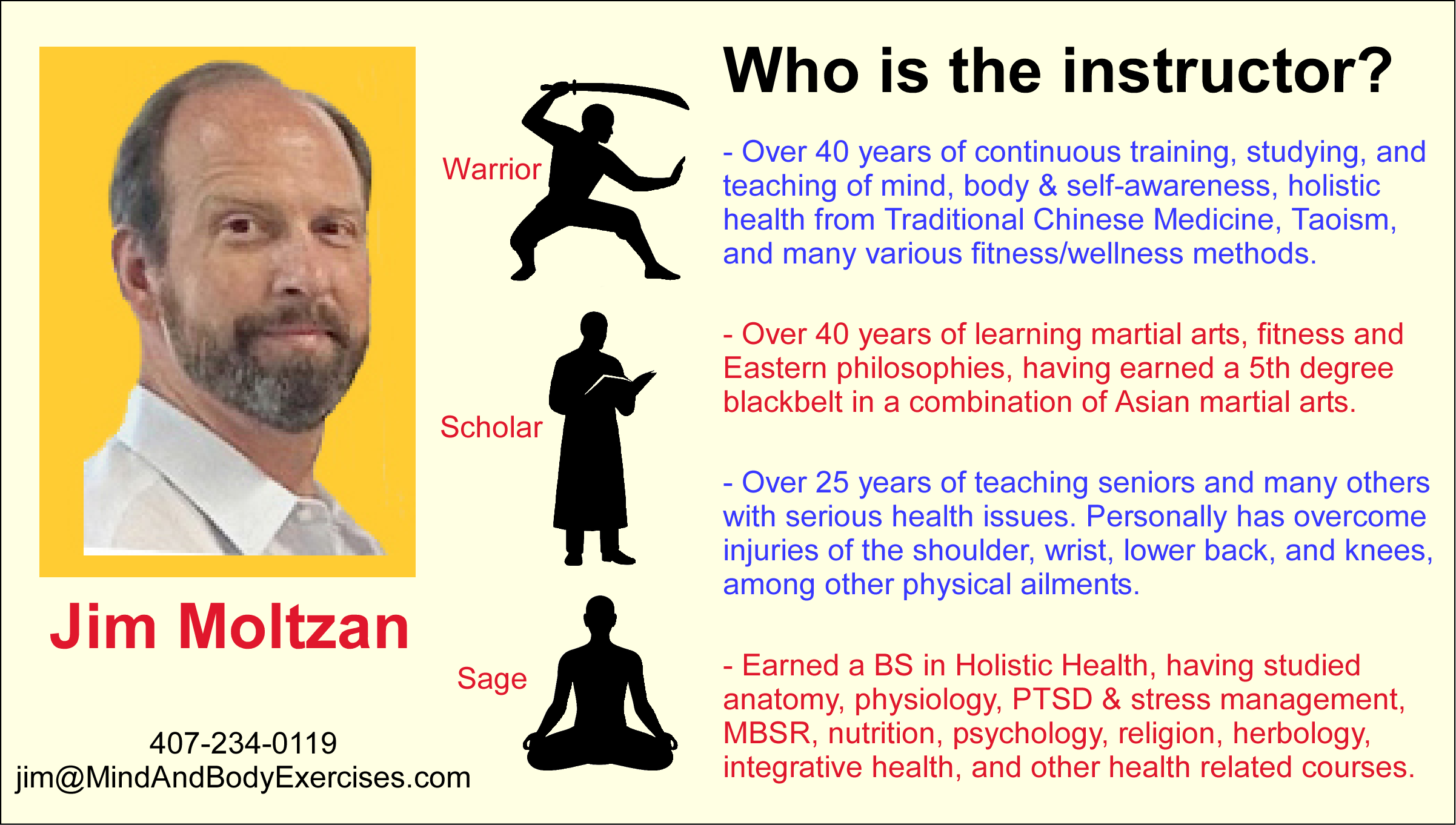
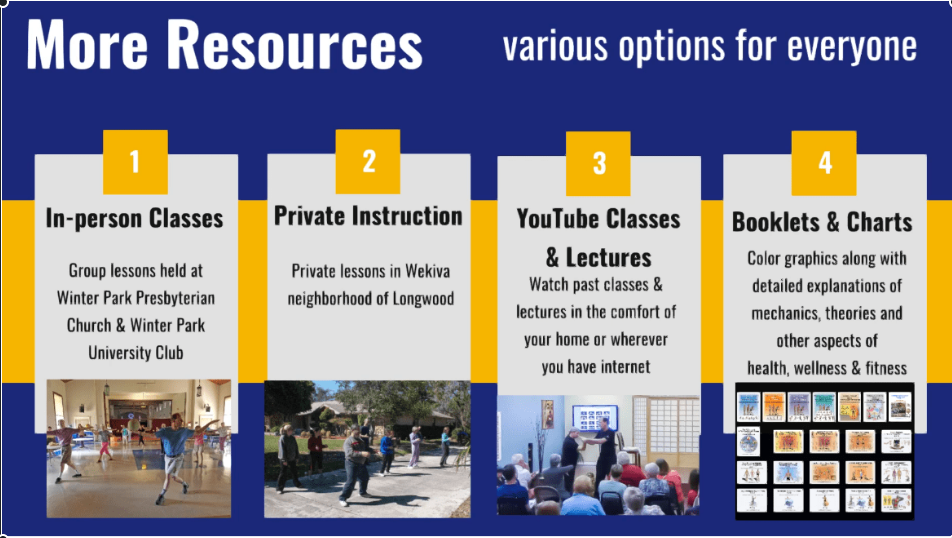
I have been learning, practicing and studying health and wellness for 45 years, teaching and sharing for 42 years. I feel that I have a lot to share that can benefit the mind, body & spirit. Watch my video of various venues that I have held holistic health discussions.

Contact me to discuss options for you, your business, your group, etc. Good health and wellness are a journey that doesn’t happen overnight. We will all experience some pain and suffering throughout our lives. Learn how to manage it before it comes it comes knocking at your door.

Jim Moltzan – 407-234-0119 or info@MindAndBodyExercises.com

Training Methods Of 72 Arts Of Shaolin

Training Methods Of 72 Arts Of Shaolin by Jin Jing Zhong (1934) is a window into how some traditional lineages of martial arts training used to be practice in years past. Many decades ago, practitioners could and would devote many hours, for many days and over many years, even decades to develop and perfect their skills. Many of the methods explained throughout this book seem impossible with today’s hectic modern schedule, where most people find it difficult to carve out 1-2 hours to exercise, a few days per week.

The text is an extensive and detailed manual on the 72 Arts of Shaolin Kung Fu, compiled and translated from early 20th-century Chinese martial arts manuscripts. It presents a comprehensive guide to Shaolin training methods, theoretical principles, and practical exercises essential for mastering both internal (soft, spiritual, energy-based) and external (hard, physical, muscular) martial arts skills. The text includes biographies of key figures such as Jin Jing Zhong and Reverend Miao Xing, highlighting their dedication and contributions to preserving Shaolin traditions. It emphasizes the cultivation of Qi (internal energy), balance of Yin and Yang forces, and the importance of moral character and perseverance in training.

The manual systematically categorizes the 72 arts into hard and soft, internal and external skills, linking each to physical health, spiritual development, and combat effectiveness. Detailed instructions on foundational exercises (e.g., striking wooden dummies, suspending coins, kicking flying meteors), and advanced techniques (e.g., Diamond Finger, Iron Shirt, Luohan’s Night Vision, Skill of Light Body) are provided. The text stresses the need for gradual, persistent training, avoidance of harmful habits, and the ethical use of martial arts. It also includes unique Shaolin training methods such as walking on poles, swimming skills, and acrobatic movements, demonstrating the holistic nature of Shaolin Kung Fu as both a martial and health practice.

The manual concludes with a tribute to Lam Sai Wing, a renowned master of Southern Shaolin Hung Gar, whose writings similarly blend combat techniques and internal cultivation methods, affirming the enduring legacy of Shaolin martial arts.

Highlights

  • Comprehensive guide to the 72 Arts of Shaolin Kung Fu, covering theory and practice.
  • Emphasis on balancing internal energy (Qi), Yin-Yang forces, and moral development.
  • Detailed hard and soft training methods for physical and spiritual mastery.
  • Shaolin exercises improve health, resilience, and combat skills simultaneously.
  • Training principles stress persistence, patience, and ethical martial arts use.
  • Unique skills include walking on poles, swimming techniques, and acrobatic jumps.
  • Biographies of key Shaolin masters and their contributions to preserving martial traditions.

Key Insights

  • Integration of Internal and External Skills: The text highlights that Shaolin mastery requires the harmonious development of both internal energy cultivation (soft Gong Fu) and external physical power (hard Gong Fu). This dual approach ensures not only effective combat skills but also long-term health and spiritual well-being. The internal force Qi, when properly nurtured, fortifies the body against injury and disease, while external techniques develop strength, precision, and resilience.
  • Qi as the Core Vital Force: Qi is portrayed as the fundamental life energy governing health, strength, and spirit. The manual provides numerous exercises for cultivating, circulating, and concentrating Qi throughout the body. The practice of controlling Qi leads to improved blood circulation, organ function, mental clarity, and emotional stability. This understanding aligns with traditional Chinese medicine and Taoist philosophy, reinforcing Shaolin’s holistic approach.
  • Moral and Psychological Foundations of Martial Arts: The text stresses that mastery is not merely physical but deeply rooted in cultivating virtues such as humility, patience, courage, and self-control. The reverence for tutors, avoidance of arrogance, and ethical restraint in the use of force are repeatedly emphasized. This moral framework ensures that martial power is used responsibly and contributes to personal and social harmony.
  • Progressive and Systematic Training: The 72 Arts are organized to accommodate practitioners of all ages and skill levels, with clear stages of difficulty and gradual increase in intensity. Foundational exercises such as Four-Part Exercise and base conditioning prepare the body and mind for advanced techniques. The text warns against impatience and irregular practice, advocating steady, daily training for years or decades to achieve true mastery.
  • Specialized Combat Techniques and Conditioning: The manual describes a wide range of sophisticated methods that condition specific body parts (e.g., Iron Head, Iron Knees, Diamond Finger) and develop unique combat skills (e.g., One Finger Chan Meditation, Eagle’s Claws, Mantis Claws). These techniques show the detailed craftsmanship in Shaolin arts, combining physical toughness with precision targeting of acupoints and energy pathways.
  • Health Benefits and Longevity: Many exercises are designed not only for fighting but also for therapeutic effects, strengthening internal organs, improving circulation, enhancing sensory functions (night vision, keen hearing), and preventing age-related decline. The text acknowledges adaptations for children, adults, and the elderly, emphasizing that Shaolin is as much a health cultivation system as a martial discipline.
  • Practical Application in Combat and Life: The manual balances philosophical depth with direct combat pragmatism. It includes guidance on using softness to overcome hardness, redirecting opponent’s force, and applying “deadly” but hidden techniques. It also teaches survival skills like swimming, diving, and agile movement, showing Shaolin’s comprehensive training for real-world challenges.

This text is a foundational document for understanding traditional Shaolin martial arts, blending philosophy, health sciences, and combat techniques into a unified training system. It underscores the cultural, spiritual, and practical significance of the 72 Arts, offering an authentic window into the Shaolin legacy that continues to influence martial arts worldwide.

Reference:

Training Methods of 72 Arts of Shaolin by Jin Jing Zhong 1934 : Jin Jing Zhong : free download, borrow, and streaming : Internet Archive. (1934). Internet Archive. https://archive.org/details/trainingmethodsof72artsofshaolinbyjinjingzhong1934

Wealth Without Wellness is Poverty in Disguise

In an age where wealth, fame, and social standing are glorified as the pinnacle of success, it is easy to forget that the most valuable assets we possess are not in our bank accounts or in our résumés. Rather they are the state of our minds and the vitality of our bodies. Material fortune and public recognition can buy influence, open doors, and offer fleeting pleasures, but they cannot reverse years of physical neglect or restore a mind dulled by stress, apathy, or overindulgence. The truth is simple: when the mind and body are compromised, the currency of wealth and the applause of the crowd lose their meaning.

The Illusion of Substitution

Society often promotes the illusion that money, influence, or fame can make up for a lack of health. We see celebrities celebrated despite visible physical decline, business leaders pushing themselves past the brink of exhaustion, and influencers curating glamorous online lives while privately battling anxiety, burnout, and chronic illness. This image of “success” hides a grim reality. No amount of financial or social power can purchase a new nervous system, undo the damage of decades of poor lifestyle habits, or replace the inner peace that comes from a well-cared-for mind.

Wealth can buy advanced medical treatment, but it cannot buy resilience built from consistent exercise, balanced nutrition, and quality rest. It can hire therapists and coaches, but it cannot magically instill mental clarity, discipline, or emotional stability in a person unwilling to nurture them. It can provide luxury and comfort, but it cannot offer the satisfaction of living in a body and mind that are strong, agile, and alert.

The Human Cost of Neglect

Neglect of the body often begins subtly. Skipped workouts, poor sleep, diets based on convenience rather than nutrition and other issues emerge as seemingly harmless lapses. Over time, this neglect compounds where muscles and bones weaken, cardiovascular endurance drops, weight accumulates, and chronic conditions take root. The body, once ignored, demands attention in ways that money alone cannot silence. Arthritis cannot be bribed. A failing heart cannot be impressed by prestige. The slow erosion of mobility and vitality spares no one.

Similarly, the neglected mind suffers in ways that wealth cannot mend. Without continuous learning, mental challenges, and emotional self-regulation, the mind becomes less adaptable. Stress becomes more overwhelming, decision-making more erratic, and creativity more stagnant. Intellectual and emotional atrophy often occur long before physical decline becomes visible, robbing life of richness and depth.

Real Wealth: Mind-Body Integrity

The most enduring form of success comes from balance: a mind that remains curious, clear, and resilient, and a body that can carry us through life’s challenges with strength and endurance. This integrity cannot be purchased, but rather it must be cultivated through daily choices. Physical exercise strengthens not just the body but also mental health, reducing anxiety and improving cognitive function. Mindful practices such as meditation, reflection, and deliberate learning sharpen awareness and emotional stability. Proper nutrition fuels both the brain and the muscles, enabling them to function at their best.

True prestige comes from being able to meet each day’s demands with clarity of thought, steadiness of emotion, and physical capability. A billionaire confined by illness envies the healthy freedom of someone who can walk without pain. A public figure struggling with depression or mental exhaustion would trade their followers for peace of mind. In the end, health is the foundation upon which all other forms of success are built.

Lessons from History and Life

History offers countless examples of individuals whose material success could not shield them from the consequences of neglect. Famous industrialists, politicians, and entertainers have succumbed to preventable diseases, addictions, and burnout. Some reached the heights of their careers only to spend their later years consumed by medical treatments or emotional turmoil. On the other hand, there are those of modest means who lived into old age with vibrant energy and mental clarity, not because they had wealth or fame, but because they respected and maintained their inner and outer well-being.

Conclusion: The Non-Negotiable Priority

In the end, the message is clear: a neglected mind and body will undermine every other achievement. Wealth and status are fleeting. The body and mind are the constant companions that shape every moment of experience. Taking care of them is not an optional luxury. A strong and healthy mind, as well as physical body are the foundation for a life well-lived. The most successful person is not necessarily the one with the most accolades or the largest bank account, but the one who can wake each day with the energy to act, the clarity to think, and the inner peace to enjoy the journey.

No title, no fortune, no spotlight can take the place of that.

Beyond the 10% Myth

The Potential for Extraordinary Human Abilities

For over a century, a persistent misconception has claimed that most people use only 3–10% of their brain capacity, while exceptional individuals, such as Albert Einstein supposedly accessed much more, some unique individuals perhaps even 100%. While appealing, this notion is unsupported by credible neuroscience. Modern research shows that humans use all parts of their brain over time, and differences in intellectual performance are due to efficiency, connectivity, and specialized skill development rather than large unused reserves.

The Origins and Fallacy of the “10% Brain” Myth

The “10% brain myth,” sometimes altered to 3%, 5%, or 8%, appears to have originated in the late 19th and early 20th centuries. Early neuroscientists misunderstood the roles of various brain regions, sometimes labeling underexplored areas as inactive. Pioneer psychologist William James’s statement that “we are making use of only a small part of our possible mental and physical resources” was also misinterpreted as a literal statement about unused brain tissue rather than human potential (Beyerstein, 2004).

Today, brain imaging techniques such as functional magnetic resonance imaging (fMRI) and positron emission tomography (PET) scans clearly show that nearly all regions of the brain are active over the course of a normal day, even during rest and sleep (Raichle & Gusnard, 2002). Moreover, the brain’s high metabolic cost accounts for ~2% of our body weight but ~20% of resting energy expenditure, makes it implausible that most of it lies dormant (Attwell & Laughlin, 2001). Even minor injuries can cause significant deficits, further demonstrating that all areas contribute to normal function.

(Knowable Magazine Science Graphics Library, n.d.)

Einstein’s Brain: Anatomical Variations and Cognitive Implications

Albert Einstein appears to have never claimed to use a greater “percentage” of his brain than others. However, his preserved brain, examined by Dr. Thomas Harvey and later researchers, revealed several structural distinctions. Notably, Einstein’s inferior parietal lobules, which are critical for spatial reasoning, mathematical processing, and visual imagery, were about 15% wider than average (Witelson et al., 1999). Additionally, his Sylvian fissure pattern was atypical, allowing more cortical connectivity between mathematical and spatial areas. Increased glial cell ratios in certain regions may have provided enhanced metabolic support for sustained cognitive work (Witelson et al., 1999).

Einstein’s Documented Brain Features vs. Modern Trainable Extraordinary Abilities

Einstein’s Documented Brain FeaturesModern Trainable Extraordinary Abilities
Enlarged inferior parietal lobules – 15% wider than average, linked to advanced spatial reasoning, mathematics, and visual imagery (Witelson et al., 1999).Spatial mastery through training – Architects, pilots, and martial artists develop exceptional spatial awareness via repeated practice and sensory-motor mapping.
Unusual Sylvian fissure pattern – Reduced fissure depth allowed more cortical connectivity between regions for math, spatial visualization, and abstract thinking (Witelson et al., 1999).Cross-domain skill integration – Interdisciplinary study and problem-solving enhance connectivity between brain networks (e.g., combining art and engineering in design thinking).
Increased glial cell ratio – Higher density in certain regions, possibly providing better metabolic support for sustained thought.Endurance of cognitive focus – Meditation, mindfulness, and cognitive endurance training improve attention regulation and mental stamina (Goleman, 2013).
High neuron density in integrative areas – Supports rapid processing of complex, abstract information.Pattern recognition expertise – Chess masters, seasoned detectives, or experienced clinicians recognize subtle cues faster through accumulated experience (Kahneman & Klein, 2009).
Likely enhanced interhemispheric connectivity – Possibly allowing faster and richer information exchange between hemispheres.Bilateral coordination training – Activities like music performance, ambidextrous martial arts practice, or juggling increase interhemispheric communication.
Innate neuroanatomical advantage from birth – Unlikely to be replicated through training alone.Neuroplasticity-driven gains – Long-term skill practice in domains like language learning, navigation, or musical performance physically alters brain structure and function (Eagleman, 2023).

These features likely supported Einstein’s remarkable ability to mentally visualize and manipulate physical concepts, as seen in his thought experiments on relativity. However, his genius also stemmed from decades of intense study, curiosity, and integrative thinking, all factors rooted in training and persistence rather than sheer anatomy.

Extraordinary Cognitive Abilities and the “Sixth Sense”

While the term “sixth sense” often evokes supernatural connotations, neuroscience recognizes several sensory modalities beyond the traditional five. These include proprioception (awareness of body position), vestibular sense (balance), and interoception (perception of internal bodily states). In certain individuals, these senses may be unusually acute, giving the impression of extraordinary perception.

Extraordinary abilities can arise from different mechanisms:

  • Synesthesia involves cross-activation between sensory regions, sometimes enhancing memory or creativity.
  • Savant syndrome allows individuals with developmental or acquired conditions to demonstrate exceptional skills in calculation, art, or memory.
  • Intuitive expertise emerges when professionals make rapid, accurate judgments by subconsciously recognizing complex patterns from experience (Kahneman & Klein, 2009).
  • Heightened situational awareness, often found in elite athletes, martial artists, or soldiers, develops through systematic training in sensory attention and pattern detection.

These capabilities are grounded in neuroplasticity, or the brain’s ability to reorganize and strengthen neural pathways through repeated use (Goleman, 2013). Sensory compensation, such as improved hearing in those with vision loss, also illustrates how the brain can refine and amplify perception in certain channels (Eagleman, 2023).

Conclusion

The myth that most humans use only a small fraction of their brain capacity is not supported by scientific evidence. Instead, differences in performance, whether in Einstein’s theoretical physics or in individuals demonstrating exceptional perception stem from variations in brain structure, connectivity, training, and experience. Einstein’s brain offered anatomical advantages that may have facilitated his unique style of thinking, but his genius was equally shaped by intellectual discipline and curiosity. Similarly, so-called “sixth sense” abilities are the result of heightened sensory integration, superior pattern recognition, and deliberate practice, illustrating that human potential is less about unlocking unused brain areas and more about refining and optimizing the capacities we already employ.

References:

Attwell, D., & Laughlin, S. B. (2001). An energy budget for signaling in the grey matter of the brain. Journal of Cerebral Blood Flow & Metabolism, 21(10), 1133–1145. https://doi.org/10.1097/00004647-200110000-00001

Beyerstein, B. L. (2004). Do we really use only 10 percent of our brains? (2024, February 20). Scientific American. https://www.scientificamerican.com/article/do-we-really-use-only-10/

Eagleman, D. (2023). Incognito: The secret lives of the brain. Pantheon. Incognito. https://eagleman.com/books/incognito/

Goleman, D. (2013). Focus: The hidden driver of excellence. Harper. https://psycnet.apa.org/record/2013-37403-000

Kahneman, D., & Klein, G. (2009). Conditions for intuitive expertise: A failure to disagree. American Psychologist, 64(6), 515–526. https://doi.org/10.1037/a0016755

Knowable Magazine Science Graphics Library. (n.d.). The brain‘s control centers | Free educational graphics. Flickr. https://www.flickr.com/photos/knowablemag/53072741397

Raichle, M. E., & Gusnard, D. A. (2002). Appraising the brain’s energy budget. Proceedings of the National Academy of Sciences, 99(16), 10237–10239. https://doi.org/10.1073/pnas.172399499

Witelson, S. F., Kigar, D. L., & Harvey, T. (1999). The exceptional brain of Albert Einstein. The Lancet, 353(9170), 2149–2153. https://doi.org/10.1016/S0140-6736(98)10327-6

The Path of Integrity

Introducing a new book by Jim Moltzan

At its heart, The Path of Integrity is both a philosophical treatise and a psychological guide. A rare combination that bridges ancient wisdom traditions with contemporary understandings of human growth, resilience, and meaning-making.

From a psychological perspective, the manuscript reflects a humanistic foundation, echoing thinkers like Carl Rogers and Abraham Maslow in its focus on authenticity, self-knowledge, and the pursuit of a life aligned with core values. The text moves beyond prescriptive “self-help” to address the deeper internal architecture of the self in the mind, body, spirit, and relational being and how each must be cultivated in balance.

The book also engages with existential psychology, confronting questions of purpose, mortality, and moral responsibility. By drawing parallels between the “Path of Integrity” and the “Way of Dissonance,” it frames life as a series of choices that either bring us into alignment with our highest potential or lead us away from it. This dichotomy functions as a form of cognitive re-framing, helping readers see their daily decisions in a broader, values-driven context.

Importantly, the manuscript explores post-traumatic growth, not as an abstract theory but as a lived reality. It acknowledges that adversity, when met with awareness and intention, can deepen resilience, empathy, and wisdom. This theme is woven throughout personal reflections, martial philosophy, and spiritual principles to create a layered and authentic approach to transformation.

The emphasis on discipline, self-awareness, and service aligns closely with self-determination theory, which holds that autonomy, competence, and relatedness are essential to psychological well-being. The book’s integration of martial arts principles, such as inner guarding, patience, and strategic action, translates these abstract needs into concrete practices.

The style is psycho-educational, offering not only insight but also practical steps, from developing mental clarity and setting energetic boundaries to cultivating stillness as a tool for decision-making. This pedagogical approach makes it equally relevant to martial artists, spiritual seekers, and those navigating the complexities of modern life.

Psychologically, The Path of Integrity stands out because it addresses both the inner terrain (belief systems, emotional regulation, moral reasoning) and the outer application (relationships, teaching, leadership, legacy). This dual focus ensures that readers do not merely reflect but act, integrating new perspectives into daily living.

Ultimately, the book’s psychological message is clear. Integrity is not an abstract ideal. It is a lived state of alignment that requires ongoing attention, honest self-evaluation, and the courage to choose what is right over what is easy. By walking this path, we move beyond survival into a life of grounded purpose, resilience, and contribution.

The Path to Integrity is available at Amazon at: https://a.co/d/bgm7U2t