
How Deep Breathing Affects Your Health
Deeper breathing is a key component to having a long and healthy life. Through focused and deliberate breathing methods, many positive mental and physical benefits can be achieved.
Most people breathe too shallow and too quickly!
Much recent research has linked stress to poor breathing habits and consequently many ailments. Many modern chronic conditions can be traced back to insufficient cell oxygenation otherwise known as cell hypoxia.
Breathing is one of the few bodily rhythms that we can consciously adjust, along with sleep and elimination. All of these rhythms directly effect our body’s delicate blood chemistry. However, our breath is the root power in bringing oxygen (qi) into our body to nourish it down to the cellular level.
Faster breathing is necessary when experiencing truly stressful situations, like being chased by an animal, running from a fire or similar life-threatening situations. However, continued breathing at this pace for an extended period of time puts accumulative stress on all of the body’s systems.

Most humans are breathing on the average, with normal activity about 12-18 breaths per minute (BPM). This amounts to very shallow breaths, using primary the top 1/3 of the lung’s capacity. Shallow chest breathing fills only the upper portion of the lungs. This reduces the ability to effectively oxygenate the circulation system.
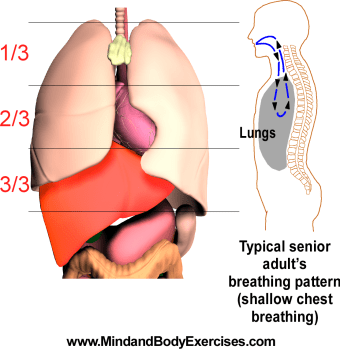
This “over-breathing” and “under-inhaling” causes an imbalance in oxygen/carbon dioxide gas exchange. This further leads to a ripple effect of other chemical (and hormonal) imbalances.
Poor oxygenation is linked to many modern chronic conditions such as asthma, COPD, obesity, diabetes, insomnia and cancer.
Emotions affects breathing rhythms.
Emotions effect the sympathetic nervous system which changes the blood chemistry.
The body releases cortisol into the bloodstream to counter stress.
Chronic elevation of cortisol effects other bodily functions in a negative manner.
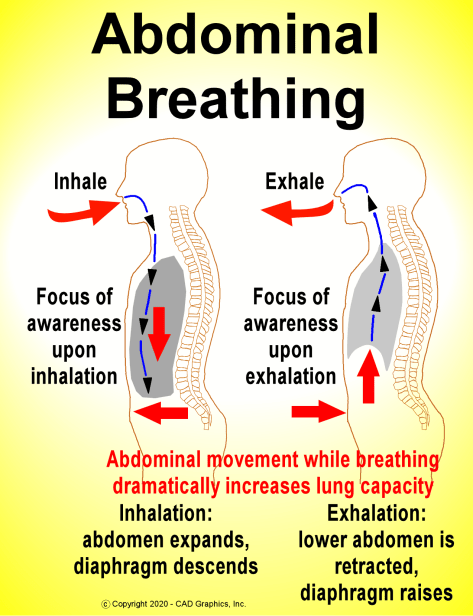
Abdominal Breathing
Deep and deliberate breathing can be improved with practicing abdominal breathing. Diaphragm movement pushes lymph throughout the body, eliminating toxic waste consequently strengthening the immune system.
Other benefits of deep breathing include:
– Improves blood circulation and oxygenation of cells
– Changes the blood chemistry to produce “happy” hormones beneficial to organs
– Toxic C02 waste is eliminated through your breath
– Stimulates the parasympathetic nervous system
– Abdominal breathing acts as a pump to massage internal organs
– Reduces mental and physical fatigue
Learn more about these incredible wellness methods by practicing tai chi, qigong and many other ancient methods.
Be well, stay healthy, be wise.
Jim Moltzan
407-234-0119
https://www.facebook.com/MindAndBodyExercises/
https://www.youtube.com/c/MindandBodyExercises
https://mindandbodyexercises.wordpress.com/
 United Martial Arts Association