
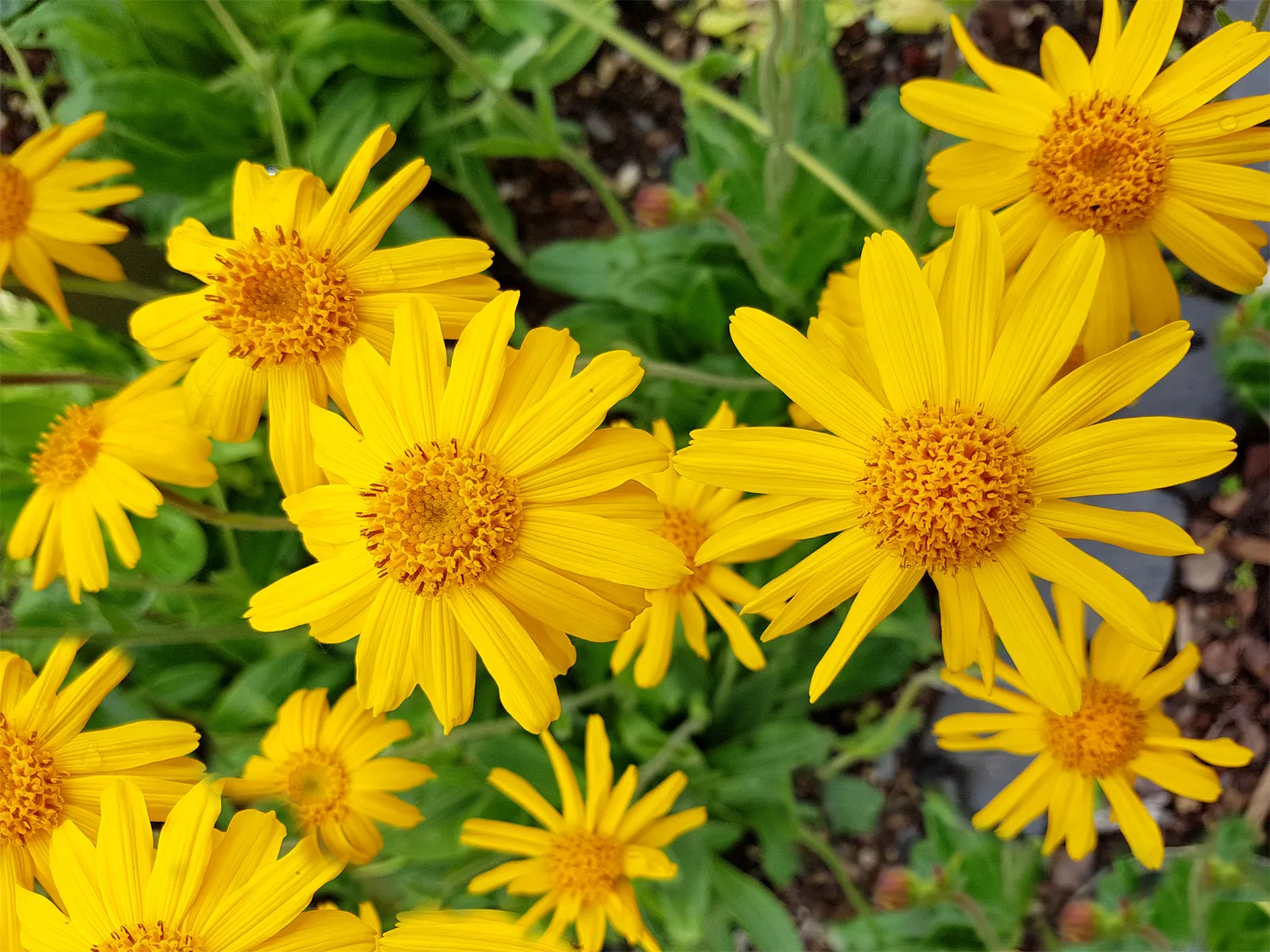
Arnica flowers, Arnica montana, or wolf’s bane, is typically used in a tincture as an analgesic, antiseptic, anti-inflammatory, and anti-ecchymotic (against bruises). Arnica has been a widely used remedy, being used (topically) externally in order to stimulate peripheral blood supply for swelling/inflammation, sprains, bruises, wounds and injuries. Additional external uses are for dandruff, dislocations, hemorrhoids, varicose veins, oedema associated with fractures, rheumatic, muscle and joint complaints, surface phlebitis, inflamed insect bites. Diluted arnica is often applied to the skin surface and purposely not covered with bandages. Arnica oil, which is a macerated oil from the arnica flowers, also has topical uses. This herb is sometimes taken internally, although not recommended, as a diuretic and stimulant. Due to irritant and allergenic effects internal use is a much lesser usage. Homeopathic preparations with arnica are also used internally and externally. In injuries of open wounds or where skin is broken or tender, topical application should be avoided as should usage near the eyes and mouth (Bones & Mills, 2013)
Internal use of arnica is not recommended. Oral use of arnica after oral ingestion may lead to dizziness, trembling, nausea, vomiting, diarrhea, increased heart rate, cardiac rhythm disturbances, breathing difficulties and collapse. There is high risk of damage to the fetus or miscarriage, if taken internally (Bones & Mills, 2013). Taken orally, Arnica may have side effects of muscle weakness, tachyarrhythmia, respiratory distress, gastrointestinal hemorrhage (Canders & Stanford, 2014). Arnica overdose can cause death due to circulatory paralysis with secondary respiratory arrest (Bones & Mills, 2013). When ingested orally, arnica’s exhibits immunomodulatory and cytotoxic effects, with its toxic constituent of Helenalin, which inhibits platelet aggregation. Arnica toxicity has no antidote (Canders & Stanford, 2014).
Key constituents include:
- sesquiterpene lactones (SLs) of the pseudoguaianolide type (0.2% to 1.5%), including helenalin and 11alpha, 13-dihydrohelenalin and their ester derivatives
- triterpenes, including arnidiol
- Flavonoids (0.4% to 0.6%) including quercitin 3-O-glucuronic acid
- Lignans including pinoresinol
- Coumarins, carotenoids
- Non-toxic pyrrolizidine alkaloids (tussilagine and isotussilagine)
- Polyacetylenes
- Essential oil (0.23% to 0.35%) containing sesquiterpenes, thymol derivatives and other monoterpenes
- Caffeoylquinic acids (phenolic acids) including 3,5- and 1,5-dicaffeoylquinic acids (Bones & Mills, 2013)
Arnica is recommended for mostly anti-inflammatory topical usage, with noted occasional side effects of irritant contact dermatitis when used externally. It is not recommended for prolonged usage or for persons with sensitivity to members of the Asteraceae family, such as daisies, ragweed, and chrysanthemums (Bones & Mills, 2013).
There are alternative herbal options for arnica depending upon the intended use. For wounds, muscular and joint pain, lavender is an option. Comfrey is used also for wounds, fractures and relative bruising. Aloe is an option for abrasions, wounds and other injuries (Herbs with Similar Uses as: Arnica, Complementary and Alternative Medicine, St. Luke’s Hospital, n.d.)
References:
Bone, Kerry; Mills, Simon. (2013) Principles and Practice of Phytotherapy (p. 373). Elsevier Health Sciences. Kindle Edition.
Canders, C., & Stanford, S. (2014, January 13). A Dangerous Cup of Tea. Wilderness & Environmental Medicine. https://www.wemjournal.org/article/S1080-6032(13)00345-1/fulltext#relatedArticles
Herbs with Similar Uses as: Arnica | Complementary and Alternative Medicine | St. Luke’s Hospital. (n.d.). St. Luke’s Hosptial. Retrieved February 23, 2022, from https://www.stlukes-stl.com/health-content/medicine/33/000589.htm
I write often about topics that affect our health and well-being. Additionally, I teach and offer lecture about qigong, tai chi, baguazhang, and yoga.
For more info, contact Jim Moltzan at info@mindandbodyexercises.com, 407-234-0119 or through my site at http://www.mindandbodyexercises.com
www.Amazon.com/author/jimmoltzan
 United Martial Arts Association