
The more we understand how our mind and body function physiologically, the better we can manage our own health, fitness and well-being.
Most of us grew up learning that we have 5 basic senses of vision, hearing smell, taste and touch. Some may have learned of the 6th sense of intuition or other abilities of sensory perception that exist beyond the basic five. Years ago these “extra” senses were looked upon as fake, coincidence or maybe even a figment of someone’s imagination. However, there is much current research and information regarding humans indeed having more than 5 basic senses (Macpherson, 2011).
Life and the experiences that it offers, is constantly changing and evolving for all that exist. Our senses are continuously receiving and interpreting stimulus to determine what is good or bad for our survival. Consequently, this input often manifests into what we call stress. We deal with stress through our thoughts and emotions. Our emotions directly affect how our brain processes information that affects all of our physiological mechanism and organ functions through the autonomic nervous and endocrine systems. Basically, thoughts and emotions affect our health and well-being whether with positive or negative outcomes.
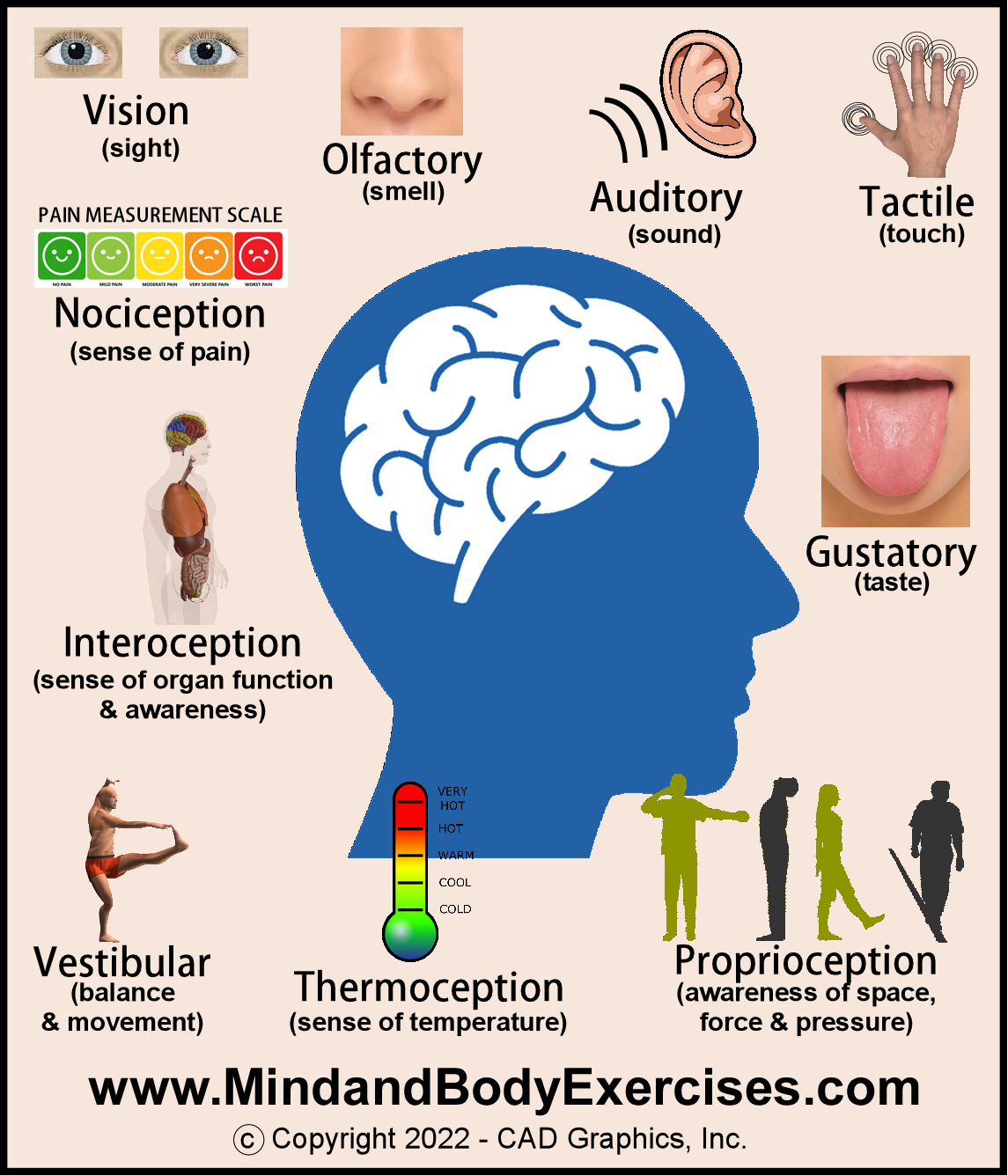
Some of the senses most people don’t think about:
Equilibrioception or vestibular – a sense of balance. This is what keeps us upright, and helps us make our way around without getting hurt.
Proprioception – knowing which parts of your body are where without looking. It’s how we can type without looking at the keyboard, for instance, or walk around without having to watch our feet.
Kinaesthesia – awareness of the position and movement of the parts of the body by means of sensory organs.
Thermoception – we know whether our environment is too cold or too hot. Being able to sense the temperature around us helps keep us alive and well.
Nociception – the ability to feel pain.
Chronoception – how we sense the passing of time.
Interoception – the ability to have sense of awareness relative to the status or function of our internal organs. We sense when we are thirsty, hunger, the need to urinate, an upset stomach, a rapid heartbeat, arousal and others.
We do have the ability to consciously control and manage our own life and relative stress. whether through lifestyle choices, diet & nutrition, physical activity and attitude. An awareness of our senses and how they work, can help us to better manage what stimuli we allow ourselves to be exposed to. If seeing bright lights gives us headaches, we can maybe adjust beforehand. When our stomach is gurgling, we know it it time to eat. If we are lacking good stability and balance, we can learn exercises to improve this sense.
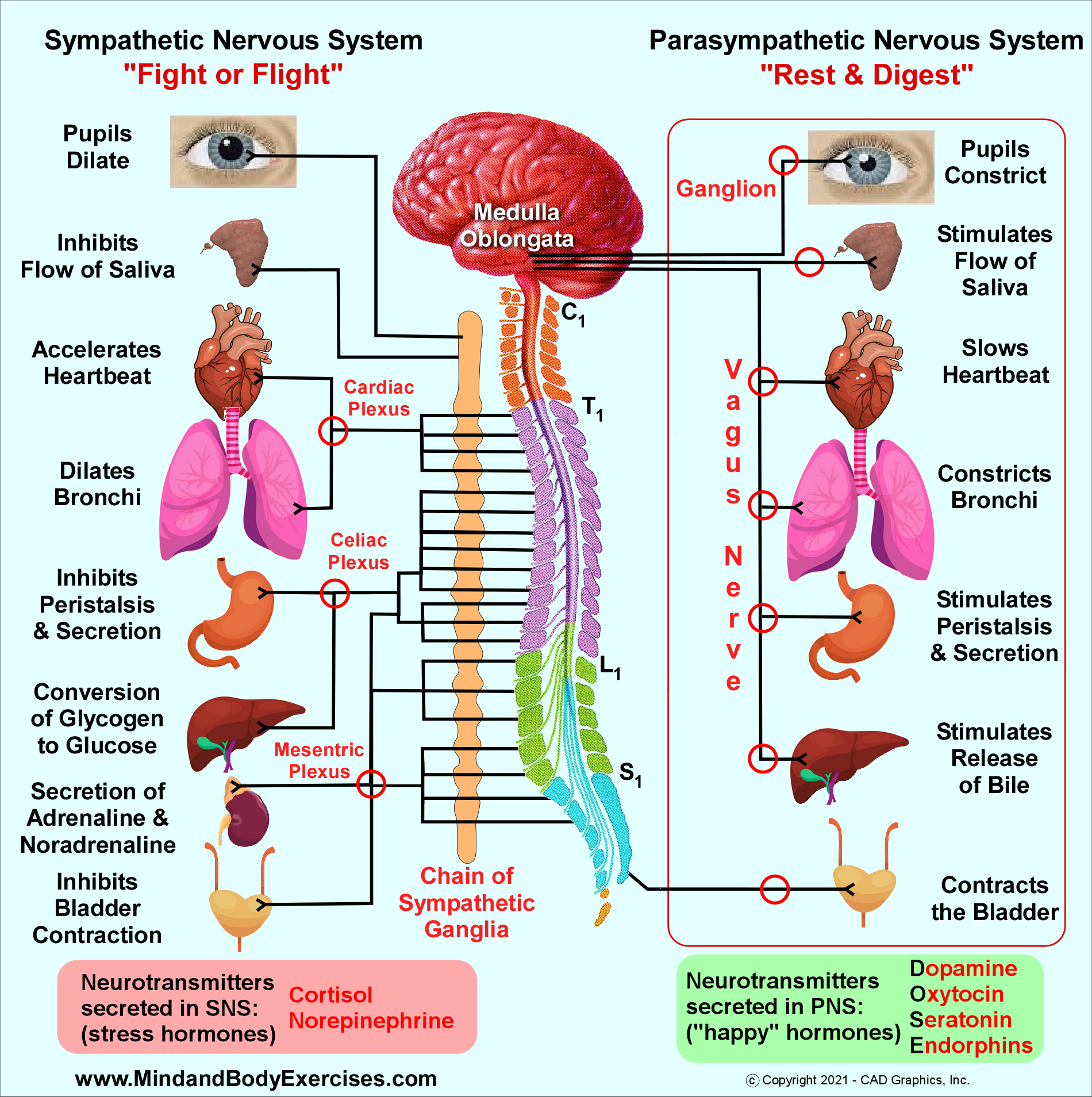
A key component of managing stress is managing the parasympathetic (rest & digest) and sympathetic (fight or flight) nervous system through consistent regulation of our breathing frequency and relative volume of each breath. This is a topic addressed in many of my other posts. Yoga, tai chi, qigong, meditation, martial arts and other methods have been proven to help to proactively manage stress and relative cortisol levels.
Manage your breath, manage your stress, manage your health and well-being.
Be well!
References:
https://www.weforum.org/agenda/2017/01/humans-have-more-than-5-senses/
Fiona Macpherson. (2011). The Senses : Classic and Contemporary Philosophical Perspectives. Oxford University Press.
____________
I write often about topics that affect our health and well-being. Additionally, I teach and offer lecture about qigong, tai chi, baguazhang, and yoga.
For more info, contact Jim Moltzan at info@mindandbodyexercises.com, 407-234-0119 or through my site at http://www.mindandbodyexercises.com
www.Amazon.com/author/jimmoltzan

 United Martial Arts Association