The One-Handed Bow and Shaolin Salute

A Symbolic Gesture Bridging Buddhism, Martial Arts, and Philosophy

Among the many ritual gestures in martial arts and Buddhist practice, few are as rich in symbolism as the one-handed bow and the Shaolin salute. These simple movements embody centuries of cultural synthesis, spanning Buddhist devotion, Confucian ethics, and Taoist philosophy. Though often performed without conscious reflection, these gestures are living links to profound stories of sacrifice, humility, and moral discipline.

It is also important to distinguish between “bowing toward” someone and “bowing down to” them. In Buddhist and martial traditions, a bow is not a sign of subjugation or inferiority, but rather a gesture of mutual respect, recognition, and presence. To bow toward someone is to acknowledge their humanity, their role as teacher or peer, or their shared path. In contrast, bowing down to someone implies surrender, hierarchy, or submission, a dynamic not typically encouraged in authentic Chan or martial teachings, which emphasize non-attachment, humility, and equality of spirit (Suzuki, 1956; Shahar, 2008). The gesture is not about worship, but about mindful reverence for the moment and the relationship.

The Story of Huike and the One-Handed Bow

The origins of the one-handed bow can be traced to a pivotal moment in Chan (Zen)Buddhist history. In the 5th or 6th century CE, the Indian monk Bodhidharma (Damo) traveled to China, bringing the profound teachings of Dhyana (meditation) Buddhism. According to legend, Bodhidharma secluded himself in a cave near the Shaolin Temple, meditating in silence for nine years (Suzuki, 1959).

During this time, a Chinese monk named Huike sought to become his disciple. Initially rejected, Huike demonstrated his unwavering determination by standing outside Bodhidharma’s cave through a snowstorm. To further prove his sincerity, Huike cut off his own hand and presented it to Bodhidharma. Moved by this act of sacrifice, Bodhidharma finally accepted him as a student (Cleary, 1999).

The one-handed bow evolved partly from this story. In Chan circles, bowing with one hand came to symbolize total devotion, humility, and the willingness to transcend ego and attachment. The gesture visually echoes Huike’s sacrifice, representing a commitment to the Dharma that goes beyond the physical form.

Practical Monastic Roots

Beyond its symbolic meaning, the one-handed bow also has practical origins. Buddhist monks traditionally carried alms bowls or staffs, often leaving one hand occupied. The gesture of bowing with the free hand thus became a mindful adaptation, embodying presence and respect even in simple actions (Strong, 2001).

In Shaolin monastic life, where martial training intertwined with Buddhist practice, this gesture naturally merged with martial etiquette. Over time, it evolved into the more formalized Shaolin salute, now widely recognized across martial arts traditions.

The Shaolin Salute (Fist Wrapped in Palm)

The Shaolin salute, performed with the left open palm wrapping over the right closed fist encapsulates a deep philosophical message:

  • The left palm symbolizes wisdom, virtue, and restraint.
  • The right fist represents martial strength and discipline.
  • Together, they convey the ideal that strength must serve wisdom, and that martial power should always be governed by moral integrity (Henning, 1999).

The gesture is performed at the start and end of training, as a sign of respect toward teachers, fellow practitioners, and the lineage itself.

Northern vs. Southern Shaolin Variations

Northern Shaolin

  • Gesture held closer to the chest, with a more upright posture.
  • Strong emphasis on Chan Buddhist origins, honoring the story of Huike and Bodhidharma.
  • Used as a reminder that martial arts is a spiritual path, not merely a physical practice.

Southern Shaolin

  • Gesture held lower, sometimes with a deeper bow.
  • Greater incorporation of Confucian and Taoist elements:
    • The left palm represents civil virtue (wen).
    • The right fist represents martial courage (wu).
  • Symbolizes the ideal of the “complete person” where one who balances civil ethics with martial prowess.

Across both traditions, the salute serves as a bridge between physical mastery and spiritual cultivation, reminding practitioners to walk the martial path with awareness, humility, and virtue.

Philosophical Layers of the Salute

InfluenceLeft PalmRight FistCombined Gesture
Buddhism (Chan)Wisdom, compassionStrength, disciplineStrength governed by wisdom
ConfucianismRitual propriety (礼, li)Martial courageHarmony of civil and martial virtues
TaoismYin (open hand)Yang (closed fist)Balance of opposites, alignment with Dao

These layers reflect the syncretic nature of Chinese culture, where Buddhism, Confucianism, and Taoism enriched one another and deeply influenced the martial arts (Shahar, 2008).

The Gesture Today

In modern martial arts, the Shaolin salute is used worldwide. Yet, many practitioners are unaware of its spiritual and historical dimensions. The story of Huike’s sacrifice, the practicality of the one-handed bow, and the layered meaning of the salute all remind us that external movements can carry profound internal significance.

Every time a martial artist performs this gesture, they are participating in a lineage that spans centuries of wisdom, discipline, and moral cultivation. In a world often dominated by superficial strength, the Shaolin salute offers a timeless reminder:
True power lies in restraint, and the greatest warrior is one whose actions serve a higher wisdom.

Conclusion

The evolution of the one-handed bow and Shaolin salute exemplifies the essence of holistic practice, integrating the body, mind, and spirit. These gestures are not mere formalities; they are expressions of a worldview where humility tempers strength, and discipline serves compassion.

As we move through modern life, whether in the dojo, temple, or daily interactions, this simple bow invites us to embody presence, respect, and the pursuit of wisdom in every action.

References:

Cleary, T. (1999). Zen Dawn: Early Zen Texts from Tun Huang. Shambhala Publications.

Henning, S. E. (1981). The Chinese martial arts in historical perspective. In Military Affairs (Issue 4, pp. 173–179). Society for Military History. https://themartialscholar.yolasite.com/resources/henning.pdf

Shahar, M. (2008). The Shaolin Monastery: History, Religion, and the Chinese Martial Arts. University of Hawaii Press. The Shaolin Monastery: History, Religion, and the Chinese Martial Arts on JSTOR

Strong, J. S. (2001). The Experience of Buddhism: Sources and Interpretations (2nd ed.). Wadsworth/Thomson Learning. https://openlibrary.org/books/OL7785420M/The_Experience_of_Buddhism

Suzuki, D. T. (1959). Zen Buddhism and Its Influence on Japanese Culture. Princeton University Press. https://archive.org/details/in.gov.ignca.16794

Nose Breathing vs. Mouth Breathing

Among many healthcare professionals, fitness enthusiasts, martial artists, musical instrument performers, and others understand that breathing through the nose, or nasal breathing is generally considered better than breathing solely through the mouth for several reasons:

1. Improved Air Filtration

  • Moist nasal passages help to filter pollen, dust, pathogens, and other allergens through tiny hairs called cilia and mucus which protect the lungs from harmful particles.

2. Increased Oxygen Absorption

  • Nasal breathing can slow down the rate of airflow, allowing more time for oxygen exchange in the lungs. This consequently leads to better oxygen delivery to tissues.

3. Better Air Humidification and Temperature Regulation

  • The nasal passages warm and humidify incoming air, helping to reduce irritation to the respiratory tract and improving overall comfort, particularly in dry or cold climates.

4. Nitric Oxide Production

  • Nasal breathing aids in the production of nitric oxide (NO), which improves blood circulation by dilating blood vessels, enhances oxygen absorption and boosts immune function by killing harmful bacteria and viruses.

5. Supports Proper Diaphragmatic Breathing

  • Nasal breathing encourages deeper, more controlled breathing, activating the respiratory diaphragm and reducing shallow, chest-dominated breaths often associated with stress.

6. Better Sleep Quality

  • Nasal breathing reduces snoring and thus reduces the risk of sleep apnea, promoting more restful and restorative sleep.

7. Improved Oral Health

  • Keeping the mouth closed during breathing is thought to prevent dry mouth, reducing the risk of cavities, gum disease, and bad breath.

8. Enhancement of Athletic Performance

  • Nasal breathing increases endurance and efficient energy use, by improving oxygen uptake and reducing the buildup of carbon dioxide within the bloodstream.

9. Balanced CO₂ and Oxygen Levels

  • Breathing through the nose helps maintain an optimal balance of carbon dioxide and oxygen in the blood, supporting cellular metabolism and calming the nervous system.

10. Supports Facial Development (in Children)

  • In children, nasal breathing promotes proper tongue posture and jaw development, reducing the risk of orthodontic issues and improving facial structure.

11. Promotes Postural Alignment

  • Nasal breathing supports proper tongue posture, which can improve overall posture and reduce strain on the neck and back.

12. Reduced Stress and Anxiety

  • Nasal breathing activates the parasympathetic nervous system, which helps reduce heart rate and stress levels, promoting a calm and focused state of mind.

13. Boosts Cognitive Function

  • Consistent oxygen distribution to the brain enhances focus, memory, and decision-making capabilities.

14. Voice Quality and Speech Clarity

  • Maintaining nasal breathing increases vocal cord health and improves voice resonance and clarity.

There may be situations where breathing through the mouth is necessary or preferable, such as during intense physical exertion or when experiencing nasal congestion. However, nasal breathing is considered the more natural and physiologically advantageous way to breathe. If someone experiences chronic nasal congestion or other issues that impede nasal breathing, it’s advisable to consult with a healthcare professional.

I teach and offer lectures about holistic health, physical fitness, stress management, human behavior, meditation, phytotherapy (herbs), music for healing, self-massage (acupressure), Daoyin (yoga), qigong, tai chi, and baguazhang.

Please contact me if you, your business, organization, or group might be interested in hosting me to speak on a wide range of topics related to better health, fitness, and well-being.

I look forward to further sharing my message by partnering with hospitals, wellness centers, VA centers, schools on all levels, businesses, and individuals who see the value in building a stronger nation through a healthier population.

I also have hundreds of FREE education video classes, lectures, and seminars available on my YouTube channel at:

https://www.youtube.com/c/MindandBodyExercises

Many of my publications can be found on Amazon at:

http://www.Amazon.com/author/jimmoltzan

My holistic health blog is available at:

https://mindandbodyexercises.wordpress.com/

http://www.MindAndBodyExercises.com

Mind and Body Exercises on Google: https://posts.gle/aD47Qo

Jim Moltzan

The Interconnectedness of Physical Fitness Aspects

The many facets of fitness can be prioritized depending on individual goals and needs. Below is a list of key fitness components, with explanations of how and why each is important, and their order of prioritization based on general health, athletic performance, and functional movement.

  • How: The ability of muscles to exert force. Strength is developed through resistance training, such as weightlifting or bodyweight exercises.
  • Why: Strength forms the foundation for most physical activities. It supports bone health, maintains muscle mass, aids in balance, and helps prevent injury by stabilizing joints and improving posture.
  • How: The range of motion around a joint or group of joints. Flexibility is improved through stretching exercises (static, dynamic, or PNF (Proprioceptive Neuromuscular Facilitation).
  • Why: Flexibility helps prevent injury by allowing muscles to move more freely. It supports overall mobility, reduces muscle stiffness, and aids in the recovery process. It’s essential for maintaining functional movement, especially as we age.
  • How: The ability to synchronize multiple body movements smoothly and efficiently. Coordination can be developed through balance exercises, agility drills, or sports.
  • Why: Coordination is crucial for functional fitness, sports performance, and injury prevention. It allows for fluid movements and better control of the body in daily activities.
  • How: The ability of the heart and lungs to deliver oxygen to working muscles during sustained physical activity. It’s improved through aerobic exercises like running, swimming, or cycling.
  • Why: Cardiovascular endurance is vital for overall health. It helps lower the risk of heart disease, boosts energy levels, and enhances the body’s ability to perform sustained tasks with less fatigue.
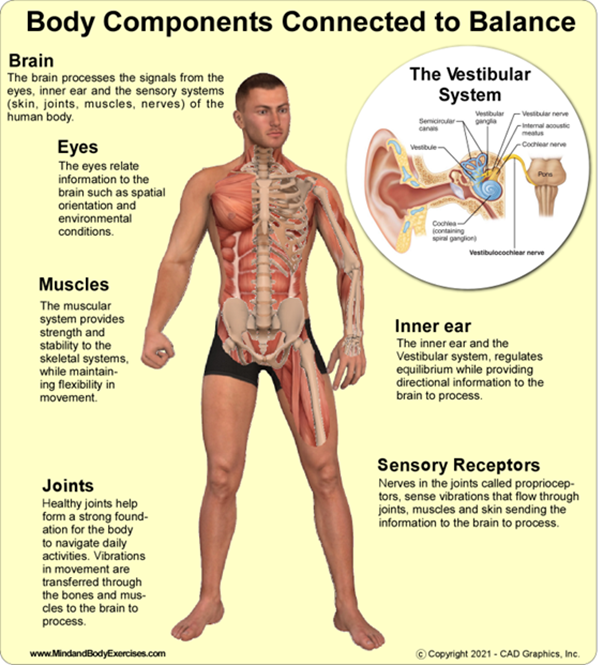
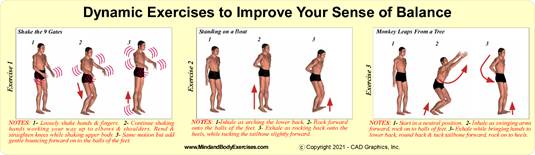
  • How: The ability to maintain body position while standing still or moving. Balance training includes exercises like yoga, Tai Chi, or standing on one leg.
  • Why: Balance is especially important for functional fitness and preventing falls, particularly as we age. It also supports better posture and coordination.
  • How: The ability to exert a maximal amount of force in the shortest possible time (a combination of strength and speed). Power is developed through plyometrics, Olympic lifts, and explosive body movements.
  • Why: Power is crucial for activities requiring quick, explosive movements such as sprinting or jumping. It’s key for athletes but also benefits functional movement by improving reaction time and performance in high-intensity tasks.
  • How: The ability to move quickly in a specific direction. Speed can be enhanced through sprint training, interval workouts, and agility drills.
  • Why: Speed is critical for athletic performance but also useful in daily life for tasks that require quick movement or reaction, such as running after a bus or responding to emergencies.
  • How: The ability to change direction quickly and efficiently. Agility training often involves cone drills, ladder drills, and quick lateral movements.
  • Why: Agility is essential for athletes in sports that require fast directional changes. It also benefits non-athletes by improving body control and reducing injury risks during dynamic activities.
  • How: The ability to move or react at the right moment. Timing is often developed through sports, reaction drills, or coordination exercises.
  • Why: Good timing enhances coordination and athletic performance, particularly in sports like tennis, boxing, or baseball where precision is key.
  • How: The ability to regulate and maintain body position and movement. Control is improved through strength, balance, and proprioception exercises.
  • Why: Control is necessary for mastering technique in physical activities. It enhances precision, reduces the risk of injury, and helps in maintaining stability and proper form during movements.
  • How: The speed at which an individual can respond to a stimulus. Reaction time can be improved through drills involving quick decision-making or unexpected changes.
  • Why: Faster reaction time is beneficial for safety and athletic performance, allowing a quicker response to environmental changes or dynamic sports scenarios.
  1. For General Health and Longevity:
    • Strength, Flexibility, Endurance, Balance
      • These components promote muscle and bone health, reduce injury risk, and improve heart health and mobility, all crucial for everyday functionality.
  2. For Athletic Performance:
    • Power, Speed, Agility, Coordination, Endurance
      • Athletes benefit most from power and agility to enhance performance in sports, where explosive movements and quick reactions are needed.
  3. For Functional Fitness and Injury Prevention:
    • Balance, Coordination, Strength, Control, Timing
      • These aspects ensure better stability, posture, and fluid movements, which are essential for performing daily tasks and preventing accidents.

Each component of fitness is interrelated and essential for a well-rounded approach to health and performance. Prioritization should be tailored to personal goals, whether that’s improving overall health, preparing for sports, or maintaining functional mobility as we age. We really can’t state that one aspect is most important, such as balance, which, if someone has none, cannot achieve the others. Or without coordination, one cannot develop more strength or more flexibility, correct? Or without strength, there is no balance to stabilize? All are important and cannot be under-prioritized, correct?

The various facets of fitness are interconnected, and it’s difficult to isolate one as the most important because they all support and influence each other.

  • Balance is essential for safe and effective movement, but it often requires a certain amount of strength and coordination to maintain.
  • Strength helps with balance and supports mobility, but flexibility is needed to allow the muscles and joints to move freely.
  • Coordination is necessary to execute movements smoothly, but strength and timing also influence how well we can control those movements.

In essence, none of these components can be fully developed in isolation. Each contributes to overall fitness and functional capacity, so under-prioritizing any one of them could limit progress in other areas. It’s important to approach fitness in a holistic way, ensuring that all aspects are integrated and developed according to personal goals and needs.

I look forward to further sharing more of my message by partnering with hospitals, wellness centers, VA centers, schools on all levels, businesses, and individuals who see the value in building a stronger nation through building a healthier population.

I also have hundreds of FREE education video classes, lectures, and seminars available on my YouTube channel at:

https://www.youtube.com/c/MindandBodyExercises

Many of my publications can be found on Amazon at:

http://www.Amazon.com/author/jimmoltzan

My holistic health blog is available at:

https://mindandbodyexercises.wordpress.com/

http://www.MindAndBodyExercises.com

Mind and Body Exercises on Google: https://posts.gle/aD47Qo

Jim Moltzan

407-234-0119

Are Food Preservatives “Preserving” Health Risks in the Body?

The potential for preservatives and other food additives to have long-term effects on human health has indeed been a subject of research and debate. While the preservatives used in food are generally approved by regulatory agencies and deemed safe within established limits, or “generally recognized as safe” (GRAS), there is concern about how these substances might interact with the human body, particularly with prolonged exposure or high consumption levels.

Many preservatives target microbial cells rather than human cells, and they often break down or are excreted from the body. However, some studies suggest certain preservatives might contribute to adverse health effects, such as inflammation, gut microbiome disruption, or oxidative stress (Zhou et al., 2023).

Some examples:

  • Sodium benzoate is widely used in acidic foods like sodas and fruit juices. Research has shown that under certain conditions, it can convert to benzene, a known carcinogen, especially when combined with ascorbic acid (vitamin C) (McNeal et al., 1993). The risk is generally low, but it raises concerns about high levels of consumption.
  • Nitrates and nitrites, commonly found in processed meats, can convert into nitrosamines in the stomach, compounds associated with an increased risk of cancers such as colorectal cancer (Song et al., 2015).
  • BHT and BHA are synthetic antioxidants used in fats and oils to prevent rancidity. There is some evidence that they may act as endocrine disruptors and impact cellular processes, although results are mixed (Pop et al., 2013).

The body’s detoxification systems, primarily the liver and kidneys, are generally effective at processing and eliminating many of these compounds. However, researchers argue that cumulative effects from chronic exposure to multiple food additives, combined with other dietary and lifestyle factors, could potentially pose health risks over time (Witkowska et al., 2021). We have known for many decades that a balanced diet with minimally processed foods can help to reduce exposure to these additives, though experts always state that more research is needed to understand their long-term impacts fully. The FDA finally banned red dye in the U.S. for use in cosmetics back in 1990 but not in foods until just January of 2025 (Davis, 2025).

_____

References

  • Zhou, X., Qiao, K., Wu, H., & Zhang, Y. (2023). The Impact of Food Additives on the Abundance and Composition of Gut Microbiota. Molecules (Basel, Switzerland), 28(2), 631. https://doi.org/10.3390/molecules28020631
  • McNeal, T. P., Nyman, P. J., Benson, J. M., & Diachenko, G. W. (1993). Survey of benzene in foods by using headspace concentration techniques and capillary gas chromatography. Journal of AOAC International, 76(6), 1213-1219.
  • Song, P., Wu, L., & Guan, W. (2015). Dietary Nitrates, Nitrites, and Nitrosamines Intake and the Risk of Gastric Cancer: A Meta-Analysis. Nutrients, 7(12), 9872–9895. https://doi.org/10.3390/nu7125505
  • Pop, A., Kiss, B., & Loghin, F. (2013). Endocrine disrupting effects of butylated hydroxyanisole (BHA – E320). Clujul medical (1957), 86(1), 16–20.
  • Witkowska, D., Słowik, J., & Chilicka, K. (2021). Heavy Metals and Human Health: Possible Exposure Pathways and the Competition for Protein Binding Sites. Molecules (Basel, Switzerland), 26(19), 6060. https://doi.org/10.3390/molecules26196060
  • Davis, Josh, How Red Dye 3 finally got banned in foods, according to a dietitian. (2025). https://www.houstonmethodist.org/blog/articles/2024/may/is-red-dye-no-3-in-food-bad-for-you-a-dieticians-take/

I teach and offer lectures about holistic health, physical fitness, stress management, human behavior, meditation, phytotherapy (herbs), music for healing, self-massage (acupressure), Daoyin (yoga), qigong, tai chi, and baguazhang.

Please contact me if you, your business, organization, or group, might be interested in hosting me to speak on a wide spectrum of topics relative to better health, fitness, and well-being.

I look forward to further sharing more of my message by partnering with hospitals, wellness centers, VA centers, schools on all levels, businesses, and individuals who see the value in building a stronger nation through building a healthier population.

I also have hundreds of FREE education video classes, lectures, and seminars available on my YouTube channel at:

https://www.youtube.com/c/MindandBodyExercises

Many of my publications can be found on Amazon at:

http://www.Amazon.com/author/jimmoltzan

My holistic health blog is available at:

https://mindandbodyexercises.wordpress.com/

http://www.MindAndBodyExercises.com

Mind and Body Exercises on Google: https://posts.gle/aD47Qo

Jim Moltzan

407-234-0119

Sleep Deprivation

Sleep is a natural regularly occurring physiological function, where humans and other animals reduce physical and mental activity, lessen responsiveness to stimuli, and particular patterns of brain activity occur (Ettinger 2018). Prolonged lack of sleep or sleep deprivation can cause impaired memory formation as well as adverse effects on the brain’s other cognitive functions such as learning, language, reason, and perception. Sleep deprivation has also been linked to significant mental diseases, such as depression, psychosis, and bipolar disorder (Horowitz, 2020). Physical problems attributed to consistent lack of sleep include weakening of the immune system, headaches, heart disease, fainting, weight gain or weight loss, blurred vision, and hernias. Other related ailments may include obesity, cancer, stroke, asthma, high blood pressure, diabetes, arthritis, and kidney failure. Severe sleep deprivation in humans can also be fatal, where a rare neurological ailment called fatal familial insomnia, results in damage to areas of the thalamus
(Horowitz, 2020).


Studies with REM-deprived sleep participants showed the effects of decreased ability to concentrate on tasks, increased irritability, hostility, anxiousness, and aggressiveness. Studies also showed that REM-starved participants entered into REM sleep almost as soon as they were permitted to nod off, over the course of a one-week experiment. Participants experienced a REM rebound effect, where they spent roughly 50 percent more time in REM than they did before the start of the experiment. This REM rebound effect seems to occur immediately after a duration of forced wakefulness during a night’s sleep. Physiological changes in animals have been observed in other studies regarding REM deprivation, with effects of weight loss, deteriorated appearance, skin lesions, increased energy expenditure, decreased body temperature, and even death. Researchers think that if humans experienced similar circumstances of sleep deprivation used in animal studies, similar outcomes would present (Ettinger 2018).

Studies show that sleep is necessary, but exactly why is not clear. Theories exist that we require sleep to conserve energy, avoid predation, and memory aid. However, none of these theories are widely accepted by psychologists. Another theory is that sleep helps in mental and physical restoration. Sleep is thought to restore resources that are drained during our daily activities. Studies show that people often sleep longer after particularly tiring events helps to support this theory. Unsettled evidence shows that specific types of tissue restoration might happen during sleep. Growth hormone is secreted at increased levels during Stage 4 sleep as well as brain neurotransmitters possibly being restored during sleep. Other research indicates that sleep is essential for brain homeostasis. Additionally, research suggests that metabolic waste that accumulates from neural activity is eliminated from the brain and cerebral spinal fluid, while only occurring during sleep (Ettinger 2018). This theory has merit, as other relative studies offer further evidence of sleep quality affecting health and well-being, specifically with intensive care unit (ICU) patients (Pisani, 2015). I find it hard to discredit this theory, just based on personal experience with almost everyone I have ever known or met, expressing how much more restored, refreshed, and energetic they are when they have regular quality sleep.


I feel that American culture in general, does not pay much attention to preventing disease and illness, let alone the specific issue of sleep deprivation. We have gradually grown into a nation where we live for our pleasures today, with little regard for the consequences that will come tomorrow. Many see modern allopathic medicine and its many pharmaceutical options, as the only path to fix all of our ills. There is a plethora of medications that we can take to keep us awake when we don’t get enough sleep. Conversely, we also have a wide variety of other pharmaceuticals to help us sleep when we are too awake, anxious, or stressed.

I see many college-aged kids, who are learning how to manage and navigate their college lives of studies and social life, while also trying to stay safe and healthy in the process. I don’t really think the issue of college student sleep deprivation has changed much over the last few decades, as far as young adults exercising their independence and learning of their limits. What has changed, I believe is the acceptance of legal as well as illegal drugs being used to manage the ups and downs of coping with the on-campus “college life”. Additionally, the last 2 years of dealing with the COVID-19 pandemic have greatly added to the recipe for potential psychological issues. Many people of all ages have experienced stress as they attempt to balance their relative circumstances. Many people were inside more which may have led to a more sedentary lifestyle, eating more poor-quality food, drinking more alcohol, consuming more recreation and medicinal drugs, and other issues that can affect the quality of sleep. Consequently, I think the more relative issue that is yet to unfold, is how has the management of the pandemic affected sleep quality across many demographics? This topic will probably take years to study in order to draw any logical conclusions.

References:
Ettinger, R. H. (2018). Psychology: The Science of Behavior (6th ed.). BVT Publishing.


Horowitz, D. (2020). Sleep deprivation. Salem Press Encyclopedia of Health.


Pisani, M. (2015). Sleep in the intensive care unit: An oft-neglected key to health restoration.


Heart & Lung : The Journal of Critical Care, 44(2), 87. https://doi-org.northernvermont.idm.oclc.org/10.1016/j.hrtlng.2015.01.007

I teach and offer lectures about holistic health, physical fitness, stress management, human behavior, meditation, phytotherapy (herbs), music for healing, self-massage (acupressure), Daoyin (yoga), qigong, tai chi, and baguazhang.

Please contact me if you, your business, organization, or group, might be interested in hosting me to speak on a wide spectrum of topics relative to better health, fitness, and well-being.

I look forward to further sharing more of my message by partnering with hospitals, wellness centers, VA centers, schools on all levels, businesses, and individuals who see the value in building a stronger nation through building a healthier population.

I also have hundreds of FREE education video classes, lectures, and seminars available on my YouTube channel at:

https://www.youtube.com/c/MindandBodyExercises

Many of my publications can be found on Amazon at:

http://www.Amazon.com/author/jimmoltzan

My holistic health blog is available at:

https://mindandbodyexercises.wordpress.com/

http://www.MindAndBodyExercises.com

Mind and Body Exercises on Google: https://posts.gle/aD47Qo

Jim Moltzan

407-234-0119