
As someone who has spent a lifetime immersed in holistic health, martial arts, qigong, and Eastern traditions, and authored 30 books on these subjects, I’ve encountered a curious dynamic when trying to share my work with fellow educators, programs, and organizations in the field.
Some colleagues and group leaders have wholeheartedly embraced my books, integrating them into their programs and recommending them to their students as complementary resources. These individuals and institutions see value in offering a broader lens and deeper tools, without fear of comparison or competition. They understand that true education isn’t about controlling a student’s learning but about nurturing it. However, not everyone responds this way.

Some instructors, schools, and even entire systems appear hesitant to recommend or promote my work or that of others outside of their bubble. In certain cases, there seems to be an unspoken fear. A fear that perhaps their students will see gaps in their own curriculum or discover new or more complete skills and insights not offered in their current learning path. It’s as though by acknowledging an external source of knowledge, they feel their authority or cohesion might be challenged.
This has raised an important question that others working in fields of mastery and personal development may also face:
How do we navigate the tension between sharing our work and respecting the insecurities it may awaken in others?
Ego in the Path of Learning
In the very traditions many of us teach, ego is framed as the primary obstacle to growth. Yet even in practices designed to transcend ego, such as tai chi, meditation, and internal martial arts, ego often remains hidden in plain sight. A teacher or institution may subtly discourage external learning, not because the material lacks value, but because they feel exposed or threatened by it.
The deeper truth is this: a student’s growth should never be seen as a threat to a teacher’s role or a program’s identity. If anything, it’s a testament to the strength of their foundational guidance. When leaders cling to authority at the expense of their students’ evolution, they ultimately hinder the very progress their mission was meant to support.
The Role of Loyalty and Closed Systems
Another dimension that often goes unspoken is the role of loyalty. A quality that, while admirable, can sometimes limit a student’s growth when tied to overly hierarchical or ideologically rigid systems.
In some organizations, students are immersed in highly structured environments where authority is concentrated, hierarchies are strict, and questioning the curriculum is discouraged. These groups often cultivate a deep sense of allegiance, whether to a teacher, lineage, ideology, or system. This loyalty can create a powerful psychological barrier, making students feel that seeking information elsewhere is a form of betrayal.
When this dynamic becomes dominant, students may become hesitant to explore new resources, even when those resources are directly aligned with their path of growth. Out of respect or fear, they remain in a tightly controlled learning environment, sometimes unaware of how limited their exposure has become.
This kind of immersion often leads to echo chambers, where the same concepts, styles, and interpretations are reinforced over and over. While repetition is a valid and often necessary method of training, when it replaces diversity of thought and cross-pollination of ideas, the result is stagnation, both intellectually and spiritually.
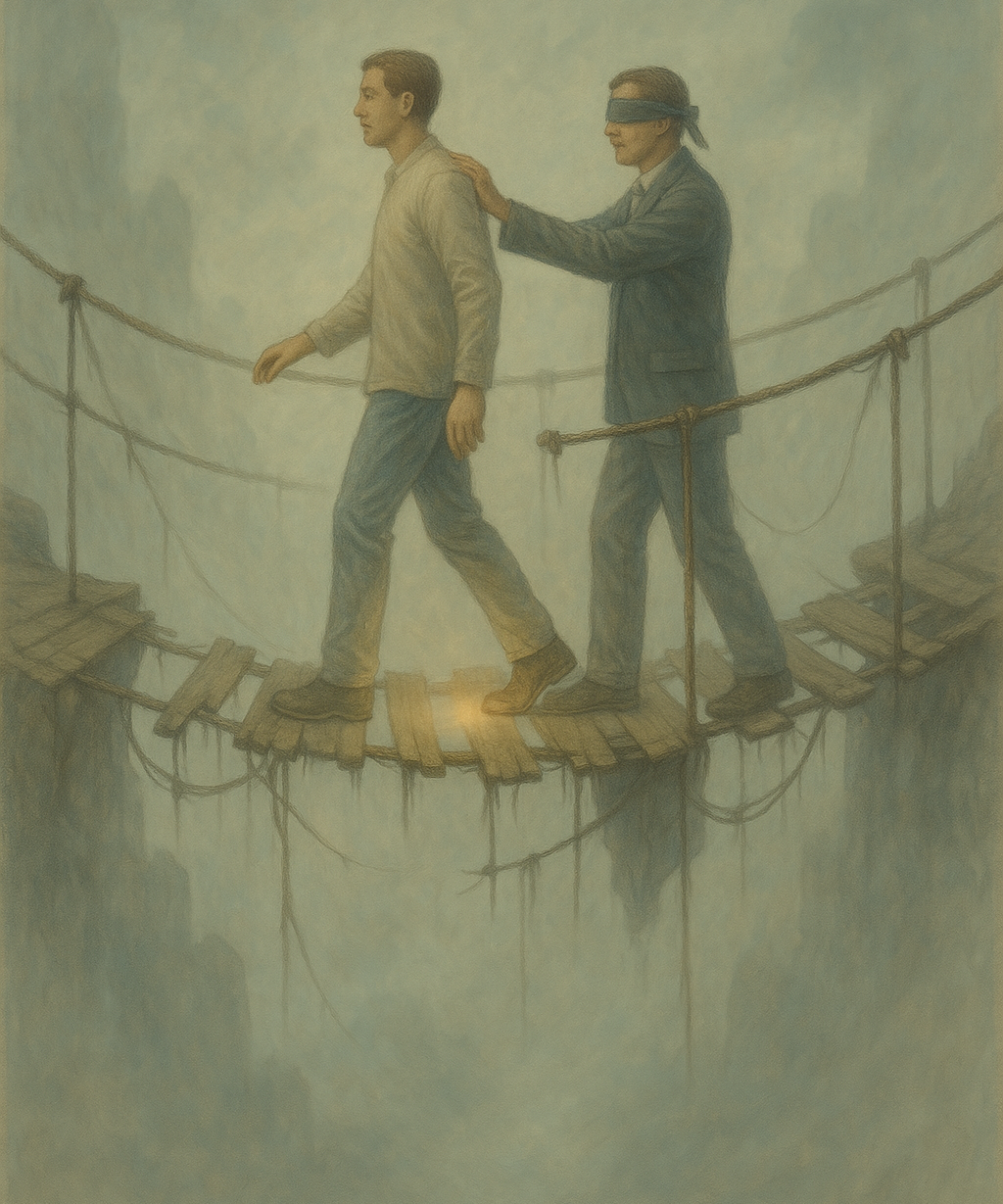
From Competition to Collaboration
The mindset that views another’s work as a threat is rooted in scarcity: the idea that there’s only so much wisdom, attention, or recognition to go around. But those of us who have walked these paths know better. Real mastery breeds humility and a sense of abundance. There is always more to explore, more to share, and more to co-create together.
That’s why I’ve shifted my focus toward collaboration with those who operate from an open, growth-oriented paradigm. To teachers, schools, organizations, and systems that view education as a dynamic and shared mission, and not a personal or ideological pedestal. These “out of the box” thinkers are actively transforming how knowledge is shared, empowering their students with rich, multidimensional resources that enhance the learning journey.

Reframing the Message
To support this shift, I’ve worked to frame my books as teaching companions, not replacements. They’re meant to enhance the student experience, deepen understanding of nuanced principles, and provide historical and philosophical context that may not fit into the rhythm of regular classes or structured programs.
Some schools and instructors have even offered to write forewords for custom editions or bundle my books into their recommended reading lists, helping students understand how the material supports, not replaces their core instruction.
Creating Supportive Alliances
Rather than positioning my work as something to be adopted with hesitation, I aim to foster supportive alliances or mutual relationships with like-minded educators and organizations who are excited about sharing resources for the benefit of the student body. This spirit of collaboration builds trust and empowers everyone involved.
Sometimes, these collaborations emerge through casual conversations, mutual respect, or shared experiences. Other times, they’re sparked by a school or group seeking to expand its curriculum without reinventing the wheel. My books are here to serve those needs. They are carefully written and researched, richly illustrated, and grounded in lived experience.
Direct to the Seeker
At the same time, I recognize that today’s students are often independent seekers, driven not only by the structure of a school or system, but by curiosity and personal growth. These individuals pursue knowledge through other teachers, books, online resources, workshops, and direct inquiry. They are the ones finding my materials, using them to deepen their practice, and reaching out with appreciation and questions.
And that’s where my focus continues to grow in serving the serious student, the progressive educator, school, or wellness program that wants to support them.
Closing Thoughts
If anyone has created something meaningful, rooted in truth and cultivated through experience, it will find its audience. Not everyone will embrace it at first. Some may resist it. But the people and organizations that are ready will not only welcome it, but they’ll also help it flourish. In time, the strength of offering additional resources will speak louder than any insecurity.

I look forward to further sharing more of my message by partnering with hospitals, wellness centers, VA centers, schools on all levels, businesses, and individuals who see the value in building a stronger nation through building a healthier population.
I also have hundreds of FREE education video classes, lectures, and seminars available on my YouTube channel at:
https://www.youtube.com/c/MindandBodyExercises
Many of my publications can be found on Amazon at:
http://www.Amazon.com/author/jimmoltzan
My holistic health blog is available at:
https://mindandbodyexercises.wordpress.com/
http://www.MindAndBodyExercises.com
Mind and Body Exercises on Google: https://posts.gle/aD47Qo
Jim Moltzan
407-234-0119


 United Martial Arts Association