Better Breathing – University Club Holistic Health Discussion 11-14-2024

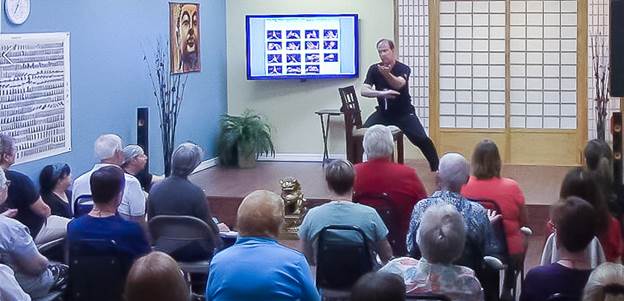
This video presents an in-depth discussion about the significance of breathing, particularly mindful and diaphragmatic breathing, as taught through martial arts practices such as Tai Chi and Qigong (chi gong). As an experienced martial arts and qigong instructor, I explained how breathing influences both physiological functions and mental states, emphasizing stress management and overall health.

Throughout the talk, the connection between breathing techniques and various health aspects like nervous system regulation, emotional balance, and physical fitness are explored. Practical guidance on how to breathe properly through the nose, from the diaphragm, and at a slower rate, is provided, alongside explanations of physiological responses to stress and relaxation. I integrate traditional Eastern perspectives like Traditional Chinese Medicine and Indian pranayama with Western science, offering a holistic view of breath as life force and energy circulation.

Various breathing exercises, including the well-known “box breathing” technique popularized by Navy SEALs, are demonstrated. The talk also covers how body posture, muscle engagement, and even acupressure points on the wrist can enhance the effectiveness of breathing techniques for reducing stress. The benefits of breath control extend beyond physical health to include emotional well-being by triggering the release of positive neurochemicals such as dopamine, serotonin, oxytocin, and endorphins.

Viewers and attendees are encouraged to incorporate these breathing habits into daily life, regardless of age or mobility, for gradual but significant health improvements. The presentation references follow-up classes on topics such as bone health, balance, and mental awareness, underscoring the integrated approach to holistic wellness.

Breathing as a Gateway to Nervous System Regulation: The way we breathe directly influences the autonomic nervous system, shifting the balance between sympathetic (stress/fight or flight) and parasympathetic (relaxation/rest and digest) responses. Deep, slow, diaphragmatic breathing promotes parasympathetic dominance, effectively calming the heart rate and reducing cortisol and adrenaline production. This “biohack” empowers individuals to consciously modulate stress rather than passively endure it.

Diaphragmatic Breathing Optimizes Lung Capacity and Oxygenation: Breathing from the diaphragm rather than shallow chest breathing utilizes more of the lung’s capacity, encouraging better oxygen exchange and carbon dioxide elimination. This improves cellular respiration efficiency and energy production. Additionally, diaphragmatic breathing activates muscles beyond the diaphragm, including neck and rib muscles, enhancing lung expansion and circulation.

Nasal Breathing is Superior to Mouth Breathing: Breathing through the nose warms and filters air, increases nitric oxide production (a vasodilator improving blood flow), and supports moistening the airways. Mouth breathing tends to be shallow and less efficient, leading to dry mouth and potentially altered facial structure in children over time. Nasal breathing contributes to a slower, deeper breath pattern, essential for effective stress management and respiratory health.

Integration of Eastern Medicine and Western Physiology: The talk bridges traditional Chinese medicine’s concept of Qi (life force) and acupuncture meridians with scientific understandings of respiratory function and neurochemistry. This integrative view enriches the appreciation of breathing not just as a mechanical act, but as a method of modulating energy flow, emotional state, and health outcomes. Practices such as Tai Chi harness these ideas physically and mentally through movement and breath synchronization.

Box Breathing as a Mental and Physiological Tool: The “box breathing” technique engages both the breath and the mind to create a focused, rhythmic pattern that promotes relaxation and mental clarity. It is effective for reducing anxiety in high-stress professions (e.g., Navy SEALs) and can be adapted for everyday use. By focusing attention on the breath cycle, it breaks negative thought loops, anchors the mind, and physically signals the nervous system to shift towards calmness.

Physical Posture and Movement Enhance Breath Quality: Posture, spinal flexibility, and full-body engagement support deeper breathing. Twisting movements improve the elasticity of costal and vertebral joints, enhancing lung expansion capacity. Similarly, maintaining proper seated posture (e.g., sitting toward the edge of a chair with feet flat and relaxed shoulders) facilitates diaphragmatic breathing. Incorporating movements from disciplines like Tai Chi or yoga fosters holistic respiratory function.

Age and Breathing: Practical Benefits at Any Stage of Life: While lung and muscular function naturally decline with age, adopting breathing practices can slow that decline and improve quality of life at any age. Even individuals in their 60s and beyond can see meaningful improvements in stress reduction, oxygenation, and mental clarity by practicing mindful breathing consistently. The talk underscores lifelong learning and self-awareness as keys to ongoing health optimization.

Highlights

  • Daily mindful breathing through the nose and diaphragm improves physical and mental health.
  • Proper breathing slows down heart rate, calms the nervous system, and reduces stress hormones.
  • Box breathing (4 seconds inhale, hold, exhale, hold) helps anchor thoughts and manage anxiety.
  • Breathing influences brain chemistry, promoting dopamine, serotonin, oxytocin, and endorphins.
  • Wrist acupressure combined with breathing techniques can relieve anxiety and promote circulation.
  • Eastern traditions like Tai Chi and Qigong emphasize breath as vital energy or life force.
  • It’s never too late to benefit from improved breathing for longevity and well-being at any age.

The video provides a comprehensive foundation on how mindful breathing practices can be used as a simple yet powerful tool to enhance physical health, mental well-being, and emotional balance, drawing from traditional and modern knowledge systems. It encourages self-awareness, consistent practice, and integration of breath work into everyday life for lasting benefits.

The Interconnectedness of Physical Fitness Aspects

The many facets of fitness can be prioritized depending on individual goals and needs. Below is a list of key fitness components, with explanations of how and why each is important, and their order of prioritization based on general health, athletic performance, and functional movement.

  • How: The ability of muscles to exert force. Strength is developed through resistance training, such as weightlifting or bodyweight exercises.
  • Why: Strength forms the foundation for most physical activities. It supports bone health, maintains muscle mass, aids in balance, and helps prevent injury by stabilizing joints and improving posture.
  • How: The range of motion around a joint or group of joints. Flexibility is improved through stretching exercises (static, dynamic, or PNF (Proprioceptive Neuromuscular Facilitation).
  • Why: Flexibility helps prevent injury by allowing muscles to move more freely. It supports overall mobility, reduces muscle stiffness, and aids in the recovery process. It’s essential for maintaining functional movement, especially as we age.
  • How: The ability to synchronize multiple body movements smoothly and efficiently. Coordination can be developed through balance exercises, agility drills, or sports.
  • Why: Coordination is crucial for functional fitness, sports performance, and injury prevention. It allows for fluid movements and better control of the body in daily activities.
  • How: The ability of the heart and lungs to deliver oxygen to working muscles during sustained physical activity. It’s improved through aerobic exercises like running, swimming, or cycling.
  • Why: Cardiovascular endurance is vital for overall health. It helps lower the risk of heart disease, boosts energy levels, and enhances the body’s ability to perform sustained tasks with less fatigue.
  • How: The ability to maintain body position while standing still or moving. Balance training includes exercises like yoga, Tai Chi, or standing on one leg.
  • Why: Balance is especially important for functional fitness and preventing falls, particularly as we age. It also supports better posture and coordination.
  • How: The ability to exert a maximal amount of force in the shortest possible time (a combination of strength and speed). Power is developed through plyometrics, Olympic lifts, and explosive body movements.
  • Why: Power is crucial for activities requiring quick, explosive movements such as sprinting or jumping. It’s key for athletes but also benefits functional movement by improving reaction time and performance in high-intensity tasks.
  • How: The ability to move quickly in a specific direction. Speed can be enhanced through sprint training, interval workouts, and agility drills.
  • Why: Speed is critical for athletic performance but also useful in daily life for tasks that require quick movement or reaction, such as running after a bus or responding to emergencies.
  • How: The ability to change direction quickly and efficiently. Agility training often involves cone drills, ladder drills, and quick lateral movements.
  • Why: Agility is essential for athletes in sports that require fast directional changes. It also benefits non-athletes by improving body control and reducing injury risks during dynamic activities.
  • How: The ability to move or react at the right moment. Timing is often developed through sports, reaction drills, or coordination exercises.
  • Why: Good timing enhances coordination and athletic performance, particularly in sports like tennis, boxing, or baseball where precision is key.
  • How: The ability to regulate and maintain body position and movement. Control is improved through strength, balance, and proprioception exercises.
  • Why: Control is necessary for mastering technique in physical activities. It enhances precision, reduces the risk of injury, and helps in maintaining stability and proper form during movements.
  • How: The speed at which an individual can respond to a stimulus. Reaction time can be improved through drills involving quick decision-making or unexpected changes.
  • Why: Faster reaction time is beneficial for safety and athletic performance, allowing a quicker response to environmental changes or dynamic sports scenarios.
  1. For General Health and Longevity:
    • Strength, Flexibility, Endurance, Balance
      • These components promote muscle and bone health, reduce injury risk, and improve heart health and mobility, all crucial for everyday functionality.
  2. For Athletic Performance:
    • Power, Speed, Agility, Coordination, Endurance
      • Athletes benefit most from power and agility to enhance performance in sports, where explosive movements and quick reactions are needed.
  3. For Functional Fitness and Injury Prevention:
    • Balance, Coordination, Strength, Control, Timing
      • These aspects ensure better stability, posture, and fluid movements, which are essential for performing daily tasks and preventing accidents.

Each component of fitness is interrelated and essential for a well-rounded approach to health and performance. Prioritization should be tailored to personal goals, whether that’s improving overall health, preparing for sports, or maintaining functional mobility as we age. We really can’t state that one aspect is most important, such as balance, which, if someone has none, cannot achieve the others. Or without coordination, one cannot develop more strength or more flexibility, correct? Or without strength, there is no balance to stabilize? All are important and cannot be under-prioritized, correct?

The various facets of fitness are interconnected, and it’s difficult to isolate one as the most important because they all support and influence each other.

  • Balance is essential for safe and effective movement, but it often requires a certain amount of strength and coordination to maintain.
  • Strength helps with balance and supports mobility, but flexibility is needed to allow the muscles and joints to move freely.
  • Coordination is necessary to execute movements smoothly, but strength and timing also influence how well we can control those movements.

In essence, none of these components can be fully developed in isolation. Each contributes to overall fitness and functional capacity, so under-prioritizing any one of them could limit progress in other areas. It’s important to approach fitness in a holistic way, ensuring that all aspects are integrated and developed according to personal goals and needs.

I look forward to further sharing more of my message by partnering with hospitals, wellness centers, VA centers, schools on all levels, businesses, and individuals who see the value in building a stronger nation through building a healthier population.

I also have hundreds of FREE education video classes, lectures, and seminars available on my YouTube channel at:

https://www.youtube.com/c/MindandBodyExercises

Many of my publications can be found on Amazon at:

http://www.Amazon.com/author/jimmoltzan

My holistic health blog is available at:

https://mindandbodyexercises.wordpress.com/

http://www.MindAndBodyExercises.com

Mind and Body Exercises on Google: https://posts.gle/aD47Qo

Jim Moltzan

407-234-0119

The Cracked Stone Revealing Gold

Kintsugi as a Metaphor for Rebirth, Resilience, and Post Traumatic Growth

Across cultures and eras, humans have sought metaphors capable of explaining how suffering can coexist with strength, and how rupture can give rise to renewal. One of the most enduring and elegant metaphors for this process is Kintsugi, the Japanese art of repairing broken pottery with lacquer mixed with powdered gold. Rather than concealing fractures, Kintsugi highlights them, transforming damage into a defining feature of the object’s beauty and value. This practice offers a powerful symbolic lens through which to examine rebirth, resilience, and post traumatic growth (PTG).

Unlike narratives that portray healing as a return to an unbroken state, Kintsugi asserts that transformation occurs because of breakage, not in spite of it. When applied to human development, this metaphor challenges deficit-based models of trauma recovery and invites a reframing of adversity as a potential catalyst for meaning, integration, and psychological maturation (Tedeschi & Calhoun, 2004).

Kintsugi and the Philosophy of Visible Repair

At its core, Kintsugi is rooted in wabi-sabi, a Japanese aesthetic philosophy that honors impermanence, imperfection, and incompleteness. Rather than valuing symmetry or flawlessness, wabi-sabi recognizes authenticity as emerging through wear, age, and use. In Kintsugi, the repaired object does not attempt to mimic its former state. The break is acknowledged, traced, and sealed with care.

This philosophical orientation mirrors contemporary trauma psychology, which increasingly recognizes that healing does not involve erasing traumatic experience, but integrating it into a broader and more coherent life narrative (Joseph & Linley, 2006). The repaired vessel becomes stronger at the site of repair, not because it avoided damage, but because it was attended to with intention, patience, and skill.

The Cracked Stone as a Universal Symbol

The image of a cracked stone revealing gold extends the Kintsugi metaphor beyond pottery into the natural and existential realm. Stone is typically associated with permanence, durability, and resistance. When stone fractures, it violates expectations of stability, much as trauma disrupts assumptions about safety, identity, and predictability (Janoff-Bulman, 1992). Yet within geological processes, fractures often expose veins of mineral wealth. Pressure, heat, and tectonic stress are precisely the forces that allow gold to form and surface.

This parallel aligns closely with hormetic models of adaptation, in which controlled stress promotes strength and refinement, while unregulated stress overwhelms biological and psychological systems (Mattson, 2008). In both geology and human development, transformation requires force, but also time, containment, and structure.

Trauma as Rupture of Meaning

Psychological trauma is not defined solely by exposure to stress or adversity, but by the shattering of meaning structures that organize perception and identity (Park, 2010). Core beliefs about fairness, safety, autonomy, and continuity are disrupted. This rupture is often experienced as fragmentation, emotional dysregulation, and loss of coherence.

From a Kintsugi perspective, trauma represents the moment of breakage. However, breakage alone does not determine outcome. Without repair, cracks propagate. With skillful integration, they become lines of strength. Post traumatic growth does not deny pain or minimize suffering. Instead, it acknowledges that the reconstruction of meaning can lead to new values, deeper relationships, and an expanded sense of purpose (Tedeschi & Calhoun, 2004).

Gold as Meaning, Not Positivity

In Kintsugi, gold does not symbolize denial or forced optimism. It represents investment. Gold is rare, costly, and deliberately applied. Similarly, psychological integration requires effort, reflection, and often guidance. Meaning is not automatically extracted from trauma. It is forged through conscious engagement with suffering, supported by regulation, social connection, and narrative reconstruction (Park, 2010).

This distinction is critical. Superficial positivity can invalidate lived experience and impede recovery. The gold of Kintsugi does not erase the crack. It honors it. In PTG research, growth is associated with deliberate meaning making, not with avoidance or suppression of distress (Joseph & Linley, 2006).

Resilience Versus Post Traumatic Growth

Resilience and post traumatic growth are often conflated, but they represent distinct processes. Resilience refers to the capacity to maintain or regain functioning in the face of adversity. Post traumatic growth refers to transformation beyond baseline functioning (Southwick et al., 2014).

In metaphorical terms, resilience preserves the vessel. Post traumatic growth reshapes it. The cracked stone repaired with gold does not return to its prior state. It becomes something new, marked by experience and enriched by integration. This distinction reframes trauma recovery as a developmental process rather than a corrective one.

The Role of Time and Patience

Kintsugi is not a rapid repair. The process requires drying, curing, and careful layering. Similarly, psychological integration unfolds over time. Neurobiological recovery, emotional regulation, and identity reconstruction are gradual processes shaped by repetition and consistency (van der Kolk, 2014).

Time alone does not heal trauma. However, time combined with regulated exposure, embodied practices, and supportive relationships allows the nervous system to recalibrate and the mind to reorganize experience (Porges, 2011). The cracked stone does not reveal gold immediately. It does so through sustained engagement with pressure and care.

Embodiment and the Materiality of Healing

Kintsugi is a tactile art. It involves hands, materials, and physical presence. This embodied dimension parallels somatic approaches to trauma recovery, which recognize that traumatic memory is stored not only cognitively but physiologically (van der Kolk, 2014). Repair occurs not solely through insight, but through restoring a sense of safety, agency, and bodily coherence.

Practices that involve posture, breath, movement, and sensory awareness serve as modern equivalents of the craftsman’s work. They provide structure to contain experience and facilitate integration, allowing psychological gold to be laid into somatic cracks.

Rebirth as Integration, Not Replacement

The concept of rebirth is often misunderstood as starting over. The Kintsugi metaphor rejects this notion. Rebirth does not mean discarding the past but incorporating it into a renewed whole. The vessel remembers its fracture. The stone retains its fault lines.

Post traumatic growth reflects this integrated rebirth. Individuals report increased appreciation for life, clarified priorities, enhanced relational depth, and a more grounded sense of self (Tedeschi & Calhoun, 2004). These outcomes do not emerge despite trauma, but through its conscious integration.

Cultural and Ethical Implications

The Kintsugi metaphor carries ethical weight. It challenges cultures that stigmatize vulnerability or equate worth with flawlessness. By highlighting repair rather than concealment, it affirms the dignity of lived experience and reframes suffering as a potential source of wisdom.

In therapeutic, educational, and communal contexts, this metaphor supports trauma-informed approaches that emphasize agency, respect, and long-term development rather than symptom suppression. It invites systems to ask not how to hide cracks, but how to support meaningful repair.

The cracked stone revealing gold offers a profound metaphor for rebirth, resilience, and post traumatic growth. It affirms that damage does not negate value, that fracture does not preclude strength, and that transformation is not a return to innocence but a movement toward integration.

Kintsugi teaches that what has been broken can become more meaningful, not because suffering is desirable, but because repair, when undertaken with care and intention, reveals capacities that would otherwise remain hidden. In this sense, post traumatic growth is not an exception to human development. It is one of its deepest expressions.

References:

Janoff-Bulman, R. (1992). Shattered assumptions: Toward a new psychology of trauma. Free Press.

Joseph, S., & Linley, P. A. (2006). Growth following adversity: Theoretical perspectives and implications for clinical practice. Clinical Psychology Review, 26(8), 1041–1053. https://doi.org/10.1016/j.cpr.2005.12.006

Mattson, M. P. (2008). Hormesis defined. Ageing Research Reviews, 7(1), 1–7. https://doi.org/10.1016/j.arr.2007.08.007

Park, C. L. (2010). Making sense of the meaning literature: An integrative review of meaning making and its effects on adjustment to stressful life events. Psychological Bulletin, 136(2), 257–301. https://doi.org/10.1037/a0018301

Porges, S. W. (2011). The polyvagal theory: Neurophysiological foundations of emotions, attachment, communication, and self regulation. W. W. Norton.

Southwick, S. M., Bonanno, G. A., Masten, A. S., Panter-Brick, C., & Yehuda, R. (2014). Resilience definitions, theory, and challenges. European Journal of Psychotraumatology, 5, 25338. https://doi.org/10.3402/ejpt.v5.25338

Tedeschi, R. G., & Calhoun, L. G. (2004). Post traumatic growth: Conceptual foundations and empirical evidence. Psychological Inquiry, 15(1), 1–18. https://doi.org/10.1207/s15327965pli1501_01

van der Kolk, B. A. (2014). The body keeps the score: Brain, mind, and body in the healing of trauma. Viking.

Legendary Origins of Tai Chi: Zhang Sanfeng and Daoist Transmission

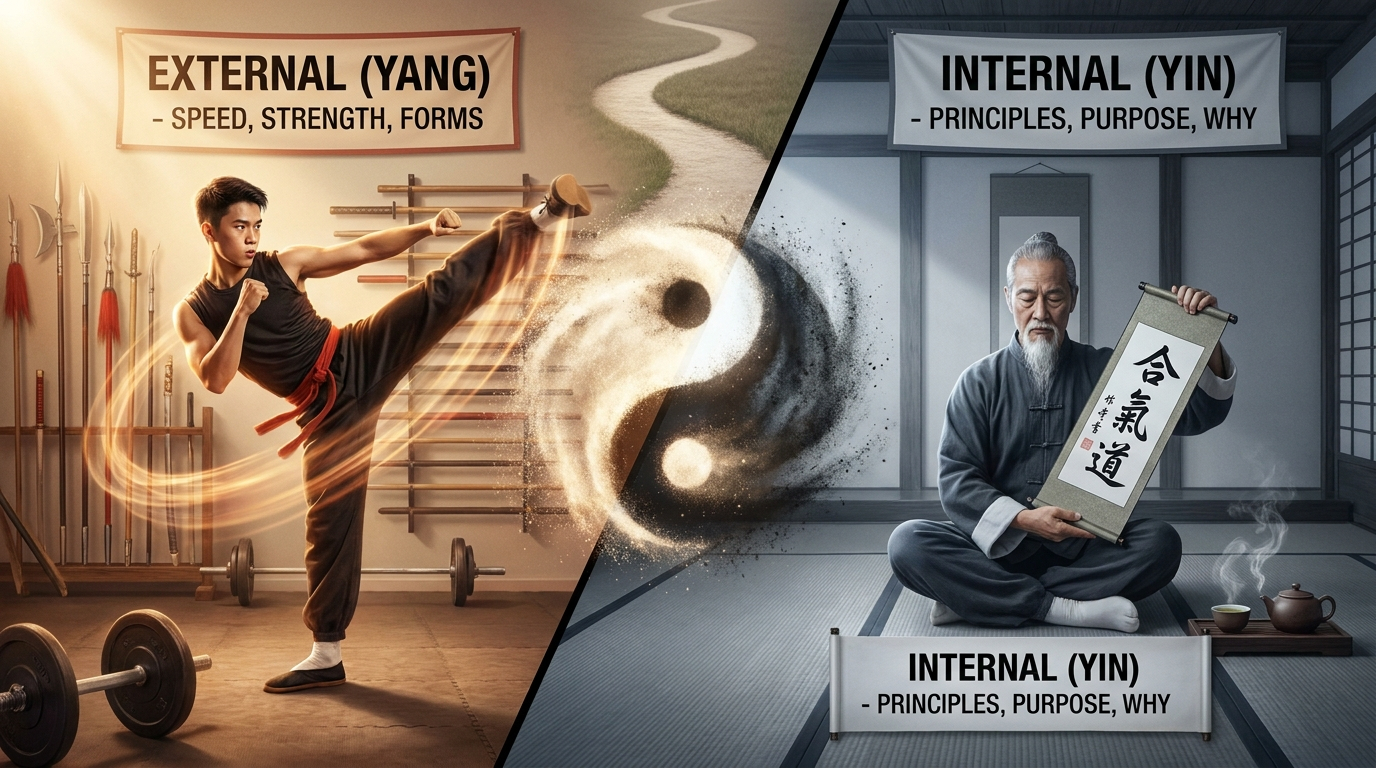
Long before Chen Village records appear in the 17th century, traditional accounts attribute Tai Chi’s creation to the Daoist monk Zhang Sanfeng, often associated with Wudang Mountain. According to legend, Zhang observed a fight between a snake and a crane. The snake yielded and coiled; the crane struck with precision. From this encounter, he is said to have synthesized principles of softness overcoming hardness, a living embodiment of Yin and Yang theory (Henning, 1994; Wile, 1996).

While modern historians generally regard this account as mythological rather than empirically verifiable, its philosophical significance is undeniable. The story reflects core Taijiquan principles:

  • Yielding over resisting
  • Circularity over linear force
  • Softness overcoming rigidity
  • Strategic adaptability

Henning (1994) notes that the Zhang Sanfeng narrative likely emerged during the late Ming and early Qing periods as part of broader cultural movements that sought to root martial systems in Daoist cosmology.

Thus, although Chen style represents the earliest documented system, the conceptual foundations of Tai Chi are traditionally traced to Daoist internal cultivation traditions centuries earlier.


Chen Style: The Foundational Documented System

Chen style originated in Chen Village (Chenjiagou), Henan Province, during the 17th century. It is traditionally attributed to Chen Wangting (1600–1680), a retired Ming dynasty military officer who synthesized battlefield methods, classical philosophy, and health exercises (Wile, 1996).

Chen style preserves features that clearly reflect martial structure:

  • Silk-reeling spirals (chan si jin)
  • Alternation of slow movement and explosive release (fa jin)
  • Low stances
  • Cannon Fist (Pao Chui)
  • Embedded combat applications

Scholars note that Chen style retains overt expressions of issuing power and structural coiling less visible in later styles (Henning, 1994).


Philosophical Foundations Across All Authentic Systems

Regardless of stylistic differences, authentic Tai Chi systems are unified by shared theoretical foundations rooted in classical Chinese cosmology.

Yin and Yang Theory

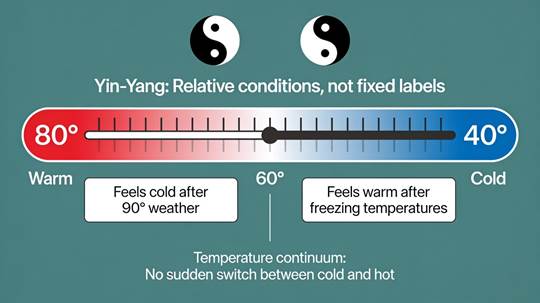
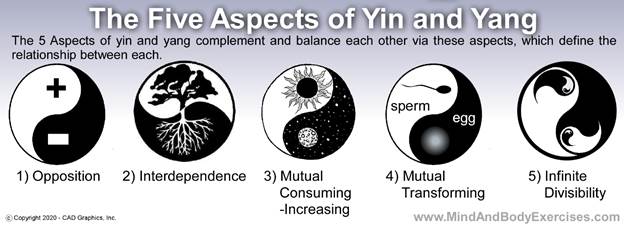
Tai Chi (Taiji) itself refers to the “Supreme Ultimate,” the dynamic interplay of Yin and Yang described in the Yijing (Book of Changes). Every movement in Tai Chi expresses:

  • Substantial and insubstantial
  • Open and close
  • Rising and sinking
  • Full and empty

This alternation is not metaphorical — it is biomechanical, energetic, and tactical.

Wuxing (Five Phases)

The Five Phase theory — Wood, Fire, Earth, Metal, and Water — informs martial strategy, organ theory, and energetic transformation. Although more explicit in some internal arts like Xingyiquan, Wuxing principles underlie Tai Chi’s cyclical power generation and transformational mechanics (Sun, 2003; Wile, 1996).

Bagua (Eight Trigrams)

The Eight Trigrams symbolize dynamic change and directional transformation. Circular stepping, angular redirection, and strategic yielding in Tai Chi mirror Bagua cosmology. Even when not overtly labeled, trigram theory informs structural shifts and directional transitions embedded in form practice.

Thus, while the choreography differs among Chen, Yang, Wu, and Sun styles, their cosmological framework remains consistent.


Yang Style: Adaptation and Public Transmission

Yang Luchan (1799–1872) studied under Chen Changxing and later taught in Beijing (Henning, 1994; Wile, 1996).

Adaptations included:

  • Smoother continuity
  • Reduced explosive emphasis
  • Elevated stances
  • Standardized pacing

His grandson Yang Chengfu formalized the large-frame slow form now widely practiced (Yang, 2005).Yang style reflects pedagogical expansion rather than dilution.


Wu Style: Refinement and Synthesis

Wu Jianquan studied within the Yang lineage and developed a system characterized by:

  • Narrower stance width
  • Slight forward inclination
  • Subtle structural alignment
  • Emphasis on push-hands sensitivity

Wu style reflects internal refinement and biomechanical precision rather than overt amplitude (Henning, 1994).


Sun Style Tai Chi

Sun Lutang (1860–1933) was already an accomplished practitioner of Xingyiquan and Baguazhang before studying Tai Chi. His system integrates principles from these “internal sister arts,” emphasizing:

  • Agile step-follow footwork
  • Upright posture
  • Smooth transitions
  • Strong reliance on intent (Yi)

Sun’s writings illustrate the synthesis of internal martial theory across systems (Sun, 2003). His style demonstrates that Tai Chi’s evolution included both lineage transmission and cross-disciplinary integration.


Why 108? Symbolism and Counting Variations

Traditional long forms are often referred to as “108 postures.” The number 108 carries symbolic significance in Chinese and Buddhist traditions, often representing completeness or cosmic totality (Wile, 1996). However, posture counts vary because:

  • Movements are repeated on both sides
  • Transitional sequences may or may not be counted
  • Different lineages classify postures differently

Thus, identical choreography may be described as 85, 88, 108, or more. Historically, long forms functioned as mnemonic archives for transmitting combat principles and conditioning methods, rather than as standardized numerical routines.


The 24 and 48 Forms: Modern Standardization

In 1956, the Chinese government introduced the 24 Simplified Form, derived primarily from Yang style. Its purpose was public health promotion and ease of instruction during a period of national physical culture reform (Frank, 2006). Repetitions and complex martial sequences were reduced to make the system accessible to large populations.

In 1976, the 48 Form was created as a more technically demanding standardized routine incorporating elements from Chen, Yang, Wu, and Sun styles. It was designed for demonstration and competitive wushu contexts (Frank, 2006).

These shorter forms reflect broader sociopolitical changes:

  • Clan-based transmission → public instruction
  • Martial preservation → health emphasis
  • Village secrecy → national standardization

Evolution Rather Than Dilution

From Chen to Yang to Wu to Sun, Tai Chi evolved in response to changing audiences and historical conditions. While stylistic expression differs in frame size, stance height, and visible power release, the core principles remain consistent:

  • Rooting and structural alignment
  • Whole-body integration
  • Relaxed yet connected movement
  • Intent directing force

Tai Chi is not a static artifact of the past. It is a living system shaped by centuries of adaptation. Its diversity reflects not fragmentation, but resilience

References

Frank, A. (2006). Taijiquan and the search for the little old Chinese man: Understanding identity through martial arts. Palgrave Macmillan.

Henning, S. (1994). Ignorance, Legend and Taijiquan. In Journal of the Chen Style Taijiquan Research Association of Hawaii (Vol. 2, Issue 3, pp. 1–7). https://crnagorataiji.wordpress.com/wp-content/uploads/2015/12/legend-in-tai-chi.pdf

Lutang, S. (2003). A study of Taijiquan. North Atlantic Books.

Wile, D. (1996). Lost T’ai-chi Classics from the Late Ch’ing Dynasty. State University of New York Press. https://doi.org/10.2307/jj.18255579

Yang, J. (2005). The essence and applications of Taijiquan. YMAA Publication Center.

The Iterative Self: How Human Encounters Refine Identity Over Time

Human identity is not static. It is neither a fixed trait nor a finished product. Rather, it is an evolving system continually shaped by interaction. Each encounter, relationship, and exposure to another person serves as a catalyst for subtle psychological recalibration. These recalibrations may be nearly imperceptible in isolation, yet cumulatively they produce profound transformation. In modern language, one might describe this process as a series of “upgrades” or successive versions of the self-emerging through lived experience. Very much the same as how we currently view upgrades to a computer, its operating system or software applications.

This observation is meant to perfectly capture the fluid nature of identity. I chose to eloquently summarize several complex psychological and sociological ideas into a cohesive metaphor. The idea that we are not static beings, but rather perpetual works-in-progress continually shaped by the “data” of human interaction. I find this concept to be quite profound.

Furthermore, I would like to expand upon this concept, exploring the mechanics of how these “upgrades” happen and extending the metaphor of versions and models.

The Human Operating System: An Iterative Process

The comparison to software versions, upgrades, and improved models is quite relevant to modern culture. If our foundational personality, determined by genetics and early childhood, is the “base code” or the operating system (v1.0), then every subsequent interaction acts as a patch, a feature update, or sometimes, a complete system overhaul.

Here is how we can break down this process of refinement through encounter:

1. The Mechanism of the “Upgrade”

How exactly does exposure to another person translate into an internal change?

Osmosis and Mirroring – Often, these adjustments are subconscious. We spend time with someone witty, and we find our own sense of humor sharpening. We hang around someone anxious, and we detect a new hum of nervousness in our own baseline. We “download” their emotional states and behavioral patterns through mirror neurons, adopting features that aren’t natively ours until they become integrated into our code.

The Looking-Glass Self – Sociologist Charles Cooley introduced the concept of the “looking-glass self.” We do not know who we are in a vacuum. We learn who we are by seeing how our actions bounce off other people. Example: You tell a joke you think is funny. The new acquaintance stares blankly. That is critical new data. Your internal model of “what is humorous” receives a minute adjustment based on that feedback failure.

Friction as a Catalyst – Often, the most significant upgrades come not from seamless interactions, but from friction. When we encounter someone whose values or methods diametrically oppose our own, it forces our internal system to run a diagnostic check. We have to actively defend, analyze, or adapt our own viewpoint in response to the challenge.

2. Types of Releases

Not all interactions carry the same weight. By extending my metaphor, I can categorize these encounters:

Minor Patches (v1.1.2 to v1.1.3): These are fleeting encounters, such as with the polite cashier, the person you hold the door for. They reinforce our “social protocols” code, perhaps slightly adjusting our mood, but they don’t change the core programming.

Feature Updates (v1.2 to v1.5): These are friendships, colleagues, or mentors. They introduce new functionality to our personality. From a friend, you might “install” an appreciation for a new genre of music; from a mentor, you might adopt a new framework for problem-solving.

Major Version Releases (v2.0 to v3.0): These are the life-altering relationships: deeply intense romances, traumatic breakups, the birth of a child, or the loss of a loved one. These events dismantle significant portions of the previous code. The person that emerges on the other side often operates so differently that they are unrecognizable from the previous “version.”

3. The Nuance: Not All “Improvements” Feel Good

It is important to recognize that “refinement” or “new model” doesn’t always mean “happier” or “more open.”

Sometimes, the new information we receive from an encounter is harmful. If someone betrays our trust, the “upgrade” we receive is a security patch that makes a firewall thicker. We become more cynical, guarded, or hesitant.

This is still a refinement, an adaptation to the reality presented to us, even if it feels like a regression in overall happiness. It is the system adjusting to ensure survival in a newly perceived hostile environment.

In conclusion, I find this overall perspective as a healthy way to view personal growth. It removes the pressure to be a “finished product.” Instead, it allows us to view every person we meet, whether a brief encounter or a lifelong partner, as a collaborator in the endless project of building the self. We are never truly done; we are just waiting for the next bit of data to arrive.