
Health Care & Personal Responsibility – Cost vs. Value
A very conflicted current subject is about how much Americans spend on health care for what doesn’t always amount to better health. As a nation, we are spending more every year on health-related expenses ($13,000+), while our average adult weight has increased 30 pounds since 1950. Often, I enter into discussions regarding how much is appropriate to charge for fitness options such as wellness classes, health club memberships and various other related services.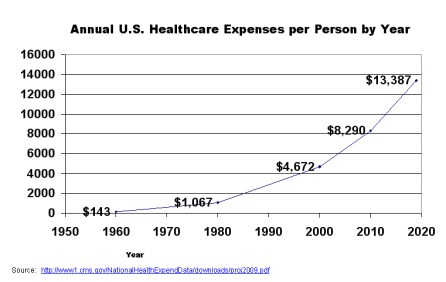
We usually look for the best value for the money we spend for whatever commodity we seek. When purchasing a service do you look for the best price or the best quality? Or perhaps a balance of the two? When seeking a dentist or doctor do you choose the cheapest? The cheapest vehicle? The cheapest education? Or the best value for your money?
What makes the difference between a house made of wood versus a brick house? Or the benefit of a healthy home cooked meal over fast food? An exercise video over an actual teacher? Group classes over individual instruction? Time and experience give us the wisdom that cheaper is not always better. The easy path is usually not the better choice in the long run.
When offering group fitness classes (tai chi or qigong) for free (or cost under $10), I have generally found that working adults do not associate much value for the education that I share at this price point. I understand their viewpoint that because it is free or cheap, why commit to attending? There is no consequence whether they show up or not. However, when people prepay or commit to a specific period of time, they feel more commitment to get their money’s worth. When I charge $50 or more for a 1-hour private class, the student receives greater benefits because they have ownership in participating and getting the results that they our paying for. When a student commits to a month or years’ worth of goal-oriented training, we are both now committed to seeing it through to achieve that goal. It is so cliché, but I have found more often than not, you do get what you pay for.
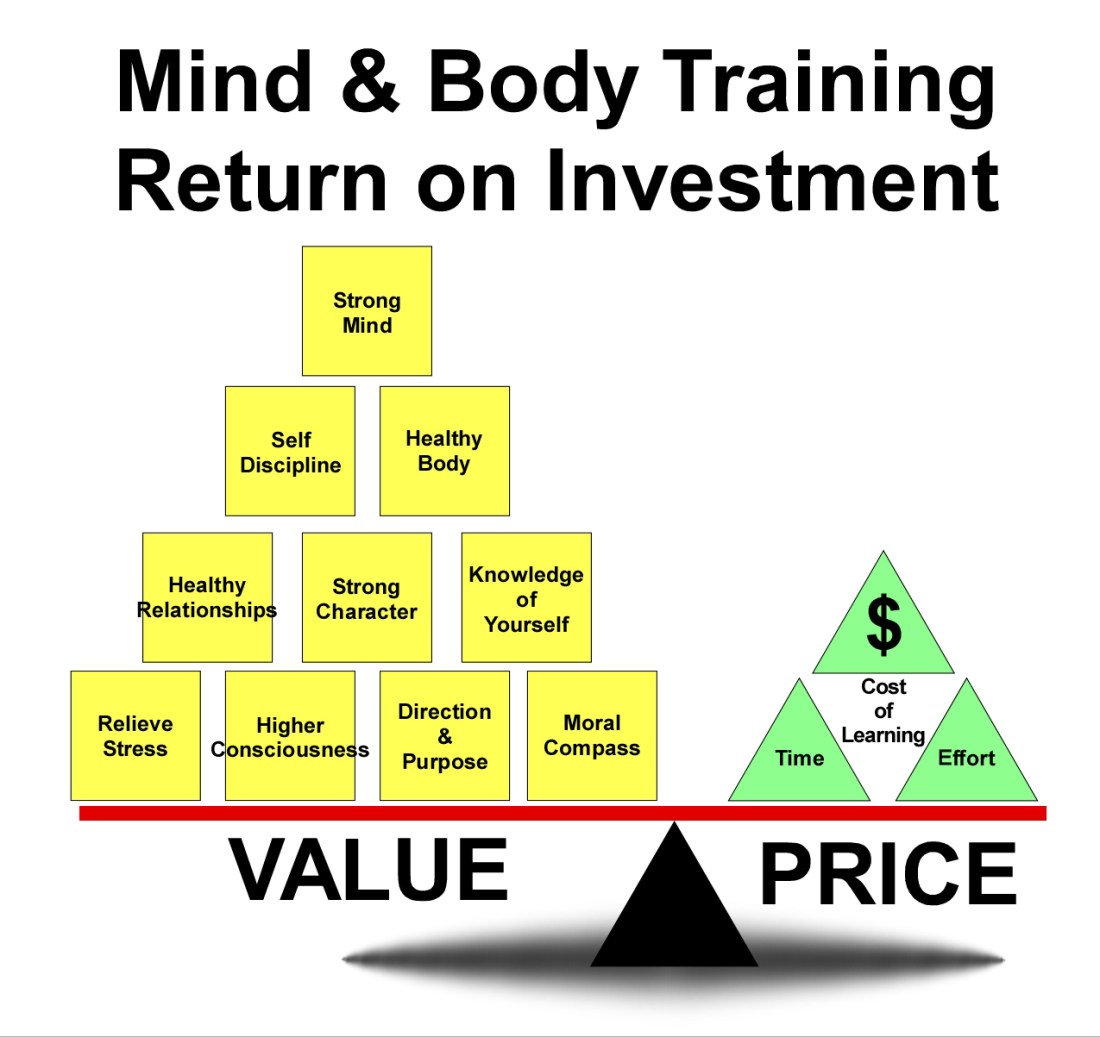
Why do I lean towards martial arts, tai chi, qigong and yoga? Personally, I have not found anything else that offers such a wide palette of benefits than the mind, body and spirit type of exercises. Every exercise method has its pros and cons, but the afore mentioned encourage the individual of ALL AGES to become more self-aware and make adjustments as necessary to avoid injuries or other issues. Strength, flexibility, balance, coordination – all can be challenged more or less depending upon the individuals’ age, goals and abilities. Other benefits such as stress relief, mental clarity, self-defense skills, confidence and chronic pain management are difficult to put a price tag upon. Also, no need for expensive equipment nor a special location to train, make for an attractive option in lieu of a pricey membership at the local upscale health club.

While some will need to continue to invest monetarily to their portfolio to insure they have enough resources to pay for future health insurance, co-pays, prescriptions and over the counter meds, others will choose to invest in their own “health care program”. Pursuing an education in how to take care of oneself is indeed a wise investment.
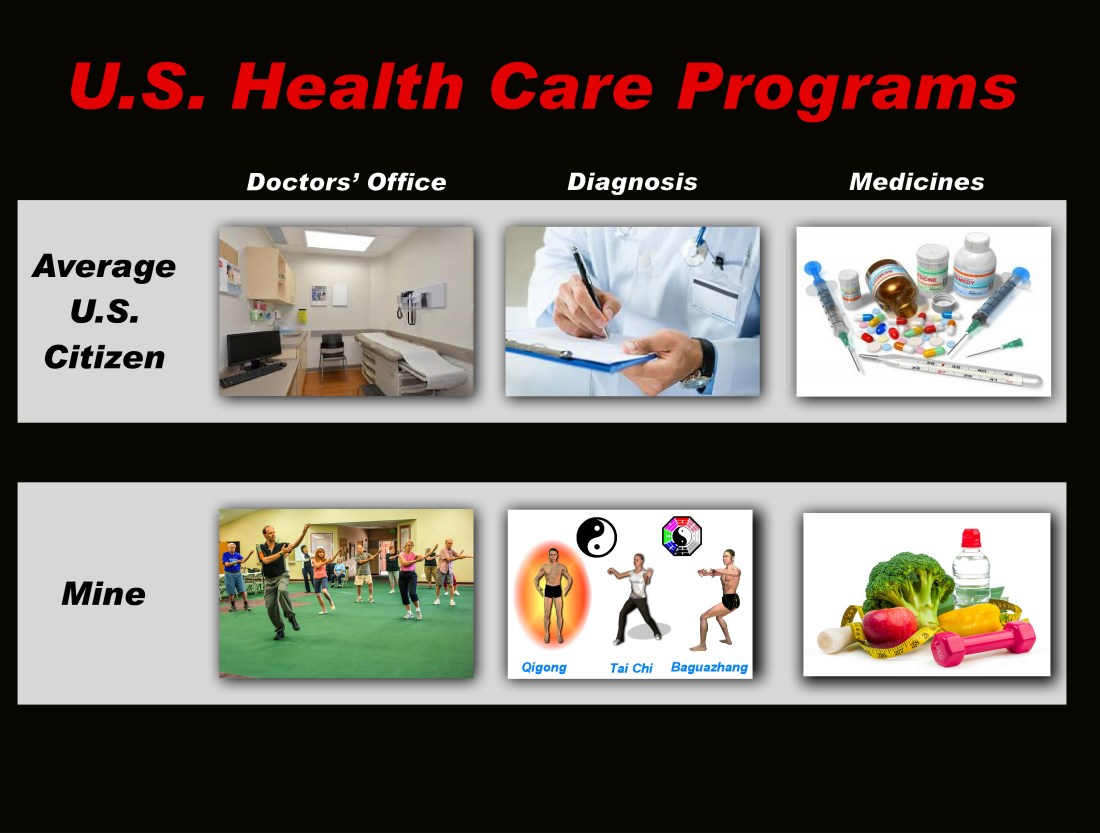
More statistics backing up a need to be proactive in your health care:
An ABC News report from 2012 states that:
“A new report estimates that the average American worker spends nearly $14.40 a week on coffee, which does not include the cost of drinking coffee at home. Data is shown to indicate that the average worker spends around $1,100 annually on coffee.”
This is more than most Americans spend on their own fitness goals throughout the year.
https://abcnews.go.com/GMA/american-coffee-habits-spend-coffee/story?id=16923079
USA Today reported in 2016:
“The average gym membership costs just under $60 per month, and 67% of memberships go unused. Meanwhile, memberships to specialized workouts like Crossfit have the fit-minded shelling out hundreds per month.”
A CBS News report from 2014 states:
“A new government study estimates that nearly 80 percent of adult Americans do not get the recommended amounts of exercise each week, potentially setting themselves up for years of health problems.”
https://www.cbsnews.com/news/cdc-80-percent-of-american-adults-dont-get-recommended-exercise/
 United Martial Arts Association