
The 5 Element Theory (Wu Xing)
Ancient Chinese scholars of the time approximately from 1600-1000 BC, recognized continuous patterns of change and transformation. Initially, these patterns were interpreted using yin-yang (balance) logic, but later these interpretations were expanded to the theory called The Five Elements. The 5 Elements Theory is based on observation, contemplation and meditation of the natural world and the environment we exist within.

The Five Elements Theory evolved from the observation of various processes, functions, and phenomena of nature. The theory proclaims that aspects of matter, can be divided into one of five basic elements of wood, fire, earth, metal and water. Each element contains their own specific characteristics and interrelationships. In modern times, the five elements theory is still used as a tool for grouping substances, as well as a method for studying changes of natural phenomena.
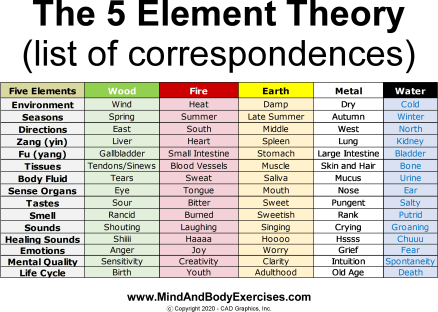
The 5 Elements Theory is a major component of thought within TCM or traditional Chinese medicine. These elements have corresponding relationships within our environment as well as within our own being specifically the internal organs and emotions connected to them.
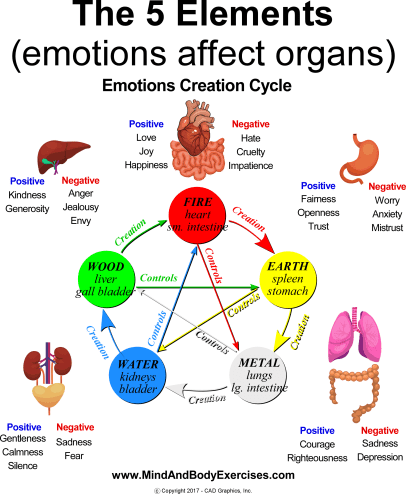
Tai Chi, bagauzhang and qigong are all methods of exercise that also embody the philosophy of the 5 Elements, while also increasing the flow of energy ( and blood flow) throughout the internal organs improving health and well-being.
 United Martial Arts Association