
Underage drinking on US college campuses has skyrocketed over the last few years, as our youth and seemingly everyone, struggles to cope with mental ailments of depression, anxiety, ADHD and others. The apparent ease of obtaining fake ID’s makes it abhorrently obvious that these institutions and their relative law enforcement, care to turn on blind eye and let the alcohol abuse continue, as long as they themselves are not held responsible or liable when the shit goes sideways. How ironic it is that if someone is caught in the possession of a fake ID, they could be facing a third-degree felony charge, and a potential 5 year jail sentence, and a fine up to $5000, depending upon the state that they get caught within – in spite of the fact that fakes are readily available online (https://blogote.com/10-best-fake-id-websites-complete-reviews-2022/)
If you are a parent of a kid away at school and don’t think that yours is drinking, smoking and trying whatever drug they please, you my friend are living in a fantasy land, a state of denial or what is more likely described as cognitive dissonance. “Cognitive dissonance is the unpleasant emotion that results from holding two contradictory beliefs, attitudes, or behaviors at the same time” (Halton, 2022). Examples of how are society embraces cognitive dissonance would be:
- The whole tobacco/vape industry. The tobacco industry is probably the only industry which the FDA willfully allows (but not approves of) to operate in spite of the scientific studies that prove the harmful effects to humans. So, while the FDA is basically in place to protect the American population against substances that endanger the health and well-being of humans, they continue to pander to this deadly industry. It has even been proven that the tobacco companies conspired to make their products more addictive, but these companies are still allowed to operate and earn profits (Kodjak, 2017).
- We know that our population is dangerously unhealthy, nutrient deprived, overweight or obese, affecting our health, well-being and even the security of our defense as most young adults cannot pass the physical exams to be in the military. Yet, we and our government do little to make this a priority. In the words of Dr. Jerome Adams, the former surgeon general of the United States, “You know what will make you and your community healthier but still, you choose not to do it.” He goes on to state that 7 out of 10 of 18-24-year olds are ineligible for military service. They cannot pass the physical, can’t meet educational requirements, or have a criminal history (TEDx Talks, 2020).
- It is common knowledge that our population, and especially our youth have been experiencing more stress, more depression, more anxiety and more suicides than any other time and even prior to our recent health crisis of the COVID-19 pandemic. Again, we and our government leaders seem to accept this, by not making it a high priority.
These issues and many others will not improve due to a lack of money or resources but rather a lack of moral character and fortitude to actually do what it takes to fix our broken culture. Our government can print a few trillion dollars at a moments notice, often billions of dollars for other countries needs and agendas. But won’t do what it takes to fix our own problems. Why? Because fixing some of these problems would put a lot of companies out of business and investors would lose their ill-gotten gains.
This topic of underage usage of legal substances of marijuana, alcohol and tobacco products is quite relative to current cultural and societal issues. As a parent of two college-age kids, I now have a different perspective than when I was their age and even as a young parent. I personally did much of my experimentation in my early teens as I had access to all of the aforementioned. My parents were either unaware or chose not to appear to know of my actions. I think that back in the 70’s and 80’s many kids were experimenting regardless of what their parents knew or didn’t know. So, what I have learned as a parent is that the more you try to shield or restrict kids from whatever behavior, they will pursue it more out of curiosity, defiance, and rebellion. If we teach and explain issues from a point of concern, love, and respect we have a much better chance of youths making better informed decisions on their own.
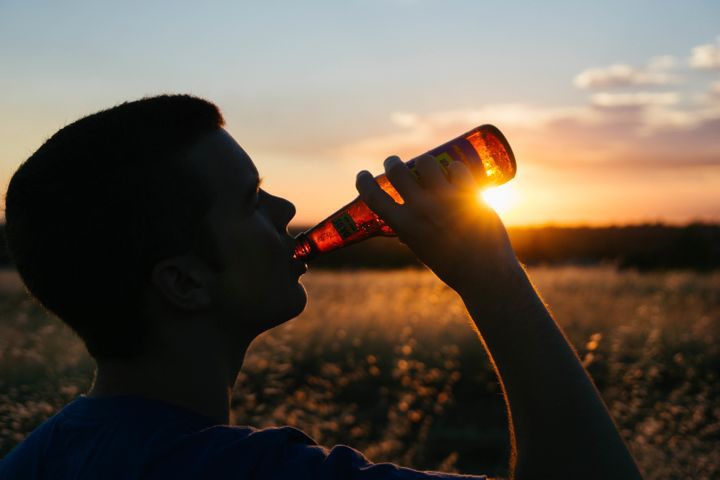
I have had pretty much this same conversation with both of my now grown kids, letting them know that I do not encourage underage use, nor “of age” abuse of any of these substances. I also let them know that I am not naïve as to what young adults are doing and the peer pressure that they live within on a daily basis. I am their parent, their guide and sometimes their lifesaver, and I remind them of this.

Drug legality is more of a function of social, political, and economic factors not necessarily related to the toxicity or pharmacology of a particular substance. Some drugs are deemed as unsafe by the powers that be (FDA), while others are judged to be safe but can be just as abused and dangerous. Those that offer adverse or deadly side effects are mostly the ones that become illegal. As social acceptance changes, along with peoples’ individual beliefs, legal status of drugs will continue to be in a constant state of change and adjustment. During the early years of the twentieth century, drugs such as opium, morphine, and cocaine were openly sold but later banned is illegal substances. Marijuana was legal throughout the US until 1937, then it was illegal and now it is becoming more legal again throughout much of the United States (Tikkanen, n.d.).
If we look at the seemingly unlimited resources of the US federal government to fund the “war on drugs” we can see that money, arrests and prison sentences has not been working for the last decades. However, with unlimited resources used more wisely for early education, I feel that knowledge is a root component to not just fix problems in our society, but rather to prevent or decrease the negative consequences. When I saw a movie called “Scared Straight” in middle school, a documentary about life in prison, I received the message. When I saw movies about STD’s in middle school with pictures and interviews of diseased people, I got the message. When my school had a completely crushed car from a DUI accident with a fatality, prominently displayed in the courtyard, I again received the message. From here it was up to me to be responsible to make wise decisions that would affect my life and those around me.
References:
Adams, Jerome, “How resilient communities can create a healthier country.” Youtube, uploaded by TEDxMidAtlantic. September 23, 2020. www.youtube.com/watch?v=RIY13uvlGLY
Halton, C. (2022, September 29). Cognitive Dissonance. Investopedia. https://www.investopedia.com/terms/c/cognitive-dissonance.asp
Kodjak, A. (2017, November 27). In Ads, Tobacco Companies Admit They Made Cigarettes More Addictive. NPR. https://www.npr.org/sections/health-shots/2017/11/27/566014966/in-ads-tobacco-companies-admit-they-made-cigarettes-more-addictive
Edlin, G., & Golanty, E. (2019). Health & Wellness (13th ed.). Jones & Bartlett Learning
Tikkanen, A. (n.d.). Why Is Marijuana Illegal in the U.S.? Encyclopedia Britannica. https://www.britannica.com/story/why-is-marijuana-illegal-in-the-us#:~:text=He%20believed%20that%20smoking%20pot,illegal%20across%20the%20United%20States.
I write often about topics that affect our health and well-being. Additionally, I teach and offer lecture about qigong, tai chi, baguazhang, and yoga. I also have hundreds of FREE education video classes, lectures and seminars available on my YouTube channel at:
https://www.youtube.com/c/MindandBodyExercises
Mind and Body Exercises on Google: https://posts.gle/aD47Qo
Jim Moltzan
407-234-0119
www.Amazon.com/author/jimmoltzan

 United Martial Arts Association