
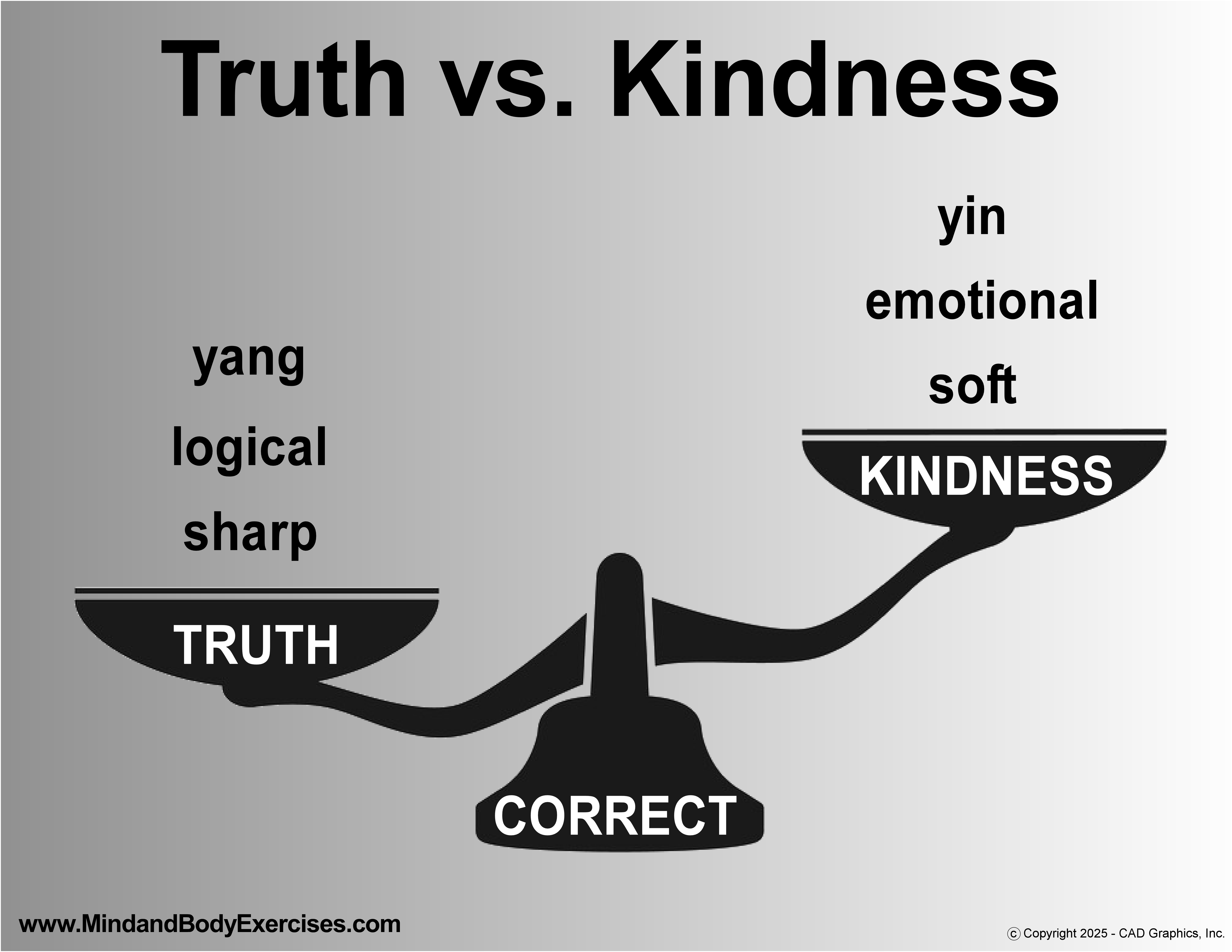
The statement, “True words are seldom kind. Kind words are seldom true,” reflects the dynamic interplay of yin and yang, as well as the balance between truth (emotion) and rightness (logic), with correctness emerging as their synthesis.
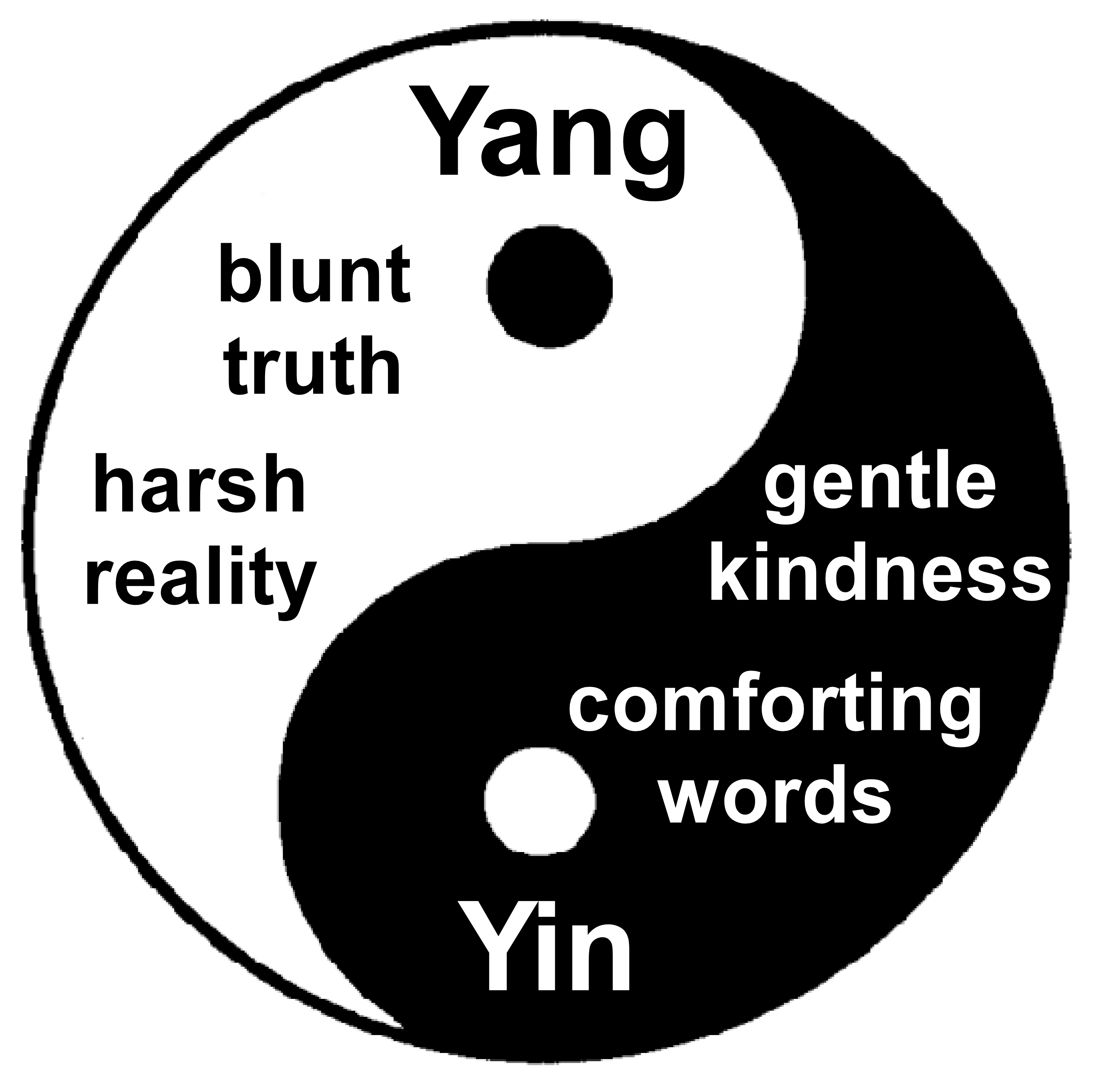
Yin and Yang in Truth and Kindness
- Truth (Yang – Hard, Objective, Direct): Truth is clear and straightforward, focusing on facts rather than perceptions. It aligns with the logical aspect of “rightness,” emphasizing what is accurate over emotional considerations. Similar to yang, truth clarifies reality without prioritizing comfort.
- Kindness (Yin – Soft, Subjective, Nurturing): Kindness is based on empathy and the emotional aspect of interactions. It often aims to soften the impact of truth to maintain harmony and relationships. This relates to the emotional side of “truthfulness,” focusing on how something feels rather than its factual accuracy. Similar to yin, kindness nurtures and soothes, sometimes prioritizing comfort over complete disclosure.
Correctness as Balance
Neither extreme of blunt truth nor gentle avoidance leads to effective communication. The optimal form of communication balances emotional sensitivity and logical correctness. Wisdom involves knowing when to emphasize accuracy, when to offer empathy, and how to integrate both aspects. Similar to how yin and yang transform under specific conditions, truth can be softened by kindness without compromising its integrity, while kindness can convey truth without becoming misleading. The skill of achieving balance lies in articulating what is true appropriately, ensuring it is both logically accurate and emotionally resonant.
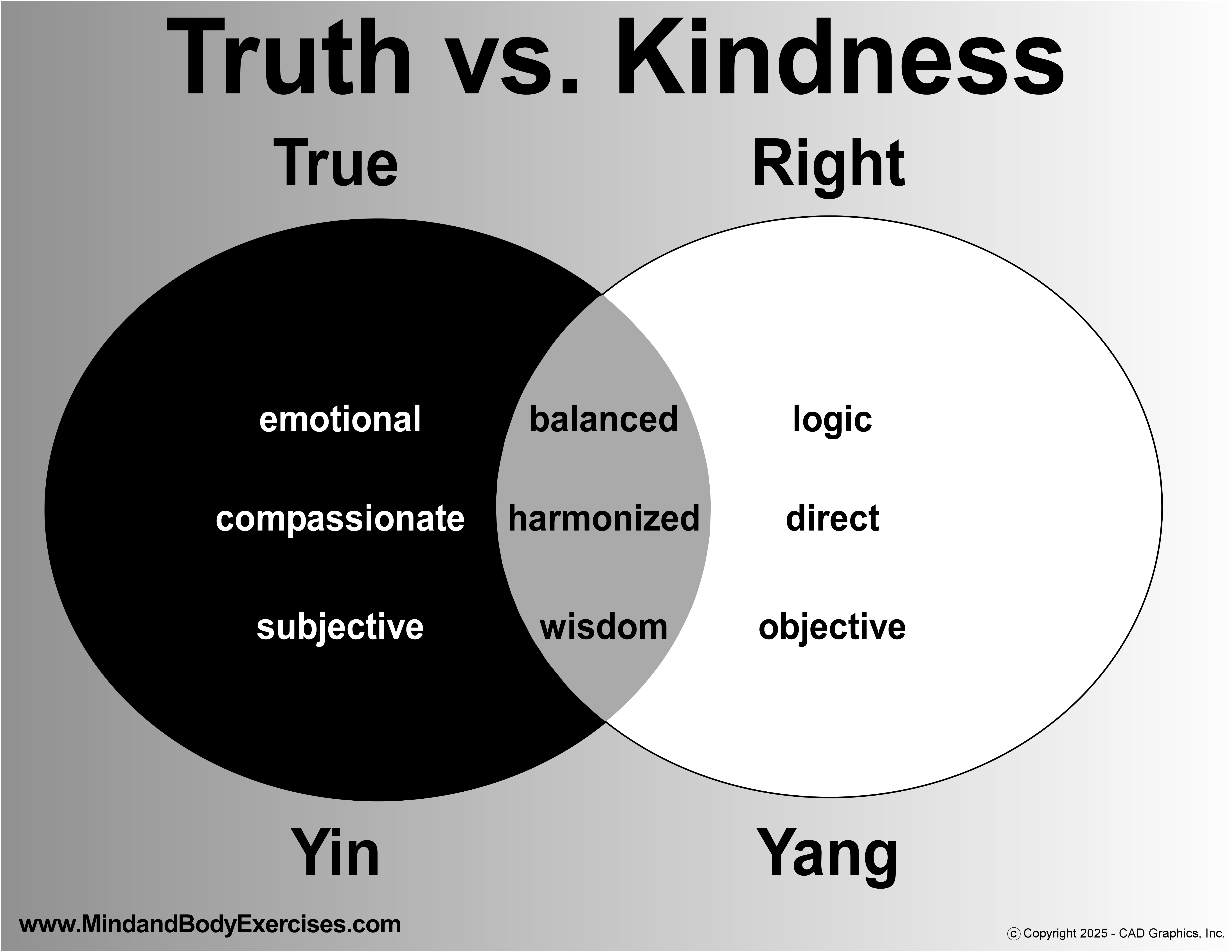
Real-Life Examples of Truth vs. Kindness
Balanced (Correct – Yin-Yang): “I see your potential, and I think with some focused effort in these areas, you could perform at a higher level. I’d love to help you get there.”
Health & Well-Being:
Pure Truth (Yang): A doctor bluntly tells a patient, “You are dangerously overweight, and you need to lose weight immediately, or you risk serious health issues.”
Pure Kindness (Yin): “You’re perfect just the way you are. Don’t worry about your weight.”
Balanced (Correct – Yin-Yang): “Your health is important, and I want to support you in making changes that will help you feel better and live longer.”
Relationships & Personal Growth:
Pure Truth (Yang): A friend tells another, “Your behavior is selfish, and that’s why people distance themselves from you.”
Pure Kindness (Yin): “You’re wonderful just as you are. Everyone should accept you without question.”
Balanced (Correct – Yin-Yang): “I value you as a friend, and I’ve noticed that some of your actions push people away. Would you be open to talking about ways to strengthen your relationships?”
Work & Professional Feedback:
Pure Truth (Yang): A boss tells an employee, “Your work is subpar, and you might not last here if you don’t improve.”
Pure Kindness (Yin): “You’re doing just fine, no worries!” (even when the work needs improvement).
Balanced (Correct – Yin-Yang): “I see your potential, and I think with some focused effort in these areas, you could perform at a higher level. I’d love to help you get there.”
I look forward to further sharing more of my message by partnering with hospitals, wellness centers, VA centers, schools on all levels, businesses, and individuals who see the value in building a stronger nation through building a healthier population.
I also have hundreds of FREE education video classes, lectures, and seminars available on my YouTube channel at:
https://www.youtube.com/c/MindandBodyExercises
Many of my publications can be found on Amazon at:
http://www.Amazon.com/author/jimmoltzan
My holistic health blog is available at:
https://mindandbodyexercises.wordpress.com/
http://www.MindAndBodyExercises.com
Mind and Body Exercises on Google: https://posts.gle/aD47Qo
Jim Moltzan
407-234-0119



 United Martial Arts Association