
Written for seekers, skeptics, and believers alike, this article invites deeper reflection on the mystery of faith, the struggle of transformation, and the timeless power of the human spirit.
Easter is one of the most widely celebrated religious holidays across the globe, observed by billions of people through both spiritual and cultural traditions. For Christians, it commemorates the resurrection of Jesus Christ; an event central to the faith and steeped in mystery, reverence, and awe. Yet, when we peel back the layers of devotion and ritual, deeper questions arise:
- What exactly happened leading up to the crucifixion?
- Why did Jesus die?
- If Jesus were alive today, would He be embraced or dismissed as a fraud?
- Would He be celebrated or condemned all over again?
These questions may seem theological at first glance, but they also probe into human psychology, sociology, and the nature of our collective consciousness. Let’s explore this landscape more fully.
The Life and Death of Jesus: A Brief Chronology
The crucifixion of Jesus was not a random act of violence but the culmination of escalating tension. His teachings challenged the religious elite and threatened both Roman and Jewish political structures. Betrayed by Judas Iscariot, arrested in the Garden of Gethsemane, and denied three times by Peter, Jesus was ultimately condemned, scourged, and crucified under Roman law.
According to the Gospels, He died a slow, excruciating death, most likely from a combination of blood loss, asphyxiation, and shock. His body was placed in a tomb, and yet, three days later, reports of His resurrection spread. For the next 40 days, Jesus appeared to His disciples and followers in various places, teaching and preparing them before ascending into heaven.
But His post-resurrection appearances were not always public or easily verified, likely to avoid immediate conflict with His enemies. This subtle presence helped build the early Christian movement without triggering another wave of persecution, yet it also raises timeless questions.
Would Jesus Be Accepted Today?
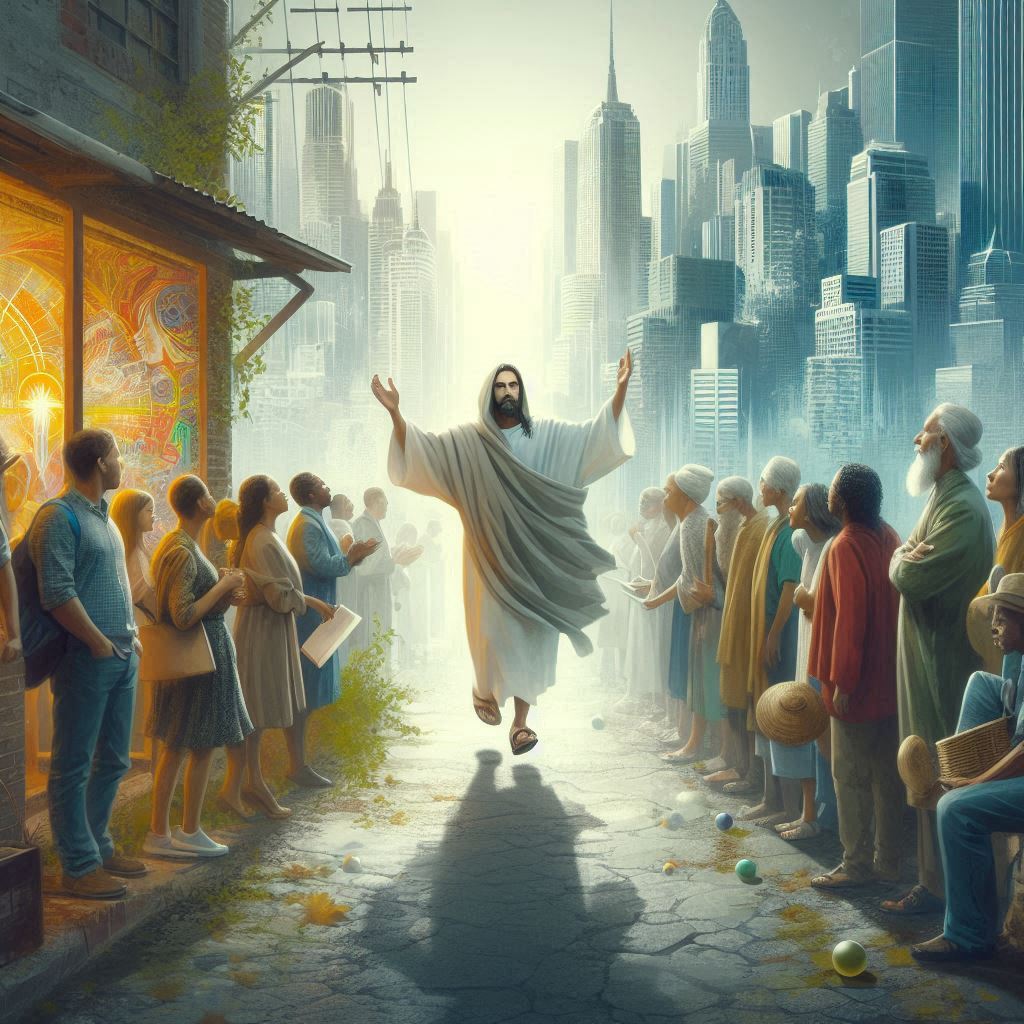
Imagine Jesus walking the Earth today, preaching love, repentance, and divine truth. Would He be revered? Or ridiculed?
For many devout Christians, His return is not only expected but deeply hoped for. But it’s also possible that His reappearance would challenge modern religious institutions, political ideologies, and cultural norms. His radical message of loving enemies, renouncing materialism, forgiving unconditionally, and living humbly runs counter to consumer culture, tribalism, and vengeance-based systems of justice.
In a secular and scientific age, He might be dismissed as delusional, cult-like, or mentally unstable. Social media would amplify both the adoration and the condemnation. News outlets would scrutinize every word. Authorities might intervene. Even some who claim to follow Him might not recognize Him if He failed to fit their expectations.
Miracles, Demons, and the Modern Lens
Jesus’ time was filled with accounts of miracles such as healing the sick, calming storms, walking on water, and casting out demons. But how do we interpret those today?
It’s worth asking: were demon possessions more common in antiquity, or was there simply a lack of medical and psychological understanding? Conditions we now label as epilepsy, schizophrenia, or PTSD may have once been seen through a spiritual lens. That doesn’t necessarily disprove the spiritual dimension, it just reminds us that knowledge evolves, and perception is always shaped by context.
Many ancient cultures viewed health holistically, body, mind, and spirit as inseparable. In that light, Jesus’ healing work can still be seen as deeply integrative, restoring not just physical health, but emotional, mental, and spiritual balance.
Do People Still Celebrate Easter as a Religious Holiday?
In the United States, Easter remains a significant holiday, but often more as a cultural celebration than a sacred observance. About 81% of Americans celebrate Easter (Statista, 2025), but only around 30% attend religious services (Jones, 2025). For many, Easter involves candy, egg hunts, spring fashion, and family meals more than deep spiritual reflection.
Globally, however, Easter remains a central pillar for over two billion Christians, and even those who don’t consider themselves religious often participate in its communal and festive traditions.
The Pattern of Human Response to Visionaries
Jesus was not the only historical figure to be rejected in His time and revered later. In fact, history repeats itself with uncanny regularity:
| Figure | During Their Life | Now Remembered As |
|---|---|---|
| Jesus Christ | Executed as a criminal and heretic | Savior, Son of God, Redeemer |
| Socrates | Sentenced to death for corrupting the youth | Father of Western Philosophy |
| Martin Luther King Jr. | Monitored and opposed; assassinated | Civil Rights Icon |
| Joan of Arc | Burned at the stake for heresy | Catholic Saint and French Heroine |
| Galileo Galilei | Placed under house arrest for scientific beliefs | Father of Modern Science |
| Nelson Mandela | Imprisoned as a dissident | Global Symbol of Peace and Freedom |
| Mother Teresa | Criticized and praised | Canonized Saint and Humanitarian |
This pattern teaches us something vital: those who carry truth, challenge norms, or disrupt unjust systems are often rejected in their own time, only to be honored by future generations once the world has caught up.
Final Reflection
If Jesus Christ were to return today, not as a celebrity preacher or political figure, but as the humble, radical healer Jesus was, there’s a strong chance he would face the same resistance that he did 2,000 years ago.
Yet, the holistic view reminds us that truth transcends time. While forms change, principles remain. Whether we view Jesus through a spiritual, symbolic, or historical lens, His life challenges us to look inward, to seek compassion, and to live from the soul rather than the ego.
The deeper question isn’t whether the world would accept Jesus, but whether we would recognize Him in our own lives, our own thoughts, and the strangers we encounter daily.
References:
Statista. (2025, March 3). Share of Americans celebrating Easter from 2009-2023. https://www.statista.com/statistics/221108/share-of-americans-celebrating-easter-since-2007/
Jones, B. J. M. (2025, March 26). Church attendance has declined in most U.S. religious groups. Gallup.com. https://news.gallup.com/poll/642548/church-attendance-declined-religious-groups.aspx?utm_source=chatgpt.com
I teach and offer lectures about holistic health, physical fitness, stress management, human behavior, meditation, phytotherapy (herbs), music for healing, self-massage (acupressure), Daoyin (yoga), qigong, tai chi, and baguazhang.
Please contact me if you, your business, organization, or group, might be interested in hosting me to speak on a wide spectrum of topics relative to better health, fitness, and well-being.
I look forward to further sharing more of my message by partnering with hospitals, wellness centers, VA centers, schools on all levels, businesses, and individuals who see the value in building a stronger nation through building a healthier population.
I also have hundreds of FREE education video classes, lectures, and seminars available on my YouTube channel at:
https://www.youtube.com/c/MindandBodyExercises
Many of my publications can be found on Amazon at:
http://www.Amazon.com/author/jimmoltzan
My holistic health blog is available at:
https://mindandbodyexercises.wordpress.com/
http://www.MindAndBodyExercises.com
Mind and Body Exercises on Google: https://posts.gle/aD47Qo
Jim Moltzan
407-234-0119



 United Martial Arts Association