
Essence, Training, and Mastery
Kung is the essential concentrated force, both mental and physical, that underlies all Chinese martial arts, particularly Kung Fu. It is not mere muscular power, but a highly focused and potent concentration of will, attention, and energy that amplifies every physical technique. Without Kung, even the most refined martial skills remain incomplete; with it, a practitioner achieves exceptional power, resilience, and mastery.
The information presented here is an overview of traditional Kung concepts and techniques as described in Kung Fu: History, Philosophy and Technique (Chow, 1978). While these methods are part of historical martial arts culture, they range from well-documented conditioning practices to legendary or symbolic feats.
Internal and External Kung
Kung manifests in two primary forms:
- Internal Kung (Yin or Negative Kung) emphasizes the cultivation of Qi (ch’i, chi, ki, gi) the vital life-breath through breathing, meditation, and calm concentration. It often favors subtlety and passive defense, enabling the practitioner to mentally subdue an opponent without direct physical contact. Its effects may be invisible, yet profound.
- External Kung (Yang or Positive Kung) focuses on physical strength and conditioning, with energy flowing outward through the body. It subdivides into Soft Kung (Yin) and Hard Kung (Yang):
- Soft Kung is difficult to master, emphasizing invisibility, precision, and mental control, but is sometimes viewed with suspicion for its potential unethical use.
- Hard Kung is overtly physical, conditioning muscles and nerves to withstand and counter heavy blows or weapon strikes.
A well-rounded martial artist seeks balance between these forms, harmonizing Yin and Yang according to Taoist principles.
Discipline and Moral Foundation
Kung is as much a moral and spiritual discipline as it is a physical one. Practitioners must adhere to behavioral and emotional codes designed to preserve vital energy and mental clarity:
- Five Restrictions to avoid:
- Frivolity
- Conceit
- Impatience
- Negligence
- Lasciviousness
- Seven Detriments:
- Fornication (energy depletion)
- Anger (breathing harm)
- Worry (mental numbness)
- Over trust (emotional vulnerability)
- Overdrinking (blood dilution)
- Laziness (muscular weakness)
- Tenseness (weak bones).
Violating these principles disrupts energy flow and undermines training. The Shaolin tradition stresses purification of spirit, breath regulation, and ethical conduct using Kung only for defense or just causes, never for malicious harm. Misuse inevitably leads to personal ruin.

Stages of Training
Mastery requires patience, persistence, and often decades of disciplined practice. Training typically progresses through:
- Skin and Muscle Stimulation – Vigorous rubbing to improve circulation and tone.
- Tendon Conditioning – Stretching and calisthenics to enhance elasticity and force transmission.
- Joint Strengthening – Weight training and impact drills for endurance and striking power.
- Qi Development – Meditation and breath control to cultivate and store vital energy, directing it for specific purposes.
This gradual progression ensures the body and mind are prepared for advanced techniques without risk of injury.
Qi: The Power Source of Kung
Qi transforms raw physical ability into directed, dynamic force. Concentrating Qi in specific body parts creates specialized capabilities, such as an iron abdomen, immovable stance, or penetrating strike. Its development must be patient and natural; forcing the process is ineffective and potentially harmful. In rare cases, Qi manifests spontaneously in emergencies, hinting at latent human potential.
Extraordinary Kung Techniques
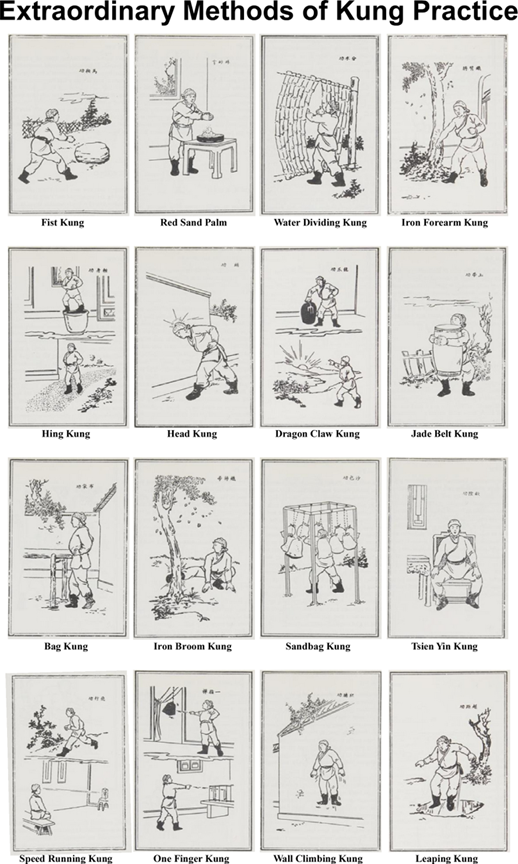
Through disciplined training, practitioners can achieve remarkable feats, some practical, others legendary in reputation. These include:
- Red Sand Palm – Yin Kung capable of inflicting damage without physical contact, developed through progressive conditioning from fine sand to heavy objects.
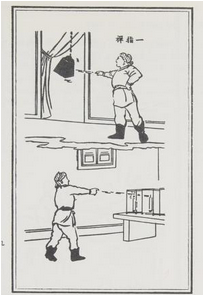
- One Finger Kung – Focused finger strikes that can move heavy objects or extinguish flames from a distance.
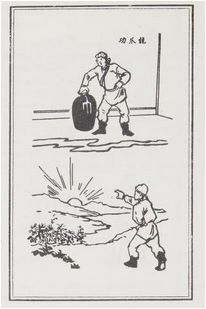
- Dragon Claw Kung – Grip strength and joint control using progressive resistance, applied to immobilize opponents.
- Water Dividing Kung – Palm and arm strength sufficient to part rigid bamboo poles.
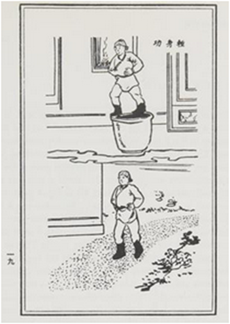
- Hing Kung (Lightness Kung) – Ability to move silently and lightly, even on fragile surfaces.
- Speed Running Kung – Leg and eyesight conditioning for swift, sustained movement.
- Leaping Kung – Explosive leg power built by jumping from progressively deeper trenches or with added weights.
- Wall Climbing Kung – Vertical and horizontal wall movement using elbows and heels.
- Tsien Yin Kung – Qi-based internal protection of vital areas.
- Bag Kung – Abdominal conditioning to absorb and redirect strikes.
- Iron Forearm Kung, Fist Kung, Sandbag Kung – Impact conditioning for devastating strikes and multi-angle attack defense.
- Iron Broom Kung – Powerful sweeping kicks to fell opponents or break obstacles.
- Jade Belt Kung – Crushing arm strength developed through tree hugging and stone lifting.
- Head Kung – Progressive hardening of the skull for safe head strikes.
Many of these require 10–15 years of committed training and precise energy control to master.
Health, Longevity, and Mental Clarity
Beyond combat, Kung offers profound physical and mental benefits. Long-term practice strengthens circulation, tendons, joints, and immunity; enhances concentration and calmness; and may contribute to longevity. It is both a martial art and a holistic health system.
Modern Rarity and Preservation
In ancient times, Kung masters devoted decades to perfection, often beginning in childhood. Today, the demands of modern life, coupled with the secrecy of true training, make genuine mastery rare. Most authentic techniques are still transmitted privately to protect their integrity. Demonstrations by skilled masters, such as generating heat without contact, bending steel, or breaking stone, attest to the enduring power of these methods.
Important Disclaimer: Buyer Beware
Anyone interested in studying these skills should understand that:
- Authentic instruction is rare. Many of these methods require years of careful, incremental training under a knowledgeable teacher who understands both the physical and internal aspects.
- Improper training can cause harm. Without correct supervision, certain conditioning practices can lead to serious injury, long-term health problems, or mental strain.
- Ethics matter. True Kung training is rooted in discipline, self-control, and moral conduct. Any instruction that promotes reckless aggression, neglects safety, or bypasses ethical principles should be avoided.
- Due diligence is essential. Seek a reputable teacher with verifiable lineage, recognized skill, and a proven track record of developing students safely. Research the school’s philosophy, teaching methods, and student experiences before committing.
- Respect your limits. Not every method is appropriate for every individual. Health conditions, age, and personal goals should all factor into how one approaches training.
Approaching Kung with patience, humility, and discernment will help ensure that the art becomes a source of growth and empowerment, not injury or disillusionment.
Conclusion
The Dynamics of Kung reveal that true Kung Fu mastery transcends physical fighting skill. It is a lifelong path of self-cultivation, uniting body, mind, and spirit through disciplined practice, ethical conduct, and the harmonious balance of internal and external forces. The extraordinary abilities it promises—whether practical, legendary, or symbolic—stand as testimony to the heights of human potential when effort, patience, and moral purpose are perfectly aligned.
Reference:
Chow, D., & Spangler, R. (1978). Kung Fu: history, philosophy and techniques. Lulu.com. https://archive.org/details/kungfuhistoryphi0000chow



 United Martial Arts Association