
Why Listening to Our Better Instincts Matters in a World of Moral Complexity
There is a quiet voice that lives within each of us that is subtle yet persistent, urging us toward what we know deep down to be right. It does not shout; it rarely argues. Instead, it nudges, whispers, and stirs feelings in the pit of the stomach or the depth of the heart. This inner voice, often referred to as our “gut feeling,” “conscience,” or “innate wisdom,” is a reflection of our deepest values and lived experience. And yet, in moments of moral or ethical decision-making, it is precisely this voice that many people ignore, sometimes out of fear, sometimes for convenience, and sometimes because the noise of the external world drowns it out.
The consequences of silencing that inner guidance can be profound. To ignore it is to betray oneself, to erode the foundation of integrity, and to risk becoming complicit in harm, even when that harm is subtle or hidden beneath layers of rationalization. Trusting our inner compass is therefore not just a matter of personal well-being; it is a vital part of what it means to live an honorable and meaningful life.

The Wisdom Beneath Instinct: Conscience as an Inner Guide
Human intuition is often misunderstood as mere emotion that is fickle, unreliable, and easily swayed. In reality, our “gut” is a highly sophisticated product of subconscious cognition. Neuroscientists have found that intuition draws on vast amounts of stored knowledge, memory, and emotional intelligence, often arriving at conclusions faster than conscious reasoning can (Gigerenzer, 2007). It is not irrational but rather it is pre-rational, in the distilled wisdom of our lived experience.
But beyond cognition, there is also a moral dimension to instinct. Philosophers from Immanuel Kant to Søren Kierkegaard have argued that conscience represents a higher faculty, or a kind of inner tribunal that judges our actions and intentions. This internal sense of right and wrong is not merely taught; it is felt deeply. It can manifest as a sense of discomfort when we contemplate wrongdoing, or a sense of peace and integrity when we choose the harder, nobler path.
When Silence Becomes Complicity
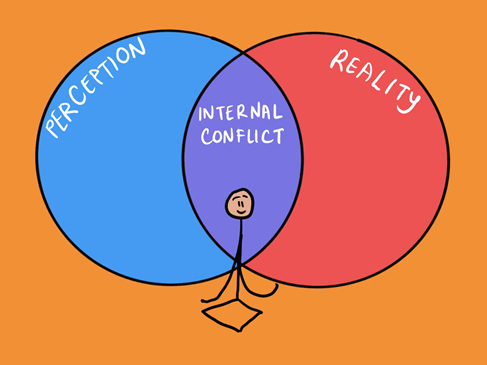
History provides sobering examples of what happens when individuals ignore their inner moral voice. One of the most studied phenomena in social psychology is Stanley Milgram’s obedience experiments (1974), in which ordinary people followed orders to administer what they believed were harmful electric shocks to strangers. Many participants reported intense internal conflict where their “gut” screamed that it was wrong, yet they continued because an authority figure told them to. These findings reveal a universal truth: when external pressure is strong, people often override their instincts to conform, even when doing so violates their ethics.
The same dynamic has played out on a societal scale. During the Holocaust, countless individuals justified their roles in atrocities with phrases like “I was just following orders.” Yet, amid the darkness, there were those who did listen to their inner voice, people like Oskar Schindler, who risked everything to save over 1,000 Jews, or Irena Sendler, who smuggled Jewish children out of the Warsaw Ghetto in defiance of Nazi laws. Their actions were not driven by logic alone but by an unshakable inner conviction that this is wrong and I must act.
Everyday Decisions: The Quiet Tests of Character
Not all ethical choices occur on such a dramatic stage. In daily life, moral decisions often arise in subtle ways, deciding whether to speak up when a colleague is mistreated, whether to tell the truth when a lie would be easier, or whether to act compassionately toward someone who cannot repay the kindness. These moments may seem small, but they are where character is forged.
Consider the case of whistleblowers such as Sherron Watkins (Enron) or Frances Haugen (Facebook). Both faced enormous personal risk by exposing wrongdoing within powerful organizations. What motivated them was not personal gain, but a deep moral impulse with a feeling that staying silent would make them complicit. These decisions, born from instinctive moral clarity, not only shaped their own lives but also had profound societal impact.
In contrast, when individuals repeatedly suppress their better instincts, they may become desensitized to wrongdoing, both in themselves and in others. This erosion of conscience rarely happens overnight; it is the cumulative result of small compromises and justifications (immersion by degrees: small steps toward total commitment). Each ignored inner warning weakens the connection to one’s deeper self, making future ethical choices harder to navigate.
The Anatomy of Regret
One of the most consistent patterns in human psychology is the regret that follows when people betray their conscience. Psychologists have found that people are more likely to regret moral failures, such as acts of dishonesty, betrayal, or cowardice, than mistakes of judgment or even missed opportunities (Gilovich & Medvec, 1995). This is because ethical missteps strike at the core of identity: they reveal a gap between who we are and who we believe ourselves to be.
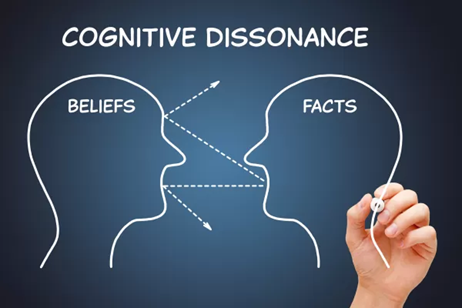
This inner dissonance, known as cognitive dissonance (Festinger, 1957) often lingers long after the immediate consequences of a decision have passed. It is the mind’s way of signaling that we have drifted from our values. Conversely, when we align our actions with our inner sense of right and wrong, we experience what psychologists call integrity congruence, a deep sense of authenticity and peace that reinforces moral resilience.
Listening as an Act of Courage
Trusting one’s instincts is not always comfortable. It may require swimming against the current, challenging authority, or facing isolation. Yet, this is precisely why it is so vital. Moral courage or the willingness to act on conscience despite fear is one of the highest expressions of human character. It is what led Rosa Parks to refuse to give up her seat, what guided Nelson Mandela to stand against apartheid, and what inspires ordinary people to do extraordinary things every day.
These individuals were not superhuman. They were ordinary people who, in critical moments, refused to silence the quiet voice within. They listened and in doing so, they not only transformed their own lives but also changed the course of history.
The Compass Within
We live in a world where external noise from media, politics, culture, and peers constantly tries to shape our choices. Amid that noise, the inner compass can feel faint. But it is always there, waiting to be heard. It is the part of us that remembers who we truly are and what we stand for.
Choosing to listen to that voice, to honor our better instincts is not a sign of weakness but of profound strength. It is how integrity is preserved, how trust is built, and how a life of meaning is crafted. In the end, our most important decisions are not about what we achieve or acquire, but about whether we have the courage to do what we know is right, even when no one else is watching.
Trust the Quiet Voice
In a culture that often rewards speed, compliance, and surface-level success, listening to one’s inner voice can feel like an act of rebellion. Yet it is precisely this act, this willingness to pause, feel, reflect, and trust that separates a life lived reactively from a life lived with purpose. The next time you find yourself standing at an ethical crossroads, resist the temptation to silence that quiet intuition within. Instead, lean into it. Let it guide you, even if the path it points to is harder, slower, or lonelier. Each time you honor that instinct, you strengthen the bridge between who you are and who you aspire to be. And over time, those small, courageous choices will weave the fabric of a life marked not by regret or compromise, but by integrity, wisdom, and peace.

References:
Festinger, L. (1957). A Theory of Cognitive Dissonance. Stanford University Press.
Gigerenzer, G. (2007). Gut Feelings: The Intelligence of the Unconscious. Viking.
Gilovich, T., & Medvec, V. H. (1995). The experience of regret: What, when, and why. Psychological Review, 102(2), 379–395. https://doi.org/10.1037/0033-295X.102.2.379
Haidt, J. (2001). The emotional dog and its rational tail: A social intuitionist approach to moral judgment. Psychological Review, 108(4), 814–834. https://doi.org/10.1037/0033-295X.108.4.814
Milgram, S. (1974). Obedience to Authority: An Experimental View. Harper & Row.


 United Martial Arts Association