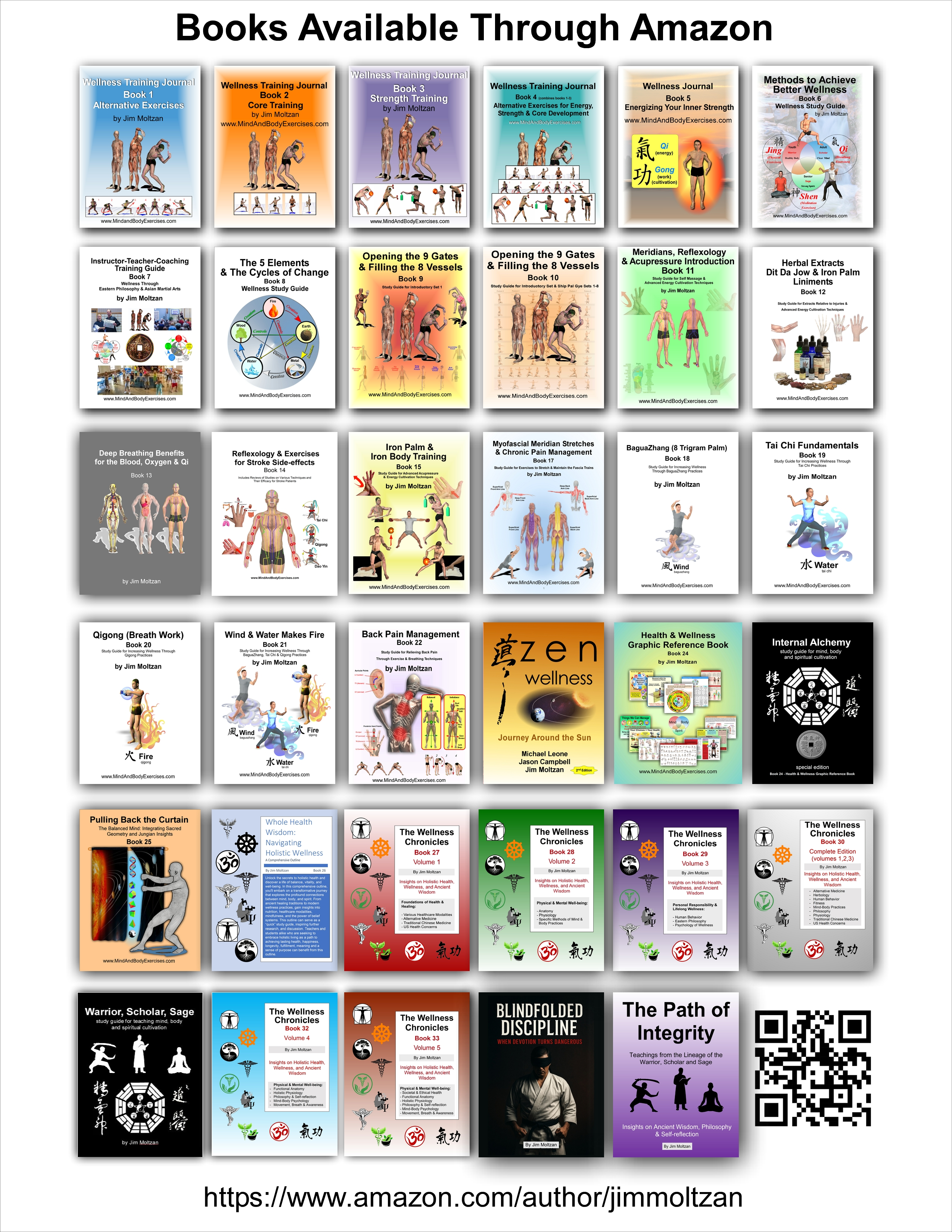
Announcing My New Book: Warrior, Scholar, Sage – A Guide for the Modern Seeker

In Warrior, Scholar, Sage, I invite you into a living tradition where martial arts, personal growth, and ancient philosophy merge to awaken the fullest human potential. Drawing from over 40 years of training, teaching, and holistic wellness practice, this book offers a unique blend of physical methodology, mental resilience, and spiritual reflection.

More than a manual of movements, this is a guide to living with awareness and integrity. You’ll explore Eastern martial traditions and Western psychological insights, from archetypes and ethical codes to energetic cultivation, posture work, and the moral responsibility of the modern-day warrior.

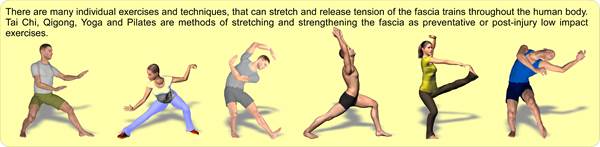
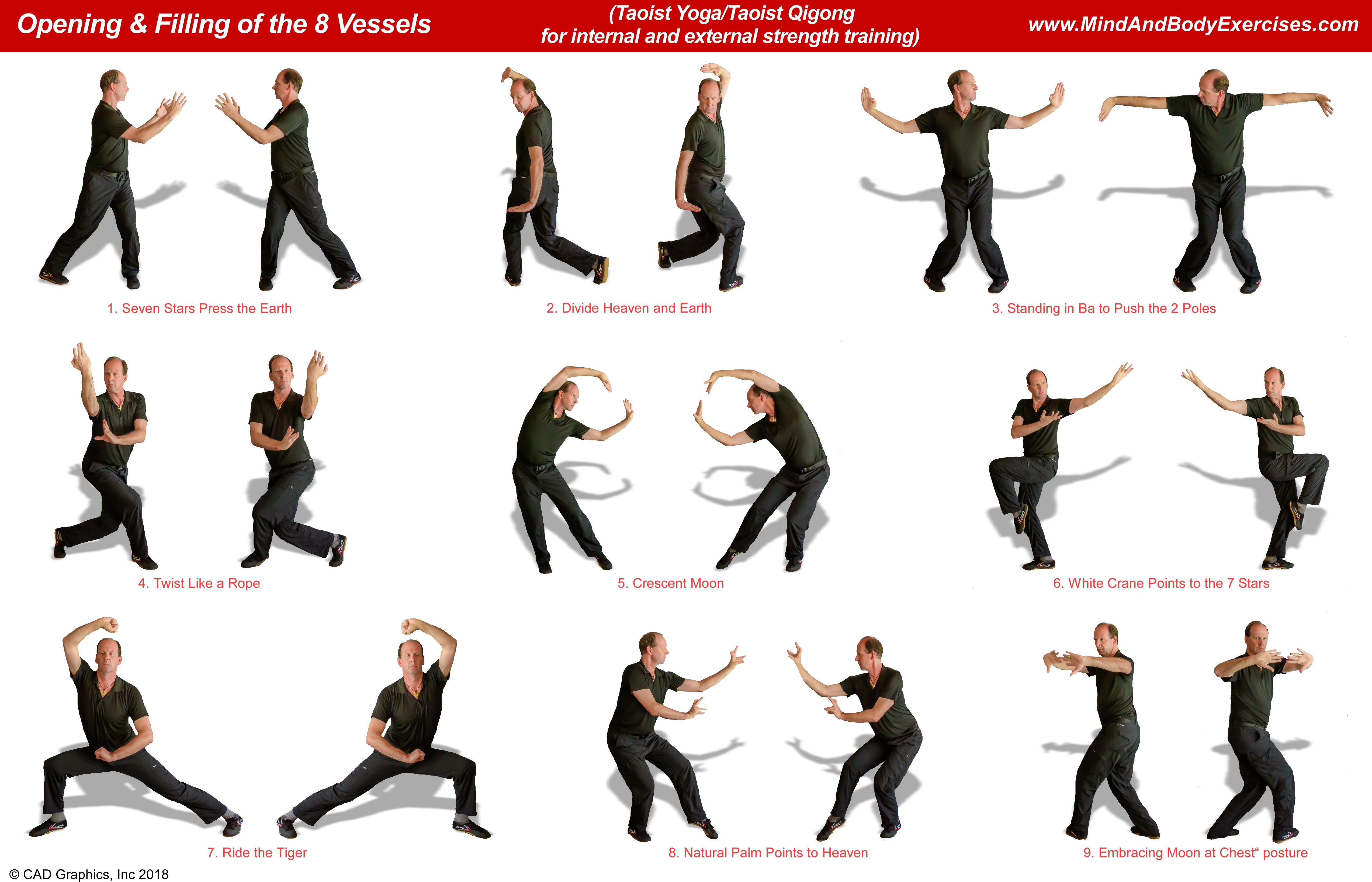
Through better understanding of dynamic tension exercises or stances (isometrics), proverbs, stories, and personal reflection, I equip readers to move with intention, teach with clarity, and live with purpose.

Whether you’re a martial artist, instructor, healer, or seeker of truth, Warrior, Scholar & Sage is your compass on the lifelong journey of strength, wisdom, and inner peace.

In a world flooded with noise, speed, and disconnection, this book offers a path back to equilibrium, through movement, breath, and discipline. It supports the development of the complete individual, what I have come to know as the integrated warrior-scholar-sage.

We’re not just training the body. We are refining the mind, expanding awareness, and aligning with higher values. The goal is not combat, but character. Not dominance, but discipline. Not conquest, but connection.

I invite you to read, reflect, and most importantly apply these teachings. Let this guide accompany you on your path to mastery not just in martial arts, but in life.

👉 Now available on Amazon.

I look forward to further sharing more of my message by partnering with hospitals, wellness centers, VA centers, schools on all levels, businesses, and individuals who see the value in building a stronger nation through building a healthier population.

I also have hundreds of FREE education video classes, lectures, and seminars available on my YouTube channel at:

https://www.youtube.com/c/MindandBodyExercises

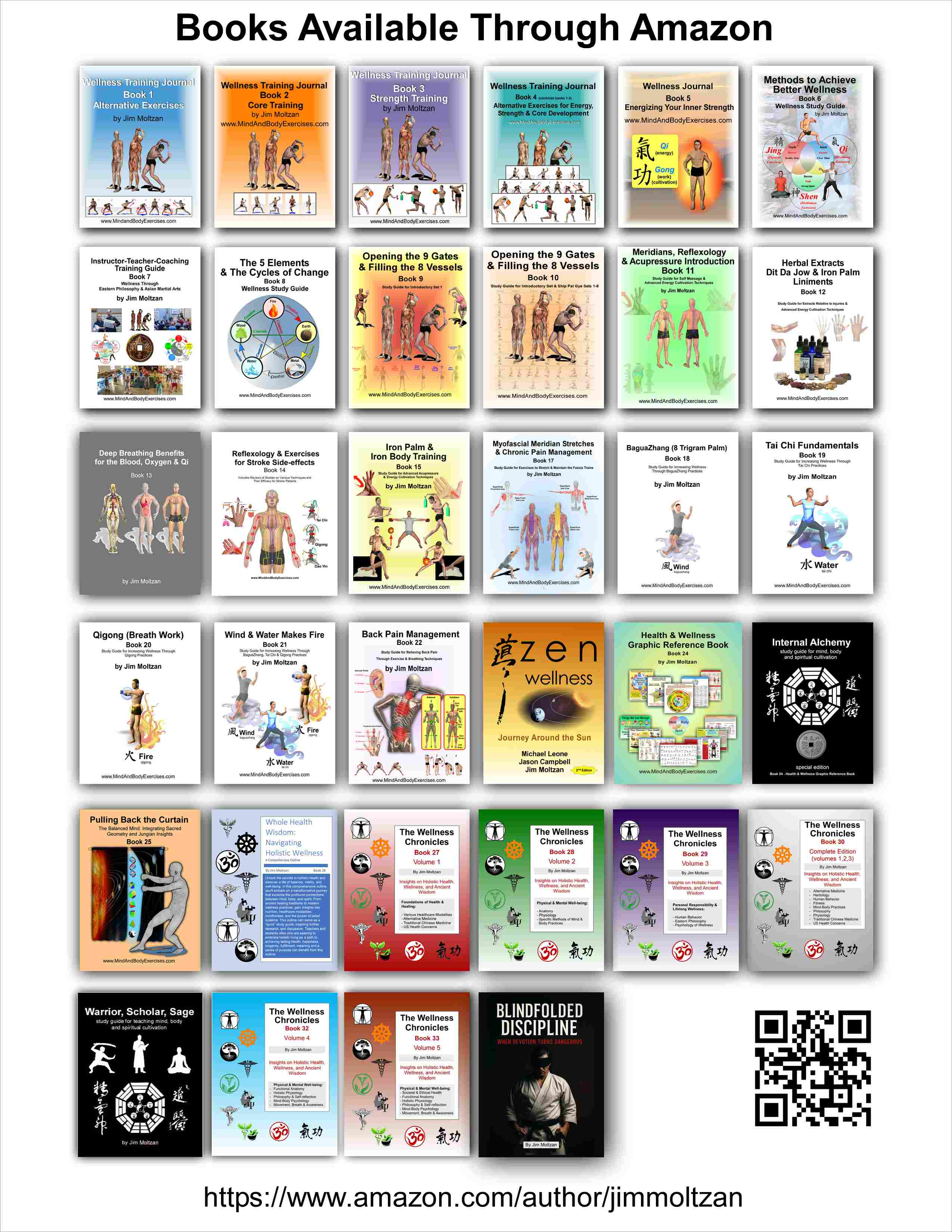
Many of my publications can be found on Amazon at:

http://www.Amazon.com/author/jimmoltzan

My holistic health blog is available at:

http://www.mindandbodyexercises.wordpress.com

http://www.MindAndBodyExercises.com

Mind and Body Exercises on Google: https://posts.gle/aD47Qo

Jim Moltzan

407-234-0119

The Illusion of Morality: Global Affairs and Personal Responsibility

In studying world events, we often discover that things are not always as they appear on the surface. A powerful example of this is found in John Perkins’ revealing book, Confessions of an Economic Hit Man (Perkins, 2004). Perkins shares his firsthand experiences of how the United States, through corporations, banks, and covert operations, orchestrated financial and political control over many developing nations, often in the name of “helping” them.

According to Perkins (2004), the system worked as follows: economic consultants would persuade leaders of developing nations to accept massive loans for infrastructure projects. These loans, however, rarely benefited the local population. Instead, they flowed to large U.S. corporations like Bechtel, Halliburton, and Stone & Webster to build projects that made countries dependent rather than independent. When nations inevitably struggled to repay their debts, the U.S. could then leverage their vulnerability, gaining access to natural resources, securing military bases, or influencing critical political decisions (Perkins, 2004).

(Lobe, 2024)

If leaders resisted, covert operations and sometimes violent regime changes would often follow. Historical cases such as the overthrow of Mohammad Mossadegh in Iran, the assassination of Omar Torrijos in Panama, and the toppling of Salvador Allende in Chile exemplify this pattern (Kinzer, 2007; Blum, 2003).

Institutions involved in this system included not just private corporations, but also public agencies like the World Bank, the International Monetary Fund (IMF), USAID, and even parts of the NSA and CIA (Perkins, 2004). While many Americans believed and still believe that their country acts as a global force for good, many people around the world have a very different perspective. For them, U.S. involvement often meant debt, exploitation, lost sovereignty, and prolonged suffering under authoritarian regimes supported by external powers (Blum, 2003).

What This Means for Our Own Lives

It’s easy to become deeply engaged, even consumed by the pursuit of truth when uncovering these hidden histories. Indeed, understanding the deeper truths about global affairs can be empowering and necessary for conscious living. However, there is an essential balance we must maintain:

Chronic anger, outrage, and obsession can cause significant damage:

  • Persistent stress weakens the immune system (Segerstrom & Miller, 2004).
  • Excessive media consumption contributes to mental exhaustion and emotional burnout
  • Neglect of physical well-being sleep, exercise, nutrition, etc. can diminish vitality and resilience.

In the end, truth-seeking should not come at the cost of self-care. When we are physically strong, mentally clear, and emotionally stable, we are in a far better position to discern information, resist manipulation, and lead by quiet example rather than reactive outrage.

A Healthier Path Forward

History will always be complex, layered with contradictions, hidden motives, and competing interests. Yet we do not serve ourselves or the greater good by burning out or losing our health in pursuit of endless investigation.

Instead, we can:

  • Practice daily mental hygiene: mindfulness, conscious breathing, time away from media noise.
  • Maintain physical vitality: nourishing the body through good food, movement, and rest.
  • Build emotional resilience: cultivating gratitude, perspective, and compassionate boundaries.

By doing so, we remain rooted and strong and able to perceive global injustices without being consumed by them. Global interventions and economic manipulations have been supported by leaders from both major U.S. political parties. Historical evidence shows that Democratic and Republican administrations alike have engaged in coups, economic coercion, military interventions, and covert operations , often justified as protecting “freedom” or “democracy,” but usually serving corporate and strategic interests.

In conclusion, understanding global systems of influence can awaken us. But maintaining personal sovereignty of our own body, mind, and spirit is what ultimately allows us to thrive, think clearly, and live freely.

References

Blum, W. (2003). Killing hope (By Zed Books London). Zed Books London. https://www.cia.gov/library/abbottabad-compound/13/130AEF1531746AAD6AC03EF59F91E1A1_Killing_Hope_Blum_William.pdf

Kinzer, S. (2007). Overthrow: America’s Century of Regime Change from Hawaii to Iraq. Macmillan.

Lobe, J. (2024, April 26). What are Americans’ biggest foreign policy priorities? Responsible Statecraft. https://responsiblestatecraft.org/us-foreign-policy-poll/

Perkins, J. (2004). Confessions of an economic hit man. Berrett-Koehler Publishers.

Segerstrom, S. C., & Miller, G. E. (2004). Psychological stress and the human immune system: A meta-analytic study of 30 years of inquiry. Psychological Bulletin, 130(4), 601–630. https://doi.org/10.1037/0033-2909.130.4.601

I look forward to further sharing more of my message by partnering with hospitals, wellness centers, VA centers, schools on all levels, businesses, and individuals who see the value in building a stronger nation through building a healthier population.

I also have hundreds of FREE education video classes, lectures, and seminars available on my YouTube channel at:

https://www.youtube.com/c/MindandBodyExercises

Many of my publications can be found on Amazon at:

http://www.Amazon.com/author/jimmoltzan

My holistic health blog is available at:

https://mindandbodyexercises.wordpress.com/

http://www.MindAndBodyExercises.com

Mind and Body Exercises on Google: https://posts.gle/aD47Qo

Jim Moltzan

407-234-0119

The Warrior, the Scholar, and the Sage: A Daoist View of Strength, Decline, and Human Destiny

In every era, civilizations rise and fall, not by accident or coincidence, but by the rhythm of deeper patterns or cycles of virtue and decay, clarity and confusion. As someone connected to a centuries-old lineage of Korean and Chinese martial artists, shaped by the philosophies of Taoism, Buddhism, and Confucianism, I’ve come to see that the struggles we face today are not anomalies. They are symptoms of imbalance. They are signs of what the ancients understood as the “return to the Daoand what modern thinkers Neil Howe and the late William Strauss have come to call the Fourth Turning (Strauss & Howe, 1997).

They propose that society moves in four generational phases, roughly every 20 years:

  • The High (Spring): After crisis, a period of rebuilding and cohesion.
  • The Awakening (Summer): Spiritual upheaval and individualism grow.
  • The Unraveling (Fall): Institutions decay, and social trust erodes.
  • The Crisis (Winter): A pivotal upheaval requiring transformation or collapse.

We have witnessed this over many years of history, such as the Fourth Turning (crisis) of the Great Depression into World War II, followed by a post-WWII boom in the U.S. (the High), then the 1960s counterculture movement (the Awakening), followed by the 1980s-2000s in the U.S. (Unraveling) and now into another 20 years of crisis. According to this model, we are now in the Fourth Turning or the winter phase, marked by turbulence, institutional failure, and a call for redefinition. Taoism would simply say: the yang must return. The old forms have decayed; the new must be forged through effort and alignment with the Dao.

At the heart of this worldview is the triad of jing (essence), qi (energy), and shen (spirit). These internal forces are not just concepts from Taoist cultivation; they represent three powerful human archetypes:

  • The Warrior (Jing) – grounded in physical vitality, courage, and action.
  • The Scholar (Qi) – representing knowledge, refinement, and discernment.
  • The Sage (Shen) – embodying spiritual clarity, stillness, and alignment with the eternal.

This trinity mirrors the natural progression of human development and when lived out collectively, forms the foundation of a resilient, ethical, and awakened society. The warrior, the scholar, and the sage can all be found in various walks of life, regardless of age, race, gender or otherwise.

You’ve likely heard the saying:

This isn’t just a catchy aphorism, but a succinct summary of yin and yang, the core principle of Taoist cosmology. When yang (strength, discipline, clarity) reaches its peak, it gives way to yin (softness, comfort, passivity). When yin becomes excessive, yang reasserts itself through challenge, hardship, and the need for resilience.

The phrase:

In the comfort of past decades, the “good times” many laid down the tools of vigilance. Warriors stopped training. Scholars stopped questioning. Sages retreated into the background. This absence of cultivated moral men (and I emphasize cultivated, not simply physically strong or formally educated) created a vacuum where mediocrity, passivity, and manipulation took root.

The Dao doesn’t punish. It corrects. The correction is not emotional but rather structural, rhythmic, and natural. In a time of unraveling, those who choose to do nothing only deepen the descent. Those who act in alignment with virtue help midwife the rebirth.

In our tradition, we don’t look outward to blame, but rather we look inward to refine ourselves through:

  • Cultivating jing through martial discipline and physical integrity.
  • Building qi through breathwork, mindfulness, and mental refinement.
  • Elevating shen through spiritual practice, service, and contemplation.

This process isn’t merely for personal benefit, but hopefully to provide a model for society. In this Fourth Turning, we need a return of those who live as warriors of integrity, scholars of discernment, and sages of wisdom. Their presence creates coherence in chaos. The Dao teaches that when the inner is aligned, the outer begins to harmonize.

Throughout history, men have often occupied positions of leadership, warfare, and infrastructure in roles requiring strength, vision, and responsibility. When these roles are filled by individuals of weak moral character, or by those disconnected from the natural order of the Dao, decline does not merely begin but it accelerates.

In today’s world, we’re witnessing the fallout of this imbalance. Divine masculinity is rooted in strength, service, wisdom, and responsibility, but has been overshadowed by its distorted reflection of toxic masculinity, which is driven by ego, control, irresponsibility, and impulse. The difference between the two is not force, but character.

The danger does not lie in masculinity itself, but in its misdirection. When yang energy is active, outward, and forceful it becomes unmoored from purpose and virtue, it devolves into recklessness, violence, and domination. One doesn’t have to look far to see the consequences: our prisons are full, blue collar and white collar crime persists, and too many men choose instant gratification over disciplined action.

Morally weak men are the most dangerous to society. Not because of their gender, but because of their inability to withstand temptation, make principled choices, or lead by example. Without the internal refinement of jing, qi, and shen, there is no foundation for restraint or wisdom.

Yet in the same breath, we must acknowledge that society still deeply depends on strong men in body, mind, and spirit. It is mostly men (not entirely though) who fight in wars, build bridges, maintain power grids, work oil rigs, harvest timber, and risk their lives in roles essential to our survival and stability. These are not outdated relics of a bygone age. They are the backbone of civilization.

But physical strength alone is not enough. In a time like the Fourth Turning, we don’t just need capable men. We need cultivated men:

  • Men who have mastered their emotions and instincts.
  • Men who serve rather than dominate.
  • Men who fight when necessary but protect by nature.
  • Men who think, reflect, and align with something greater than themselves.

As the Dao teaches:

The cure is not to suppress masculine energy but to elevate it, refine it, and align it with the eternal flow of the Dao. In this age of unraveling, the world doesn’t need less masculinity. It needs truer masculinity. The kind forged in hardship, guided by virtue, and embodied by the Warrior, the Scholar, and the Sage.

If everything follows the Dao, then this present upheaval is not a mistake. It’s a call. A call to remember. To return. To rebuild.

The Fourth Turning is not a death sentence. It is an initiation. Just as in Taoist cultivation, decay gives way to rebirth. The yang returns only when yin has gone to its extreme.

We must ask ourselves:

  • Will we wait for others to restore balance?
  • Or will we embody the Warrior, the Scholar, and the Sage, and rise to meet the moment?

The Dao is not just a path. It is the pattern of life itself. To walk it now, consciously is to become part of the cure.

Reference:

Strauss, W., & Howe, N. (1997). The fourth turning. Broadway Books.

The Buddhist Eightfold Path & the Taoist 8 Keys of Wisdom

The Eightfold Path in Buddhism and the Eight Keys of Wisdom both emphasize self-awareness, ethical living, and inner transformation, but they approach wisdom from different angles. Buddhism focuses on liberation from suffering and Taoism emphasizes harmony with the Tao (the Way). Below are summaries and correlations between them.

The Buddhist Eightfold Path is a core teaching of the Buddha, forming the practical aspect of the Four Noble Truths. It guides ethical conduct, mental discipline, and wisdom, leading to the cessation of suffering and enlightenment (nirvana).

Wisdom (Prajñā / Panna)

  1. Right View (Sammā-diṭṭhi) – Understanding the Four Noble Truths and seeing reality as it is.
  2. Right Intention (Sammā-saṅkappa) – Cultivating thoughts of goodwill, and harmlessness, avoiding harmful desires and ill-will.

Ethical Conduct (Śīla / Sīla)

  1. Right Speech (Sammā-vācā) – Speaking truthfully, kindly, and avoiding lying, gossip, or harmful words
  2. Right Action (Sammā-kammanta) – Acting ethically by resisting from harming living beings, stealing, and engaging in improper sexual conduct.
  3. Right Livelihood (Sammā-ājīva) – Earning a living in a way that does not cause harm or exploit others.

Mental Discipline (Samādhi)

  1. Right Effort (Sammā-vāyāma) – Cultivating positive states of mind, preventing negative thoughts, and striving for self-improvement.
  2. Right Mindfulness (Sammā-sati) – Maintaining awareness of one’s body, feelings, thoughts, and phenomena through consistent mindfulness practice.
  3. Right Concentration (Sammā-samādhi) – Developing deep meditative states of focus to achieve insight and tranquility.

Like the Eightfold Path, The Eight Keys of Wisdom is a core teaching in ancient wisdom, drawing from Taoism, Buddhism, and Confucianism. It guides ethical conduct, mental discipline, and wisdom, leading to the cessation of suffering and enlightenment (nirvana).

  1. Reflection – See yourself as others see you
  2. Make correct choices (Hun & Po) – Discerning true, right, and correct. Dealing with the inner conflict
  3. Overcome your delusion – 5 agents, 7 distractions
  4. Turn on your light – See and be seen, plant good seeds
  5. Be the mountain – Attain honor rooted in principle
  6. Change your reality – Assume responsibility of your fate or destiny
  7. Become a vessel of wisdom – Practice what you preach, become a role model rather than a warning
  8. Water over fire – Draw from nature’s energies
  1. ReflectionRight View (Sammā-diṭṭhi)
    • Taoist Wisdom: See yourself as others see you.
    • Buddhist Parallel: The Right View teaches seeing reality as it is, free from illusion. In Buddhism, self-awareness includes understanding how others perceive us and recognizing our attachments and biases.
  2. True, Right and Correct (Hun & Po)Right Intention (Sammā-saṅkappa)
    • Taoist Wisdom: Manage and cope with inner conflicts.
    • Buddhist Parallel: Right Intention involves aligning thoughts with ethical and wholesome goals, reducing inner conflict between desire (Po) and higher wisdom (Hun). Both traditions emphasize balancing these opposing aspects of the psyche.
  3. Overcome Your Delusion – Right Effort (Sammā-vāyāma)
    • Taoist Wisdom: 5 agents, 7 distractions (Five Elements & Emotional Imbalances).
    • Buddhist Parallel: Right Effort means actively working to remove unwholesome states (such as greed, anger, and delusion) and cultivate wisdom. In Taoism, recognizing the interplay of the Five Elements and overcoming distractions aligns with maintaining mental clarity.
  4. Turn on Your Light – Right Mindfulness (Sammā-sati)
    • Taoist Wisdom: See and be seen. Plant good seeds to leave a legacy of knowledge.
    • Buddhist Parallel: Right Mindfulness is about clear awareness of one’s actions, emotions, and thoughts. “Turning on the light” in Taoism refers to conscious self-awareness, which aligns with the Buddhist practice of mindfulness meditation.
  5. Be the Mountain – Right Action (Sammā-kammanta)
    • Taoist Wisdom: Achieve honor and respect by being rooted in principle.
    • Buddhist Parallel: Right Action means living with integrity, abstaining from harm and unethical behavior. Being “the mountain” represents stability in virtue, just as Right Action is about unwavering moral conduct.
  6. Change Your Reality – Right Livelihood (Sammā-ājīva)
    • Taoist Wisdom: Assume responsibility for your fate or destiny.
    • Buddhist Parallel: Right Livelihood encourages earning a living ethically and shaping one’s future through right choices. Taoism’s view that we shape our destiny aligns with Buddhism’s emphasis on karma and responsibility for one’s path.
  7. Become the Vessel of Wisdom – Right Speech (Sammā-vācā)
    • Taoist Wisdom: Practice what you preach. Strive to live as an example and not a warning to others.
    • Buddhist Parallel: Right Speech teaches honest, compassionate communication. In Taoism, becoming a “vessel of wisdom” means embodying truth, much like Right Speech requires sincerity in words.
  8. Water Over Fire – Right Concentration (Sammā-samādhi)
    • Taoist Wisdom: Balance the elements; maintain peace in chaos.
    • Buddhist Parallel: Right Concentration cultivates mental stillness and deep meditative absorption, similar to Taoist teachings on harmonizing the forces of water (yin) and fire (yang) to maintain balance and clarity.

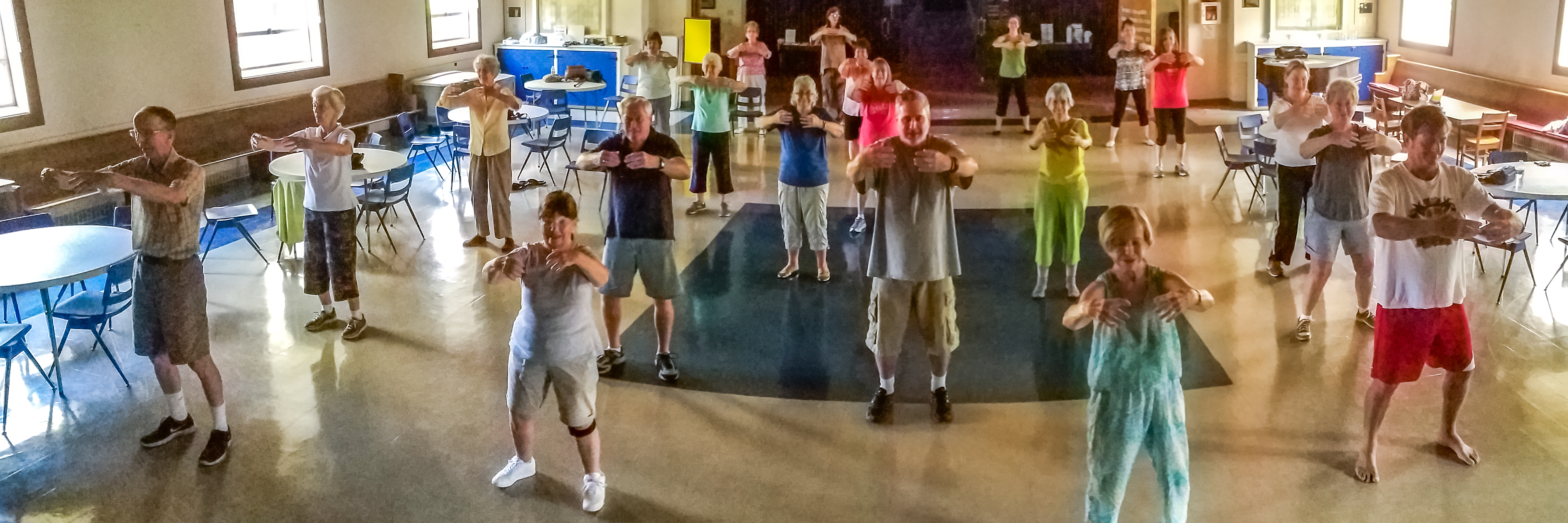
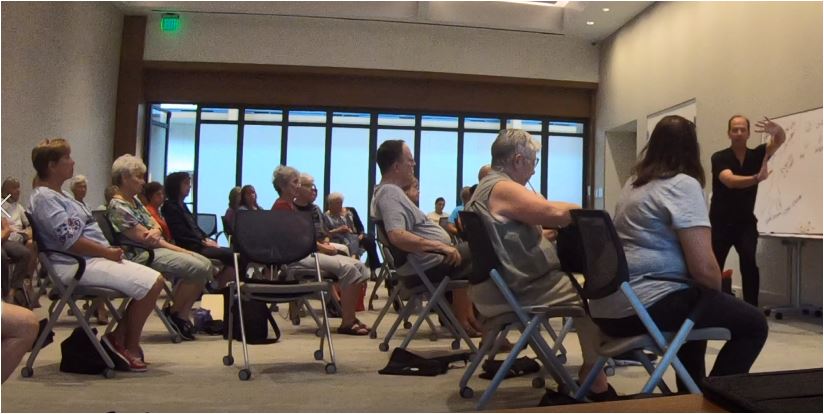
I teach and offer lectures about holistic health, physical fitness, stress management, human behavior, meditation, phytotherapy (herbs), music for healing, self-massage (acupressure), Daoyin (yoga), qigong, tai chi, and baguazhang.

Please contact me if you, your business, organization, or group, might be interested in hosting me to speak on a wide spectrum of topics relative to better health, fitness, and well-being.

I look forward to further sharing more of my message by partnering with hospitals, wellness centers, VA centers, schools on all levels, businesses, and individuals who see the value in building a stronger nation through building a healthier population.

I also have hundreds of FREE education video classes, lectures, and seminars available on my YouTube channel at:

https://www.youtube.com/c/MindandBodyExercises

Many of my publications can be found on Amazon at:

http://www.Amazon.com/author/jimmoltzan

My holistic health blog is available at:

https://mindandbodyexercises.wordpress.com/

http://www.MindAndBodyExercises.com

Mind and Body Exercises on Google: https://posts.gle/aD47Qo

Jim Moltzan

407-234-0119

Opening the Circle: How Wise Educators Welcome Outside Insight

As someone who has spent a lifetime immersed in holistic health, martial arts, qigong, and Eastern traditions, and authored 30 books on these subjects, I’ve encountered a curious dynamic when trying to share my work with fellow educators, programs, and organizations in the field.

Some colleagues and group leaders have wholeheartedly embraced my books, integrating them into their programs and recommending them to their students as complementary resources. These individuals and institutions see value in offering a broader lens and deeper tools, without fear of comparison or competition. They understand that true education isn’t about controlling a student’s learning but about nurturing it. However, not everyone responds this way.

Some instructors, schools, and even entire systems appear hesitant to recommend or promote my work or that of others outside of their bubble. In certain cases, there seems to be an unspoken fear. A fear that perhaps their students will see gaps in their own curriculum or discover new or more complete skills and insights not offered in their current learning path. It’s as though by acknowledging an external source of knowledge, they feel their authority or cohesion might be challenged.

This has raised an important question that others working in fields of mastery and personal development may also face:

Ego in the Path of Learning

In the very traditions many of us teach, ego is framed as the primary obstacle to growth. Yet even in practices designed to transcend ego, such as tai chi, meditation, and internal martial arts, ego often remains hidden in plain sight. A teacher or institution may subtly discourage external learning, not because the material lacks value, but because they feel exposed or threatened by it.

The deeper truth is this: a student’s growth should never be seen as a threat to a teacher’s role or a program’s identity. If anything, it’s a testament to the strength of their foundational guidance. When leaders cling to authority at the expense of their students’ evolution, they ultimately hinder the very progress their mission was meant to support.

The Role of Loyalty and Closed Systems

Another dimension that often goes unspoken is the role of loyalty. A quality that, while admirable, can sometimes limit a student’s growth when tied to overly hierarchical or ideologically rigid systems.

In some organizations, students are immersed in highly structured environments where authority is concentrated, hierarchies are strict, and questioning the curriculum is discouraged. These groups often cultivate a deep sense of allegiance, whether to a teacher, lineage, ideology, or system. This loyalty can create a powerful psychological barrier, making students feel that seeking information elsewhere is a form of betrayal.

When this dynamic becomes dominant, students may become hesitant to explore new resources, even when those resources are directly aligned with their path of growth. Out of respect or fear, they remain in a tightly controlled learning environment, sometimes unaware of how limited their exposure has become.

This kind of immersion often leads to echo chambers, where the same concepts, styles, and interpretations are reinforced over and over. While repetition is a valid and often necessary method of training, when it replaces diversity of thought and cross-pollination of ideas, the result is stagnation, both intellectually and spiritually.

From Competition to Collaboration

The mindset that views another’s work as a threat is rooted in scarcity: the idea that there’s only so much wisdom, attention, or recognition to go around. But those of us who have walked these paths know better. Real mastery breeds humility and a sense of abundance. There is always more to explore, more to share, and more to co-create together.

That’s why I’ve shifted my focus toward collaboration with those who operate from an open, growth-oriented paradigm. To teachers, schools, organizations, and systems that view education as a dynamic and shared mission, and not a personal or ideological pedestal. These “out of the box” thinkers are actively transforming how knowledge is shared, empowering their students with rich, multidimensional resources that enhance the learning journey.

Reframing the Message

To support this shift, I’ve worked to frame my books as teaching companions, not replacements. They’re meant to enhance the student experience, deepen understanding of nuanced principles, and provide historical and philosophical context that may not fit into the rhythm of regular classes or structured programs.

Some schools and instructors have even offered to write forewords for custom editions or bundle my books into their recommended reading lists, helping students understand how the material supports, not replaces their core instruction.

Creating Supportive Alliances

Rather than positioning my work as something to be adopted with hesitation, I aim to foster supportive alliances or mutual relationships with like-minded educators and organizations who are excited about sharing resources for the benefit of the student body. This spirit of collaboration builds trust and empowers everyone involved.

Sometimes, these collaborations emerge through casual conversations, mutual respect, or shared experiences. Other times, they’re sparked by a school or group seeking to expand its curriculum without reinventing the wheel. My books are here to serve those needs. They are carefully written and researched, richly illustrated, and grounded in lived experience.

Direct to the Seeker

At the same time, I recognize that today’s students are often independent seekers, driven not only by the structure of a school or system, but by curiosity and personal growth. These individuals pursue knowledge through other teachers, books, online resources, workshops, and direct inquiry. They are the ones finding my materials, using them to deepen their practice, and reaching out with appreciation and questions.

And that’s where my focus continues to grow in serving the serious student, the progressive educator, school, or wellness program that wants to support them.

Closing Thoughts

If anyone has created something meaningful, rooted in truth and cultivated through experience, it will find its audience. Not everyone will embrace it at first. Some may resist it. But the people and organizations that are ready will not only welcome it, but they’ll also help it flourish. In time, the strength of offering additional resources will speak louder than any insecurity.

I look forward to further sharing more of my message by partnering with hospitals, wellness centers, VA centers, schools on all levels, businesses, and individuals who see the value in building a stronger nation through building a healthier population.

I also have hundreds of FREE education video classes, lectures, and seminars available on my YouTube channel at:

https://www.youtube.com/c/MindandBodyExercises

Many of my publications can be found on Amazon at:

http://www.Amazon.com/author/jimmoltzan

My holistic health blog is available at:

https://mindandbodyexercises.wordpress.com/

http://www.MindAndBodyExercises.com

Mind and Body Exercises on Google: https://posts.gle/aD47Qo

Jim Moltzan

407-234-0119