Breathing is both an automatic physiological process and a foundational medium through which emotional regulation and somatic stability are maintained. Among the many respiratory patterns observed in humans, the physiological sigh represents a unique convergence of pulmonary mechanics, autonomic nervous system regulation, and traditional breath observations preserved in Daoist practices. Characterized by two sequential inhalations followed by a prolonged exhalation, the physiological sigh is an innate reflex that occurs spontaneously in healthy individuals and plays a critical role in maintaining lung function and nervous system balance (Del Negro et al., 2018; West, 2012).
While modern neuroscience and respiratory physiology have clarified the mechanisms underlying this breath pattern, Daoist and Traditional Chinese Medicine frameworks identified the functional importance of sighing centuries earlier, particularly in relation to Lung Qi regulation and emotional release. Examining the physiological sigh through both lenses reveals a rare alignment between classical somatic wisdom and contemporary scientific explanation.
Pulmonary Function and Alveolar Recruitment
From a biomedical perspective, the primary function of the physiological sigh is alveolar recruitment. During normal respiration, particularly under conditions of stress, fatigue, or restricted posture, small numbers of alveoli may partially collapse, reducing surface area available for gas exchange (West, 2012). Over time, this can lead to reduced lung compliance and diminished respiratory efficiency.
The physiological sigh counteracts this process through a brief second inhalation that increases transpulmonary pressure, allowing collapsed alveoli to reopen. This mechanism preserves lung elasticity and optimizes oxygen exchange, making the sigh an essential component of healthy respiratory maintenance rather than an incidental behavior (Del Negro et al., 2018).
Autonomic Nervous System Regulation
Beyond its mechanical function, the physiological sigh exerts a powerful influence on the autonomic nervous system. The prolonged exhalation phase enhances parasympathetic activity, primarily through vagal pathways, resulting in decreased heart rate, reduced sympathetic arousal, and rapid attenuation of stress responses (Porges, 2011).
Research in applied psychophysiology demonstrates that breathing patterns emphasizing extended exhalation improve heart rate variability and stabilize respiratory rhythm, contributing to reductions in perceived anxiety and respiratory discomfort (Lehrer et al., 2000). Because the sigh operates at the level of brainstem control rather than conscious effort, it remains effective even during states of emotional overwhelm or impaired cognitive processing.
Neurophysiological Basis of the Sigh Reflex
The physiological sigh is generated by respiratory rhythm centers located in the medulla, particularly the pre-Bötzinger complex and associated neural networks (Ramirez et al., 2013). These circuits integrate chemosensory feedback related to carbon dioxide levels and lung stretch, allowing the sigh to emerge automatically when respiratory efficiency declines.
This brainstem dominance explains why sighing is commonly observed during crying, emotional release, and moments of relief, as well as during sleep. It also explains why voluntary imitation of the physiological sigh can produce rapid calming effects when higher cognitive strategies are ineffective.
Daoist and Traditional Chinese Medicine Perspective
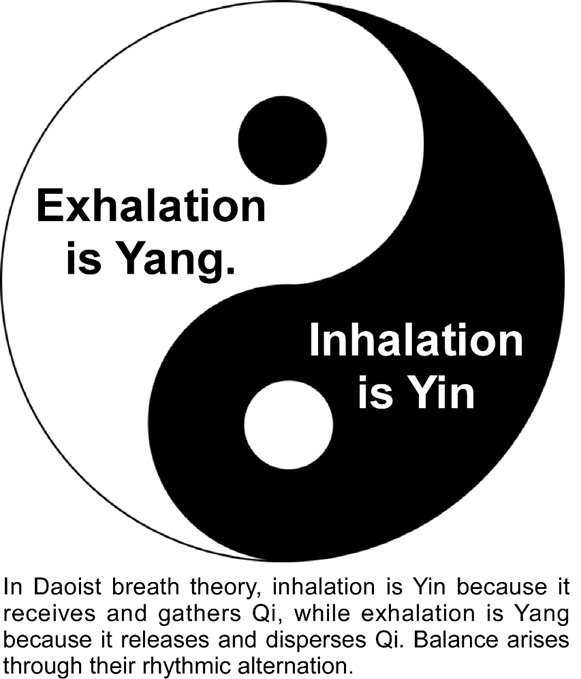
In Daoist breath theory and Traditional Chinese Medicine, sighing is closely associated with the Lung system, which governs respiration, rhythm, and the distribution of Qi (vital energy) throughout the body. The Lung is also linked to the Po, or corporeal soul, which is sensitive to grief, shock, and emotional contraction. Classical medical texts describe sighing as a spontaneous mechanism through which constrained Lung Qi is released and chest tension is alleviated.
The double inhalation observed in the physiological sigh can be interpreted within this framework as a restoration of Zong Qi, the gathering Qi of the chest, while the extended exhalation facilitates the descent and regulation of Lung Qi. This process supports Lung and Kidney coordination, a foundational principle in Daoist internal cultivation and breath regulation practices.
Dao Yin and qigong systems frequently incorporate a subtle secondary inhalation at the top of the breath, followed by a slow and complete exhalation. While historically described in energetic terms, modern physiology reveals that these practices align closely with alveolar recruitment and parasympathetic activation, suggesting that Daoist practitioners were observing functional outcomes long before their mechanisms could be scientifically articulated.
Integrative Application and Intentional Use
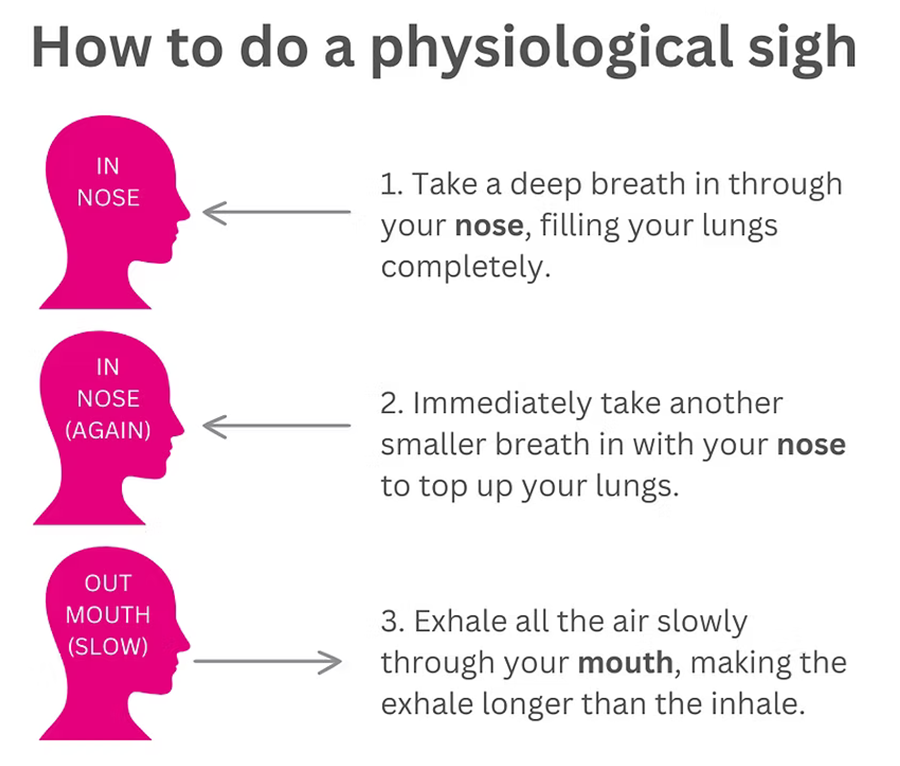
The physiological sigh can be intentionally reproduced as a practical tool for acute regulation:
- A gentle nasal inhalation
- A short secondary inhalation at the top of the breath
- A slow, extended exhalation until comfortably empty
This sequence may be repeated one to three times and is best used as a reset rather than a continuous breathing pattern. Excessive repetition may lead to lightheadedness due to altered carbon dioxide levels.
From an integrative perspective, this method represents neither a purely mechanical intervention nor a symbolic ritual. Rather, it is a functional reset that simultaneously restores lung mechanics, autonomic balance, and somatic coherence.
The physiological sigh exemplifies a rare point of convergence between modern respiratory science and Daoist breath theory. Scientifically, it functions as an essential mechanism for maintaining lung compliance and autonomic regulation through innate brainstem circuits. Traditionally, it has been recognized as a natural means of releasing chest constraint, settling the Heart Mind, and restoring respiratory rhythm.
This convergence underscores an important principle in integrative health: some of the most effective regulatory mechanisms are not learned techniques, but inherent biological safeguards that can be consciously supported when needed. The physiological sigh stands as a compelling example of how ancient somatic observation and contemporary neuroscience can inform and enrich one another.
References:
Balban, M. Y., Neri, E., Kogon, M. M., Weed, L., Nouriani, B., Jo, B., Holl, G., Zeitzer, J. M., Spiegel, D., & Huberman, A. D. (2023). Brief structured respiration practices enhance mood and reduce physiological arousal. Cell Reports Medicine, 4(1), 100895. https://doi.org/10.1016/j.xcrm.2022.100895
Del Negro, C. A., Funk, G. D., & Feldman, J. L. (2018). Breathing matters. Nature Reviews Neuroscience, 19(6), 351–367. https://doi.org/10.1038/s41583-018-0003-6
Lehrer, P. M., Vaschillo, E., & Vaschillo, B. (2000). Resonant frequency biofeedback training to increase cardiac variability. Applied Psychophysiology and Biofeedback, 25(3), 177–191. https://doi.org/10.1023/A:1009554825745
Porges, S. W. (2011). The polyvagal theory: Neurophysiological foundations of emotions, attachment, communication, and self-regulation. W. W. Norton & Company.
Li, P., Janczewski, W. A., Yackle, K., Kam, K., Pagliardini, S., Krasnow, M. A., & Feldman, J. L. (2016). The peptidergic control circuit for sighing. Nature, 530(7590), 293–297. https://doi.org/10.1038/nature16964
West, J. B. (2012). Respiratory physiology: The essentials (9th ed.). Lippincott Williams & Wilkins.