A Neurophysiological and Holistic Framework for Adaptive Human Development
Human development is not formed solely through comfort and stability. Across biology, psychology, and philosophy, a consistent principle emerges: properly dosed challenge strengthens living systems. This principle is expressed biologically through hormesis, psychologically through adaptive stress exposure, and existentially through post traumatic growth (PTG). While trauma is traditionally framed as inherently damaging, modern research demonstrates that under specific conditions, adversity can catalyze resilience, meaning, and higher levels of functioning (Tedeschi & Calhoun, 2004; Southwick et al., 2014). This essay explores the interrelationship between hormetic stress, strategic trauma, and post traumatic growth as a unified framework for conscious adaptation at the physiological, psychological, and behavioral levels.
Hormetic Stress: The Biological Language of Adaptation
Hormesis refers to the phenomenon where low to moderate doses of stress stimulate beneficial adaptive responses, while excessive doses cause damage (Mattson, 2008; Calabrese & Baldwin, 2003). This dose dependent stress response is observable across multiple biological systems including cellular repair, mitochondrial function, immune regulation, metabolic efficiency, and neuroplasticity.
Common hormetic stressors include:
• Physical exercise
• Intermittent fasting
• Thermal exposure (heat and cold)
• Hypoxic training
• Cognitive challenge
At the cellular level, hormetic stress activates transcription factors such as Nrf2, FOXO, and PGC-1α, which upregulate antioxidant defenses, mitochondrial biogenesis, and metabolic efficiency (Mattson, 2012). In the nervous system, moderate stress enhances brain derived neurotrophic factor (BDNF), which supports synaptic plasticity, learning, and emotional regulation (Cotman & Berchtold, 2002).
From a Traditional Chinese Medicine and martial cultivation perspective, these hormetic mechanisms mirror the progressive strengthening of jing (essence), qi (vital energy), and shen (consciousness) through controlled physical strain, breath discipline, and mental focus. What modern biology describes as cellular stress adaptation, Eastern systems describe as refinement of vital substance and spirit.
Strategic Trauma Versus Unbuffered Trauma
Not all stress is equal, and not all trauma is adaptive. A critical distinction must be made between unstructured traumatic overwhelm and strategic or titrated trauma exposure.
Unbuffered Trauma
Unbuffered trauma occurs when an individual is exposed to overwhelming threat without safety, agency, preparation, or recovery opportunity. This type of exposure dysregulates the hypothalamic pituitary adrenal (HPA) axis, elevates chronic cortisol, disrupts hippocampal memory encoding, and sensitizes the amygdala toward persistent hypervigilance (McEwen, 2007; van der Kolk, 2014). The result is often:
• Post traumatic stress disorder
• Affective instability
• Somatic symptoms
• Dissociation
• Learned helplessness
Strategic Trauma Exposure
Strategic trauma is fundamentally different. It involves controlled exposure to challenge, paired with:
• Voluntary engagement
• Predictable boundaries
• Meaningful framing
• Recovery integration
This distinction is supported by stress inoculation theory, which demonstrates that moderate stress exposure builds future resilience by training cognitive appraisal systems and autonomic recovery capacity (Meichenbaum, 2007; Southwick & Charney, 2012).
Examples of strategic trauma include:
• Structured martial training, yoga, qigong
• Intense athletic conditioning
• Therapeutic exposure therapy
• Vision quests and rites of passage
• Cold water immersion
• Breath retention protocols
In these environments, stress is not endured passively. It is metabolized through agency, training, and narrative meaning. Neurobiologically, this transforms threat perception from amygdala dominance into prefrontal mediated regulation, strengthening executive control over fear circuitry (Arnsten, 2009).
Post Traumatic Growth: Beyond Recovery
Post traumatic growth is not the absence of suffering. It is the reconstruction of identity, values, and meaning following disruption of core assumptions (Tedeschi & Calhoun, 2004). PTG differs from resilience. Resilience returns a person to baseline functioning. PTG elevates a person above prior psychological functioning.
Five consistent dimensions of PTG have been identified:
- Increased appreciation for life
- Enhanced personal strength
- Improved relationships
- Recognition of new possibilities
- Spiritual or existential transformation
These domains align closely with holistic frameworks of body, mind, and spirit development. Importantly, PTG does not arise from the trauma itself. It emerges from how the trauma is processed, integrated, and narrated (Joseph & Linley, 2006).
Neuroplasticity plays a central role. Trauma destabilizes existing neural networks. Growth emerges during the reorganization phase, especially when narrative meaning making, somatic regulation, and social connection are present (van der Kolk, 2014; Porges, 2011).
The Role of the Nervous System in Adaptive Stress Integration
The autonomic nervous system determines whether stress becomes destructive or transformative. According to polyvagal theory, physiological safety enables the body to shift from defensive survival states into social engagement and recovery pathways (Porges, 2011).
Strategic stress fosters:
• Faster vagal recovery
• Greater heart rate variability
• Reduced cortisol reactivity
• Increased emotional regulation
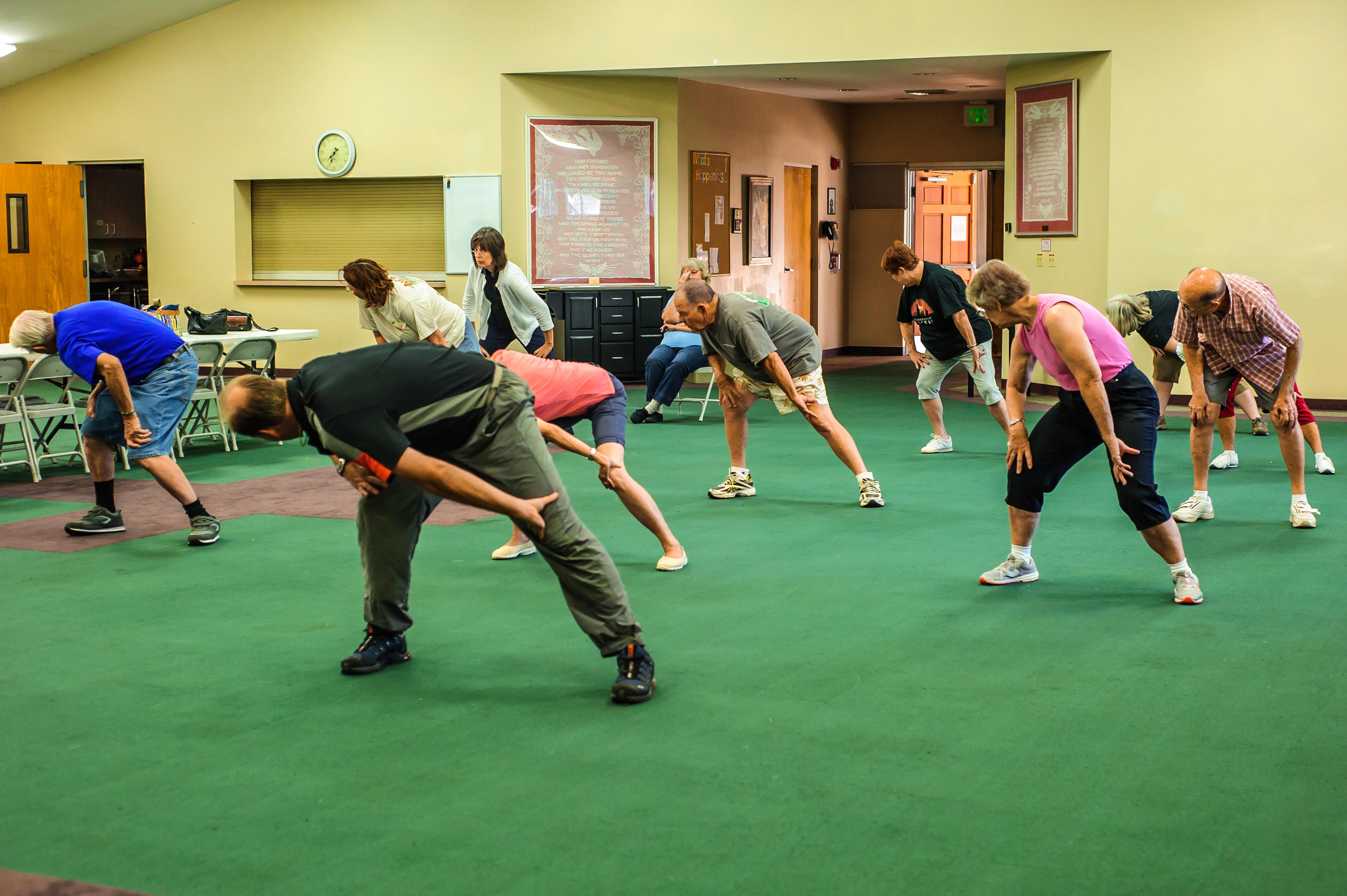
Practices such as breath control, Tai Chi, Dao Yin, meditation, and stance training directly stimulate vagal tone and proprioceptive integration. Through repeated exposure to physical and respiratory challenge with controlled regulation, the nervous system learns that stress does not equal danger. It becomes a signal for focused adaptation.
Meaning as the Catalyst of Growth
Trauma alone does not produce wisdom. Meaning transforms suffering into developmental coherence. Viktor Frankl demonstrated that individuals who interpreted suffering through purpose exhibited greater psychological endurance and recovery capacity (Frankl, 1959).
Meaning functions neurologically by:
• Regulating the default mode network
• Organizing autobiographical memory
• Anchoring identity coherence
• Reducing existential threat reactivity
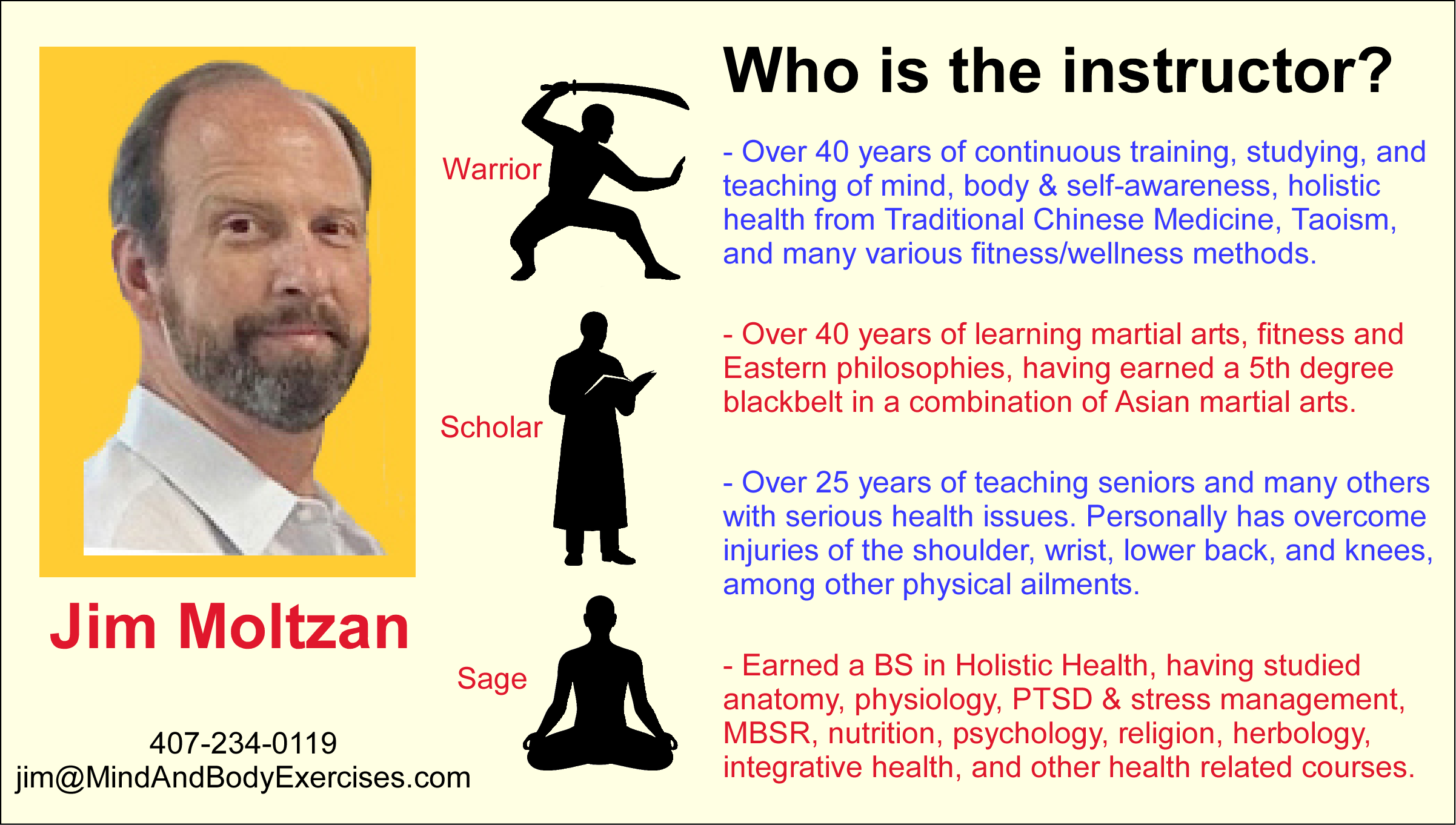
From the Warrior Scholar Sage model, meaning is not philosophical abstraction. It is a behaviorally embodied compass that directs effort into service, mastery, and ethical restraint. Without meaning, stress degenerates into pathology. With meaning, stress refines character.
Physical Systems as Trauma Integration Engines
Modern trauma research confirms what martial and somatic traditions have long taught: trauma is stored not only in memory but in the musculature, fascia, posture, and breath patterns (van der Kolk, 2014). Controlled physical stress restores integration through:
• Load bearing and skeletal feedback
• Fascial hydration through movement
• Intra abdominal pressure regulation
• Respiratory rhythm stabilization
Standing meditation, heavy stance work, and slow eccentric strength training impose mechanical hormetic stress that recalibrates proprioceptive accuracy and embodied confidence. This restores the individual’s relationship with gravity, space, effort, and self trust.
Strategic Suffering and the Misunderstood Role of Discomfort
Contemporary culture increasingly equates well-being with comfort. This misguided model weakens adaptive capacity. Discomfort is not the enemy of health. It is the training ground of resilience. What matters is dose, recovery, and interpretation.
Strategic suffering trains:
• Delayed gratification
• Impulse regulation
• Emotional tolerance
• Focus under pressure
• Psychological endurance
When suffering is voluntary, time limited, and purpose driven, it engrains self-respect rather than helplessness. This distinction explains why two individuals may endure similar stressors yet diverge entirely in outcome.
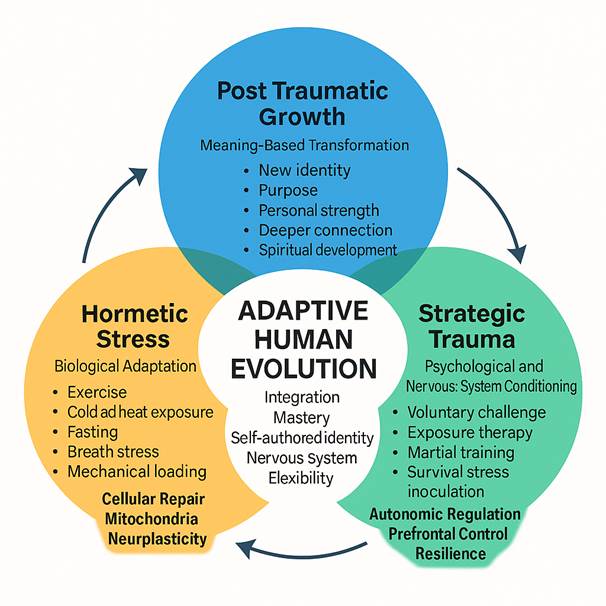
Integration of Hormesis, Strategic Trauma, and PTG
When viewed as a unified developmental sequence:
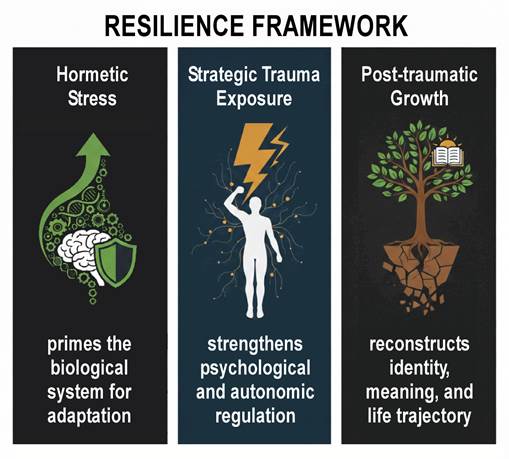
- Hormetic stress primes the biological system for adaptation
- Strategic trauma exposure strengthens psychological and autonomic regulation
- Post traumatic growth reconstructs identity, meaning, and life trajectory
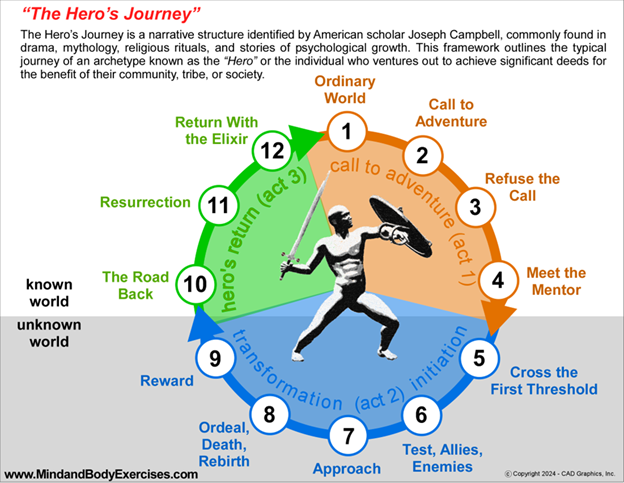
This triadic model reflects the ancient transformation archetype of descent, refinement, and return of Joseph Campbell’s Hero’s Journey (2014). It also aligns with neurobiological models of allostatic adaptation, somatic integration, and narrative restructuring.
Clinical and Educational Implications
This framework has direct application to:
• Trauma informed physical training
• Veteran rehabilitation
• Addiction recovery
• Youth development
• Leadership education
• Martial instruction
• Somatic psychotherapy
Rather than minimizing stress, the goal becomes teaching individuals how to engage with stress skillfully, recover efficiently, and integrate meaningfully.
Hormetic stress teaches the body to adapt. Strategic trauma teaches the mind to regulate. Post traumatic growth teaches the soul how to transform. When these three forces are understood as complementary rather than contradictory, trauma becomes neither romanticized nor feared. It becomes raw developmental material.
True growth does not come from avoiding adversity, nor from drowning in it, but from meeting it with structure, meaning, regulation, and skill. This is the timeless engine of human evolution.
References:
Arnsten, A. F. T. (2009). Stress signalling pathways that impair prefrontal cortex structure and function. Nature Reviews Neuroscience, 10(6), 410–422. https://doi.org/10.1038/nrn2648
Calabrese, E. J., & Baldwin, L. A. (2003). Toxicology rethinks its central belief. Nature, 421, 691–692. https://doi.org/10.1038/421691a
Campbell, J. (2014). The hero’s journey. New World Library.
Cotman, C. W., & Berchtold, N. C. (2002). Exercise: A behavioral intervention to enhance brain health and plasticity. Trends in Neurosciences, 25(6), 295–301. https://doi.org/10.1016/S0166-2236(02)02143-4
Frankl, V. E. (1959). Man’s search for meaning. Beacon Press.
Joseph, S., & Linley, P. A. (2006). Growth following adversity: Theoretical perspectives and implications for clinical practice. Clinical Psychology Review, 26(8), 1041–1053. https://doi.org/10.1016/j.cpr.2005.12.006
Mattson, M. P. (2008). Hormesis defined. Ageing Research Reviews, 7(1), 1–7. https://doi.org/10.1016/j.arr.2007.08.007
Mattson M. P. (2012). Energy intake and exercise as determinants of brain health and vulnerability to injury and disease. Cell metabolism, 16(6), 706–722. https://doi.org/10.1016/j.cmet.2012.08.012
McEwen, B. S. (2007). Physiology and neurobiology of stress and adaptation. Physiological Reviews, 87(3), 873–904. https://doi.org/10.1152/physrev.00041.2006
Meichenbaum, D. (2007). Stress inoculation training: A preventative and treatment approach. Pergamon Press.
Porges, S. W. (2011). The polyvagal theory: Neurophysiological foundations of emotions, attachment, communication, and self regulation. W. W. Norton.
Southwick, S. M., & Charney, D. S. (2012). Resilience: The science of mastering life’s greatest challenges. Cambridge University Press. https://doi.org/10.1017/CBO9781139013857
Southwick, S. M., Bonanno, G. A., Masten, A. S., Panter Brick, C., & Yehuda, R. (2014). Resilience definitions, theory, and challenges. European Journal of Psychotraumatology, 5, 25338. https://doi.org/10.3402/ejpt.v5.25338
Tedeschi, R. G., & Calhoun, L. G. (2004). Posttraumatic growth: Conceptual foundations and empirical evidence. Psychological Inquiry, 15(1), 1–18. https://doi.org/10.1207/s15327965pli1501_01
van der Kolk, B. A. (2014). The body keeps the score. Viking.