From Atheism to Awe: How Deep Science Awakens the Spiritual Mind

“A little knowledge of science makes you an atheist, but in-depth knowledge of science makes you a believer in God.”
              – Often attributed to Francis Bacon, founder of the scientific method

In today’s cultural landscape, science is often framed as being in conflict with religion or spirituality. Many young learners, upon their first encounter with scientific explanations of the universe, feel empowered by naturalistic theories that appear to replace the need for a divine creator. Yet, as some of history’s greatest minds have discovered, the deeper one delves into the mysteries of existence, the more the boundary between science and spirituality begins to blur.

This article explores how surface-level understanding of science can lead to atheism, while profound scientific inquiry often circles back to the awe, mystery, and reverence traditionally associated with belief in a higher order.

I. Shallow Science: When God Seems Unnecessary

When individuals first engage with scientific thought, they often encounter a worldview that appears fully self-contained:

  • Biology explains life through evolutionary theory, offering a compelling, godless account of biodiversity.
  • Neuroscience reduces human thought and behavior to chemical and electrical activity in the brain.
  • Physics and cosmology portray a universe arising from a quantum vacuum or Big Bang, operating without obvious purpose or design.

This can easily lead to scientific materialism, the belief that only physical matter and measurable phenomena exist. In such a view, God becomes redundant, as a vestige of earlier ignorance.

Indeed, many atheists point to science as their justification. As evolutionary biologist Richard Dawkins (2006) contends in The God Delusion, the universe we observe has “precisely the properties we should expect if there is, at bottom, no design, no purpose, no evil and no good, nothing but blind, pitiless indifference.”

But is this truly the endpoint of scientific discovery?

II. Deep Science: The Return of the Sacred

As scientific understanding matures, new questions emerge, with richer, stranger, and more metaphysically provocative than the answers that came before. This deeper engagement often reveals that the universe is far from a cold, mechanistic void. Instead, it is intricate, harmonious, and astonishing in ways that seem to defy chance or randomness.

1. The Fine-Tuning of the Universe

Modern physics has revealed that the fundamental constants of the universe, such as gravity, electromagnetism, and the strong nuclear force are finely tuned for life. A minuscule deviation in any of these constants would render the cosmos sterile and lifeless (Rees, 1999).

This raises profound questions: Why do these constants exist at all? Why are they so precisely calibrated?

While some propose the multiverse theory to explain this, others like theoretical physicist Paul Davies (2007) suggest that the universe “seems to be fine-tuned for consciousness,” implying the possibility of a purposeful or intelligent order.

2. The Enigma of Consciousness

Despite all our advances in neuroscience, no theory adequately explains how subjective experiences of thoughts, emotions, and inner life arise from the brain’s gray matter. This “hard problem of consciousness” has led some researchers to propose panpsychism or dual-aspect monism, theories that view consciousness as a fundamental feature of the universe, not an accidental byproduct (Chalmers, 1996).

Such views resonate with spiritual traditions that see consciousness, not matter, as primary. As Max Planck, founder of quantum theory, once said:

“I regard consciousness as fundamental. I regard matter as derivative from consciousness” (Planck, 2014).

3. Mathematics and the Mind of God

One of the most mysterious features of the cosmos is that it can be described so precisely by mathematics, an abstract language invented by the human mind. Why should physical reality conform to these equations?

Einstein called this “the incomprehensible comprehensibility of the universe.” For many, this suggests not randomness but order and rationality, akin to the classical idea of Logos, where a divine ordering principle present in Greek philosophy and Christian theology (John 1:1).

4. Quantum Mysteries and Nonlocality

Quantum mechanics defies classical logic:

  • Particles can exist in multiple states until observed (superposition).
  • Entangled particles influence each other instantaneously, even across vast distances (nonlocality).

These findings challenge our assumptions about space, time, causality and even the role of consciousness in shaping reality. While interpretations vary, the quantum world seems less like a machine and more like a mystery, echoing ancient insights from mystical traditions (Zohar & Marshall, 1994).

5. Science’s Own Limits

Science is a powerful tool, but it has limits. It can tell us how things happen, but not why they exist. It cannot fully answer:

  • Why there is something rather than nothing
  • Whether the universe has purpose or meaning
  • What grounds morality, love, or beauty
  • What happens after death

As John Polkinghorne (2005), a quantum physicist and theologian, notes:

“Science describes the processes of the world, but religion is required to make sense of its meaning.”

III. The Wisdom of Scientists and Seekers

Many prominent scientists have acknowledged the spiritual implications of their work:

  • Albert Einstein: “The more I study science, the more I believe in God” (quoted in Clark, 1971).
  • Werner Heisenberg: “The first gulp from the glass of natural science will turn you into an atheist, but at the bottom of the glass, God is waiting” (Heisenberg, 1974).
  • Carl Jung, though a psychologist, echoed similar themes in his work on archetypes and the collective unconscious, seeing spiritual insight as part of the individuation process (Jung, 1968).

IV. A Holistic View: Integration Over Division

From a holistic health and wellness perspective, the journey from materialism to meaning mirrors our own inner evolution:

  • At first, we crave certainty, reductionism, and linear logic.
  • Later, through deeper study and lived experience, we learn to embrace mystery, paradox, and awe.
  • Wellness, too, is not just physical; it involves spiritual alignment, emotional integration, and conscious living.

In this sense, the journey through science becomes a path to spiritual maturity. True wholeness is not rejecting science in favor of God or vice versa but realizing that the two may be part of a unified truth.

Conclusion: From Knowing to Wondering

Superficial knowledge may cast aside the sacred. But deep understanding restores it, not as dogma, but as mystery. Not as fear-based belief, but as reverence, humility, and awe at a universe far more intricate and interconnected than materialism allows.

“When the eye of science truly opens wide, it sees not just the gears of the universe but its soul.”

References:

Chalmers, D. J. (1996). The conscious mind: in search of a fundamental theory. https://philpapers.org/rec/CHATCM

Clark, R. W. (1971). Einstein: The Life and Times. World Publishing Company. https://archive.org/details/einstein00rona

Davies, P. (2007). The Goldilocks Enigma: Why Is the Universe Just Right for Life? Houghton Mifflin. https://archive.org/details/goldilocksenigma0000davi

Dawkins, R. (2006). The God Delusion. Houghton Mifflin. https://philosophy.org.za/uploads_other/The_God_Delusion_(Selected).pdf

Heisenberg, W. (1974). Physics and Beyond: Encounters and Conversations. Harper & Row. https://archive.org/details/physicsbeyondenc00heisrich

Jung, C.G. (1968). The Archetypes and the Collective Unconscious (R.F.C. Hull, Trans.; 2nd ed.). Routledge. https://doi.org/10.4324/9781315725642

Planck, M. (2014). Scientific Autobiography ([edition unavailable]). Philosophical Library/Open Road. Retrieved from https://www.perlego.com/book/2393069/scientific-autobiography-and-other-papers-pdf  (Original work published 2014)

Polkinghorne, J. (2005). Exploring Reality: The Intertwining of Science and Religion. Yale University Press. https://archive.org/details/exploringreality0000polk

Rees, M. (1999). JUST SIX NUMBERS. In The Deep Forces That Shape the Universe. BASIC. https://al-sabeel.net/wp-content/uploads/2020/08/JUST-SIX-NUMBERS-The-Deep-Forces-That-Shape-the-Universe.pdf

Zohar, D., & Marshall, I. (1994). The Quantum Society: Mind, Physics and a New Social Vision. William Morrow https://archive.org/details/quantumsocietymi0000zoha

Pain vs. Pleasure: Core Mechanisms

The human body’s ability to experience and regulate both pain and pleasure is central to its survival, adaptation, and overall well-being. These sensations are not isolated phenomena but are deeply rooted in complex neural, chemical, and hormonal systems that influence behavior, emotion, and physiological balance. This article explores the intricate physiological mechanisms involved in pain and pleasure, as well as how they interact with the body’s homeostatic processes to maintain equilibrium and guide adaptive responses to both internal and external stimuli.

1. Neural Pathways

  • Pain (Nociception):
    • Specialized nerve endings (nociceptors) detect noxious stimuli (heat, pressure, chemicals).
    • Signals travel via the spinothalamic tract to the thalamus and somatosensory cortex for interpretation.
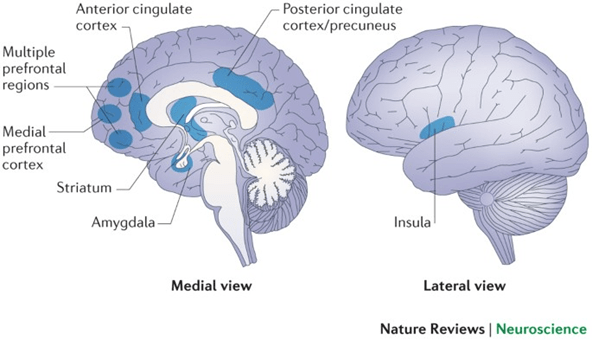
    • Limbic system (amygdala, anterior cingulate cortex) mediates the emotional aspects of pain (Leknes & Tracey, 2008).
  • Pleasure (Reward):
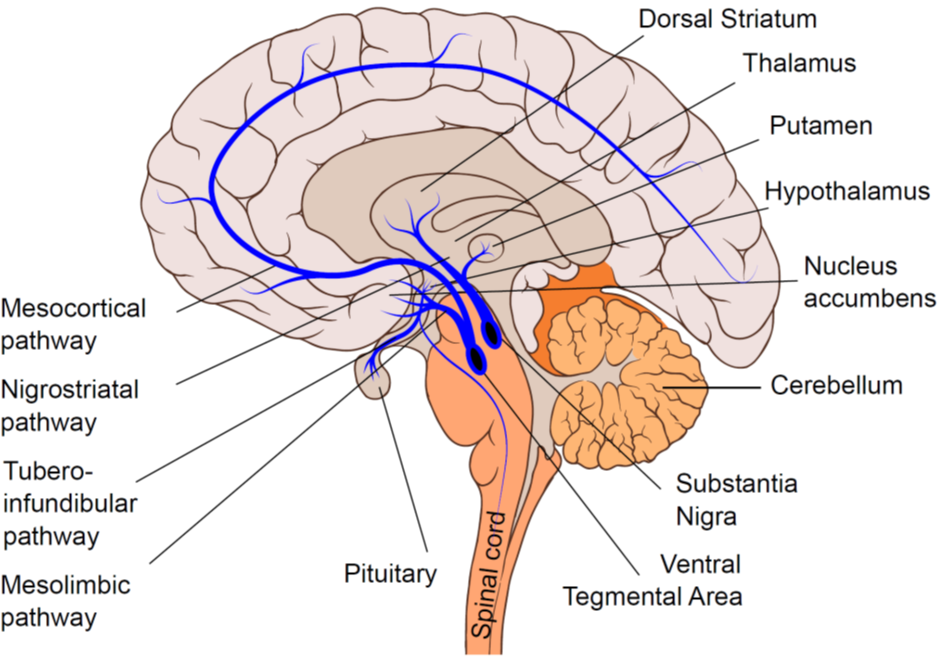
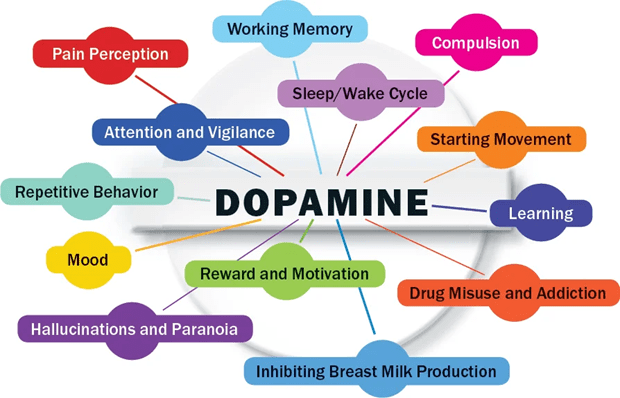
    • Mediated by the mesolimbic dopamine pathway, primarily involving the ventral tegmental area (VTA) and nucleus accumbens (NAc).
    • Stimuli like food, sex, exercise, or music release dopamine, producing pleasure and reinforcement (Fields, 2004).

2. Neurotransmitters & Chemicals

NeurochemicalRole in PainRole in Pleasure
Dopamine↓ in chronic pain (Leknes & Tracey, 2008)↑ in reward/pleasure (Fields, 2004)
SerotoninModulates pain perception (McEwen, 2007)Enhances mood, pleasure (Fields, 2004)
EndorphinsNatural opioid, inhibits pain (Zubieta et al., 2005)Induces euphoria (“runner’s high”) (Fields, 2004)
Substance PPromotes pain signal transmission (Fields, 2004)
GABA & GlycineInhibit pain signals (McEwen, 2007)Promote relaxation (Ulrich-Lai & Herman, 2009)
OxytocinMay reduce pain; bonding hormone (Leknes & Tracey, 2008)Enhances social pleasure (Leknes & Tracey, 2008)

3. Homeostasis: The Balance Regulator

a. The Hypothalamus

  • The hypothalamus is the central control for maintaining homeostasis. It monitors:
    • Temperature
    • Blood glucose
    • pH
    • Hormone levels
    • Circadian rhythms
      (McEwen, 2007)
  • It regulates autonomic output and endocrine functions via:
    • Pituitary gland
    • Sympathetic and parasympathetic systems
      (Ulrich-Lai & Herman, 2009)

b. Autonomic Nervous System (ANS)

  • Sympathetic Nervous System (SNS): “Fight or flight” – increases HR, BP, dilates pupils, inhibits digestion.
  • Parasympathetic Nervous System (PNS): “Rest and digest” – promotes digestion, slows HR, conserves energy
    (Ulrich-Lai & Herman, 2009).

c. Pain, Pleasure, and Autonomic Balance

  • Pain → SNS activation: Increased cortisol, inflammation, heightened alertness.
  • Pleasure → PNS activation: Lowered stress hormones, improved digestion, enhanced healing and immunity
    (Fields, 2004; McEwen, 2007).

4. Adaptive Feedback Loops

a. HPA Axis (Hypothalamic–Pituitary–Adrenal Axis)

  • Activated during chronic pain or stress.
  • Releases cortisol and other glucocorticoids to mobilize energy.
  • Chronic activation can lead to:
    • Suppressed immune function
    • Disrupted sleep
    • Impaired neuroplasticity
      (McEwen, 2007; Ulrich-Lai & Herman, 2009)

b. Reward System Feedback

  • Positive reinforcement strengthens pleasure-seeking behavior.
  • Dopaminergic signaling adapts: excess pleasure (e.g., from addictive substances) can reduce sensitivity, requiring more stimulus for the same effect (tolerance)
    (Leknes & Tracey, 2008).

5. Integration: Pain-Pleasure-Homeostasis Interplay

ConditionPain SystemPleasure SystemHomeostasis Impact
Acute ExerciseStimulates endorphins (mild pain)↑ Dopamine, endorphins (Fields, 2004)Improves cardiovascular balance (McEwen, 2007)
Chronic Stress↑ Cortisol, ↑ Substance P (McEwen, 2007)↓ Dopamine, serotonin (Leknes & Tracey, 2008)Disrupts sleep, digestion, immunity (Ulrich-Lai & Herman, 2009)
Meditation/Relaxation↓ SNS activation (Ulrich-Lai & Herman, 2009)↑ GABA, ↑ serotonin (McEwen, 2007)Restores ANS balance (Ulrich-Lai & Herman, 2009)
Trauma (Physical/Emotional)Activates nociception + amygdala (Leknes & Tracey, 2008)Blunts reward pathways (Fields, 2004)Dysregulated HPA axis, chronic pain (McEwen, 2007)

V. Holistic Considerations

From a holistic health perspective, balance between pain and pleasure is key to maintaining dynamic equilibrium:

  • Pain is a protective signal—meant to initiate change or healing.
  • Pleasure signals safety and reward—encouraging repeat behavior.
  • Both influence behavior, decision-making, immune function, and neuroplasticity (McEwen, 2007; Fields, 2004).

Regular practices like:

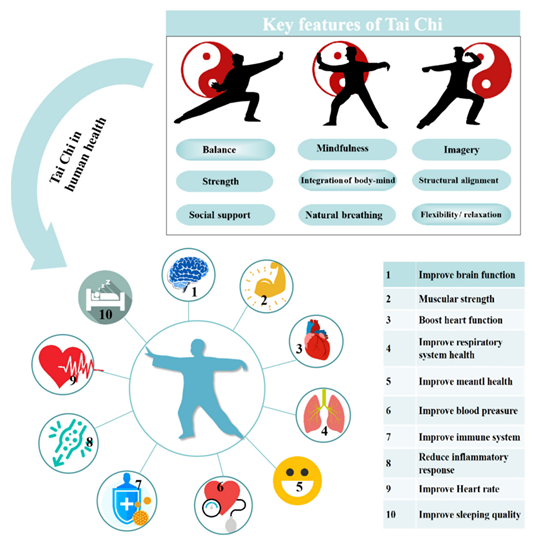
  • Tai Chi, Qigong, exercise, cold exposure, mindful eating, and social connection
    help regulate this system and enhance adaptive resilience (Ulrich-Lai & Herman, 2009).

The physiological mechanisms governing pain and pleasure are not only crucial for signaling threat or reward but also act as integral regulators of the body’s internal environment. These systems work synergistically with the hypothalamus, autonomic nervous system, and endocrine pathways to maintain homeostasis, reinforce survival behaviors, and foster adaptation. Understanding these interconnected networks opens the door to more effective holistic health interventions, such as movement, mindfulness, and social engagement, that support the body’s natural capacity to manage stress, enhance pleasure, and restore balance.

References:

Fields, H. L. (2004). State-dependent opioid control of pain. Nature Reviews Neuroscience, 5(7), 565–575. https://doi.org/10.1038/nrn1431

Leknes, S., & Tracey, I. (2008). A common neurobiology for pain and pleasure. Nature Reviews Neuroscience, 9(4), 314–320. https://doi.org/10.1038/nrn2333

McEwen, B. S. (2007). Physiology and neurobiology of stress and adaptation. Physiological Reviews, 87(3), 873–904. https://doi.org/10.1152/physrev.00041.2006

Readingraphics. (2025, July 13). Book summary – Dopamine Nation: Finding Balance in the Age of Indulgence. Readingraphics. https://readingraphics.com/book-summary-dopamine-nation/

Ulrich-Lai, Y. M., & Herman, J. P. (2009). Neural regulation of endocrine and autonomic stress responses. Nature Reviews Neuroscience, 10(6), 397–409. https://doi.org/10.1038/nrn2647

Zubieta, J. K., et al. (2005). Placebo effects mediated by endogenous opioid activity on μ-opioid receptors. Journal of Neuroscience, 25(34), 7754–7762. https://doi.org/10.1523/JNEUROSCI.0439-05.2005

When to Do and When Not to Do

A Warrior–Scholar–Sage Perspective on Discernment, Discipline, and Rest

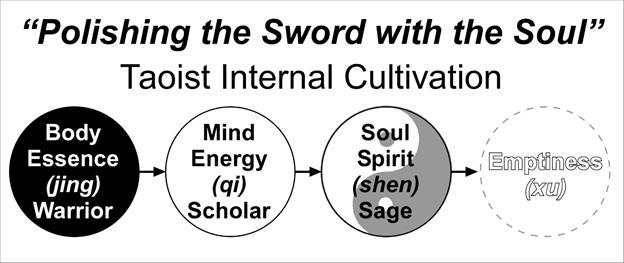
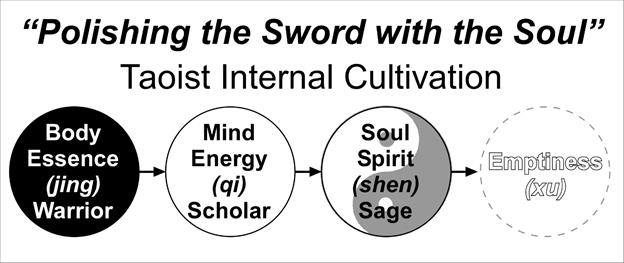
Modern culture equates productivity with virtue. We are conditioned to believe that constant motion is synonymous with progress and that rest is a form of weakness. Yet across classical Eastern philosophy, martial traditions, and contemplative lineages, wisdom has never been measured by how much one does, but by knowing when to act and when not to act. This discernment lies at the heart of the Warrior–Scholar–Sage archetype and is expressed through the timeless triad of True, Right, and Correct.

To live well is not merely to be busy, but to be aligned. The true path is not found through endless activity, but through refined awareness and the capacity to recognize what deserves our energy and what must be released.

The Warrior: Mastery of Discipline and Restraint

The Warrior represents Right action. Not impulsive action, not reactive behavior, but action rooted in clarity, purpose, and timing. In classical martial traditions, discipline is not merely physical conditioning but cultivated judgment. The greatest warrior is not one who fights constantly, but one who knows when not to fight.

Sun Tzu reminds us that victory is achieved not by brute force, but by superior strategy and restraint:

“He will win who knows when to fight and when not to fight.”
(The Art of War; Sun Tzu, trans. Griffith, 1971)

The Warrior’s training develops self-command, or the ability to resist distraction, ego-driven urgency, and emotional reactivity. This mastery is reflected in the modern principle of the “not-to-do list,” which removes time-wasters, unnecessary meetings, and low-impact obligations that drain vitality and clarity. Just as a martial artist conserves energy for decisive moments, the modern Warrior must learn to say “no” to what is trivial in order to say “yes” to what is meaningful.

In Taoist philosophy, this principle is expressed as wu wei, or effortless action through alignment rather than force. Wu wei does not mean passivity; it means acting only when action is harmonious with circumstance (Lao Tzu, trans. Mitchell, 1988). The Warrior does not struggle against the current of life; he moves with it.

The Scholar: Clarity of Mind and Discernment of Truth

The Scholar represents True understanding. Before action, perception must come. Before movement, awareness must come. The Scholar refines cognition, attention, and reflection so that effort is guided by wisdom rather than compulsion.

In Eastern philosophy, clarity is cultivated through stillness. The Tao Te Ching teaches:

“To the mind that is still, the whole universe surrenders.”
(Lao Tzu, trans. Mitchell, 1988)

This stillness is not emptiness but receptivity. It is the mental discipline that allows one to distinguish signal from noise, value from distraction, essence from excess. The Scholar understands that perpetual stimulation fragments attention and erodes creativity. Neuroscience now confirms that insight, problem-solving, and emotional regulation depend upon cycles of focused engagement and deliberate rest (Raichle, 2015; Kaplan & Berman, 2010).

Modern productivity research echoes ancient wisdom: deep work requires boundaries. Without reflection, we confuse urgency with importance. Without rest, we confuse movement with meaning. The Scholar therefore cultivates the discipline of reflection, journaling, meditation, and contemplative study, practices that refine perception and illuminate what is true.

The Sage: Alignment with Natural Law

The Sage embodies what is Correct, not merely in a moral sense, but in accordance with natural rhythm and universal order. The Sage recognizes that life unfolds in cycles: effort and restoration, engagement and withdrawal, expansion and contraction.

Traditional Chinese philosophy expresses this through the doctrine of yin and yang, complementary forces in perpetual transformation (Kaptchuk, 2000). Activity without rest becomes exhaustion. Rest without purpose becomes stagnation. Health, creativity, and wisdom arise from dynamic balance.

The Sage understands that overextension leads to collapse and that excessive control produces resistance. In Buddhism, this is reflected in the Middle Way, the path between indulgence and deprivation (Rahula, 1974). In Confucian ethics, it is expressed through li, proper conduct arising from situational appropriateness rather than rigid rules (Ames & Rosemont, 1998).

To the Sage, knowing when not to act is as powerful as knowing when to act. Stillness is not absence. Silence is not emptiness. Withdrawal is not retreating. These are strategic expressions of wisdom.

The Integrated Path: Living the True, Right, and Correct Life

When the Warrior, Scholar, and Sage are integrated, life becomes a practice of intelligent engagement. The individual learns to:

  • Act with discipline (Warrior — Right)
  • Perceive with clarity (Scholar — True)
  • Align with natural law (Sage — Correct)

This triadic harmony produces a life of purposeful effort rather than frantic striving. It teaches us to push forward when the moment calls for courage and endurance and to withdraw when reflection, restoration, or re-calibration is required.

The ancient sages understood what modern neuroscience now confirms: burnout is not a failure of character but a failure of rhythm. Creativity does not arise from constant stimulation but from alternating cycles of tension and release. Wisdom does not emerge from accumulation but from discernment.

To live well is not to do more. It is to do what matters and to release what does not.

The highest form of productivity is not busyness. It is alignment.

The highest form of discipline is not force. It is restraint.

And the highest form of wisdom is knowing, with clarity and courage, and when to do and when not to do.

References

Ames, R. T., & Rosemont, H. (1998). The analects of Confucius: A philosophical translation. Ballantine Books.

Griffith, S. B. (Trans.). (1971). Sun Tzu: The art of war. Oxford University Press.

Kaplan, S., & Berman, M. G. (2010). Directed attention as a common resource for executive functioning and self-regulation. Perspectives on Psychological Science, 5(1), 43–57. https://doi.org/10.1177/1745691609356784

Kaptchuk, T. J. (2000). The web that has no weaver: Understanding Chinese medicine (2nd ed.). McGraw-Hill.

Lao Tzu. (1988). Tao Te Ching (S. Mitchell, Trans.). HarperCollins.

Rahula, W. (1974). What the Buddha taught (2nd ed.). Grove Press.

Raichle, M. E. (2015). The brain’s default mode network. Annual Review of Neuroscience, 38, 433–447. https://doi.org/10.1146/annurev-neuro-071013-014030

Borrowed Meaning, Personal Authorship, and the Measure of a Life

Human beings have an enduring need for meaning, belonging, and purpose. Throughout history, individuals have aligned themselves with ideologies, political parties, professional identities, institutions, movements, and charismatic leaders in hopes of achieving recognition, security, direction, and a sense of significance. While such affiliations can offer structure and community, they also carry a subtle risk: the displacement of personal authorship in favor of borrowed meaning.

Psychological and philosophical academia suggests that meaning derived primarily from external validation or group identity is inherently fragile. Viktor Frankl (2006) argued that meaning cannot be handed down by systems or authorities; it must be discovered and embodied through personal responsibility and lived values. When individuals outsource their sense of purpose to an ideology, organization, or leader, they may experience temporary fulfillment yet remain existentially dependent upon forces outside themselves.

Modern culture increasingly reinforces identity through alignment. Social identity theory demonstrates that individuals often define themselves by the groups to which they belong, internalizing group values and narratives as personal identity markers (Tajfel & Turner, 1979). While this can foster cohesion, it can also suppress individuality and moral agency. Over time, allegiance may shift from being a conscious choice to an unquestioned loyalty, where dissent threatens belonging and conformity replaces reflection.

In such cases, people may spend years or entire lifetimes resources, contributing labor, emotional energy, and loyalty to systems that primarily expand the legacy, power, or recognition of others. Institutions grow. Leaders are remembered. Movements persist. Yet the individual contributor often fades into obscurity, having invested deeply in causes that did not meaningfully invest back in their personal development or well-being. Hannah Arendt (1958) warned that when individuals surrender judgment and responsibility to collective structures, they risk becoming functionaries rather than fully realized moral agents.

This raises a fundamental question: Whose legacy is being built?

At the end of life, few people aspire to be remembered for their affiliations. Rarely does one hope their memory will read “loyal employee,” “dedicated party member,” or “contributor to institutional success.” Instead, the identities most people cherish are relational and human: beloved parent, partner, friend, mentor. These roles are not bestowed by organizations; they are earned through presence, care, ethical consistency, and emotional availability over time.

Developmental psychology reinforces this distinction. Erikson (1982) described late adulthood as a period defined by the tension between integrity and despair, in which individuals reflect on whether their lives were meaningfully lived. Integrity emerges not from accumulated status, but from coherence between values, actions, and relationships. A life measured primarily by external achievement, devoid of authentic connection, often results in existential dissatisfaction rather than fulfillment.

Importantly, this is not an argument against service, cooperation, or contributing to causes larger than oneself. Meaningful work frequently involves collaboration, and healthy societies depend upon participation. However, there is a critical difference between serving a cause and surrendering one’s authorship to it. Self-determination theory emphasizes that psychological well-being depends on autonomy, competence, and relatedness, none of which thrive when individuals suppress their agency in pursuit of approval or belonging (Deci & Ryan, 2000).

True contribution strengthens both the individual and the collective. It arises when service is grounded in personal integrity rather than self-erasure, and when individuals retain moral discernment rather than deferring it to authority. Contribution that demands the forfeiture of identity, conscience, or critical thought ultimately diminishes the human spirit, even if it benefits external systems.

Legacy, therefore, is not a matter of scale or visibility. It is not defined by titles held, slogans defended, or institutions supported. Rather, it is reflected in the quiet, cumulative impact one has on the lives of others. Did one listen when it mattered? Act with courage when it was costly? Offer care without expectation of reward? Help others become more fully themselves rather than merely more productive or powerful?

Research on meaning in life consistently shows that fulfillment is most strongly associated with prosocial behavior, authenticity, and contribution to others’ well-being, not with status or ideological dominance (Martela & Steger, 2016). A life devoted solely to advancing systems, leaders, or abstract ideals may leave impressive structures behind, yet little trace of the individual soul that sustained them.

In a culture that frequently equates significance with visibility and success with alignment, choosing to root meaning in personal responsibility and human connection is a quiet act of resistance. It affirms substance over symbolism, depth over display, and conscience over conformity. When the final accounting arrives, most people do not wish to be remembered for what they stood behind, but for who they stood beside.

And in that measure, meaning is no longer borrowed, it is earned.

References

Arendt, H. (1958). The human condition (By The University of Chicago Press & The University of Chicago Press, Ltd.; 2nd ed., p. vii). The University of Chicago Press. https://www.dbu.edu/mitchell/modern-resources/_documents/arendt_the_human_condition.pdf

Deci, E. L., & Ryan, R. M. (2000). The “what” and “why” of goal pursuits: Human needs and the self-determination of behavior. Psychological Inquiry, 11(4), 227–268. https://doi.org/10.1207/S15327965PLI1104_01

Erikson, E. H. (1982). The life cycle completed. W. W. Norton & Company. https://archive.org/details/lifecyclecomplet0000erik_j3j4

Frankl, V. E. (2006). Man’s search for meaning (Rev. ed.). Beacon Press. (Original work published 1946) https://antilogicalism.com/wp-content/uploads/2017/07/mans-search-for-meaning.pdf

Martela, F., & Steger, M. F. (2016). The three meanings of meaning in life: Distinguishing coherence, purpose, and significance. The Journal of Positive Psychology, 11(5), 531–545. https://doi.org/10.1080/17439760.2015.1137623

Tajfel, H., & Turner, J. C. (1979). An integrative theory of intergroup conflict. In W. G. Austin & S. Worchel (Eds.), The social psychology of intergroup relations (pp. 33–47). Brooks/Cole.

Role Loss, Role Renewal, and the Path of Self-Mastery

A Life-Span Perspective on Inner Transformation

Human life unfolds through a series of roles, each carrying purpose, identity, and responsibility. In early and mid-adulthood, few roles are as consuming or as meaningful as that of parent and caregiver. Children, and often pets, become the gravitational center around which daily life, emotional energy, and long-term planning revolve. Yet these roles, by design, are temporary. When they change or dissolve, individuals are confronted not merely with loss, but with a profound existential question: Who am I when the role no longer defines me?

This experience is often described as role loss and is not a pathological condition, but a universal developmental passage. Whether it is children leaving home, shifting careers, aging bodies, or the death of companion animals, role transitions repeatedly invite (and sometimes force) inner reorganization. How one responds to these transitions determines whether the experience becomes a source of stagnation or a catalyst for transformation.

Parenting, Attachment, and Identity Enmeshment

Parenthood naturally restructures identity. Developmental psychology recognizes that adult roles are deeply intertwined with meaning, self-worth, and social validation (Erikson, 1950). Raising children requires sustained outward focus while protecting, guiding, financing, scheduling, and emotionally regulating for others. Over time, this external orientation can quietly eclipse internal development. Identity becomes fused with usefulness: I am needed, therefore I matter.

Pets often extend this caregiving role, especially as children age and become more independent. Companion animals provide continuity of responsibility, emotional regulation, and relational attachment, particularly during transitional phases when children are increasingly absent. Research confirms that pets frequently function as attachment figures and emotional stabilizers, especially in midlife and older adulthood (Brooks et al., 2018).

While these roles are meaningful and necessary, they can also delay an inevitable confrontation with the self, one that arrives when caregiving structures dissolve.

The Quiet Crisis of Role Loss

When children leave for college, careers, or families of their own, parents experience a second identity shift. Unlike earlier transitions, this one is often less publicly acknowledged and poorly ritualized. Western culture provides few frameworks for honoring the completion of a role, only its acquisition. The result is a subtle but destabilizing sense of redundancy, grief, and disorientation, commonly mislabeled as emptiness rather than understood as transition (Schlossberg, 1981).

The eventual loss of pets compounds this experience. Pets often represent the final daily structure of caretaking. Their passing can expose a stark silence, one that confronts individuals with unclaimed time, emotional bandwidth, and unresolved inner terrain. Grief, in this context, is not only about loss of companionship, but the collapse of a familiar role structure.

Without inner resources, these moments can devolve into distraction, compulsive busyness, or numbing behaviors. With awareness, however, they become invitations to a deeper stage of development.

Beneath the experience of role loss lies a deeper psychological reckoning: the quiet collapse of the illusion of control. Parenting and caregiving naturally foster the belief that vigilance, effort, and responsibility can shape outcomes, protect against loss, and stabilize the future. This belief is not naive; it is necessary. It allows parents to function, to commit fully, and to shoulder immense responsibility. Yet when children grow beyond parental reach or when beloved animals inevitably pass away, the limits of control become unmistakable. What dissolves is not merely a role, but the assumption that life can be managed through effort alone. This realization is often unsettling, but it is also liberating. It marks the threshold between external management and internal mastery, where meaning is no longer sustained by controlling circumstances, but by cultivating resilience, discernment, and acceptance within oneself.

Self-Mastery as Role Independence

Self-mastery begins where role dependency ends. Philosophical and psychological traditions alike emphasize that mature development involves shifting from externally assigned identity to internally cultivated authority. Carl Jung (1969) described this process as individuation: the lifelong task of becoming psychologically whole by integrating unconscious aspects of the self rather than living exclusively through social roles.

Similarly, Viktor Frankl (1959) argued that meaning cannot be sustained solely through responsibility to others; it must eventually be grounded in personal values, chosen purpose, and self-transcendence. When external roles fall away, the individual is challenged to generate meaning internally rather than inherit it from circumstance.

From an Eastern perspective, this transition mirrors long-standing teachings on detachment, not as disengagement from life, but as freedom from identity fixation. Taoist and Buddhist traditions emphasize that clinging to impermanent forms such as roles, relationships, identities, inevitably produces suffering. Liberation arises not from rejecting roles, but from recognizing that the self is larger than any single function it performs.

Inner Transformation Across the Life Span

Role loss, when consciously engaged, becomes a crucible for transformation. Developmental psychology frames later adulthood not as decline, but as a period of potential integration, wisdom, and generativity beyond productivity (Erikson, 1982). This stage invites reflection, synthesis, and the embodiment of lived insight rather than constant outward striving.

Practices associated with self-mastery often are rooted in reflection, physical discipline, breath awareness, ethical self-examination, and contemplative inquiry, providing structure when external roles disappear. These practices redirect attention inward, fostering resilience, emotional regulation, and coherence. Rather than asking, Who needs me now? the individual begins asking, What must I now cultivate within myself?

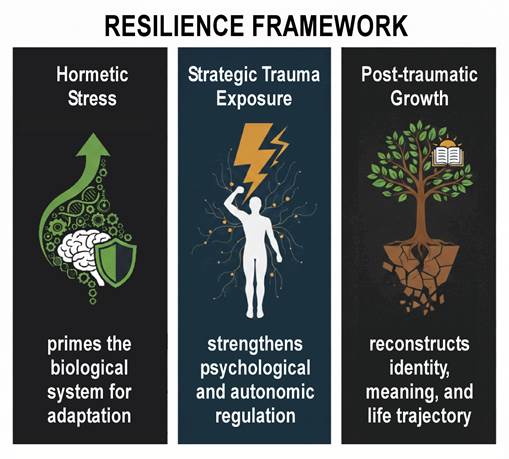
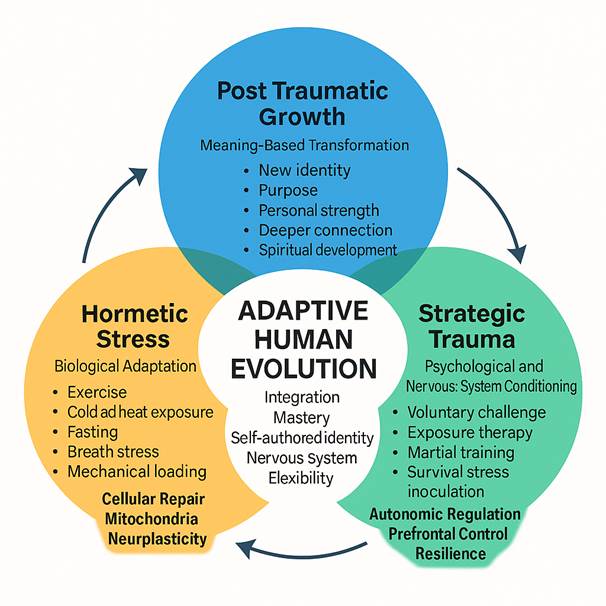
This shift aligns with post-traumatic growth research, which shows that major life disruptions often precede increases in psychological depth, appreciation of life, and existential clarity, when individuals engage adversity with intention rather than avoidance (Tedeschi & Calhoun, 2004).

From Role Loss to Role Renewal

Ultimately, the loss of roles is not an erasure of meaning, but a reorientation of it. The parent does not cease to be a parent; the caregiver does not lose compassion. Rather, these qualities are liberated from constant external demand and reintegrated as internal virtues such as wisdom, patience, discernment, and presence.

We most often earn value in life through service to others. Across every role we inhabit whether parent, caregiver, teacher, leader or otherwise, our words and actions inevitably affect other human beings. Yet while service gives life texture and meaning, it need not determine self-worth. Purpose does not collapse when a role dissolves, nor is identity dependent on what others think, say, or require of us. One of life’s enduring freedoms is the capacity to locate value within one’s own being, independent of role, recognition, or demand. When this freedom is realized, service becomes a choice rather than a necessity, and identity becomes grounded rather than contingent.

References

Brooks, H. L., Rushton, K., Lovell, K., Bee, P., Walker, L., Grant, L., & Rogers, A. (2018). The power of support from companion animals for people living with mental health problems: A systematic review and narrative synthesis of the evidence. BMC Psychiatry, 18(1), 31. https://doi.org/10.1186/s12888-018-1613-2

Erikson, E. H. (1950). Childhood and society. W. W. Norton & Company.

Erikson, E. H. (1982). The life cycle completed. W. W. Norton & Company.

Frankl, V. E. (1959). Man’s search for meaning. Beacon Press.

Jung, C. G. (1969). The structure and dynamics of the psyche (Collected Works, Vol. 8). Princeton University Press.

Schlossberg, N. K. (1981). A model for analyzing human adaptation to transition. The Counseling Psychologist, 9(2), 2–18. https://doi.org/10.1177/001100008100900202

Tedeschi, R. G., & Calhoun, L. G. (2004). Posttraumatic growth: Conceptual foundations and empirical evidence. Psychological Inquiry, 15(1), 1–18. https://doi.org/10.1207/s15327965pli1501_01