10-90% of the Efficacy of Prescriptions Comes Down to the Placebo Effect

Our society seems to rely heavily upon interpretation of scientific data, when it comes to healthcare and guidance, relative pharmaceuticals, procedures, etc. However, it is ironic that the US healthcare system relies quite heavily on this perception that medical pharmaceuticals can fix many ailments. The power of suggestion can play a significant role in alleviating pain and suffering. Somewhere between 10-90% of the efficacy of prescriptions comes down to the placebo effect.

Factors such as trust in the doctor prescribing the medication, specific details regarding the medicine, like its brand, price, name, and place of origin can all affect the patient’s potential belief in the medicine improving their aliment. So, while we keep hearing “follow the science”, the science seems to show that the placebo effect is indeed real and part of the US healthcare system.

References:

Colloca L. (2019). The Placebo Effect in Pain Therapies. Annual review of pharmacology and toxicology, 59, 191–211. https://doi.org/10.1146/annurev-pharmtox-010818-021542

The Pharmaceutical Journal, PJ, 19 September 2015, Vol 295, No 7880;295(7880):DOI:10.1211/PJ.2015.20069282

https://www.nature.com/articles/nrn3976

___________

I am currently offering wellness lectures and tai chi/fitness classes for group, small group & private instruction in Wekiva, Longwood and Winter Park. I also have hundreds of FREE education video classes, lectures and seminars available onmy YouTube channel at:

https://www.youtube.com/c/MindandBodyExercises

Mind and Body Exercises on Google: https://posts.gle/aD47Qo

Jim Moltzan

407-234-0119

www.MindAndBodyExercises.com

www.Amazon.com/author/jimmoltzan

Who Does the FDA Really Work For?

Why do food companies seem to have more rights than consumers, when it comes to disclosing what ingredients are in particular foods? The FDA loosened food labeling requirements mid-2020, with the stated goal of providing regulatory flexibility, to lessen the impact of supply chain disruptions of product availability related to the current COVID-19 pandemic.

Why Does the FDA Get Nearly Half Its Funding From the Companies It  Regulates? • Children's Health Defense

Reports show that the FDA is actually partially funded by the same companies that they are tasked with regulating, raising concerns with conflicts of interest. It is almost always best to do the due diligence and find where this information is coming from and find reputable sources as there is so much information available to the public today that can and will support whatever ones beliefs and viewpoints tend to lean towards.

The US government at its relative public health agencies, save severely lost the trust of the American people. Medical experts that have an audience, can start to rebuild trust, by just putting themselves out there with some transparency, honesty, humility, and empathy regarding these topics at hand. For example, if a scientist is interviewed as an expert on a particular topic, have them tell their story of being a director for the FDA and now being a board member for Pfizer, instead of people Googling this fact, seeing it maybe as a conflict of interest and then formulating their own conspiracy theory from it. Similarly, if the FDA is going to report that they took 108 days to review documents for licensing of the Pfizer covid19 vaccine and will honor a Freedom of Information Act (FOIA) request, don’t take 55 years to fully release the information to the group of scientists that made the request. Leaders and experts need to stop creating the perfect storm of events that will undoubtedly lead to conspiracy theories and consequently, more vaccine resistance.

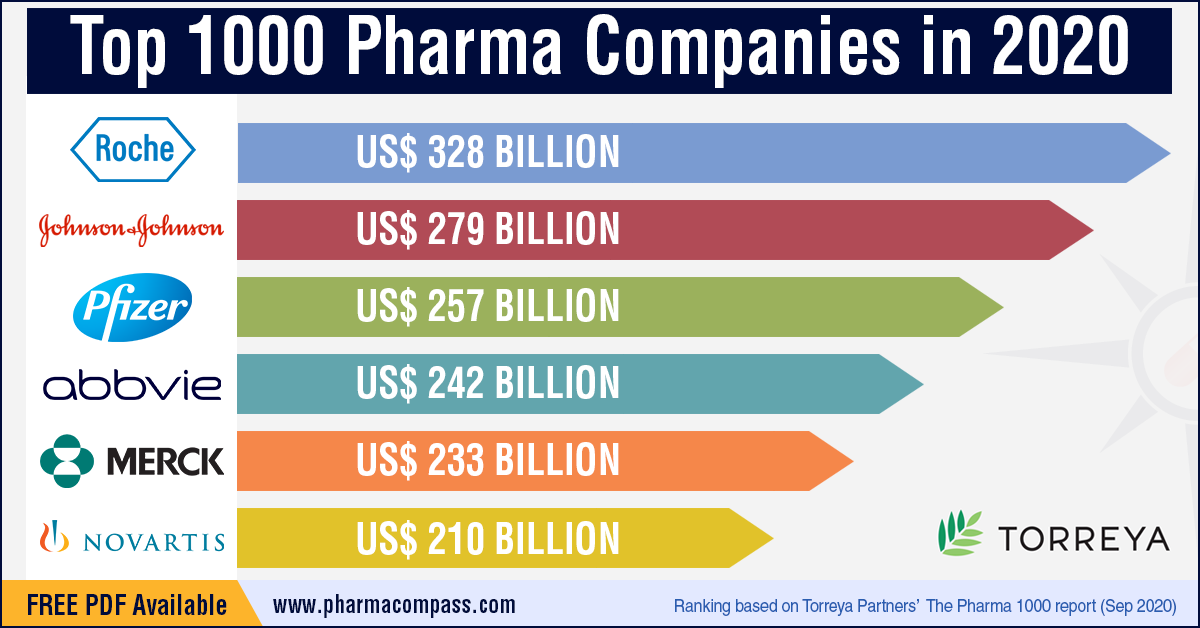
Top 1000 Pharma Companies in 2020 - Pharma Excipients

References:

http://www.childrenshealthdefense.org/defender/fda-nearly-half-funding-companies-it-regulates/

https://www.fda.gov/food/cfsan-constituent-updates/fda-announces-temporary-flexibility-policy-regarding-certain-labeling-requirements-foods-humansLinks to an external site.

https://today.uconn.edu/2021/05/why-is-the-fda-funded-in-part-by-the-companies-it-regulates-2/Links to an external site.

https://www.usatoday.com/story/news/factcheck/2021/08/27/fact-check-some-fdas-budget-does-come-industry-funding/5572076001/

Former FDA Commissioner Gottlieb defends decision to join Pfizer board (cnbc.com)

Elizabeth Warren tells Scott Gottlieb to resign from Pfizer board (usatoday.com) (Links to an external site.)

Soechtig, Stephanie, and Jason Lindsey. “Tapped.” YouTube, YouTube, 17 June 2021, https://www.youtube.com/watch?v=jeAtHj9L38o.


Be well, get healthy, be wise.

I am currently available for health and wellness lectures and classes for group, & private instruction in the Orlando, Florida area. Mind and Body Exercises on Google: https://posts.gle/aD47Qo

Jim Moltzan

407-234-0119

www.MindAndBodyExercises.com

https://www.facebook.com/MindAndBodyExercises/

https://www.youtube.com/c/MindandBodyExercises

https://mindandbodyexercises.wordpress.com/

https://umareg.com/masters-council/

The Cost of Treating Cystic Fibrosis

“Each year in the United States about 30,000 babies are born with cystic fibrosis, a disease that causes severe lung and breathing problems (Kaiser, 2012). This inherited (genetic) disease occurs because an affected child inherits a defective gene from each parent. Modern medical treatments enable babies born with cystic fibrosis to survive to about age 40. Despite the improved care and therapies, there still is no cure.

In 2012, the U.S. Food and Drug Administration (FDA) and the health programs in Canada, the European Union, and other countries approved the drug Kalydeco (ivakator), which can restore lung function in a specific subtype of cystic fibrosis patients—about 4 of 100. Vertex Pharmaceuticals, the company that manufactures Kalydeco, charges $300,000 for a year’s supply of pills (taken twice daily). Most cystic fibrosis patients who respond to the drug will need to take it for decades to stay alive.

Many doctors, patients and their families, and insurers, including the U.S. government, which pays for the drug through Medicare Disability and Medicaid, object to the high cost. They point out that the scientific research that discovered the drug was paid for by taxpayers and that Vertex received considerable help from the Cystic Fibrosis Association and hence spent less than the typical $1 billion to $2 billion to develop the new drug. Without some adjustment in the price, as is being demanded by the U.S. and European governments, each patient receiving the drug will produce a multi-billion-dollar profit for Vertex. In the for-profit model of drug development and sale, Vertex is doing nothing illegal to price its product as it sees fit.

The cost of Kalydeco and other new drugs approved for serious diseases—especially cancer—which is almost always more than $100,000 per treatment or annually if the drug must be given continuously, is a pressing problem facing the healthcare system. With modern genetic technologies to help produce more drugs to treat small numbers of patients, industry and drug developers will be tempted to exploit their advantage financially. Detecting and treating genetic and other serious diseases are rife with ethical and economic concerns that will become critical in the coming years.”

References:

Edlin, G., & Golanty, E. (2019). Health & Wellness (13th ed.). Jones & Bartlett Learning

I am currently offering wellness lectures and classes for group, small group & private instruction in Wekiva, Longwood and Winter Park.

For more info, contact Jim Moltzan at info@mindandbodyexercises.com, 407-234-0119 or through my site at http://www.mindandbodyexercises.com

www.MindAndBodyExercises.comhttp://www.Amazon.com/author/jimmoltzan

https://www.facebook.com/MindAndBodyExercises/https://www.youtube.com/c/MindandBodyExercises

https://mindandbodyexercises.wordpress.com/http://www.umareg.com/masters-c

FDA/EPA – guardians of the consumer or a shill for Big Pharma & Medical?

Should these products have been approved in the 1st place? I realize not everyone has health issues from these items, but who wants to test their luck? I guess if a product generates $XXXbillion, and lawsuits payout $Xbillion, it was a good business plan. Do your research, when it comes to your well-being. No one should care more about your health than you.

Be well, stay healthy, be wise.

__________

Learn how to maintain health, fitness and wellness with tai chi, gigong and other time-proven methods. Private, small or group instruction.

Take care of yourself because no one else should care more about you than you. Eat better, move more, stress less, be nicer. Be well!

Jim Moltzan 407-234-0119

www.MindAndBodyExercises.com

http://www.Amazon.com/author/jimmoltzan

https://www.facebook.comMindAndBodyExercises

https://www.youtube.com/c/MindandBodyExercises

https://mindandbodyexercises.wordpress.com/

Masters Council

FDA, Food & Drug Companies – Overuse of Antibiotics in the Food Chain

Good information regarding the FDA, drug and food companies who are all contributing to chemicals allowed into the American diet, in spite of the health risks. Remember when we were taught that “you are what you eat” and thought it was ridiculous? Regardless, most people continue to trust those that willfully make us sick.

“In the 1990s, the FDA approved two drugs, Baytril and SaraFlox, that could be added routinely to poultry feed. These two drugs belong to a class of extremely effective antibiotics called fluoroquinolones; members of this family of drugs are used to treat the bacteria that cause anthrax and food borne infections. Scientists and the American Medical Association warned that such use in animal feed would lead to the emergence of antibiotic-resistant strains. After several years of use, this is exactly what happened, and the FDA tried to ban the use of the drugs in livestock. Drug companies fought the FDA, and it was years before the drugs were finally withdrawn from the market. But it was to late; resistance had already occurred. Fluoroquinolone drugs are now much less effective in treating staph infections.”

“In 2007, the FDA again succumbed to drug company pressures and approved the use of a powerful antibiotic, cefquinome, for use in animal feed. Again the American Medical Association and many other health organizations warned that adding this drug to animal feed would, within a few years, lead to antibiotic-resistant strains of pathogenic bacteria and render this powerful class of drugs much less effective. Despite the overwhelming evidence of the health peril from overuse of antibiotics in animals and people, the US. government still has not restricted the unnecessary use of antibiotics as most other countries have done (Woolhouse & Ward, 2013). Every year in the United States, drug companies sell thousands of tons of antibiotics for use in livestock and people. Time after time over the last several decades, the FDA has bowed to industry pressures and has failed to perform its primary mission to protect the health of Americans.”

References:

Edlin, G., & Golanty, E. (2019). Health & Wellness (13th ed.). Jones & Bartlett Learning, pg. 273

Woolhouse, M. E. J., & Ward, M. J. (2013). Sources of antimicrobial resistance. Science, 341 , 1460—1461.https://www.ncbi.nlm.nih.gov/pmc/articles/PMC4424433/