Time as a Line, a Cycle, and a Spiral

Human beings have long attempted to understand the nature of time, whether it flows as a straight line, repeats in cycles, or unfolds in a multidimensional pattern that transcends simple geometry. In Western scientific thought, time is generally described as linear, moving from past to future along an irreversible path shaped by entropy. In contrast, many spiritual, philosophical, and cosmological traditions propose a cyclical or spiral nature of time, suggesting that events, patterns, and developmental processes recur, yet do so at progressively different states of complexity or awareness. Contemporary neuroscience, psychology, cosmology, and systems theory increasingly support a hybrid view: time may appear linear to conscious perception, operate cyclically in biological and cosmic rhythms, and unfold in a spiral structure in terms of human growth and the evolution of systems. This essay integrates scientific, philosophical, and esoteric perspectives to show that time is not exclusively linear or cyclical; rather, it behaves as both, a dynamic spiral that unites forward motion with recurrent patterns.

Linear Time: Direction, Causality, and Human Perception

The most straightforward model of time is linear: a sequence of moments extending from a defined past into an open future. Physicists often rely on this model to describe causality, entropy, and the “arrow of time,” the direction in which disorder or entropy increases in closed systems (Carroll, 2010). From this standpoint, time’s linearity is a consequence of thermodynamic laws, which dictate that systems naturally evolve from ordered states toward greater randomness. This thermodynamic arrow establishes an irreversible progression from past to present to future (Price, 1996).

Human perception reinforces this linear model. Cognitive scientists note that our subjective experience of time is constructed through temporal sequencing, or the ability to arrange events in a coherent narrative (Eagleman, 2009). Memory also structures time linearly: we recall past events but cannot access future ones. Developmental psychology further reinforces linearity through observable life stages of infancy, adolescence, adulthood, and aging, each building upon previous phases (Baltes, Lindenberger, & Staudinger, 2006). Because of this subjective and biological structure, humans tend to equate time with unidirectional progress.

Yet, although linear time is practical for navigation, memory, and survival, it does not fully capture the repetitive, rhythmic, or transformational aspects found in nature or human consciousness. For this reason, linear time is best viewed as one dimension of a larger temporal structure.

Cyclical Time: Biological Rhythms, Cosmic Patterns, and Ancient Traditions

Cyclical models of time are found across ancient and modern systems. Many cultures including Hindu, Taoist, Mayan, and Indigenous traditions—describe time as repeating cycles of creation, decay, and renewal (Eliade, 1954). Cycles are embedded everywhere in the natural world: the phases of the moon, the oscillation of the seasons, tidal rhythms, hormonal cycles, and circadian patterns all express a temporal circularity that is intrinsic to life (Foster & Kreitzman, 2014).

Biology offers some of the most compelling evidence for cyclical temporality. The human circadian rhythm, governed by the suprachiasmatic nucleus, follows a daily 24-hour cycle that regulates sleep, hormone release, cellular repair, and cognitive functioning (Hastings, Maywood, & Brancaccio, 2019). These processes repeat with remarkable precision, yet each cycle subtly differs based on environmental cues and internal conditions. Similarly, the brain undergoes rhythmic oscillations during wakefulness and sleep, replaying and reorganizing memories in repeated neural cycles (Buzsáki, 2006).

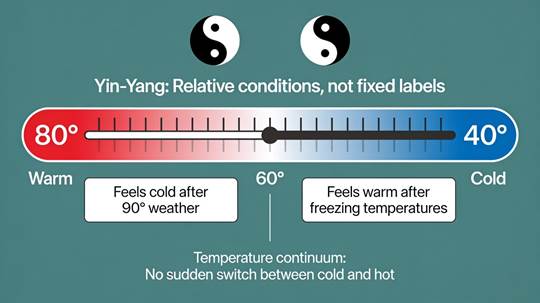
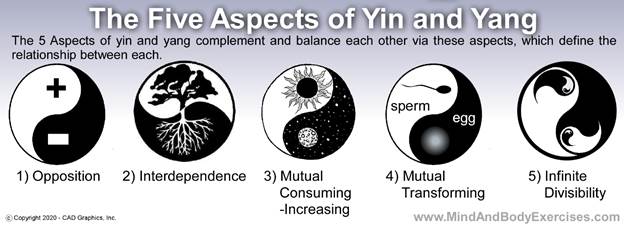
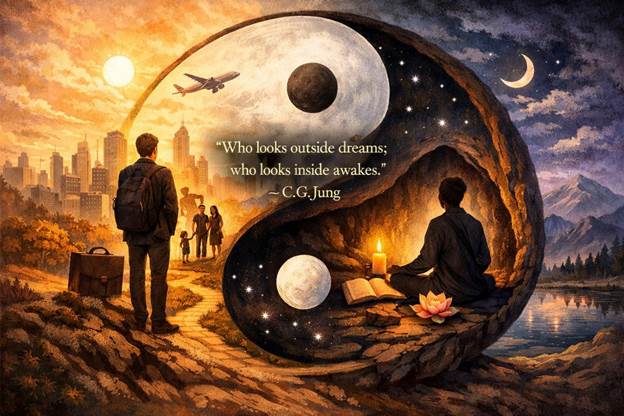
Cyclical time is also central to psychology. Emotional narratives, behavioral patterns, and relationship dynamics often repeat, albeit in varying intensities or contexts. Carl Jung argued that archetypes and symbols recur throughout history and individual development, reflecting cyclical patterns in the collective unconscious (Jung, 1959). In Taoist philosophy, the interplay of yin and yang illustrates cycles of expansion and contraction, activity and rest, growth and decay, each phase necessary for the next (Kohn, 2001). These traditions echo the idea that cycles do not merely repeat but evolve as they recur.

Although cycles appear circular, life does not return to the exact same point. Instead, patterns reemerge within a dynamic system that is constantly changing. This suggests that time may not be strictly circular but may instead follow a spiral trajectory.

Spiral Time: A Synthesis of Linearity and Cyclicality

A spiral model of time integrates the linear and cyclical frameworks into a more accurate representation of temporal reality. A spiral advances forward (like a line) while simultaneously looping through recurring phases (like a cycle). This pattern describes many natural systems, including galaxies, weather formations, and biological structures such as DNA, which is itself a double helix—a spiral encoding the evolution of life (Watson & Berry, 2003).

Spiral time also aligns with developmental and psychological models in which human beings revisit earlier stages but with greater depth, insight, or capacity. In transformative learning theory, individuals repeatedly encounter challenges that mirror previous experiences, yet their responses become more sophisticated as consciousness evolves (Mezirow, 2000). Similarly, trauma recovery often follows a spiral pattern in which emotions resurface periodically but with increasing resilience and understanding, a process known as post-traumatic growth (Calhoun & Tedeschi, 2014).

In Taoist internal alchemy (Nei Dan), spiritual development is explicitly described as cyclical refinement along an ascending path. Practitioners repeat meditative, energetic, and behavioral cycles to refine jing (essence), qi (vital energy), and shen (spirit or consciousness), not in perfect loops but in spiraling transformations that gradually elevate awareness (Larre & Rochat de la Vallée, 1996).

Likewise, in cosmology, some theoretical models propose that cosmic evolution may involve oscillatory processes occurring along an expanding trajectory, an interplay of expansion, contraction, and entropy-driven change that resembles a spiral rather than a straight line or a closed loop (Steinhardt & Turok, 2002).

Thus, the spiral becomes a unifying symbol for the multidimensional nature of time: forward motion built upon recurring yet transforming cycles.

The Human Experience of Time as Spiral Evolution

Human consciousness experiences time in a way that closely matches the spiral model. While daily rhythms repeat, no two days are identical. We revisit emotional and psychological patterns, but with new insights. Practices such as meditation, qigong, tai chi, and introspection also reveal the spiral nature of personal development. Repetition is not redundancy; it is refinement.

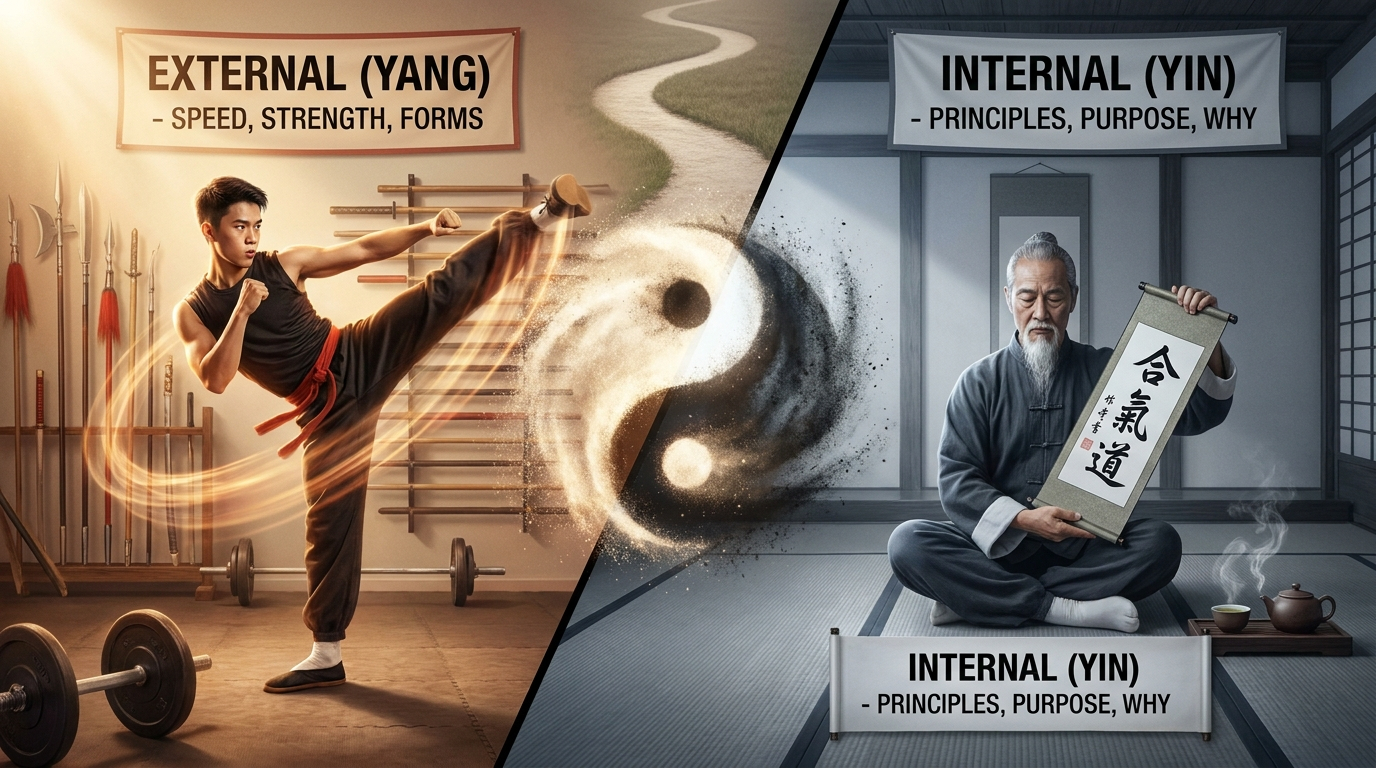
In martial arts, the practitioner endlessly repeats foundational forms, but each iteration deepens physical mastery, energetic sensitivity, and mental focus. Over years of practice, the same movement is performed thousands of times, yet with evolving meaning and embodiment. This is the essence of spiral time: returning to familiar territory but from a higher vantage point.

Likewise, personal growth follows a spiral trajectory. Challenges resurface, but each cycle presents an opportunity to integrate previous lessons, leading to new capacities, perspectives, and states of consciousness. The spiral is not only a temporal model but a developmental one that mirrors the complexity of human life.

Time cannot be adequately captured by a single geometric metaphor. Although scientific models emphasize linearity through entropy and causality, the rhythms of the natural world and the recurrences within human psychology demonstrate cyclical qualities. Yet neither framework alone is sufficient. A more holistic perspective recognizes that time advances while simultaneously repeating patterns, creating a structure that is best understood as a spiral, with a synthesis of forward progression and cyclical recurrence.

This spiral model aligns with biological rhythms, cosmological theories, psychological development, and spiritual traditions such as Taoist internal alchemy. It also describes the lived experience of human growth, in which individuals revisit patterns with increasing depth and awareness. Ultimately, time is not merely a straight line we travel or a circle we repeat; it is a spiral we ascend, evolving through iterative cycles of experience, learning, and transformation.

 (Historical Infographics: Into the Depth of Time, 2021)

References:

Baltes, P. B., Lindenberger, U., & Staudinger, U. M. (2006). Life-span theory in developmental psychology. In R. M. Lerner & W. Damon (Eds.), Handbook of child psychology: Vol. 1. Theoretical models of human development (6th ed., pp. 569–664). Wiley.

Buzsáki, G. (2006). Rhythms of the brain. Oxford University Press.

Calhoun, L. G., & Tedeschi, R. G. (2014). Handbook of posttraumatic growth: Research and practice. Psychology Press.

Carroll, S. (2010). From eternity to here: The quest for the ultimate theory of time. Dutton.

Eagleman, D. (2009). Brain time: The temporal dimension of consciousness. In M. Gazzaniga (Ed.), The cognitive neurosciences (4th ed., pp. 659–666). MIT Press.

Eliade, M. (1954). The myth of the eternal return: Cosmos and history. Princeton University Press.

Foster, R., & Kreitzman, L. (2014). The rhythms of life: The biological clocks that control the daily lives of every living thing. Yale University Press.

Hastings, M.H., Maywood, E.S. & Brancaccio, M. Generation of circadian rhythms in the suprachiasmatic nucleus. Nat Rev Neurosci 19, 453–469 (2018). https://doi.org/10.1038/s41583-018-0026-z

Historical infographics: Into the depth of time. (2021, July 25). https://sandrarendgen.wordpress.com/2017/10/30/data-trails-the-geological-time-spiral-1975/

Jung, C. G. (1959). The archetypes and the collective unconscious. Princeton University Press.

Kohn, L. (2001). Daoism and Chinese culture (2nd ed.). Three Pines Press.

Larre, C., & Rochat de la Vallée, E. (1996). The seven emotions: Psychology and health in ancient China. Monkey Press.

Mezirow, J. (2000). Learning as transformation: Critical perspectives on a theory in progress. Jossey-Bass.

Morrill, D. (2022). The difference between linear time and circular time | Debra Morrill. https://debramorrill.com/the-difference-between-linear-time-and-circular-time

Price, H. (1996). Time’s arrow and Archimedes’ point. Oxford University Press.

Steinhardt, P. J., & Turok, N. (2002). A cyclic model of the universe. Science, 296(5572), 1436–1439. https://doi.org/10.1126/science.1070462

Watson, J. D., & Berry, A. (2003). DNA: The secret of life. Knopf.

Introducing a New Series: The Architecture of the Human Journey

In a world saturated with fragmented advice on health, fitness, and personal development, there remains a need for something more complete, structured, integrated, and grounded in both lived experience and timeless principles.

Over the course of several decades of study, practice, and teaching across the fields of holistic health, martial arts, and human development, a unifying framework has gradually taken shape. This framework does not isolate the body from the mind, nor the mind from the spirit. Instead, it recognizes that human growth unfolds through the dynamic interaction of multiple systems of physical, biological, energetic, behavioral, and philosophical.

It is from this perspective that a new six-part book series emerges:

The Architecture of the Human Journey

This series is not simply a collection of books. It is a structured exploration of what it means to develop as a human being: physically, mentally, energetically, and ethically within the realities of modern life.

Each volume builds upon the others, forming a progressive pathway toward greater awareness, resilience, and self-mastery.

Book 1: The Self-Healing Body

The journey begins with the body—not as a machine to be pushed or punished, but as a living system designed for adaptation, repair, and resilience.

The Self-Healing Body explores the foundational principles of movement, posture, breathing, and recovery. It challenges the modern tendency toward inactivity and over-reliance on external interventions, instead emphasizing the body’s innate capacity to restore balance when given the proper conditions.

Readers are guided toward a deeper understanding of how daily habits of sitting, standing, walking, breathing shape long-term health outcomes. The message is clear: the body is not broken; it is often simply underused, misused, or misunderstood.

Book 2: The Biological Mind

If the body is the foundation, the mind is the regulator.

The Biological Mind examines how thoughts, emotions, stress responses, and neurological patterns influence both behavior and physiology. Rather than viewing the mind as something abstract or separate, this book presents it as a biological system, deeply connected to the nervous system, hormones, and physical health.

Topics include stress conditioning, attention, perception, and the ways in which modern environments can dysregulate natural mental processes. Readers are encouraged to recognize how their internal dialogue and external inputs shape their lived experience.

Book 3: The Energetic Body

Beyond the physical and biological lies a more subtle, yet equally important dimension: the energetic system.

The Energetic Body draws from Traditional Chinese Medicine, Daoist practices, and internal martial arts to explore concepts such as qi, meridians, breath, and internal flow. While often overlooked in Western models, these systems have guided health and movement practices for thousands of years.

This volume bridges the gap between ancient insight and modern understanding, offering practical ways to cultivate energy through breathwork, posture, and intentional movement.

Book 4: Embodied Discipline

Knowledge without application remains incomplete.

Embodied Discipline focuses on the integration of body, mind, and energy through consistent practice. It is here that theory becomes lived experience. Discipline is reframed not as rigid control, but as the steady cultivation of habits that align with one’s values and goals.

Drawing from martial arts training, this book explores how structure, repetition, and intentional challenges build not only physical capacity, but mental clarity and emotional resilience.

Book 5: The Healthcare Paradox

Modern healthcare offers remarkable advancements, yet widespread chronic illness continues to rise.

The Healthcare Paradox examines this contradiction. It explores how systems designed to treat disease often overlook the foundational behaviors that prevent it. Nutrition, movement, stress, environment, and personal responsibility all play a role, yet are frequently underemphasized.

This book does not reject modern medicine but rather places it within a broader context. One that encourages individuals to become active participants in their own health rather than passive recipients of care.

Book 6: The Human Journey

The final volume steps back to consider the broader question: What is all of this for?

The Human Journey explores meaning, purpose, relationships, and the realities of growth over a lifetime. It integrates the lessons of the previous volumes into a larger philosophical perspective, drawing from both Eastern and Western traditions.

It recognizes that strength, clarity, and health are not ends in themselves, but tools that support a more meaningful and connected life.

A Complete Framework for Modern Living

Taken together, these six books form a cohesive system:

  • The body provides structure
  • The mind provides direction
  • The energy system provides flow
  • Discipline provides integration
  • Awareness of systems provides context
  • Meaning provides purpose

This is the architecture – not of a building, but of a life.

In a time when information is abundant, but wisdom is scattered, The Architecture of the Human Journey offers a way to reconnect the pieces. It invites readers not just to learn, but to observe, reflect, and ultimately take responsibility for their own development.

This is not a quick fix or a temporary program. It is a long-term approach to living with greater awareness, strength, and integrity.

The journey is ongoing. The architecture is yours to build.

Science, Faith, and the Nature of Miracles

Reframing the Ancient and the Modern

We often hear the phrase, “trust the science,” particularly in matters of health, medicine, and public policy. At the same time, billions of people across the world continue to hold religious and spiritual beliefs that include miracles, or events that appear to defy natural explanation. This creates an apparent tension: if science explains the world through observable and repeatable processes, where do miracles fit?

This question becomes even more intriguing when we consider that miraculous events, such as the resurrection of Christ, the parting of the Red Sea, or the “burning bush,” are described as miracles, where miracles were relatively common in ancient texts, yet seem absent or highly disputed in modern times. Has something changed in reality itself, or has the change occurred within human perception and interpretation?

The Scope and Limits of Science

Science is a powerful and reliable method for understanding the natural world. It is based on systematic observation, measurement, and replication (Popper, 2002). Through this process, science has explained countless phenomena once considered mysterious or divine, including disease processes, weather patterns, and neurological conditions.

However, science operates within specific boundaries:

  • It studies repeatable and observable phenomena
  • It relies on empirical evidence and falsifiability
  • It does not address one-time, unrepeatable events effectively

By definition, miracles are:

  • Singular
  • Non-repeatable
  • Often tied to subjective or spiritual meaning

Thus, science does not necessarily disprove miracles, it simply lacks the tools to evaluate them within its framework.

Ancient Interpretations of Extraordinary Events

In ancient times, the absence of scientific understanding often led to supernatural interpretations of natural events. For example:

  • Seizures or altered states may have been viewed as spiritual possession or divine encounter
  • Sudden recovery from illness may have been interpreted as miraculous healing
  • Unusual environmental events could be attributed to divine intervention

This does not imply that all ancient accounts are false, but rather that interpretation was shaped by available knowledge and cultural worldview (Ehrman, 2014).

Additionally, many ancient narratives were transmitted orally before being recorded in written form. Oral traditions often emphasize meaning, symbolism, and moral teaching, which can lead to amplification or stylization over time (Vansina, 1985).

Revisiting Biblical Miracles Through a Modern Lens

Scholars have proposed natural explanations for some biblical events:

  • The parting of the Red Sea may reflect wind-driven water displacement or tidal phenomena (Drews & Han, 2010)
  • The burning bush could represent a natural flame or symbolic narrative
  • Reports of healing may involve spontaneous remission or psychosomatic effects

The resurrection of Christ, however, remains a unique case. Interpretations vary widely:

  1. A literal supernatural event (faith-based view)
  2. Misinterpretation of death (e.g., premature burial)
  3. Visionary or psychological experiences among followers
  4. A symbolic theological narrative

From a scientific standpoint, the resurrection cannot be verified or falsified due to its historical and non-repeatable nature. It exists primarily within the domains of theology, philosophy, and historical interpretation (Licona, 2010).

Why Miracles Seem Absent Today

Several factors contribute to the perceived decline in miracles:

1. Increased Scientific Knowledge

Modern science explains many phenomena that were once mysterious. As understanding grows, fewer events are classified as supernatural.

2. Higher Standards of Evidence

Today’s claims are evaluated through:

  • Documentation
  • Video recording
  • Independent verification

Extraordinary claims now require substantial evidence (Sagan, 1996).

3. Cultural Skepticism

Modern society emphasizes critical thinking and empirical validation. Claims of miracles are often met with scrutiny or psychological interpretation.

Bridging Science and Spirituality

Rather than viewing science and faith as opposing forces, they can be understood as addressing different aspects of human experience:

  • Science explores mechanisms and processes
  • Philosophy examines meaning and reasoning
  • Spirituality engages with purpose, connection, and transcendence

For example, meditation has been shown to influence brain function and emotional regulation (Davidson & McEwen, 2012), while also producing subjective experiences of insight and transformation. Both perspectives offer valid, complementary insights.

A Holistic Interpretation of Miracles

From a holistic standpoint, miracles may be reframed as:

  • Events that lie at the edge of current understanding
  • Experiences that carry profound personal or collective meaning
  • Interpretations shaped by cultural, psychological, and spiritual frameworks

In this view, the question is not simply whether miracles are “real” or “not real,” but how humans interpret and assign meaning to extraordinary experiences.

The apparent divide between science and miracles may not reflect a change in reality, but rather a transformation in human perception. Ancient people interpreted the unknown through a spiritual lens, while modern society relies on scientific frameworks to explain the same phenomena.

Both approaches seek to understand existence, one through measurement, the other through meaning. Perhaps the most balanced perspective is not to choose between science and faith, but to recognize their respective roles. Science explains how the world works, while spirituality explores why it matters.

References

Davidson, R. J., & McEwen, B. S. (2012). Social influences on neuroplasticity: Stress and interventions to promote well-being. Nature Neuroscience, 15(5), 689–695. https://doi.org/10.1038/nn.3093

Drews, C., & Han, W. (2010). Dynamics of wind setdown at Suez and the Eastern Nile Delta. PLoS ONE, 5(8), e12481. https://doi.org/10.1371/journal.pone.0012481

Ehrman, B. D. (2014). How Jesus became God: The exaltation of a Jewish preacher from Galilee. HarperOne.

Licona, M. R. (2010). The resurrection of Jesus: A new historiographical approach. IVP Academic.

Popper, K. (2002). The logic of scientific discovery. Routledge.

Sagan, C. (1996). The demon-haunted world: Science as a candle in the dark. Ballantine Books.

Vansina, J. (1985). Oral tradition as history. University of Wisconsin Press.

The Cracked Stone Revealing Gold

Kintsugi as a Metaphor for Rebirth, Resilience, and Post Traumatic Growth

Across cultures and eras, humans have sought metaphors capable of explaining how suffering can coexist with strength, and how rupture can give rise to renewal. One of the most enduring and elegant metaphors for this process is Kintsugi, the Japanese art of repairing broken pottery with lacquer mixed with powdered gold. Rather than concealing fractures, Kintsugi highlights them, transforming damage into a defining feature of the object’s beauty and value. This practice offers a powerful symbolic lens through which to examine rebirth, resilience, and post traumatic growth (PTG).

Unlike narratives that portray healing as a return to an unbroken state, Kintsugi asserts that transformation occurs because of breakage, not in spite of it. When applied to human development, this metaphor challenges deficit-based models of trauma recovery and invites a reframing of adversity as a potential catalyst for meaning, integration, and psychological maturation (Tedeschi & Calhoun, 2004).

Kintsugi and the Philosophy of Visible Repair

At its core, Kintsugi is rooted in wabi-sabi, a Japanese aesthetic philosophy that honors impermanence, imperfection, and incompleteness. Rather than valuing symmetry or flawlessness, wabi-sabi recognizes authenticity as emerging through wear, age, and use. In Kintsugi, the repaired object does not attempt to mimic its former state. The break is acknowledged, traced, and sealed with care.

This philosophical orientation mirrors contemporary trauma psychology, which increasingly recognizes that healing does not involve erasing traumatic experience, but integrating it into a broader and more coherent life narrative (Joseph & Linley, 2006). The repaired vessel becomes stronger at the site of repair, not because it avoided damage, but because it was attended to with intention, patience, and skill.

The Cracked Stone as a Universal Symbol

The image of a cracked stone revealing gold extends the Kintsugi metaphor beyond pottery into the natural and existential realm. Stone is typically associated with permanence, durability, and resistance. When stone fractures, it violates expectations of stability, much as trauma disrupts assumptions about safety, identity, and predictability (Janoff-Bulman, 1992). Yet within geological processes, fractures often expose veins of mineral wealth. Pressure, heat, and tectonic stress are precisely the forces that allow gold to form and surface.

This parallel aligns closely with hormetic models of adaptation, in which controlled stress promotes strength and refinement, while unregulated stress overwhelms biological and psychological systems (Mattson, 2008). In both geology and human development, transformation requires force, but also time, containment, and structure.

Trauma as Rupture of Meaning

Psychological trauma is not defined solely by exposure to stress or adversity, but by the shattering of meaning structures that organize perception and identity (Park, 2010). Core beliefs about fairness, safety, autonomy, and continuity are disrupted. This rupture is often experienced as fragmentation, emotional dysregulation, and loss of coherence.

From a Kintsugi perspective, trauma represents the moment of breakage. However, breakage alone does not determine outcome. Without repair, cracks propagate. With skillful integration, they become lines of strength. Post traumatic growth does not deny pain or minimize suffering. Instead, it acknowledges that the reconstruction of meaning can lead to new values, deeper relationships, and an expanded sense of purpose (Tedeschi & Calhoun, 2004).

Gold as Meaning, Not Positivity

In Kintsugi, gold does not symbolize denial or forced optimism. It represents investment. Gold is rare, costly, and deliberately applied. Similarly, psychological integration requires effort, reflection, and often guidance. Meaning is not automatically extracted from trauma. It is forged through conscious engagement with suffering, supported by regulation, social connection, and narrative reconstruction (Park, 2010).

This distinction is critical. Superficial positivity can invalidate lived experience and impede recovery. The gold of Kintsugi does not erase the crack. It honors it. In PTG research, growth is associated with deliberate meaning making, not with avoidance or suppression of distress (Joseph & Linley, 2006).

Resilience Versus Post Traumatic Growth

Resilience and post traumatic growth are often conflated, but they represent distinct processes. Resilience refers to the capacity to maintain or regain functioning in the face of adversity. Post traumatic growth refers to transformation beyond baseline functioning (Southwick et al., 2014).

In metaphorical terms, resilience preserves the vessel. Post traumatic growth reshapes it. The cracked stone repaired with gold does not return to its prior state. It becomes something new, marked by experience and enriched by integration. This distinction reframes trauma recovery as a developmental process rather than a corrective one.

The Role of Time and Patience

Kintsugi is not a rapid repair. The process requires drying, curing, and careful layering. Similarly, psychological integration unfolds over time. Neurobiological recovery, emotional regulation, and identity reconstruction are gradual processes shaped by repetition and consistency (van der Kolk, 2014).

Time alone does not heal trauma. However, time combined with regulated exposure, embodied practices, and supportive relationships allows the nervous system to recalibrate and the mind to reorganize experience (Porges, 2011). The cracked stone does not reveal gold immediately. It does so through sustained engagement with pressure and care.

Embodiment and the Materiality of Healing

Kintsugi is a tactile art. It involves hands, materials, and physical presence. This embodied dimension parallels somatic approaches to trauma recovery, which recognize that traumatic memory is stored not only cognitively but physiologically (van der Kolk, 2014). Repair occurs not solely through insight, but through restoring a sense of safety, agency, and bodily coherence.

Practices that involve posture, breath, movement, and sensory awareness serve as modern equivalents of the craftsman’s work. They provide structure to contain experience and facilitate integration, allowing psychological gold to be laid into somatic cracks.

Rebirth as Integration, Not Replacement

The concept of rebirth is often misunderstood as starting over. The Kintsugi metaphor rejects this notion. Rebirth does not mean discarding the past but incorporating it into a renewed whole. The vessel remembers its fracture. The stone retains its fault lines.

Post traumatic growth reflects this integrated rebirth. Individuals report increased appreciation for life, clarified priorities, enhanced relational depth, and a more grounded sense of self (Tedeschi & Calhoun, 2004). These outcomes do not emerge despite trauma, but through its conscious integration.

Cultural and Ethical Implications

The Kintsugi metaphor carries ethical weight. It challenges cultures that stigmatize vulnerability or equate worth with flawlessness. By highlighting repair rather than concealment, it affirms the dignity of lived experience and reframes suffering as a potential source of wisdom.

In therapeutic, educational, and communal contexts, this metaphor supports trauma-informed approaches that emphasize agency, respect, and long-term development rather than symptom suppression. It invites systems to ask not how to hide cracks, but how to support meaningful repair.

The cracked stone revealing gold offers a profound metaphor for rebirth, resilience, and post traumatic growth. It affirms that damage does not negate value, that fracture does not preclude strength, and that transformation is not a return to innocence but a movement toward integration.

Kintsugi teaches that what has been broken can become more meaningful, not because suffering is desirable, but because repair, when undertaken with care and intention, reveals capacities that would otherwise remain hidden. In this sense, post traumatic growth is not an exception to human development. It is one of its deepest expressions.

References:

Janoff-Bulman, R. (1992). Shattered assumptions: Toward a new psychology of trauma. Free Press.

Joseph, S., & Linley, P. A. (2006). Growth following adversity: Theoretical perspectives and implications for clinical practice. Clinical Psychology Review, 26(8), 1041–1053. https://doi.org/10.1016/j.cpr.2005.12.006

Mattson, M. P. (2008). Hormesis defined. Ageing Research Reviews, 7(1), 1–7. https://doi.org/10.1016/j.arr.2007.08.007

Park, C. L. (2010). Making sense of the meaning literature: An integrative review of meaning making and its effects on adjustment to stressful life events. Psychological Bulletin, 136(2), 257–301. https://doi.org/10.1037/a0018301

Porges, S. W. (2011). The polyvagal theory: Neurophysiological foundations of emotions, attachment, communication, and self regulation. W. W. Norton.

Southwick, S. M., Bonanno, G. A., Masten, A. S., Panter-Brick, C., & Yehuda, R. (2014). Resilience definitions, theory, and challenges. European Journal of Psychotraumatology, 5, 25338. https://doi.org/10.3402/ejpt.v5.25338

Tedeschi, R. G., & Calhoun, L. G. (2004). Post traumatic growth: Conceptual foundations and empirical evidence. Psychological Inquiry, 15(1), 1–18. https://doi.org/10.1207/s15327965pli1501_01

van der Kolk, B. A. (2014). The body keeps the score: Brain, mind, and body in the healing of trauma. Viking.

Legendary Origins of Tai Chi: Zhang Sanfeng and Daoist Transmission

Long before Chen Village records appear in the 17th century, traditional accounts attribute Tai Chi’s creation to the Daoist monk Zhang Sanfeng, often associated with Wudang Mountain. According to legend, Zhang observed a fight between a snake and a crane. The snake yielded and coiled; the crane struck with precision. From this encounter, he is said to have synthesized principles of softness overcoming hardness, a living embodiment of Yin and Yang theory (Henning, 1994; Wile, 1996).

While modern historians generally regard this account as mythological rather than empirically verifiable, its philosophical significance is undeniable. The story reflects core Taijiquan principles:

  • Yielding over resisting
  • Circularity over linear force
  • Softness overcoming rigidity
  • Strategic adaptability

Henning (1994) notes that the Zhang Sanfeng narrative likely emerged during the late Ming and early Qing periods as part of broader cultural movements that sought to root martial systems in Daoist cosmology.

Thus, although Chen style represents the earliest documented system, the conceptual foundations of Tai Chi are traditionally traced to Daoist internal cultivation traditions centuries earlier.


Chen Style: The Foundational Documented System

Chen style originated in Chen Village (Chenjiagou), Henan Province, during the 17th century. It is traditionally attributed to Chen Wangting (1600–1680), a retired Ming dynasty military officer who synthesized battlefield methods, classical philosophy, and health exercises (Wile, 1996).

Chen style preserves features that clearly reflect martial structure:

  • Silk-reeling spirals (chan si jin)
  • Alternation of slow movement and explosive release (fa jin)
  • Low stances
  • Cannon Fist (Pao Chui)
  • Embedded combat applications

Scholars note that Chen style retains overt expressions of issuing power and structural coiling less visible in later styles (Henning, 1994).


Philosophical Foundations Across All Authentic Systems

Regardless of stylistic differences, authentic Tai Chi systems are unified by shared theoretical foundations rooted in classical Chinese cosmology.

Yin and Yang Theory

Tai Chi (Taiji) itself refers to the “Supreme Ultimate,” the dynamic interplay of Yin and Yang described in the Yijing (Book of Changes). Every movement in Tai Chi expresses:

  • Substantial and insubstantial
  • Open and close
  • Rising and sinking
  • Full and empty

This alternation is not metaphorical — it is biomechanical, energetic, and tactical.

Wuxing (Five Phases)

The Five Phase theory — Wood, Fire, Earth, Metal, and Water — informs martial strategy, organ theory, and energetic transformation. Although more explicit in some internal arts like Xingyiquan, Wuxing principles underlie Tai Chi’s cyclical power generation and transformational mechanics (Sun, 2003; Wile, 1996).

Bagua (Eight Trigrams)

The Eight Trigrams symbolize dynamic change and directional transformation. Circular stepping, angular redirection, and strategic yielding in Tai Chi mirror Bagua cosmology. Even when not overtly labeled, trigram theory informs structural shifts and directional transitions embedded in form practice.

Thus, while the choreography differs among Chen, Yang, Wu, and Sun styles, their cosmological framework remains consistent.


Yang Style: Adaptation and Public Transmission

Yang Luchan (1799–1872) studied under Chen Changxing and later taught in Beijing (Henning, 1994; Wile, 1996).

Adaptations included:

  • Smoother continuity
  • Reduced explosive emphasis
  • Elevated stances
  • Standardized pacing

His grandson Yang Chengfu formalized the large-frame slow form now widely practiced (Yang, 2005).Yang style reflects pedagogical expansion rather than dilution.


Wu Style: Refinement and Synthesis

Wu Jianquan studied within the Yang lineage and developed a system characterized by:

  • Narrower stance width
  • Slight forward inclination
  • Subtle structural alignment
  • Emphasis on push-hands sensitivity

Wu style reflects internal refinement and biomechanical precision rather than overt amplitude (Henning, 1994).


Sun Style Tai Chi

Sun Lutang (1860–1933) was already an accomplished practitioner of Xingyiquan and Baguazhang before studying Tai Chi. His system integrates principles from these “internal sister arts,” emphasizing:

  • Agile step-follow footwork
  • Upright posture
  • Smooth transitions
  • Strong reliance on intent (Yi)

Sun’s writings illustrate the synthesis of internal martial theory across systems (Sun, 2003). His style demonstrates that Tai Chi’s evolution included both lineage transmission and cross-disciplinary integration.


Why 108? Symbolism and Counting Variations

Traditional long forms are often referred to as “108 postures.” The number 108 carries symbolic significance in Chinese and Buddhist traditions, often representing completeness or cosmic totality (Wile, 1996). However, posture counts vary because:

  • Movements are repeated on both sides
  • Transitional sequences may or may not be counted
  • Different lineages classify postures differently

Thus, identical choreography may be described as 85, 88, 108, or more. Historically, long forms functioned as mnemonic archives for transmitting combat principles and conditioning methods, rather than as standardized numerical routines.


The 24 and 48 Forms: Modern Standardization

In 1956, the Chinese government introduced the 24 Simplified Form, derived primarily from Yang style. Its purpose was public health promotion and ease of instruction during a period of national physical culture reform (Frank, 2006). Repetitions and complex martial sequences were reduced to make the system accessible to large populations.

In 1976, the 48 Form was created as a more technically demanding standardized routine incorporating elements from Chen, Yang, Wu, and Sun styles. It was designed for demonstration and competitive wushu contexts (Frank, 2006).

These shorter forms reflect broader sociopolitical changes:

  • Clan-based transmission → public instruction
  • Martial preservation → health emphasis
  • Village secrecy → national standardization

Evolution Rather Than Dilution

From Chen to Yang to Wu to Sun, Tai Chi evolved in response to changing audiences and historical conditions. While stylistic expression differs in frame size, stance height, and visible power release, the core principles remain consistent:

  • Rooting and structural alignment
  • Whole-body integration
  • Relaxed yet connected movement
  • Intent directing force

Tai Chi is not a static artifact of the past. It is a living system shaped by centuries of adaptation. Its diversity reflects not fragmentation, but resilience

References

Frank, A. (2006). Taijiquan and the search for the little old Chinese man: Understanding identity through martial arts. Palgrave Macmillan.

Henning, S. (1994). Ignorance, Legend and Taijiquan. In Journal of the Chen Style Taijiquan Research Association of Hawaii (Vol. 2, Issue 3, pp. 1–7). https://crnagorataiji.wordpress.com/wp-content/uploads/2015/12/legend-in-tai-chi.pdf

Lutang, S. (2003). A study of Taijiquan. North Atlantic Books.

Wile, D. (1996). Lost T’ai-chi Classics from the Late Ch’ing Dynasty. State University of New York Press. https://doi.org/10.2307/jj.18255579

Yang, J. (2005). The essence and applications of Taijiquan. YMAA Publication Center.