Respiratory Mechanics and Nervous System Regulation
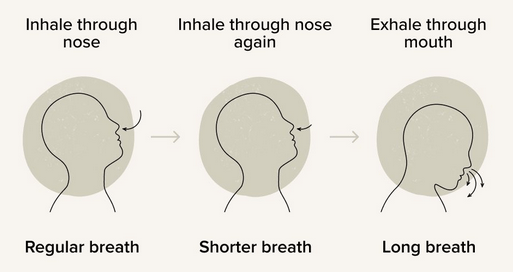
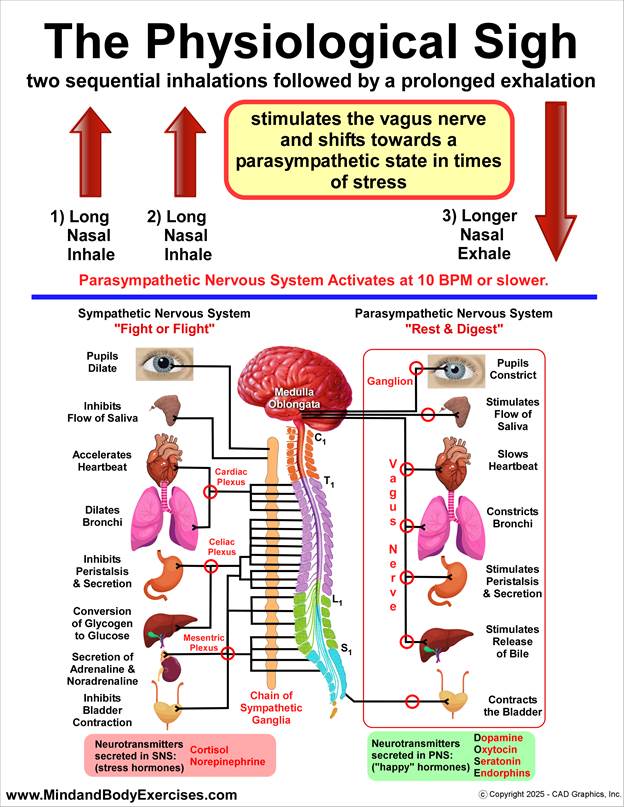
The physiological sigh is an innate respiratory pattern characterized by two sequential inhalations followed by a prolonged exhalation. This breathing reflex occurs spontaneously in healthy individuals at regular intervals, including during sleep, and serves an essential role in maintaining lung function and regulating the autonomic nervous system (Del Negro et al., 2018; West, 2012).
Unlike voluntary breathing techniques that rely on conscious control, the physiological sigh is generated by brainstem respiratory circuits, allowing it to function even during states of emotional distress, fatigue, or diminished cognitive capacity (Li et al., 2016).
Pulmonary Function and Alveolar Recruitment
One primary function of the physiological sigh is alveolar recruitment. During normal respiration, especially under conditions of stress, shallow breathing, or prolonged sitting, small clusters of alveoli may partially collapse, reducing gas exchange efficiency (West, 2012).
The second, brief inhalation increases transpulmonary pressure, allowing collapsed alveoli to reopen and restoring optimal lung compliance. Without periodic sighing, lung stiffness and impaired oxygen exchange may gradually develop (Del Negro et al., 2018).
Autonomic Nervous System Regulation
The extended exhalation phase of the physiological sigh plays a critical role in autonomic regulation. Prolonged exhalation enhances parasympathetic activity via the vagus nerve, resulting in reduced heart rate, decreased sympathetic arousal, and rapid attenuation of stress responses (Porges, 2011).
Research has shown that exhalation-weighted breathing patterns can quickly lower perceived anxiety and respiratory discomfort by improving carbon dioxide regulation and restoring respiratory rhythm stability (Lehrer et al., 2000).
Neurophysiological Basis
The physiological sigh is coordinated by respiratory rhythm-generating centers within the medulla, particularly the pre-Bötzinger complex and associated neural networks (Ramirez et al., 2013). Because these circuits operate independently of cortical processing, the sigh remains functional during emotional overwhelm, panic states, and trauma responses.
This brainstem dominance explains why sighing often occurs during crying, emotional release, or moments of relief, and why intentional imitation of the sigh can be effective when cognitive strategies fail.
Intentional Application
The physiological sigh can be voluntarily reproduced for acute nervous system regulation:
Inhale gently through the nose
Take a second short inhalation at the top of the breath
Slowly exhale until the lungs feel comfortably empty
Repeat one to three times
This method should not be performed continuously, as excessive repetition may cause lightheadedness.
Integrative Perspective
Traditional breath practices observed in yoga, Dao Yin and qigong systems (tai chi and other martial arts) describe sighing as a natural mechanism for releasing chest tension and restoring respiratory rhythm. Modern physiology now provides a mechanistic explanation for these observations, revealing a convergence between classical somatic practices and contemporary neuroscience.
The physiological sigh is a mechanical respiratory reset, not a relaxation technique dependent on belief or visualization. Its effectiveness lies in its ability to directly restore lung mechanics and autonomic balance through innate neural pathways.
Lehrer, P. M., Vaschillo, E., & Vaschillo, B. (2000). Resonant frequency biofeedback training to increase cardiac variability. Applied Psychophysiology and Biofeedback, 25(3), 177–191. https://doi.org/10.1023/A:1009554825745
Porges, S. W. (2011). The polyvagal theory: Neurophysiological foundations of emotions, attachment, communication, and self-regulation. W. W. Norton & Company.
Li, P., Janczewski, W. A., Yackle, K., Kam, K., Pagliardini, S., Krasnow, M. A., & Feldman, J. L. (2016). The peptidergic control circuit for sighing. Nature, 530(7590), 293–297. https://doi.org/10.1038/nature16964
West, J. B. (2012). Respiratory physiology: The essentials (9th ed.). Lippincott Williams & Wilkins.
A Holistic Perspective on Letting Go for Health, Clarity, and Growth
The Weight of What We’ve Already Paid
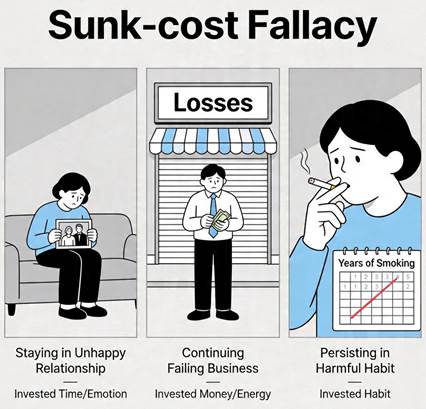
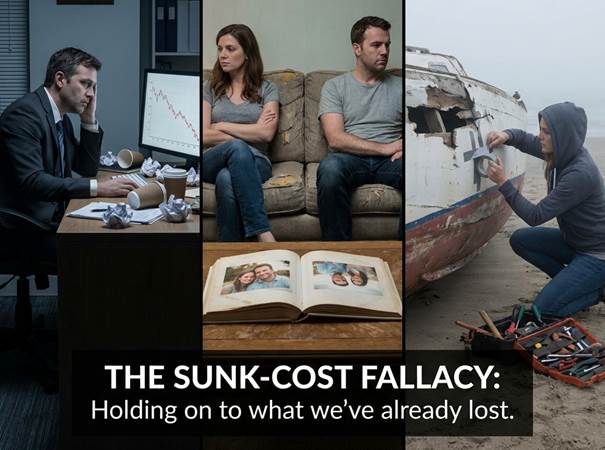
In the realm of human behavior, few psychological traps are as quietly influential and as damaging as the sunk-cost fallacy. At its core, this bias compels us to continue investing time, energy, money, or emotion into something simply because we have already invested so much.
We stay in the relationship too long. We continue the failing business venture. We persist in habits that no longer serve us.
Not because it is wise, but because we feel we cannot afford to waste what we’ve already given.
From a holistic health perspective, this is not merely a cognitive error. It is a mind–body–spirit imbalance as a disruption in our ability to perceive reality clearly, regulate emotion, and act in alignment with our well-being.
Understanding the Sunk-Cost Fallacy
The sunk-cost fallacy arises when past investments distort present decision-making. Rationally, what has already been spent, whether time, money, or effort, cannot be recovered. Therefore, it should not influence future choices.
Yet psychologically, it does. Why?
Because humans are not purely rational beings. We are emotional, identity-driven, and meaning-seeking. We attach value not only to outcomes, but to effort, sacrifice, and narrative.
To walk away can feel like:
Admitting failure
Wasting time or resources
Losing identity or status
Breaking emotional bonds
So instead, we double down.
The Physiological and Emotional Cost
From the lens of holistic health, this bias is not just “mental,” but rather it is deeply embodied.
When we remain committed to something that is no longer aligned:
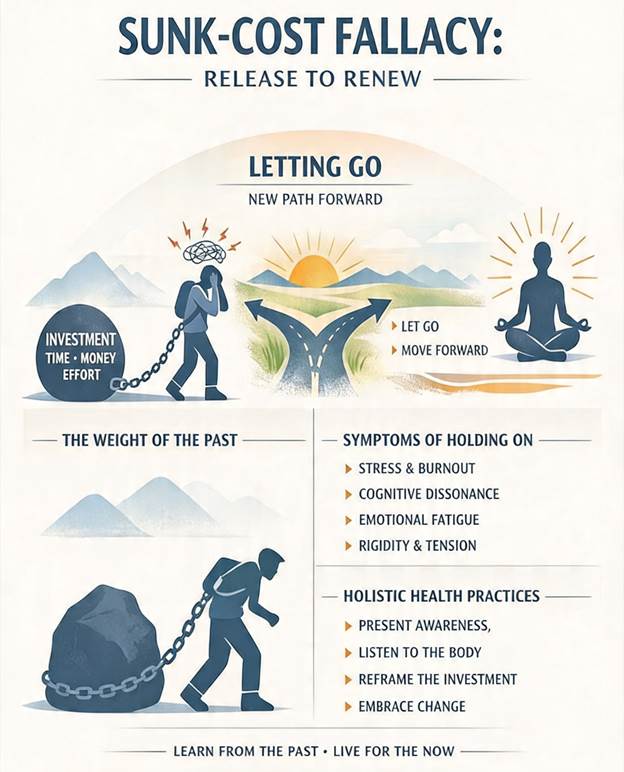
Behavioral rigidity develops (inability to pivot or adapt)
Over time, this manifests physically:
Poor sleep
Elevated blood pressure
Reduced immune resilience
Muscular tension and postural collapse
The body, in its wisdom, often signals what the mind refuses to acknowledge.
A Yin–Yang Perspective: When Persistence Becomes Pathology
In Eastern philosophy, persistence is often seen as a virtue where yang energy equals effort, drive, forward motion.
But when yang is not balanced by yin, as in reflection, receptivity, stillness, it becomes excessive.
The sunk-cost fallacy represents excessive yang trapped by stagnant yin:
Too much doing, not enough observing
Too much force, not enough flow
Too much attachment, not enough release
True wisdom lies in knowing when to persist and when to withdraw.
Just as in martial arts, pushing forward blindly leads to imbalance. The skilled practitioner yields, redirects, and adapts.
The Identity Trap: “I’ve Come This Far…”
Perhaps the most powerful driver of the sunk-cost fallacy is identity.
“I’ve spent 20 years building this.” “I’ve invested too much to quit now.” “This is who I am.”
But here is the deeper question:
Are you continuing because it is right… or because it is familiar?
In the Warrior–Scholar–Sage framework:
The Warrior may push forward out of discipline
The Scholar may justify the decision intellectually
The Sage steps back and asks: Is this aligned with truth?
Only the Sage sees clearly enough to release what no longer serves.
Holistic Health Implications: Where This Shows Up
This bias is pervasive across all domains of life:
Physical Health
Continuing ineffective exercise routines
Ignoring pain signals (“I’ve always trained this way”)
Persisting in diets that are not working
Mental Health
Staying in toxic thought patterns
Clinging to outdated beliefs or worldviews
Overcommitting to stress-inducing responsibilities
Emotional & Relational Health
Remaining in unhealthy relationships
Maintaining one-sided friendships
Avoiding necessary endings
Spiritual Health
Attachment to rigid doctrines
Mistaking loyalty for growth
Confusing suffering with purpose
Breaking Free: A Practice of Release
Letting go is not weakness. It is refinement.
Consider these practices:
1. Reframe the Investment
Instead of seeing past effort as “wasted,” view it as tuition paid for wisdom.
Nothing is lost if something is learned.
2. Return to Present-Moment Awareness
Ask:
If I were starting fresh today, would I choose this again?
Is this serving my current well-being?
3. Listen to the Body
The body rarely lies.
Tightness, fatigue, resistance → signals of misalignment
Ease, clarity, energy → signals of alignment
4. Practice Strategic Withdrawal
In martial arts and life, retreat is not defeat. It is repositioning.
5. Embrace Impermanence
All things change.
Clinging to what was prevents you from stepping into what can be.
A Closing Reflection: The Freedom of Letting Go
Imagine carrying a heavy pack on a long journey.
Inside are items you once needed—tools, supplies, perhaps even comforts. But over time, they have become unnecessary weight.
The sunk-cost fallacy whispers: “You’ve carried this this far… you can’t put it down now.”
But wisdom responds: “I carried it because I needed it then. I release it because I no longer need it now.”
Holistic health is not just about what we build—it is about what we are willing to release.
Because sometimes, the greatest act of strength… is letting go.
References
Arkes, H. R., & Blumer, C. (1985). The psychology of sunk cost. Organizational Behavior and Human Decision Processes, 35(1), 124–140. https://doi.org/10.1016/0749-5978(85)90049-4
Kahneman, D. (2011). Thinking, fast and slow. Farrar, Straus and Giroux.
Sapolsky, R. M. (2004). Why zebras don’t get ulcers (3rd ed.). Holt Paperbacks.
Hayes, S. C., Strosahl, K. D., & Wilson, K. G. (2012). Acceptance and commitment therapy: The process and practice of mindful change (2nd ed.). Guilford Press. https://psycnet.apa.org/record/2012-00755-000
In a world filled with information, opinions, and endless distractions, clarity has become increasingly rare.
People are told what to think, how to act, and what to value, often without ever being encouraged to question the source. Health is outsourced. Meaning is borrowed. Reactions replace reflection. And over time, many individuals find themselves living in ways that feel increasingly disconnected from their own sense of purpose, direction, and control.
This series was created as a response to that condition.
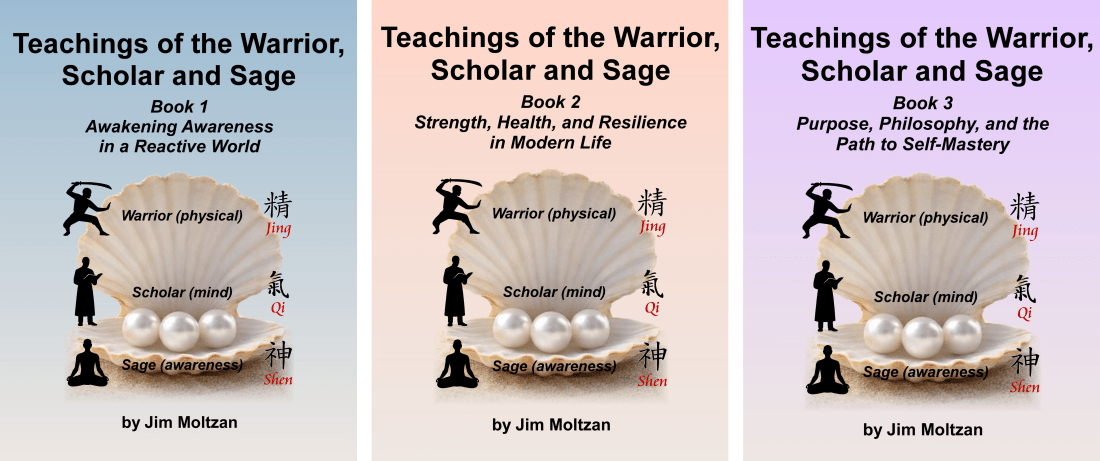
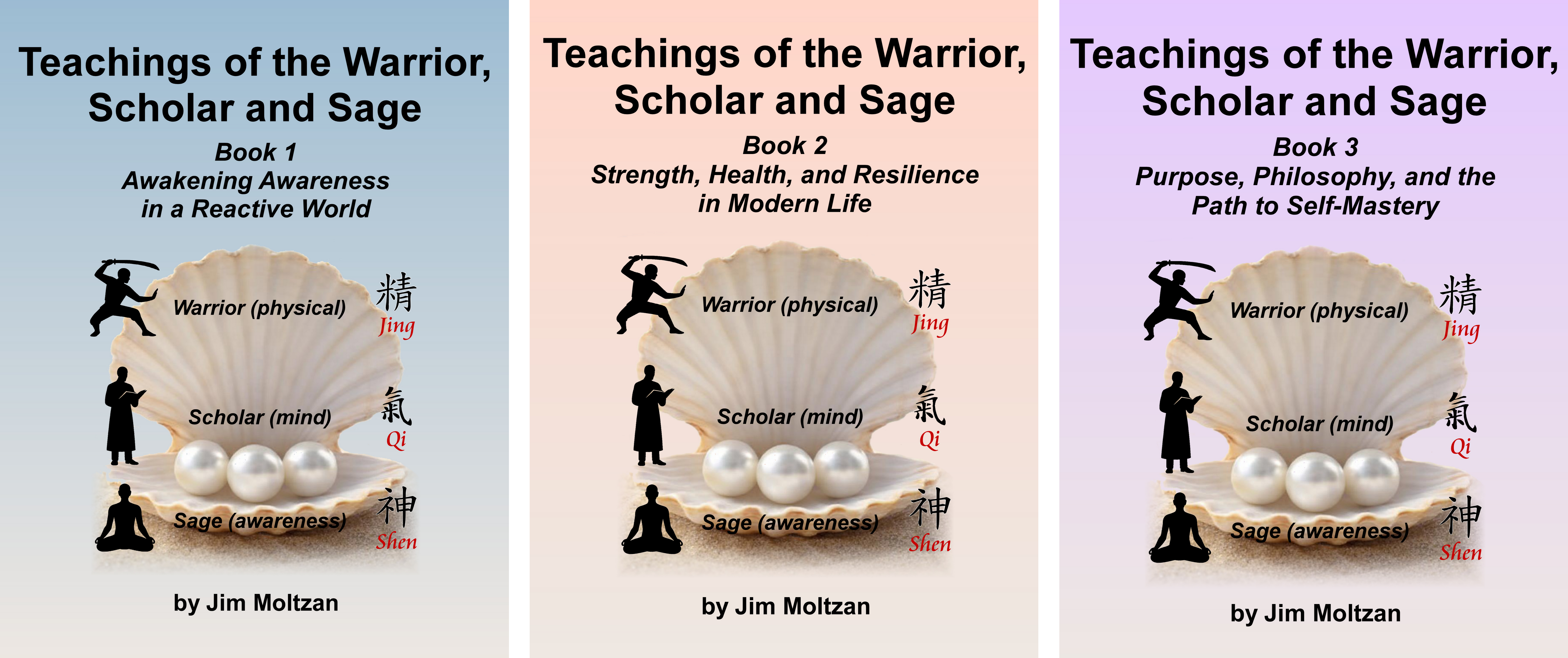
Teachings of the Warrior, Scholar and Sage is a curated collection of short, focused writings designed to bring attention back to what is often overlooked, the relationship between how we think, how we live, and how we develop as human beings over time. These are not abstract theories or passing trends. They are grounded observations drawn from decades of experience in martial arts, holistic health, teaching, and the study of human behavior.
Each volume in this series presents a selection of essays that stand on their own, yet collectively point toward a larger framework of understanding.
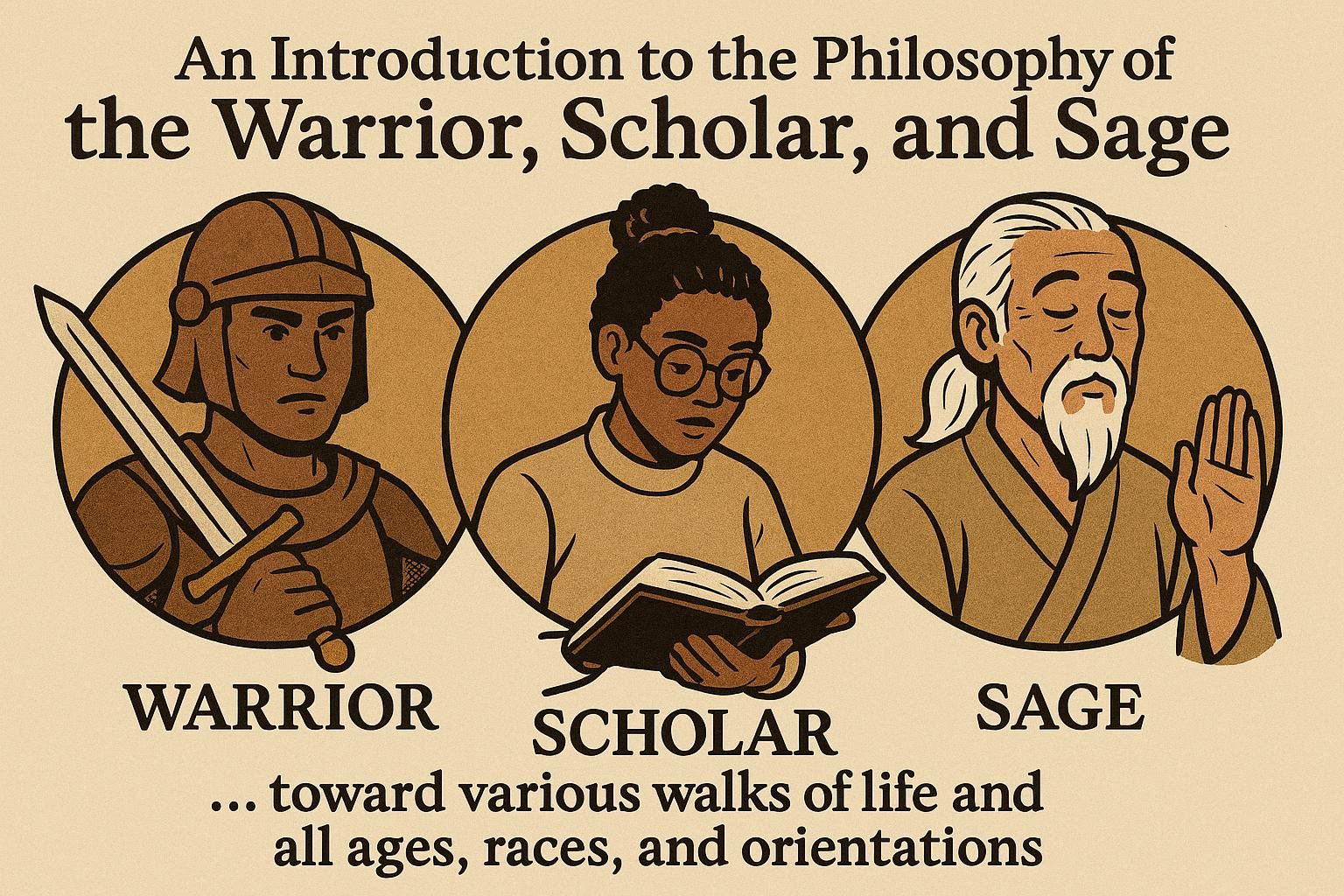
At the center of this framework are three enduring archetypes:
The Warrior, the Scholar, and the Sage.
The Warrior represents action, discipline, and the willingness to confront reality directly. It is expressed through the body, through effort, and through the capacity to endure challenge rather than avoid it. In modern life, this is not limited to physical training, but includes the ability to take responsibility for one’s health, habits, and daily choices.
The Scholar represents inquiry, understanding, and the pursuit of clarity. It asks not only what to do, but why. It examines patterns, questions assumptions, and seeks to understand the mechanisms behind behavior, belief, and perception. In a time where information is abundant but understanding is limited, this role becomes increasingly important.
The Sage represents integration, discernment, and lived wisdom. It is the ability to step back, to see the broader picture, and to act with both clarity and compassion. It is not knowledge for its own sake, but knowledge applied appropriately within the realities of life.
These three are not separate paths.They are aspects of the same process.
Throughout this series, you will encounter ideas that move across physical health, mental and emotional patterns, social influence, personal responsibility, and philosophical inquiry. Some essays address the realities of aging, stress, and the consequences of neglecting the body. Others examine how identity is shaped, how beliefs are formed, and how easily autonomy can be compromised without awareness. Still others explore deeper questions of meaning, purpose, and the direction of one’s life.
While the topics vary, the underlying message remains consistent:
Human beings are not fixed.
They are adaptive systems capable of growth, change, and refinement, but only when awareness and effort are applied over time.
This series is intentionally structured as a collection of concise writings rather than a single continuous narrative. Each essay is meant to be read, considered, and revisited. A single idea, properly understood and applied, carries more value than many ideas briefly encountered and quickly forgotten.
For some readers, these writings will serve as an introduction. For others, they may reinforce or clarify concepts already encountered through experience. Not every idea will resonate at once, nor should it. Understanding often depends on timing, context, and the willingness to reflect.
It is also important to recognize what this series is, and what it is not.
It is not a step-by-step program. It is not a rigid system of belief. It is not a promise of immediate transformation.
Rather, it is a set of perspectives intended to encourage observation, responsibility, and self-directed development.
The material presented here represents only a portion of a much larger body of work. Across numerous books, articles, and teachings, these ideas are explored in greater depth, structured in different ways, and applied across a variety of contexts. This series serves as an accessible entry point into that broader library.
If something within these pages resonates, it is not by accident. It reflects recognition. And recognition is often the first step toward change.
Ultimately, no book, system, or teacher can do the work for you. The responsibility for growth, health, and direction remains where it has always been, with the individual.
The Warrior, the Scholar, and the Sage are not distant ideals.
They are capacities that already exist within you.
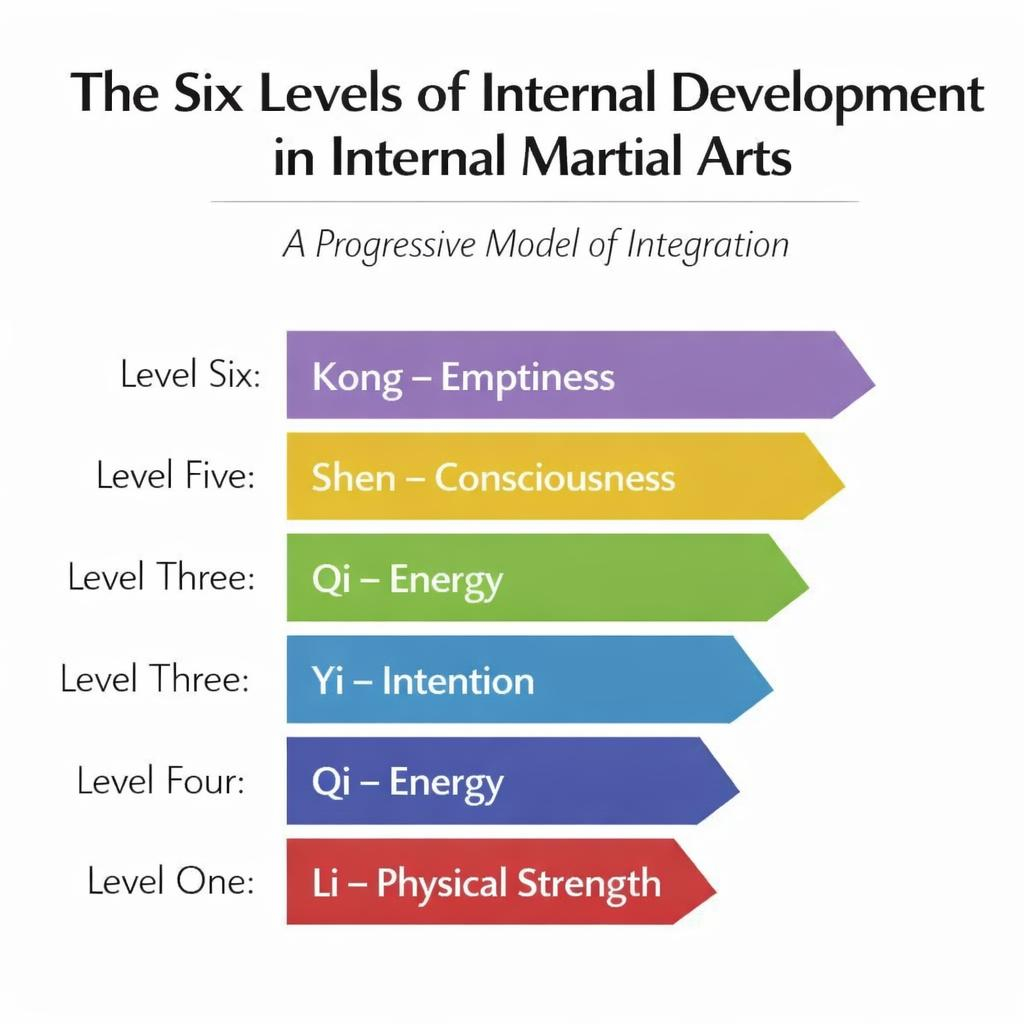
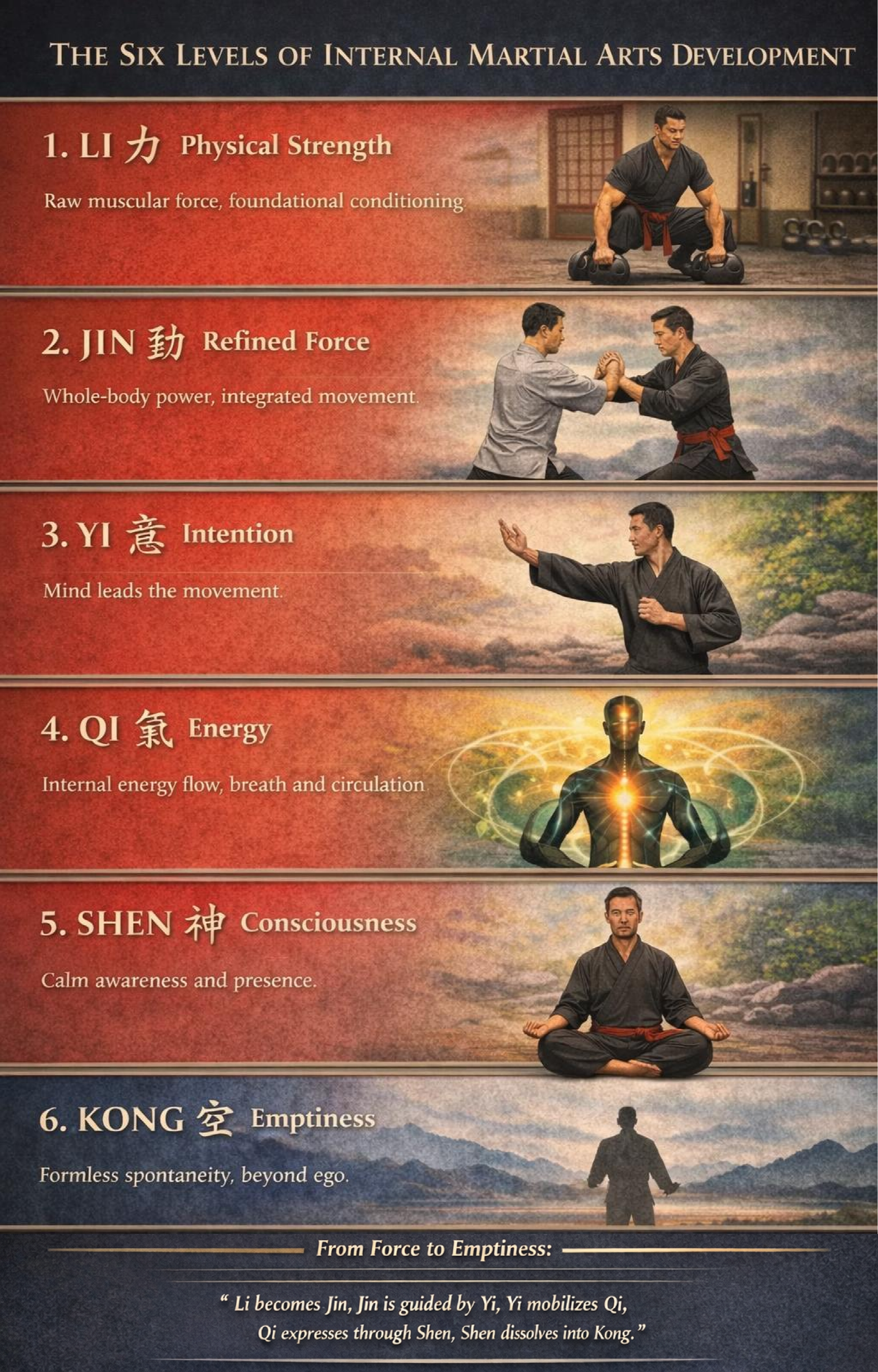
The internal martial arts, commonly referred to as Neijia, represent a sophisticated system of human development that integrates body, mind, and consciousness through progressive refinement. The three most widely recognized internal martial arts are Hsing Yi, Tai Chi Chuan and BaguaZhang. Within these traditions, a frequently cited developmental model describes six interrelated levels: Li (力), Jin (勁), Yi (意), Qi (氣), Shen (神), and Kong (空). While not universally standardized across all lineages, this framework reflects a coherent synthesis of classical Chinese martial, medical, and philosophical thought (Yang, 1998; Chen, 2004; Kohn, 2008).
These levels are not discrete stages to be completed and abandoned, but rather nested layers of integration, each refining and reorganizing the preceding level. The progression reflects a shift from gross physical force toward subtle awareness and spontaneous action, paralleling Daoist internal alchemical models such as Jing–Qi–Shen–Xu (emptiness) (Kohn, 2008).
Level One: Li (力) – Physical Strength
Li refers to raw muscular strength and mechanical force, representing the most basic level of martial capacity. At this stage, movement is driven primarily by localized muscle contraction, often resulting in segmented and inefficient force production.
From a biomechanical perspective, Li relies heavily on voluntary muscular activation and leverage, with limited integration across the kinetic chain (McGinnis, 2013). While essential as a foundational attribute, Li is inherently limited. It is expendable, fatigue-prone, and easily countered by superior structure or timing.
Traditional training methods emphasize:
Static postures (e.g., horse stance, bo stance, twisted stance, etc.)
Repetitive conditioning drills
Strength and endurance development
Despite its limitations, Li provides the necessary structural and physiological base upon which higher levels are cultivated.
Level Two: Jin (勁) – Refined Force
Jin represents a qualitative transformation of force, from isolated muscular effort to integrated, whole-body power. It is often described as “trained strength” or “refined force,” characterized by efficient transmission of energy through aligned structure and connective tissues (Yang, 1998).
Biomechanically, Jin reflects:
Kinetic chain integration
Elastic recoil through fascia and tendons
Ground-reaction force transmission
This level corresponds with modern understandings of tensegrity and fascialconnectivity, where force is distributed across the entire body rather than generated locally (Myers, 2014).
Classical expressions of Jin include:
Peng (expansive, buoyant force)
Lu (yielding and redirecting)
Ji (pressing)
An (sinking)
The transition from Li to Jin marks a critical threshold in internal training: effort decreases while effectiveness increases.
Level Three: Yi (意) – Intention
Yi, often translated as intention or intentional awareness, serves as the directive principle that organizes movement and force. In classical texts, it is said that “Yi leads Qi, and Qi leads the body” (Yang, 1998).
At this level, movement becomes:
Less reliant on conscious muscular control
More guided by pre-reflective awareness
Increasingly efficient and anticipatory
Neuroscientifically, Yi may be understood as the integration of:
Motor planning (premotor cortex)
Attentional control networks
Sensorimotor prediction
This aligns with research demonstrating that intention and attention significantly influence motor coordination and performance efficiency (Wulf & Lewthwaite, 2016).
The practitioner begins to experience a shift from doing movement to allowing movement to be directed internally.
Level Four: Qi (氣) – Functional Energy
Qi is among the most debated concepts in both Eastern and Western discourse. Rather than interpreting Qi as a mystical substance, contemporary scholarship often frames it as a functional integration of physiological systems, including:
Breath and respiratory efficiency
Circulation and fluid dynamics
Neural signaling and proprioception
Fascial continuity
From this perspective, Qi represents the emergent coherence of the organism as a unified system (Chen, 2004; Jahnke, 2002).
Empirical studies on Qigong and Tai Chi suggest improvements in:
Cardiovascular regulation
Balance and coordination
Stress reduction and autonomic balance
These findings support the interpretation of Qi as system-wide functional optimization rather than an isolated energy entity (Wayne & Kaptchuk, 2008).
Level Five: Shen (神) – Consciousness and Presence
Shen refers to consciousness, awareness, and the quality of presence. In both Traditional Chinese Medicine and Daoist philosophy, Shen is associated with the clarity and stability of the mind (Kohn, 2008).
At this level:
Perception becomes refined and immediate
Emotional reactivity diminishes
Action arises from calm awareness rather than impulse
Shen is closely related to constructs studied in modern psychology, such as:
Mindfulness
Meta-awareness
Flow states
Research indicates that such states are associated with enhanced performance, reduced stress, and improved cognitive flexibility (Csikszentmihalyi, 1990; Tang et al., 2015).
In martial application, Shen manifests as timing, sensitivity, and effortless responsiveness.
Level Six: Kong (空) – Emptiness
Kong, often translated as emptiness, represents the culmination of internal development. Rooted in both Daoist and Buddhist philosophy, it does not imply nihilism, but rather freedom from attachment, rigidity, and fixed identity (Kohn, 2008).
At this level:
Action is spontaneous and uncontrived
There is no separation between intention and execution
The practitioner is no longer bound by technique or conceptual frameworks
This state parallels advanced descriptions of:
Non-dual awareness
Effortless action (wu wei)
Self-transcendent experience
From a performance standpoint, Kong reflects complete integration, where body, mind, and environment function as a unified field.
Integrative Perspective: From Force to Emptiness
The progression from Li to Kong reflects a continuum of refinement:
Li becomes organized into Jin
Jin is directed by Yi
Yi mobilizes Qi
Qi expresses through Shen
Shen dissolves into Kong
Importantly, advanced practitioners do not abandon earlier levels; rather, they embody all levels simultaneously, with each functioning in harmony.
This model closely parallels:
Daoist internal alchemy (Jing → Qi → Shen → Xu)
Psychophysiological integration models
Contemporary frameworks of embodied cognition
Implications for Training and Practice
A critical issue in modern practice is the misinterpretation or premature pursuit of higher levels. Many practitioners:
Remain at the level of Li while believing they are expressing Jin
Seek Qi experiences without structural integrity
Conceptualize Yi without embodied application
Effective training requires:
Structural foundation (Li → Jin)
Intentional refinement (Yi)
Physiological integration (Qi)
Conscious awareness (Shen)
Letting go of fixation (Kong)
This progression underscores a central principle of internal arts:
True development is not the accumulation of techniques, but the refinement of the practitioner.
References
Chen, M. (2004). Chen style taijiquan: The source of taiji boxing. New World Press.
Myers, T. W. (2014). Anatomy trains: Myofascial meridians for manual and movement therapists (3rd ed.). Elsevier.
Tang, Y. Y., Hölzel, B. K., & Posner, M. I. (2015). The neuroscience of mindfulness meditation. Nature Reviews Neuroscience, 16(4), 213–225. https://doi.org/10.1038/nrn3916
Wayne, P. M., & Kaptchuk, T. J. (2008). Challenges inherent to t’ai chi research: part I–t’ai chi as a complex multicomponent intervention. Journal of alternative and complementary medicine (New York, N.Y.), 14(1), 95–102. https://doi.org/10.1089/acm.2007.7170a
Wulf, G., & Lewthwaite, R. (2016). Optimizing performance through intrinsic motivation and attention for learning: The OPTIMAL theory of motor learning. Psychonomic Bulletin & Review, 23(5), 1382–1414. https://doi.org/10.3758/s13423-015-0999-9
Yang, J. M. (1998). The root of Chinese Qigong: Secrets of health, longevity, and enlightenment. YMAA Publication Center.
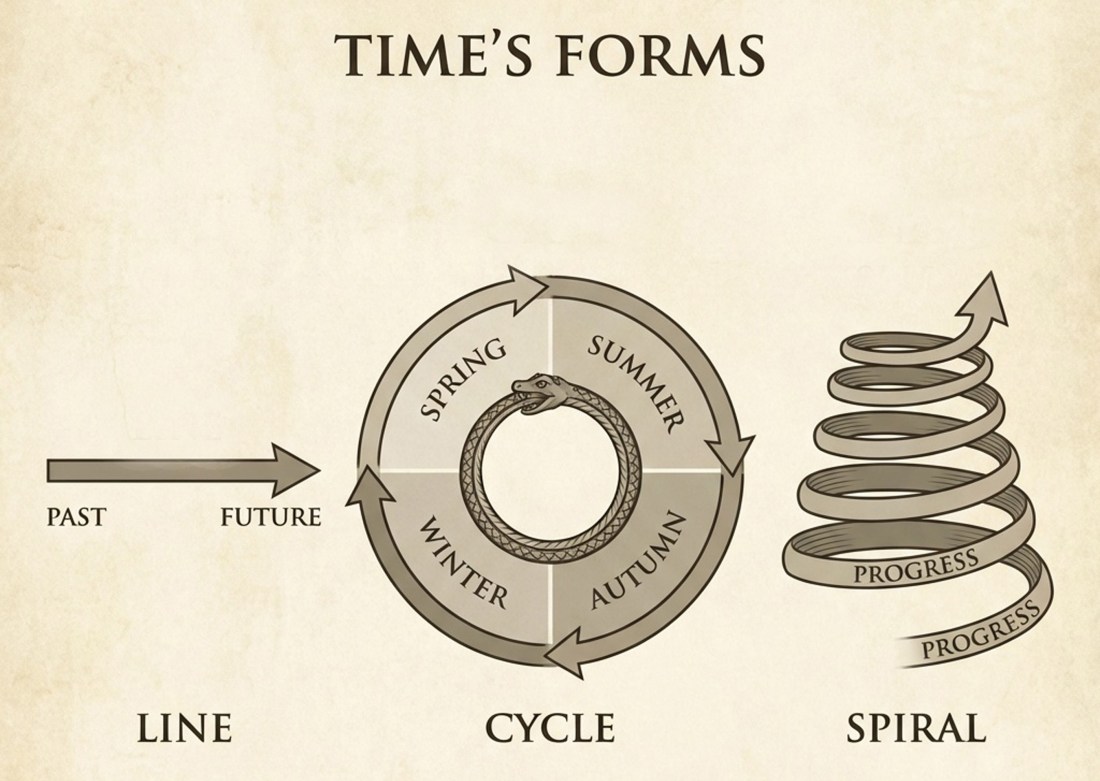
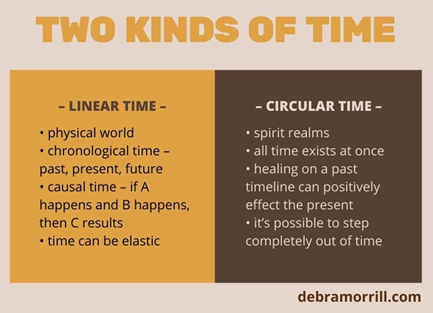
Human beings have long attempted to understand the nature of time, whether it flows as a straight line, repeats in cycles, or unfolds in a multidimensional pattern that transcends simple geometry. In Western scientific thought, time is generally described as linear, moving from past to future along an irreversible path shaped by entropy. In contrast, many spiritual, philosophical, and cosmological traditions propose a cyclical or spiral nature of time, suggesting that events, patterns, and developmental processes recur, yet do so at progressively different states of complexity or awareness. Contemporary neuroscience, psychology, cosmology, and systems theory increasingly support a hybrid view: time may appear linear to conscious perception, operate cyclically in biological and cosmic rhythms, and unfold in a spiral structure in terms of human growth and the evolution of systems. This essay integrates scientific, philosophical, and esoteric perspectives to show that time is not exclusively linear or cyclical; rather, it behaves as both, a dynamic spiral that unites forward motion with recurrent patterns.
Linear Time: Direction, Causality, and Human Perception
The most straightforward model of time is linear: a sequence of moments extending from a defined past into an open future. Physicists often rely on this model to describe causality, entropy, and the “arrow of time,” the direction in which disorder or entropy increases in closed systems (Carroll, 2010). From this standpoint, time’s linearity is a consequence of thermodynamic laws, which dictate that systems naturally evolve from ordered states toward greater randomness. This thermodynamic arrow establishes an irreversible progression from past to present to future (Price, 1996).
Human perception reinforces this linear model. Cognitive scientists note that our subjective experience of time is constructed through temporal sequencing, or the ability to arrange events in a coherent narrative (Eagleman, 2009). Memory also structures time linearly: we recall past events but cannot access future ones. Developmental psychology further reinforces linearity through observable life stages of infancy, adolescence, adulthood, and aging, each building upon previous phases (Baltes, Lindenberger, & Staudinger, 2006). Because of this subjective and biological structure, humans tend to equate time with unidirectional progress.
Yet, although linear time is practical for navigation, memory, and survival, it does not fully capture the repetitive, rhythmic, or transformational aspects found in nature or human consciousness. For this reason, linear time is best viewed as one dimension of a larger temporal structure.
Cyclical Time: Biological Rhythms, Cosmic Patterns, and Ancient Traditions
Cyclical models of time are found across ancient and modern systems. Many cultures including Hindu, Taoist, Mayan, and Indigenous traditions—describe time as repeating cycles of creation, decay, and renewal (Eliade, 1954). Cycles are embedded everywhere in the natural world: the phases of the moon, the oscillation of the seasons, tidal rhythms, hormonal cycles, and circadian patterns all express a temporal circularity that is intrinsic to life (Foster & Kreitzman, 2014).
Biology offers some of the most compelling evidence for cyclical temporality. The human circadian rhythm, governed by the suprachiasmatic nucleus, follows a daily 24-hour cycle that regulates sleep, hormone release, cellular repair, and cognitive functioning (Hastings, Maywood, & Brancaccio, 2019). These processes repeat with remarkable precision, yet each cycle subtly differs based on environmental cues and internal conditions. Similarly, the brain undergoes rhythmic oscillations during wakefulness and sleep, replaying and reorganizing memories in repeated neural cycles (Buzsáki, 2006).
Cyclical time is also central to psychology. Emotional narratives, behavioral patterns, and relationship dynamics often repeat, albeit in varying intensities or contexts. Carl Jung argued that archetypes and symbols recur throughout history and individual development, reflecting cyclical patterns in the collective unconscious (Jung, 1959). In Taoist philosophy, the interplay of yin and yang illustrates cycles of expansion and contraction, activity and rest, growth and decay, each phase necessary for the next (Kohn, 2001). These traditions echo the idea that cycles do not merely repeat but evolve as they recur.
Although cycles appear circular, life does not return to the exact same point. Instead, patterns reemerge within a dynamic system that is constantly changing. This suggests that time may not be strictly circular but may instead follow a spiral trajectory.
Spiral Time: A Synthesis of Linearity and Cyclicality
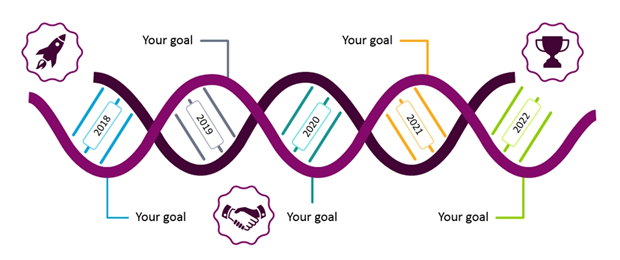
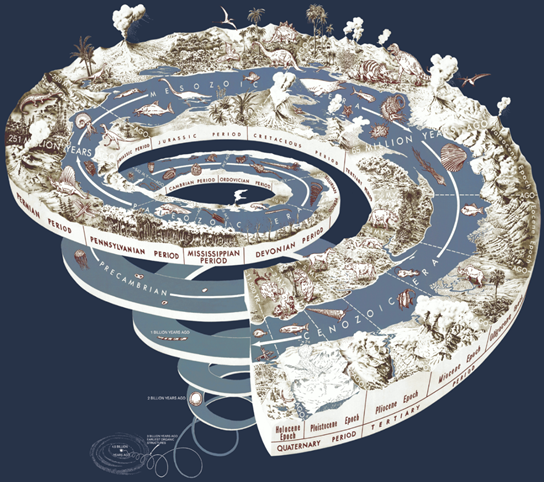
A spiral model of time integrates the linear and cyclical frameworks into a more accurate representation of temporal reality. A spiral advances forward (like a line) while simultaneously looping through recurring phases (like a cycle). This pattern describes many natural systems, including galaxies, weather formations, and biological structures such as DNA, which is itself a double helix—a spiral encoding the evolution of life (Watson & Berry, 2003).
Spiral time also aligns with developmental and psychological models in which human beings revisit earlier stages but with greater depth, insight, or capacity. In transformative learning theory, individuals repeatedly encounter challenges that mirror previous experiences, yet their responses become more sophisticated as consciousness evolves (Mezirow, 2000). Similarly, trauma recovery often follows a spiral pattern in which emotions resurface periodically but with increasing resilience and understanding, a process known as post-traumatic growth (Calhoun & Tedeschi, 2014).
In Taoist internal alchemy (Nei Dan), spiritual development is explicitly described as cyclical refinement along an ascending path. Practitioners repeat meditative, energetic, and behavioral cycles to refine jing (essence), qi (vital energy), and shen (spirit or consciousness), not in perfect loops but in spiraling transformations that gradually elevate awareness (Larre & Rochat de la Vallée, 1996).
Likewise, in cosmology, some theoretical models propose that cosmic evolution may involve oscillatory processes occurring along an expanding trajectory, an interplay of expansion, contraction, and entropy-driven change that resembles a spiral rather than a straight line or a closed loop (Steinhardt & Turok, 2002).
Thus, the spiral becomes a unifying symbol for the multidimensional nature of time: forward motion built upon recurring yet transforming cycles.
The Human Experience of Time as Spiral Evolution
Human consciousness experiences time in a way that closely matches the spiral model. While daily rhythms repeat, no two days are identical. We revisit emotional and psychological patterns, but with new insights. Practices such as meditation, qigong, tai chi, and introspection also reveal the spiral nature of personal development. Repetition is not redundancy; it is refinement.
In martial arts, the practitioner endlessly repeats foundational forms, but each iteration deepens physical mastery, energetic sensitivity, and mental focus. Over years of practice, the same movement is performed thousands of times, yet with evolving meaning and embodiment. This is the essence of spiral time: returning to familiar territory but from a higher vantage point.
Likewise, personal growth follows a spiral trajectory. Challenges resurface, but each cycle presents an opportunity to integrate previous lessons, leading to new capacities, perspectives, and states of consciousness. The spiral is not only a temporal model but a developmental one that mirrors the complexity of human life.
Time cannot be adequately captured by a single geometric metaphor. Although scientific models emphasize linearity through entropy and causality, the rhythms of the natural world and the recurrences within human psychology demonstrate cyclical qualities. Yet neither framework alone is sufficient. A more holistic perspective recognizes that time advances while simultaneously repeating patterns, creating a structure that is best understood as a spiral, with a synthesis of forward progression and cyclical recurrence.
This spiral model aligns with biological rhythms, cosmological theories, psychological development, and spiritual traditions such as Taoist internal alchemy. It also describes the lived experience of human growth, in which individuals revisit patterns with increasing depth and awareness. Ultimately, time is not merely a straight line we travel or a circle we repeat; it is a spiral we ascend, evolving through iterative cycles of experience, learning, and transformation.
(Historical Infographics: Into the Depth of Time, 2021)
References:
Baltes, P. B., Lindenberger, U., & Staudinger, U. M. (2006). Life-span theory in developmental psychology. In R. M. Lerner & W. Damon (Eds.), Handbook of child psychology: Vol. 1. Theoretical models of human development (6th ed., pp. 569–664). Wiley.
Buzsáki, G. (2006). Rhythms of the brain. Oxford University Press.
Calhoun, L. G., & Tedeschi, R. G. (2014). Handbook of posttraumatic growth: Research and practice. Psychology Press.
Carroll, S. (2010). From eternity to here: The quest for the ultimate theory of time. Dutton.
Eagleman, D. (2009). Brain time: The temporal dimension of consciousness. In M. Gazzaniga (Ed.), The cognitive neurosciences (4th ed., pp. 659–666). MIT Press.
Eliade, M. (1954). The myth of the eternal return: Cosmos and history. Princeton University Press.
Foster, R., & Kreitzman, L. (2014). The rhythms of life: The biological clocks that control the daily lives of every living thing. Yale University Press.
Hastings, M.H., Maywood, E.S. & Brancaccio, M. Generation of circadian rhythms in the suprachiasmatic nucleus. Nat Rev Neurosci19, 453–469 (2018). https://doi.org/10.1038/s41583-018-0026-z



 United Martial Arts Association