
Dr. Jon Jureidini is a child psychiatrist in Australia. He is part of the Critical and Ethical Mental Health (CEMH), which is a research group within the Robinson Research Institute. The CEMH conducts critical appraisal, meta-research, teaching, and advocacy, with the goal of promoting safer, more effective and more ethical research and practice in the field of mental health (Staff Directory | Dr Jon Jureidini, n.d.). Dr. Jon Jureidini reports that medicine is mostly dominated by a few very large and competing pharmaceutical companies, that are quite aligned in their methods to expand their profits. He reports on the issues of evidence-based medicine being compromised by the commercialization of academia, failed regulation and other corporate influences. This doctor sees the scientific progress being abused by the medical industry and its relationship with academic researchers, as they often do not share raw data, suppress negative trial results, and fail to report adverse events. Because of this, there is a greater potential for patient death, due to commercial interests influence upon regulators, research agenda, and universities. He strongly suggests that reforms need to be made in all of these areas, in order to bring trust and legitimacy back to evidence-based medicine. Jureidini calls for a separation of regulators from drug company funding, due to regulators often accept funding and industry funded trials in order to approve drugs that a particular company is trying to market (Jureidini, 2022).
Lydia Green, a pharmacist, and former pharmaceutical advertising copywriter speaks about her goals of decreasing the sway of influence of pharmaceutical marketing and misinformation on the American healthcare industry. America contributes only 5% to the population of the world yet spends 1/3 of the world’s $1.4 trillion pharmaceutical healthcare marketplace. In spite of spending the most, the US often ranks low on the overall health of its population. Medicine is all about the money, and a patient’s well-being maybe second. These pharmaceutical companies are businesses that at their root, just like all business, operate to make a profit. Again, it is all about the money. When healthcare and its relative components of pharmaceuticals, doctors, and the profits that both can gain from promoting their products, in spite of actual need – this whole system is severely corrupt and broken and in need of drastic reform. Green proposes a need for a 3rd party agency to help return trust, in regard to the pharmaceutical industry. This alliance would be made up of communicators, marketers, former pharma-ad writers, medical and pharmacy schools, and doctors that have no influence from companies with profits as their sole motivation. However, Green suggests that such an organization could be funded through payments, but once again from fees attached to monies that pharmaceutical and medical device companies make to doctors (TEDx Talks, 2020b).
I found an article containing much information on how direct-to-consumer (DTC) ads for the US pharmaceutical industry, proliferated a $5.4 billion marketing campaign back in 2015. The U.S. is one of only 2 countries that legally allow DTC for drug companies. New Zealand is the other. Not coincidently, Americans pay more for drugs and medical devices than any other country in the world (Drugwatch, 2022). Michelle Llamas, a Board-Certified Patient Advocate (BCPA) has a long list of experience, but what makes her credible to this article is her almost a decade of medical writing and research experience. She is a trusted source for information on high-risk prescriptions, health conditions, drugs and medical devices (Drugwatch, 2023).
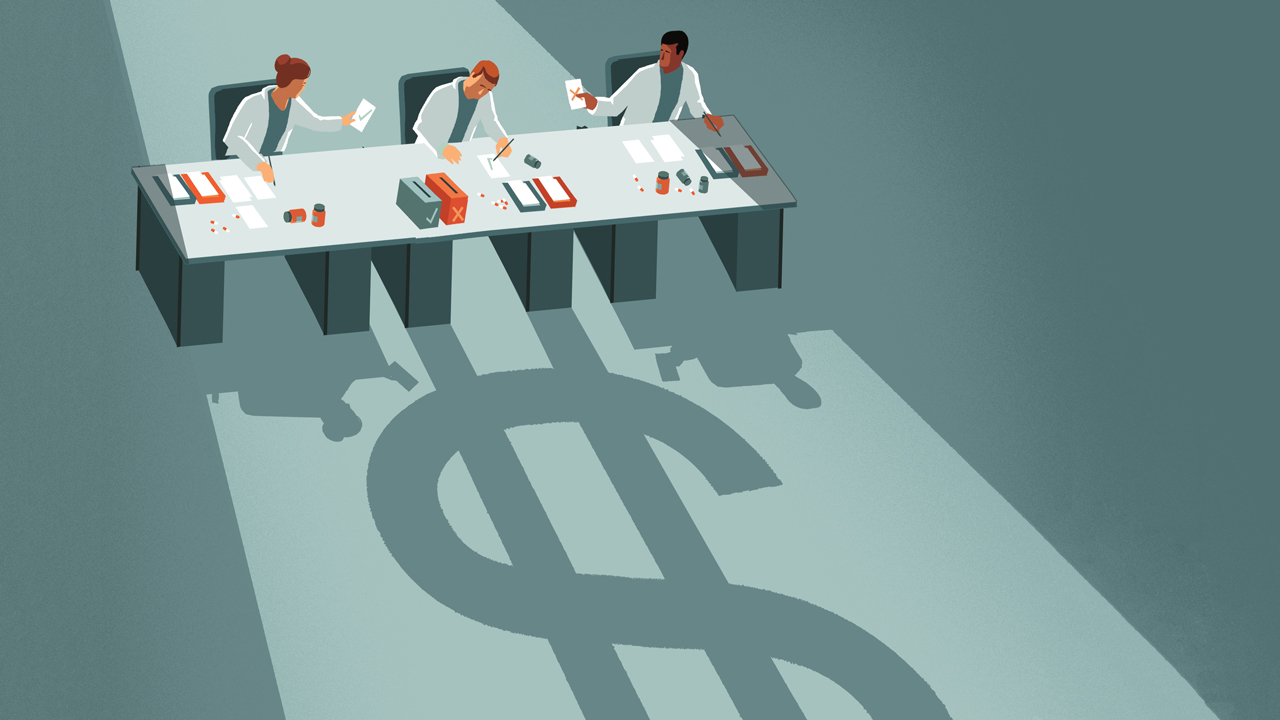
Drug companies often invest billions of dollars in their attempts to promote off-labeling of their drugs and/or devices that are not approved for other uses by the Food and Drug Administration (FDA). Companies try to convince doctors to prescribe their brand-name drugs or devices, for uses other than their original approval. Additionally, drug companies sometimes create clinical trials focused on swaying doctors and educational courses to highlight expensive drugs for non-FDA-approved uses, in spite of having no scientific evidence of efficacy nor safety. Drug and device companies spent in 2015, about $4 billion on television ads, and about $1.5 billion in magazine advertising. Radio, theaters, newspapers, billboards, and some other types of marketing took up an additional few million dollars. It paid off for these companies to advertise, as every dollar spent on advertising generated increased sales of prescription drugs by $4.40. Big pharmaceutical companies are willing to gamble on being fined for a few hundred million dollars, in spite of their product being found to cause adverse effects, if they know that they can market a product that may generate billions of dollars in profit (Drugwatch, 2022). From a business perspective, this is a good business model. From an ethics perspective, this is downright criminal and inhumane.
“The approval of rofecoxib (Vioxx) by the US Food and Drug Administration has led to the “single greatest drug safety catastrophe in the history of this country or the history of the world,” charged one of the agency’s own experts, Dr David Graham, in US Senate hearings last Thursday.
Dr Graham, associate director in the FDA’s Office of Drug Safety, said an estimated 88,000 to 139,000 Americans had heart attacks and strokes as a result of taking rofecoxib. The number, he said, far exceeds earlier disasters such as the 100 children killed in the United States by an elixir of sulfanilamide in the 1930s and the 5000 to 10,000 children born in the 1960s with birth defects related to thalidomide. Both events led to sweeping regulatory changes in the United States.”

A forthcoming article for the special issue of the Journal of Law, Medicine and Ethics (JLME), edited by Marc Rodwin and supported by the Edmond J. Safra Center for Ethics, presents evidence that about 90 percent of all new drugs approved by the FDA over the past 30 years are little or no more effective for patients than existing drugs.
References:
Lenzer J. (2004). FDA is incapable of protecting US “against another Vioxx”. BMJ (Clinical research ed.), 329(7477), 1253. https://doi.org/10.1136/bmj.329.7477.1253
Risky Drugs: Why The FDA Cannot Be Trusted. (2013, July 17). Edmond & Lily Safra Center for Ethics. https://ethics.harvard.edu/blog/risky-drugs-why-fda-cannot-be-trusted
Hidden conflicts? Pharma payments to FDA advisers after drug approvals spark ethical concerns. (2023, February 22). Science | AAAS. https://www.science.org/content/article/hidden-conflicts-pharma-payments-fda-advisers-after-drug-approvals-spark-ethical
Drugwatch. (2022, November 21). Selling Side Effects – Big Pharma’s Marketing Machine. Drugwatch.com. https://www.drugwatch.com/featured/big-pharma-marketing/Links to an external site.
Drugwatch. (2023, February 23). Michelle Llamas – Drugwatch Senior Writer. Drugwatch.com. https://www.drugwatch.com/authors/mllamas/Links to an external site.
Jureidini, J. (2022, March 16). The illusion of evidence based medicine. The BMJ. https://www.bmj.com/content/376/bmj.o702Links to an external site.
Staff Directory | Dr Jon Jureidini. (n.d.). https://www.adelaide.edu.au/directory/jon.jureidiniLinks to an external site.
TEDx Talks. (2020b, November 23). Why Drug Marketing Rules American Healthcare and What We Can Do About it | Lydia Green | TEDxMcphs. YouTube.https://www.youtube.com/watch?v=Jh7rQbknPyE
I write often about topics that affect our health and well-being. Additionally, I teach and offer lecture about qigong, tai chi, baguazhang, and yoga. I also have hundreds of FREE education video classes, lectures and seminars available on my YouTube channel at:
https://www.youtube.com/c/MindandBodyExercises
Mind and Body Exercises on Google: https://posts.gle/aD47Qo
Jim Moltzan
407-234-0119
www.Amazon.com/author/jimmoltzan




If you are interested in reading it, I published a blog post last May entitled ‘Bad Pharma’, as per the book written by Dr Ben Goldacre, who is now a Director of Evidence-Based Medicine at the Bennett Institute of the University of Oxford in England. In spite of his role, he has apparently been quiet about the adverse effects of the COVID19 ‘vaccines’.
LikeLike