
Recent research has found links in form and function between the interactions of the fascial network and acupuncture. Health and fitness researchers have discovered that connective tissue, along with collagen fibers and fibroblasts, wraps around the end of the acupuncture needle when it is rotated in place. These effects have been seen at up to 4cm away from the site of needle insertion. Researchers have surmised that acupuncture energy meridians may follow the intermuscular or intramuscular myofascial lines (Yunshan et al., 2025).
The myofascial meridians do not follow the precise lines of the Chinese energy meridians, which are an energetic connection rather than physical. However, there is some definite overlap. The unrestricted movement, taught in the Chinese internal martial arts, involves the free flow of Qi and aligning the myofascial lines.
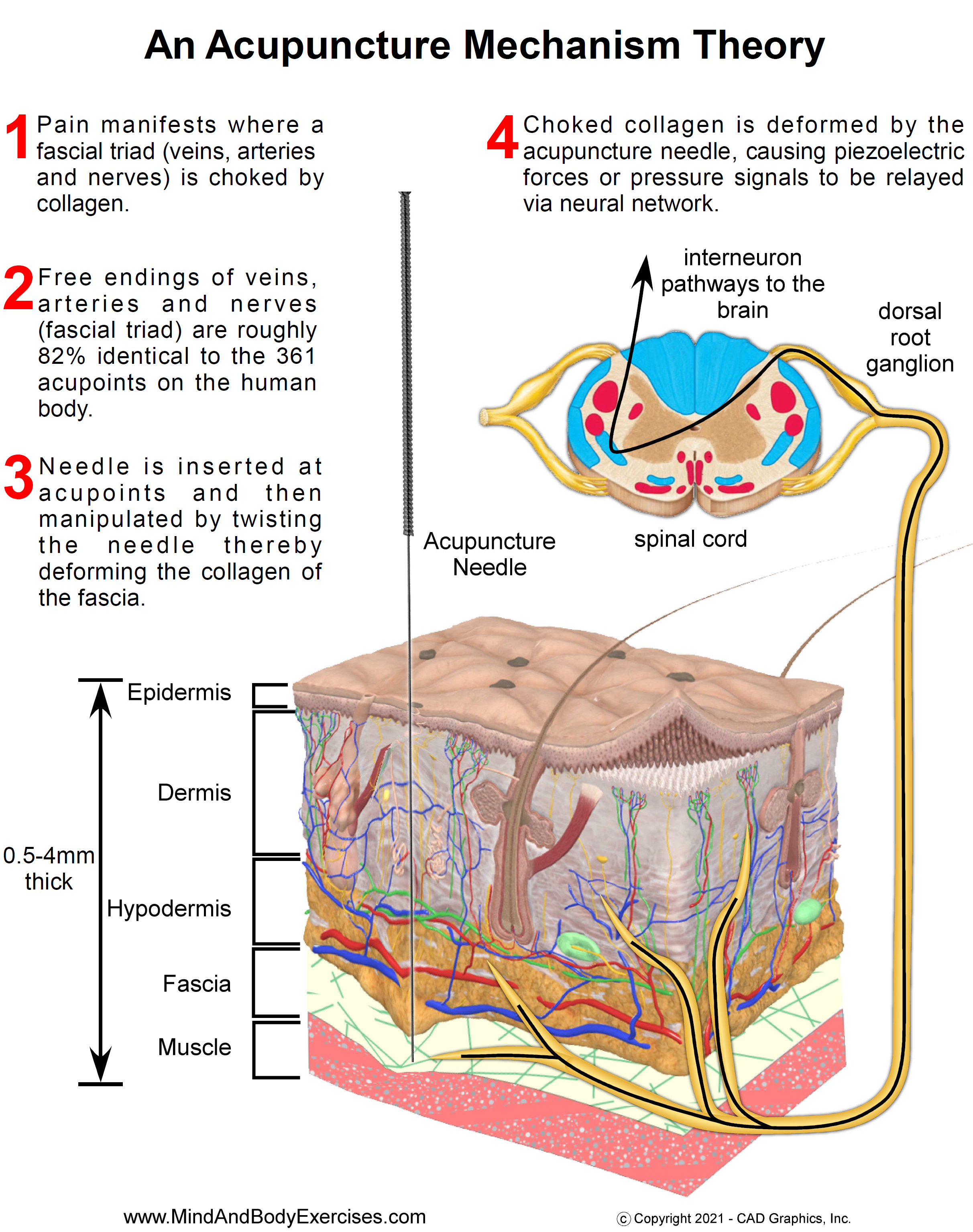

The connection between Traditional Chinese Medicine (TCM) meridians and the myofascial trains described in modern anatomy, particularly by Thomas Myers in Anatomy Trains (2016), is a fascinating area of study. This relationship bridges ancient wisdom with contemporary science, offering insights into how energy and structure interact within the human body.
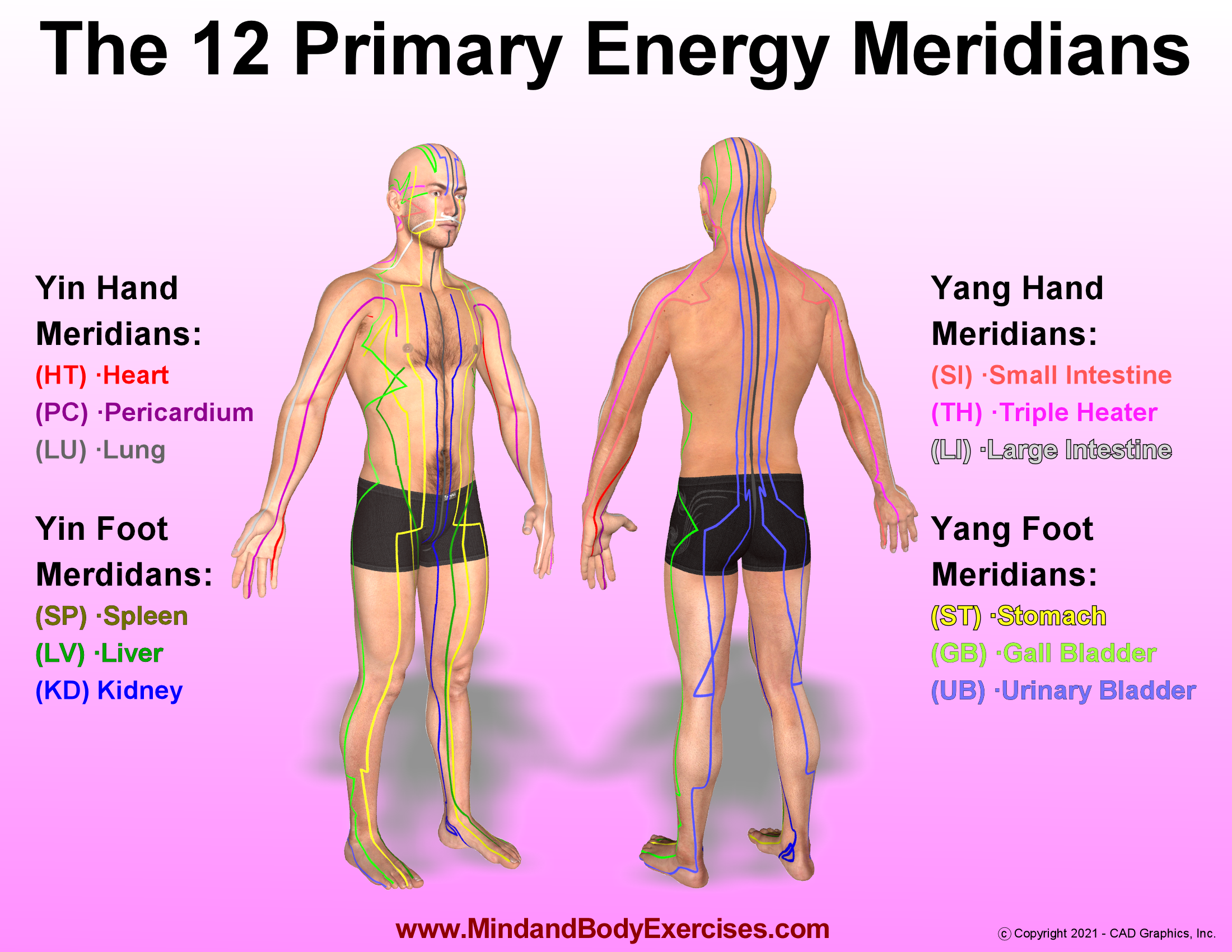
1. Structural Similarities
- Meridians in TCM – In TCM, meridians are pathways through which qi (vital energy) flows, connecting organs, tissues, and systems. These pathways follow predictable routes along the body and influence both physical and energetic health.
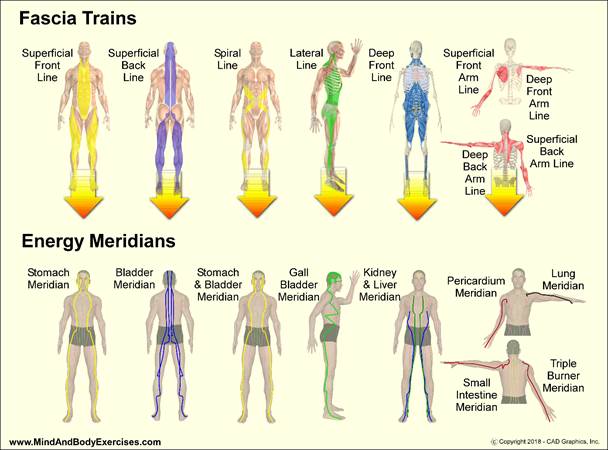
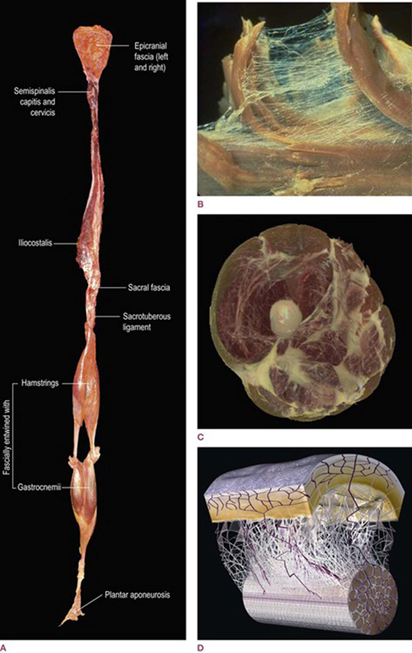
- Myofascial Trains – Myofascial trains, as described by Myers, are continuous lines of fascia and connective tissue that transmit tension, force, and movement throughout the body. Myers identified 12 major myofascial lines, many of which mirror the flow of energy described by TCM meridians.
Overlap: Many of the fascial lines align quite well with the primary TCM meridians:
- The Superficial Back Line aligns with the Bladder Meridian running down the back.
- The Superficial Front Line aligns the Stomach and Spleen Meridians.
- The Lateral Line aligns with the Gallbladder Meridian.
- The Deep Front Line aligns with the Kidney and Liver Meridians, especially in the connection between the psoas and diaphragm.
2. Fascia’s High Water Content and Conductivity
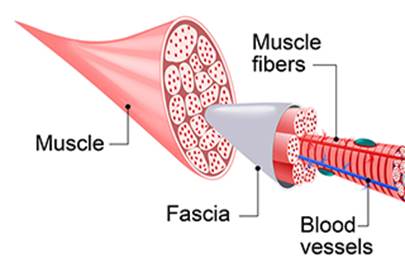
- Hydrophilic Nature: Fascia is composed primarily of collagen and elastin fibers suspended in a gel-like ground substance known as the extracellular matrix (ECM), which is about 70-80% water. This high water content allows fascia to conduct electrical signals efficiently.
- Structured Water and Bioelectricity: Within the fascia, water exists in a structured or “exclusion zone” (EZ) state, where the water molecules align in a crystalline lattice. This structured water behaves like a semiconductor, facilitating the transmission of bioelectric signals, which closely parallels the movement of qi in TCM.
- Fascia’s Role – Fascia is highly innervated and acts as a communication network, responding to mechanical, chemical, and energetic stimuli. It conducts bioelectricity, making it a potential medium for the flow of qi.
- Piezoelectric Effect – When fascia is stretched or moved, it generates electrical charges through the piezoelectric effect. This phenomenon may correspond to the concept of qi moving through the meridians, providing a scientific basis for the energetic flow described in TCM.
3. Points of Intersection
- Acupuncture Points and Fascial Crossroads – Many acupuncture points are located where fascial planes intersect or where fascia connects with nerves, vessels, and muscles. Stimulating these points may influence both the fascia and the flow of energy, restoring balance in structure and energy flow
- Trigger Points and Ashi Points – rigger points in fascia often correspond to Ashi points in TCM. This overlap highlights a deep connection between fascial dysfunction and energy stagnation, further supporting the integration of these systems.
4. Dynamic Interplay of Movement and Energy
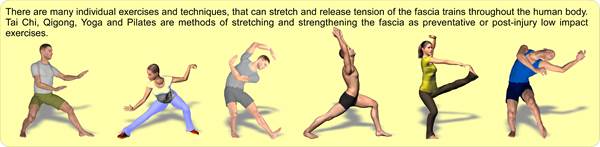
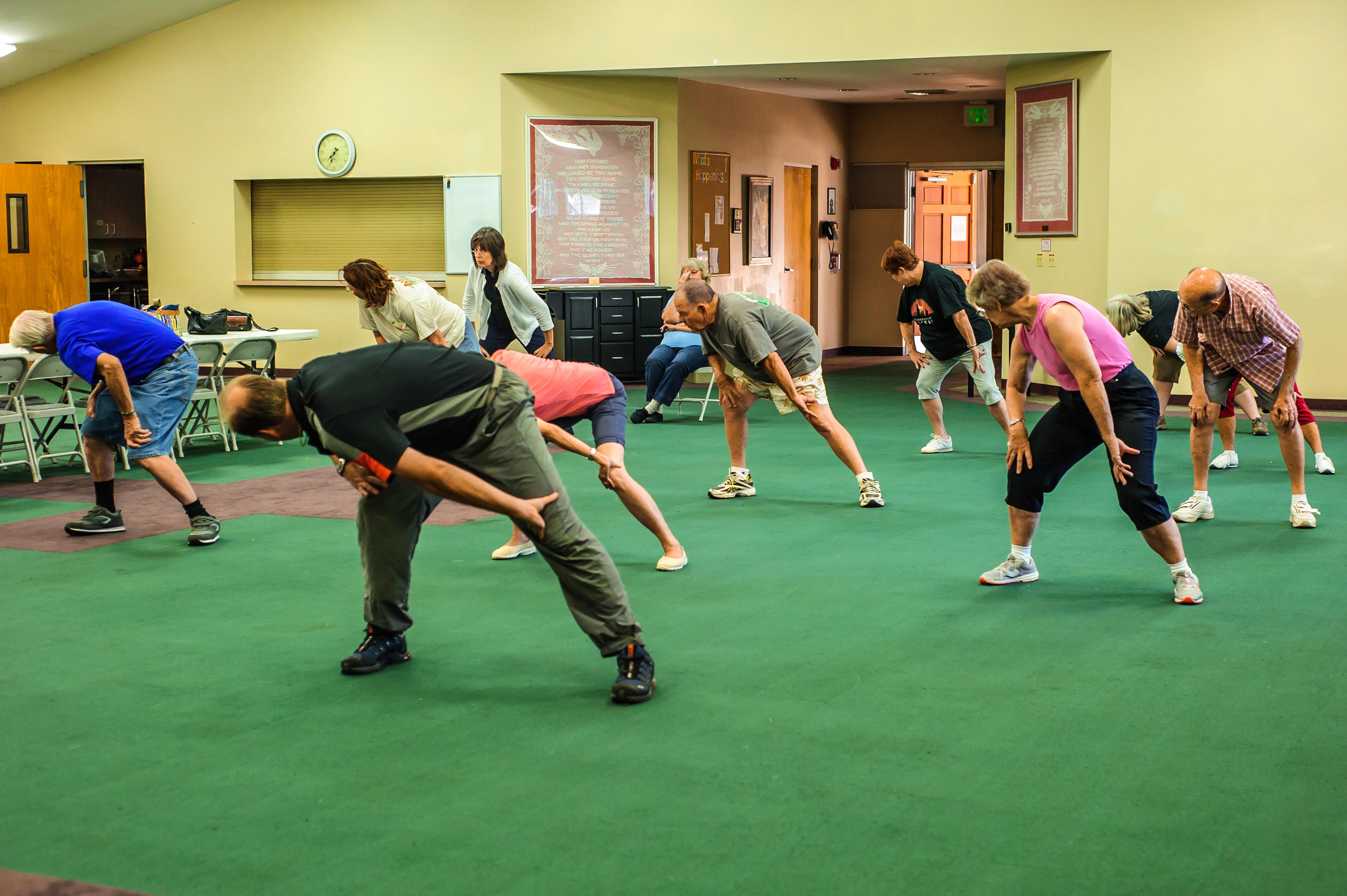
- Tai Chi, Dao Yin and Qigong – Practices like dao yin and qigong manipulate both fascial tension and qi circulation, encouraging smooth flow along these pathways. The slow, mindful stretching and holding in these exercises release fascial restrictions while restoring balance to the meridians.
5. Scientific Validation Growing
- Studies using fMRI and infrared thermography have shown that needling acupuncture points activate areas along predictable pathways, which often align with fascial lines.
Research on fascia’s bioelectric properties suggests that it may serve as the “physical” counterpart to the meridian system described in ancient texts. This growing body of evidence bridges the gap between TCM and modern anatomy.
6. Potential Implications
- Holistic Therapies
Combining myofascial release with acupressure or acupuncture can enhance therapeutic outcomes by addressing both the structural and energetic dimensions of the body. This integrated approach allows practitioners to work more holistically, benefiting patients on multiple levels.
- Blending Ancient and Modern Knowledge
Understanding the correlation between fascia and meridians helps modern therapists—such as osteopaths, physiotherapists, and acupuncturists apply ancient wisdom in a contemporary context. This connection exemplifies how ancient practices anticipated discoveries that Western science is only beginning to explore. In essence, fascia may serve as the physical matrix through which the meridian system operates, blending ancient wisdom with modern anatomy. This connection is a prime example of how ancient practices anticipated discoveries that Western science is just beginning to explore.
Fascia may serve as the physical matrix through which the meridian system operates, blending ancient TCM principles with modern anatomical insights. This evolving understanding highlights the profound interplay between structure and energy, offering a unified perspective on health and healing.
References:
Myers, T. W. (2020). Anatomy trains: Myofascial meridians for manual and movement therapists (4th ed.). Elsevier.
Themes, U. (2016, June 11). Fascia and biomechanical regulation. Basicmedical Key. https://basicmedicalkey.com/fascia-and-biomechanical-regulation/
Yunshan, L., Chengli, X., Peiming, Z., Haocheng, Q., Xudong, L., & Liming, L. (2025). Integrative research on the mechanisms of acupuncture mechanics and interdisciplinary innovation. BioMedical Engineering OnLine, 24(1), 1–24. https://doi.org/10.1186/s12938-025-01357-w
I look forward to further sharing more of my message by partnering with hospitals, wellness centers, VA centers, schools on all levels, businesses, and individuals who see the value in building a stronger nation through building a healthier population.
I also have hundreds of FREE education video classes, lectures, and seminars available on my YouTube channel at:
https://www.youtube.com/c/MindandBodyExercises
Many of my publications can be found on Amazon at:
http://www.Amazon.com/author/jimmoltzan
My holistic health blog is available at:
https://mindandbodyexercises.wordpress.com/
http://www.MindAndBodyExercises.com
Mind and Body Exercises on Google: https://posts.gle/aD47Qo
Jim Moltzan
407-234-0119


 United Martial Arts Association