
In every era, civilizations rise and fall, not by accident or coincidence, but by the rhythm of deeper patterns or cycles of virtue and decay, clarity and confusion. As someone connected to a centuries-old lineage of Korean and Chinese martial artists, shaped by the philosophies of Taoism, Buddhism, and Confucianism, I’ve come to see that the struggles we face today are not anomalies. They are symptoms of imbalance. They are signs of what the ancients understood as the “return to the Dao” and what modern thinkers Neil Howe and the late William Strauss have come to call the Fourth Turning (Strauss & Howe, 1997).
They propose that society moves in four generational phases, roughly every 20 years:
- The High (Spring): After crisis, a period of rebuilding and cohesion.
- The Awakening (Summer): Spiritual upheaval and individualism grow.
- The Unraveling (Fall): Institutions decay, and social trust erodes.
- The Crisis (Winter): A pivotal upheaval requiring transformation or collapse.
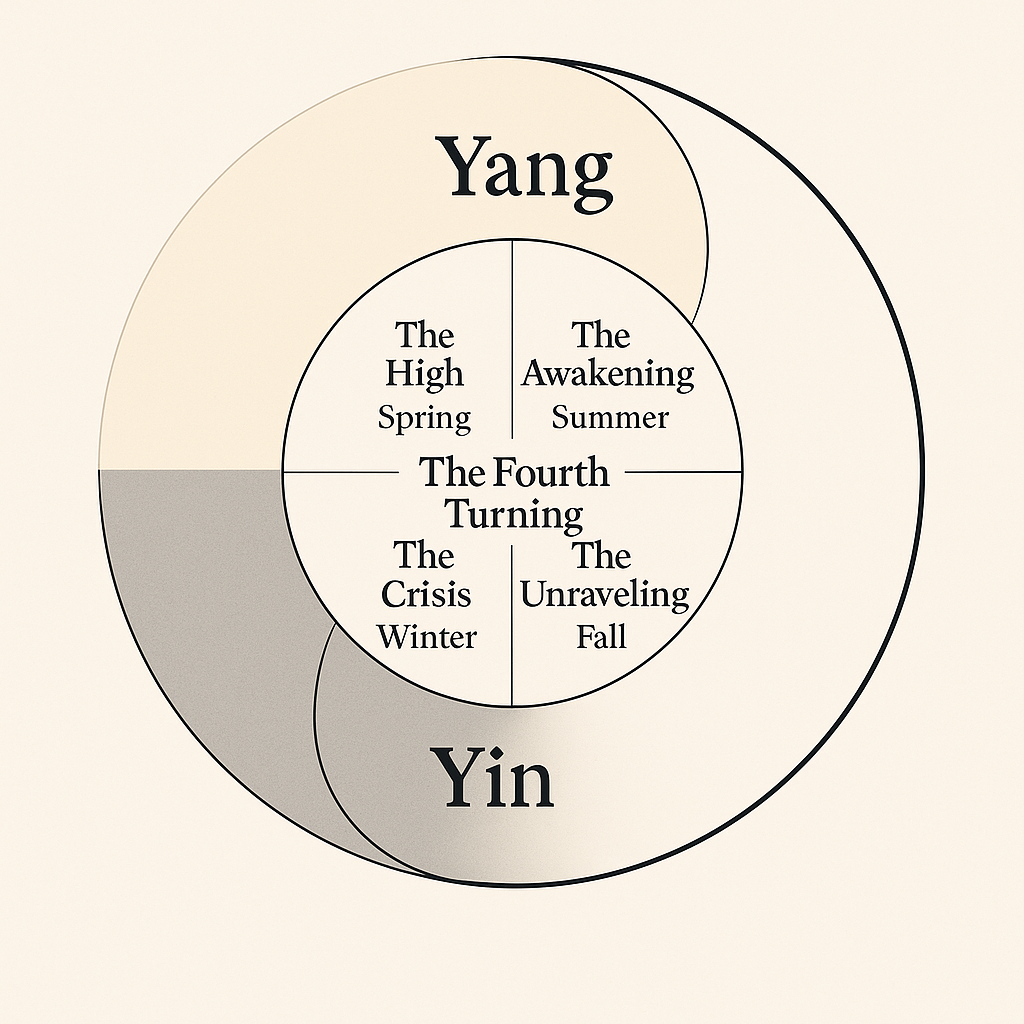
We have witnessed this over many years of history, such as the Fourth Turning (crisis) of the Great Depression into World War II, followed by a post-WWII boom in the U.S. (the High), then the 1960s counterculture movement (the Awakening), followed by the 1980s-2000s in the U.S. (Unraveling) and now into another 20 years of crisis. According to this model, we are now in the Fourth Turning or the winter phase, marked by turbulence, institutional failure, and a call for redefinition. Taoism would simply say: the yang must return. The old forms have decayed; the new must be forged through effort and alignment with the Dao.
At the heart of this worldview is the triad of jing (essence), qi (energy), and shen (spirit). These internal forces are not just concepts from Taoist cultivation; they represent three powerful human archetypes:
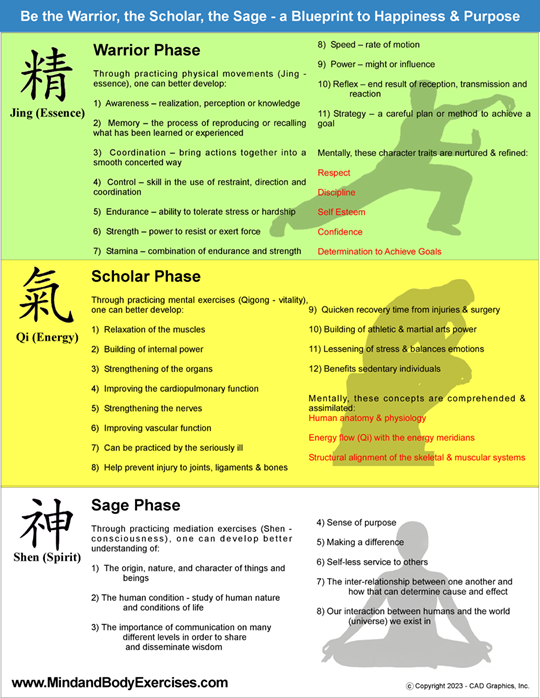
- The Warrior (Jing) – grounded in physical vitality, courage, and action.
- The Scholar (Qi) – representing knowledge, refinement, and discernment.
- The Sage (Shen) – embodying spiritual clarity, stillness, and alignment with the eternal.
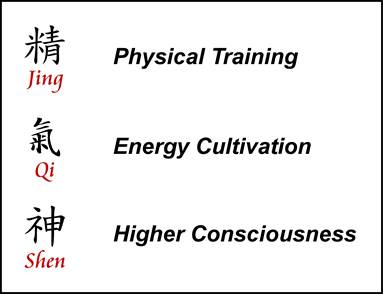
This trinity mirrors the natural progression of human development and when lived out collectively, forms the foundation of a resilient, ethical, and awakened society. The warrior, the scholar, and the sage can all be found in various walks of life, regardless of age, race, gender or otherwise.
The Cycles of Strength and Decline
You’ve likely heard the saying:
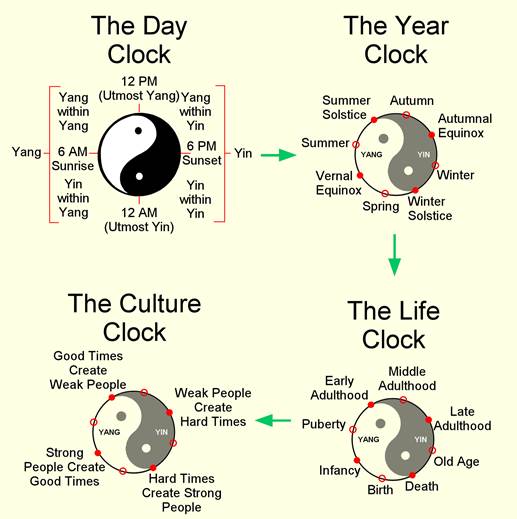
“Hard times create strong men,
strong men create good times,
good times create weak men,
and weak men create hard times.”
This isn’t just a catchy aphorism, but a succinct summary of yin and yang, the core principle of Taoist cosmology. When yang (strength, discipline, clarity) reaches its peak, it gives way to yin (softness, comfort, passivity). When yin becomes excessive, yang reasserts itself through challenge, hardship, and the need for resilience.
When Good Men Do Nothing
The phrase:
“The only thing necessary for the triumph of evil is for good men to do nothing,” resonates even more powerfully during times like these.
In the comfort of past decades, the “good times” many laid down the tools of vigilance. Warriors stopped training. Scholars stopped questioning. Sages retreated into the background. This absence of cultivated moral men (and I emphasize cultivated, not simply physically strong or formally educated) created a vacuum where mediocrity, passivity, and manipulation took root.
The Dao doesn’t punish. It corrects. The correction is not emotional but rather structural, rhythmic, and natural. In a time of unraveling, those who choose to do nothing only deepen the descent. Those who act in alignment with virtue help midwife the rebirth.
Cultivation Is the Cure
In our tradition, we don’t look outward to blame, but rather we look inward to refine ourselves through:
- Cultivating jing through martial discipline and physical integrity.
- Building qi through breathwork, mindfulness, and mental refinement.
- Elevating shen through spiritual practice, service, and contemplation.
This process isn’t merely for personal benefit, but hopefully to provide a model for society. In this Fourth Turning, we need a return of those who live as warriors of integrity, scholars of discernment, and sages of wisdom. Their presence creates coherence in chaos. The Dao teaches that when the inner is aligned, the outer begins to harmonize.
The Role of Men in the Turning
Throughout history, men have often occupied positions of leadership, warfare, and infrastructure in roles requiring strength, vision, and responsibility. When these roles are filled by individuals of weak moral character, or by those disconnected from the natural order of the Dao, decline does not merely begin but it accelerates.
In today’s world, we’re witnessing the fallout of this imbalance. Divine masculinity is rooted in strength, service, wisdom, and responsibility, but has been overshadowed by its distorted reflection of toxic masculinity, which is driven by ego, control, irresponsibility, and impulse. The difference between the two is not force, but character.
The danger does not lie in masculinity itself, but in its misdirection. When yang energy is active, outward, and forceful it becomes unmoored from purpose and virtue, it devolves into recklessness, violence, and domination. One doesn’t have to look far to see the consequences: our prisons are full, blue collar and white collar crime persists, and too many men choose instant gratification over disciplined action.
Morally weak men are the most dangerous to society. Not because of their gender, but because of their inability to withstand temptation, make principled choices, or lead by example. Without the internal refinement of jing, qi, and shen, there is no foundation for restraint or wisdom.
Yet in the same breath, we must acknowledge that society still deeply depends on strong men in body, mind, and spirit. It is mostly men (not entirely though) who fight in wars, build bridges, maintain power grids, work oil rigs, harvest timber, and risk their lives in roles essential to our survival and stability. These are not outdated relics of a bygone age. They are the backbone of civilization.
But physical strength alone is not enough. In a time like the Fourth Turning, we don’t just need capable men. We need cultivated men:
- Men who have mastered their emotions and instincts.
- Men who serve rather than dominate.
- Men who fight when necessary but protect by nature.
- Men who think, reflect, and align with something greater than themselves.
As the Dao teaches:
Softness without structure leads to collapse. Force without wisdom leads to tyranny.
The cure is not to suppress masculine energy but to elevate it, refine it, and align it with the eternal flow of the Dao. In this age of unraveling, the world doesn’t need less masculinity. It needs truer masculinity. The kind forged in hardship, guided by virtue, and embodied by the Warrior, the Scholar, and the Sage.
Conclusion: Dao and the Fourth Turning
If everything follows the Dao, then this present upheaval is not a mistake. It’s a call. A call to remember. To return. To rebuild.
The Fourth Turning is not a death sentence. It is an initiation. Just as in Taoist cultivation, decay gives way to rebirth. The yang returns only when yin has gone to its extreme.
We must ask ourselves:
- Will we wait for others to restore balance?
- Or will we embody the Warrior, the Scholar, and the Sage, and rise to meet the moment?
The Dao is not just a path. It is the pattern of life itself. To walk it now, consciously is to become part of the cure.
Reference:
Strauss, W., & Howe, N. (1997). The fourth turning. Broadway Books.

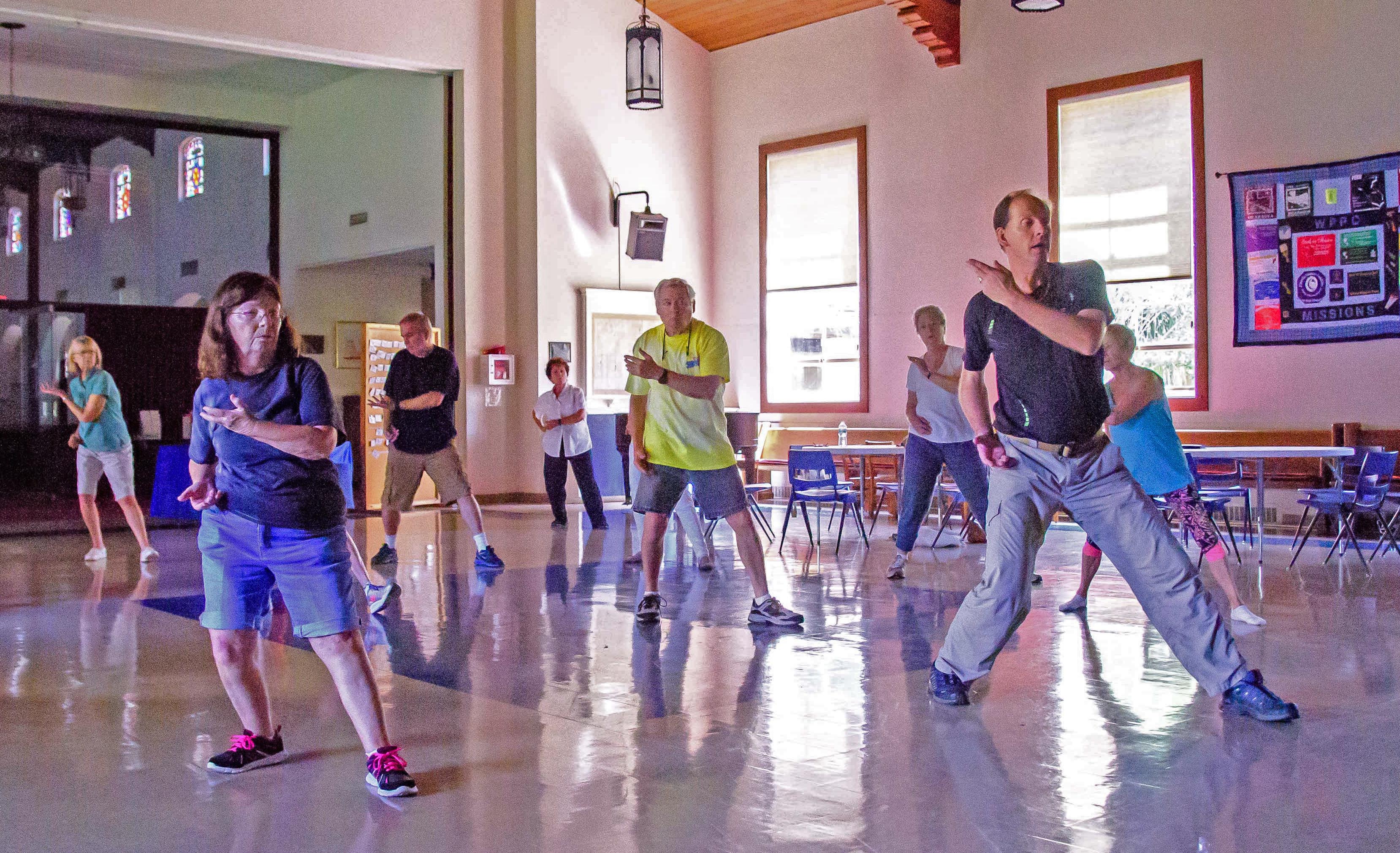

 United Martial Arts Association