
Stroke is a major cause of long-term disability, affecting millions globally. Conventional rehabilitation methods focus primarily on physical and cognitive therapy. However, mind-body practices like Tai Chi, Qigong, and breath regulation have emerged as effective complementary interventions. This article explores the physiological and psychological benefits of these practices in post-stroke recovery, supported by peer-reviewed evidence and recent clinical studies.
A stroke occurs when blood flow to the brain is interrupted, leading to a range of impairments in movement, speech, memory, and emotional regulation. Recovery can be slow and incomplete, with many survivors experiencing long-term disability. While conventional stroke rehabilitation includes physical therapy, speech-language therapy, and occupational therapy, integrating holistic practices like Tai Chi, Qigong, and breathwork has been researched and may significantly enhance outcomes (Li et al., 2012; Wang et al., 2022).
Tai Chi for Stroke Recovery
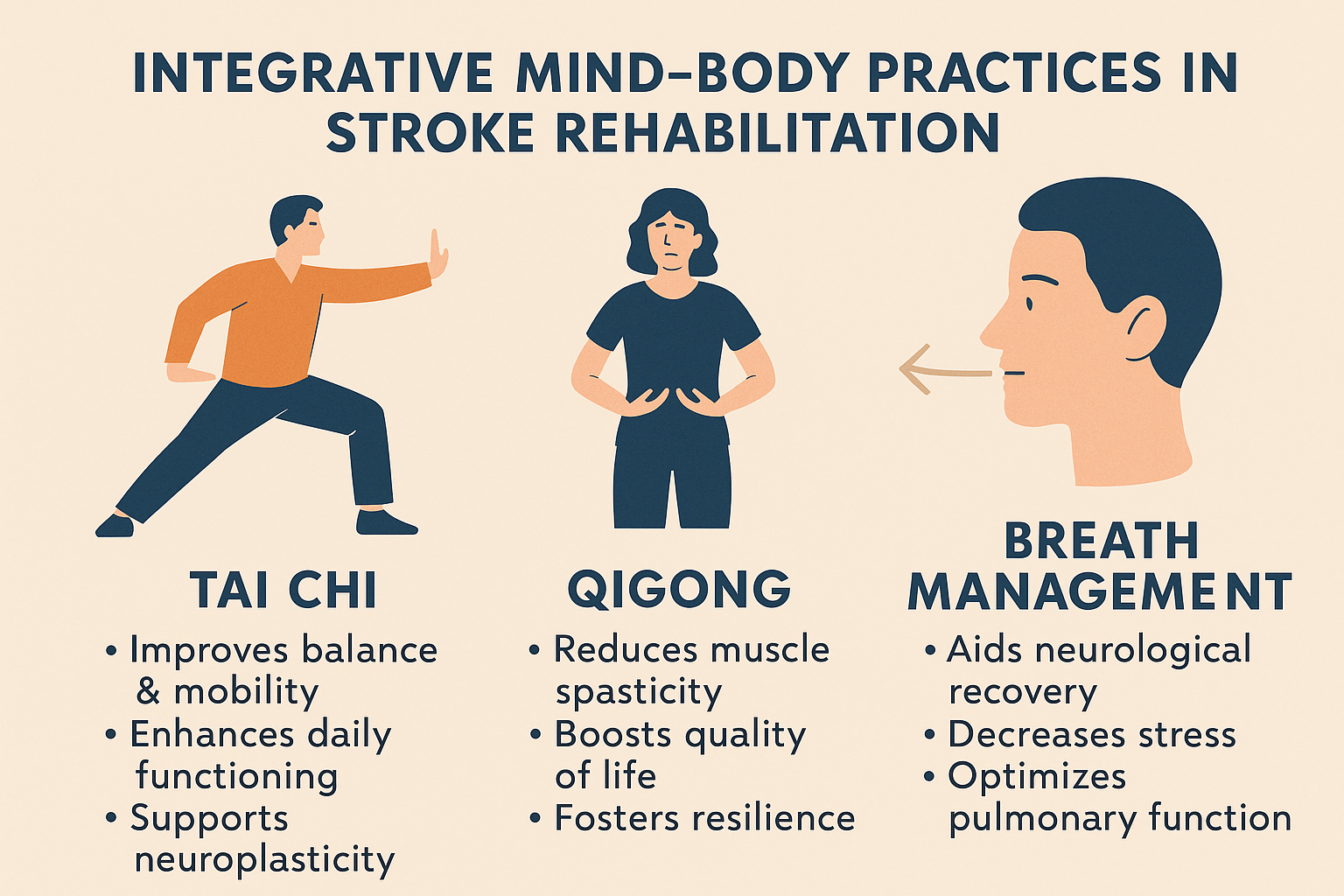
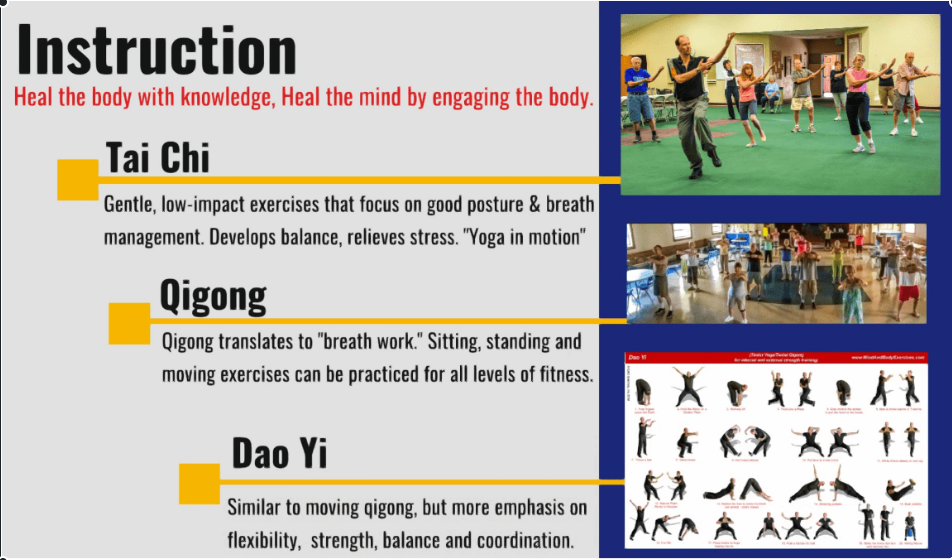
Tai Chi is a low-impact, meditative exercise rooted in Chinese martial arts, consisting of slow, flowing movements coordinated with breath and focused attention. Studies indicate Tai Chi is safe and beneficial for stroke survivors, particularly for improving balance, mobility, and activities of daily living (ADLs) (Park et al., 2022).
In a meta-analysis of 27 randomized controlled trials involving 1,919 stroke survivors, Tai Chi was found to significantly improve dynamic balance (Hedges’ g = 1.04), walking ability (Hedges’ g = 0.81), and ADL performance (Hedges’ g = 0.43) (Park et al., 2022). Additionally, seated Tai Chi adaptations demonstrated improved upper-limb function and mental health, making it ideal for those with limited mobility (American Heart Association [AHA], 2022).
Furthermore, Tai Chi supports postural control by engaging both the musculoskeletal and nervous systems, promoting neuroplasticity, an essential component in recovery after stroke-induced brain damage (Li et al., 2012).
Qigong as a Therapeutic Modality
Qigong integrates movement, breathing, and mental focus to cultivate “qi” or vital life energy. Like Tai Chi, it is accessible, adaptable, and especially effective in promoting both physical and psychological healing in stroke patients (Wang et al., 2022).
Qigong has been shown to reduce muscle spasticity, improve upper and lower limb function, and enhance the quality of life in stroke survivors. Moreover, it fosters mental resilience, helping to reduce depression and anxiety, two common post-stroke complications (Wang et al., 2022).
To substantiate the claim about the adaptability of Qigong for individuals at all recovery stages, you can refer to the study by Wang et al. (2022), which highlights Qigong’s effectiveness in promoting physical and psychological healing for stroke patients. This research emphasizes Qigong’s versatility, as it can be practiced in various postures of standing, seated, or lying down, making it suitable for diverse mobility levels.
Breath Management Techniques
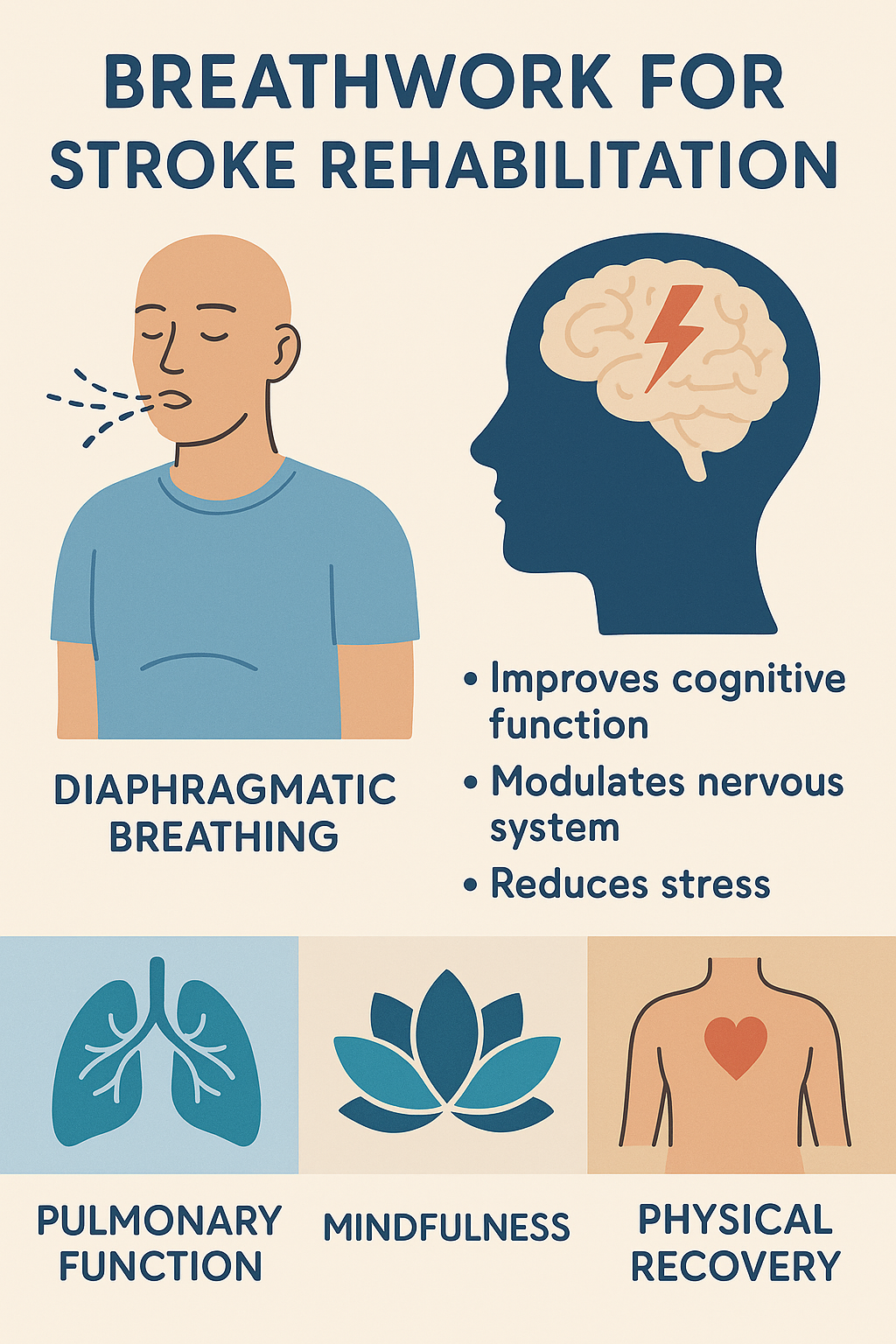
Breath control plays a foundational role in both Tai Chi and Qigong, but it also serves as a stand-alone therapy in stroke rehabilitation. Breathing exercises like diaphragmatic breathing, pursed-lip breathing, and alternate nostril breathing improve pulmonary function, reduce stress, and enhance neurological recovery (Kang et al., 2022)
A recent review by Kang (2022) found that stroke patients engaging in structured breathwork showed measurable improvements in cognitive function and mental alertness. Controlled breathing can modulate the autonomic nervous system, reduce sympathetic arousal, and improve oxygen delivery to brain tissue. These are crucial factors for healing post-stroke.
Another meta-analysis found that respiratory muscle training significantly improved walking ability, respiratory strength, and vital capacity in stroke survivors (Liu et al., 2024). Breath regulation also fosters mindfulness and can reduce stress-induced cortisol levels, which otherwise impair cognitive and physical recovery.
Clinical Integration and Application
The integration of Tai Chi, Qigong, and breath management into stroke rehabilitation offers a complementary model that addresses the whole person: body, mind, and spirit. These practices are particularly suited for long-term maintenance and chronic stroke management because they are low-cost, non-invasive, and patient-empowering.
Rehabilitation professionals can incorporate these practices as part of a tiered recovery program. For instance, seated Qigong or Tai Chi can be introduced early, with progression toward standing forms as the patient’s balance and strength improve. Breath training may be applied across all stages, helping regulate mood and improve mental clarity from the onset (Wang et al., 2022).
Instructor certification and training should be considered when implementing these practices in clinical settings to ensure safety and efficacy. Additionally, ongoing research is warranted to explore the neurological mechanisms by which these practices influence post-stroke plasticity and rehabilitation outcomes.
Conclusion
Tai Chi, Qigong, and breath management represent powerful, evidence-based adjuncts to conventional stroke rehabilitation. These mind-body practices enhance physical recovery, cognitive function, emotional well-being, and spiritual resilience. By fostering neuroplasticity, emotional regulation, and functional independence, they provide a holistic and empowering pathway for stroke survivors. Integrating these modalities into clinical care can support a more complete and compassionate recovery journey.
Check out my revised book of Reflexology & Exercises for Stroke Side-effects, available on Amazon https://a.co/d/25q40Hd:
References
American Heart Association. (2022, April 7). Seated form of tai chi might boost stroke recovery. https://www.heart.org/en/news/2022/04/07/seated-form-of-tai-chi-might-boost-stroke-recovery
Li, F., Harmer, P., Fitzgerald, K., Eckstrom, E., Stock, R., Galver, J., Maddalozzo, G., & Batya, S. S. (2012). Tai Chi and postural stability in patients with Parkinson’s disease. New England Journal of Medicine, 366(6), 511–519. https://doi.org/10.1056/NEJMoa1107911
Liu, Y., Liu, X., Liu, Y., Zhang, L., Zhang, L., Wang, J., Shi, Y., & Xie, Q. (2024). Effects of respiratory muscle training on post-stroke rehabilitation: A systematic review and meta-analysis. World Journal of Clinical Cases, 12(20), 4289–4300. https://doi.org/10.12998/wjcc.v12.i20.4289
Park, M., Song, R., Ju, K., Seo, J., Fan, X., Ryu, A., Li, L., & Kim, J. (2022). Effects of Tai Chi and Qigong on the mobility of stroke survivors: A systematic review and meta-analysis of randomized trials. PLOS ONE, 17(11), e0277541. https://doi.org/10.1371/journal.pone.0277541
Wang, Y., Zhang, Q., Li, F., Li, Q., & Jin, Y. (2022). Effects of tai chi and Qigong on cognition in neurological disorders: A systematic review and meta-analysis. Geriatric Nursing, 46, 166–177. https://doi.org/10.1016/j.gerinurse.2022.05.014
Yang, H., Li, B., Feng, L., Zhang, Z., & Liu, X. (2023). Effects of health Qigong exercise on upper extremity muscle activity, balance function, and quality of life in stroke patients. Frontiers in Neuroscience, 17, 1208554. https://doi.org/10.3389/fnins.2023.1208554
Kang, E. S., Yook, J. S., & Ha, M. S. (2022). Breathing Exercises for Improving Cognitive Function in Patients with Stroke. Journal of clinical medicine, 11(10), 2888. https://doi.org/10.3390/jcm11102888


 United Martial Arts Association