
Training Methods Of 72 Arts Of Shaolin by Jin Jing Zhong (1934) is a window into how some traditional lineages of martial arts training used to be practice in years past. Many decades ago, practitioners could and would devote many hours, for many days and over many years, even decades to develop and perfect their skills. Many of the methods explained throughout this book seem impossible with today’s hectic modern schedule, where most people find it difficult to carve out 1-2 hours to exercise, a few days per week.
The text is an extensive and detailed manual on the 72 Arts of Shaolin Kung Fu, compiled and translated from early 20th-century Chinese martial arts manuscripts. It presents a comprehensive guide to Shaolin training methods, theoretical principles, and practical exercises essential for mastering both internal (soft, spiritual, energy-based) and external (hard, physical, muscular) martial arts skills. The text includes biographies of key figures such as Jin Jing Zhong and Reverend Miao Xing, highlighting their dedication and contributions to preserving Shaolin traditions. It emphasizes the cultivation of Qi (internal energy), balance of Yin and Yang forces, and the importance of moral character and perseverance in training.

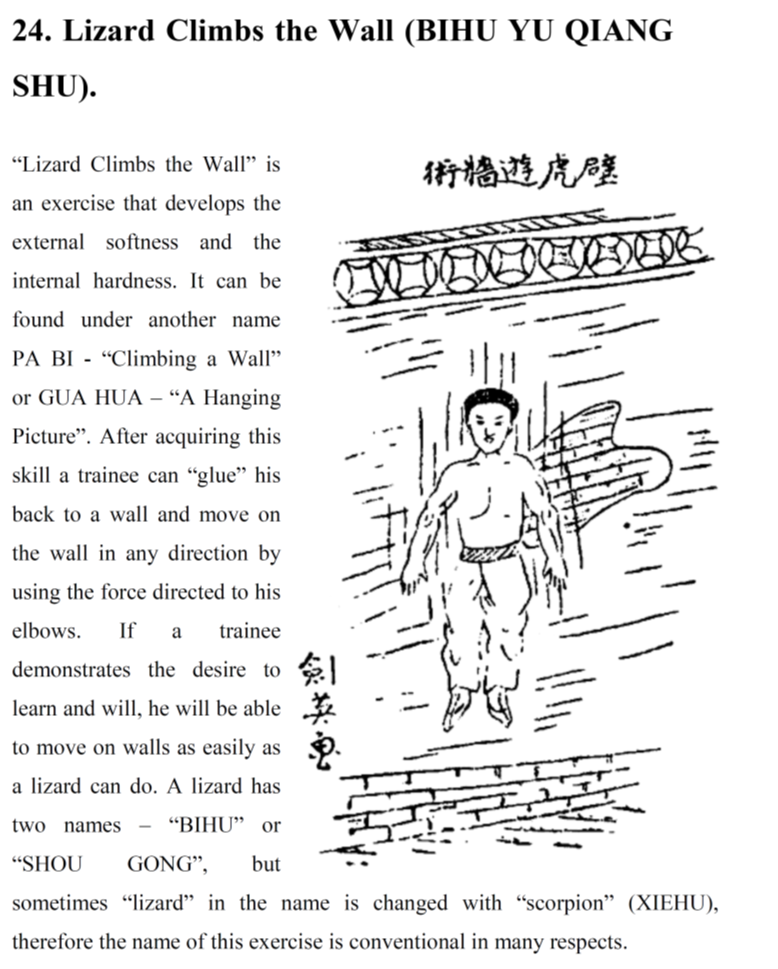
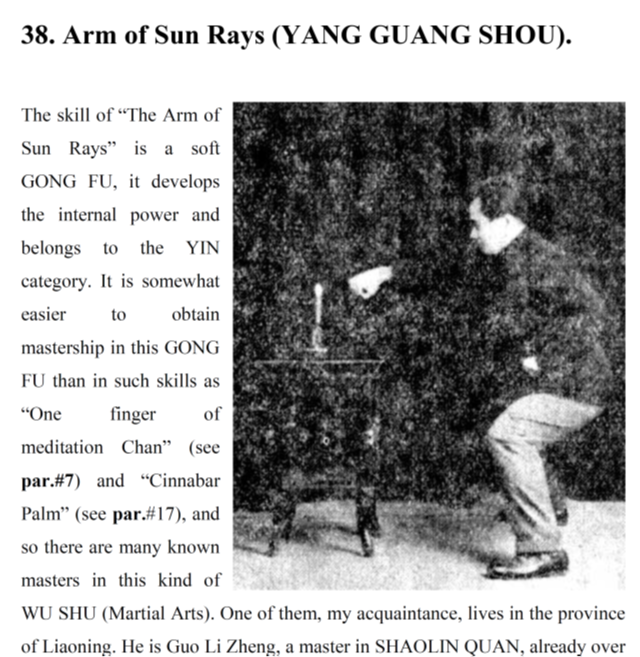
The manual systematically categorizes the 72 arts into hard and soft, internal and external skills, linking each to physical health, spiritual development, and combat effectiveness. Detailed instructions on foundational exercises (e.g., striking wooden dummies, suspending coins, kicking flying meteors), and advanced techniques (e.g., Diamond Finger, Iron Shirt, Luohan’s Night Vision, Skill of Light Body) are provided. The text stresses the need for gradual, persistent training, avoidance of harmful habits, and the ethical use of martial arts. It also includes unique Shaolin training methods such as walking on poles, swimming skills, and acrobatic movements, demonstrating the holistic nature of Shaolin Kung Fu as both a martial and health practice.
The manual concludes with a tribute to Lam Sai Wing, a renowned master of Southern Shaolin Hung Gar, whose writings similarly blend combat techniques and internal cultivation methods, affirming the enduring legacy of Shaolin martial arts.
Highlights
- Comprehensive guide to the 72 Arts of Shaolin Kung Fu, covering theory and practice.
- Emphasis on balancing internal energy (Qi), Yin-Yang forces, and moral development.
- Detailed hard and soft training methods for physical and spiritual mastery.
- Shaolin exercises improve health, resilience, and combat skills simultaneously.
- Training principles stress persistence, patience, and ethical martial arts use.
- Unique skills include walking on poles, swimming techniques, and acrobatic jumps.
- Biographies of key Shaolin masters and their contributions to preserving martial traditions.
Key Insights
- Integration of Internal and External Skills: The text highlights that Shaolin mastery requires the harmonious development of both internal energy cultivation (soft Gong Fu) and external physical power (hard Gong Fu). This dual approach ensures not only effective combat skills but also long-term health and spiritual well-being. The internal force Qi, when properly nurtured, fortifies the body against injury and disease, while external techniques develop strength, precision, and resilience.
- Qi as the Core Vital Force: Qi is portrayed as the fundamental life energy governing health, strength, and spirit. The manual provides numerous exercises for cultivating, circulating, and concentrating Qi throughout the body. The practice of controlling Qi leads to improved blood circulation, organ function, mental clarity, and emotional stability. This understanding aligns with traditional Chinese medicine and Taoist philosophy, reinforcing Shaolin’s holistic approach.
- Moral and Psychological Foundations of Martial Arts: The text stresses that mastery is not merely physical but deeply rooted in cultivating virtues such as humility, patience, courage, and self-control. The reverence for tutors, avoidance of arrogance, and ethical restraint in the use of force are repeatedly emphasized. This moral framework ensures that martial power is used responsibly and contributes to personal and social harmony.
- Progressive and Systematic Training: The 72 Arts are organized to accommodate practitioners of all ages and skill levels, with clear stages of difficulty and gradual increase in intensity. Foundational exercises such as Four-Part Exercise and base conditioning prepare the body and mind for advanced techniques. The text warns against impatience and irregular practice, advocating steady, daily training for years or decades to achieve true mastery.
- Specialized Combat Techniques and Conditioning: The manual describes a wide range of sophisticated methods that condition specific body parts (e.g., Iron Head, Iron Knees, Diamond Finger) and develop unique combat skills (e.g., One Finger Chan Meditation, Eagle’s Claws, Mantis Claws). These techniques show the detailed craftsmanship in Shaolin arts, combining physical toughness with precision targeting of acupoints and energy pathways.
- Health Benefits and Longevity: Many exercises are designed not only for fighting but also for therapeutic effects, strengthening internal organs, improving circulation, enhancing sensory functions (night vision, keen hearing), and preventing age-related decline. The text acknowledges adaptations for children, adults, and the elderly, emphasizing that Shaolin is as much a health cultivation system as a martial discipline.
- Practical Application in Combat and Life: The manual balances philosophical depth with direct combat pragmatism. It includes guidance on using softness to overcome hardness, redirecting opponent’s force, and applying “deadly” but hidden techniques. It also teaches survival skills like swimming, diving, and agile movement, showing Shaolin’s comprehensive training for real-world challenges.
This text is a foundational document for understanding traditional Shaolin martial arts, blending philosophy, health sciences, and combat techniques into a unified training system. It underscores the cultural, spiritual, and practical significance of the 72 Arts, offering an authentic window into the Shaolin legacy that continues to influence martial arts worldwide.

Reference:
Training Methods of 72 Arts of Shaolin by Jin Jing Zhong 1934 : Jin Jing Zhong : free download, borrow, and streaming : Internet Archive. (1934). Internet Archive. https://archive.org/details/trainingmethodsof72artsofshaolinbyjinjingzhong1934

 United Martial Arts Association