
Every comprehensive system of human transformation contains a bridge, one that links the physical body to the invisible dimensions of mind and spirit. In the Eastern traditions this bridge is expressed through Jing (essence), Qi (vital energy), and Shen (consciousness). In the developmental framework I teach, it appears as the Warrior, Scholar, and Sage. In the Western esoteric lineage, the same bridge is known as Hermeticism, a philosophical and spiritual system attributed to Hermes Trismegistus, the “Thrice-Great” master of physical, intellectual, and spiritual wisdom.
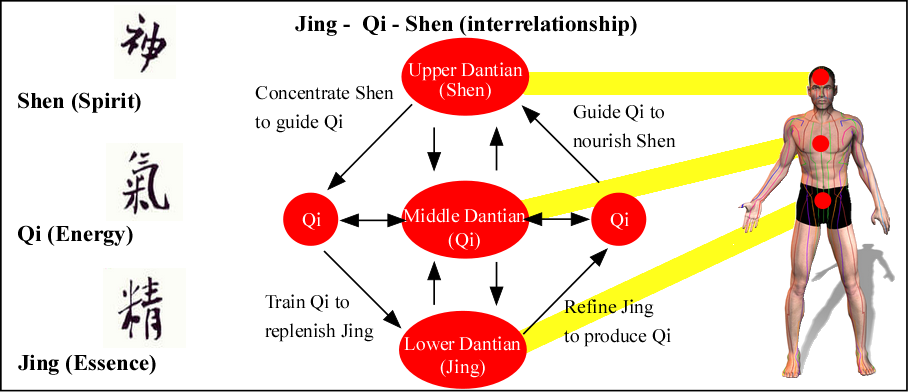
These are not parallel systems by coincidence. They are structurally identical expressions of the same universal process of human refinement, or the ascent from embodiment to insight, and from insight to integrated wisdom. Across cultures and centuries, the language changes, but the architecture remains.
Hermeticism arises from Hellenistic Egypt, a fusion of Greek philosophy, Egyptian spirituality, early science, medicine, astronomy, and metaphysics (Copenhaver, 1992; Fowden, 1993). Its core message is simple but profound: reality is mental, patterned, cyclical, lawful, and capable of conscious transformation. The most famous Hermetic maxim from the Emerald Tablet expresses this truth succinctly:
“As above, so below; as within, so without.”
This is not merely poetic symbolism. It is a functional statement of psychospiritual law: what is refined in the body shapes the mind; what is clarified in the mind refines the spirit; what is awakened in the spirit returns to illuminate the body.
The Eight Hermetic Principles and Their Living Expression
Hermetic philosophy is traditionally organized into eight fundamental principles (seven classical principles plus the unifying axiom of Integration & Moral Alignment). These principles are not abstract metaphysics; they describe how transformation actually happens in daily life.
Below is a brief, applied summary of each.
1. Mentalism – “All is Mind.”
Reality originates in consciousness.
Example:
Thought hygiene, attention control, emotional regulation, and metacognition all reflect the fact that perception shapes experience. In practice, this is where the Scholar refines Qi through disciplined awareness.
2. Correspondence – “As above, so below; as within, so without.”
Patterns repeat across all levels of existence.
Example:
Organ–emotion relationships, archetypal symbolism, and synchronicity reflect this principle. The Sage expresses it through Shen-based integration and purpose.
3. Vibration – “Nothing rests; everything moves.”
All things exist in motion and frequency.
Example:
Breath rhythm, posture, nervous system tone, and muscular tension all shape consciousness. This is the foundational work of the Warrior, refining Jing through somatic calibration.
4. Polarity – “Opposites are identical in nature, differing only in degree.”
All dualities exist on a spectrum.
Example:
Fear and courage, stress and resilience, pain and growth are not opposites but transformations of the same continuum. This principle governs emotional alchemy and shadow integration.
5. Rhythm – “Everything flows in and out.”
Nature moves in cycles.
Example:
Circadian rhythms, seasonal cycles, recovery cycles in training, and emotional tides all operate under rhythmic law. Ignoring rhythm leads to burnout; honoring it leads to longevity.
6. Cause and Effect – “Every cause has its effect.”
Nothing is random.
Example:
Consistent practice compounds. Discipline produces capacity. Neglect produces decay. This principle governs training progression, psychological habit formation, and destiny itself.
7. Gender – “Masculine and feminine principles exist in everything.”
All creation arises from active and receptive forces.
Example:
Stillness and motion, force and yielding, analysis and intuition are necessary partners. In internal alchemy this corresponds to Kan and Li, or the inner marriage of fire and water.
8. The Unifying Principle – Integration & Moral Alignment
(Implicit throughout the Hermetic texts)
This is the alchemical ascent itself:
Matter → Energy → Consciousness → Unity
Warrior → Scholar → Sage
Jing → Qi → Shen
It describes the return of the fragmented human being to wholeness.
Hermeticism and Eastern Internal Alchemy: One Process, Two Languages
Western Hermeticism and Daoist Neidan (internal alchemy) describe the same three-stage refinement:
- Refining Jing (Warrior) – stability, grounding, structure, breath, stance
- Refining Qi (Scholar) – insight, emotional regulation, meaning
- Refining Shen (Sage) – awareness, wisdom, unity, purpose
In Hermetic terms this mirrors:
- Earth → Air → Fire → Ether
- Body → Mind → Spirit → Divine Mind
- Alchemy → Knowledge → Illumination → Union
The training of the body becomes the furnace of consciousness. The mind becomes the instrument of refinement. The spirit becomes the field of meaning.
Jung and Psychology as Modern Hermetic Science
Carl Jung recognized Western and Eastern alchemy as symbolic maps of individuation, or the integration of the unconscious and conscious psyche (Jung, 1968). He interpreted alchemical stages as:
- Shadow purification
- Integration of opposites
- Inner marriage (coniunctio)
- Emergence of the unified Self
This is precisely the Warrior–Scholar–Sage progression expressed in psychological language.
Why Hermeticism Matters Now
Modern culture suffers from a dangerous fragmentation:
- The Warrior has been reduced to stress and survival
- The Scholar to data without wisdom
- The Sage to abstraction without embodiment
Hermeticism restores their unity as a single ascending current of human evolution. It re-establishes the coherence between:
- Body and breath
- Thought and emotion
- Discipline and compassion
- Knowledge and service
- Identity and purpose
This blog summary introduces the deeper work now fully developed in my newest release:
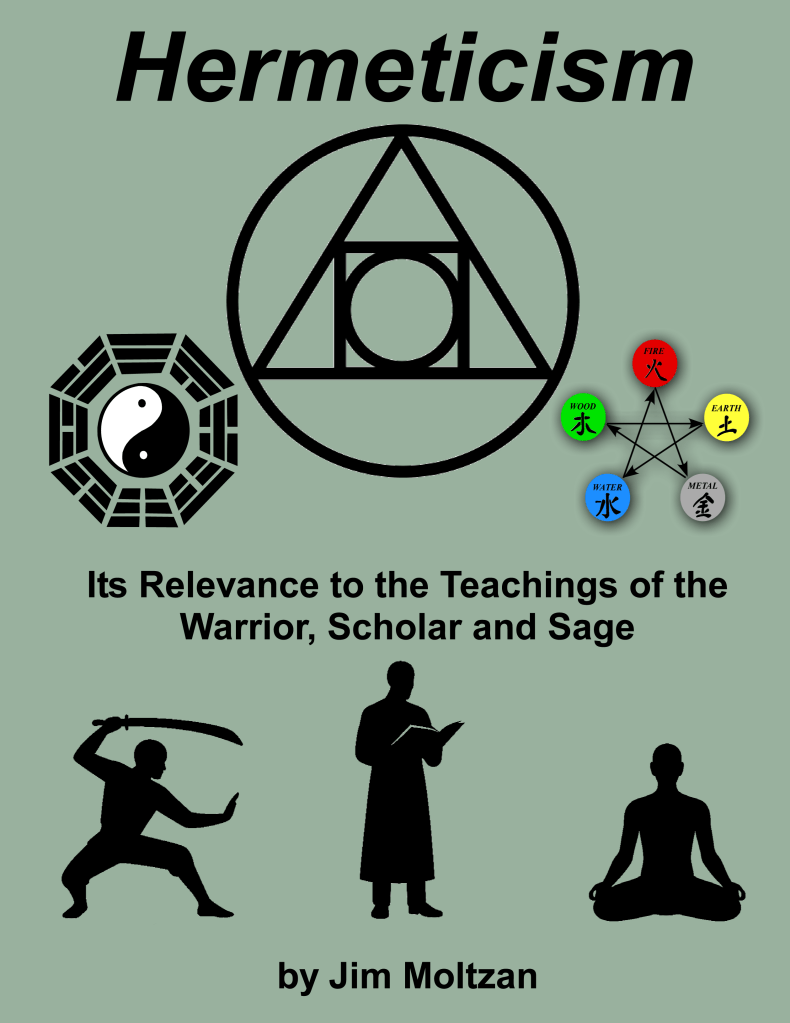
Book 38 – Hermeticism: Its Relevance to the Teachings of the Warrior, Scholar & Sage
This volume stands at the architectural center of my entire body of work. It reveals:
- How the Warrior becomes the Scholar
- How the Scholar becomes the Sage
- How the Sage returns to unity
- And how all three operate simultaneously as a single living process
It is not a theoretical book. It is a map of transformation, as it seeks to integrate Hermetic law, Eastern internal alchemy, Jungian psychology, nervous system science, breathwork, ethics, and the meaning-making process of human life.
Hermeticism is not something to believe. It is something to practice, embody, and become.
As above, so within.
As within, so becomes the world.
Available on Amazon at: https://a.co/d/fbD2mU0
References:
Copenhaver, B. P. (1992). Hermetica: The Greek Corpus Hermeticum and the Latin Asclepius. Cambridge University Press.
Faivre, A. (1994). Access to Western Esotericism. SUNY Press.
Fowden, G. (1993). The Egyptian Hermes: A historical approach to the late pagan mind. Princeton University Press. https://archive.org/details/egyptianhermeshi0000fowd
Jung, C. G. (1968). Alchemical studies (R. F. C. Hull, Trans.). Princeton University Press. https://www.jungiananalysts.org.uk/wp-content/uploads/2018/07/C.-G.-Jung-Collected-Works-Volume-13_-Alchemical-Studies.pdf
Mahé, J.-P. (1998). The treatise on the “Emerald Tablet.” Journal of the Warburg and Courtauld Institutes, 61, 1–20.
Principe, L. M. (2013). The Secrets of Alchemy. University of Chicago Press.
 United Martial Arts Association