
A Holistic Reflection on Inspiration, Warning, and the Evolving Self
Human beings often imagine what it would be like to travel back and speak to a younger version of themselves. This idea appears in philosophy, psychology, and narrative storytelling because it symbolizes the universal desire to reflect, correct, and integrate one’s life experiences. Beyond the fantasy of time travel lies a powerful metaphor for holistic health: the encounter between the “older self” and the “younger self” represents an inner dialogue between potential and maturity, between innocence and insight, and between raw possibility and lived wisdom.
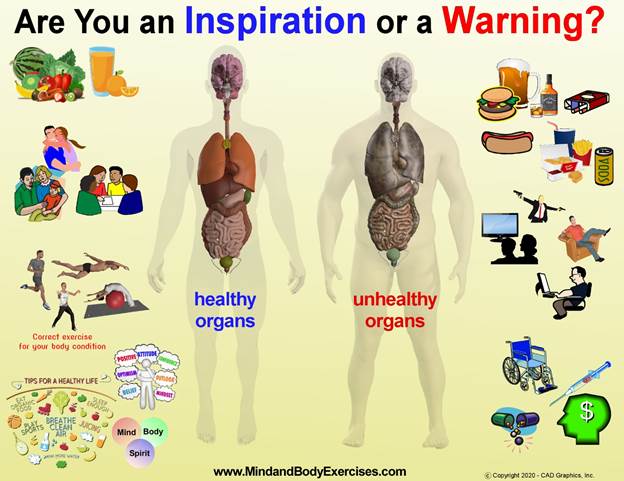
A central question arises: if the older self could appear before the younger, would they be seen as an inspiration or a warning? In reality, a person is always both. The meeting highlights the continuity of human development and the opportunity for conscious self-direction at every age.

The Younger Self: A Vessel of Possible Selves
Developmental psychology emphasizes that adolescents and young adults form “possible selves,” internal images of who they might become, who they hope to be, and who they fear becoming (Markus & Nurius, 1986). These imagined futures strongly influence motivation, health behaviors, coping strategies, and identity formation.
The younger self typically carries:
- Curiosity
- Imagination
- Flexibility
- A broad horizon of potential
- Sensitivity to validation and guidance
From a holistic perspective, this early stage corresponds to Jing, the foundational essence and latent potential a person enters life with. The younger self is fertile ground for direction. If an older version appeared, the younger self might interpret them as evidence of what is achievable or as a signal of what must be avoided to preserve well-being.
The emotional impact would depend largely on how well the older self embodies the younger self’s hoped-for qualities (Oyserman & James, 2011).
The Older Self: Integration, Insight, and Embodied Lessons
With age comes the accumulation of experiences, patterns, consequences, and lessons. While aging itself does not guarantee wisdom, reflective integration does. We all grow older, however we do not all grow up. Research in adult development shows that meaning-making, emotional regulation, and resilience tend to strengthen across the lifespan—particularly through processes of cognitive appraisal and narrative reconstruction (Charles, 2010; Park, 2010).
The older self represents:
- Lived consequences of habits
- Emotional intelligence gained through adversity
- Patterns of health, self-care, and neglect
- Wisdom derived from integrating experiences
- Clarity about purpose and personal truth
In holistic terms, this corresponds to Qi and Shen: the active life force shaped by choices (Qi) and the clarity, awareness, and purpose that emerge through integration (Shen).
Depending on the life lived, the younger self might see the older one as:
- Inspiration if they embody calm, vitality, meaning, and self-possession
- Warning if they carry bitterness, physical decline from neglect, or unhealed patterns
- A realistic combination of both, which is the most human and psychologically accurate view
The Dual Truth: We Are Always Inspiration and Warning
Self-reflection research shows that individuals learn most effectively when they can hold both positive and negative self-assessments simultaneously, a process known as integrative self-reflection (Morin, 2017). The older self naturally embodies this duality:
1. A Lighthouse
Showing what is possible when discipline, compassion, and health practices accumulate over time.
2. A Signpost
Revealing which choices, habits, or relationships lead to stagnation or suffering.
3. A Mirror
Reflecting truths the younger self could not yet see but might have recognized earlier if guidance were available.
4. A Bridge
Demonstrating that healing, resilience, and transformation remain possible even decades later. Research on post-traumatic growth shows that meaning-making and growth often occur long after adversity has passed (Tedeschi & Calhoun, 2004).
In Taoist terms, this mirrors the dynamic interplay of yin and yang, where apparent opposites coexist, complement one another, and create a fuller picture of the truth.
Holistic Health and the Self Across Time
Holistic health recognizes the interdependence of body, mind, and spirit. The meeting of younger and older selves highlights how long-term well-being is shaped through consistent, incremental choices.
Body / Jing
Long-term research in public health demonstrates that consistent health behaviors such as sleep quality, physical activity, balanced nutrition, stress management, and avoiding harmful habits, predict well-being and longevity across the lifespan. These lifestyle factors, when adopted earlier, form a stable foundation for later-life physical vitality and resilience (Belloc & Breslow, 1972).
Mind / Qi
Emotional regulation, coping strategies, and thought patterns evolve through practice. Individuals who learn adaptive regulation earlier show greater life satisfaction and resilience in adulthood (Gross, 2015).
Spirit / Shen
Meaning, alignment, and ethical coherence develop through reflection. Life review processes help individuals construct narratives that support psychological well-being (Westerhof & Bohlmeijer, 2014).
Thus, the older self is the embodied outcome of how Jing was preserved, how Qi was cultivated, and how Shen was refined.
A Practical Thought Experiment for Personal Growth
Imagine your future self walking into the room today. Would they thank you or warn you? Would they:
- Ask you to slow down?
- Encourage you to keep going?
- Remind you to take better care of your body?
- Urge you to set boundaries?
- Suggest that your purpose needs revisiting?
- Praise your discipline, courage, or compassion?
Research shows that visualizing one’s future self increases motivation, improves decision-making, and strengthens long-term thinking (Hershfield, 2011). The time-travel metaphor becomes a tool for conscious alignment.
Your younger self is gone, but your older self is still being shaped now, through today’s decisions. Holistic health is the conversation between past potential, present choice, and future embodiment. The point is not to change the past but to ensure that the future becomes a version of yourself you would be proud to meet.
References:
Belloc, N. B., & Breslow, L. (1972). Relationship of physical health status and health practices. Preventive Medicine, 1(3), 409–421. https://doi.org/10.1016/0091-7435(72)90014-x
Charles, S. T. (2010). Strength and vulnerability integration: A model of emotional well-being across adulthood. Psychological Bulletin, 136(6), 1068–1091. https://doi.org/10.1037/a0021232
Gross, J. J. (2015). Emotion regulation: Current status and future prospects. Psychological Inquiry, 26(1), 1–26. https://doi.org/10.1080/1047840X.2014.940781
Hershfield, H. E. (2011). Future self-continuity: How conceptions of the future self transform intertemporal choice. Annals of the New York Academy of Sciences, 1235(1), 30–43. https://doi.org/10.1111/j.1749-6632.2011.06201.x
Markus, H., & Nurius, P. (1986). Possible selves. American Psychologist, 41(9), 954–969. https://doi.org/10.1037/0003-066X.41.9.954
Morin, A. (2017). Toward a glossary of self-related terms. Frontiers in Psychology, 8, 280. https://doi.org/10.3389/fpsyg.2017.00280
Oyserman, D., & James, L. (2011). Possible identities. In S. J. Schwartz, K. Luyckx, & V. L. Vignoles (Eds.), Handbook of identity theory and research (pp. 117–145). Springer Science + Business Media. https://doi.org/10.1007/978-1-4419-7988-9_6
Park, C. L. (2010). Making sense of the meaning literature: An integrative review. Psychological Bulletin, 136(2), 257–301. https://doi.org/10.1037/a0018301
Tedeschi, R. G., & Calhoun, L. G. (2004). Posttraumatic growth: Conceptual foundations and empirical evidence. Psychological Inquiry, 15(1), 1–18. https://doi.org/10.1207/s15327965pli1501_01
Westerhof, G. J., & Bohlmeijer, E. T. (2014). Celebrating fifty years of research and applications in reminiscence and life review: state of the art and new directions. Journal of aging studies, 29, 107–114. https://doi.org/10.1016/j.jaging.2014.02.003
 United Martial Arts Association