
“A little knowledge of science makes you an atheist, but in-depth knowledge of science makes you a believer in God.”
– Often attributed to Francis Bacon, founder of the scientific method
In today’s cultural landscape, science is often framed as being in conflict with religion or spirituality. Many young learners, upon their first encounter with scientific explanations of the universe, feel empowered by naturalistic theories that appear to replace the need for a divine creator. Yet, as some of history’s greatest minds have discovered, the deeper one delves into the mysteries of existence, the more the boundary between science and spirituality begins to blur.
This article explores how surface-level understanding of science can lead to atheism, while profound scientific inquiry often circles back to the awe, mystery, and reverence traditionally associated with belief in a higher order.
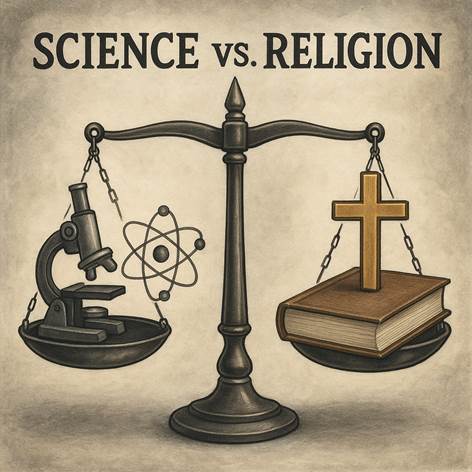
I. Shallow Science: When God Seems Unnecessary
When individuals first engage with scientific thought, they often encounter a worldview that appears fully self-contained:
- Biology explains life through evolutionary theory, offering a compelling, godless account of biodiversity.
- Neuroscience reduces human thought and behavior to chemical and electrical activity in the brain.
- Physics and cosmology portray a universe arising from a quantum vacuum or Big Bang, operating without obvious purpose or design.
This can easily lead to scientific materialism, the belief that only physical matter and measurable phenomena exist. In such a view, God becomes redundant, as a vestige of earlier ignorance.
Indeed, many atheists point to science as their justification. As evolutionary biologist Richard Dawkins (2006) contends in The God Delusion, the universe we observe has “precisely the properties we should expect if there is, at bottom, no design, no purpose, no evil and no good, nothing but blind, pitiless indifference.”
But is this truly the endpoint of scientific discovery?
II. Deep Science: The Return of the Sacred
As scientific understanding matures, new questions emerge, with richer, stranger, and more metaphysically provocative than the answers that came before. This deeper engagement often reveals that the universe is far from a cold, mechanistic void. Instead, it is intricate, harmonious, and astonishing in ways that seem to defy chance or randomness.
1. The Fine-Tuning of the Universe
Modern physics has revealed that the fundamental constants of the universe, such as gravity, electromagnetism, and the strong nuclear force are finely tuned for life. A minuscule deviation in any of these constants would render the cosmos sterile and lifeless (Rees, 1999).
This raises profound questions: Why do these constants exist at all? Why are they so precisely calibrated?
While some propose the multiverse theory to explain this, others like theoretical physicist Paul Davies (2007) suggest that the universe “seems to be fine-tuned for consciousness,” implying the possibility of a purposeful or intelligent order.
2. The Enigma of Consciousness
Despite all our advances in neuroscience, no theory adequately explains how subjective experiences of thoughts, emotions, and inner life arise from the brain’s gray matter. This “hard problem of consciousness” has led some researchers to propose panpsychism or dual-aspect monism, theories that view consciousness as a fundamental feature of the universe, not an accidental byproduct (Chalmers, 1996).
Such views resonate with spiritual traditions that see consciousness, not matter, as primary. As Max Planck, founder of quantum theory, once said:
“I regard consciousness as fundamental. I regard matter as derivative from consciousness” (Planck, 2014).
3. Mathematics and the Mind of God
One of the most mysterious features of the cosmos is that it can be described so precisely by mathematics, an abstract language invented by the human mind. Why should physical reality conform to these equations?
Einstein called this “the incomprehensible comprehensibility of the universe.” For many, this suggests not randomness but order and rationality, akin to the classical idea of Logos, where a divine ordering principle present in Greek philosophy and Christian theology (John 1:1).
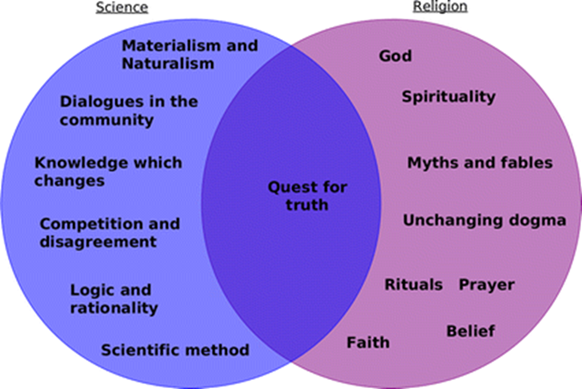
4. Quantum Mysteries and Nonlocality
Quantum mechanics defies classical logic:
- Particles can exist in multiple states until observed (superposition).
- Entangled particles influence each other instantaneously, even across vast distances (nonlocality).
These findings challenge our assumptions about space, time, causality and even the role of consciousness in shaping reality. While interpretations vary, the quantum world seems less like a machine and more like a mystery, echoing ancient insights from mystical traditions (Zohar & Marshall, 1994).
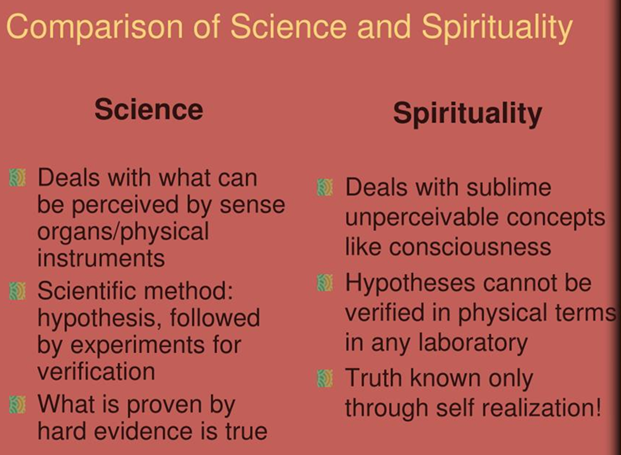
5. Science’s Own Limits
Science is a powerful tool, but it has limits. It can tell us how things happen, but not why they exist. It cannot fully answer:
- Why there is something rather than nothing
- Whether the universe has purpose or meaning
- What grounds morality, love, or beauty
- What happens after death
As John Polkinghorne (2005), a quantum physicist and theologian, notes:
“Science describes the processes of the world, but religion is required to make sense of its meaning.”
III. The Wisdom of Scientists and Seekers
Many prominent scientists have acknowledged the spiritual implications of their work:
- Albert Einstein: “The more I study science, the more I believe in God” (quoted in Clark, 1971).
- Werner Heisenberg: “The first gulp from the glass of natural science will turn you into an atheist, but at the bottom of the glass, God is waiting” (Heisenberg, 1974).
- Carl Jung, though a psychologist, echoed similar themes in his work on archetypes and the collective unconscious, seeing spiritual insight as part of the individuation process (Jung, 1968).
IV. A Holistic View: Integration Over Division
From a holistic health and wellness perspective, the journey from materialism to meaning mirrors our own inner evolution:
- At first, we crave certainty, reductionism, and linear logic.
- Later, through deeper study and lived experience, we learn to embrace mystery, paradox, and awe.
- Wellness, too, is not just physical; it involves spiritual alignment, emotional integration, and conscious living.
In this sense, the journey through science becomes a path to spiritual maturity. True wholeness is not rejecting science in favor of God or vice versa but realizing that the two may be part of a unified truth.
Conclusion: From Knowing to Wondering
Superficial knowledge may cast aside the sacred. But deep understanding restores it, not as dogma, but as mystery. Not as fear-based belief, but as reverence, humility, and awe at a universe far more intricate and interconnected than materialism allows.
“When the eye of science truly opens wide, it sees not just the gears of the universe but its soul.”
References:
Chalmers, D. J. (1996). The conscious mind: in search of a fundamental theory. https://philpapers.org/rec/CHATCM
Clark, R. W. (1971). Einstein: The Life and Times. World Publishing Company. https://archive.org/details/einstein00rona
Davies, P. (2007). The Goldilocks Enigma: Why Is the Universe Just Right for Life? Houghton Mifflin. https://archive.org/details/goldilocksenigma0000davi
Dawkins, R. (2006). The God Delusion. Houghton Mifflin. https://philosophy.org.za/uploads_other/The_God_Delusion_(Selected).pdf
Heisenberg, W. (1974). Physics and Beyond: Encounters and Conversations. Harper & Row. https://archive.org/details/physicsbeyondenc00heisrich
Jung, C.G. (1968). The Archetypes and the Collective Unconscious (R.F.C. Hull, Trans.; 2nd ed.). Routledge. https://doi.org/10.4324/9781315725642
Planck, M. (2014). Scientific Autobiography ([edition unavailable]). Philosophical Library/Open Road. Retrieved from https://www.perlego.com/book/2393069/scientific-autobiography-and-other-papers-pdf (Original work published 2014)
Polkinghorne, J. (2005). Exploring Reality: The Intertwining of Science and Religion. Yale University Press. https://archive.org/details/exploringreality0000polk
Rees, M. (1999). JUST SIX NUMBERS. In The Deep Forces That Shape the Universe. BASIC. https://al-sabeel.net/wp-content/uploads/2020/08/JUST-SIX-NUMBERS-The-Deep-Forces-That-Shape-the-Universe.pdf
Zohar, D., & Marshall, I. (1994). The Quantum Society: Mind, Physics and a New Social Vision. William Morrow https://archive.org/details/quantumsocietymi0000zoha



 United Martial Arts Association