
A Reflection on Relationships, Impermanence, and the Wisdom of Final Chapters
I have lived long enough, to see many of my personal relationships come to an end. Relationships with family, friends and neighbors. Also, in the workplace, or with casual acquaintances and even with most beloved pets. There is no way to escape the fact that all of our relationships,… good, bad or otherwise… will eventually wind down and consequently, … cease to exist.

Some relationships ended gently, like the fading of a season. Some ended abruptly, with sharp edges and unfinished words. Others dissolved so slowly that I did not recognize their ending until much later. Some lasted for only seconds as meaningful encounters, while others have lasted for decades, ranging from superficial to those with much depth and connection.
A few were taken from me through death, reminding me that time is not something we negotiate.
If there is one truth I now accept without resistance, it is this: every relationship ends. The only uncertainty is how.
All Relationships End — But Not All Endings Are Equal
A relationship can end in many ways:
- Physical separation
- Emotional drifting
- Conflict or betrayal
- Mutual completion
- Growth in different directions
- Death
The ending is inevitable. The quality of the ending, however, is not. Two relationships can last the same number of years. One ends with resentment, bitterness, and silence. The other ends in gratitude, dignity, and respect. Same duration, but very different legacies. And legacy is what remains when presence is gone.
When I was younger, I assumed continuity. Friendships felt permanent. Partnerships felt anchored. Mentorships felt enduring. Even conflict seemed temporary. I moved through life with the quiet belief that what was present would remain.
Age has corrected that assumption.
In both Buddhism and Taoism, impermanence is not considered tragic; it is considered structural. Everything that arises eventually passes. Seasons change. Roles evolve. Bodies age. The river moves forward regardless of how tightly we grip the bank.
Relationships are no exception. This realization is not cynical. However, it is clarifying.
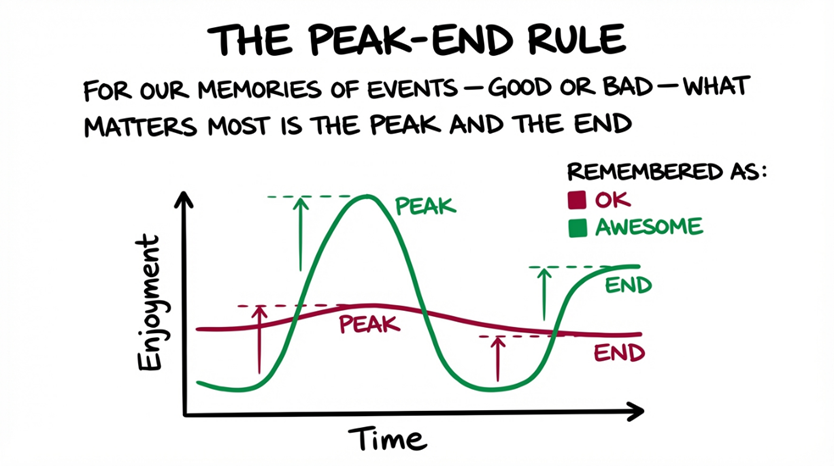
What I have come to understand is that while every relationship will end, not every ending carries the same weight. The way something concludes often determines how it is remembered. Behavioral science supports this idea through what is known as the peak–end rule, a concept associated with Daniel Kahneman. Human beings tend to remember experiences not by averaging every moment, but by recalling emotional peaks and how the experience ended.
In my own life, I have seen this play out repeatedly. Some relationships ended in mutual respect. Those I remember with gratitude, even if sadness accompanied the goodbye. Other endings were strained or unresolved. In those cases, the final chapter colored the memory of the entire story. Not because the good years disappeared, but because the emotional signature shifted.
The ending becomes a lens. Over time, I stopped asking whether a relationship lasted “long enough.” Instead, I began asking whether I conducted myself well when it mattered most. Did I speak truthfully but without cruelty? Did I take responsibility for my part? Did I protect confidence even when I was hurt? Did I leave with dignity?
Ending well does not mean avoiding hard conversations. It does not mean suppressing disappointment or pretending harm did not occur. It means refusing to allow bitterness to become part of one’s identity. It means honoring what was real, even if it cannot continue.
Not All Endings Are Mutual
Here is where the idea becomes more nuanced.
Sometimes:
- One person wants to leave.
- One person is hurt.
- One person feels betrayed.
The closing of a relationship is not always evenly distributed. One may feel relief while the other feels loss. One may feel clarity while the other feels confusion.
We cannot control how another person chooses to exit. But we can control whether we exit with integrity.
Not all of my endings were graceful. I have spoken too quickly at times. I have clung when I should have released. I have walked away when I should have stayed. But even the painful endings became teachers. Each one revealed something about attachment, ego, expectation, and fear.
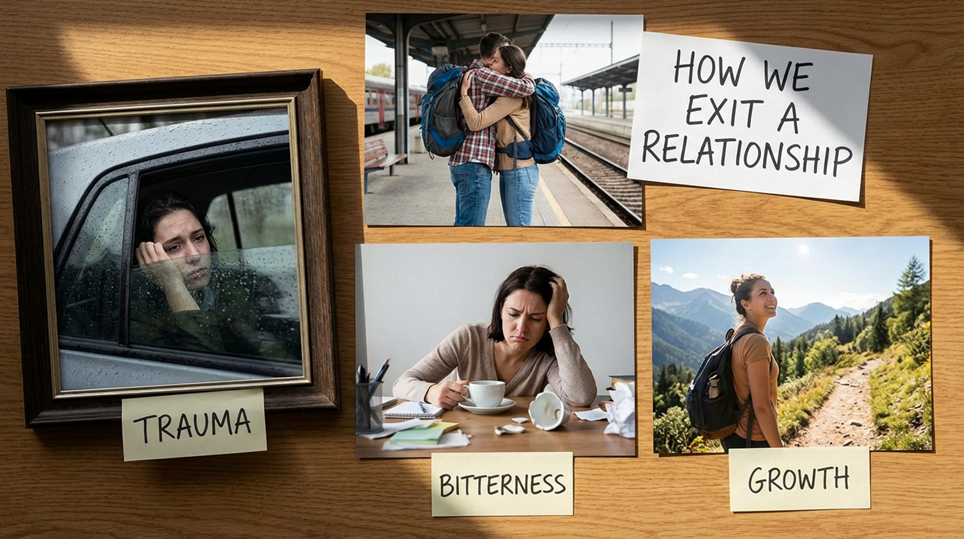
Not all relationships are meant to last.
Some are teachers.
Some are mirrors.
Some are initiations.
Some are seasonal.
But how we exit determines whether the experience becomes:
- Trauma
- Bitterness
- Or growth
Each one forced me to refine who I was.
If I have gained anything from the relationships that have ended — well or poorly — it is perspective.
Now, as I enter what many call the golden years of life, I do not assume longevity in any relationship. I try to be present. I strive to be responsible. I presume that any conversation could be the last meaningful exchange. That awareness changes how I speak. It softens unnecessary conflict and reduces trivial ego battles. It encourages gratitude.
It also deepens intentionality.
When we recognize that every relationship has a final chapter, we begin to live differently in the earlier ones. We may express appreciation more freely. We may forgive more quickly. We can choose our words more carefully. We can protect what matters and release what does not.
Relationships do not truly end when contact stops. They continue within us. They shape habits, perspectives, and character. Some leave behind wisdom. Some leave behind warnings. Some leave behind quiet gratitude. All leave impressions.
The quality of the ending influences the emotional afterlife of the relationship.
If I could offer anything to those who are younger, it would not be advice on how to make every relationship last forever. That is not within our control. Instead, I would suggest this:
Conduct yourself in such a way that, if the relationship ended tomorrow, you would not regret your final chapter.
Try not to weaponize vulnerability. Try not to humiliate in anger. Do not rewrite history to protect pride. Do not allow ego to eclipse shared humanity.
You cannot control how others leave. But you can control how you do.
In the end, our legacy is not built upon how long relationships lasted, but upon how we treated others within them. Especially when they were ending. Dignity under pressure is remembered. Respect in conflict is remembered. Gratitude in goodbye is remembered.
Every relationship will one day close. That is not a morbid thought, but rather a refining one.
Knowing this has not made me withdraw. It has made me more attentive, careful. and grateful. More willing to release without resentment.
The final chapter will come for every connection I still hold. When it does, I hope the memory left behind is steady, respectful, and honest. Not perfect, but principled.
If endings are inevitable, then grace becomes essential. And perhaps that is one of the quiet purposes of aging: to understand that relationships are not possessions to secure, but gifts to steward right up until their final page.

 United Martial Arts Association