
Long before Chen Village records appear in the 17th century, traditional accounts attribute Tai Chi’s creation to the Daoist monk Zhang Sanfeng, often associated with Wudang Mountain. According to legend, Zhang observed a fight between a snake and a crane. The snake yielded and coiled; the crane struck with precision. From this encounter, he is said to have synthesized principles of softness overcoming hardness, a living embodiment of Yin and Yang theory (Henning, 1994; Wile, 1996).
While modern historians generally regard this account as mythological rather than empirically verifiable, its philosophical significance is undeniable. The story reflects core Taijiquan principles:
- Yielding over resisting
- Circularity over linear force
- Softness overcoming rigidity
- Strategic adaptability
Henning (1994) notes that the Zhang Sanfeng narrative likely emerged during the late Ming and early Qing periods as part of broader cultural movements that sought to root martial systems in Daoist cosmology.
Thus, although Chen style represents the earliest documented system, the conceptual foundations of Tai Chi are traditionally traced to Daoist internal cultivation traditions centuries earlier.
Chen Style: The Foundational Documented System
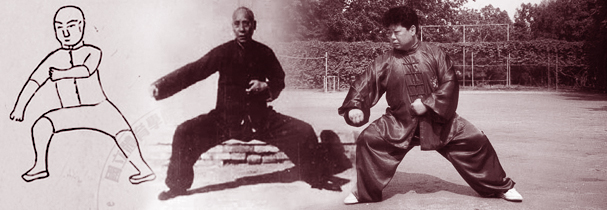
Chen style originated in Chen Village (Chenjiagou), Henan Province, during the 17th century. It is traditionally attributed to Chen Wangting (1600–1680), a retired Ming dynasty military officer who synthesized battlefield methods, classical philosophy, and health exercises (Wile, 1996).
Chen style preserves features that clearly reflect martial structure:
- Silk-reeling spirals (chan si jin)
- Alternation of slow movement and explosive release (fa jin)
- Low stances
- Cannon Fist (Pao Chui)
- Embedded combat applications
Scholars note that Chen style retains overt expressions of issuing power and structural coiling less visible in later styles (Henning, 1994).
Philosophical Foundations Across All Authentic Systems
Regardless of stylistic differences, authentic Tai Chi systems are unified by shared theoretical foundations rooted in classical Chinese cosmology.
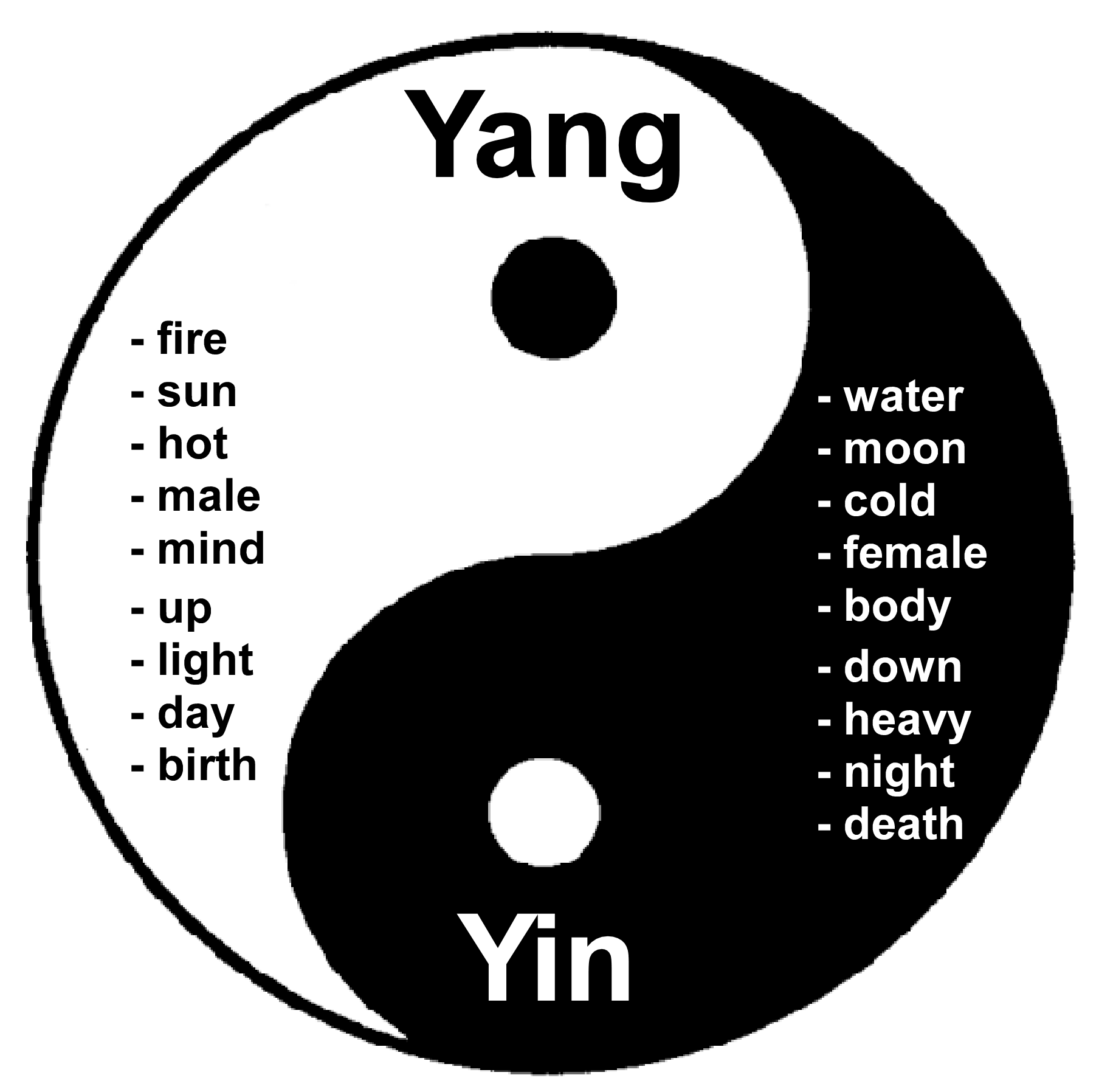
Yin and Yang Theory
Tai Chi (Taiji) itself refers to the “Supreme Ultimate,” the dynamic interplay of Yin and Yang described in the Yijing (Book of Changes). Every movement in Tai Chi expresses:
- Substantial and insubstantial
- Open and close
- Rising and sinking
- Full and empty
This alternation is not metaphorical — it is biomechanical, energetic, and tactical.
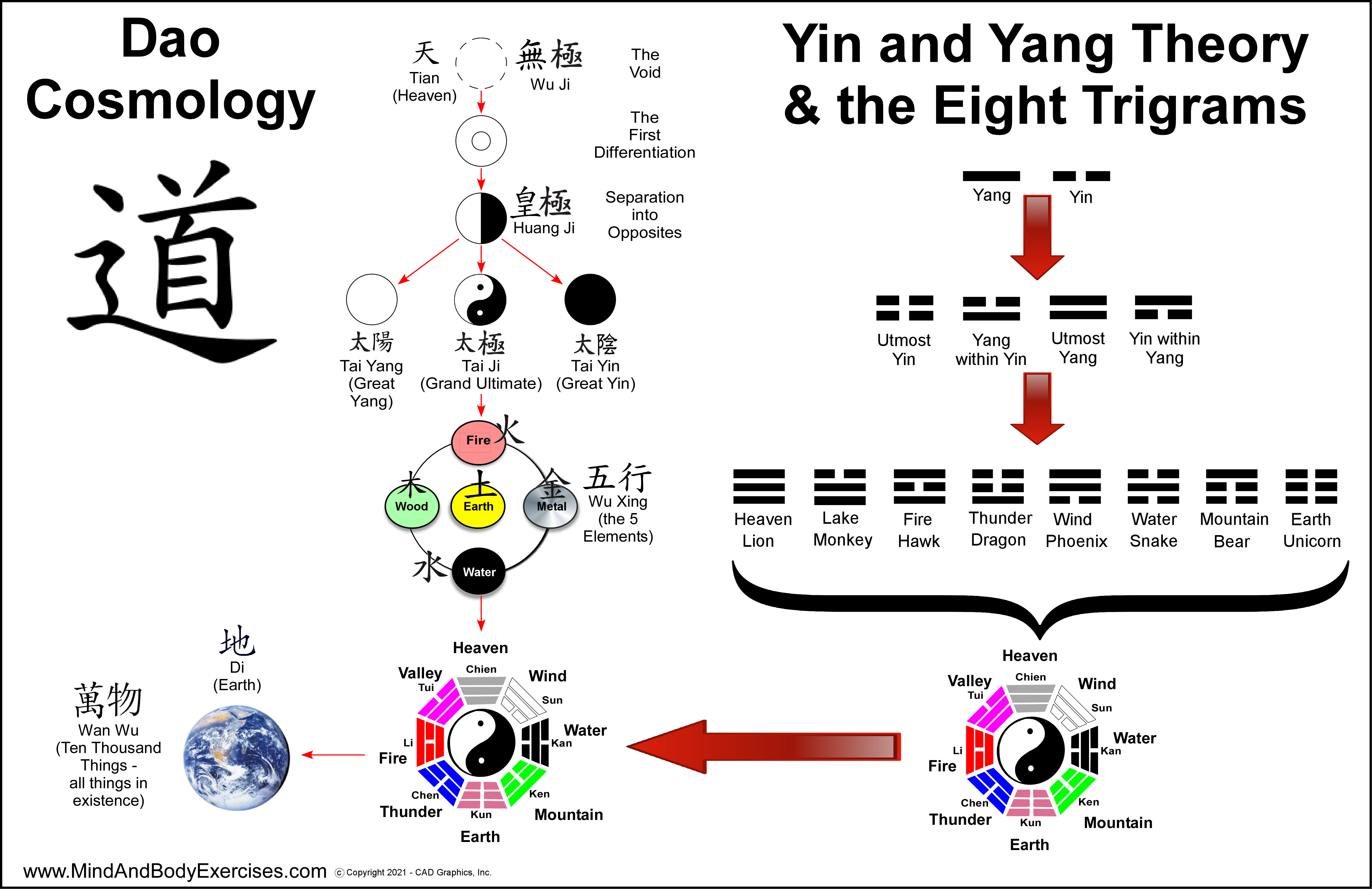
Wuxing (Five Phases)
The Five Phase theory — Wood, Fire, Earth, Metal, and Water — informs martial strategy, organ theory, and energetic transformation. Although more explicit in some internal arts like Xingyiquan, Wuxing principles underlie Tai Chi’s cyclical power generation and transformational mechanics (Sun, 2003; Wile, 1996).
Bagua (Eight Trigrams)
The Eight Trigrams symbolize dynamic change and directional transformation. Circular stepping, angular redirection, and strategic yielding in Tai Chi mirror Bagua cosmology. Even when not overtly labeled, trigram theory informs structural shifts and directional transitions embedded in form practice.
Thus, while the choreography differs among Chen, Yang, Wu, and Sun styles, their cosmological framework remains consistent.
Yang Style: Adaptation and Public Transmission
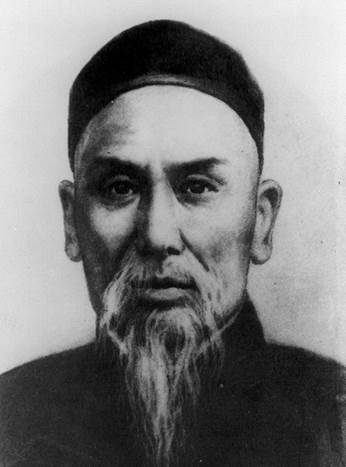
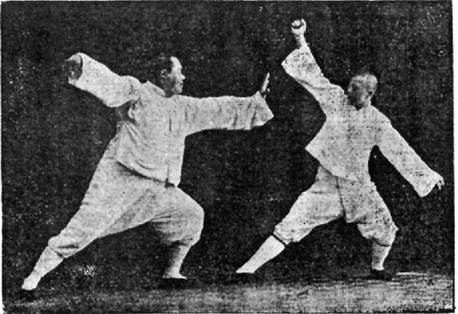
Yang Luchan (1799–1872) studied under Chen Changxing and later taught in Beijing (Henning, 1994; Wile, 1996).
Adaptations included:
- Smoother continuity
- Reduced explosive emphasis
- Elevated stances
- Standardized pacing
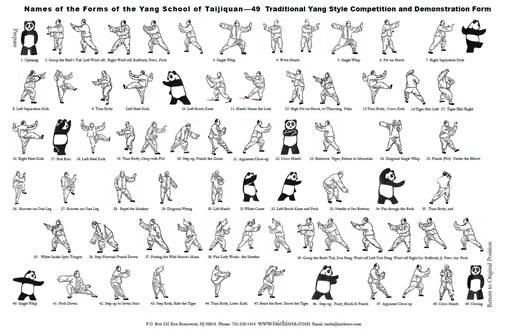
His grandson Yang Chengfu formalized the large-frame slow form now widely practiced (Yang, 2005).Yang style reflects pedagogical expansion rather than dilution.
Wu Style: Refinement and Synthesis
Wu Jianquan studied within the Yang lineage and developed a system characterized by:
- Narrower stance width
- Slight forward inclination
- Subtle structural alignment
- Emphasis on push-hands sensitivity
Wu style reflects internal refinement and biomechanical precision rather than overt amplitude (Henning, 1994).
Sun Style Tai Chi
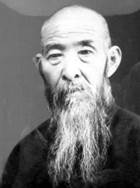
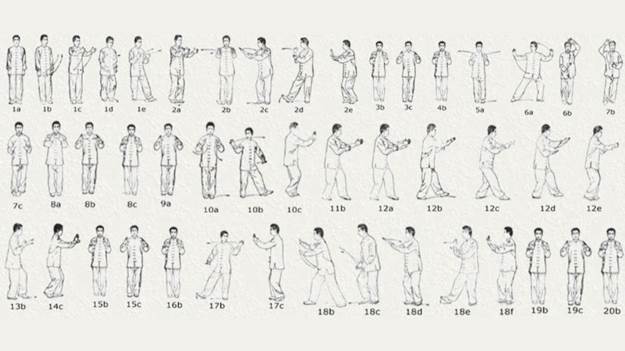
Sun Lutang (1860–1933) was already an accomplished practitioner of Xingyiquan and Baguazhang before studying Tai Chi. His system integrates principles from these “internal sister arts,” emphasizing:
- Agile step-follow footwork
- Upright posture
- Smooth transitions
- Strong reliance on intent (Yi)
Sun’s writings illustrate the synthesis of internal martial theory across systems (Sun, 2003). His style demonstrates that Tai Chi’s evolution included both lineage transmission and cross-disciplinary integration.
Why 108? Symbolism and Counting Variations
Traditional long forms are often referred to as “108 postures.” The number 108 carries symbolic significance in Chinese and Buddhist traditions, often representing completeness or cosmic totality (Wile, 1996). However, posture counts vary because:
- Movements are repeated on both sides
- Transitional sequences may or may not be counted
- Different lineages classify postures differently
Thus, identical choreography may be described as 85, 88, 108, or more. Historically, long forms functioned as mnemonic archives for transmitting combat principles and conditioning methods, rather than as standardized numerical routines.
The 24 and 48 Forms: Modern Standardization
In 1956, the Chinese government introduced the 24 Simplified Form, derived primarily from Yang style. Its purpose was public health promotion and ease of instruction during a period of national physical culture reform (Frank, 2006). Repetitions and complex martial sequences were reduced to make the system accessible to large populations.
In 1976, the 48 Form was created as a more technically demanding standardized routine incorporating elements from Chen, Yang, Wu, and Sun styles. It was designed for demonstration and competitive wushu contexts (Frank, 2006).
These shorter forms reflect broader sociopolitical changes:
- Clan-based transmission → public instruction
- Martial preservation → health emphasis
- Village secrecy → national standardization
Evolution Rather Than Dilution
From Chen to Yang to Wu to Sun, Tai Chi evolved in response to changing audiences and historical conditions. While stylistic expression differs in frame size, stance height, and visible power release, the core principles remain consistent:
- Rooting and structural alignment
- Whole-body integration
- Relaxed yet connected movement
- Intent directing force
Tai Chi is not a static artifact of the past. It is a living system shaped by centuries of adaptation. Its diversity reflects not fragmentation, but resilience
References
Frank, A. (2006). Taijiquan and the search for the little old Chinese man: Understanding identity through martial arts. Palgrave Macmillan.
Henning, S. (1994). Ignorance, Legend and Taijiquan. In Journal of the Chen Style Taijiquan Research Association of Hawaii (Vol. 2, Issue 3, pp. 1–7). https://crnagorataiji.wordpress.com/wp-content/uploads/2015/12/legend-in-tai-chi.pdf
Lutang, S. (2003). A study of Taijiquan. North Atlantic Books.
Wile, D. (1996). Lost T’ai-chi Classics from the Late Ch’ing Dynasty. State University of New York Press. https://doi.org/10.2307/jj.18255579
Yang, J. (2005). The essence and applications of Taijiquan. YMAA Publication Center.
 United Martial Arts Association