
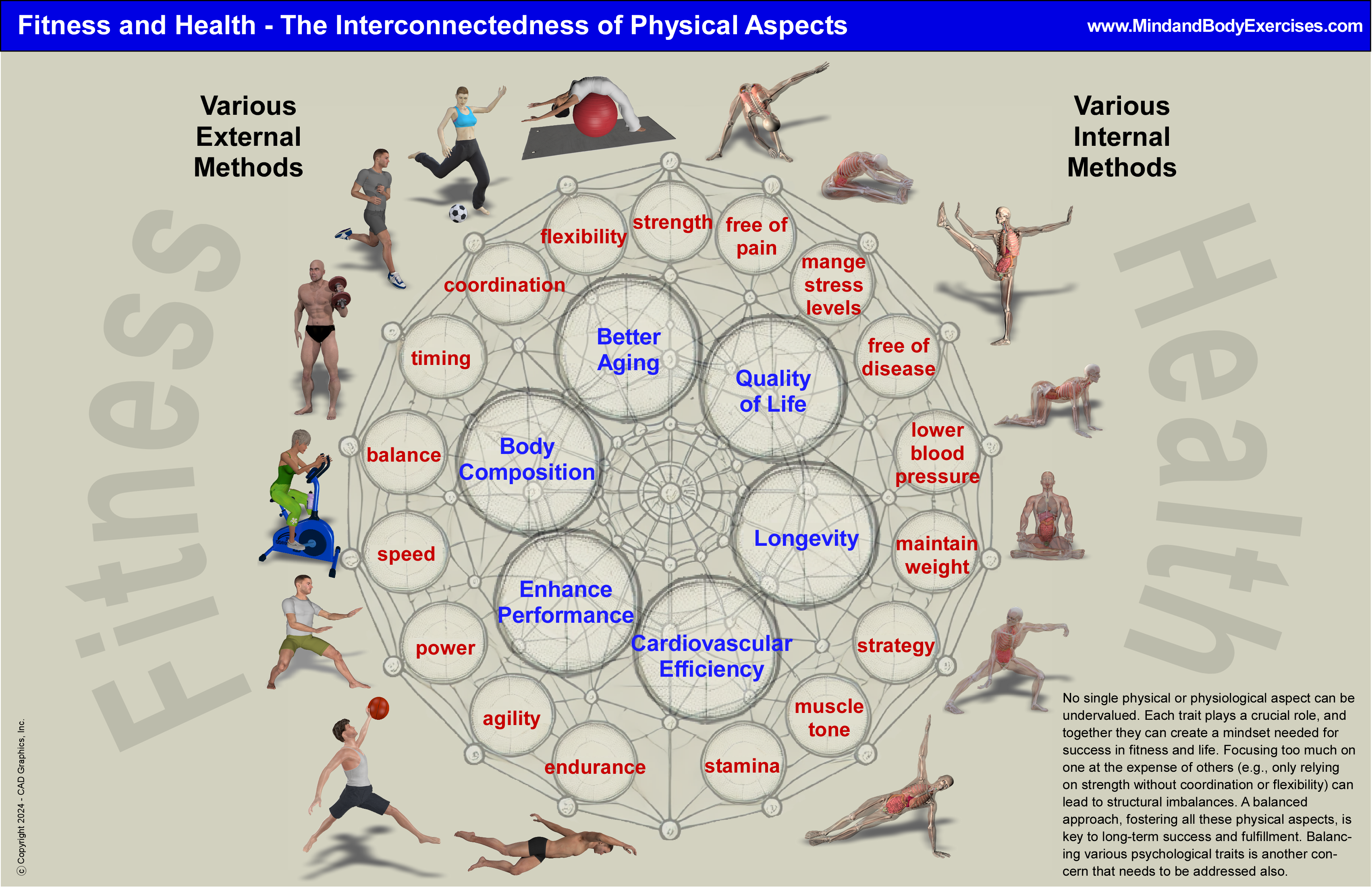
The many facets of fitness can be prioritized depending on individual goals and needs. Below is a list of key fitness components, with explanations of how and why each is important, and their order of prioritization based on general health, athletic performance, and functional movement.
1. Strength
- How: The ability of muscles to exert force. Strength is developed through resistance training, such as weightlifting or bodyweight exercises.
- Why: Strength forms the foundation for most physical activities. It supports bone health, maintains muscle mass, aids in balance, and helps prevent injury by stabilizing joints and improving posture.
2. Flexibility
- How: The range of motion around a joint or group of joints. Flexibility is improved through stretching exercises (static, dynamic, or PNF (Proprioceptive Neuromuscular Facilitation).
- Why: Flexibility helps prevent injury by allowing muscles to move more freely. It supports overall mobility, reduces muscle stiffness, and aids in the recovery process. It’s essential for maintaining functional movement, especially as we age.
3. Coordination
- How: The ability to synchronize multiple body movements smoothly and efficiently. Coordination can be developed through balance exercises, agility drills, or sports.
- Why: Coordination is crucial for functional fitness, sports performance, and injury prevention. It allows for fluid movements and better control of the body in daily activities.
4. Endurance (Cardiovascular)
- How: The ability of the heart and lungs to deliver oxygen to working muscles during sustained physical activity. It’s improved through aerobic exercises like running, swimming, or cycling.
- Why: Cardiovascular endurance is vital for overall health. It helps lower the risk of heart disease, boosts energy levels, and enhances the body’s ability to perform sustained tasks with less fatigue.
5. Balance
- How: The ability to maintain body position while standing still or moving. Balance training includes exercises like yoga, Tai Chi, or standing on one leg.
- Why: Balance is especially important for functional fitness and preventing falls, particularly as we age. It also supports better posture and coordination.
6. Power
- How: The ability to exert a maximal amount of force in the shortest possible time (a combination of strength and speed). Power is developed through plyometrics, Olympic lifts, and explosive body movements.
- Why: Power is crucial for activities requiring quick, explosive movements such as sprinting or jumping. It’s key for athletes but also benefits functional movement by improving reaction time and performance in high-intensity tasks.
7. Speed
- How: The ability to move quickly in a specific direction. Speed can be enhanced through sprint training, interval workouts, and agility drills.
- Why: Speed is critical for athletic performance but also useful in daily life for tasks that require quick movement or reaction, such as running after a bus or responding to emergencies.
8. Agility
- How: The ability to change direction quickly and efficiently. Agility training often involves cone drills, ladder drills, and quick lateral movements.
- Why: Agility is essential for athletes in sports that require fast directional changes. It also benefits non-athletes by improving body control and reducing injury risks during dynamic activities.
9. Timing
- How: The ability to move or react at the right moment. Timing is often developed through sports, reaction drills, or coordination exercises.
- Why: Good timing enhances coordination and athletic performance, particularly in sports like tennis, boxing, or baseball where precision is key.
10. Control
- How: The ability to regulate and maintain body position and movement. Control is improved through strength, balance, and proprioception exercises.
- Why: Control is necessary for mastering technique in physical activities. It enhances precision, reduces the risk of injury, and helps in maintaining stability and proper form during movements.
11. Reaction Time
- How: The speed at which an individual can respond to a stimulus. Reaction time can be improved through drills involving quick decision-making or unexpected changes.
- Why: Faster reaction time is beneficial for safety and athletic performance, allowing a quicker response to environmental changes or dynamic sports scenarios.
Prioritization Based on Goals:
- For General Health and Longevity:
- Strength, Flexibility, Endurance, Balance
- These components promote muscle and bone health, reduce injury risk, and improve heart health and mobility, all crucial for everyday functionality.
- Strength, Flexibility, Endurance, Balance
- For Athletic Performance:
- Power, Speed, Agility, Coordination, Endurance
- Athletes benefit most from power and agility to enhance performance in sports, where explosive movements and quick reactions are needed.
- Power, Speed, Agility, Coordination, Endurance
- For Functional Fitness and Injury Prevention:
- Balance, Coordination, Strength, Control, Timing
- These aspects ensure better stability, posture, and fluid movements, which are essential for performing daily tasks and preventing accidents.
- Balance, Coordination, Strength, Control, Timing
Each component of fitness is interrelated and essential for a well-rounded approach to health and performance. Prioritization should be tailored to personal goals, whether that’s improving overall health, preparing for sports, or maintaining functional mobility as we age. We really can’t state that one aspect is most important, such as balance, which, if someone has none, cannot achieve the others. Or without coordination, one cannot develop more strength or more flexibility, correct? Or without strength, there is no balance to stabilize? All are important and cannot be under-prioritized, correct?
The various facets of fitness are interconnected, and it’s difficult to isolate one as the most important because they all support and influence each other.
- Balance is essential for safe and effective movement, but it often requires a certain amount of strength and coordination to maintain.
- Strength helps with balance and supports mobility, but flexibility is needed to allow the muscles and joints to move freely.
- Coordination is necessary to execute movements smoothly, but strength and timing also influence how well we can control those movements.
In essence, none of these components can be fully developed in isolation. Each contributes to overall fitness and functional capacity, so under-prioritizing any one of them could limit progress in other areas. It’s important to approach fitness in a holistic way, ensuring that all aspects are integrated and developed according to personal goals and needs.
I look forward to further sharing more of my message by partnering with hospitals, wellness centers, VA centers, schools on all levels, businesses, and individuals who see the value in building a stronger nation through building a healthier population.
I also have hundreds of FREE education video classes, lectures, and seminars available on my YouTube channel at:
https://www.youtube.com/c/MindandBodyExercises
Many of my publications can be found on Amazon at:
http://www.Amazon.com/author/jimmoltzan
My holistic health blog is available at:
https://mindandbodyexercises.wordpress.com/
http://www.MindAndBodyExercises.com
Mind and Body Exercises on Google: https://posts.gle/aD47Qo
Jim Moltzan
407-234-0119

 United Martial Arts Association