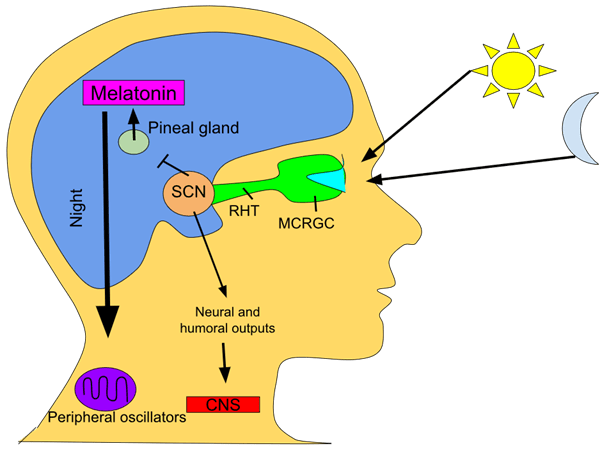
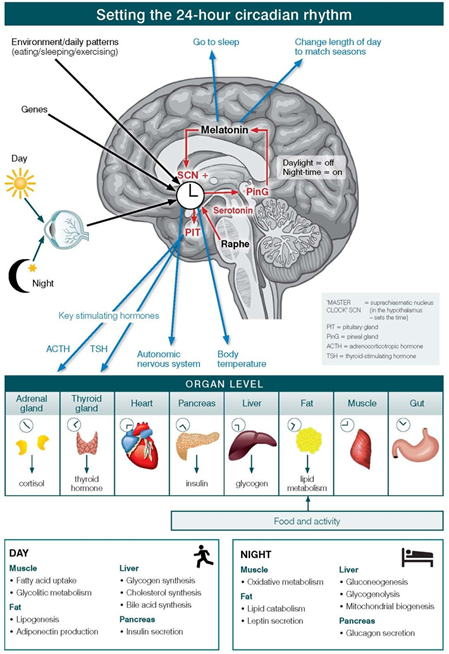
The suprachiasmatic nucleus (SCN) is a small, bilateral structure located in the anterior hypothalamus, directly above the optic chiasm. It serves as the body’s master circadian clock, orchestrating daily rhythms in physiology and behavior, including the sleep-wake cycle, hormone secretion, core body temperature, and feeding behavior.
Structure and Function of the SCN
The SCN is composed of approximately 20,000 neurons and is unique in that it:
Receives direct input from the retina through the retinohypothalamic tract, enabling it to synchronize the body’s internal clock with the external light-dark cycle (Reppert & Weaver, 2002).
Sends timing signals to peripheral clocks in tissues throughout the body (Takahashi, 2017).
Regulates the secretion of melatonin via connections to the pineal gland, helping initiate sleep.
How It Works: The Circadian Loop
Light detection: Specialized retinal ganglion cells detect ambient light and send signals directly to the SCN.
Signal integration: The SCN uses this light information to adjust its own activity and entrain the circadian rhythm.
Output signaling: The SCN influences the pineal gland (via the paraventricular nucleus and sympathetic nervous system) to suppress melatonin during daylight and allow melatonin to be released in darkness.
Peripheral coordination: The SCN sends signals to various body systems, ensuring synchronization of local clocks with the central clock.
SCN and the Sleep-Wake Cycle
At night, the SCN promotes melatonin secretion from the pineal gland, facilitating sleep.
During daylight, the SCN inhibits melatonin and promotes alertness and wakefulness.
Disruption in SCN function (e.g., jet lag, shift work, aging) can lead to insomnia, mood disorders, metabolic issues, and cognitive deficits (Czeisler et al., 1995).
Molecular Clockwork
Inside each SCN neuron is a feedback loop of gene expression involving:
Clock genes such as CLOCK, BMAL1, PER, and CRY
These genes form transcription-translation feedback loops that produce near-24-hour rhythms in gene expression (Partch et al., 2014)
Modern research on the suprachiasmatic nucleus (SCN) reinforces what traditional holistic practices have long intuited, that human health depends on harmony with natural rhythms.
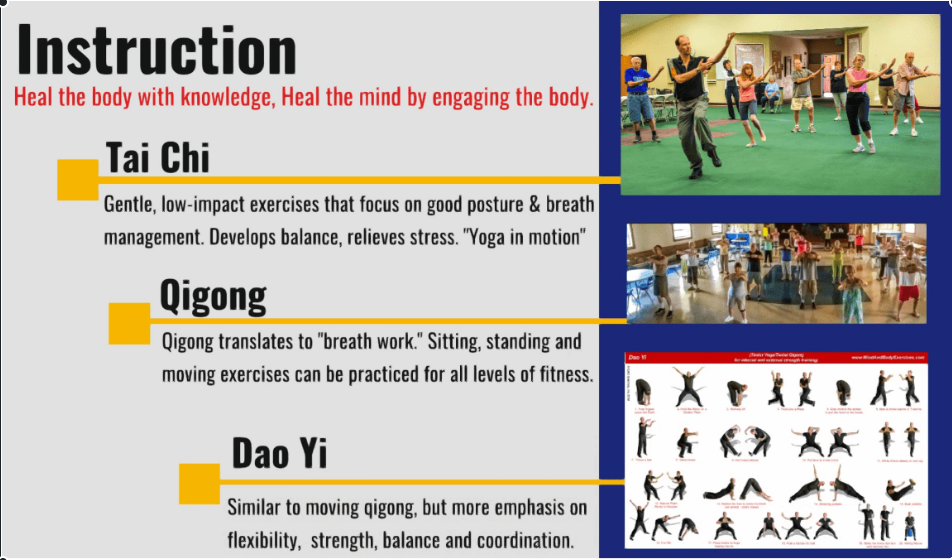
Mind-body disciplines such as Qigong, Tai Chi, and other somatic practices naturally align with this biological timing system. Their emphasis on movement at transitional times of day (like dawn and dusk), breath regulation, and meditative stillness helps synchronize internal rhythms with external environmental cues. This entrainment supports balanced melatonin and cortisol release, improves sleep quality, and reduces stress load on the nervous system.
From a holistic perspective, these practices serve as both regulators and restorers of biological coherence. They embody an intuitive understanding of what neuroscience now confirms, that regulating the body through breath, movement, and awareness reinforces the timing mechanisms of the SCN and helps restore physiological harmony from the inside out.
References:
Czeisler, C. A., Shanahan, T. L., Klerman, E. B., Martens, H., Brotman, D. J., Emens, J. S., Klein, T., & Rizzo, J. F. (1995). Suppression of melatonin secretion in some blind patients by exposure to bright light. New England Journal of Medicine, 332(1), 6–11. https://doi.org/10.1056/nejm199501053320102
Partch, C. L., Green, C. B., & Takahashi, J. S. (2014). Molecular architecture of the mammalian circadian clock. Trends in Cell Biology, 24(2), 90–99. https://doi.org/10.1016/j.tcb.2013.07.002
Reppert, S. M., & Weaver, D. R. (2002). Coordination of circadian timing in mammals. Nature, 418(6901), 935–941. https://doi.org/10.1038/nature00965
Takahashi, J. S. (2017). Transcriptional architecture of the mammalian circadian clock. Nature Reviews Genetics, 18(3), 164–179. https://doi.org/10.1038/nrg.2016.150
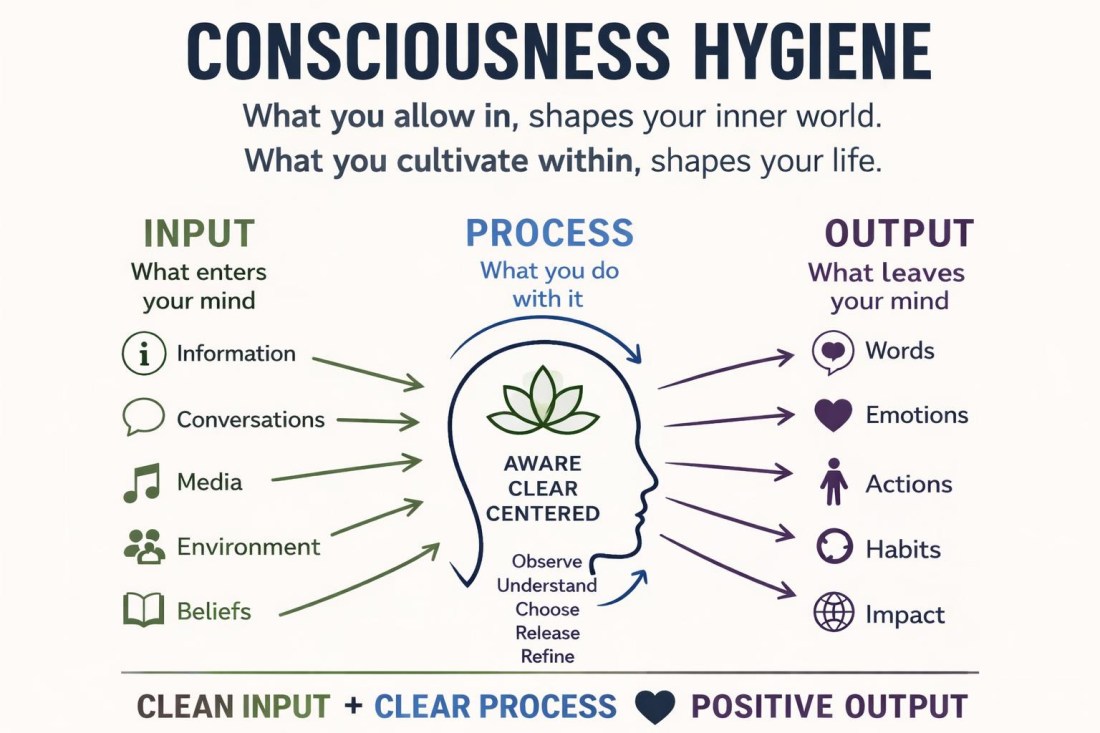
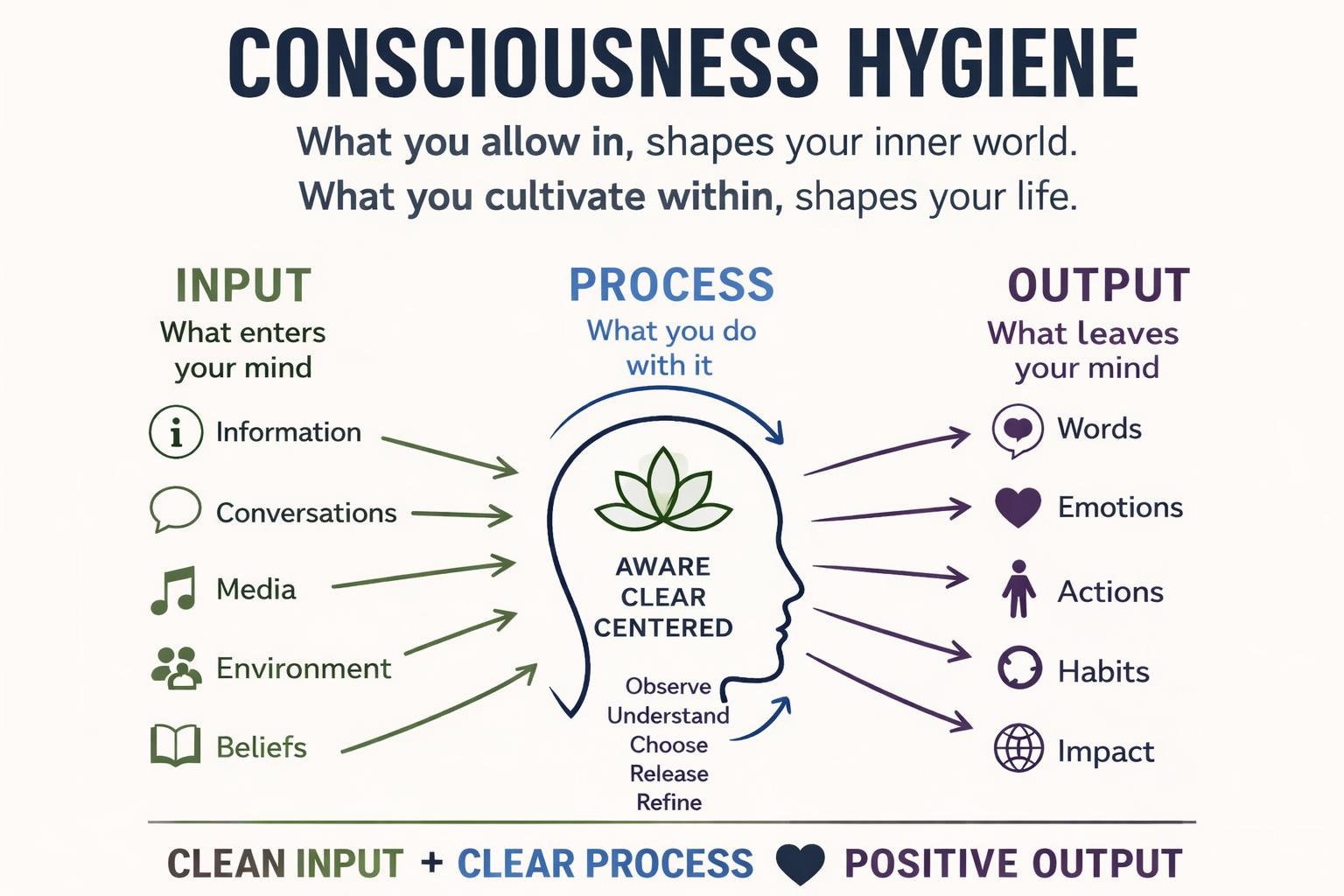
Consciousness hygiene is not a formal scientific term, but it is increasingly used in psychology, philosophy, meditation traditions, and holistic health to describe the deliberate management and care of one’s mental and perceptual environment, much like physical hygiene refers to caring for the body.
In simple terms:
Consciousness hygiene = practices that keep the mind clear, balanced, and resilient.
It involves being mindful about what enters, circulates within, and exits the mind.
For anyone with a background in holistic health, martial arts, and Eastern philosophy, the concept aligns very closely with principles found in Daoist cultivation, Buddhist mindfulness, and Stoic philosophy, even though the modern term itself is relatively new.
1. The Basic Idea: The Mind Also Needs Hygiene
Just as the body requires:
clean food
clean air
movement
rest
The mind requires similar care.
Without intentional care, the mind becomes cluttered with:
excessive information
emotional residue
negative conditioning
media overload
stress loops
Modern psychology often refers to this as cognitive load or mental contamination. In a holistic sense, consciousness hygiene asks:
What are you feeding your mind?
What thoughts are you repeating?
What emotional states are you cultivating?
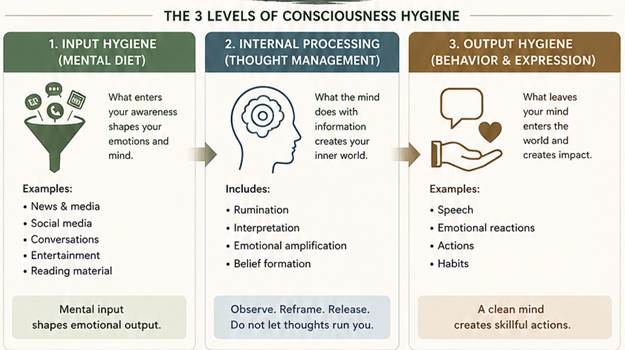
2. Three Levels of Consciousness Hygiene
Many thinkers describe it in three stages.
Level 1 – Input Hygiene (Mental Diet)
What enters your awareness.
Examples include:
news consumption
social media
conversations
music and entertainment
reading material
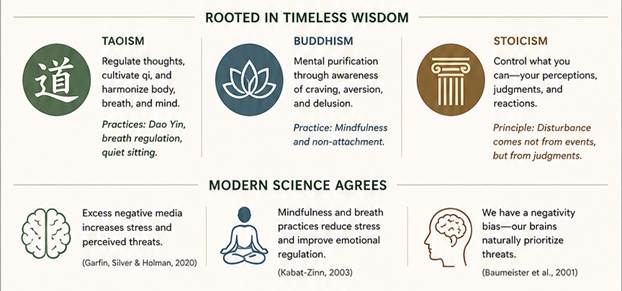
Research shows that excessive exposure to negative media increases anxiety, stress hormones, and perceived threat levels (Garfin, Silver, & Holman, 2020).
In practical terms:
Mental input shapes emotional output.
This aligns strongly with the martial arts idea of guarding the gates of perception.
Cognitive psychology shows that humans tend toward negativity bias, meaning the brain naturally prioritizes threat-related information (Baumeister et al., 2001).
Consciousness hygiene therefore includes:
reframing thoughts
observing internal dialogue
preventing mental spirals
In meditation traditions, this is simply watching the mind without attachment.
Level 3 – Output Hygiene (Behavior and Expression)
What leaves the mind and enters the world.
Examples include:
speech
emotional reactions
actions
habits
If the mind is cluttered with anger or fear, those emotions leak into behavior.
Healthy consciousness hygiene leads to:
clearer thinking
calmer reactions
intentional behavior
3. Ancient Traditions Already Practiced It
Although the phrase is modern, the practice is ancient.
Taoism
Taoist cultivation emphasized:
regulating thoughts
calming emotional turbulence
circulating qi
Practices such as Dao Yin, breath regulation, and quiet sitting were methods of clearing the mind.
Buddhism
Buddhist teachings describe mental purification.
Meditation trains awareness to observe:
craving
aversion
delusion
These are considered pollutants of consciousness.
Stoicism
Stoic philosophers like Epictetus and Marcus Aurelius emphasized controlling:
perceptions
judgments
emotional reactions
Their view:
Disturbance comes not from events, but from the judgments we make about them.
This is essentially cognitive hygiene.
4. Modern Psychological Parallels
Modern research touches the same concept using different terminology.
Relevant areas include:
Mindfulness training
Cognitive behavioral therapy (CBT)
Stress inoculation
Emotional regulation
Mindfulness practices, for example, have been shown to reduce stress and improve emotional regulation (Kabat-Zinn, 2003).
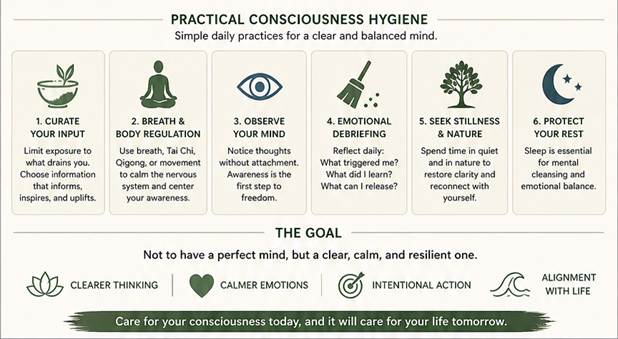
5. Practical Examples of Consciousness Hygiene
Daily practices might include:
Mental Diet
Limiting exposure to:
sensational news
toxic social media
constant information flow
Breath and Body Regulation
Practices such as:
meditation
Tai Chi
Qigong
controlled breathing
These calm the autonomic nervous system and reduce stress.
Tai Chi and qigong, these practices are actually classic methods of consciousness hygiene, even though they are often described as physical exercise.
Emotional Debriefing
Reflecting on the day:
What triggered me?
What did I learn?
What should I release?
Mental Stillness
Moments of quiet:
meditation
walking in nature
silent reflection
These clear cognitive overload.
6. Why Consciousness Hygiene Matters Today
Modern humans are exposed to more information in a single day than people centuries ago experienced in weeks.
Without conscious filtering, this leads to:
chronic stress
anxiety
attention fragmentation
emotional reactivity
Therefore, consciousness hygiene is becoming increasingly important.
It is essentially self-defense for the mind.
7. A Simple Definition
A concise way to describe it is:
Consciousness hygiene is the intentional practice of protecting, regulating, and refining the contents of one’s awareness.
It includes:
managing mental inputs
regulating internal thoughts
cultivating healthy emotional states
In many ways, Tai Chi, breathwork (managed breathing), and Dao Yin are forms of consciousness hygiene.
The slow movement, breath coordination, and attention training all serve to clean the mind while regulating the nervous system.
References
Baumeister, R. F., Bratslavsky, E., Finkenauer, C., & Vohs, K. D. (2001). Bad is stronger than good. Review of General Psychology, 5(4), 323–370. https://doi.org/10.1037/1089-2680.5.4.323
Garfin, D. R., Silver, R. C., & Holman, E. A. (2020). The novel coronavirus (COVID-2019) outbreak: Amplification of public health consequences by media exposure. Health Psychology, 39(5), 355–357. https://doi.org/10.1037/hea0000875
Kabat-Zinn, J. (2003). Mindfulness-based interventions in context: Past, present, and future. Clinical Psychology: Science and Practice, 10(2), 144–156. https://doi.org/10.1093/clipsy.bpg016
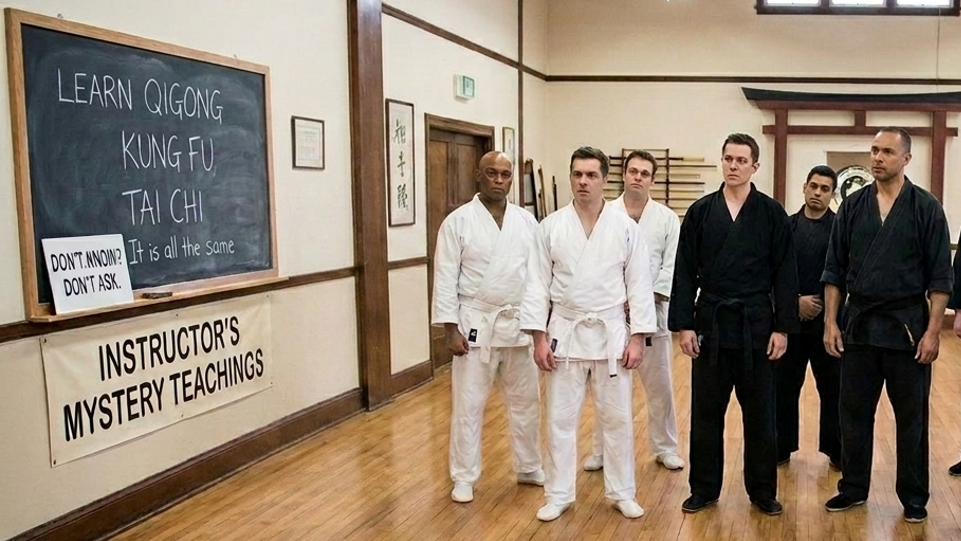
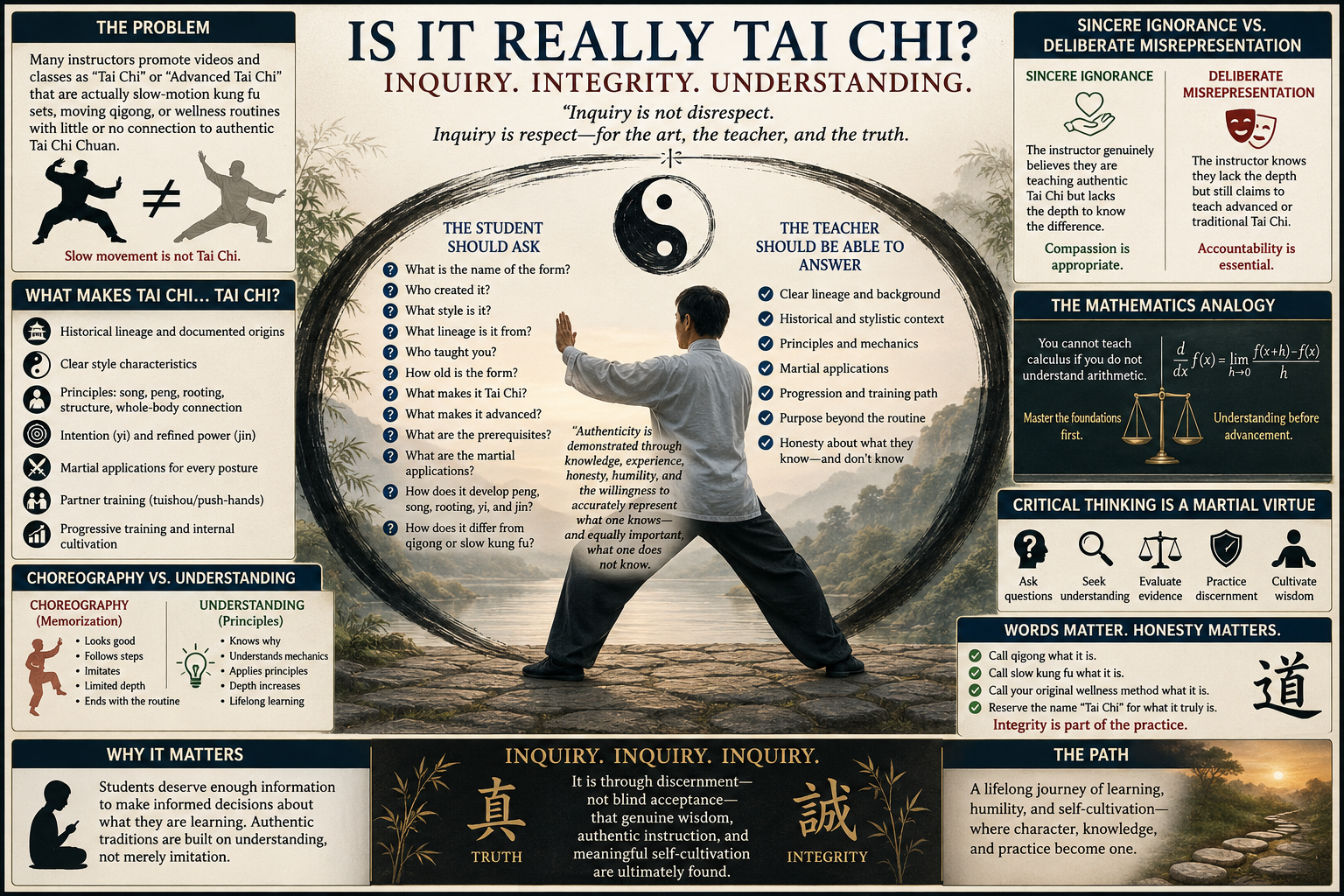
Over the past several years, I have noticed an increasing number of martial arts schools and wellness instructors promoting their curriculum with demonstrations and videos titled “Tai Chi Form,”“Advanced Tai Chi,” or “Traditional Tai Chi.” As someone who has devoted approximately forty-five years to studying and practicing martial arts, qigong, dao yin, and 25 years of authentic Tai Chi, I often find myself asking a simple question:
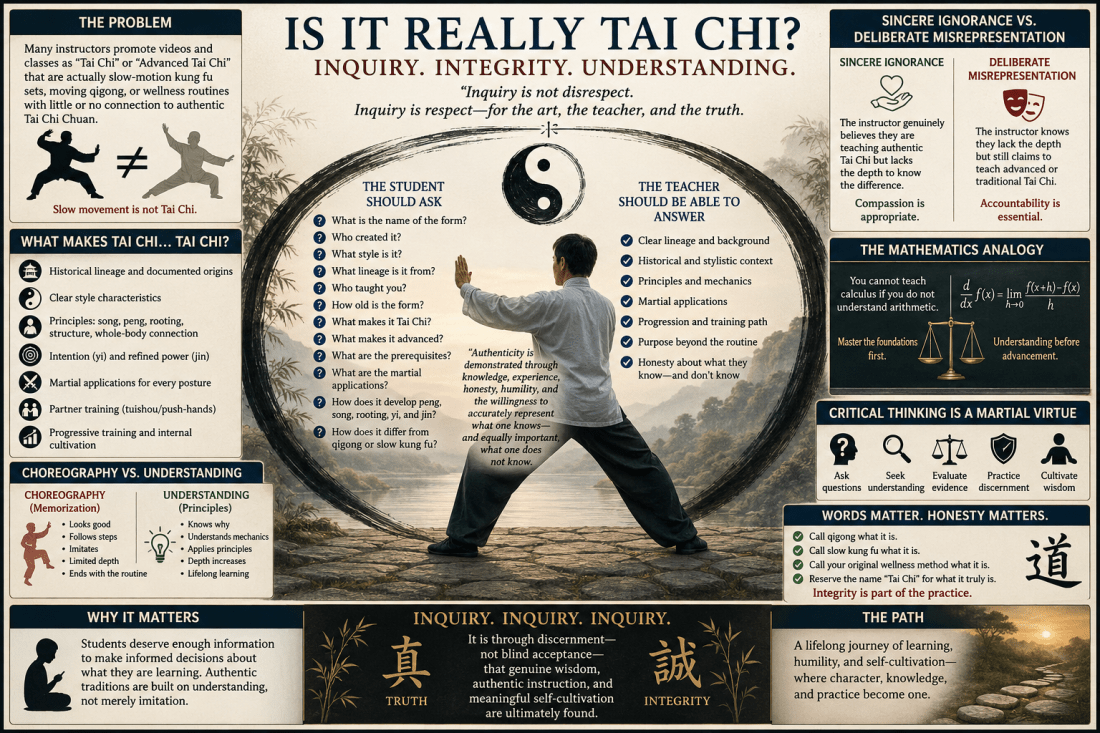
Is it really Tai Chi?
Before discussing why this concerns me, I should acknowledge that I was once in a similar position myself. This is not intended as an insult or criticism of those genuinely trying to help others improve their health. Many instructors are sincere, compassionate people who believe they are offering something beneficial. Slow movement, controlled breathing, stretching, and mindful exercise all possess tremendous value. The problem arises when those practices are presented as authentic Tai Chi without sufficient knowledge to justify the claim.
In today’s world, the name Tai Chi has become a powerful marketing term. Unfortunately, many people equate slow movement with Tai Chi. Yet moving slowly does not automatically transform a sequence of movements into Tai Chi Chuan any more than moving quickly makes it Shaolin Kung Fu.
Authenticity requires much more than appearance.
My Own Journey of Learning
Before I critique others, it is only fair that I acknowledge my own past.
I too was once young, enthusiastic, and, in many respects, naive. Like many martial artists, I trusted the knowledge that had been passed on to me. I believed I was being taught authentic and even advanced Tai Chi, and in turn I sincerely taught what I had learned to others.
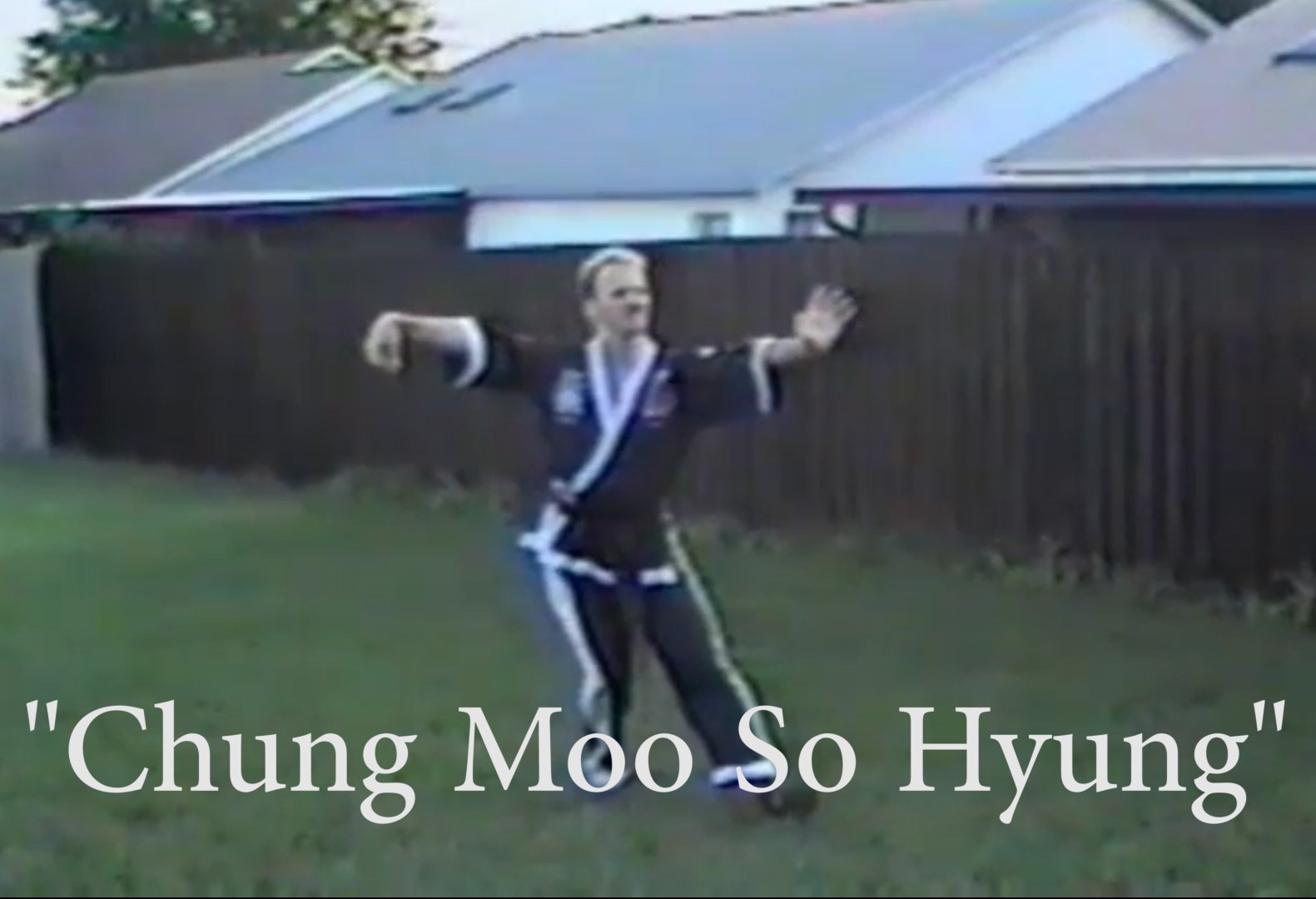
Among the forms I taught were Tai Chi Chung, Chung Moo Soo Hyung, Tai Su, Tai Yu and Tae Guk Jung. At the time, I genuinely believed these represented legitimate Tai Chi forms and perhaps even advanced expressions of traditional Tai Chi lineages.
With decades of additional study, practice, and exposure to authentic Tai Chi systems and their historical development, I gradually came to realize that my understanding had been incomplete. Those forms had little resemblance to what is traditionally recognized as Tai Chi Chuan. While some contained beneficial movement, coordination, breathing, and wellness exercises, they were not representative of authentic Tai Chi as I now understand it.
I was not intentionally misleading anyone. Rather, I was teaching what I sincerely believed to be true. Looking back, I now recognize that good intentions alone do not guarantee accurate instruction. Experience, continued study, intellectual honesty, and the humility to admit when we have been mistaken are all essential parts of personal growth.
Today, I believe one of the greatest responsibilities of any instructor is not simply to teach with confidence, but to continually question, verify, and refine one’s own understanding. In many ways, this article is as much a reflection on my own journey as it is a discussion about the importance of authenticity within the martial arts.
The Questions Every Student Should Ask
Whenever I see an unfamiliar “Tai Chi form,” numerous questions immediately come to mind.
What is the name of the form?
Who created it?
What style of Tai Chi is it?
What lineage is it associated with?
How old is the form?
Who taught it to the instructor?
What distinguishes it from qigong or slow-motion kung fu?
Why is it being called Tai Chi?
What makes it an advanced Tai Chi form?
What prerequisites should a student possess before learning it?
What martial applications exist for each movement?
What internal principles are being developed?
What is the correlation to yin and yang, the 5 Elements (wuxing) and Bagua?
These are not hostile questions. They are respectful questions. They are the kinds of questions that preserve the integrity of an art that has evolved over several centuries. Inquiry is not disrespect. Inquiry demonstrates respect for the art, the teacher, and ultimately the truth.
What Makes Tai Chi… Tai Chi?
Tai Chi Chuan is far more than a graceful series of slow movements.
Authentic systems possess defining characteristics that distinguish them from other movement arts. While different lineages emphasize different aspects of training, legitimate Tai Chi generally includes:
A documented historical lineage.
Clearly identifiable style characteristics.
Principles such as relaxation (song), structural integrity, rooting, whole-body connection, and peng jin.
Coordinated use of intention (yi) and body mechanics.
Martial applications for every posture.
Partner training through push-hands (tuishou) or equivalent sensitivity exercises.
Progressive development of refined power (jin) rather than muscular force alone.
Internal training methods integrated with external movement.
Without these foundational elements, one may still be performing valuable exercises, but those exercises should be honestly described for what they are. There is absolutely nothing wrong with teaching qigong, teaching therapeutic movement, or teaching slow kung fu. Each has its own unique value. They simply should not be presented as something they are not.
The Mathematics Analogy
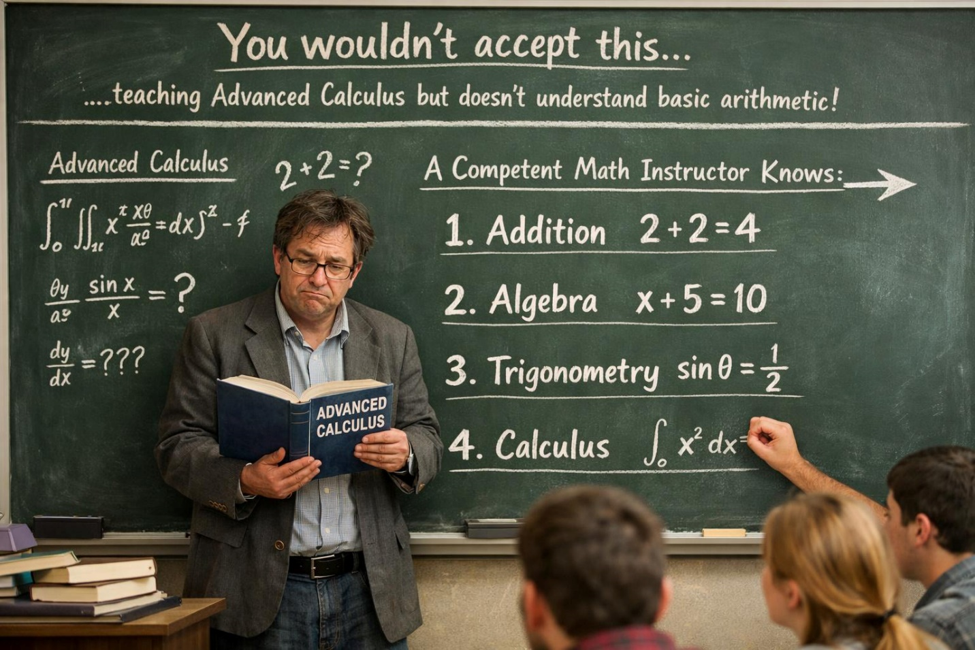
I often compare this issue to mathematics. Suppose someone claimed to teach advanced calculus while possessing only a superficial understanding of basic arithmetic. Would we accept that? Of course not. A competent mathematics instructor understands addition before algebra, algebra before trigonometry, and trigonometry before calculus.
The same progression exists within Tai Chi. One cannot reasonably claim mastery of advanced forms while lacking a firm understanding of foundational principles such as alignment, weight shifting, rooting, body mechanics, relaxation, and martial function. Memorizing choreography is not the same as understanding an art.
Choreography Versus Understanding
Many people can memorize movement sequences. Actors memorize scripts. Dancers memorize choreography. Musicians memorize compositions. Memorization, however, is only one component of expertise.
The well-rounded instructor understands not only what is being performed but also why. Why does the weight shift here? Why does the spine rotate in this manner? Why is the pelvis positioned this way? What is the martial application? How does this movement develop structural integrity? How does this posture cultivate peng rather than collapse? Without answers to these questions, students are learning choreography rather than principles.
Eventually, choreography reaches its limits. Understanding does not.
Sincere Ignorance Versus Deliberate Misrepresentation
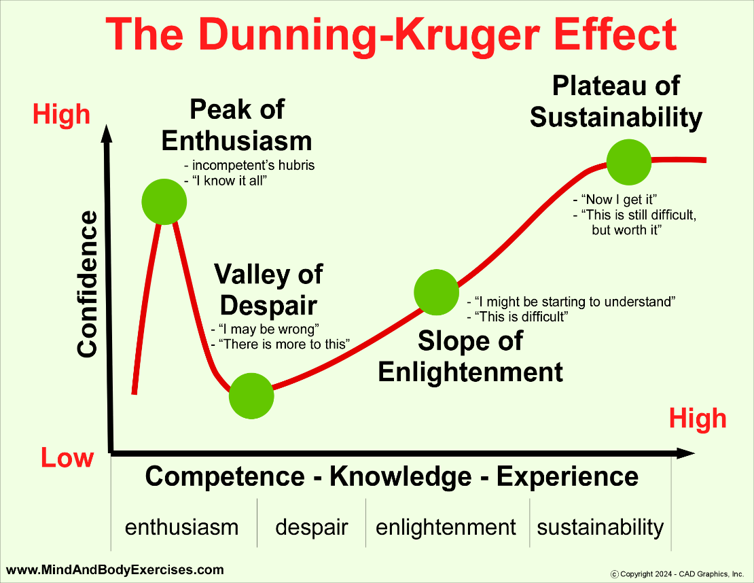
It is important to acknowledge an important ethical distinction. Not every instructor who teaches questionable Tai Chi is intentionally deceptive. Some instructors simply do not realize the limitations of their own training. This reflects what psychologists refer to as the Dunning–Kruger effect, in which individuals with limited expertise may overestimate their competence because they lack sufficient knowledge to recognize what they do not know (Kruger & Dunning, 1999).
Ironically, those who have practiced authentic Tai Chi for decades often become increasingly humble. The deeper one’s understanding grows, the more one appreciates the vastness of the art.
Intentions matter. A sincere instructor deserves more compassion than someone knowingly misrepresenting themselves. Nevertheless, good intentions do not transform inaccurate information into accurate information. A sincere misunderstanding remains a misunderstanding.
Students Deserve Honest Representation
Perhaps my greatest concern is not that these instructors exist. Every discipline has beginners. Every discipline has developing teachers. The greater concern is representation. If an instructor says, “These are movement exercises inspired by Tai Chi principles,” there is honesty.
If an instructor says, “This is a wellness exercise I developed from several martial arts systems,” there is honesty.
If an instructor teaches qigong while calling it qigong, there is honesty.
However, if someone claims to teach advanced traditional Tai Chi yet cannot explain the origin, lineage, principles, mechanics, or historical development of what they are teaching, students deserve to know that. Words, terminology and accuracy matters.
Critical Thinking Is a Martial Virtue
Traditional martial arts often emphasize respect, loyalty, humility, honesty, and integrity. Ironically, these same virtues should encourage thoughtful questioning rather than discourage it. Students should never feel guilty for asking:
“Where did this come from?”
“Who taught you?”
“Why is it performed this way?”
“How does this differ from other styles?”
“What evidence supports these claims?”
Authentic instructors rarely fear these questions. In fact, many welcome them. The instructor who understands an art generally enjoys discussing its history, philosophy, mechanics, and evolution. Those discussions enrich everyone involved.
Beyond Tai Chi
Although this discussion centers on Tai Chi, the principle extends far beyond martial arts. It applies equally to health care, psychology, religion, philosophy, politics, science, education, and countless other disciplines.
Healthy skepticism is not cynicism. Inquiry is not rebellion. Critical thinking is not disrespect. Rather, inquiry is one of the highest forms of respect because it demonstrates a sincere desire to understand reality rather than simply accept appearances.
As I have written many times before, wisdom often begins with asking better questions rather than collecting more answers.
In summary, one of the greatest lessons I have learned throughout decades of martial arts practice is that external appearances can be remarkably deceptive. A beautiful performance may possess little substance. A simple movement practiced with extraordinary understanding may contain profound depth. Ultimately, authenticity is not determined by how impressive something appears, how many social media followers an instructor possesses, or how eloquently they market themselves.
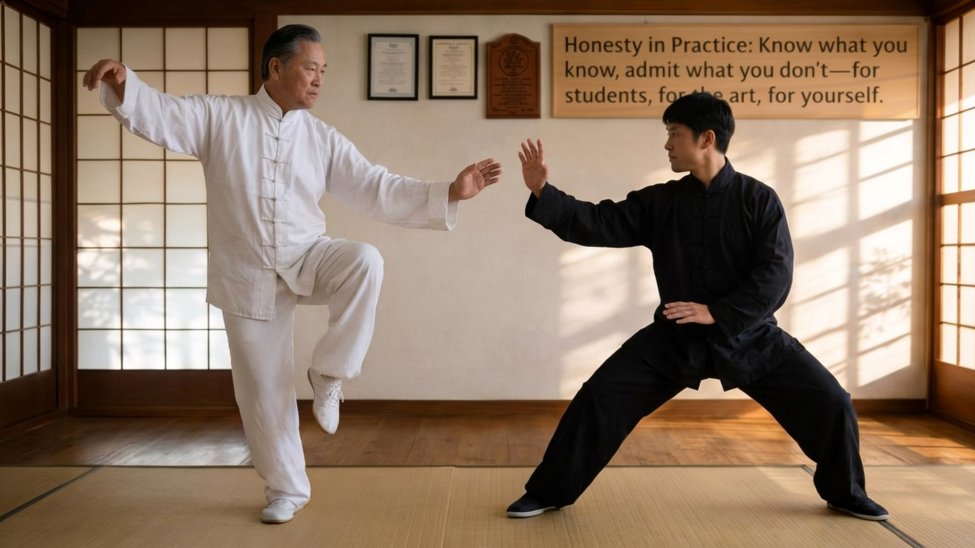
Authenticity is demonstrated through knowledge, experience, honesty, humility, and the willingness to accurately represent what one knows and equally important, what one does not know. Students deserve that honesty. Traditional martial arts deserve that honesty. And in an art that places such emphasis on ethics, character, and personal cultivation, accurate representation is not merely good business practice. It is part of the practice itself.
Perhaps the greatest lesson is this:
Inquiry. Inquiry. Inquiry.
Ask thoughtful questions. Think critically. Seek understanding rather than appearances. For it is through discernment, not blind acceptance, that genuine wisdom, authentic instruction, and meaningful self-cultivation are ultimately found.
Reference
Kruger, J., & Dunning, D. (1999). Unskilled and unaware of it: How difficulties in recognizing one’s own incompetence lead to inflated self-assessments. Journal of Personality and Social Psychology, 77(6), 1121–1134. https://doi.org/10.1037/0022-3514.77.6.1121
A Lesson in Martial Arts, Authenticity, and Self-Mastery
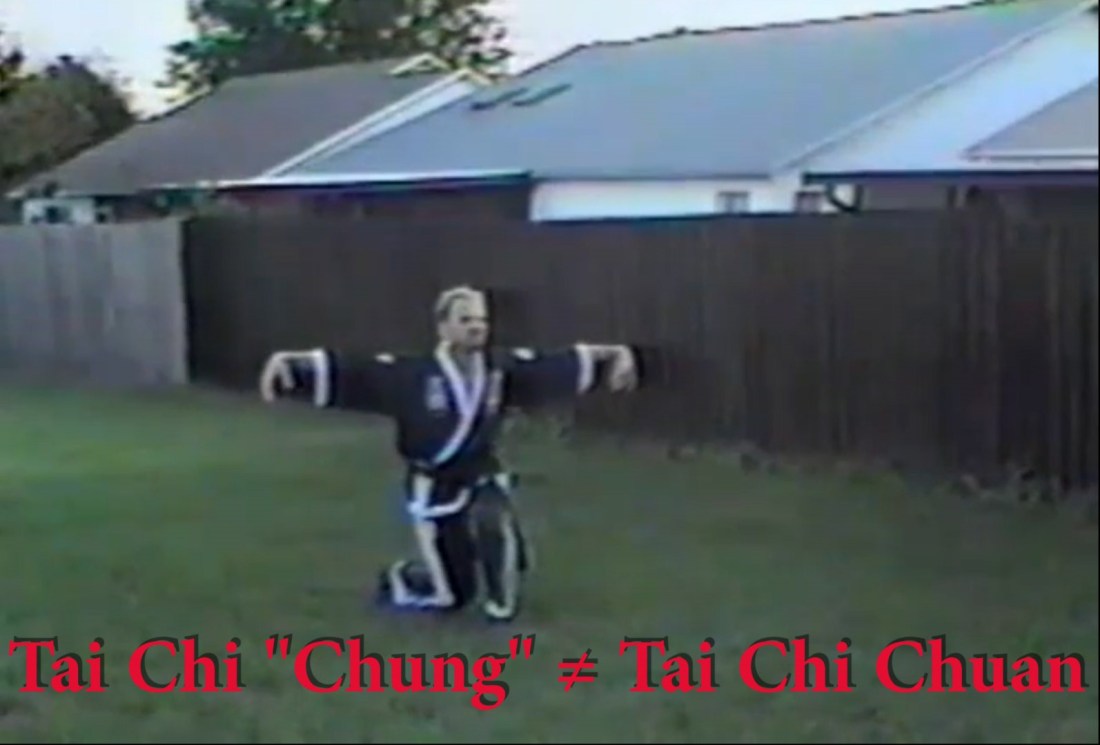
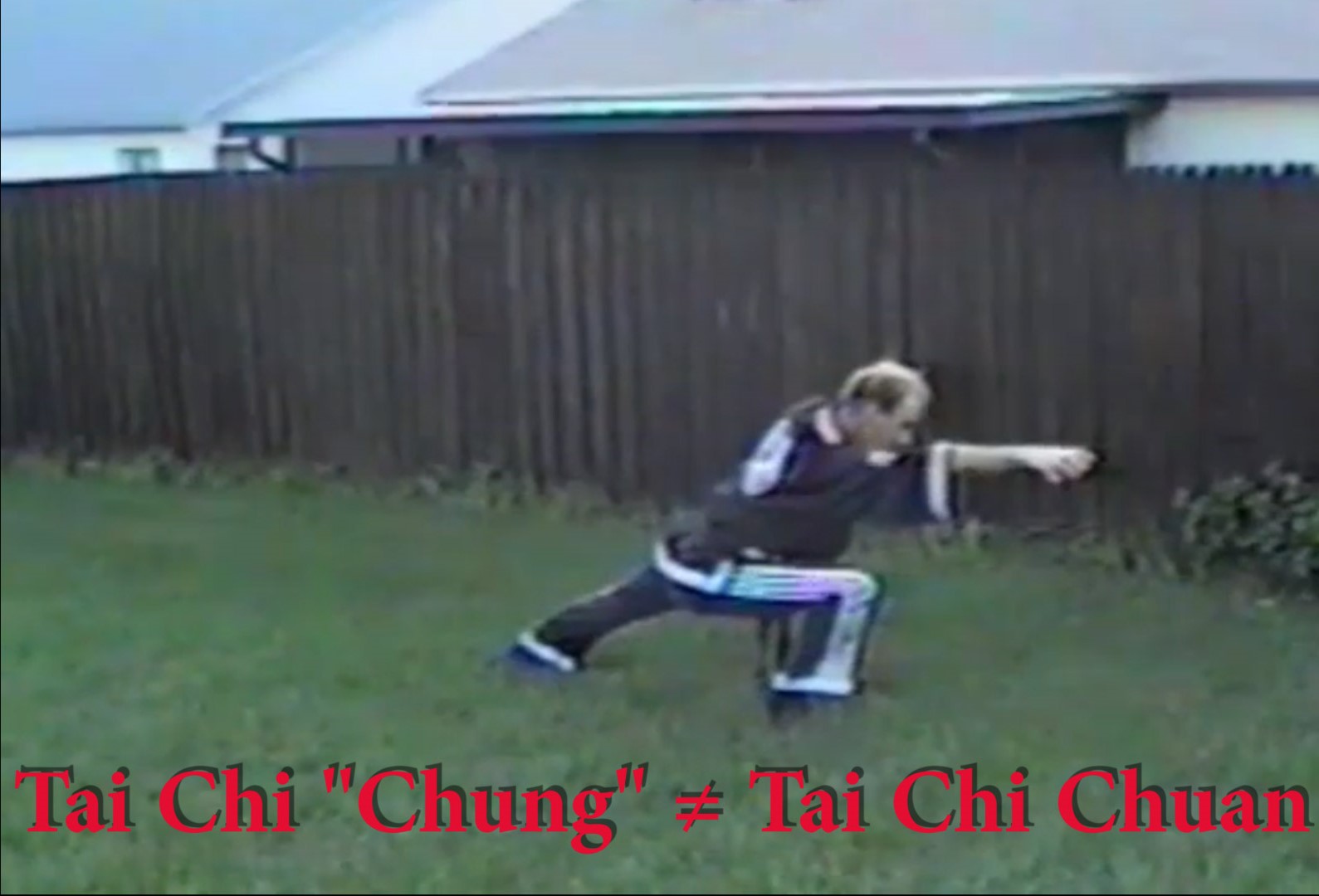
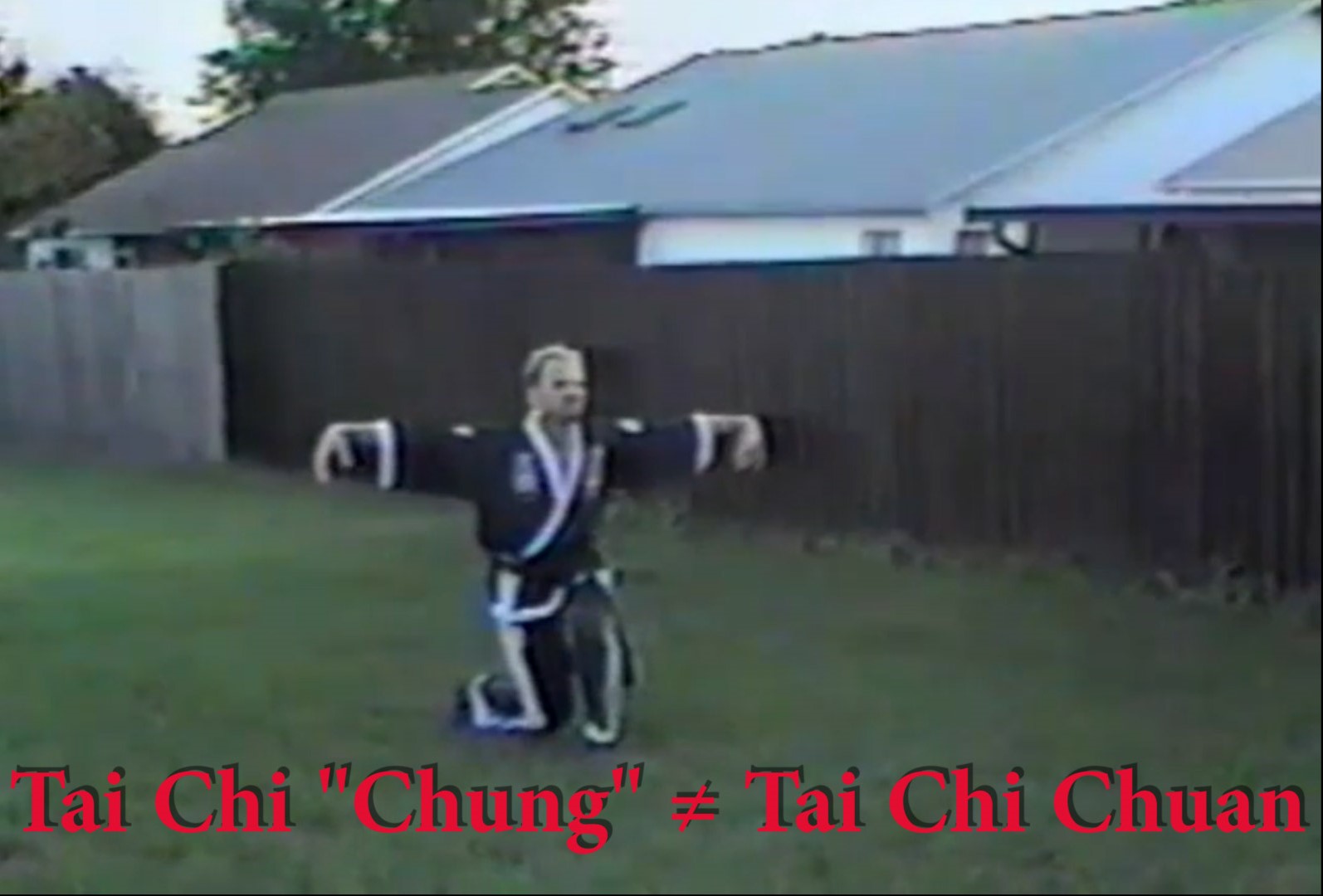
The term Tai Chi Chung can be confusing, especially for practitioners who encountered it within Korean martial arts organizations. At first glance, it appears related to Tai Chi Chuan, the older Wade-Giles spelling of Taijiquan, the traditional Chinese martial art often translated as “Supreme Ultimate Fist.” However, a closer look suggests that Tai Chi Chung, at least as I encountered it, was not traditional Chinese Taijiquan. Rather, it appears to have been a Korean martial arts form that borrowed certain slow, flowing, meditative, and balance-oriented qualities commonly associated with Tai Chi, while lacking many of the deeper structural and historical features of authentic Taijiquan.
The etymology matters. In Chinese, Taiji refers to the Supreme Ultimate, the dynamic polarity expressed through yin and yang. Quan or Chuan means fist, boxing, or martial art. Thus, Taijiquan means “Supreme Ultimate Fist,” a martial system rooted in Chinese cosmology, internal mechanics, and combat principles. The term Tai Chi Chuan is simply an older Romanization of the same name. By contrast, Tai Chi Chung does not appear to be a recognized name for one of the traditional Chinese Taijiquan family systems, such as Chen, Yang, Wu, Wu/Hao, or Sun style.
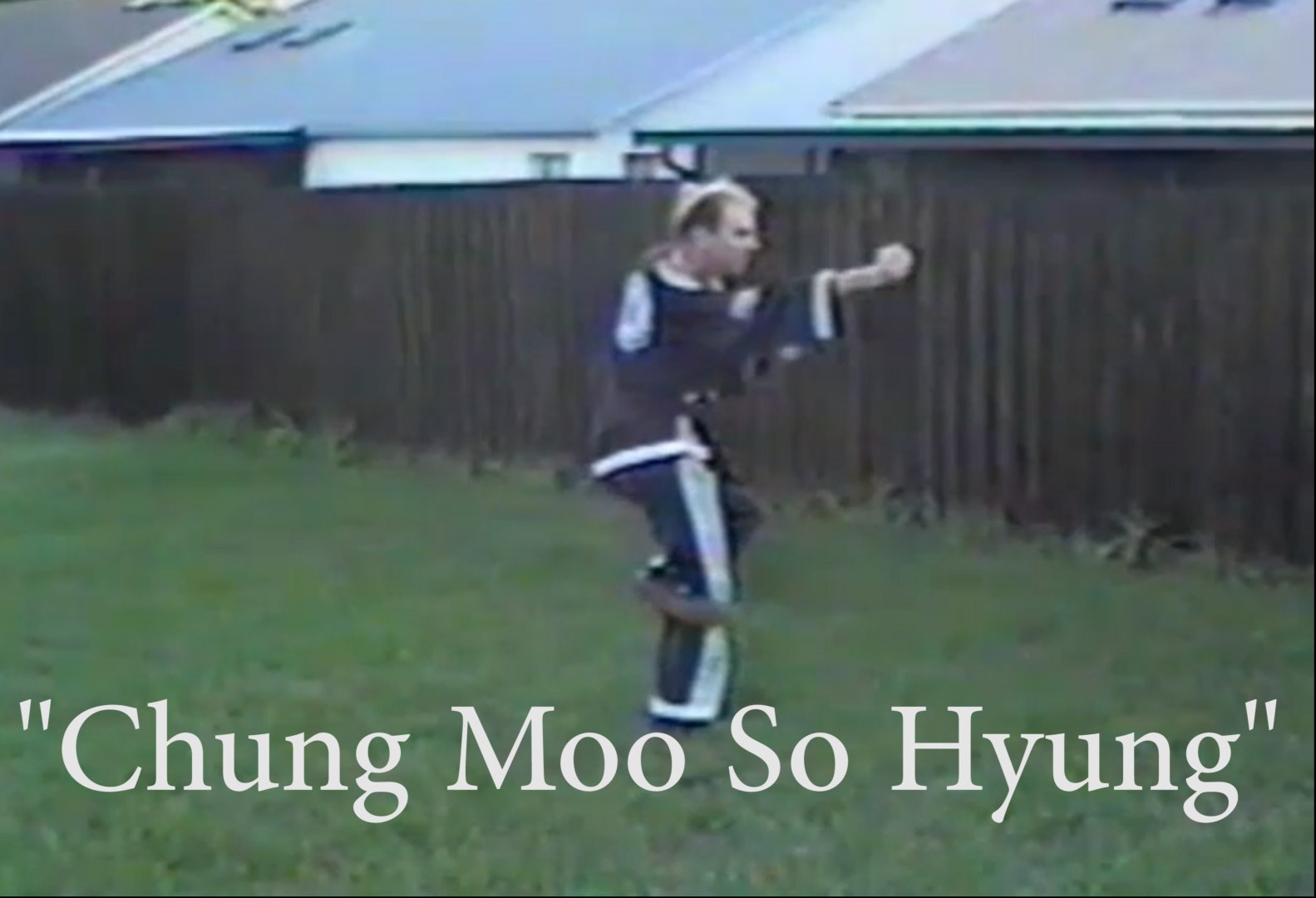
In the Korean martial arts context, the related term Chung Moo Soo Hyung deserves its own explanation. Hyung means form or pattern. Soo often means hand or empty-hand method. Moo may refer to martial practice, but depending on the character and interpretation, it may also carry broader philosophical implications. I was taught that Chung could be interpreted as mind and Moo as body, giving the phrase a meaning something like “mind and body empty-hand form.” Whether this is a literal linguistic translation or a lineage-specific philosophical interpretation, it reflects a common martial arts teaching theme: the harmonization of mind, body, breath, and movement.
This interpretation has value. A form designed to integrate mind and body can serve as a meaningful tool for concentration, balance, self-regulation, and internal awareness. In that sense, Tai Chi Chung or Chung Moo Soo Hyung may have functioned as a Korean internal-development hyung rather than an authentic Chinese Taijiquan form.
The video I recently reviewed shows me performing this form some years ago. At that time, I wore the stripes, patches, and organizational markings that recognized my rank, skill, dedication, and responsibilities within that martial arts system. Those visible symbols represented achievement and ability within that particular organization. When I left that particular system to pursue other interests, I was immediately demoted in rank and position. At that stage of life, such recognition mattered to me. Like many younger martial artists, I placed significant value on approval from instructors, organizations, and peers.
With time, however, I came to understand martial arts differently. Recognition from others may encourage us, but it is not the same as self-mastery. Rank is not the same as wisdom. Patches are not the same as inner refinement. When we are young, naïve, and highly impressionable, we often trust others more than we trust ourselves. We assume that those in authority possess superior knowledge, deeper insight, and unquestionable legitimacy. Sometimes they do. Sometimes they do not. Maturity requires learning the difference.
Technically, the form in the video has many positive qualities. It develops balance, controlled weight shifting, leg strength, coordination, mindfulness, and proprioception. The slow pace encourages concentration rather than speed. The low postures challenge endurance. The crane-like stances and single-leg transitions develop stability and awareness of center of gravity. The circular arm motions create a sense of flow and continuity that differs from the more linear movements often seen in karate-derived Korean forms.
From a health and training perspective, these are worthwhile benefits. The form can help cultivate patience, breath awareness, physical control, and mental focus. It may be useful as a bridge between external martial training and more meditative internal practice.
However, this does not make it authentic Tai Chi.
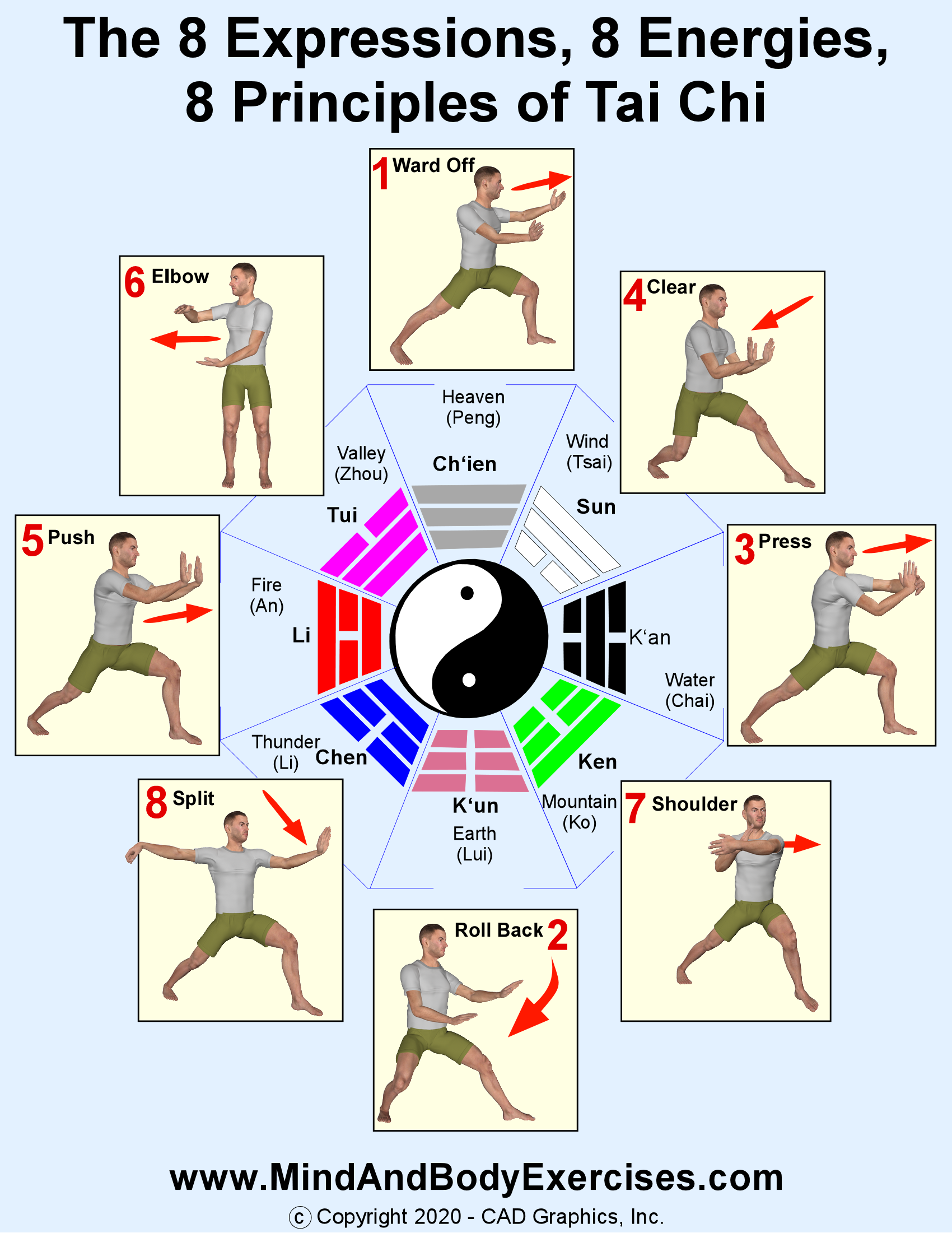
Anyone who has seriously practiced and studied legitimate and authentic styles of Taijiquan would likely recognize that this form, while beneficial, does not express the core mechanics of traditional Chinese Tai Chi. It does not clearly demonstrate the continuous whole-body connection, silk-reeling energy, refined dantian-driven movement, peng structure, or the systematic expression of the Eight Energies: peng, lu, ji, an, cai, lie, zhou, and kao. It appears more segmented than integrated, more like a Korean internal-development hyung than a traditional Chinese internal martial art.
Authentic Taijiquan is not merely slow movement. It is not simply relaxation, balance, or graceful motion. It is a sophisticated martial art rooted in Chinese philosophy, body mechanics, internal power development, combat application, and centuries of transmitted practice. Its movements are shaped by yin and yang theory, the Five Elements, the Eight Energies, intent, structure, rooting, spiraling, and whole-body integration. Without these foundations, a form may still be good exercise, qigong-like movement, or meditative martial training, but it becomes difficult to honestly classify it as Tai Chi.
This distinction is important because mislabeling martial arts can mislead students. When any martial arts organization presents a form as “Tai Chi” without preserving the history, principles, mechanics, or cultural roots of Taijiquan, it risks distorting the art. In some cases, this may even approach cultural appropriation: borrowing the name or appearance of another culture’s tradition without sufficient understanding, acknowledgment, or respect.
Most martial arts systems claim to uphold moral codes such as honesty, humility, respect, discipline, and integrity. Passing off a non-Taijiquan form as Tai Chi conflicts with those values. It may serve organizational branding, marketing, or curriculum expansion, but it does not serve truth.
Looking back, I do not reject the form. I can still appreciate what it gave me. It helped develop balance, concentration, discipline, coordination, and body awareness. The younger version of myself in that video was sincere. He trained hard, believed what he was taught, and sought to improve. There is value in that.
But I now see the form through a more discerning lens. It was useful, but it was not authentic Taijiquan. It was beneficial, but it was not what it was presented to be. That distinction represents an important lesson in the martial path.
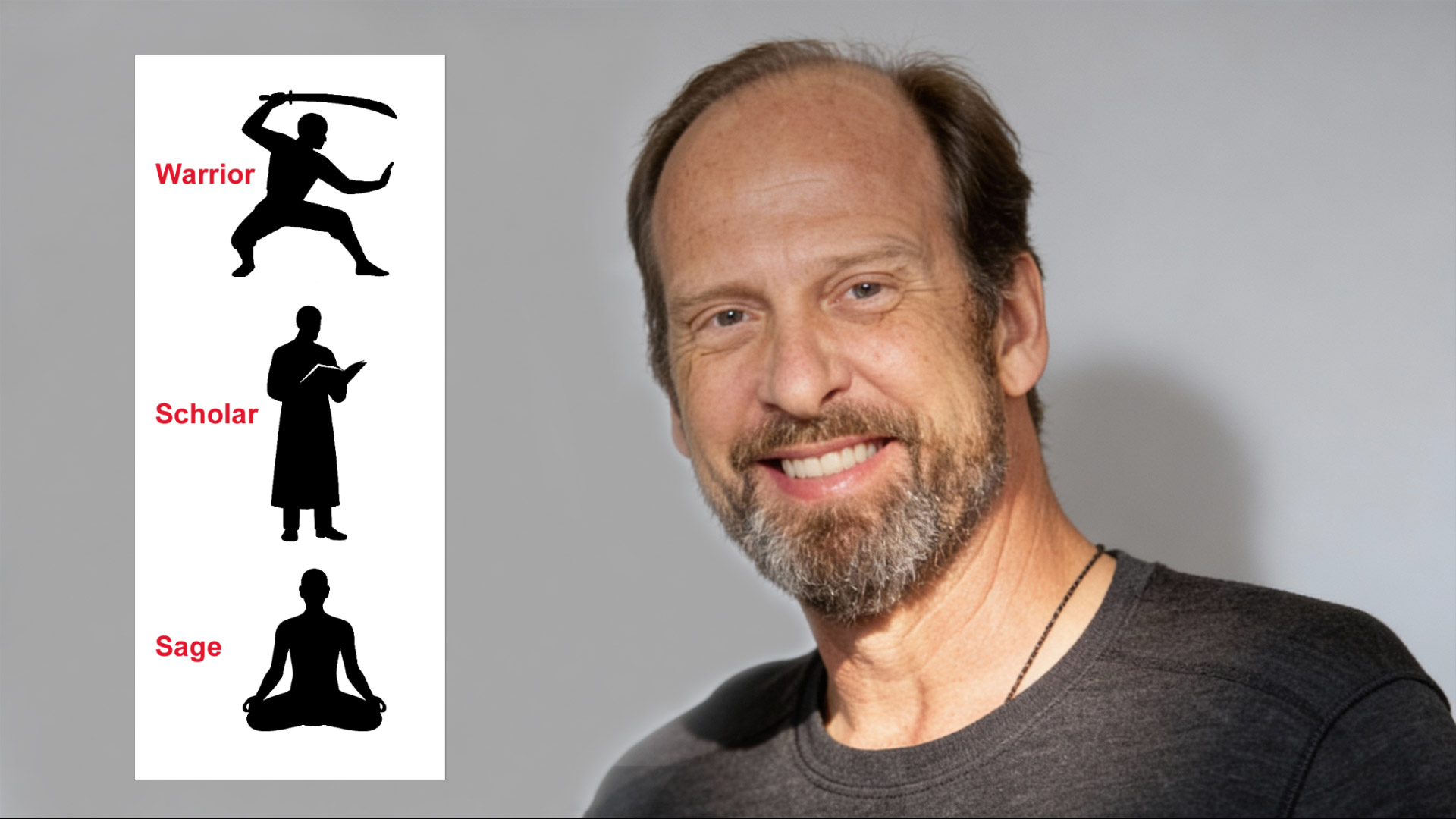
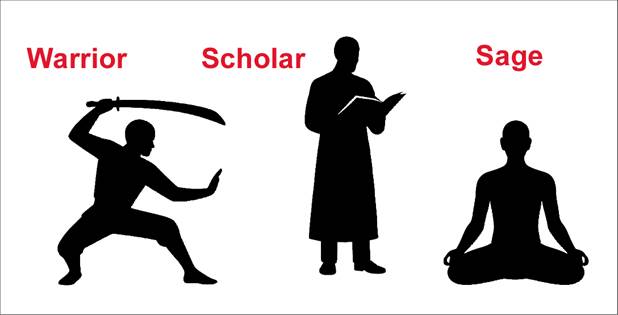
The Warrior trains the body. The Scholar investigates truth. The Sage learns to distinguish appearance from essence.
In youth, we may seek rank, recognition, patches, titles, and approval. With maturity, we learn that the deeper purpose of martial arts is self-cultivation. The real measure of practice is not how others decorate us, but how we honestly refine and define ourselves.
True martial arts should lead us toward clarity, humility, integrity, and self-mastery. When they do, they become more than physical systems. They become pathways of transformation.
That lesson, unlike any patch or rank, is one that remains with us for life.
We often hear that Tai Chi is good for balance, relaxation, and overall health. But the deeper question is this:
Why does it work so well?
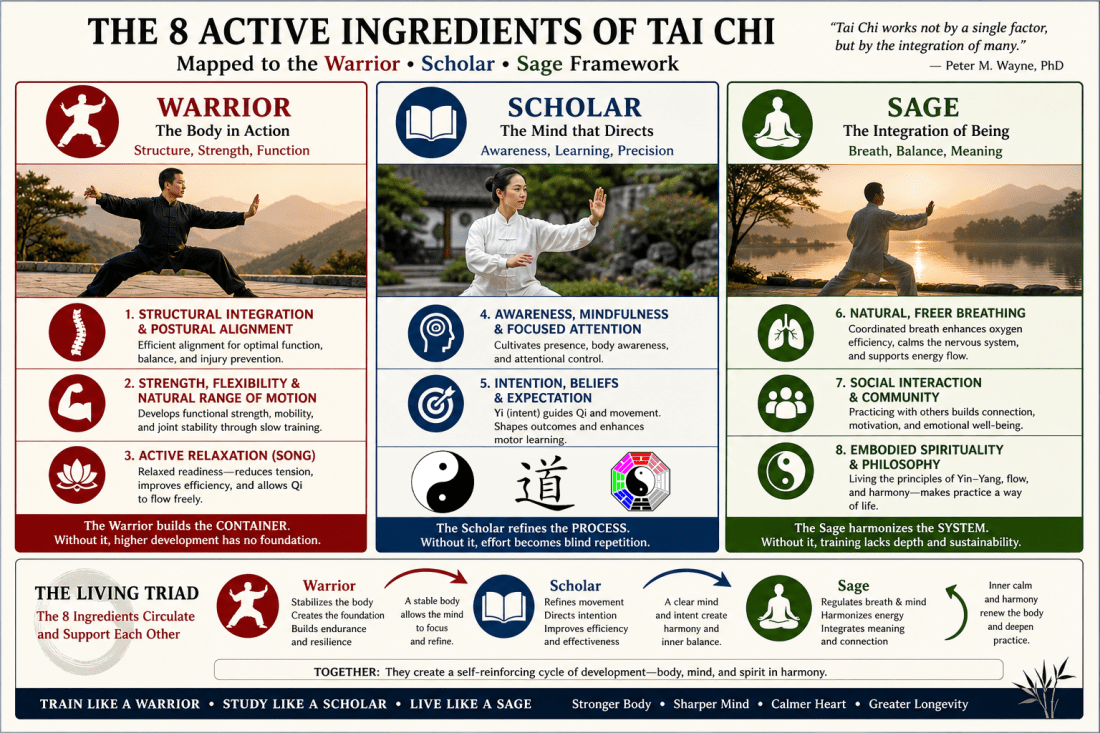
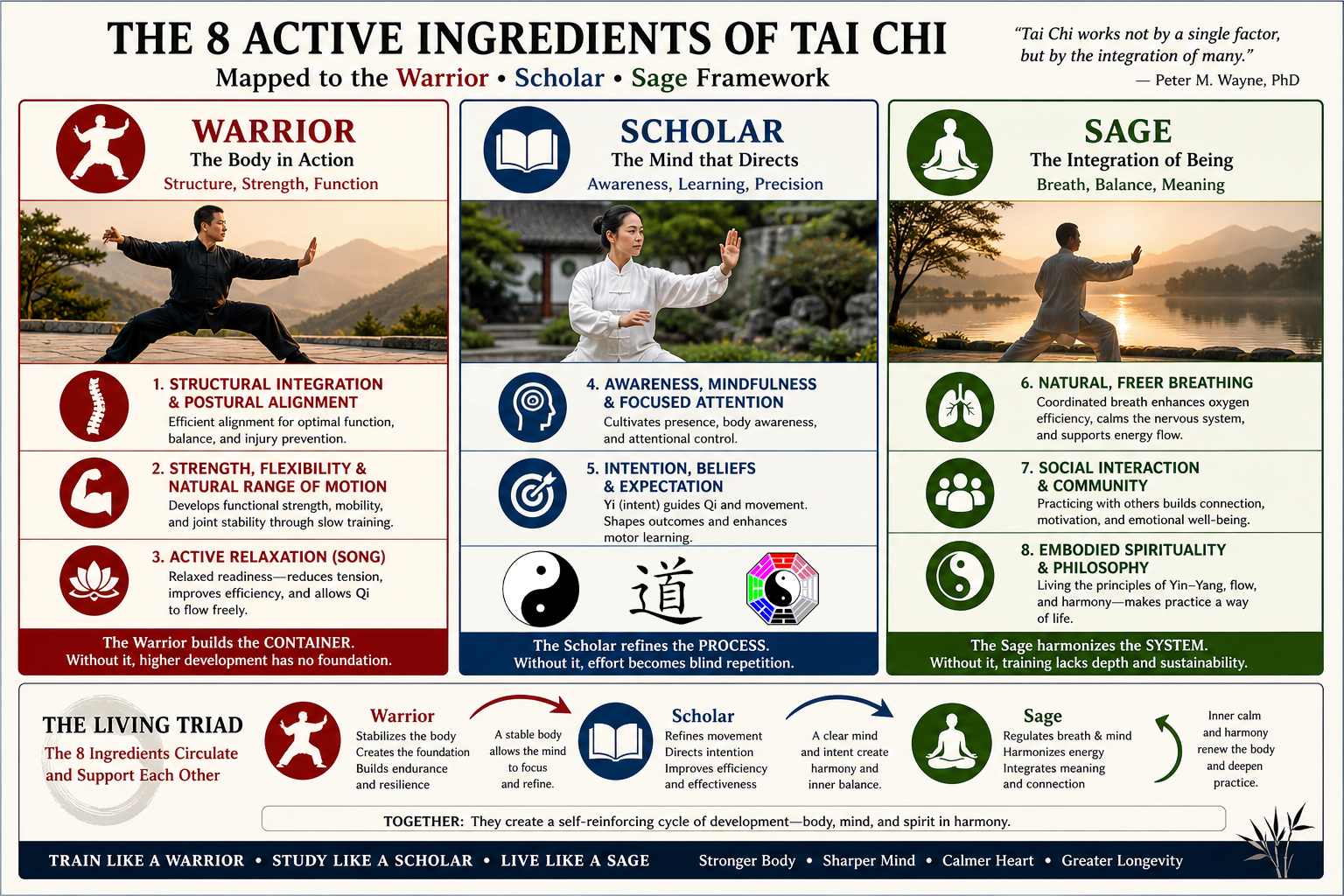
In The Harvard Medical School Guide to Tai Chi, Peter M. Wayne introduces the concept of the “8 active ingredients” of Tai Chi. His research-based perspective frames Tai Chi not as a single exercise, but as a multi-system method that integrates body, mind, and breath into a unified practice (Wayne & Fuerst, 2013; Wayne, 2014).
From my perspective, after more than four decades of training, teaching, and living these methods, these “ingredients” map clearly into a timeless framework:
Train like a Warrior Study like a Scholar Live like a Sage
This triad provides a practical and philosophical lens to understand how Tai Chi truly develops the human being.
Tai Chi as a Complete System
Wayne’s eight ingredients include:
Awareness and mindfulness
Intention and expectation
Structural alignment
Active relaxation (song)
Strength and flexibility
Breathing
Social interaction
Philosophy and meaning
Individually, each has value. But together, they create something far more powerful:
A self-reinforcing system of physical conditioning, mental refinement, and internal regulation (Wayne & Fuerst, 2013).
Research on Tai Chi consistently shows improvements across multiple systems, including musculoskeletal strength, balance, cardiovascular health, and psychological well-being, supporting its role as a multicomponent intervention rather than a single-modality exercise (Wang et al., 2010; Wayne et al., 2014).
The Warrior: Building the Body
The Warrior represents the physical foundation of practice.
This includes:
Structural alignment and posture (somatic re-calibration)
Functional strength and mobility
Active relaxation under load
Through stance training, controlled movement, and progressive endurance, the body becomes:
Stable
Rooted
Reliable under stress
This is not bodybuilding. It is functional integrity.
Modern research supports Tai Chi’s ability to improve balance, lower extremity strength, and reduce fall risk, particularly in aging populations (Li et al., 2005; Wayne et al., 2014).
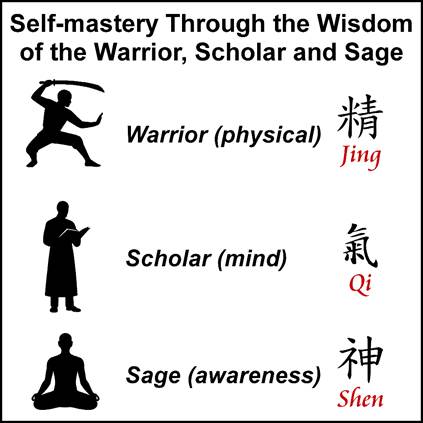
In Traditional Chinese terms, this develops the body’s Jing, the physical essence that supports all higher functions.
Without the Warrior, there is no foundation.
_____
The Scholar: Refining the Mind
The Scholar represents awareness, learning, and intention.
This includes:
Mindfulness and focused attention
The use of intention (Yi) to guide movement
Continuous self-correction and refinement (iterative cultivation)
This is where practice shifts from repetition to intelligent training.
You begin to notice:
Where tension exists
Where alignment breaks down
Where effort is wasted
The mind becomes an active participant, not a passive observer.
Research in neuroscience shows that mindful movement practices like Tai Chi enhance attention, cognitive function, and neuroplasticity, while also reducing stress-related reactivity (Larkey et al., 2009; Wayne et al., 2014).
This aligns with the cultivation of Qi, the functional energy that animates movement and coordination.
Without the Scholar, effort becomes blind repetition.
_____
The Sage: Integrating the System
The Sage represents balance, breath, and meaning.
This includes:
Natural, coordinated breathing
Nervous system regulation
Philosophical understanding (yin and yang, flow, harmony)
Connection with others through shared practice
All of the above = transmutation
At this level, Tai Chi becomes more than exercise. It becomes:
Restorative
Meditative
Sustainable for a lifetime
Breathing practices associated with Tai Chi have been shown to enhance parasympathetic activity, improve heart rate variability, and support emotional regulation (Brown & Gerbarg, 2005; Wayne et al., 2014).
Social engagement and group-based movement practices also contribute to improved adherence and psychological well-being (Wayne & Fuerst, 2013).
This is the cultivation of Shen, the spirit or integrated awareness.
Without the Sage, training lacks depth and sustainability.
_____
The Living Triad: How It All Works Together
These are not separate stages. They are interdependent processes.
The Warrior stabilizes the body
The Scholar refines the method
The Sage harmonizes the system
And in return:
A calm mind improves movement
Better movement improves structure
Strong structure supports deeper relaxation
This creates a continuous loop of development:
Body → Mind → Breath → Awareness → Back to Body
This systems-based interaction is precisely why Tai Chi produces broad, cross-domain health benefits, influencing physical, cognitive, and emotional systems simultaneously (Wayne et al., 2014; Wang et al., 2010).
A Practical Takeaway
If you are practicing—or teaching—Tai Chi, consider this simple framework:
Train like a Warrior Build strength, structure, and endurance
Study like a Scholar Refine awareness, intention, and precision
Live like a Sage Breathe, balance, and harmonize
When all three are present, practice becomes complete.
Modern science is beginning to validate what traditional systems have long understood:
True development is not isolated. It is integrated.The body, mind, and spirit are not separate systems to be trained independently, but aspects of a single, living process.
Tai Chi, when practiced correctly, is one of the clearest expressions of this truth (Wayne & Fuerst, 2013; Wayne et al., 2014).
References
Brown, R. P., & Gerbarg, P. L. (2005). Sudarshan Kriya yogic breathing in the treatment of stress, anxiety, and depression: Part I—Neurophysiologic model. Journal of Alternative and Complementary Medicine, 11(1), 189–201. https://doi.org/10.1089/acm.2005.11.189
Larkey, L., Jahnke, R., Etnier, J., & Gonzalez, J. (2009). Meditative movement as a category of exercise: Implications for research. Journal of Physical Activity and Health, 6(2), 230–238. https://doi.org/10.1123/jpah.6.2.230
Li, F., Harmer, P., Fisher, K. J., & McAuley, E. (2005). Tai Chi and fall reductions in older adults: A randomized controlled trial. Journals of Gerontology Series A: Biological Sciences and Medical Sciences, 60(2), 187–194. https://doi.org/10.1093/gerona/60.2.187
Wang, C., Collet, J. P., & Lau, J. (2004). The effect of Tai chi on health outcomes in patients with chronic conditions. Archives of Internal Medicine, 164(5), 493. https://doi.org/10.1001/archinte.164.5.493
Wayne, P. M., Berkowitz, D. L., Litrownik, D. E., Buring, J. E., & Yeh, G. Y. (2014). What do we really know about the safety of tai chi?: A systematic review of adverse event reports in randomized trials. Archives of Physical Medicine and Rehabilitation, 95(12), 2470–2483. https://doi.org/10.1016/j.apmr.2014.05.005