
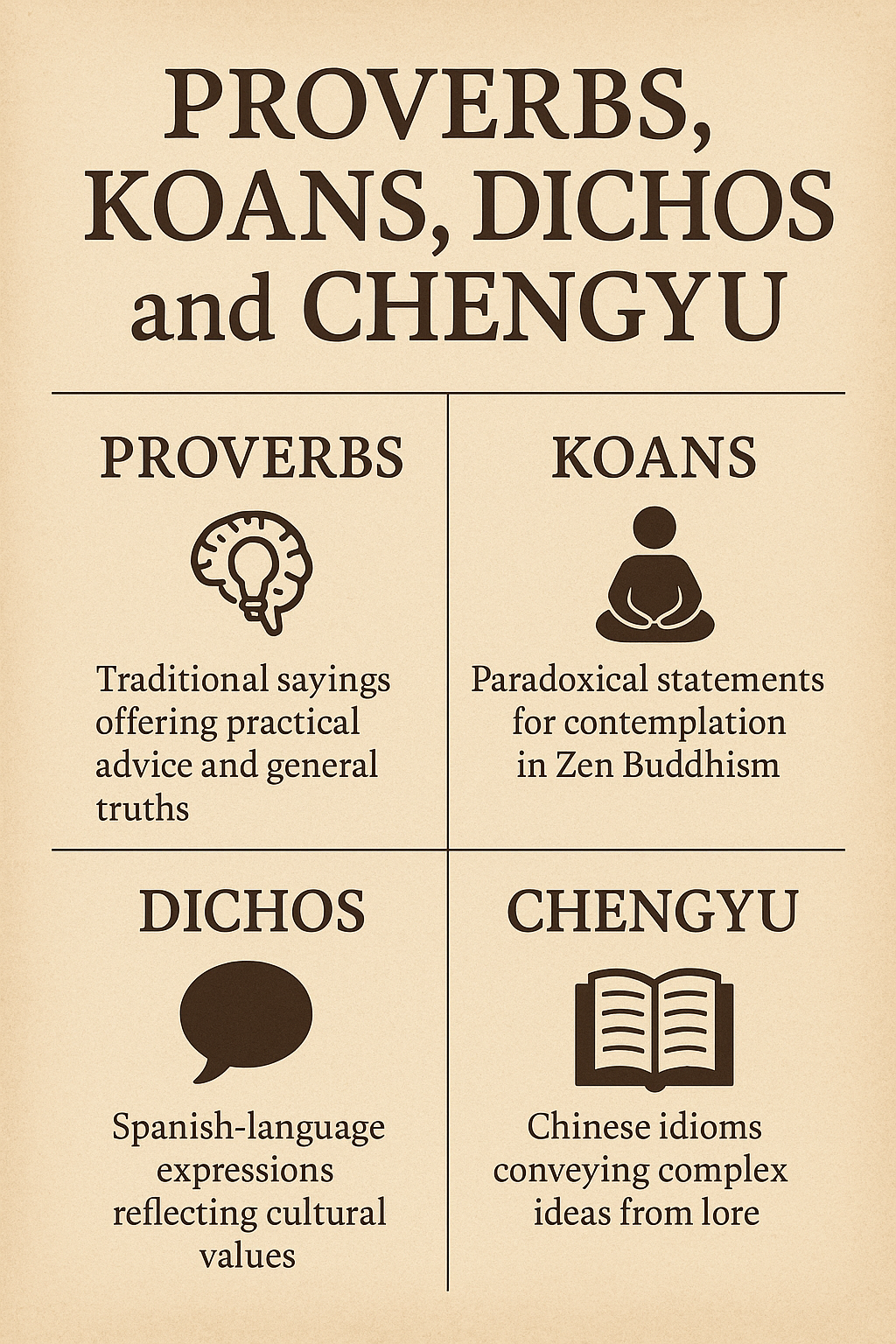
Proverbs, koans, dichos, and chengyu are all concise expressions of cultural wisdom, yet they each emerge from unique linguistic and philosophical traditions. Though they may differ in form and function, they share the universal purpose of offering insight into human nature, behavior, and values. Below is a comparison that highlights their origins and distinctions.
Proverbs
- Cultural Origin: Found in virtually every language and culture worldwide, proverbs are traditional sayings passed down through generations.
- Purpose: Proverbs offer practical wisdom, moral lessons, or general truths about life. They are often metaphorical and easily remembered.
- Examples:
- “A stitch in time saves nine.”
- “Actions speak louder than words.”
- “Don’t count your chickens before they hatch.”
Koans
- Cultural Origin: Originating in Chinese Chan Buddhism and further developed in Japanese Zen Buddhism, koans are used as a tool for spiritual training.
- Purpose: Koans are not meant to be logically solved. Instead, they challenge conventional reasoning and are used in meditation to provoke deep introspection and insight into the nature of self and reality.
- Examples:
- “What is the sound of one hand clapping?”
- “What was your original face before your parents were born?”
Dichos
- Cultural Origin: Common in the Spanish-speaking world, especially in Latin America and Spain, dichos are culturally rich sayings deeply embedded in Hispanic traditions.
- Purpose: Like proverbs, dichos reflect cultural values and offer observations or advice about life, often with regional flavor or humor.
- Examples:
- “No hay mal que por bien no venga”
(There’s no bad from which good doesn’t come.) - “El que mucho abarca, poco aprieta”
(Jack of all trades, master of none.)
- “No hay mal que por bien no venga”
Chengyu
- Cultural Origin: Chengyu (成语) are idiomatic expressions from classical Chinese literature. Most consist of four characters and are rooted in historical or mythological events.
- Purpose: Chengyu condense complex narratives or moral lessons into brief, poetic form. They are often used in both written and spoken Chinese to convey layered meanings.
- Examples:
- 卧薪尝胆 (wò xīn cháng dǎn) – “To lie on firewood and taste gall.”
Refers to enduring hardship and humiliation in pursuit of a goal or vengeance. - 画蛇添足 (huà shé tiān zú) – “To draw legs on a snake.”
Means to ruin something by overdoing it.
- 卧薪尝胆 (wò xīn cháng dǎn) – “To lie on firewood and taste gall.”
In summary, proverbs are universal sayings found in many cultures. Koans are paradoxical statements used in Zen Buddhism for meditation and self-realization. Dichos are Spanish-language proverbs commonly used in Hispanic cultures. Chenyus are from Chinese culture and are idiomatic expressions or set phrases. While they all share common goal of conveying wisdom, they vary in their cultural origins and specific uses.
From a holistic health perspective, such wisdom serves not only the intellect but the mind-body-spirit connection. These expressions often guide emotional balance, mindful behavior, and personal growth, cornerstones of overall well-being. They offer reminders of resilience, compassion, humility, and inner strength, supporting wellness not just as a state of physical health, but as a dynamic, cultural, and spiritual journey.
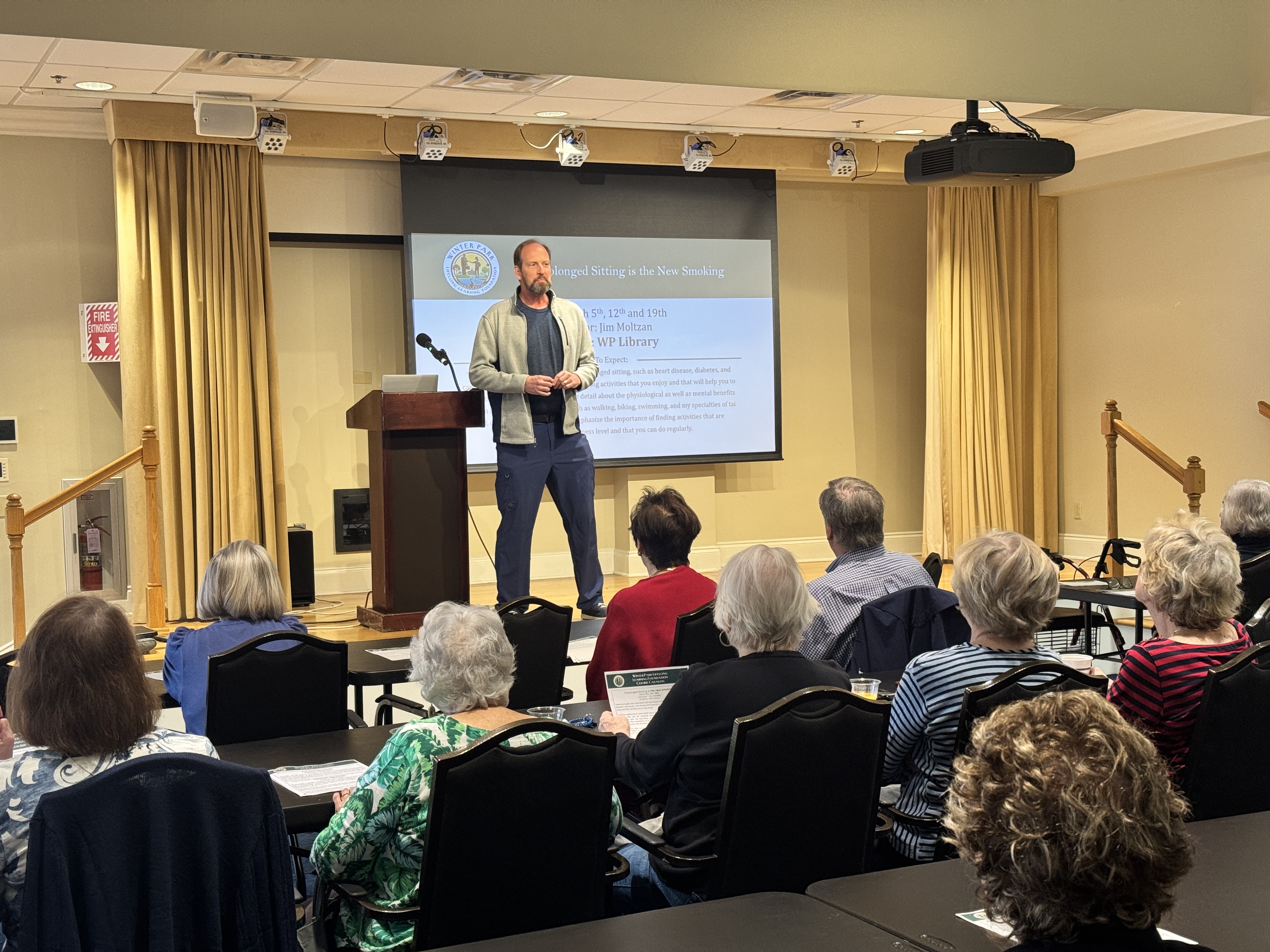
I teach and offer lectures about holistic health, physical fitness, stress management, human behavior, meditation, phytotherapy (herbs), music for healing, self-massage (acupressure), Daoyin (yoga), qigong, tai chi, and baguazhang.
Please contact me if you, your business, organization, or group, might be interested in hosting me to speak on a wide spectrum of topics relative to better health, fitness, and well-being.
I look forward to further sharing more of my message by partnering with hospitals, wellness centers, VA centers, schools on all levels, businesses, and individuals who see the value in building a stronger nation through building a healthier population.
I also have hundreds of FREE education video classes, lectures, and seminars available on my YouTube channel at:
https://www.youtube.com/c/MindandBodyExercises
Many of my publications can be found on Amazon at:
http://www.Amazon.com/author/jimmoltzan
My holistic health blog is available at:
https://mindandbodyexercises.wordpress.com/
http://www.MindAndBodyExercises.com
Mind and Body Exercises on Google: https://posts.gle/aD47Qo
Jim Moltzan
407-234-0119


 United Martial Arts Association