
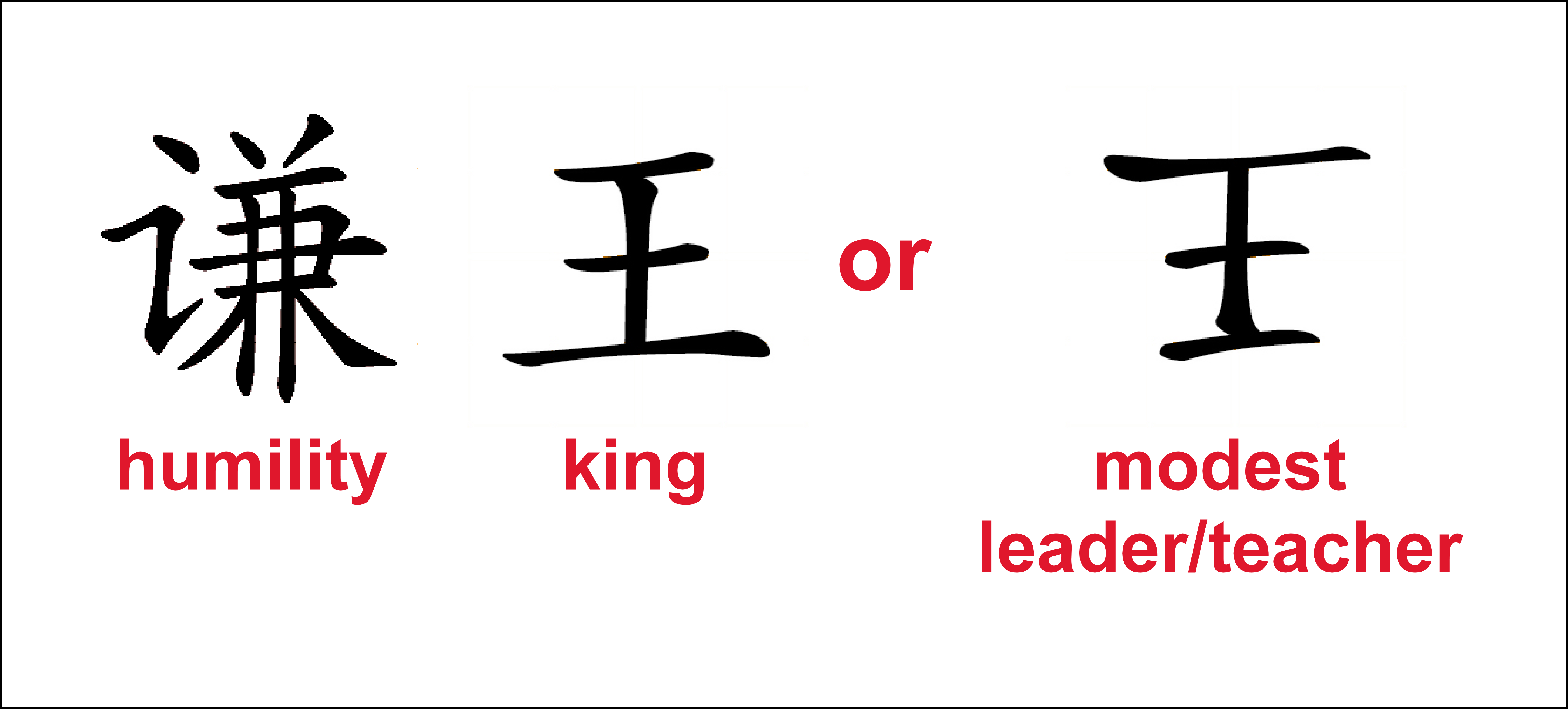
The Chinese character for humility is 谦 (qiān). The character for a king (or ruler) is 王 (wáng), but when flipped, it can be associated with something reversed, such as a reversed position, or lack of power. Combining these, one could interpret 谦王 (qiān wáng) as “humble ruler” or “modest king”, representing a ruler who is both powerful and humble.
In a time long ago, a great king ruled over a vast and prosperous land. Despite his power, he felt something was missing. Perhaps an imbalance in the heart of his kingdom and perhaps within himself. Recognizing the limits of his own understanding, the king invited a wise man to help restore harmony to his realm.
The wise man accepted the invitation, bringing with him not armies or gold, but clarity, insight, and timeless wisdom. Through thoughtful guidance, he realigned the kingdom’s priorities. Not by conquering enemies, but by restoring balance between the people and their values. He offered no lectures on dominance or strategy, but instead taught the king to listen more, act less, and lead from within. And then, without asking for any reward or recognition, the wise man quietly departed.
The king was stunned. He had expected a request for treasure or title. Instead, the king was left with only the echo of wisdom that had shifted the foundation of his being. He was no longer the same man. In honor of this transformative experience, the king ordered the Chinese character for “king” (王) to be turned upside down wherever it appeared in his palace.
This symbolic act was not a rejection of power, but rather a redefinition of it. By inverting the symbol of his own authority, the king declared a new truth:
Wisdom is greater than power. Humility is the highest throne.
The Deeper Meaning
While the tale may not be part of the classic canon of Chinese folklore, its message is deeply rooted in Eastern philosophy and holistic wisdom traditions.
In Taoist thought, the greatest rulers are often those who lead without force. The sage governs by aligning with the Tao or natural order, practicing wu wei or effortless action, and allowing things to unfold organically.
In Confucian ethics, the moral character of the ruler sets the tone for the nation. A wise and virtuous leader brings peace not through decrees but by embodying righteousness.
In Buddhist teachings, detachment from ego and recognition of impermanence guide the wise. Like the sage in the story, the Bodhisattva acts for the benefit of others without seeking personal gain.
The upside-down character becomes a living reminder: true power lies not in domination, but in service, awareness, and the willingness to learn.
A Reflection for Our Times
In today’s world, where leadership is often equated with control, and success with status, the Upside-Down King offers us a timeless teaching:
Sometimes, the greatest transformation comes not from gaining more, but from surrendering pride and embracing wisdom.
This story reminds us that holistic well-being begins with humility, whether we are leading others, caring for our health, or walking the path of self-discovery. The body may follow orders, but the soul responds to truth. And in the realm of wellness, just as in the kingdom of the wise king, balance is restored when wisdom reigns over ego.
I look forward to further sharing more of my message by partnering with hospitals, wellness centers, VA centers, schools on all levels, businesses, and individuals who see the value in building a stronger nation through building a healthier population.
I also have hundreds of FREE education video classes, lectures, and seminars available on my YouTube channel at:
https://www.youtube.com/c/MindandBodyExercises
Many of my publications can be found on Amazon at:
http://www.Amazon.com/author/jimmoltzan
My holistic health blog is available at:
https://mindandbodyexercises.wordpress.com/
http://www.MindAndBodyExercises.com
Mind and Body Exercises on Google: https://posts.gle/aD47Qo
Jim Moltzan
407-234-0119


 United Martial Arts Association