In the pursuit of holistic health, much attention is given to nutrition, exercise, sleep, and stress management. Yet one of the most overlooked determinants of well-being is the quality of our relationships. Just as the body is shaped by what we consume, the mind and spirit are shaped by the people we allow into our lives. When those relationships become toxic, distancing oneself is not only beneficial, but also often necessary.
There is a quiet devastation in staying too long near someone who diminishes you. It does not announce itself with sirens or visible wounds. Instead, it operates at the cellular level, eroding sleep, contracting breath, tightening the shoulders, flooding the bloodstream with cortisol long after the interaction has passed. The decision to distance oneself from a toxic relationship is not, as some would suggest, an act of selfishness or weakness. It is, in the deepest sense, an act of physiological and psychological survival.

Understanding Toxicity Beyond the Obvious
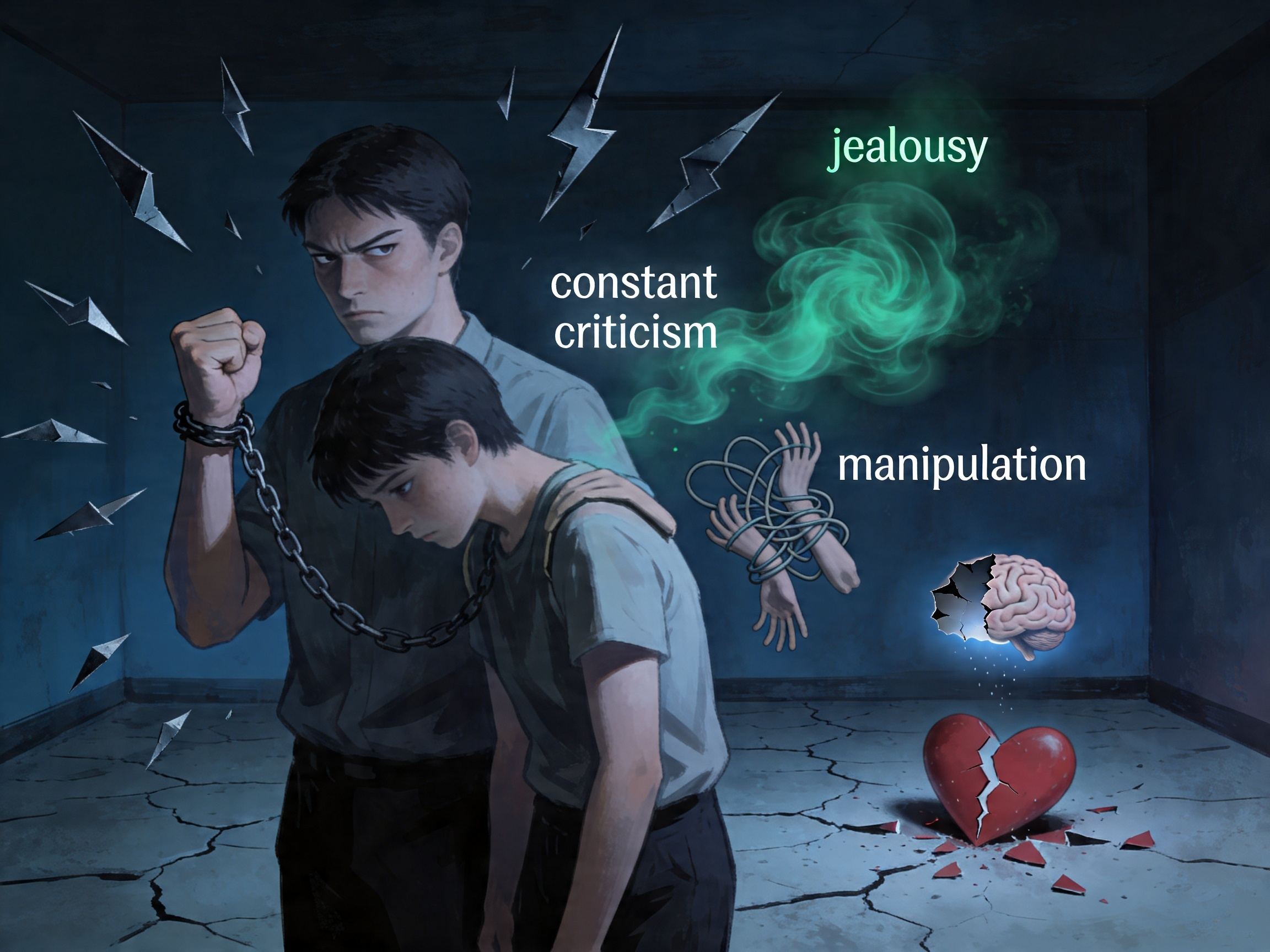
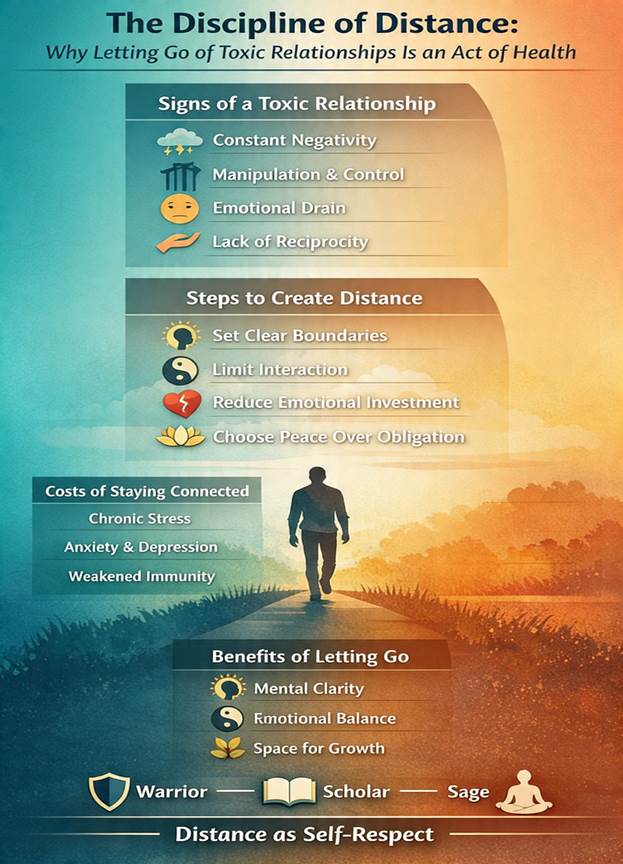
A toxic relationship is not always defined by overt abuse or dramatic conflict. More often, it manifests subtly, through chronic negativity, manipulation, emotional depletion, lack of reciprocity, or persistent disrespect. These dynamics can exist in friendships, family systems, workplaces, and even long-term partnerships.
In psychological and behavioral science, a toxic relationship is broadly defined as one in which a persistent pattern of behavior by one or more parties produces harm, emotional, cognitive, physical, or spiritual, in another (Lancer, 2014). What distinguishes a difficult relationship from a genuinely toxic one is the element of chronic harm with little or no reciprocal nourishment. From a psychological standpoint, toxic relationships are associated with increased stress responses, emotional dysregulation, and diminished self-worth (Lepore, 1992). Over time, this can contribute to anxiety, depression, and physical health issues such as hypertension and weakened immune function (Holt-Lunstad et al., 2010). In essence, the body does not differentiate between physical threats and emotional ones. The nervous system reacts accordingly.
The Body Keeps Score — and the Body Tells the Truth
When an individual remains in a toxic relational environment, the body operates in a prolonged state of sympathetic nervous system activation, the “fight or flight” response. The hypothalamic-pituitary-adrenal (HPA) axis, the body’s central stress response system, activates when we perceive threat. In healthy circumstances, this activation is brief and resolves once the stressor passes. In toxic relational environments, the stressor does not pass and the HPA axis remains chronically engaged.
The result is sustained elevation of cortisol, which over time suppresses immune function, disrupts sleep architecture, impairs cognitive performance, contributes to gastrointestinal dysfunction, and degrades cardiovascular health (McEwen, 2007). Chronic exposure to these stressors has also been linked to metabolic dysfunction and significantly elevated mortality risk (Holt-Lunstad et al., 2010).
From a Traditional Chinese Medicine perspective, such disturbances are understood as stagnation of qi, or of life energy, of vital flow, particularly affecting the Liver system, which governs the smooth flow of energy and emotions. Prolonged stagnation transforms into heat, contributing to irritability, tension, disrupted sleep, and internal imbalance (Maciocia, 2015). The emotional and the biological are not separate systems. They are one system, responding as one.
Psychological Roots: Attachment, Identity, and the Pull to Stay
One of the most painful paradoxes of toxic relationships is that they are often the hardest to leave. This is not weakness. It is neurobiological architecture.
Bowlby’s (1969) attachment theory established that human beings are neurologically wired to seek proximity to attachment figures, even when those figures are sources of fear or inconsistency. In fact, environments characterized by intermittent reinforcement, alternating between warmth and hostility, produce particularly powerful psychological bonds. The unpredictability itself triggers the reward system, creating a pattern not unlike that observed in addiction (Fisher et al., 2010).
Cultural conditioning compounds this. We are often taught by family systems, religious institutions, and social norms, that loyalty requires endurance, even at the expense of one’s own well-being. There is, however, a critical distinction between commitment and self-sacrifice. Healthy relationships are mutually nourishing. Toxic ones demand one-sided tolerance. Leaving requires not only courage but a fundamental renegotiation of one’s sense of self and worthiness.
The Warrior, Scholar, and Sage: An Integrated Framework
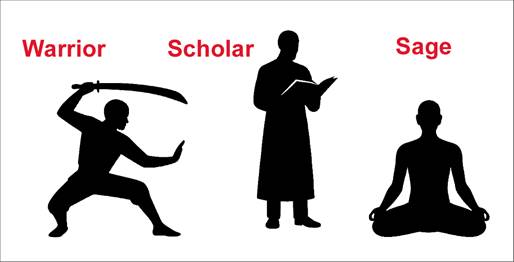
Perhaps no framework captures the full dimensionality of distancing from toxic relationships more completely than the integrated triad of the Warrior, the Scholar, and the Sage. Each archetype engages the challenge from a distinct but complementary orientation and together, they model a wholeness of response that neither psychology nor philosophy alone can provide.
The Warrior does not enter combat indiscriminately and neither does the trained martial mind engage every interpersonal conflict as though it must be won or endured. In classical martial philosophy, the highest expression of skill is not domination but strategic discernment: knowing when to engage and knowing when to withdraw. Sun Tzu’s principle that the supreme art of war is to subdue the enemy without fighting speaks directly to relational toxicity. The Warrior recognizes that remaining in a depleting relationship is not loyalty, but rather it is a drain on the very resources of energy, clarity, mental focus, and physical vitality, that martial and holistic training are designed to cultivate and protect. Boundaries, in this context, are not walls built from fear. They are the disciplined perimeter of a trained practitioner who understands that what enters one’s field shapes one’s capacity to function at full power.
The Scholar brings the discipline of observation and discernment. Where the emotional mind sees only pain, confusion, and the pull of familiar patterns, the Scholar steps back and reads the situation with the detachment of careful study. Patterns are examined: not once, but across time. The Scholar asks not only “what is this person doing to me?” but “what pattern in me allowed this dynamic to persist?” This is where the genuine education lives. Social learning theory confirms that we are continuously shaped by the relational environments we inhabit (Bandura, 1977). The Scholar understands that prolonged exposure to toxic patterns is not neutral, it is a curriculum, and it teaches us, slowly and reliably, to expect diminishment as normal. The act of studying the pattern, naming it, and choosing to no longer participate in it is itself a transformative scholarly act. An application of knowledge toward the cultivation of a wiser life.
The Sage operates from a register beyond strategy or analysis. The Sage perceives the whole — the arc of a life, the nature of interconnection, the cosmic principle that what we nourish, grows, and what we withdraw from, diminishes. In Taoist thought, the Sage does not struggle against what resists; like water, the softest of forces, the Sage flows where there is openness and withdraws from obstruction without bitterness or drama (Laozi, trans. Mitchell, 1988). Letting go, in the Sage’s understanding, is not abandonment. It is wisdom. It is the recognition that some connections, however long they have endured, are no longer aligned with the direction of growth and that releasing them is an act of love for both parties, freeing each to find their proper place in the larger pattern. The Sage also holds the deepest awareness of what Rogers (1961) called unconditional positive regard and understands that offering it does not require remaining in proximity to harm.
Together, the Warrior, Scholar, and Sage form a complete response: the Warrior protects, the Scholar discerns, and the Sage releases with grace. No single archetype alone is sufficient. The Warrior without the Scholar becomes combative. The Scholar without the Sage becomes cold. The Sage without the Warrior becomes passive. But integrated, as the ideal of holistic practice demands, they produce a practitioner capable of navigating one of life’s most difficult passages with both strength and wisdom.
Distance as a Form of Self-Respect
Creating distance does not always mean dramatic confrontation or complete severance. It can take many forms: reducing the frequency of interaction, setting clear and consistent boundaries, limiting emotional investment, or choosing not to engage in harmful patterns. For many people, a gradual reduction in contact, accompanied by internal boundary-setting and the cultivation of healthier relationships, is both safer and more sustainable than a sudden break.
This process requires awareness, discipline, and a willingness to endure the temporary discomfort of asserting one’s needs. There may be guilt, resistance, or even backlash from the other party. Yet this discomfort is typically temporary, while the benefits are enduring. From a behavioral psychology perspective, boundary-setting reinforces self-efficacy, or the belief in one’s ability to take meaningful control of personal circumstances (Bandura, 1997). Each act of distancing becomes a reaffirmation of personal agency.
It is also worth noting what distancing does not mean. It does not require hatred, bitterness, or a permanent severing in every circumstance. In cases where full physical separation is not possible, such as with co-parenting, professional settings, and family caregiving, emotional detachment remains a recognized, healthy coping strategy: a cognitive and emotional restructuring in which the person withdraws the energy and identity investment they once placed in a relationship, while maintaining necessary surface-level contact (Nolen-Hoeksema, 2001).

Reclaiming Space for Growth
When toxic influences are reduced or removed, space is created mentally, emotionally, and energetically. This space allows for clearer thinking, improved emotional regulation, greater alignment with personal values, and the emergence of healthier relationships. It is not uncommon for individuals to experience a distinct sense of lightness or renewed vitality after distancing themselves from chronically draining connections. This is not coincidental; it is the natural result of removing a sustained stressor from the relational field.
Social ecology matters profoundly to psychological development and ongoing maintenance of well-being. Research on social relationships consistently demonstrates that supportive, positive connections enhance longevity and resilience, while negative interactions produce measurably opposite effects (Holt-Lunstad et al., 2010). Choosing with intention who inhabits one’s relational field is not elitism. It is ecology, in the understanding that what we allow into our environment shapes who we become.
Somatic practices are among the most effective tools for navigating this transition. Tai Chi, qigong, and dao yin cultivate continuous awareness of the relationship between emotional states and physical form, training the practitioner to recognize the body’s responses to specific individuals and environments, and to distinguish genuine safety from mere familiarity. The discipline of daily practice creates an internal reference point: a felt sense of what balance, openness, and ease actually feel like in the body, making it harder to accept their absence as the price of connection.
A Necessary Act in a Culture of Overexposure
In a world of constant connectivity, social media, digital communication, and societal pressure to remain perpetually available, the ability to step back is no longer simply a psychological skill. It is a survival competency. Not every relationship deserves equal access to your time, attention, or emotional bandwidth. Just as the trained practitioner is selective about the food consumed, the information absorbed, and the training methods employed, so too must they be selective about the relational influences permitted to shape the internal environment.
The Warrior, Scholar, and Sage all agree on this point: discernment is not coldness. It is clarity. And clarity, in holistic health as in martial practice, is a prerequisite for power.
Conclusion: Distance Is Not Disconnection — It Is Alignment
Distancing oneself from toxic relationships is not about isolation, avoidance, or the abandonment of compassion. It is about alignment. Aligning one’s environment with one’s values, one’s health, and one’s long-term wholeness.
The Warrior calls it protection. The Scholar calls it discernment. The Sage calls it wisdom. Holistic health calls it necessary.
It is an act of discipline. It is an act of self-respect. And in many cases, perhaps most, it is an act of healing.
References
Bandura, A. (1977). Social learning theory. Prentice Hall.
Bandura, A. (1997). Self-efficacy: The exercise of control. W. H. Freeman.
Bowlby, J. (1969). Attachment and loss: Vol. 1. Attachment. Basic Books. https://archive.org/details/attachmentlossvo00john
Fisher, H. E., Brown, L. L., Aron, A., Strong, G., & Mashek, D. (2010). Reward, addiction, and emotion regulation systems associated with rejection in love. Journal of Neurophysiology, 104(1), 51–60. https://doi.org/10.1152/jn.00784.2009
Holt-Lunstad, J., Smith, T. B., & Layton, J. B. (2010). Social relationships and mortality risk: A meta-analytic review. PLoS Medicine, 7(7), e1000316. https://doi.org/10.1371/journal.pmed.1000316
Lancer, D. (2014). Conquering shame and codependency: 8 steps to freeing the true you. Hazelden Publishing.
Laozi. (1988). Tao Te Ching (S. Mitchell, Trans.). Harper & Row. (Original work attributed circa 6th–4th century BCE)
Lepore, S. J. (1992). Social conflict, social support, and psychological distress: Evidence of cross-domain buffering effects. Journal of Personality and Social Psychology, 63(5), 857–867. https://doi.org/10.1037/0022-3514.63.5.857
Maciocia, G. (2015). The foundations of Chinese medicine: A comprehensive text (3rd ed.). Elsevier.
McEwen, B. S. (2007). Physiology and neurobiology of stress and adaptation: Central role of the brain. Physiological Reviews, 87(3), 873–904. https://doi.org/10.1152/physrev.00041.2006
Nolen-Hoeksema, S. (2001). Abnormal psychology (2nd ed.). McGraw-Hill.
Rogers, C. R. (1961). On becoming a person: A therapist’s view of psychotherapy. Houghton Mifflin.