
A Holistic Journey of Maturity, Meaning, and Re-Alignment
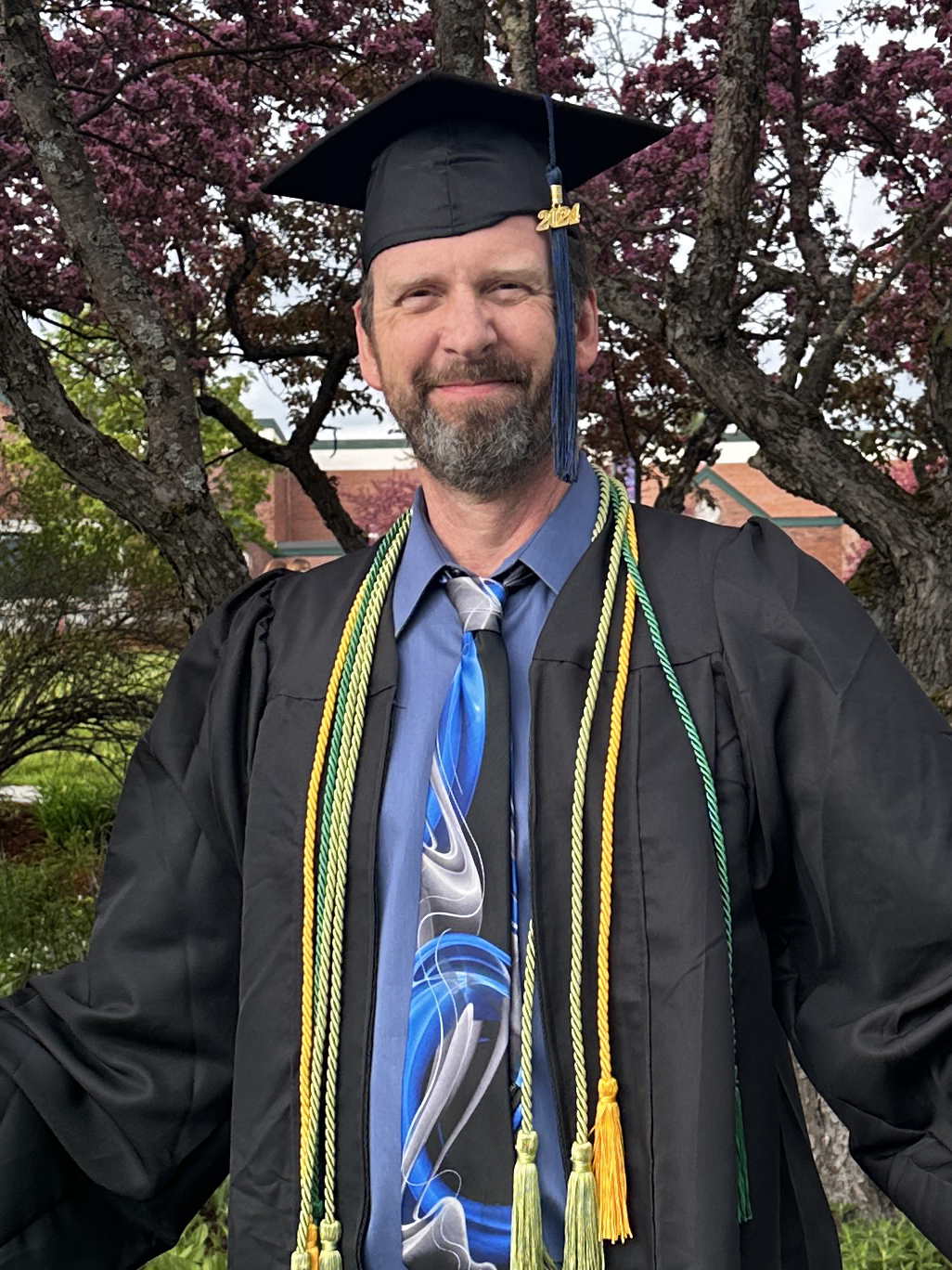
Returning to college later in life is often described as a challenge, as an uphill climb requiring time, discipline, and sacrifice. Yet for many adults, and certainly in my case, the opposite proved true. When I chose to return to higher education in my mid-fifties to pursue a degree in Holistic Health, I brought with me something few traditional college-age students possess: decades of lived experience. That experience, combined with a more mature cognitive framework, transformed the academic journey from an obligation into an opportunity for deep integration, personal clarity, and intellectual renewal.
Bringing a Lifetime of Experience to Academic Study
Unlike those who enter college at eighteen, my return at age fifty-six meant I did not begin my studies with uncertainty or the pressure of choosing a career path before ever living one. I had already accumulated a lifetime’s worth of learning through practical experience in raising a family, navigating career changes, managing health challenges, and observing the complexities of human behavior. These experiences served as a foundation upon which new academic material could be layered, compared, and contextualized.
Rather than absorbing information passively or memorizing material solely for grades, I was able to evaluate theories and concepts through the lens of lived truth. I had already lived many of the essays others were struggling to write. Where younger students needed interviews or lengthy research to understand topics such as stress management, lifestyle change, parenting, or work-life balance, I could draw directly from the real world. This allowed me to engage with coursework not as an abstract collection of requirements, but as a deeply personal and integrated process of confirmation, refinement, and reconnection.
Freedom From Indoctrination and the Advantage of Cognitive Maturity
One of the unspoken benefits of returning to college later in life is the reduced susceptibility to the distractions and ideological or social pressures often present in higher education environments. Younger students are still in the formative stages of identity development, emotional regulation, and worldview formation, are often more influenced by prevailing narratives, trends and peer pressure to explore adult life on their own. They are still building the very cognitive structures necessary to differentiate opinion from fact, emotion from logic, cultural pressures from authentic beliefs and to use good judgement in making choices.
At fifty-six, I entered the classroom with a fully formed sense of self, shaped not by theory but by experience. My executive functions of judgment, discernment, critical reasoning, and the ability to evaluate information objectively, were not only mature but well exercised. This maturity provided both grounding and clarity. I could engage in discussions, write papers, and analyze complex material without feeling pulled by ideological currents or academic conformity. Instead, I was able to maintain intellectual sovereignty, bringing a balanced, reflective, and often more nuanced perspective than I ever could have at eighteen.
This distance from influence was not merely protective but rather liberating. I could appreciate and integrate new knowledge without feeling pressured to adopt someone else’s worldview. My education was not a process of being molded, but of refining and expanding what life had already taught me.
Holistic Health as a Framework for Integration
Choosing Holistic Health as a field of study amplified this sense of meaningful alignment. Holistic frameworks naturally connect physical well-being, mental processes, emotional patterns, spiritual development, social realities, and personal responsibility. Because I had already spent decades exploring aspects of these areas through my own practices, career roles, and interpersonal experiences, college did not introduce an entirely new system. It helped reorganize and deepen what I already knew intuitively.
Academic study provided clarity around topics such as stress physiology, behavior change psychology, wellness models, integrative therapies, and mind-body research. But rather than being overwhelmed by new material, I experienced a profound sense of realignment. Concepts I had previously approached through trial and error now had names, frameworks, and evidence-based explanations. Academic structure refined my intuitive understanding and allowed me to articulate insights I had accumulated over years of practical life.

A Degree for Knowledge, Not for Income
Another advantage of returning to college later in life was the freedom from financial anxiety that burdens many younger students. I was not seeking a degree for job security, salary potential, or societal approval. My purpose was internal: to deepen understanding, refine long-held interests, and elevate both personal and professional growth.
I earned my degree without the shadow of debt or the fear of whether my major would “pay off.” This freedom created a learning environment rooted in curiosity and self-directed motivation rather than obligation. My return to school was an act of self-cultivation, not an economic gamble. The value of the degree lay not in its marketability but in the clarity, confidence, and expanded perspective it provided.
Seeing What Younger Students Often Cannot Yet See
Looking around the classroom, I often felt compassion for the younger generations who entered college without the grounding perspective that life inevitably provides. Many had never managed their own households, navigated personal crises, or experienced the nuances of long-term relationships. They had not yet seen how deeply intertwined the mind, body, emotions, and environment truly are.
Without life experience, many were forced to rely exclusively on textbooks, borrowed opinions, or youthful assumptions. Their worldview was still forming, and their sense of identity was still fragile. In contrast, I had already lived through enough seasons of life to recognize patterns, contradictions, and truths that cannot be fully appreciated through theory alone. Education at my age was not a search for identity. It was a refinement of wisdom.
Gaining Perspective, Not Certainty
Returning to college did not provide absolute answers or solve life’s mysteries, but it offered something arguably more important: a refined way of asking questions. I gained a more sophisticated capacity for research, analysis, contemplation, and critical observation. Academic learning expanded my ability to examine human behavior, health, spiritual development, and social systems from multiple angles.
In the end, the experience was not about “knowing everything,” but about understanding how everything relates. Through education, I strengthened the bridge between personal experience and academic insight, between intuition and research, between life wisdom and contemporary knowledge.
Education as a Lifelong, Holistic Process
My return to college in my mid-fifties was not simply an academic endeavor, but it was an act of holistic integration. With age came maturity, perspective, and discernment. With education came clarity, structure, and expansion. Together, they formed a powerful synthesis that reconnected past experience with present understanding.
I am grateful not only for what I learned, but for when I learned it. Education at this stage of life was not a requirement, but instead it was a gift. A gift of realignment, renewed purpose, and deeper comprehension of how mind, body, and spirit weave together in the tapestry of a human life.
 United Martial Arts Association