One Truth, Many Experiences — And the Need for Discernment

There can only be one truth about a particular thing. A tree is a tree. It does not become something else because someone prefers it to be different. It has roots, a trunk, branches, and leaves. It grows according to its nature.

Truth, in that sense, is singular.

Yet there are countless ways to experience that truth. One person sees shade. Another sees lumber. A child sees a playground. A farmer sees fruit. A bird sees shelter. An artist sees beauty. The tree remains what it is, but its meaning expands through relationship.

However, there is another layer we must not ignore.

Not all trees are healthy.

From a distance, a tree may appear strong with an upright trunk, full canopy, green leaves. Yet beneath the surface, its roots may be rotting. Insects may be boring into its core. Disease may be spreading through its vascular system. It may produce some healthy fruit and some spoiled fruit at the same time.

What appears stable may, in fact, be compromised. This complicates the simplicity at seeking truth, but only at face value.

The truth of the tree includes both its visible form and its hidden condition. Its outward strength does not automatically equal inward integrity. The shade it provides may still be real. The fruit it produces may still nourish. But the structural truth of the tree might be deteriorating. And if the roots are compromised long enough, collapse becomes inevitable.

This is where discernment enters the conversation.

Experience alone is not enough.
Observation alone is not enough.
Surface-level impressions are not enough.

We must look deeper. A person may experience comfort beneath a tree that is slowly dying. That comfort is real, but temporary. Someone may harvest fruit without realizing that decay has already begun in the roots. Another may lean against the trunk, unaware that termites are hollowing it from within.

The tree remains a tree. But the condition of the tree matters. This is true of ideas. It is true of institutions, leaders, relationships, and it is true of ourselves.

Something may look strong on the outside while its foundation is unstable. This thing may produce good results occasionally while carrying hidden corruption. This entity may offer shade while preparing to fall.

Truth is singular; however, truth is also layered. There is the truth of identity — what a particular thing is. And there is the truth of condition — how healthy or diseased it is. Wisdom requires that we examine both.

In human life, this means we must not confuse appearance with integrity. A smiling face does not guarantee emotional health. A successful career does not guarantee moral grounding. A large organization does not guarantee structural soundness. A belief system that produces some good fruit may still carry internal rot.

Discernment asks:
What do the roots look like?
What nourishes this system?
Is the fruit consistently healthy, or only occasionally?
Is there hidden decay beneath visible strength?

The tree teaches us again. We may approach it for shade, for fruit, for beauty, and those experiences are valid. But maturity asks us to step back and assess the whole. To look beneath the bark. To examine the roots. To recognize that outward form and inward health are not always identical.

Reality does not change because we ignore decay. Collapse does not wait for consensus. And yet, even here, the metaphor holds hope.

A diseased tree can sometimes be pruned. Infestation can sometimes be treated.
Roots can sometimes be strengthened. But only if the condition is acknowledged.

One truth. Many experiences. And beneath them all, is the responsibility to look deeper.

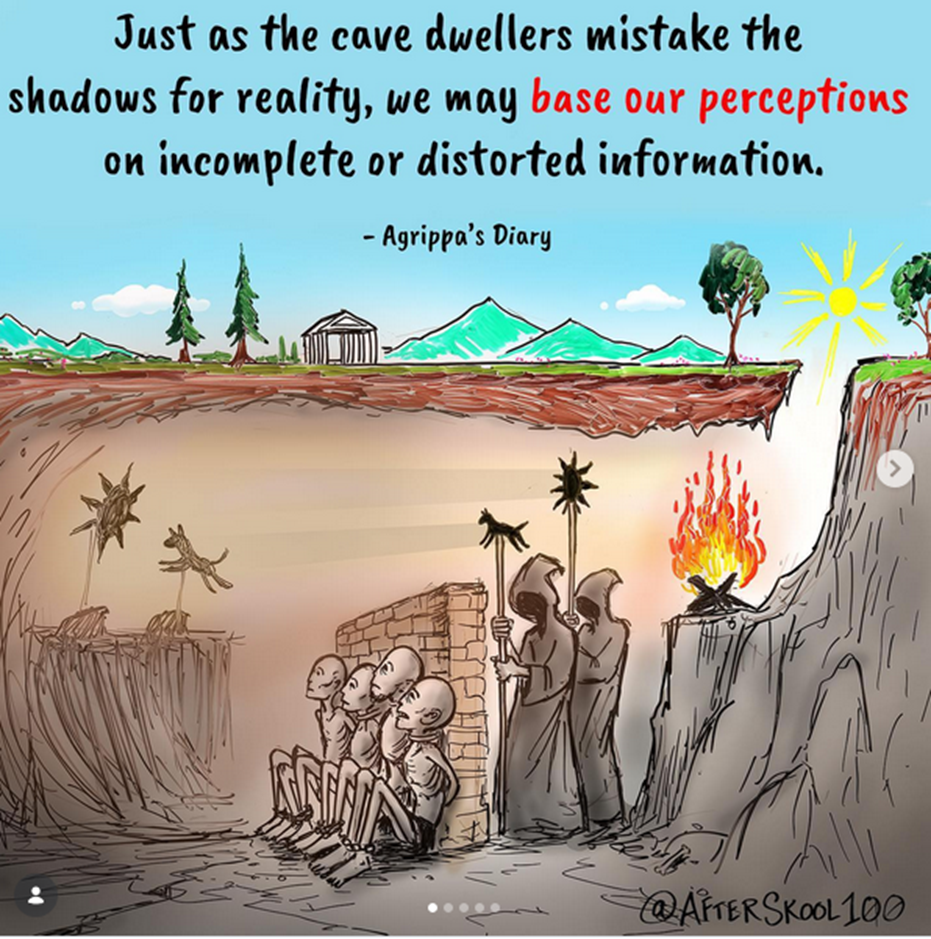
The tree is what it is…. But not all as it may seem, … at first glance. To find truth, we might need to look at many perspectives.

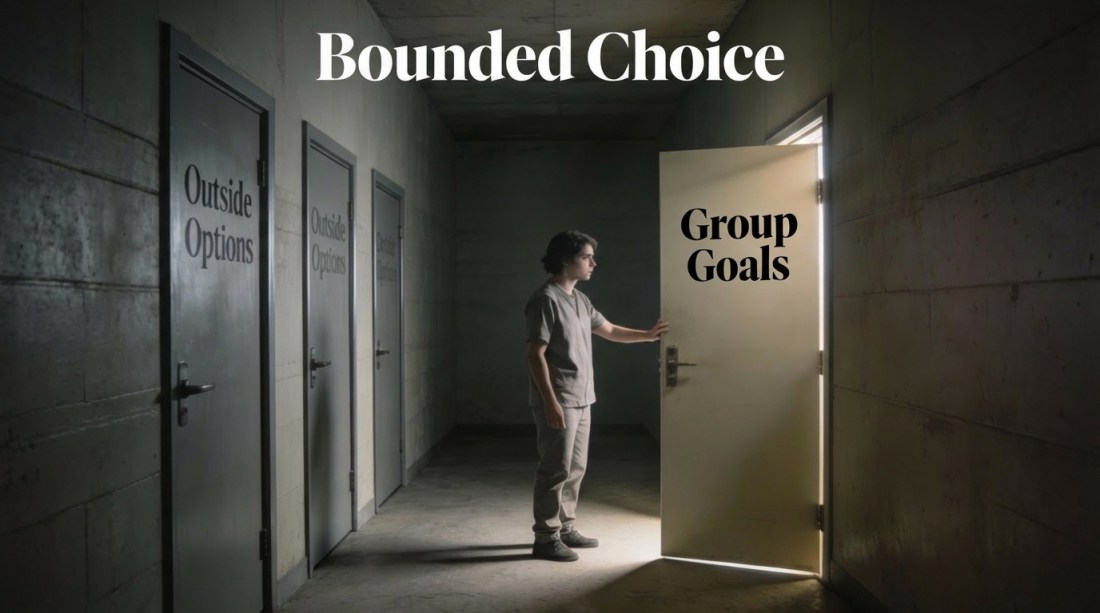
Bounded Choice Through the Lens of the Warrior–Scholar–Sage

Human freedom is not merely the ability to select between options. True freedom depends upon whether those options are real, informed, and unconstrained by coercion. A person may appear to be choosing voluntarily while operating inside a closed psychological system that has already defined what is acceptable, moral, and permissible. This phenomenon is known as bounded choice, a condition in which individuals experience subjective freedom within an objectively restricted framework (Lalich, 2004).

In high-control groups, authoritarian systems, abusive relationships, ideological movements, and coercive institutions, bounded choice becomes the invisible architecture of compliance. Individuals come to believe they are freely choosing loyalty, sacrifice, obedience, and submission, while the system quietly eliminates all meaningful alternatives.

The Warrior: Defender of Autonomy

The Warrior represents sovereignty, courage, and the capacity to protect one’s psychological and moral boundaries.

In bounded choice systems, the Warrior is systematically dismantled. Authority is reframed as virtue. Obedience is reframed as strength. Submission is reframed as discipline. The individual is taught that questioning leadership is weakness, and independence is ego.

Lalich (2004) describes how charismatic, high-demand groups construct a totalistic moral universe in which only one path is considered righteous. Members are told they are choosing their own devotion, but the cost of choosing otherwise is framed as spiritual failure, betrayal, or existential collapse.

Zimbardo (2007) demonstrates how situational power and systemic authority can override personal conscience, causing individuals to surrender moral agency in favor of role-based obedience. In such environments, compliance is not demanded, it is normalized.

The Warrior awakens when a person realizes:

The Scholar: Seeker of Truth

The Scholar represents inquiry, critical thinking, historical awareness, and intellectual independence. Bounded choice systems operate by controlling information. They:

  • Restrict outside sources
  • Rewrite history
  • Redefine language
  • Frame dissent as ignorance
  • Portray outsiders as corrupt or dangerous

This creates what Lifton (1961) termed a closed belief system, in which ideology replaces objective reality and critical thought is reframed as disloyalty.

Hassan (2015) explains that coercive influence systems depend upon behavioral, informational, thought, and emotional control (the BITE model). By shaping perception and emotional responses, the system creates the illusion of voluntary participation while quietly eliminating informed consent.

The Scholar recognizes that freedom requires:

  • Access to multiple perspectives
  • The ability to compare narratives
  • The right to question doctrine
  • The freedom to revise beliefs

Truth does not fear scrutiny. Only control does.

The Sage: Guardian of Wisdom

The Sage represents integration, ethical clarity, and long-range vision. Bounded choice systems collapse complexity into absolutism. They offer:

  • Simple answers to complex problems
  • Moral superiority over outsiders
  • A grand mission narrative
  • A sense of chosen identity

This creates what Lalich (2004) identifies as identity fusion, where the individual’s self-concept becomes inseparable from the group. Leaving the group is experienced not merely as separation, but as existential annihilation.

Zimbardo (2007) further explains that prolonged immersion in authoritarian systems reshapes moral perception, producing what he terms the “banality of wrongdoing,” where harmful actions become psychologically normalized.

The Sage recognizes that wisdom requires:

  • Moral nuance
  • Emotional maturity
  • Tolerance for ambiguity
  • Personal conscience

No institution, ideology, or leader owns truth.

The Architecture of Bounded Choice

Bounded choice is sustained through five interlocking mechanisms:

  1. Moral Absolutism – One worldview is declared universally correct (Lifton, 1961)
  2. Fear Conditioning – Leaving is framed as catastrophic (Lalich, 2004)
  3. Identity Fusion – Selfhood becomes dependent on group membership (Lalich, 2004)
  4. Information Control – External perspectives are discredited (Hassan, 2015)
  5. Redefinition of Freedom – Obedience becomes virtue (Zimbardo, 2007)

Over time, members no longer perceive alternatives as real options. They believe they are choosing freely, while their psychological perimeter has already been engineered.

As Lalich (2004) explains, bounded choice is not passive victimhood. It is coerced agency, a system that exploits the human need for meaning, belonging, and certainty.

Open Choice: The Landscape of Authentic Freedom

Open choice systems cultivate:

  • Informed consent
  • Psychological safety
  • Moral autonomy
  • Freedom of exit
  • Freedom of inquiry
  • Respect for dissent
  • Multiplicity of perspectives

They strengthen rather than replace the individual’s conscience (Hassan, 2015; Lifton, 1961).

Where bounded choice collapses the self into the system, open choice strengthens the self within society.

Bounded choice is one of the most sophisticated mechanisms of human control ever developed. It does not remove choice, it weaponizes it. It converts obedience into virtue, submission into identity, and captivity into meaning (Lalich, 2004; Zimbardo, 2007).

The Warrior–Scholar–Sage stands as a timeless archetype of liberation: strong enough to resist coercion, wise enough to discern truth, and grounded enough to live by conscience rather than command.

Freedom is not given by institutions, but rather it is cultivated by individuals.

When you write your autobiography someday, will you be the lead character, a supporting actor, or merely an extra in someone else’s story? Will your life reflect the building of your own legacy, or the quiet reinforcement of someone else’s shadow?

The Warrior defends autonomy, the Scholar seeks truth, and the Sage lives by conscience. To live freely is not simply to choose, but to choose consciously to ensure that the life being lived is truly one’s own.

References

After Skool. (2023, September 19). The profound meaning of Plato’s allegory of the cave [Video]. YouTube. https://www.youtube.com/watch?v=4nHj3gL_JN0

Hassan, S. (2015). Combating cult mind control (Updated ed.). Freedom of Mind Press.

Lalich, J. (2004). Bounded ChoiceTrue believers and charismatic cults. https://doi.org/10.1525/california/9780520231948.001.0001

Lifton, R. J. (1961). Thought reform and the psychology of totalism: A study of “brainwashing” in China. W. W. Norton & Company.

Zimbardo, P. G. (2007). The Lucifer effect: Understanding how good people turn evil. Random House. https://psycnet.apa.org/record/2007-04177-000

From Atheism to Awe: How Deep Science Awakens the Spiritual Mind

“A little knowledge of science makes you an atheist, but in-depth knowledge of science makes you a believer in God.”
              – Often attributed to Francis Bacon, founder of the scientific method

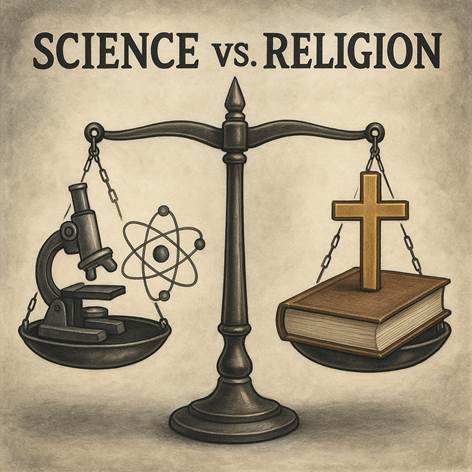
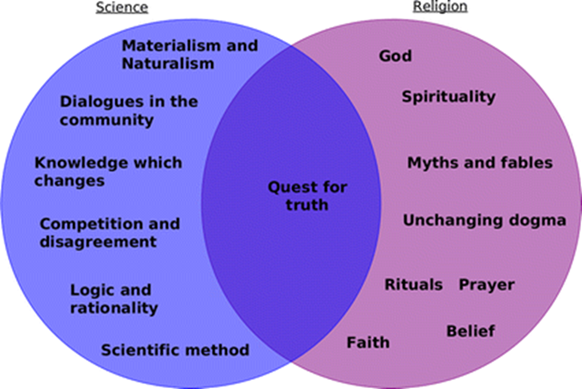
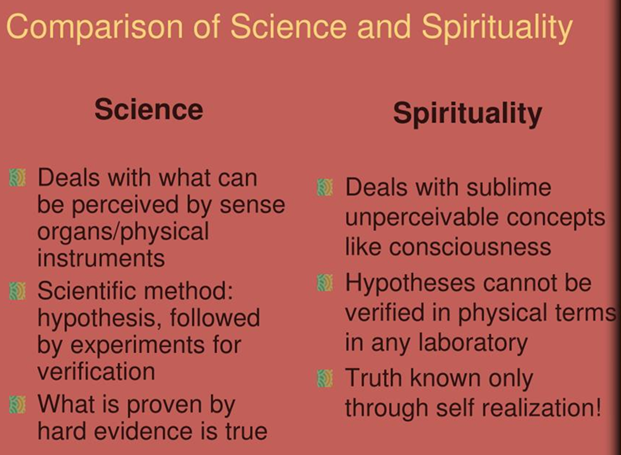
In today’s cultural landscape, science is often framed as being in conflict with religion or spirituality. Many young learners, upon their first encounter with scientific explanations of the universe, feel empowered by naturalistic theories that appear to replace the need for a divine creator. Yet, as some of history’s greatest minds have discovered, the deeper one delves into the mysteries of existence, the more the boundary between science and spirituality begins to blur.

This article explores how surface-level understanding of science can lead to atheism, while profound scientific inquiry often circles back to the awe, mystery, and reverence traditionally associated with belief in a higher order.

I. Shallow Science: When God Seems Unnecessary

When individuals first engage with scientific thought, they often encounter a worldview that appears fully self-contained:

  • Biology explains life through evolutionary theory, offering a compelling, godless account of biodiversity.
  • Neuroscience reduces human thought and behavior to chemical and electrical activity in the brain.
  • Physics and cosmology portray a universe arising from a quantum vacuum or Big Bang, operating without obvious purpose or design.

This can easily lead to scientific materialism, the belief that only physical matter and measurable phenomena exist. In such a view, God becomes redundant, as a vestige of earlier ignorance.

Indeed, many atheists point to science as their justification. As evolutionary biologist Richard Dawkins (2006) contends in The God Delusion, the universe we observe has “precisely the properties we should expect if there is, at bottom, no design, no purpose, no evil and no good, nothing but blind, pitiless indifference.”

But is this truly the endpoint of scientific discovery?

II. Deep Science: The Return of the Sacred

As scientific understanding matures, new questions emerge, with richer, stranger, and more metaphysically provocative than the answers that came before. This deeper engagement often reveals that the universe is far from a cold, mechanistic void. Instead, it is intricate, harmonious, and astonishing in ways that seem to defy chance or randomness.

1. The Fine-Tuning of the Universe

Modern physics has revealed that the fundamental constants of the universe, such as gravity, electromagnetism, and the strong nuclear force are finely tuned for life. A minuscule deviation in any of these constants would render the cosmos sterile and lifeless (Rees, 1999).

This raises profound questions: Why do these constants exist at all? Why are they so precisely calibrated?

While some propose the multiverse theory to explain this, others like theoretical physicist Paul Davies (2007) suggest that the universe “seems to be fine-tuned for consciousness,” implying the possibility of a purposeful or intelligent order.

2. The Enigma of Consciousness

Despite all our advances in neuroscience, no theory adequately explains how subjective experiences of thoughts, emotions, and inner life arise from the brain’s gray matter. This “hard problem of consciousness” has led some researchers to propose panpsychism or dual-aspect monism, theories that view consciousness as a fundamental feature of the universe, not an accidental byproduct (Chalmers, 1996).

Such views resonate with spiritual traditions that see consciousness, not matter, as primary. As Max Planck, founder of quantum theory, once said:

“I regard consciousness as fundamental. I regard matter as derivative from consciousness” (Planck, 2014).

3. Mathematics and the Mind of God

One of the most mysterious features of the cosmos is that it can be described so precisely by mathematics, an abstract language invented by the human mind. Why should physical reality conform to these equations?

Einstein called this “the incomprehensible comprehensibility of the universe.” For many, this suggests not randomness but order and rationality, akin to the classical idea of Logos, where a divine ordering principle present in Greek philosophy and Christian theology (John 1:1).

4. Quantum Mysteries and Nonlocality

Quantum mechanics defies classical logic:

  • Particles can exist in multiple states until observed (superposition).
  • Entangled particles influence each other instantaneously, even across vast distances (nonlocality).

These findings challenge our assumptions about space, time, causality and even the role of consciousness in shaping reality. While interpretations vary, the quantum world seems less like a machine and more like a mystery, echoing ancient insights from mystical traditions (Zohar & Marshall, 1994).

5. Science’s Own Limits

Science is a powerful tool, but it has limits. It can tell us how things happen, but not why they exist. It cannot fully answer:

  • Why there is something rather than nothing
  • Whether the universe has purpose or meaning
  • What grounds morality, love, or beauty
  • What happens after death

As John Polkinghorne (2005), a quantum physicist and theologian, notes:

“Science describes the processes of the world, but religion is required to make sense of its meaning.”

III. The Wisdom of Scientists and Seekers

Many prominent scientists have acknowledged the spiritual implications of their work:

  • Albert Einstein: “The more I study science, the more I believe in God” (quoted in Clark, 1971).
  • Werner Heisenberg: “The first gulp from the glass of natural science will turn you into an atheist, but at the bottom of the glass, God is waiting” (Heisenberg, 1974).
  • Carl Jung, though a psychologist, echoed similar themes in his work on archetypes and the collective unconscious, seeing spiritual insight as part of the individuation process (Jung, 1968).

IV. A Holistic View: Integration Over Division

From a holistic health and wellness perspective, the journey from materialism to meaning mirrors our own inner evolution:

  • At first, we crave certainty, reductionism, and linear logic.
  • Later, through deeper study and lived experience, we learn to embrace mystery, paradox, and awe.
  • Wellness, too, is not just physical; it involves spiritual alignment, emotional integration, and conscious living.

In this sense, the journey through science becomes a path to spiritual maturity. True wholeness is not rejecting science in favor of God or vice versa but realizing that the two may be part of a unified truth.

Conclusion: From Knowing to Wondering

Superficial knowledge may cast aside the sacred. But deep understanding restores it, not as dogma, but as mystery. Not as fear-based belief, but as reverence, humility, and awe at a universe far more intricate and interconnected than materialism allows.

“When the eye of science truly opens wide, it sees not just the gears of the universe but its soul.”

References:

Chalmers, D. J. (1996). The conscious mind: in search of a fundamental theory. https://philpapers.org/rec/CHATCM

Clark, R. W. (1971). Einstein: The Life and Times. World Publishing Company. https://archive.org/details/einstein00rona

Davies, P. (2007). The Goldilocks Enigma: Why Is the Universe Just Right for Life? Houghton Mifflin. https://archive.org/details/goldilocksenigma0000davi

Dawkins, R. (2006). The God Delusion. Houghton Mifflin. https://philosophy.org.za/uploads_other/The_God_Delusion_(Selected).pdf

Heisenberg, W. (1974). Physics and Beyond: Encounters and Conversations. Harper & Row. https://archive.org/details/physicsbeyondenc00heisrich

Jung, C.G. (1968). The Archetypes and the Collective Unconscious (R.F.C. Hull, Trans.; 2nd ed.). Routledge. https://doi.org/10.4324/9781315725642

Planck, M. (2014). Scientific Autobiography ([edition unavailable]). Philosophical Library/Open Road. Retrieved from https://www.perlego.com/book/2393069/scientific-autobiography-and-other-papers-pdf  (Original work published 2014)

Polkinghorne, J. (2005). Exploring Reality: The Intertwining of Science and Religion. Yale University Press. https://archive.org/details/exploringreality0000polk

Rees, M. (1999). JUST SIX NUMBERS. In The Deep Forces That Shape the Universe. BASIC. https://al-sabeel.net/wp-content/uploads/2020/08/JUST-SIX-NUMBERS-The-Deep-Forces-That-Shape-the-Universe.pdf

Zohar, D., & Marshall, I. (1994). The Quantum Society: Mind, Physics and a New Social Vision. William Morrow https://archive.org/details/quantumsocietymi0000zoha


Pain vs. Pleasure: Core Mechanisms

The human body’s ability to experience and regulate both pain and pleasure is central to its survival, adaptation, and overall well-being. These sensations are not isolated phenomena but are deeply rooted in complex neural, chemical, and hormonal systems that influence behavior, emotion, and physiological balance. This article explores the intricate physiological mechanisms involved in pain and pleasure, as well as how they interact with the body’s homeostatic processes to maintain equilibrium and guide adaptive responses to both internal and external stimuli.

1. Neural Pathways

  • Pain (Nociception):
    • Specialized nerve endings (nociceptors) detect noxious stimuli (heat, pressure, chemicals).
    • Signals travel via the spinothalamic tract to the thalamus and somatosensory cortex for interpretation.
    • Limbic system (amygdala, anterior cingulate cortex) mediates the emotional aspects of pain (Leknes & Tracey, 2008).
  • Pleasure (Reward):
    • Mediated by the mesolimbic dopamine pathway, primarily involving the ventral tegmental area (VTA) and nucleus accumbens (NAc).
    • Stimuli like food, sex, exercise, or music release dopamine, producing pleasure and reinforcement (Fields, 2004).

2. Neurotransmitters & Chemicals

NeurochemicalRole in PainRole in Pleasure
Dopamine↓ in chronic pain (Leknes & Tracey, 2008)↑ in reward/pleasure (Fields, 2004)
SerotoninModulates pain perception (McEwen, 2007)Enhances mood, pleasure (Fields, 2004)
EndorphinsNatural opioid, inhibits pain (Zubieta et al., 2005)Induces euphoria (“runner’s high”) (Fields, 2004)
Substance PPromotes pain signal transmission (Fields, 2004)
GABA & GlycineInhibit pain signals (McEwen, 2007)Promote relaxation (Ulrich-Lai & Herman, 2009)
OxytocinMay reduce pain; bonding hormone (Leknes & Tracey, 2008)Enhances social pleasure (Leknes & Tracey, 2008)

3. Homeostasis: The Balance Regulator

a. The Hypothalamus

  • The hypothalamus is the central control for maintaining homeostasis. It monitors:
    • Temperature
    • Blood glucose
    • pH
    • Hormone levels
    • Circadian rhythms
      (McEwen, 2007)
  • It regulates autonomic output and endocrine functions via:
    • Pituitary gland
    • Sympathetic and parasympathetic systems
      (Ulrich-Lai & Herman, 2009)

b. Autonomic Nervous System (ANS)

  • Sympathetic Nervous System (SNS): “Fight or flight” – increases HR, BP, dilates pupils, inhibits digestion.
  • Parasympathetic Nervous System (PNS): “Rest and digest” – promotes digestion, slows HR, conserves energy
    (Ulrich-Lai & Herman, 2009).

c. Pain, Pleasure, and Autonomic Balance

  • Pain → SNS activation: Increased cortisol, inflammation, heightened alertness.
  • Pleasure → PNS activation: Lowered stress hormones, improved digestion, enhanced healing and immunity
    (Fields, 2004; McEwen, 2007).

4. Adaptive Feedback Loops

a. HPA Axis (Hypothalamic–Pituitary–Adrenal Axis)

  • Activated during chronic pain or stress.
  • Releases cortisol and other glucocorticoids to mobilize energy.
  • Chronic activation can lead to:
    • Suppressed immune function
    • Disrupted sleep
    • Impaired neuroplasticity
      (McEwen, 2007; Ulrich-Lai & Herman, 2009)

b. Reward System Feedback

  • Positive reinforcement strengthens pleasure-seeking behavior.
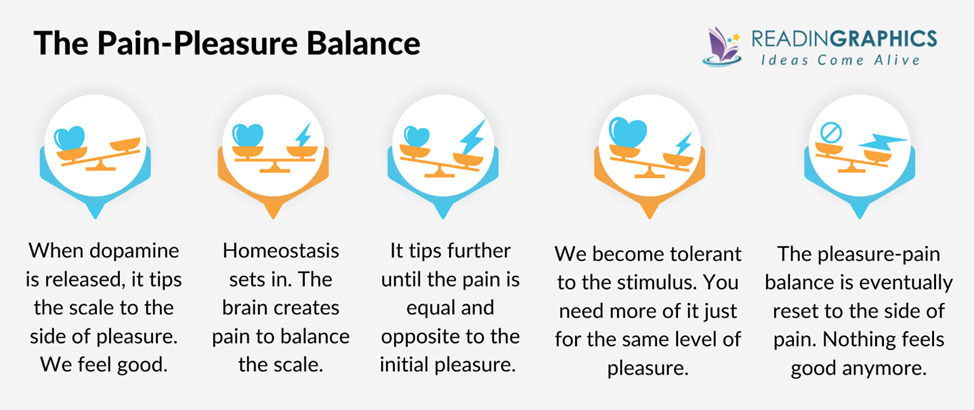
  • Dopaminergic signaling adapts: excess pleasure (e.g., from addictive substances) can reduce sensitivity, requiring more stimulus for the same effect (tolerance)
    (Leknes & Tracey, 2008).

5. Integration: Pain-Pleasure-Homeostasis Interplay

ConditionPain SystemPleasure SystemHomeostasis Impact
Acute ExerciseStimulates endorphins (mild pain)↑ Dopamine, endorphins (Fields, 2004)Improves cardiovascular balance (McEwen, 2007)
Chronic Stress↑ Cortisol, ↑ Substance P (McEwen, 2007)↓ Dopamine, serotonin (Leknes & Tracey, 2008)Disrupts sleep, digestion, immunity (Ulrich-Lai & Herman, 2009)
Meditation/Relaxation↓ SNS activation (Ulrich-Lai & Herman, 2009)↑ GABA, ↑ serotonin (McEwen, 2007)Restores ANS balance (Ulrich-Lai & Herman, 2009)
Trauma (Physical/Emotional)Activates nociception + amygdala (Leknes & Tracey, 2008)Blunts reward pathways (Fields, 2004)Dysregulated HPA axis, chronic pain (McEwen, 2007)

V. Holistic Considerations

From a holistic health perspective, balance between pain and pleasure is key to maintaining dynamic equilibrium:

  • Pain is a protective signal—meant to initiate change or healing.
  • Pleasure signals safety and reward—encouraging repeat behavior.
  • Both influence behavior, decision-making, immune function, and neuroplasticity (McEwen, 2007; Fields, 2004).

Regular practices like:

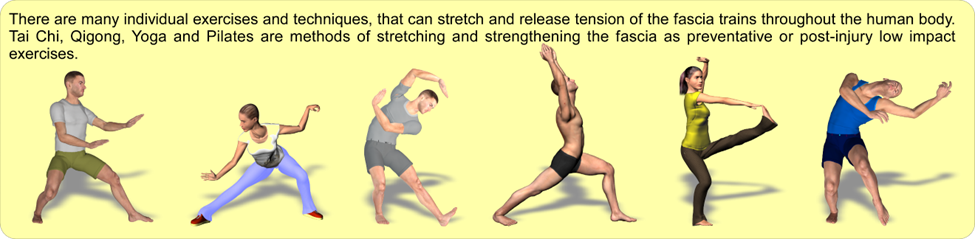
  • Tai Chi, Qigong, exercise, cold exposure, mindful eating, and social connection
    help regulate this system and enhance adaptive resilience (Ulrich-Lai & Herman, 2009).

The physiological mechanisms governing pain and pleasure are not only crucial for signaling threat or reward but also act as integral regulators of the body’s internal environment. These systems work synergistically with the hypothalamus, autonomic nervous system, and endocrine pathways to maintain homeostasis, reinforce survival behaviors, and foster adaptation. Understanding these interconnected networks opens the door to more effective holistic health interventions, such as movement, mindfulness, and social engagement, that support the body’s natural capacity to manage stress, enhance pleasure, and restore balance.

References:

Fields, H. L. (2004). State-dependent opioid control of pain. Nature Reviews Neuroscience, 5(7), 565–575. https://doi.org/10.1038/nrn1431

Leknes, S., & Tracey, I. (2008). A common neurobiology for pain and pleasure. Nature Reviews Neuroscience, 9(4), 314–320. https://doi.org/10.1038/nrn2333

McEwen, B. S. (2007). Physiology and neurobiology of stress and adaptation. Physiological Reviews, 87(3), 873–904. https://doi.org/10.1152/physrev.00041.2006

Readingraphics. (2025, July 13). Book summary – Dopamine Nation: Finding Balance in the Age of Indulgence. Readingraphics. https://readingraphics.com/book-summary-dopamine-nation/

Ulrich-Lai, Y. M., & Herman, J. P. (2009). Neural regulation of endocrine and autonomic stress responses. Nature Reviews Neuroscience, 10(6), 397–409. https://doi.org/10.1038/nrn2647

Zubieta, J. K., et al. (2005). Placebo effects mediated by endogenous opioid activity on μ-opioid receptors. Journal of Neuroscience, 25(34), 7754–7762. https://doi.org/10.1523/JNEUROSCI.0439-05.2005

When to Do and When Not to Do

A Warrior–Scholar–Sage Perspective on Discernment, Discipline, and Rest

Modern culture equates productivity with virtue. We are conditioned to believe that constant motion is synonymous with progress and that rest is a form of weakness. Yet across classical Eastern philosophy, martial traditions, and contemplative lineages, wisdom has never been measured by how much one does, but by knowing when to act and when not to act. This discernment lies at the heart of the Warrior–Scholar–Sage archetype and is expressed through the timeless triad of True, Right, and Correct.

To live well is not merely to be busy, but to be aligned. The true path is not found through endless activity, but through refined awareness and the capacity to recognize what deserves our energy and what must be released.

The Warrior: Mastery of Discipline and Restraint

The Warrior represents Right action. Not impulsive action, not reactive behavior, but action rooted in clarity, purpose, and timing. In classical martial traditions, discipline is not merely physical conditioning but cultivated judgment. The greatest warrior is not one who fights constantly, but one who knows when not to fight.

Sun Tzu reminds us that victory is achieved not by brute force, but by superior strategy and restraint:

“He will win who knows when to fight and when not to fight.”
(The Art of War; Sun Tzu, trans. Griffith, 1971)

The Warrior’s training develops self-command, or the ability to resist distraction, ego-driven urgency, and emotional reactivity. This mastery is reflected in the modern principle of the “not-to-do list,” which removes time-wasters, unnecessary meetings, and low-impact obligations that drain vitality and clarity. Just as a martial artist conserves energy for decisive moments, the modern Warrior must learn to say “no” to what is trivial in order to say “yes” to what is meaningful.

In Taoist philosophy, this principle is expressed as wu wei, or effortless action through alignment rather than force. Wu wei does not mean passivity; it means acting only when action is harmonious with circumstance (Lao Tzu, trans. Mitchell, 1988). The Warrior does not struggle against the current of life; he moves with it.

The Scholar: Clarity of Mind and Discernment of Truth

The Scholar represents True understanding. Before action, perception must come. Before movement, awareness must come. The Scholar refines cognition, attention, and reflection so that effort is guided by wisdom rather than compulsion.

In Eastern philosophy, clarity is cultivated through stillness. The Tao Te Ching teaches:

“To the mind that is still, the whole universe surrenders.”
(Lao Tzu, trans. Mitchell, 1988)

This stillness is not emptiness but receptivity. It is the mental discipline that allows one to distinguish signal from noise, value from distraction, essence from excess. The Scholar understands that perpetual stimulation fragments attention and erodes creativity. Neuroscience now confirms that insight, problem-solving, and emotional regulation depend upon cycles of focused engagement and deliberate rest (Raichle, 2015; Kaplan & Berman, 2010).

Modern productivity research echoes ancient wisdom: deep work requires boundaries. Without reflection, we confuse urgency with importance. Without rest, we confuse movement with meaning. The Scholar therefore cultivates the discipline of reflection, journaling, meditation, and contemplative study, practices that refine perception and illuminate what is true.

The Sage: Alignment with Natural Law

The Sage embodies what is Correct, not merely in a moral sense, but in accordance with natural rhythm and universal order. The Sage recognizes that life unfolds in cycles: effort and restoration, engagement and withdrawal, expansion and contraction.

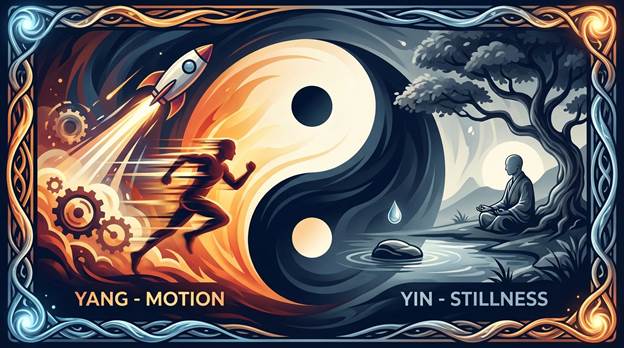
Traditional Chinese philosophy expresses this through the doctrine of yin and yang, complementary forces in perpetual transformation (Kaptchuk, 2000). Activity without rest becomes exhaustion. Rest without purpose becomes stagnation. Health, creativity, and wisdom arise from dynamic balance.

The Sage understands that overextension leads to collapse and that excessive control produces resistance. In Buddhism, this is reflected in the Middle Way, the path between indulgence and deprivation (Rahula, 1974). In Confucian ethics, it is expressed through li, proper conduct arising from situational appropriateness rather than rigid rules (Ames & Rosemont, 1998).

To the Sage, knowing when not to act is as powerful as knowing when to act. Stillness is not absence. Silence is not emptiness. Withdrawal is not retreating. These are strategic expressions of wisdom.

The Integrated Path: Living the True, Right, and Correct Life

When the Warrior, Scholar, and Sage are integrated, life becomes a practice of intelligent engagement. The individual learns to:

  • Act with discipline (Warrior — Right)
  • Perceive with clarity (Scholar — True)
  • Align with natural law (Sage — Correct)

This triadic harmony produces a life of purposeful effort rather than frantic striving. It teaches us to push forward when the moment calls for courage and endurance and to withdraw when reflection, restoration, or re-calibration is required.

The ancient sages understood what modern neuroscience now confirms: burnout is not a failure of character but a failure of rhythm. Creativity does not arise from constant stimulation but from alternating cycles of tension and release. Wisdom does not emerge from accumulation but from discernment.

To live well is not to do more. It is to do what matters and to release what does not.

The highest form of productivity is not busyness. It is alignment.

The highest form of discipline is not force. It is restraint.

And the highest form of wisdom is knowing, with clarity and courage, and when to do and when not to do.

References

Ames, R. T., & Rosemont, H. (1998). The analects of Confucius: A philosophical translation. Ballantine Books.

Griffith, S. B. (Trans.). (1971). Sun Tzu: The art of war. Oxford University Press.

Kaplan, S., & Berman, M. G. (2010). Directed attention as a common resource for executive functioning and self-regulation. Perspectives on Psychological Science, 5(1), 43–57. https://doi.org/10.1177/1745691609356784

Kaptchuk, T. J. (2000). The web that has no weaver: Understanding Chinese medicine (2nd ed.). McGraw-Hill.

Lao Tzu. (1988). Tao Te Ching (S. Mitchell, Trans.). HarperCollins.

Rahula, W. (1974). What the Buddha taught (2nd ed.). Grove Press.

Raichle, M. E. (2015). The brain’s default mode network. Annual Review of Neuroscience, 38, 433–447. https://doi.org/10.1146/annurev-neuro-071013-014030