The Threefold Way: Society, Nature, and Self in Chinese Philosophy

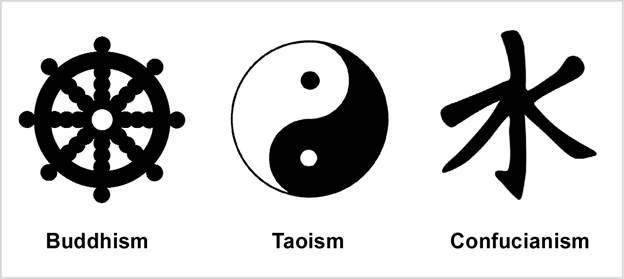
For centuries, Chinese culture has been shaped by a triad of the philosophical systems of Confucianism, Taoism, and Buddhism. Though distinct in their teachings, they are often seen as complementary threads that weave together a balanced and meaningful life. Each offers a unique focus: Confucianism emphasizes harmony in society, Taoism seeks unity with nature, and Buddhism turns inward to liberate the self from suffering (Yao, 2000).
Confucianism: The Order of Society

Founded by Confucius (Kong Fuzi) around the 5th century BCE, Confucianism centers on ethics, duty, and the cultivation of virtuous behavior within a structured society. It promotes familial piety (xiao), respect for hierarchy, and the importance of education and ritual (li) (Sontag, 1974). A Confucian life is guided by the roles of the parent, child, ruler, subject, and the fulfillment of these roles builds a just and orderly world. It teaches that virtue in leadership trickles down to the moral development of the people (Yao, 2000).

Taoism: Flowing with Nature

Rooted in the Tao Te Ching by Laozi, Taoism (or Daoism) champions spontaneity, simplicity, and harmony with the Tao, or the ineffable force that flows through all things (Laozi, trans. Mitchell, 1988). Rather than striving to control or fix the world, the Taoist seeks to align with the natural order through non-resistance (wu wei), letting go of ego, and observing the rhythms of nature. Taoism speaks to the middle-aged soul, or one who questions structure and seeks authenticity and fluidity in life (Kirkland, 2004).

Buddhism: Awakening the Inner Self

Brought to China from India around the 1st century CE, Buddhism introduced a new inwardness, emphasizing meditation, compassion, and release from suffering through the Eightfold Path (Harvey, 2013). The Buddhist focus is not on society or external alignment but on awakening. It teaches that all phenomena are impermanent, and that liberation comes not from control or flow, but from transcending attachment entirely (Mitchell, 2002). In this way, Buddhism serves the aging soul by contemplating, detaching, and seeking ultimate freedom.

Integration: A Balanced Life

In traditional Chinese thought, these three paths were not meant to compete but to complete one another. A person might live as:

  • a Confucian in the office
  • a Taoist in the garden
  • a Buddhist in solitude (Yao, 2000).

Together, they offer a map to live wisely with integrity in society, harmony in nature, and peace within the soul.

References

Sontag, F. (1974). Herbert Fingarette. Confucius—the Secular as Sacred. (Harper and Row, New York, 1972.). Religious Studies, 10(2), 245–246. https://doi.org/10.1017/s0034412500007514

Harvey, P. (2012). An introduction to Buddhism. https://doi.org/10.1017/cbo9781139050531

Taoism: the Enduring tradition. (n.d.). Routledge & CRC Press. https://www.routledge.com/Taoism-The-Enduring-Tradition/Kirkland/p/book/9780415263221?utm_source=cjaffiliates&utm_medium=affiliates&cjevent=eeb2c6c93e3c11f083ff00cf0a82b820

Mitchell, S. (1988). Tao Te Ching. In HARPERPERENNIAL MODERNCLASSICS. HARPERPERENNIAL MODERNCLASSICS. https://ia800904.us.archive.org/20/items/taoteching-Stephen-Mitchell-translation-v9deoq/taoteching-Stephen-Mitchell-translation-v9deoq_text.pdf

Mitchell, D. W. (2002). Buddhism: Introducing the Buddhist experience. Oxford University Press.

Yao, X. (2000). An introduction to confucianism. https://doi.org/10.1017/cbo9780511800887

Introducing a New Series: The Architecture of the Human Journey

In a world saturated with fragmented advice on health, fitness, and personal development, there remains a need for something more complete, structured, integrated, and grounded in both lived experience and timeless principles.

Over the course of several decades of study, practice, and teaching across the fields of holistic health, martial arts, and human development, a unifying framework has gradually taken shape. This framework does not isolate the body from the mind, nor the mind from the spirit. Instead, it recognizes that human growth unfolds through the dynamic interaction of multiple systems of physical, biological, energetic, behavioral, and philosophical.

It is from this perspective that a new six-part book series emerges:

The Architecture of the Human Journey

This series is not simply a collection of books. It is a structured exploration of what it means to develop as a human being: physically, mentally, energetically, and ethically within the realities of modern life.

Each volume builds upon the others, forming a progressive pathway toward greater awareness, resilience, and self-mastery.

Book 1: The Self-Healing Body

The journey begins with the body—not as a machine to be pushed or punished, but as a living system designed for adaptation, repair, and resilience.

The Self-Healing Body explores the foundational principles of movement, posture, breathing, and recovery. It challenges the modern tendency toward inactivity and over-reliance on external interventions, instead emphasizing the body’s innate capacity to restore balance when given the proper conditions.

Readers are guided toward a deeper understanding of how daily habits of sitting, standing, walking, breathing shape long-term health outcomes. The message is clear: the body is not broken; it is often simply underused, misused, or misunderstood.

Book 2: The Biological Mind

If the body is the foundation, the mind is the regulator.

The Biological Mind examines how thoughts, emotions, stress responses, and neurological patterns influence both behavior and physiology. Rather than viewing the mind as something abstract or separate, this book presents it as a biological system, deeply connected to the nervous system, hormones, and physical health.

Topics include stress conditioning, attention, perception, and the ways in which modern environments can dysregulate natural mental processes. Readers are encouraged to recognize how their internal dialogue and external inputs shape their lived experience.

Book 3: The Energetic Body

Beyond the physical and biological lies a more subtle, yet equally important dimension: the energetic system.

The Energetic Body draws from Traditional Chinese Medicine, Daoist practices, and internal martial arts to explore concepts such as qi, meridians, breath, and internal flow. While often overlooked in Western models, these systems have guided health and movement practices for thousands of years.

This volume bridges the gap between ancient insight and modern understanding, offering practical ways to cultivate energy through breathwork, posture, and intentional movement.

Book 4: Embodied Discipline

Knowledge without application remains incomplete.

Embodied Discipline focuses on the integration of body, mind, and energy through consistent practice. It is here that theory becomes lived experience. Discipline is reframed not as rigid control, but as the steady cultivation of habits that align with one’s values and goals.

Drawing from martial arts training, this book explores how structure, repetition, and intentional challenges build not only physical capacity, but mental clarity and emotional resilience.

Book 5: The Healthcare Paradox

Modern healthcare offers remarkable advancements, yet widespread chronic illness continues to rise.

The Healthcare Paradox examines this contradiction. It explores how systems designed to treat disease often overlook the foundational behaviors that prevent it. Nutrition, movement, stress, environment, and personal responsibility all play a role, yet are frequently underemphasized.

This book does not reject modern medicine but rather places it within a broader context. One that encourages individuals to become active participants in their own health rather than passive recipients of care.

Book 6: The Human Journey

The final volume steps back to consider the broader question: What is all of this for?

The Human Journey explores meaning, purpose, relationships, and the realities of growth over a lifetime. It integrates the lessons of the previous volumes into a larger philosophical perspective, drawing from both Eastern and Western traditions.

It recognizes that strength, clarity, and health are not ends in themselves, but tools that support a more meaningful and connected life.

A Complete Framework for Modern Living

Taken together, these six books form a cohesive system:

  • The body provides structure
  • The mind provides direction
  • The energy system provides flow
  • Discipline provides integration
  • Awareness of systems provides context
  • Meaning provides purpose

This is the architecture – not of a building, but of a life.

In a time when information is abundant, but wisdom is scattered, The Architecture of the Human Journey offers a way to reconnect the pieces. It invites readers not just to learn, but to observe, reflect, and ultimately take responsibility for their own development.

This is not a quick fix or a temporary program. It is a long-term approach to living with greater awareness, strength, and integrity.

The journey is ongoing. The architecture is yours to build.

Science, Faith, and the Nature of Miracles

Reframing the Ancient and the Modern

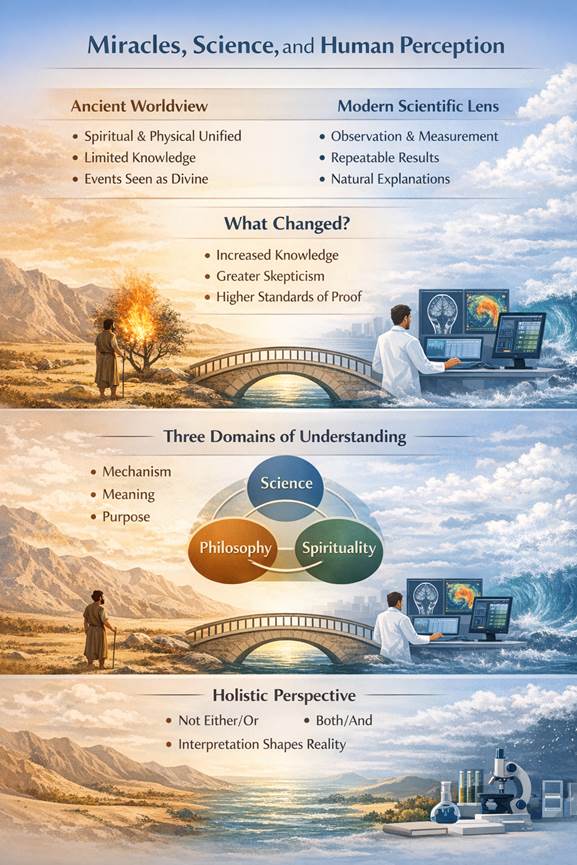
We often hear the phrase, “trust the science,” particularly in matters of health, medicine, and public policy. At the same time, billions of people across the world continue to hold religious and spiritual beliefs that include miracles, or events that appear to defy natural explanation. This creates an apparent tension: if science explains the world through observable and repeatable processes, where do miracles fit?

This question becomes even more intriguing when we consider that miraculous events, such as the resurrection of Christ, the parting of the Red Sea, or the “burning bush,” are described as miracles, where miracles were relatively common in ancient texts, yet seem absent or highly disputed in modern times. Has something changed in reality itself, or has the change occurred within human perception and interpretation?

The Scope and Limits of Science

Science is a powerful and reliable method for understanding the natural world. It is based on systematic observation, measurement, and replication (Popper, 2002). Through this process, science has explained countless phenomena once considered mysterious or divine, including disease processes, weather patterns, and neurological conditions.

However, science operates within specific boundaries:

  • It studies repeatable and observable phenomena
  • It relies on empirical evidence and falsifiability
  • It does not address one-time, unrepeatable events effectively

By definition, miracles are:

  • Singular
  • Non-repeatable
  • Often tied to subjective or spiritual meaning

Thus, science does not necessarily disprove miracles, it simply lacks the tools to evaluate them within its framework.

Ancient Interpretations of Extraordinary Events

In ancient times, the absence of scientific understanding often led to supernatural interpretations of natural events. For example:

  • Seizures or altered states may have been viewed as spiritual possession or divine encounter
  • Sudden recovery from illness may have been interpreted as miraculous healing
  • Unusual environmental events could be attributed to divine intervention

This does not imply that all ancient accounts are false, but rather that interpretation was shaped by available knowledge and cultural worldview (Ehrman, 2014).

Additionally, many ancient narratives were transmitted orally before being recorded in written form. Oral traditions often emphasize meaning, symbolism, and moral teaching, which can lead to amplification or stylization over time (Vansina, 1985).

Revisiting Biblical Miracles Through a Modern Lens

Scholars have proposed natural explanations for some biblical events:

  • The parting of the Red Sea may reflect wind-driven water displacement or tidal phenomena (Drews & Han, 2010)
  • The burning bush could represent a natural flame or symbolic narrative
  • Reports of healing may involve spontaneous remission or psychosomatic effects

The resurrection of Christ, however, remains a unique case. Interpretations vary widely:

  1. A literal supernatural event (faith-based view)
  2. Misinterpretation of death (e.g., premature burial)
  3. Visionary or psychological experiences among followers
  4. A symbolic theological narrative

From a scientific standpoint, the resurrection cannot be verified or falsified due to its historical and non-repeatable nature. It exists primarily within the domains of theology, philosophy, and historical interpretation (Licona, 2010).

Why Miracles Seem Absent Today

Several factors contribute to the perceived decline in miracles:

1. Increased Scientific Knowledge

Modern science explains many phenomena that were once mysterious. As understanding grows, fewer events are classified as supernatural.

2. Higher Standards of Evidence

Today’s claims are evaluated through:

  • Documentation
  • Video recording
  • Independent verification

Extraordinary claims now require substantial evidence (Sagan, 1996).

3. Cultural Skepticism

Modern society emphasizes critical thinking and empirical validation. Claims of miracles are often met with scrutiny or psychological interpretation.

Bridging Science and Spirituality

Rather than viewing science and faith as opposing forces, they can be understood as addressing different aspects of human experience:

  • Science explores mechanisms and processes
  • Philosophy examines meaning and reasoning
  • Spirituality engages with purpose, connection, and transcendence

For example, meditation has been shown to influence brain function and emotional regulation (Davidson & McEwen, 2012), while also producing subjective experiences of insight and transformation. Both perspectives offer valid, complementary insights.

A Holistic Interpretation of Miracles

From a holistic standpoint, miracles may be reframed as:

  • Events that lie at the edge of current understanding
  • Experiences that carry profound personal or collective meaning
  • Interpretations shaped by cultural, psychological, and spiritual frameworks

In this view, the question is not simply whether miracles are “real” or “not real,” but how humans interpret and assign meaning to extraordinary experiences.

The apparent divide between science and miracles may not reflect a change in reality, but rather a transformation in human perception. Ancient people interpreted the unknown through a spiritual lens, while modern society relies on scientific frameworks to explain the same phenomena.

Both approaches seek to understand existence, one through measurement, the other through meaning. Perhaps the most balanced perspective is not to choose between science and faith, but to recognize their respective roles. Science explains how the world works, while spirituality explores why it matters.

References

Davidson, R. J., & McEwen, B. S. (2012). Social influences on neuroplasticity: Stress and interventions to promote well-being. Nature Neuroscience, 15(5), 689–695. https://doi.org/10.1038/nn.3093

Drews, C., & Han, W. (2010). Dynamics of wind setdown at Suez and the Eastern Nile Delta. PLoS ONE, 5(8), e12481. https://doi.org/10.1371/journal.pone.0012481

Ehrman, B. D. (2014). How Jesus became God: The exaltation of a Jewish preacher from Galilee. HarperOne.

Licona, M. R. (2010). The resurrection of Jesus: A new historiographical approach. IVP Academic.

Popper, K. (2002). The logic of scientific discovery. Routledge.

Sagan, C. (1996). The demon-haunted world: Science as a candle in the dark. Ballantine Books.

Vansina, J. (1985). Oral tradition as history. University of Wisconsin Press.

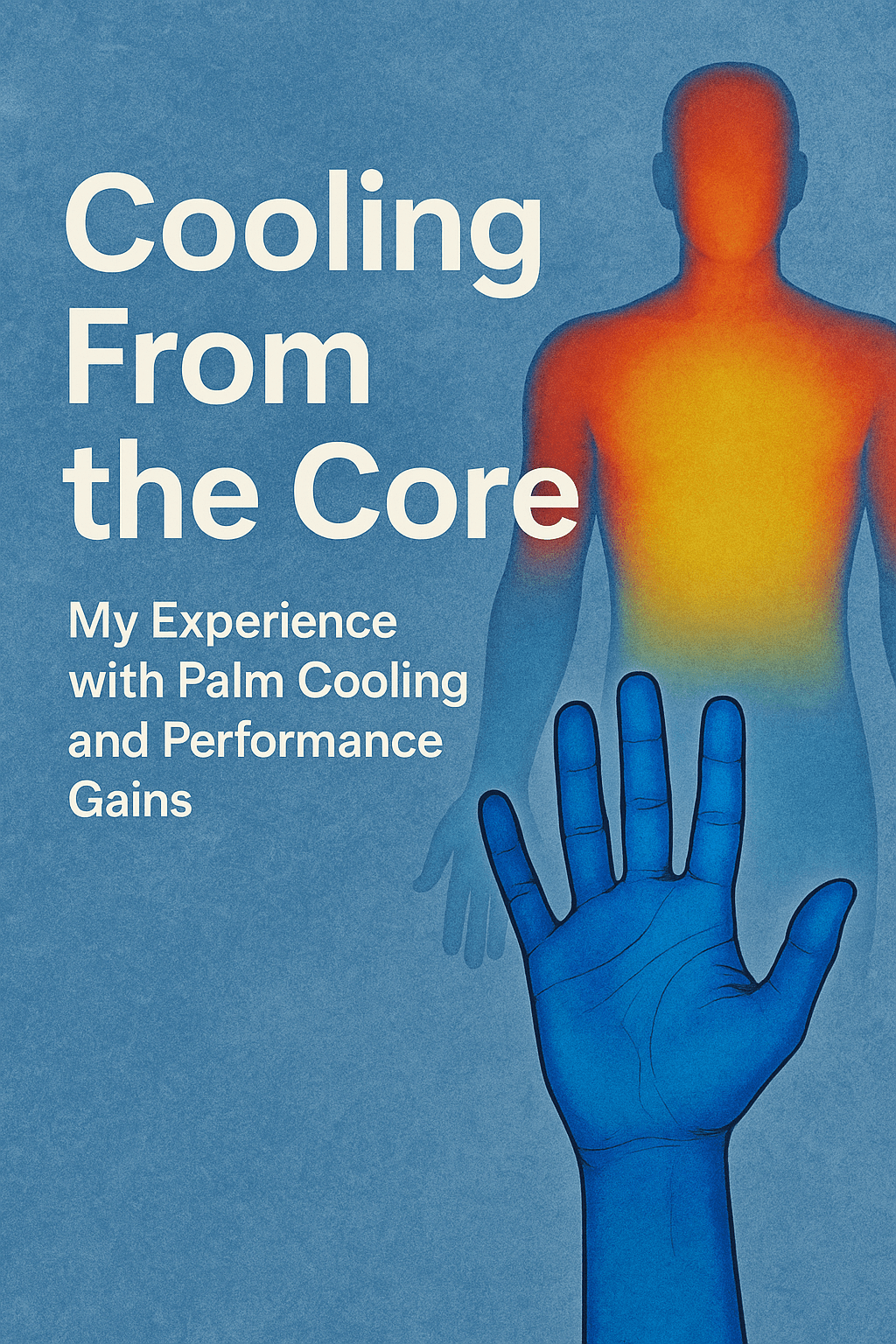
Finding the Body’s Secret Cooling Switches

When I listened to this episode of Huberman Lab Essentials, I felt like I was getting a masterclass in how our bodies really deal with heat and cold. Dr. Andrew Huberman was speaking with Dr. Craig Heler, an expert in neurobiology and ophthalmology, about cold exposure, and not just the trendy ice bath kind of talk, but the deeper science and practical ways it affects performance, physiology, and thermoregulation.

As I absorbed their discussion, I realized how much of my own thinking about cooling was based on half-truths or misleading sensations. They broke down the different physiological responses to cold showers versus ice baths, how aerobic and anaerobic exercise interact with temperature stress, and why heat buildup in muscles is often the true limiter of performance.

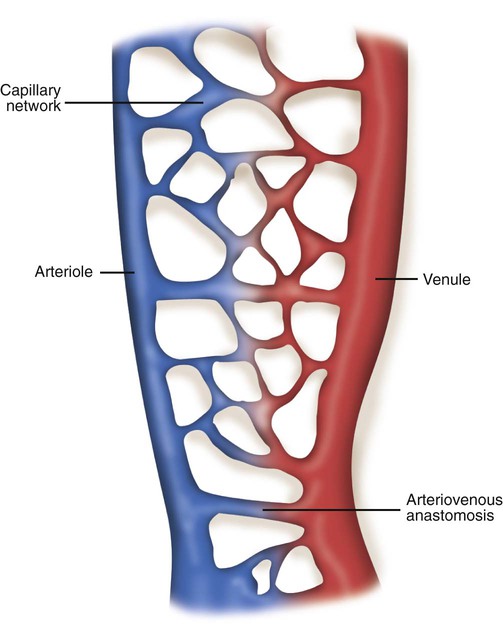
One of the biggest takeaways for me was learning about specialized heat loss portals in glabrous skin, orthe hairless areas like our palms, the soles of our feet, and our upper face. These areas have unique blood vessel shunts (arterio-venous anastomoses) that let blood bypass capillaries for rapid heat exchange. It’s an evolutionary adaptation, and when you target these portals for cooling, you can dramatically increase endurance and work capacity.

(The Cardiovascular System, 2025)

I found it fascinating and slightly frustrating, to learn that a lot of common cooling methods, like cold towels or ice packs, aren’t just less effective, they can actually work against you. They might feel good, but they can cause vasoconstriction that traps heat inside the body. Dr. Heler shared research and even pro athlete examples where palm cooling allowed people to double or triple their workout volume. I was struck by one story where an athlete’s dip count jumped from around 150 to over 300 by using this method.

What really stuck with me was the idea that muscle fatigue during anaerobic work is often due to local overheating, not just lactic acid buildup or lack of willpower. Once muscles hit around 39.5°C (103.1°F), a key enzyme for fuel supply shuts down, and the body simply won’t let you keep going. Cooling these heat loss portals between sets helps prevent that shutdown and keeps you in the game longer.

I also learned that you have to be careful not to overcool. If you make the skin too cold, you close off the very pathways you’re trying to use. The CoolMitt technology they discussed solves this by cooling palms to the optimal temperature. Cool enough to pull heat quickly, but not so cold that it causes vasoconstriction. About three minutes of cooling hits the sweet spot before diminishing returns set in.

What’s surprising is how much faster these glabrous skin areas can cool the body compared to the usual medical focus points like the armpits or groin. Cooling the palms, soles, and face can work about twice as fast, which makes me think medical protocols for heat stroke and athletic recovery might need to be revisited or updated.

Beyond the sports and martial arts communties, I see the potential for this science in the military, for outdoor workers, or anyone dealing with extreme heat. Even without specialized gear, Dr. Heler suggested experimenting with cold packs or frozen items on the palms during rest intervals.

One subtle but important insight was that cooling the head or neck might make you feel cooler but doesn’t necessarily lower your core temperature. That psychological trick can be dangerous if it leads you to push harder while your body is still overheating.

For me, this episode was a clear reminder of how much performance and safety comes down to understanding the body’s systems rather than relying on what feels good in the moment. Knowing that muscle temperature, glabrous skin cooling, and careful avoidance of overcooling can be the difference between fatigue and peak performance has given me a whole new set of tools to experiment with.

In the end, I learned both practical strategies and a deeper appreciation for the science. Cooling the right places, in the right way, can change the game not just for athletes, but for anyone who wants to perform at their best in challenging environments.

References:

Andrew Huberman. (2025, August 7). Essentials: Increase Strength & Endurance with Cooling Protocols | Dr. Craig Heller [Video]. YouTube. https://www.youtube.com/watch?v=aZklQpFa2kE

The cardiovascular system. (2025, April 22). Clinical Gate. https://clinicalgate.com/the-cardiovascular-system-6/

Energy Flow Within the Body

Energy Flow as Organ-to-Organ Transmission: Traditional Chinese Medicine (TCM) teaches that energy or “Qi” flows through the body in interconnected organ-to-organ patterns rather than simply circulating from the heart through the bloodstream. This insight reframes how we understand health and movement, emphasizing harmony and balance over mere exertion. This nuanced insight shifts the understanding of physical health from a single focal point to an interconnected system, encouraging movements designed to stimulate this flow comprehensively. This has profound implications for exercise design, rehabilitation, and even stress management, as it integrates bodily systems rather than isolating them.

Asymmetry Designed for Functionality: Unlike common exercise patterns that often emphasize symmetrical movement for balance, the asymmetrical nature of these movements mimics biological energy pathways and ensures each part of the body receives appropriate stimulation and energy transfer. This ergonomic approach enhances efficiency and may reduce the chance of injury or overuse affecting one side more than the other.

Breath Control and Relaxation Enable Deeper Energy Work: The synchronized breathing with physical movements, breathing in through the nose, out through the nose or mouth, and coordinating the tongue’s position, helps extend breath hold times, deepen relaxation, and conserve energy. The concept that tension reduces breath-holding capacity underscores the importance of mental calmness in physical performance and recovery, highlighting a mind-body connection often overlooked in Western fitness paradigms.

Joint Mobility and Energy Flow are Interlinked: The closing set’s focus on gently bending and releasing the major joints (shoulders, elbows, wrists, hips, knees, ankles) points to the joints as critical nodes for energy flow, not merely as mechanical hinges. This combined physical and energetic approach maintains joint flexibility and promotes a harmonious rhythm throughout the body, potentially preventing stiffness, spasms, and cramping after exercise.

Energy ‘Bank Account’ Metaphor Offers Sustainable Health Insight: By likening the body’s core energy center to a bank account, the practice teaches the value of replenishing energy rather than depleting it exclusively by movement. This metaphor aligns with modern concepts of energy management, self-care, and sustainability, emphasizing rest and recovery as essential for long-term health benefits, key for athletes, seniors, and anyone seeking balanced vitality.

Cultural Philosophy Enriches Physical Practice: The inclusion of the “Bagua,” concept of the figure 8 symbol, at the end of the session introduces a philosophical dimension, uniting physical movement with symbolic meaning. This connection elevates the practice beyond exercise, fostering a deeper sense of continuity, timelessness, and community among participants. It also implies that practice is not just a physical routine but a lifelong commitment to health and awareness.

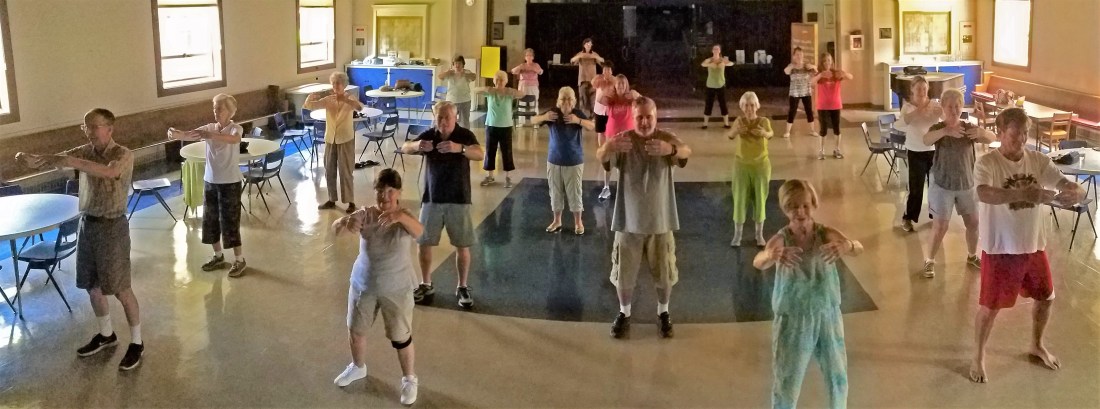
Longevity and Community Consistency Demonstrate Effectiveness: The fact that this class has been ongoing since 1997 illustrates the adaptability and effectiveness of these principles, as well as the strong community bonds formed among practitioners. The longevity also suggests that such practices can be sustainable and valuable throughout the decades, accommodating newcomers while preserving foundational wisdom. This longevity is a testament to the alignment of tradition with evolving modern health needs.

The video discusses a holistic approach to energy flow in the body, rooted in traditional Chinese medicine and similar philosophies. Unlike typical Western exercise which focuses primarily on cardiovascular activity and the heart, the practice highlighted here emphasizes the flow of energy through a sequence of organs and body parts, following natural patterns rather than symmetrical movements. This method promotes balanced and harmonious movement of energy and blood circulation throughout the body, providing greater overall health benefits.

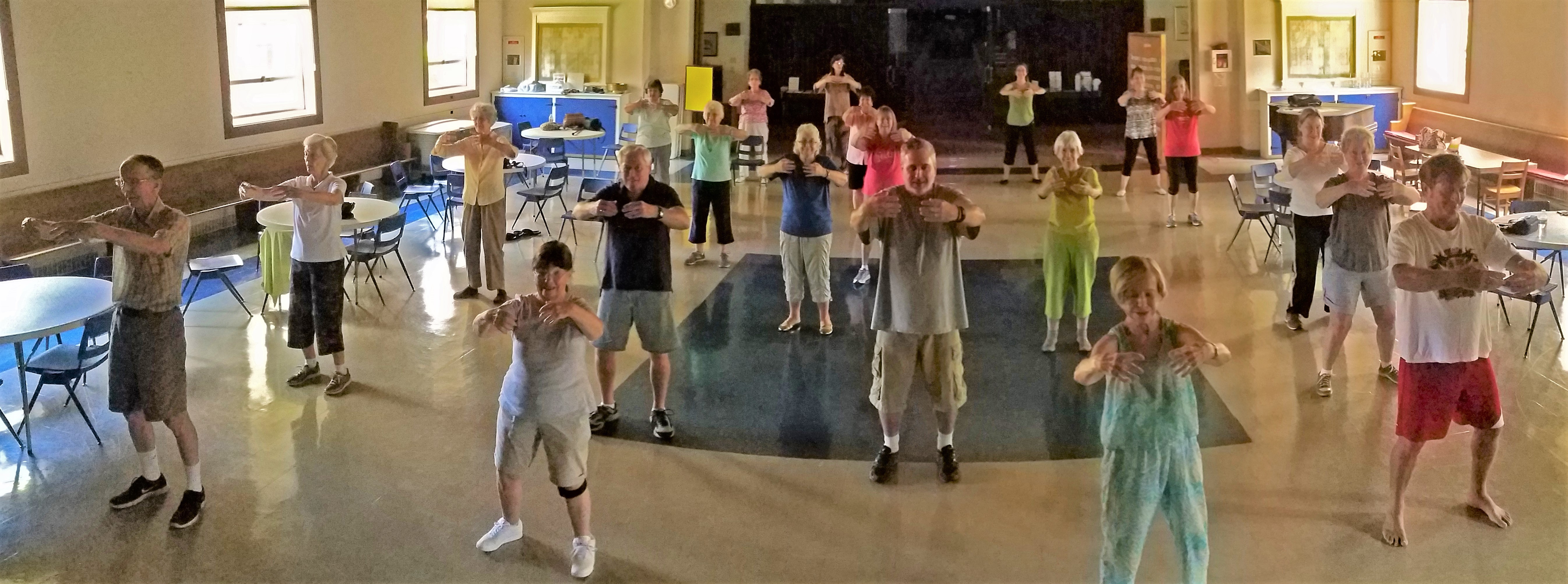
I guided participants through a closing set of movements designed to relax the major joints of the shoulders, elbows, wrists, hips, knees, ankles, while synchronizing breathing with mindful body awareness. This gradual cool-down process helps prevent muscle cramps and spasms common after mild or intense physical activity by gently bringing energy back to the body’s core “battery” or “bank account.” The collective movement and breath control encourage relaxation and prolonged breath holding through deliberate tension and release.

This holistic system blends ancient philosophy, breath work, energy theory, and joint mobility into one integrated practice. Rather than isolating fitness goals, it cultivates harmony between body and mind, reflecting the essence of Traditional Chinese Medicine: balanced energy, sustained vitality, and conscious movement.