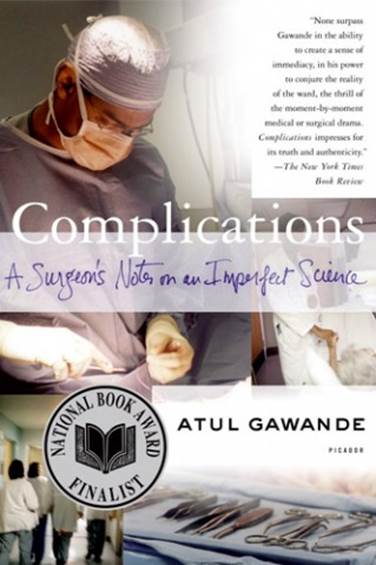
In Complications, surgeon-writer Atul Gawande draws on his own experiences during general-surgery residency to explore the complex realities, ethical dilemmas, and human fallibility in modern medicine. The book is organized into three broad parts of Fallibility, Mystery, and Uncertainty, each of which interrogates how medicine is practiced, how doctors learn, and how patients and physicians navigate risk, error, and the limits of knowledge (Gawande, 2002; Pai, 2002). Gawande does not aim to indict the profession so much as to bring forth its human dimension: that surgery and medicine are “imperfect science”.
Part 1: Fallibility
The first section focuses on how doctors and especially surgeons in training must contend with mistakes, learning on the job, and the expectation of perfection.
- In “Education of a Knife,” Gawande recounts his own nervousness as a new resident asked to make the first incision. He reflects on how surgical education demands real patients, which inherently means novices will perform procedures with less experience. He observes the tension between patient expectation (that the doctor knows what they are doing) and the reality (that medicine is a craft learned by doing) (Gawande, 2002).
- In subsequent essays (“When Doctors Make Mistakes,” “Nine Thousand Surgeons,” and “When Good Doctors Go Bad”), he discusses how errors occur not only from gross negligence, but from judgment calls, incomplete information, and institutional culture. He argues that the common view of medical error (a “bad doctor” ruling) is too simplistic; rather, human fallibility and systemic vulnerabilities matter (Gawande, 2002).
- Gawande also addresses the pressure on surgeons to perform flawlessly, and how the operating-room environment can reinforce denial of error. By bringing candid narrative of his own missteps, he humanizes the profession and encourages transparency (Barksdale, 2012).
Key insights
- No matter how skilled, physicians are subject to error.
- Training requires novices; the system must reconcile patient safety and physician learning.
- A culture of concealment around mistakes undercuts improvement; openness fosters learning.
Part 2: Mystery
The second section examines the unknowns and uncertainties inherent in medical practice, where cases defy standard diagnosis, where pathophysiology remains unclear, or where intuitive judgment must fill in scientific gaps.
- Examples include “The Pain Perplex” (on chronic pain whose causes elude clear biomedical models), “The Man Who Couldn’t Stop Eating” (on gastric-bypass patients for whom the appetite system seems dysregulated), and “Blushing” (on the phenomenon of extreme blushing and its psychosocial dimension) (Cheng, 2020).
- Gawande uses these cases to argue that medicine often deals in probabilities, not certainties, and that physicians must sometimes act when the science is partial. He shows how rare conditions or atypical presentations challenge protocols and demand humility (Gawande, 2002).
- These stories reveal the interface between biology, psychology, and social context and how patient experience cannot always be reduced to textbook categories.
Key insights
- Many medical problems reside in the “gray zone” of neither fully knowable nor entirely random.
- Physicians sometimes must combine scientific knowledge, intuition, and ethical judgment.
- Acknowledging mystery undermines over-confidence and fosters more honest communication with patients.
Part 3: Uncertainty
The final section confronts the fact that medical decisions are often made under conditions of incomplete information, conflicting values, and moral complexity.
- In “Whose Body Is It, Anyway?” Gawande explores patient autonomy versus physician authority. One case he recounts concerns a terminal patient who initially refuses ventilatory support but later opts for a risky surgery to save a leg, raising questions of consistency, hope, and decision-making in the face of uncertain outcomes (Gawande, 2002) (Barksdale, 2012).
- In “Final Cut” and “The Case of the Red Leg,” he addresses misdiagnosis, autopsy revelations, and rare life-threatening infections such as necrotizing fasciitis. These chapters illustrate how even with modern medicine, physicians cannot guarantee success—and must make decisions under risk (Gawande, 2002).
- Gawande argues that medicine’s truths are provisional; that the model of doctor-as-all-knowing is outdated; and that a better stance is one of “responsible humility” — acknowledging what we don’t know, what we can’t control, and the importance of judgment (Pai, 2002)
Key insights
- Decision-making in medicine is inherently uncertain, involving risks, trade-offs, and patient values.
- The idea of perfect, error-free medicine is unrealistic; systems and culture must adapt to this reality.
- Ethical practice includes admitting uncertainty and involving patients as partners in care.
Overarching Themes and Implications
Complications presents several interconnected themes:
- Human fallibility: Surgeons and doctors are not infallible; training, fatigue, bias, and system constraints matter.
- Limits of science: Despite advances, much remains unknown; patients and practitioners contend with ambiguity.
- Ethics of practice: Questions of responsibility, autonomy, informed consent, and risk are central.
- Learning and improvement: By telling personal stories of error and near-miss, Gawande suggests that the path to progress lies in transparency, reflection, and system redesign (Gawande, 2002; Pai, 2002).
- Culture and the operating room: Developing a culture that acknowledges uncertainty, supports learning and avoids punitive reactions to mistakes can improve outcomes.
For practitioners, educators, and patients alike, the book calls for a more realistic, humble approach to medicine, one that recognizes the art as well as the science of healing; that welcomes patient involvement; and that strives for excellence while accepting imperfection.

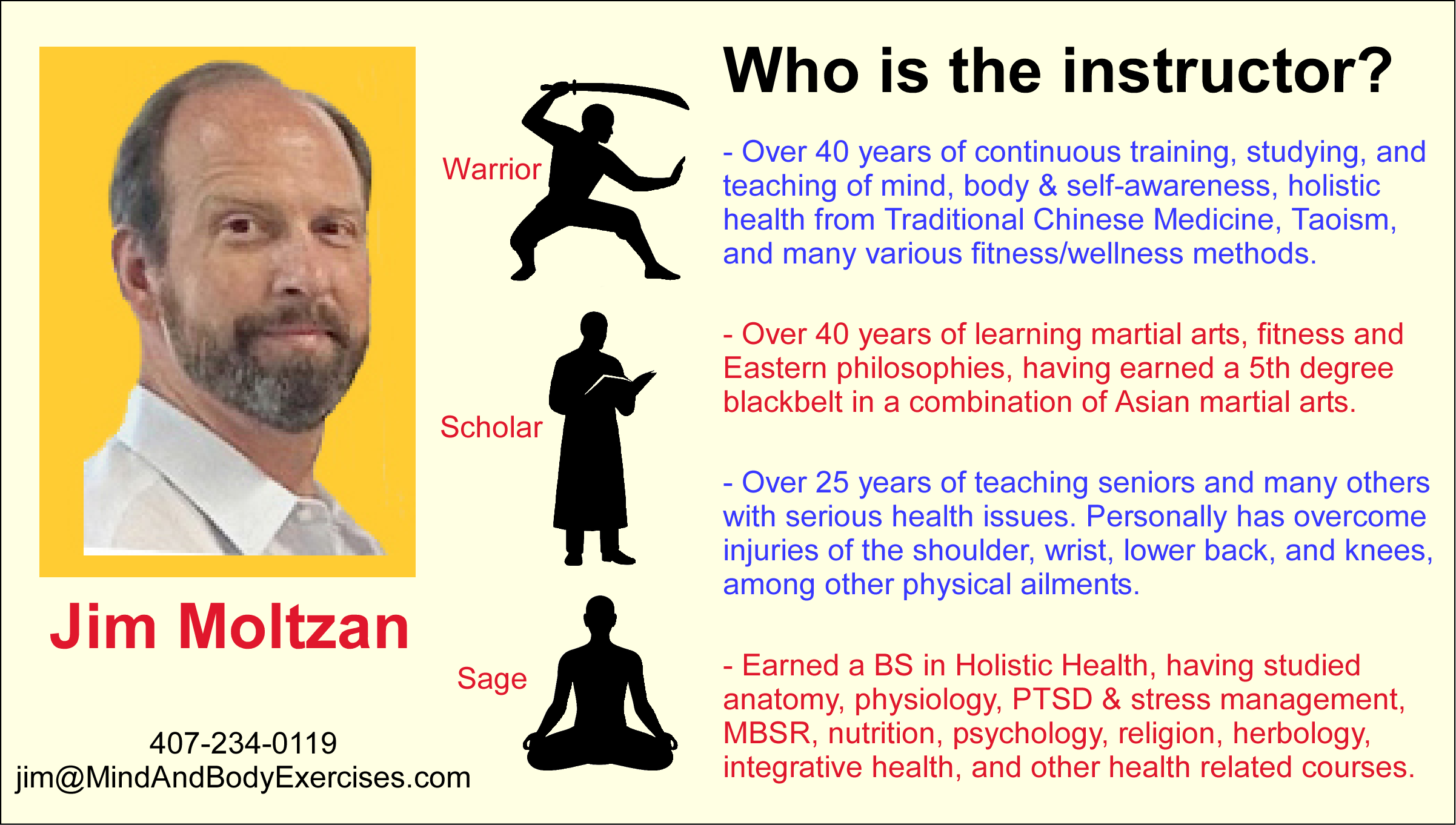
Given my interests in holistic health, martial arts philosophy, and human development, Complications offers a compelling parallel: just as spiritual/physical cultivation acknowledges the imperfect nature of the self and embraces ongoing growth, so does medicine recognize its own imperfection and the value of lifelong learning. The humility, ethical awareness, and systems-level thinking in Gawande’s work aligns with my theme of the warrior-scholar-sage development, where mastery is a process, not a destination.
Complications underscores points such as:
- The importance of humility in teaching (just as young surgeons must learn).
- The value of acknowledging uncertainty rather than pretending to have control (a common theme in martial arts/spiritual cultivation).
- The ethics of teacher-student relationships, of living systems rather than mechanistic models.
- The role of narrative and case-study as a teaching tool (paralleling martial arts story, lineage, and real-life struggles).
Complications: A Surgeon’s Notes on an Imperfect Science is a thoughtful, well-written exploration of what happens when doctors confront the limits of knowledge, the inevitability of error, and the moral weight of care. Gawande invites readers whether they are patients, or practitioners, to drop the myth of infallibility and embrace the complicated, demanding nature of medicine with integrity, reflection, and compassion. In doing so, he offers a model of professional and ethical maturity that resonates far beyond surgery.
References:
Barksdale, A. (2012, February 9). Book Review: Complications by Atul Gawande – Flat Hat News. Flat Hat News. https://flathatnews.com/2008/12/01/book-review-complications-atul-gawande/?utm_source=chatgpt.com
Cheng, A. (2020, November 20). Complications Book Summary, by Atul Gawande – Allen Cheng. Allen Cheng. https://www.allencheng.com/complications-book-summary-atul-gawande/?utm_source=chatgpt.com.
Gawande, A. (2002). Complications: A surgeon’s notes on an imperfect science. Henry Holt & Co.
Pai S. A. (2002). Complications: A Surgeon’s Notes on an Imperfect Science. BMJ : British Medical Journal, 325(7365), 663.