The Rules for Being Human

These ‘Life-Rules’ by Cherie Carter-Scott, from her book, “If Life is a Game, These are the Rules”.  When you were born, you didn’t come with an owner’s manual; these guidelines make life work better.

1. You will receive a body. You may like it or hate it, but it’s the only thing you are sure to keep for the rest of your life.

2. You will learn lessons. You are enrolled in a full-time informal school called “Life on Planet Earth”. Every person or incident is the Universal Teacher.

3. There are no mistakes, only lessons. Growth is a process of experimentation. “Failures” are as much a part of the process as “success.”

4. A lesson is repeated until learned. It is presented to you in various forms until you learn it — then you can go on to the next lesson.

5. If you don’t learn easy lessons, they get harder. External problems are a precise reflection of your internal state. When you clear inner obstructions, your outside world changes. Pain is how the universe gets your attention.

6. You will know you’ve learned a lesson when your actions change. Wisdom is practice. A little of something is better than a lot of nothing.

7. “There” is no better than “here”. When your “there” becomes a “here” you will simply obtain another “there” that again looks better than “here.”

8. Others are only mirrors of you. You cannot love or hate something about another unless it reflects something you love or hate in yourself.

9. Your life is up to you. Life provides the canvas; you do the painting. Take charge of your life — or someone else will.

10. You always get what you want. Your subconscious rightfully determines what energies, experiences, and people you attract — therefore, the only foolproof way to know what you want is to see what you have. There are no victims, only students.

11. There is no right or wrong, but there are consequences. Moralizing doesn’t help. Judgments only hold the patterns in place. Just do your best.

12. Your answers lie inside you. Children need guidance from others; as we mature, we trust our hearts, where the Laws of Spirit are written. You know more than you have heard or read or been told. All you need to do is to look, listen, and trust.

13. You will forget all this.

14. You can remember any time you wish.(From the book “If Life is a Game, These are the Rules” by Cherie Carter-Scott)

________________

I am currently offering wellness lectures and tai chi/fitness classes for group, small group & private instruction in Wekiva, Longwood and Winter Park.

Mind and Body Exercises on Google: https://posts.gle/aD47Qo
Jim Moltzan
407-234-0119
www.MindAndBodyExercises.com
www.Amazon.com/author/jimmoltzan

True, Right, and Correct

I have engaged in quite a few discussions regarding “truth” with others over my years. I have learned from my observations and in particular that “kind words are seldom true; true words are seldom kind”. True words can be uncomfortable or even painful for the speaker as well as the recipient. But like you stated, being a desirable dinner guest might not be your goal.

I was taught from my experiences within martial arts and its background in Taoism, Buddhism and Confucianism, the concept of balancing true, right and correct. We often find ourselves trying to balance ourselves between what is true, right or correct for any given situation and particular circumstances for any specific time and place. What was true yesterday may not be today. What is appropriate in one setting, may not be for another. If we tell the truth to a young child about birth, murder, drugs and other complex subjects, before their understanding is appropriate, it may cause damage to their perspectives for years to come. However, if we do what we feel is right and maybe shield them from reality, this too may cause potential issues down the road. Correct, however is the balance we seek to find between true and right. So in other words, I do not think truth is totally absolute and appropriate for all situations.

Wisdom is a recipe of knowledge and experience obtained over time (age) allowing one to differentiate when is the correct timing to react or not to react. When to do, when not to do. Coming up to a stop sign, you really don’t care to stop your vehicle (your true feeling) but you do because it is the right action (the law) to stop. If a blaring fire engine were to suddenly appear in your rear view mirror, you might choose to move through the intersection and to a space clear of the oncoming 370,000 pounds of moving metal and water (correct action for this situation).

_________

Learn how to maintain health, fitness and wellness with tai chi, gigong and other time-proven methods. Private, small or group instruction.

Take care of yourself because no one else should care more about you than you. Eat better, move more, stress less, be nicer. Be well!

Jim Moltzan 407-234-0119

www.MindAndBodyExercises.com

http://www.Amazon.com/author/jimmoltzan

https://www.facebook.comMindAndBodyExercises

https://www.youtube.com/c/MindandBodyExercises

https://mindandbodyexercises.wordpress.com/

Masters Council

Shad Darshans – Philosophies From Ayurveda

Sankhya is one of the six Shad Darshans in Indian philosophy which seeks to understand the Truth of life. Sankhya, comes from “san” meaning truth and “khya” meaning to realize. Sankhya is also a Sanskrit word meaning enumeration.The founder of this philosophy was Kapila, an enlightened rishis or seer. Samkhya is composed of a consistent dualism between Prakruti (matter) and Purusha (pure consciousness). Prakruti is responsible for creation of all manifestation of form and diversity within the Universe. Whereas Purusha is the witness to this creation. Prakruti (matter) cannot exist without Purusha (pure consciousness), but conversely there can be Purusha without Prakruti. Obtaining Right knowledge allows one to distinguish between Purusha from Prakruti. Furthermore, Sankhya is comprised of 24 principles that evolve out of each other, that are thought to have brought about other aspects of the Universe. These categories begin to breakdown further into another branch of the Tamas, where the 5 elements of ether, air, fire, water, and earth manifest into being. From another branch known as Sattva, the Five Sense Faculties and Five Faculties of Action come into existence (Lad, 2001).

These balances can be seen as somewhat similar to Taoist Cosmology where the balance of Yin and Yang manifested from the Wuji to create the Dao or Tao (loosely translated as “the way”), which also has theories and beliefs regarding the origin of the universe.

Mimamsa is another of the six Shad Darhan from Indian philosophy and incorporated within Ayureveda. The philosopher Jaimini is known to be the founder of Mimamsa, whose meaning is to thoroughly understand the truth. God is seen in the here and now as a universal being, that is reflected in nature as well as in every human. In order to truly know and understand oneself, one needs to know God.

Mimamsa focuses on the teaching of the Vedas which are the most ancient Hindu scriptures. Mimamsa is further divided into Purva Mimamsa and Uttara Mimamsa. Purva Mimamsa focuses upon the initial teachings within the Vedas pertaining to rituals and actions. Uttara Mimamsa focuses on the higher teachings of the Vedanta. Mimamsa believes that there are many deities that each have significant blessings to benefit mankind.

Another aspect of Mimamsa is Dharma, where one strives to achieve spiritual freedom through the performance of duty. Dharma teaches of a path for people to conduct and live their lives with purpose. Teachings include ceremonies, rituals and fasting. Ayurveda draws upon Mimamsa for healing purposes using rituals such as burning incense and candles, flower offerings and sprinkling of holy water, all which are thought to have healing powers (Lad, 2002).

I can relate very much to this concept of Dharma. Through my years of learning qigong, Chinese and Korean martial arts, we were taught to strive to live a path of self-discipline to manage health as well as our moral compass. Part of our martial arts Dharma was to learn and apply as much of the philosophy as possible to ourselves, with the eventual goal of teaching and helping others to do the same. Teaching of others is regarded as a very high level of self-sacrifice of time, effort, energy and thought, which earns good karma (spiritual credit or debt). Learn so that you earn.

I am now realizing that many of these philosophies did not originate from just these practices of martial arts or qigong alone, or even from yoga but often having a deeper root in the Indian Shad Darshans.

References:

Lad, V. (2001). Textbook of Ayurveda, Vol. 1: Fundamental Principles of Ayurveda (1st ed., Vol. 1). Ayurvedic Press.

_______________

For more info, contact Jim Moltzan at info@mindandbodyexercises.com, 407-234-0119 or through my site at http://www.mindandbodyexercises.com

www.MindAndBodyExercises.com

http://www.Amazon.com/author/jimmoltzan

https://www.facebook.com/MindAndBodyExercises/

https://www.youtube.com/c/MindandBodyExercises

Basic Concepts of Ayurveda

Ayurveda, meaning the “knowledge of life”, has been practiced for over 3000 years. Perhaps modern society and culture can learn something about health and wellness from the ancients. Many of the basic concepts deal with balance of one’s mind, body and spirit in relation to an individual’s specific constitution. Just because something is considered healthy for one, doesn’t necessarily mean it is healthy for all. Open your mind to other perspectives that maybe there exist other options beyond pharmaceuticals, surgery and other invasive healthcare protocols.

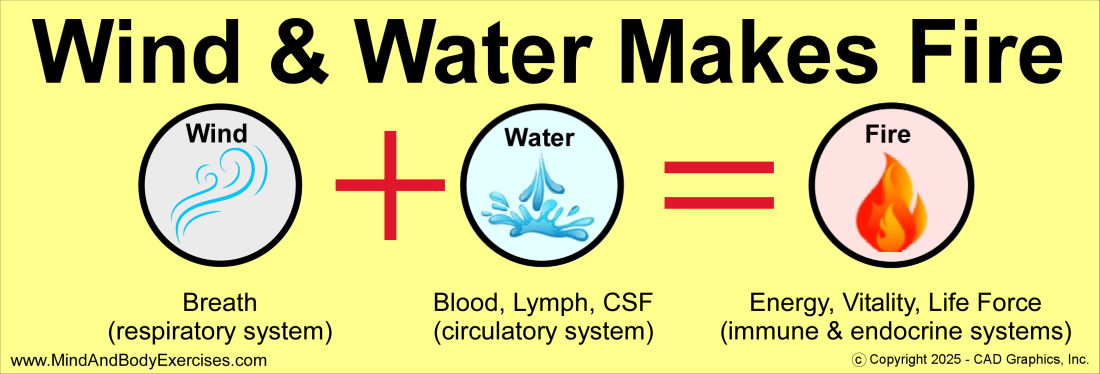
The 5 elements of ether, air, fire, water, earth manifesting from a state of nothingness consciousness or avyakta, to produce the universe and consequently establishing the basic principles behind Ayurveda science. The ancient rishis (sages or seers) believe that each element has its own unique properties, but maybe more important is the inner relationships of harmony that exist within each. The 5 elements consist of:

  • Ether – came about from the subtle vibration o the soundless sound of Aum
  • Air – came about from the ether moving
  • Fire – the movement of air produced friction to generate heat producing fire
  • Water – came about from the heat of fire dissolving elements to produce water
  • Earth – water solidified to form the molecules of earth

Each of the elements have corresponding traits or features such as senses, actions, organs and tastes, that again are unique to that element.

From the 5 elements, the Tridoshas or body type constitutions of Vata, Pitta and Kapha are manifested. Dosha means “impurity” or “mistake” but in this context refer more to organization of psychophysiological responses and physical changes within the human body. Each Dosha are comprised of all 5 of the elements and have interrelationships. However, two elements are dominant in each. The three Doshas and their elemental relationships are:

  • Vata is associated with air and ether
  • Pitta is associated with fire and water
  • Kapha is water and earth

Within Ayurveda therapeutics, pharmacology and food preparation are 20 attributes or “Gunas” such as Guru (heavy), Laghu,(light), Shita (cold), Ushna (hot), etc. Ayurveda philosophy uses these 20 attributes as a therapeutic guide or diagnostic tool, in order to evaluate which quality is out of harmony within Vata, Pitta, or Kapha. These gunas are further categorized into 10 opposite pairs.

There are also various states within the combinations of Doshas, as no one is just comprised of one Dosha, but rather a balance of proportions of the three. This is referred to as one’s Prakruti, or the psychophysical makeup as well as functional habits of an individual. There are four categories that describe Prakruti:

  • Janma Prakruti – also referred to as Karma Prakruti, is genetic so it does not change until the end.
  • Deha Prakruti – can change by way of the actions of the mother’s lifestyle, diet, and environment. It is the current Prakruti.
  • Dosha Prakruti – represents the ratio of each Dosha at the time of birth.
  • Manas Prakruti.- defines the mental constitution and is subject to change. Manas Prakruti is further described in the three Gunas of sattva, rajas and tamas.

Manas Prakruti further breaks down and described in terms of the three gunas of sattva, rajas, and tamas where:

  • Sattva – expresses qualities of the mind such as alertness, love, clarity, compassion, attentiveness
  • Rajas – expresses qualities of selfishness, restlessness, and self-centeredness
  • Tamas – qualities expressed are gloominess, sadness, dullness, laziness

The 3 Doshas can each be further elaborated upon to determine a more concise profile or constitution of the individual. All Doshas have personality and physical traits that can be perceived as positive as well as negative.

Vata comes from the Sanskrit word of “vah” with the meaning of carrying or moving. Vata reflects mobility that regulates bodily activities such as movement of food through the body and thoughts over a particular time. Vata is the commander of our life force or prana. When the vata exits the body, physical life ends. Vata individuals are often alert, quick to act and easily excited. There are many other attributes that can define the vata individual, but this is a very basic and general description.

Pitta comes from the Sanskrit word “tap” meaning heat and represents the fire element within the body. Pitta plays a role in metabolism, digestion, and body temperature. The Pitta individual has a strong capacity to concentrate, learn and understand. Consequently, they become very disciplined and great leaders.

Kapha’s meaning comes from the Sanskrit words of ka (water) and pha (flourish) or that which is flourished by water. Kapha’s elements are water and earth, composing the cells, tissues and organs of the human body. A Kapha type individual harbors a deep and stable faith, a calm and steady mind. This strong constitution possesses strength, love, knowledge, and longevity.

This is just a basic overview of some of the many aspects of Ayurveda philosophy.

References:

Lad,. (2001). Textbook of Ayurveda, Vol. 1: Fundamental Principles of Ayurveda (1st ed., Vol. 1). Ayurvedic Press.

_______________

Qigong, tai chi, baguazhang, and yoga are not the only methods that can be used within this formula but have proven the test of time as methods to cultivate harmony of the mind, body and spirit. These exercise practices offer a wide spectrum of physical wellness benefits, stress relief as well as means of self-awareness.  Not all teachers nor students practice these for the same goals.

I am currently offering wellness lectures and classes for group, small group & private instruction in Wekiva, Longwood and Winter Park.

For more info, contact Jim Moltzan at info@mindandbodyexercises.com, 407-234-0119 or through my site at http://www.mindandbodyexercises.com

http://www.Amazon.com/author/jimmoltzan

We are the Architects of our own Health or Illness, Destiny or Fate

Perception & Physiology

All of our senses are a pathway into our inner pharmacy where tonic thoughts produce tonic chemicals, and toxic thoughts produce toxic chemicals. Stress and negative emotions help produce cortisol, nor-epinephrine and epinephrine. Relaxation and serenity help to produce dopamine, oxytocin, serotonin and endorphins.

We truly are the architect of our own healing and destiny, where our perspectives and beliefs can shift our own biology and physiology.

Our consciousness is an interpretation of the information that our senses obtain from our immediate internal and external environment.

Our cells adjust their biology from the chemical messengers produced within our body and circulated throughout our blood chemistry.

Most people actually have the ability to change the perception of their own environment, thereby adjusting the functions of the cells.

We need not be the victims of our heredity as we change our perception, change our environment and thereby control our genetic activity. We can become the master of our genetic activities.

Our health can be viewed as something that we can regulate through the choices we make in our lives.

What we think, what we feel, what we believe and the emotions we choose to respond with, all affect immunoglobulin A (IGA) in the blood. IGA is the primary defense against bacteria and viruses. circulated in our blood chemistry and affecting relative organ functions.

American society has been indoctrinated to believe that Western, conventional or allopathic medical doctors know best for everyone’s health and well-being, and the patient should not question this. Pharmaceuticals, surgery and convenience are major components to their healthcare.

Many people have little knowledge of what naturopaphy, chiropractic, osteopathy, homeopathy, Ayurveda, Traditional Chinese medicine and others being legitimate healthcare modalities. Western doctors often will not even acknowledge other modalities beyond being placebos, let alone recommend them for a patient’s specific individual needs. Ironically, the US allopathic healthcare system also relies substantially on the patient’s potential belief in medicine improving their ailment. Factors such as trust in the doctor prescribing the medication, specific details regarding the medicine, like its brand, color, price, name, and place of origin can all affect this perception that medical pharmaceuticals can fix all or many ailments. If placebos can be accepted as a major part of the healing process, more people will be able to take control and accountability of their own well-being. Maybe it truly is “all in our heads”.

Hope & Gratitude

People can resist the unfounded fears in their lives. Our bodies know how to be healthy, but our fear affects our body’s ability to heal itself.

Our lives are as beautiful or terrible as we choose to perceive them.  We have as much or as little opportunity as we choose to pursue.

We can choose to see what an amazing gift it is to be alive. We can choose to focus on love in our lives, of our family and other loved ones. We can choose to be grateful for what we have, and often for what we don’t have.

The human body is brilliantly designed to perform seemingly miraculous events of self-regulation and self-healing.

Regardless of how severe or long someone has been ill, there is a hope that they are capable of some level of healing. Many with much less hope or resources, have achieved much more than those with deep pockets, power and celebrity.

We Are Not Our Thoughts

The mind is composed of two independent entities, being the conscious and the subconscious minds.

The subconscious mind is the default autopilot program, which is where we operate most often throughout our waking hours. This is where we execute mundane tasks, seemingly without much thought or effort. The subconscious mind comes primarily from absorbing other people’s behavior and actions.

The conscious mind is the engaged, thinking and creative mind. It is in this state of mind that we can become aware as the observer of our thoughts.

Understand how our mind works, in that it is actually our own consciousness that directs our thoughts and emotions. Once we realize this, we are empowered to become the director of our actions with unlimited potential.

Healthcare modalities of Ayurveda and Traditional Chinese Medicine recognize disease as occurring in patterns, cycles or stages. The idea that an individual just becomes ill one day, is hard to acknowledge when obvious patterns in lifestyle choices affect overall health and well-being over the course of a lifetime.

6 Stages of Disease

Six stages of how disease comes into being:

1 – accumulation

2 – aggravation

3 – spread

4 – localization

5 – manifestation

6 – diversified

These stages have everything to do with the individual’s own accountability of their health and lifestyle choices and not so much about what others are doing or not doing.

TCM view of stages of disease

Focus

The world around us is vastly shaped by what we pay attention to at any given moment. Research shows that most people can only hold their attention for about 90 minutes at a time, depending upon the activity or subject. A huge component of focus is motivation. When properly motivated the human mind, body and spirit are quite capable of accomplishing what might have been perceived as improbable or impossible.

People often demonstrate amazing levels of focus when performing skilled work or tasks while using their hands. A theory for this is that such tasks provide a framework of values. It is here where the mind engages the body. Heal the body by using the mind. Heal the mind by engaging the body. This has worked for thousands of years, but in recent years this concept has lost popularity to modern pharmaceuticals to improve focus.

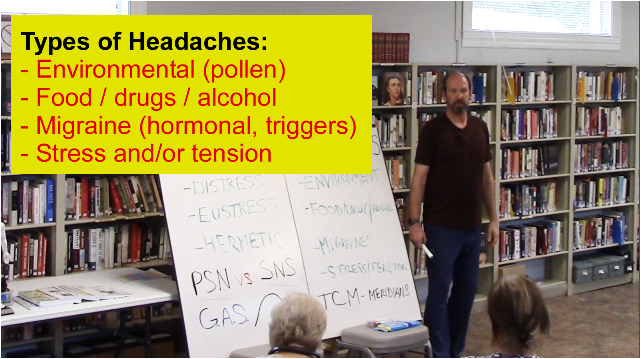
The mind directs the body, while the body protects the mind. Practices such as yoga, tai chi and qigong, all have proven the test of time for their healing properties of the mind, body and spirit. I have personally healed many physical injuries to my spine, shoulders, and knees from these methods. I have treated my own ailments of headaches, allergies and various other aches and pains. Additionally, I have addressed and managed other issues of anxiety, grief, and anger through my diligent practices. I have shared these techniques with hundreds and possibly thousands of others, over my years whether through in person instruction, lectures, publications, or online video classes.

If we can get ourselves all worked up and stressed by watching disturbing news shows or engaging in other negative issues and activities, we can conversely put ourselves in a state of peace, joy or contentment through our thoughts and actions. We are our own architect of our life, our health, our happiness, our destiny.

References:

Colloca L. (2019). The Placebo Effect in Pain Therapies. Annual review of pharmacology and toxicology, 59, 191–211. https://doi.org/10.1146/annurev-pharmtox-010818-021542

Noonan, K. Schomer, A. 2017, Heal

___________

Control the body with the mind. Manage the mind by disciplining the body, through physical activity. Learn to be more active, eat healthier, sleep better, stress less – these are the key components to maintaining a strong mind, body, immune system, and outlook on life.

I am currently offering wellness lectures and classes for group, small group & private instruction in Wekiva, Longwood and Winter Park.

Mind and Body Exercises on Google: https://posts.gle/aD47Qo

Jim Moltzan

407-234-0119
www.MindAndBodyExercises.com

https://www.facebook.com/MindAndBodyExercises

https://www.youtube.com/c/MindandBodyExercises

https://mindandbodyexercises.wordpress.com/