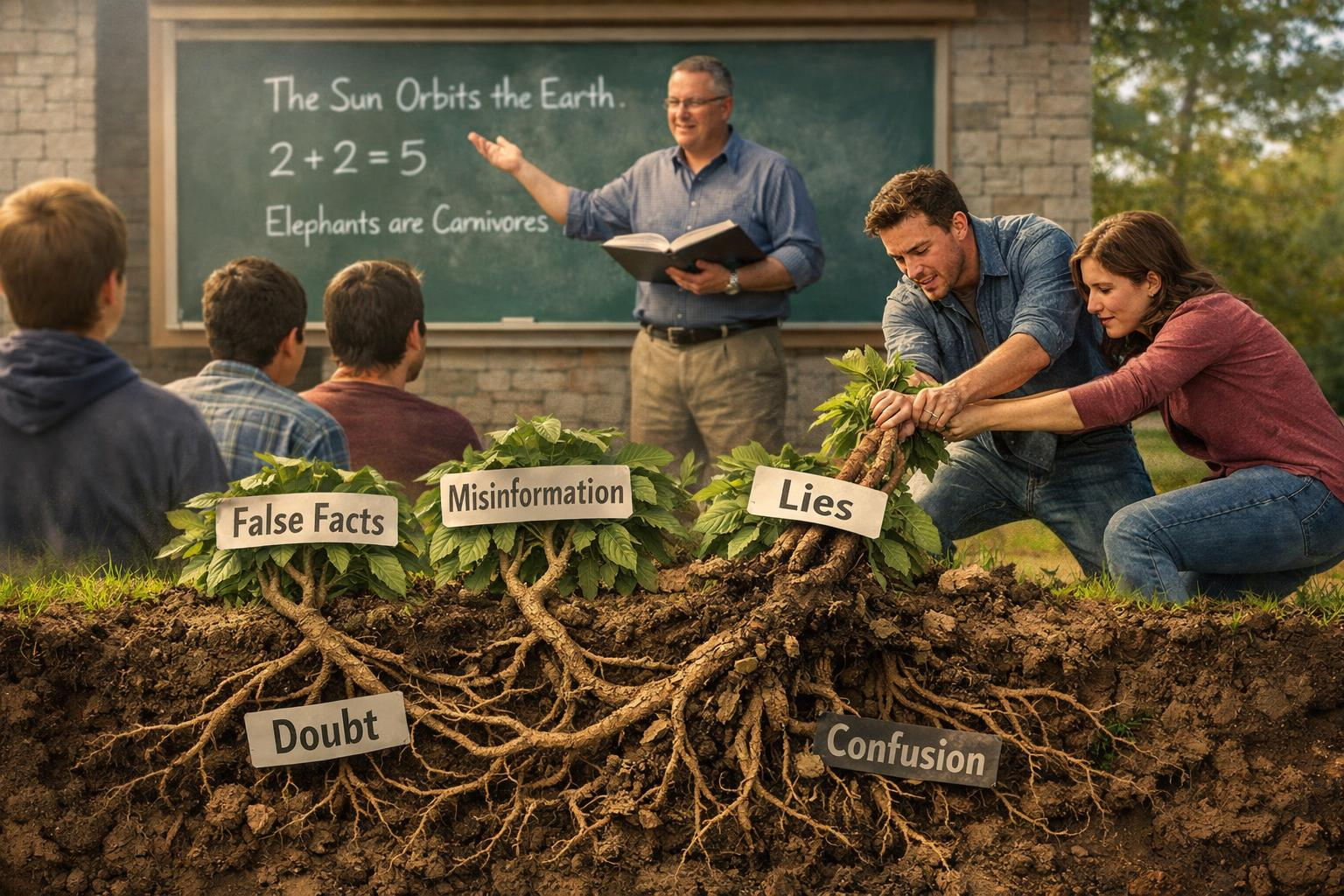

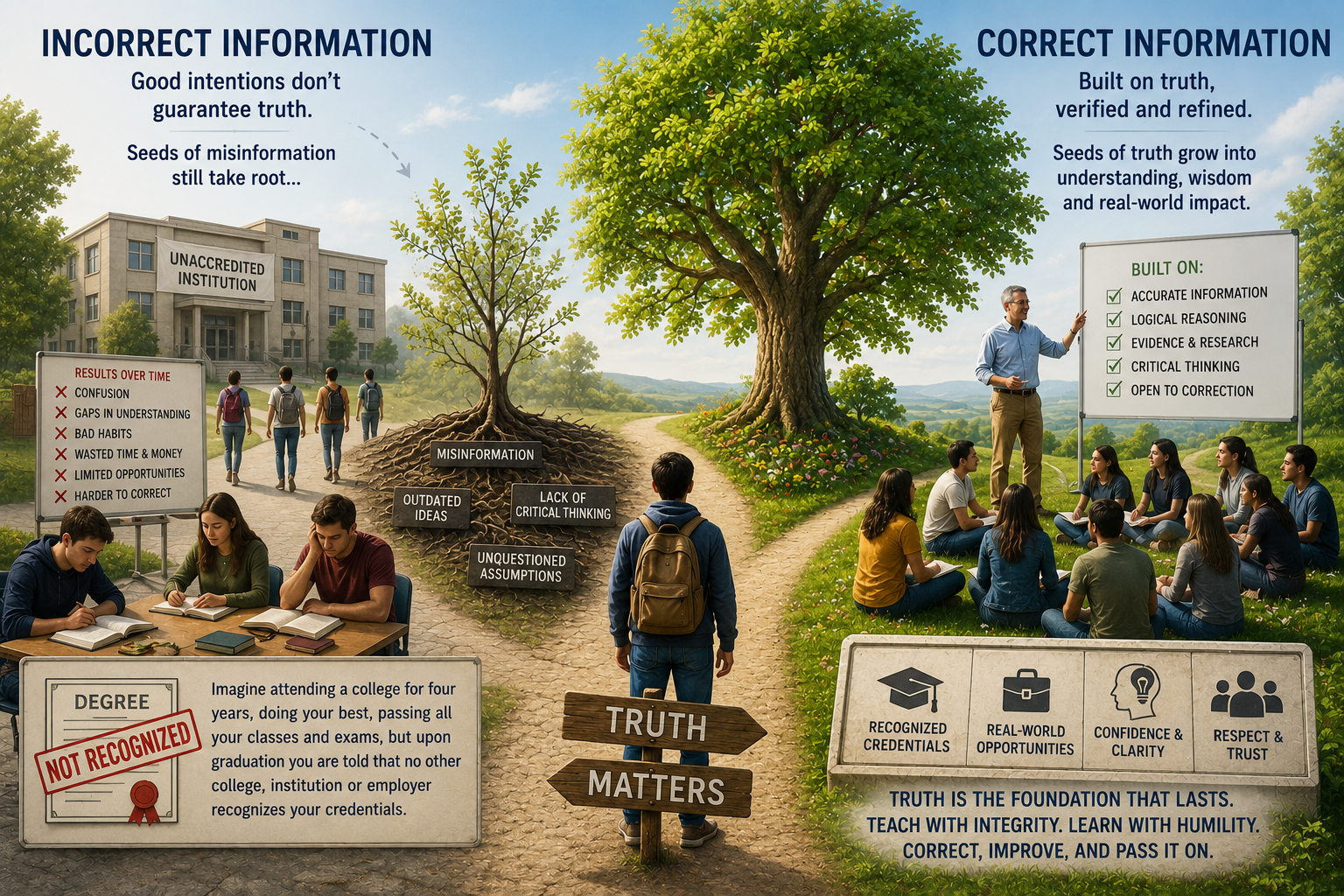
If someone teaches others using incorrect information, regardless of whether their intentions are good or whether the errors are made knowingly or unknowingly, they are planting seeds that will eventually need to be corrected. Misinformation has consequences. The longer it goes unchallenged, the more deeply it becomes rooted in the minds of students, making later correction more difficult.
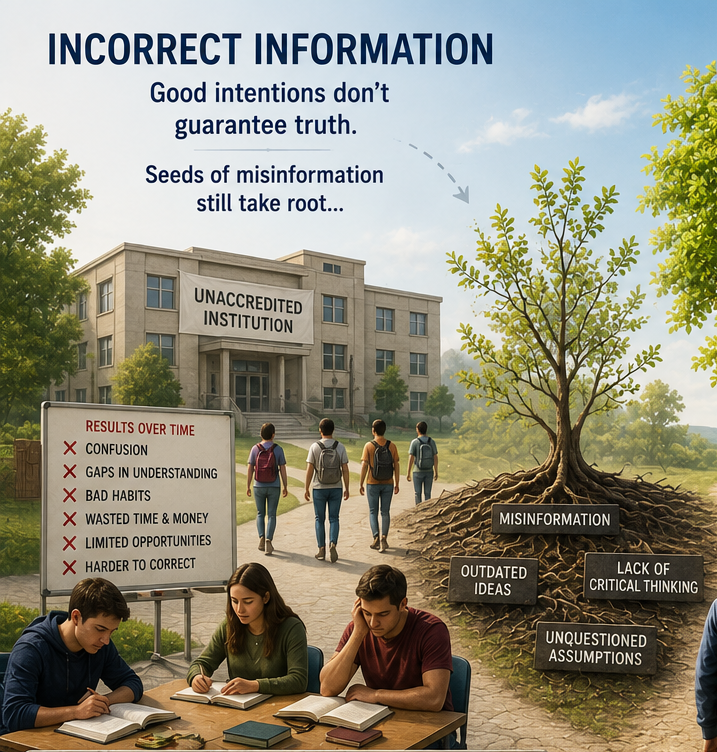
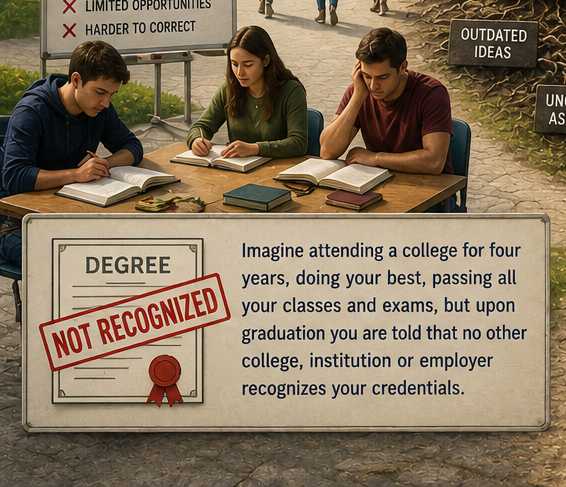
Imagine attending a college or university for four years. You faithfully attend classes, study diligently, complete assignments, pass every examination, and ultimately earn your degree. You have invested thousands of hours of your life, significant financial resources, and an enormous amount of effort. Then, upon graduation, you discover that no other accredited college, university, licensing board, or employer recognizes your credentials because the institution was never legitimately accredited or accepted within the broader academic community. While you may have learned valuable skills and developed personally during your education, the credential itself carries little or no recognized value beyond the walls of that institution. The realization would likely be disappointing, frustrating, and perhaps even life-changing.
The same principle can apply in many other disciplines. Whether teaching arithmetic, grammar, history, science, or my particular concerns of yoga and martial arts, every educator assumes a responsibility to pursue accuracy, remain intellectually humble, and continually evaluate their understanding against credible evidence and recognized standards. Good intentions alone do not make inaccurate information correct. While sincere teachers deserve understanding rather than condemnation for honest mistakes, they also have an ethical obligation to acknowledge errors, correct them openly, and encourage their students to value truth over ego.
In fairness, many instructors who pass along inaccurate information are not intentionally deceptive. They are often teaching exactly what they themselves were taught by mentors whom they trusted and respected. In this way, misinformation can become multigenerational, passed from teacher to student and then from student to teacher. Breaking that cycle requires intellectual humility, a willingness to question long-held assumptions, and the courage to revise one’s understanding when compelling evidence points in a different direction
While institutions and instructors certainly bear responsibility for the quality of their instruction, students also have a responsibility to investigate, question, compare, and verify what they are being taught. Blind acceptance is rarely a substitute for thoughtful inquiry.
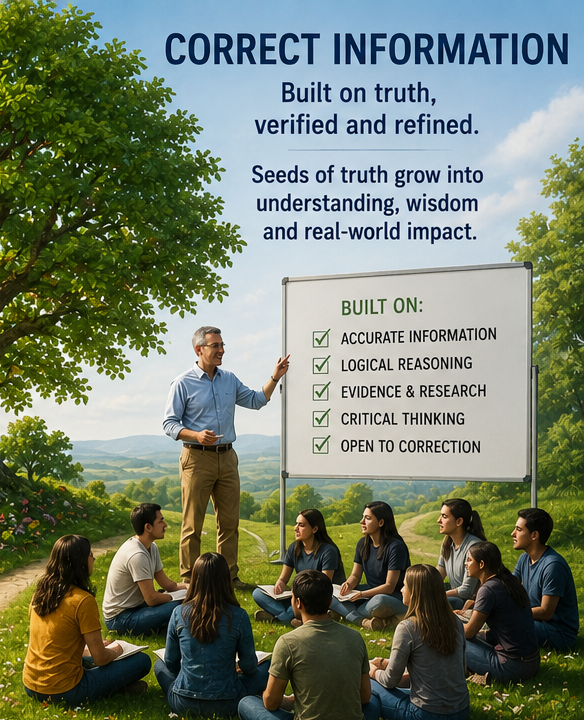
As both teachers and students, we should strive to build our knowledge upon foundations that can withstand thoughtful scrutiny. If we later discover that portions of our education were inaccurate, incomplete, or misrepresented, the appropriate response is not embarrassment or denial, but humility, curiosity, and a willingness to learn. Correcting our understanding may require additional time and effort, but it is far better to cultivate truth than to continue passing along misconceptions to the next generation. In doing so, we teach not only the subject itself, but one of the most valuable lessons of all: authentic education is a lifelong process of refinement, where intellectual honesty matters more than preserving one’s reputation, protecting one’s pride, or safeguarding one’s bank account.

 United Martial Arts Association