Philosophy or Religion? Buddhism, Taoism, and Confucianism – a brief comparison of the 3 systems

There is often debate as to what is a philosophy, versus that which is a religion. I have come to understand that there are fundamental differences between the two, that are rooted in the goals, nature, and methods of each system. Religion seems to focus mostly on spiritual awareness through understanding and moral guidance, whereas philosophy embodies more broad topics such as science, logic, politics, and art. Philosophy looks to find truth in empirical and logical evidence, while religion usually accepts faith as valid evidence. Philosophy can be a broader, and more general field, where religion usually involves specific sets of beliefs and practices within a group. Philosophical aspects often appear within religions and consequently philosophical discussions about religious topics. The relationship between philosophy and religion can be complementary, where each can offer a unique perspective of the human experience. I write about this topic as I have found that individuals who have some type of relationship with either a life philosophy or religion, often have a stronger sense of purpose, meaning and gratitude beyond themselves. This often leads to a healthier and happier life. Also, association with a religion in while aligning with a philosophical system need not be mutually exclusive to one another. In various parts of the world where people are free to worship and live as they may, one can be a Christian, Buddhist and Taoist if they so choose.

Buddhism, Taoism, and Confucianism are three of the most commonly practiced belief systems that are often labeled as philosophies, religions or even sometimes as both. The following is a summary of their origins and tenets:

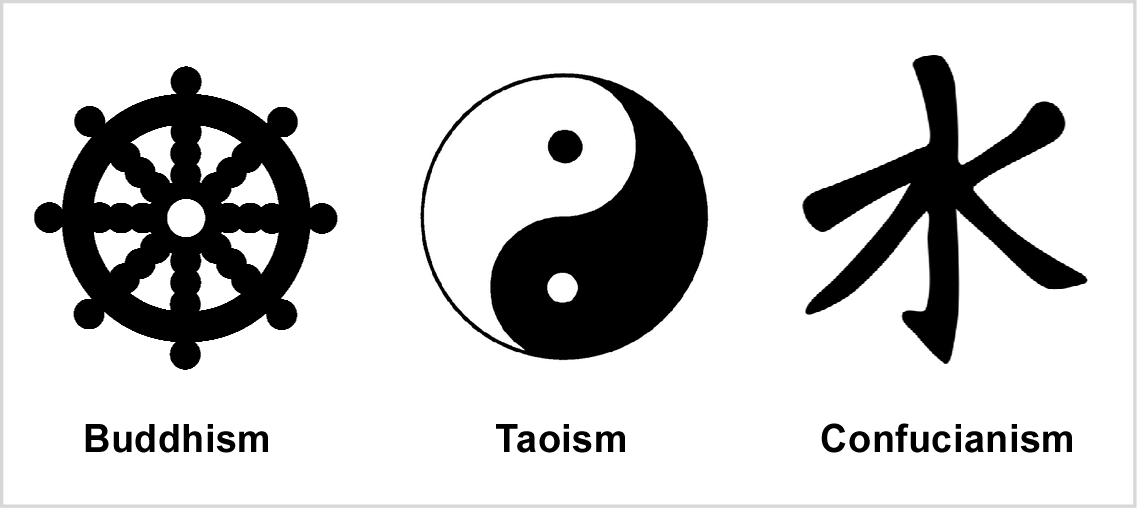
The 8-spoked wheel is often seen as a symbol for Buddhism.

Origin:

  • Buddhism was founded in the 6th century BCE by Buddha (563-483 BCE), also named Siddhartha Gautama, in ancient India which is today Nepal.
  • Siddhartha was a prince who gave up his privileged life in order to better understand the nature of human suffering and to seek enlightenment or nirvana.

Core Tenets:

  • The Four Noble Truths define the nature of suffering and a path to reduce its presence:
    • The Truth of Suffering (Dukkha): Buddhism acknowledges the existence of suffering and dissatisfaction in life. This suffering can be physical, emotional, or mental.
    • The Truth of the Cause of Suffering (Samudaya): Buddhism asserts that the root cause of suffering is craving or attachment (tanha) to things that are impermanent. This attachment leads to suffering because everything in the world is subject to change and eventual loss.
    • The Truth of the Cessation of Suffering (Nirodha): Buddhism teaches that it is possible to end suffering by letting go of attachment and craving. When one ceases to cling to impermanent things, suffering can be extinguished.
    • The Truth of the Path to the Cessation of Suffering (Magga): Buddhism offers a practical path called the Eightfold Path that leads to the cessation of suffering. This path consists of ethical and mental practices, such as right understanding, right intention, right speech, right action, right livelihood, right effort, right mindfulness, and right concentration.
  • The Eight-fold Path provides a guide towards ethical and mental development needed to achieve enlightenment (Nirvana):
    • Right views
    • Right aspirations
    • Right speech
    • Right conduct
    • Right livelihood
    • Right endeavor
    • Right mindfulness
    • Right meditation

Goal:

  • The ultimate goal in Buddhism is to attain Nirvana, where there is a state of liberation from the continuous cycle of birth, death, and rebirth also known as Samsara.
The taijitsu is often associated with Taoism and its concept of yin & yang.

Origin:

  • Taoism, or sometimes Daoism, thought to have originated from Lao Tzu and his foundational text of the Tao Te Ching (The Way and Its Power), in China in the 6th century BCE.

Core Tenets:

  • Main focus is upon trying to live in accordance to the Tao (the Way), which is thought to be the indefinable, fundamental force that unites all and everything in the universe.
  • Another main principle is that of Wu Wei (effortless action), where one strives to live in harmony within the natural flow of the Tao rather than be subject to it.
  • Ying & yang focuses upon the unity and duality inherent in all seeming opposites, such as: night-day, male-female, good-evil, positive-negative, etc.

Goal:

  • Taoist philosophy strives to have the individual exist in a state of balance and harmony with the Tao, in order to align within the natural order of things, rather than imposing one’s own will upon nature and the universe as a whole.

The Chinese character for water is often associated with Confucianism.

Origin:

  • Confucianism originated in China and was founded by Confucius (also known as Kong Fuzi) (551-479 BCE).
  • Confucius was primarily concerned with understanding of social order and its issues of ethics, morality, and the proper conduct of people living in society.

Core Tenets:

  • Sacred texts of the Wu Ching (Five Classics) include the I Ching (Book of Changes), the Lun-Yu (The Analects)
  • Emphasis is upon a moral code of:
    • Li: A code of moral/social conduct
    • Jen: Compassion/benevolence towards others
    • Yi: Righteousness
    • Te: Virtue
    • Xiao: Filial piety
  • The importance of social harmony and the cultivation of moral character through education and self-cultivation.
  • Emphasis upon the “Golden Rule” of “do not do unto others what you would not desire yourself.”

Goal:

  • Confucianism focuses upon establishing and maintaining a harmoniously functioning, well-ordered society through the virtuous persons who can fulfill their roles and responsibilities for the greater good of all.
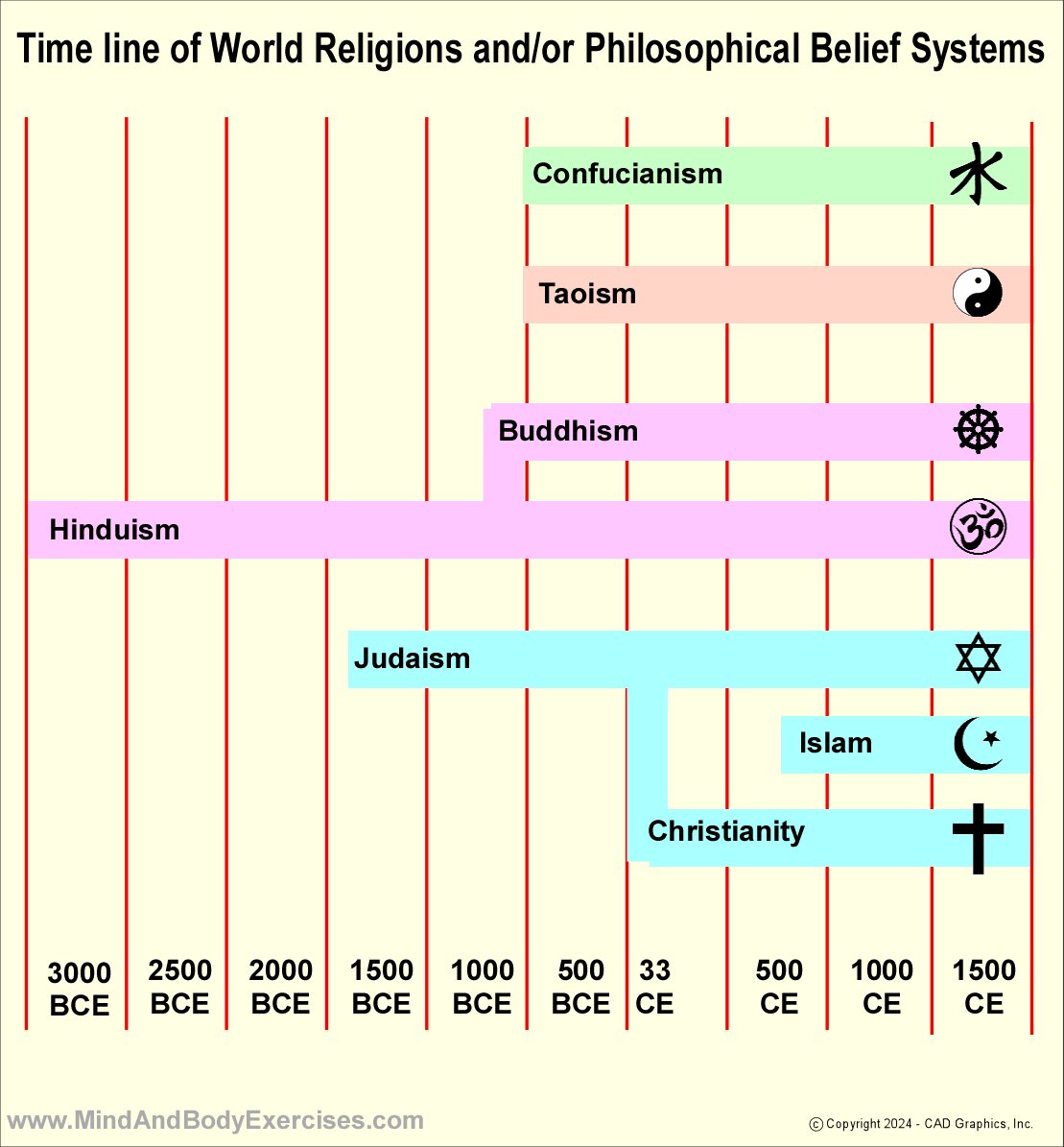
From my research, there is no historical evidence that supports that the founders of Buddhism (Siddhartha Gautama), Taoism (Lao Tzu), and Confucianism (Confucius) had ever met one another, crossed paths or had interactions during their lifetimes. All three of these individuals had lived in different times and places. Based upon the geographical distances as well as cultural differences between them, it is quite unlikely that these founders could have shared any direct experiences or even knowledge of each other’s existence.

These traditions often share some of the same philosophical ideas. Similarities in philosophical topics cultivated by these systems are most likely due to common exploration of universal ethical and existential questions during their times, rather than direct interactions or encounters among the founders. These systems do also have unique differences in their goals, teachings, methods, traditions, and approaches to life.

Comparisons between the three systems:

  • Basic Goals:
    • Buddhism: understanding the self.
    • Taoism: understanding the self in relation to all else.
    • Confucianism: understanding the self and the relationship to society.
  • Geographic Origins:
    • Buddhism: India
    • Taoism: China
    • Confucianism: China
  • Founders:
    • Buddhism: Siddhartha Gautama (Buddha)
    • Taoism: Often associated with Lao Tzu
    • Confucianism: Confucius
  • Central Concepts:
    • Buddhism: Four Noble Truths, Eightfold Path, nirvana
    • Taoism: Tao, wu wei, yin & yang
    • Confucianism: Li, Jen, Te, Yi, Xiao
  • Ultimate Goal:
    • Buddhism: Nirvana
    • Taoism: Harmony with the Tao
    • Confucianism: Social harmony through moral character and cultivation
  • Perspective on Life:
    • Buddhism: reduce suffering, detach from desires.
    • Taoism: alignment and harmony with the Tao
    • Confucianism: ethical conduct and social responsibilities

________________________

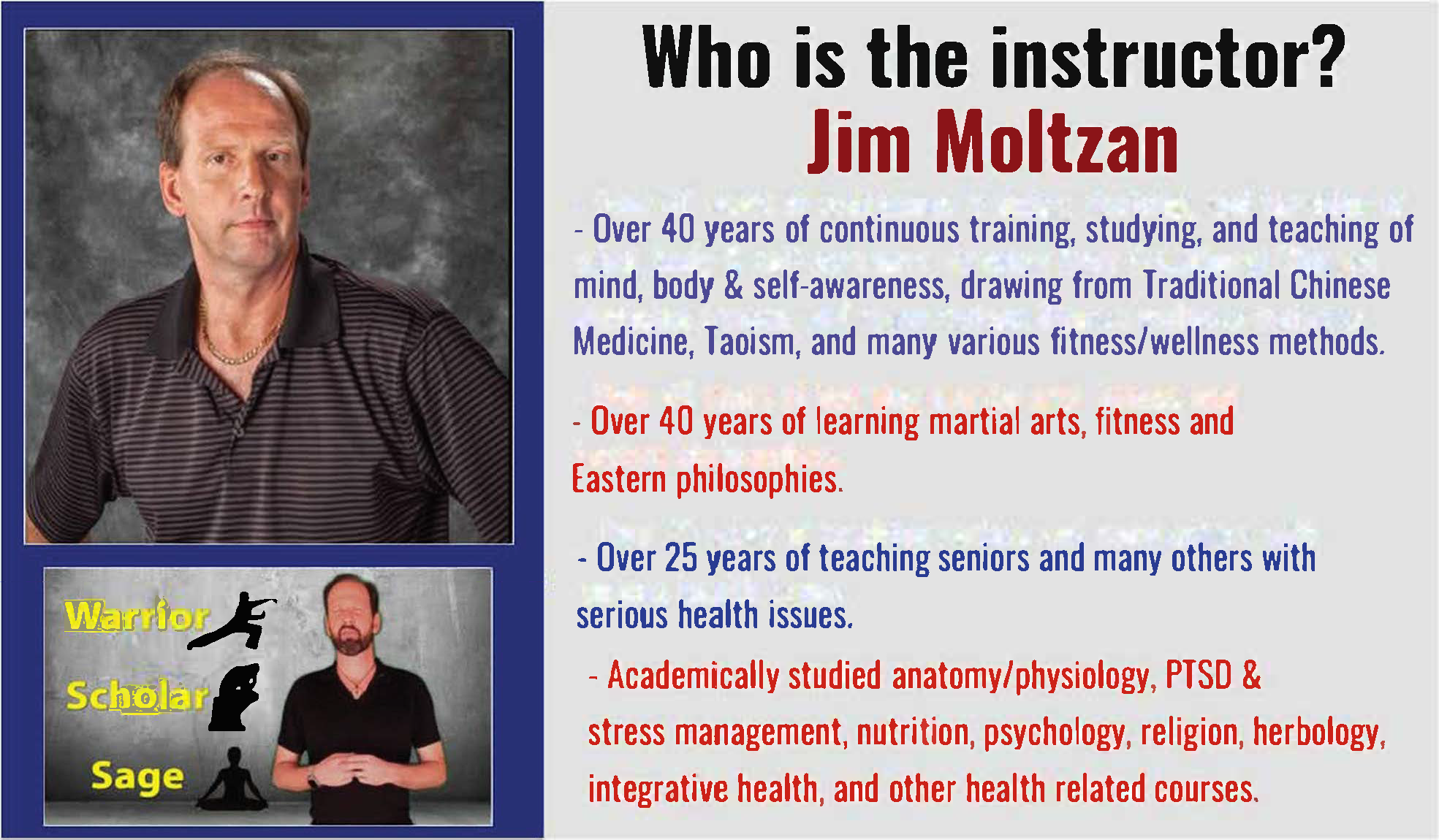
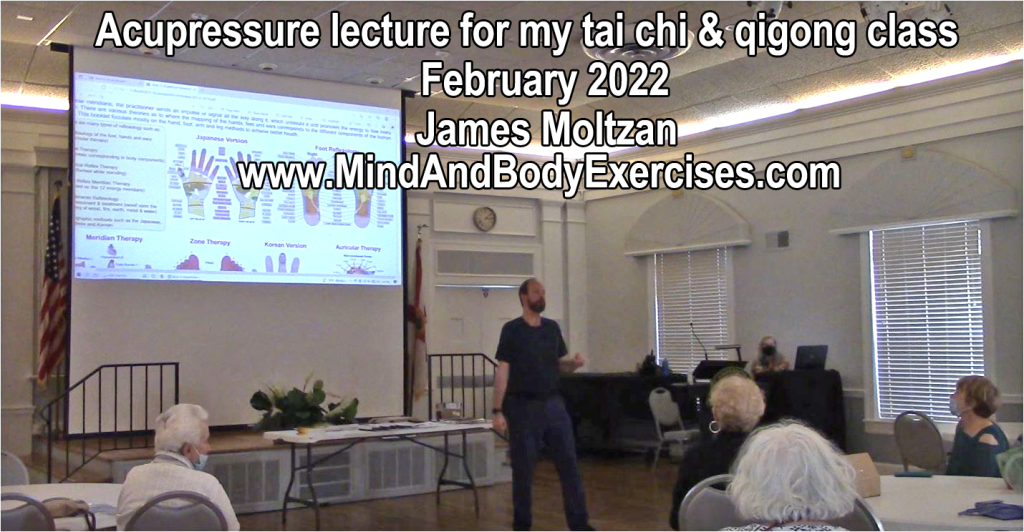
I teach and offer lectures about holistic health, stress management, qigong, tai chi, baguazhang, meditation, phytotherapy (herbs), music for healing, self-massage, and Daoyin (yoga).

I look forward to further sharing more of my message by partnering with hospitals, wellness centers, VA centers, schools on all levels, businesses and individuals that see the value in building a stronger nation through building a healthier population. I also have hundreds of FREE education video classes, lectures and seminars available on my YouTube channel at:

https://www.youtube.com/c/MindandBodyExercises

www.MindAndBodyExercises.com

www.Amazon.com/author/jimmoltzan

Mind and Body Exercises on Google: https://posts.gle/aD47Qo

Jim Moltzan

407-234-0119
The Overview Effect, a Cosmic Perspective of Just How Minute Humanity is

Author Frank White first introduced the “overview effect” in his 1987 book “The Overview Effect: Space Exploration and Human Evolution”. White had interviews with dozens of astronauts regarding their time in space, finding that many of them had experienced an alteration of their consciousness upon viewing the Earth from such a unique and distant perspective. White explained that the overview effect as being a “state of cognitive dissonance” where astronauts are faced with recognizing the reality of their existence as being a small part of a immense and interconnected universe. This immediate understanding can manifest into various cognitive changes such as:

  • A sense of astonishment, sublime and wonder: Some astronauts have commented about being overwhelmed by seeing the beauty, as well as fragility of the Earth when viewed from outer space.
  • An increased sense of interconnectedness: Some interviewed astronauts have reported experiencing feeling a deeper connection to all life on Earth as they have come to view humanity as but a single species instead of separate races, countries, or groups.
  • A re-calibration of priorities: Those astronauts that have experienced this effect have commented that they often feel a newfound appreciation for the importance of being good stewards of our environment, as well as nations needing to work together for the benefit of the Earth as a whole.

Coincidentally, television space traveler William Shatner of Star Trek fame, did travel in 2021 into space with the invitation from Blue Origin and Amazon’s Jeff Bezos. Shatner too did experience this phenomenon of overwhelming emotion and realization that the Earth, as most of us know it, is not all that we think it is, as sometimes being the center of the universe. Instead, Shatner and others have come to truly see the Earth as a small part of the universe.

As space travel and exploration becomes more feasible as a reality for non-traditional astronauts, travel off-planet may be another method to achieve some level of ego death. This paradigm shift could possibly lead to a more caring, peaceful and perhaps sustainable future for all of humanity. Ego death is a realization that someone comes to understand that they are not truly the things that they may identified with. Examples of this would be the brilliant doctor who becomes injured and must surrender their control to another to possibly save their life. In this discussion of the overview effect, an individual who sees the Earth in perspective to the rest of the universe, might experience their own ego death as they become humbled by seeing the brilliance of the universe.

To think that this on Earth is all that there is, I find to be quite narrow-minded as well as narcissistic. While standing on the Earth and gazing up at the night sky with no surrounding light pollution, have you never felt a similar type of overview effect upon seeing literally an infinite number of stars?

References:

The Overview Effect: Space Exploration and Human Evolution, 3rd Edition. (2014, December). ProtoView. https://link.gale.com/apps/doc/A392254156/AONE?u=vol_vsc&sid=ebsco&xid=acfa7be9

Koren, M. (2023). Seeing Earth from Space Will Change You. Atlantic Monthly331(1), 22–25.

Meijer, Dirk. (2014). The Universe as a Cyclic Organized Information System: John Wheeler’s World Revisited. NeuroQuantology. 13. 10.14704/nq.2015.13.1.798.

_____________________

I teach and offer lectures about holistic health, stress management, qigong, tai chi, baguazhang, meditation, phytotherapy (herbs), music for healing, self-massage, and Daoyin (yoga).

I look forward to further sharing more of my message by partnering with hospitals, wellness centers, VA centers, schools on all levels, businesses and individuals that see the value in building a stronger nation through building a healthier population. I also have hundreds of FREE education video classes, lectures and seminars available on my YouTube channel at:

https://www.youtube.com/c/MindandBodyExercises

www.MindAndBodyExercises.com

www.Amazon.com/author/jimmoltzan

Mind and Body Exercises on Google: https://posts.gle/aD47Qo

Jim Moltzan

407-234-0119

The 12 Steps of the Hero’s Journey – Why is this relative to us?

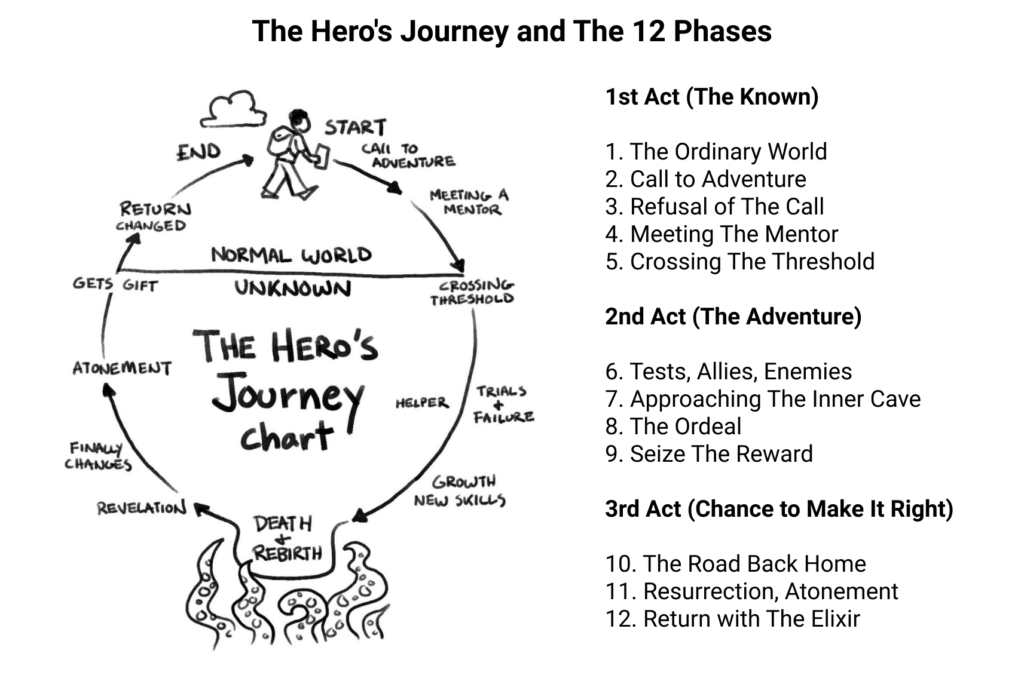
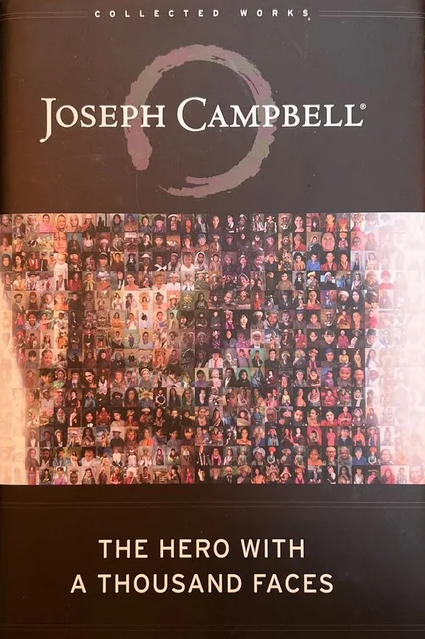
The concept of the “Hero’s Journey” comes from Joseph Campbell who was a writer, mythologist, and lecturer. Campbell introduced this idea in his book “The Hero with a Thousand Faces,” which was published in 1949. The theme underlying in the Hero’s Journey is that many myths, stories and legends, from differing cultures throughout the world and throughout history follow a similar pattern or structure. Psychologist Carl Jung referred to this innate relationship as the collective unconscious. The Hero’s Journey consists of roughly 12 distinct stages for a “chosen one” to navigate. Specific details may vary from culture to culture, but the overall structure remains fairly consistent. Examples would be that of Gilgamesh (Sumerian/Babylonian Mythology), King Arthur (Arthurian Legends), The Odyssey and Jason and the Argonauts (Greek Mythology), The Ramayana (Hindu Mythology), Sun Wukong (Journey to the West – Chinese Mythology), Inanna’s Descent to the Underworld (Sumerian Mythology), and Siegfried, the dragon slayer (Germanic mythology).

This structure of storytelling has also been popularized by modern authors of books and movies such as Lord of the Rings, Harry Potter, The Hunger Games and maybe most widely known of “Star Wars“. George Lucas of Star Wars was inspired by Campbell’s writings, but the two did not meet until well after Lucas had already produced his famous movies. I think that if we look carefully and reflect inward, we may be able to also see the pattern of the hero’s journey in each of our own lives. Why is this important? Because seeing our lives from this perspective can help to add clarity and focus to the unique meaning and purpose that we all possess but are not always aware of.

I find Sam Keen and Anne Valley Fox’s Your Mythic Journey published in 1973, to be quite relevant to current cultural and societal issues. Specifically, that of myths being defined as lies or something opposite of being factual. I too used to think of myths as lies or mere stories to entertain us, until becoming educated otherwise to this stigma. Keen elaborates that myths are a strict set of interconnected stories, customs, rituals, and rites, that serve to inform us while providing a sense of meaning, purpose, and direction to an individual, a family, a community, or culture. Keen expresses that telling of myths, ancient as well as modern have fallen to the wayside due to advances in technologies and the evolution of cultures and societies. When particular things can be seen as “good,” there is always the other opposite or contrasting perspective of there existing some amount of “bad.” While technology might be a factor in people choosing to not write their stories down as much as in years ago or choose to commit them to memory, because they know that they can always just go look them up on the internet. The other side of this coin is that modern technology has opened up the ability for more people to access other nations’ information bases and various cultures’ stories, myths, and knowledge, literally from the comfort and convenience of their own homes. In years past if someone cared to pursue learning about a particular culture, they might very well be best informed if they were to travel across the oceans to find a source that was willing to share. Today we just pick up our smartphone to travel in our thoughts to the other side of the world.

I have been immersed in a Taoist lifestyle for over 40 years, both from my martial arts and Traditional Chinese Medicine (TCM) background and study of this philosophy. With this in mind, I am drawn to see the yin and yang or the balance and contrast, in all things. This concept of yin and yang dates back thousands of years where Taoism has its origins around 500 BCE. Perhaps Taoism came about from the passing of myths to one another, or some myths may have come about from those having studied Taoism. Or maybe both are true, a debate for another discussion. Keen’s words have yin and yang written deep throughout them, as he hints that the contrast between heroes and enemies, is what gives meaning to either side.

Keen later goes on to speak of the inner voices of our ancestors and those around us, that often run through our minds. I have come to know this as our inner dialogue, and when not in check, referred to as the “monkey mind” that is constantly and incessantly jumping from one thought or story to another. Organizing our stories and our myths in our own mind is the challenge. These stories can offer us purpose and meaning to each of us in our own individual and unique ways in spite of standing on the shoulders of those who came before us with their stories and myths. Current popular culture in the US seems somewhat focused upon people needing to come to some realization of “their truth” as opposed to what Keen speaks of as “their story.” Can various different people having the same experience have different truths? I think not, but they can definitely have different stories of their own unique experience. An underlying theme that Keen speaks of is the need for someone to stand in the shoes of another, if they are to truly understand another’s story, whether in their myths, culture, traditions, symbols, etc.

I find Keen’s comments about how few people really know the depth of their own thoughts and imaginations quite accurate. I see more people concerned with what is going on within the virtual computer-generated and online social worlds outside of themselves, rather than understanding what is happening within their own minds. Some people can claim to know about driving a race car in virtual reality when they actually only know how to drive a standard vehicle in the physical world. Learning to understand and differentiate our public and private selves or “discovering our many selves” as Keen states, is a bit of foreshadowing of what I read later as some strong Carl Jung influences of personas, and archetypes as well as Sigmund Freud’s concepts of the id and ego.

The 12 steps of the hero’s journey:

  1. The Ordinary World
    The hero, uneasy, uncomfortable or unaware, is introduced sympathetically so the audience can identify with the situation or dilemma. The hero is shown against a background of environment, heredity, and personal history. Some kind of polarity in the hero’s life is pulling in different directions and causing stress.
  2. The call to adventure
    Something shakes up the situation, either from external pressures or from something rising up from deep within, so the hero must face the beginnings of change.
  3. Refusal of the call
    The hero feels the fear of the unknown and tries to turn away from the adventure, however briefly. Alternately, another character may express the uncertainty and danger ahead.
  4. Meeting with the mentor
    The hero comes across a seasoned traveler of the worlds who gives him or her training, equipment, or advice that will help on the journey. Or the hero reaches within to a source of courage and wisdom.
  5. Crossing the threshold
    At the end of Act One, the hero commits to leaving the Ordinary World and entering a new region or condition with unfamiliar rules and values.
  6. Tests, allies, and enemies
    The hero is tested and sorts out allegiances in the Special World.
  7. Approach
    The hero and newfound allies prepare for the major challenge in the Special world.
  8. The ordeal
    Near the middle of the story, the hero enters a central space in the Special World and confronts death or faces his or her greatest fear. Out of the moment of death comes a new life.
  9. The reward
    The hero takes possession of the treasure won by facing death. There may be celebration, but there is also danger of losing the treasure again.
  10. The road back
    About three-fourths of the way through the story, the hero is driven to complete the adventure, leaving the Special World to be sure the treasure is brought home. Often a chase scene signals the urgency and danger of the mission.
  11. The resurrection
    At the climax, the hero is severely tested once more on the threshold of home. He or she is purified by a last sacrifice, another moment of death and rebirth, but on a higher and more complete level. By the hero’s action, the polarities that were in conflict at the beginning are finally resolved.
  12. Return with the elixir
    The hero returns home or continues the journey, bearing some element of the treasure that has the power to transform the world as the hero has been transformed.

I feel that we are all pursuing a hero’s journey on some level as we all manage and cope with our daily trials and tribulations. However, it is up to the individual to reach some inner clarity and cultivation of character to better understand how this concept applies to their story.

References:

Campbell, J. (1949). The hero with a thousand faces. Pantheon Books.

Keen, S. (1989). Your Mythic Journey: Finding Meaning in Your Life Through Writing and Storytelling. TarcherPerigee.

____________________________

I teach and offer lectures about holistic health, stress management, qigong, tai chi, baguazhang, meditation, phytotherapy (herbs), music for healing, self-massage, and Daoyin (yoga).

I look forward to further sharing more of my message by partnering with hospitals, wellness centers, VA centers, schools on all levels, businesses and individuals that see the value in building a stronger nation through building a healthier population. I also have hundreds of FREE education video classes, lectures and seminars available on my YouTube channel at:

https://www.youtube.com/c/MindandBodyExercises

www.MindAndBodyExercises.com

www.Amazon.com/author/jimmoltzan

Mind and Body Exercises on Google: https://posts.gle/aD47Qo

Jim Moltzan

407-234-0119
Symbolism’s Relationship to Music

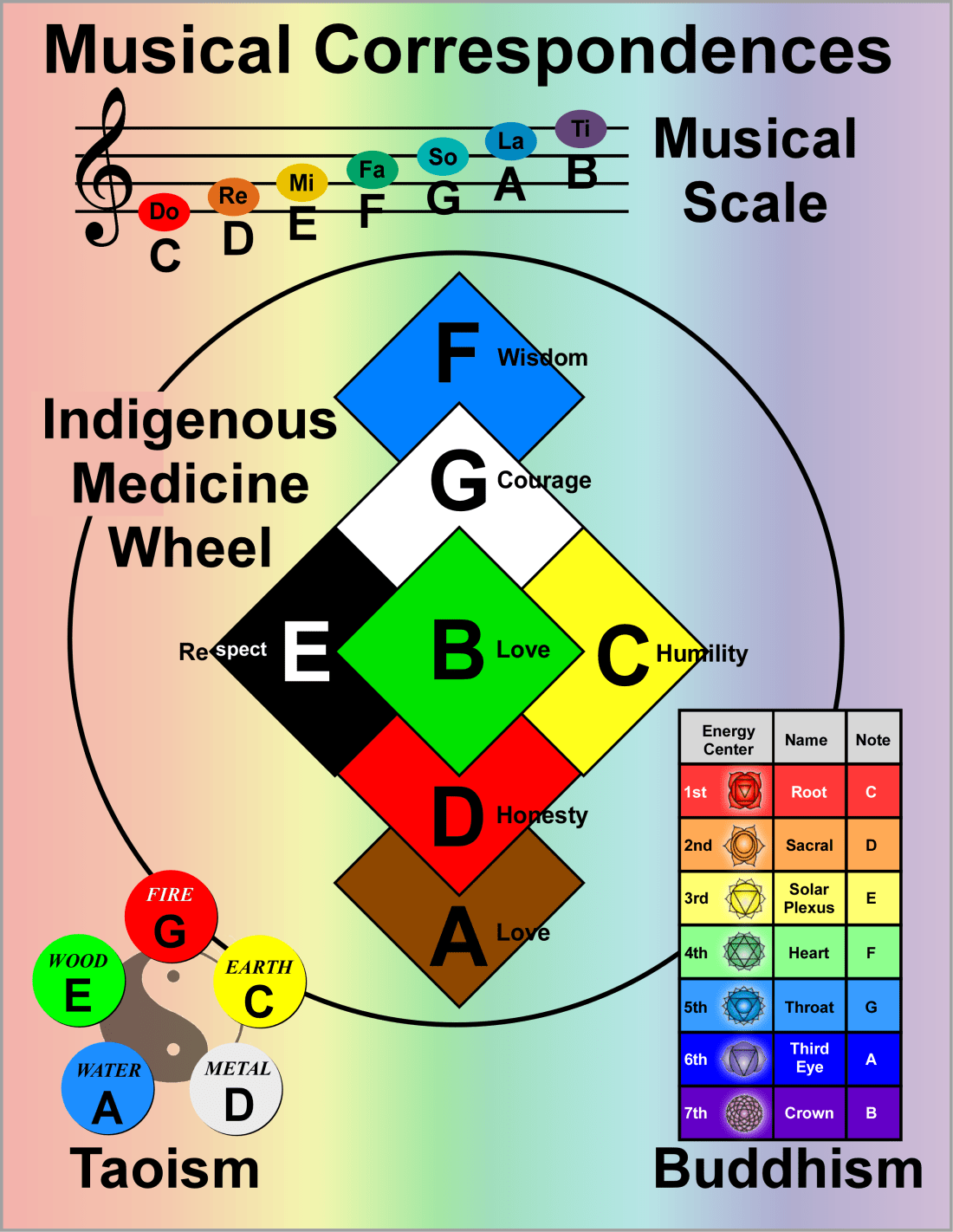
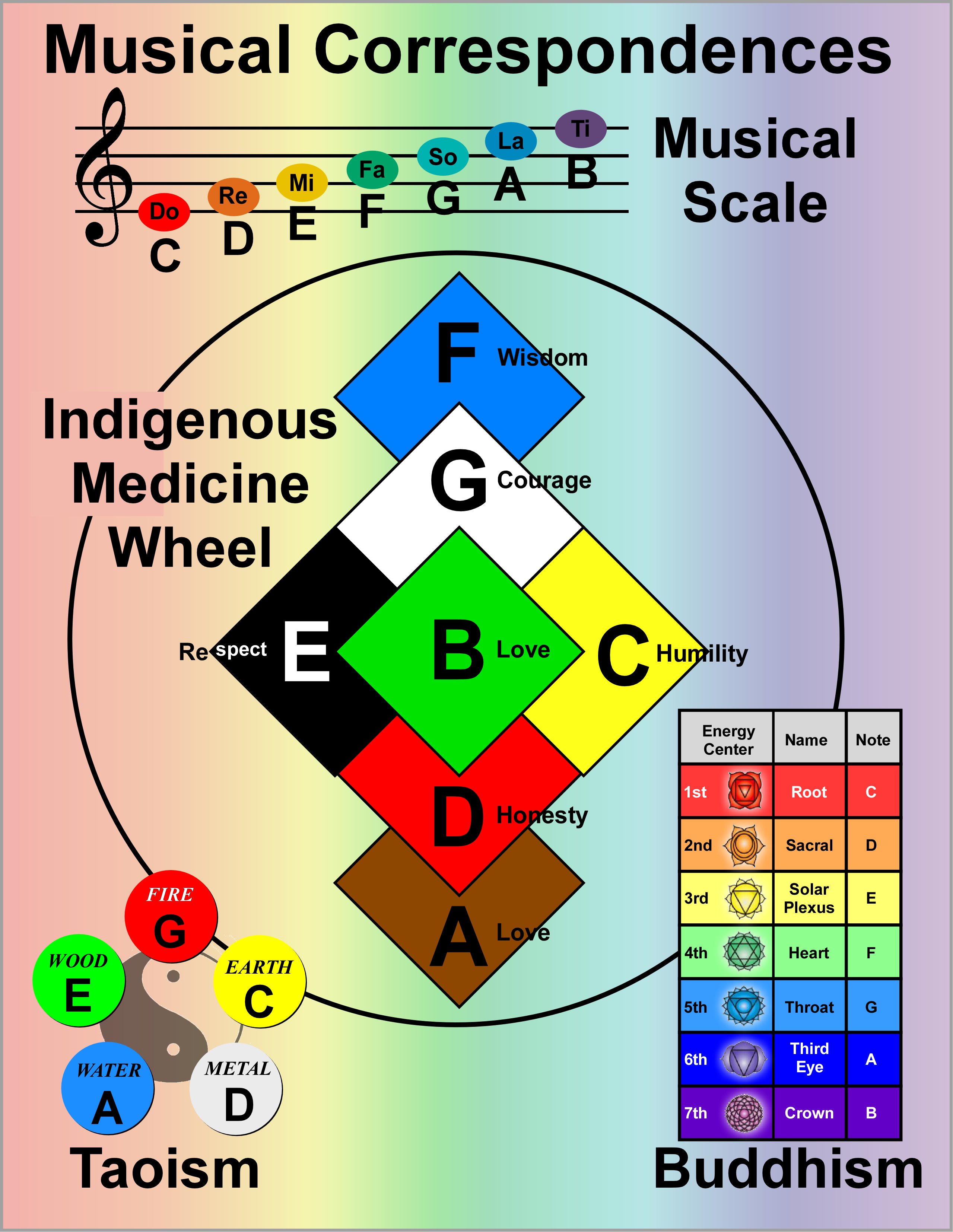
Symbols can have strong meanings, and for that reason have been used for thousands of years to help convey messages, passing on of history, mythology and philosophical concepts. I have combined some of my thoughts on the relationships between Carl Jung’s ideas on “squaring of the circle,” and its similarities to the Indigenous Medicine Wheel, the 5-elements theory or “wuxi” from Taoism, and the energy center or “chakras” from Hinduism/Buddhism. The Indigenous Medicine Wheel offers the values of humility, honesty, respect, courage, wisdom, truth, and love. Taoism’s star symbol represents other aspects of the mind, will power, intellect, the corporeal and ethereal souls, among other correspondences. The chakra scale has its own set of similar, but different correspondences. The more I delve into the teachings of these ancient cultures, I feel quite strongly that the similarities between them are not mere coincidences, but rather perhaps the underlying collective unconscious presenting itself in various different manifestations, in separate locations and at assorted times in human history.

Aside from overlapping components of colors, elements, animals, energy centers and many others, is the similarity in the musical notes or tones that all of these philosophical and/or belief systems share. Humans have used music for enjoyment, for ritual, for healing and perhaps other reasons for thousands of years. Music is a series of sounds or tones that produce vibrations. These vibrations can affect the human body’s nervous system on many levels, sometimes deemed as being good or bad for the individual. Certain tones are thought to affect specific organs, different levels of self-realization, and links to higher spiritual realms. Conversely, specific notes can vibrate to cause stress on the nervous system, breakup kidney stones and even for demolition of buildings.

I learned many decades ago that the holding of physical postures engages specific muscles group while simultaneously engaging the nervous systems. Either the parasympathetic nervous system (rest and digest response) is engaged with the slow rhythmic breathing or the sympathetic nervous system (fight or flight response) with a rapid rhythmic breathing cadence. Either of these processes can change the blood chemistry to promote healing on different levels. This physiological process can be seen in the other moving meditations practices of yoga, and its offspring of qigong and further spawn of tai chi. I have found (and personally practiced) all of these methods with either slow or fast breathing patterns can put the practitioner in either the meditative or trance state, depending upon background music/sounds, the individual and their intent. This is a concept called entrainment, where the practitioner’s heartbeat synchronizes with the beat of a drum or other percussion sound. I have learned to practice qigong, tai chi and other martial arts exercises with music consisting of bells, chimes and other percussion instruments with this exact purpose of slowing (or increases) the heart and breathing rate in order to enter into the meditative state of being.

With so much talk and debate in recent years regarding anxiety, depression and many other mental ailments, music therapy along with physical and mental exercises, offers realistic, relatively cheap and readily accessible methods for self-regulation of thoughts, emotions and relative physiological mechanisms. Or, in other words self-care of personal health and well-being.

_____________

I teach and offer lectures about holistic health, qigong, tai chi, baguazhang, and yoga. I also have hundreds of FREE education video classes, lectures and seminars available on my YouTube channel at:

https://www.youtube.com/c/MindandBodyExercises

Mind and Body Exercises on Google: https://posts.gle/aD47Qo

Jim Moltzan

407-234-0119

Contact for times, locations and costs.

www.MindAndBodyExercises.com

www.Amazon.com/author/jimmoltzan

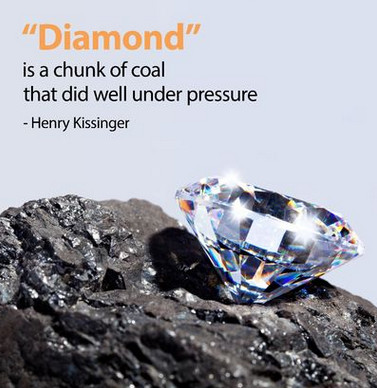
Become the Diamond, Leave the Coal Behind

Humans are like a lump of coal (or carbon), where if put under enough pressure, we may transform into a diamond. I understand that it takes many years, perhaps millions of years for this transformation to happen. As humans we have only about 70-80’s years on average to make our transformation come about, so best to start as soon as possible. I speak of this diamond metaphorically, in regards to each of us being on our own journey to find purpose and meaning in our lives. The diamond is what emerges from the dark and dirty coal, as we strive to find the inner genius, beauty, perfection and acceptance within our selves.

We all have our own unique set of circumstances with relative trials and tribulations. How we manage these issues are key to our health and happiness. Managing our thoughts, emotions and actions can often be attained from managing our physical body through exercise and deliberate wellness and fitness methods. Qigong (yoga), tai chi, meditation and other methods can offer lifelong benefits to the mind, body and spirit. These practices are paths to become your diamond from the rough of the world.

The process of transforming coal into a diamond takes an incredibly long time—millions to billions of years. Both coal and diamonds are made up of carbon, but the key difference lies in their formation and the conditions under which they are created.

Coal forms from plant material that accumulates in swampy environments over millions of years. Through the process of burial and geological transformation, the organic material undergoes compaction and chemical changes, resulting in the formation of coal. This process typically takes millions of years.

On the other hand, diamonds are formed deep within the Earth’s mantle, where high pressure and temperature conditions exist. These conditions cause carbon atoms to arrange in a crystal lattice structure, forming diamonds. This process occurs at depths of around 150 to 200 kilometers (93 to 124 miles) and requires immense pressure and temperatures of approximately 1,000 to 1,300 degrees Celsius (1,832 to 2,372 degrees Fahrenheit). The time required for diamond formation can range from hundreds of millions to billions of years.

Therefore, the transformation of coal into a diamond is an extremely slow and geologically long process, occurring over millions to billions of years under specific conditions deep within the Earth.

Life is a challenge. Nothing worth achieving comes for free. Gifts and rewards are most valuable when earned. Change your coal into diamonds.

I write often about topics that affect our health and well-being. Additionally, I teach and offer lecture about qigong, tai chi, baguazhang, and yoga. I also have hundreds of FREE education video classes, lectures and seminars available on my YouTube channel at:

https://www.youtube.com/c/MindandBodyExercises

Mind and Body Exercises on Google: https://posts.gle/aD47Qo

Jim Moltzan

407-234-0119

www.MindAndBodyExercises.com

www.Amazon.com/author/jimmoltzan