Slower Breathing & How Physiologically it is a Key Component in Longevity

How Deep Breathing Affects Your Health

Deeper breathing is a key component to having a long and healthy life. Through focused and deliberate breathing methods, many positive mental and physical benefits can be achieved.

The average person breathes 12-18 breathes per minute (BPM) during regular activity of standing, sitting & walking, engaging the sympathetic nervous system (SNS). Constant duration in the SNS dumps neurotransmitters of cortisol and norepinephrine into the blood stream putting the vital organs in a state of constant high alert and stress. Health and fitness experts suggest that 6 BPM is optimal for the lungs to properly oxygenate the whole body, balance the blood chemistry and also remove toxins. The lungs are responsible for removing 70% of the body’s waste by-products through exhalation. This is more easily accomplished through mindful breathing patterns from exercises such as mediation, qigong, tai chi and yoga.

Most people breathe too shallow and too quickly!

Much recent research has linked stress to poor breathing habits and consequently many ailments. Many modern chronic conditions can be traced back to insufficient cell oxygenation otherwise known as cell hypoxia.

Breathing is one of the few bodily rhythms that we can consciously adjust, along with sleep and elimination. All of these rhythms directly affect our body’s delicate blood chemistry. However, our breath is the root power in bringing oxygen (qi) into our body to nourish it down to the cellular level.

Faster breathing is necessary when experiencing truly stressful situations, like being chased by an animal, running from a fire or similar life-threatening situations. However, continued breathing at this pace for an extended period of time puts accumulative stress on all of the body’s systems.

The following link has more information from the US National Library of Medicine, National Institutes of Health that goes a bit deeper into the science of why lower breaths per minute (BPM) is so beneficial.

https://www.ncbi.nlm.nih.gov/pmc/articles/PMC5709795/

I can help. I have almost 40 years worth of experience in practicing and teaching others to take control of their health and well-being. Wellness lectures, classes, study guides & booklets.For more information, contact Jim Moltzan at 407-234-0119 or www.MindAndBodyExercises.com

Be well!

Jim Moltzan

407-234-0119

http://www.MindAndBodyExercises.com

https://www.facebook.com/MindAndBodyExercises/

https://www.youtube.com/c/MindandBodyExercises

https://mindandbodyexercises.wordpress.com

/https://umareg.com/masters-council/

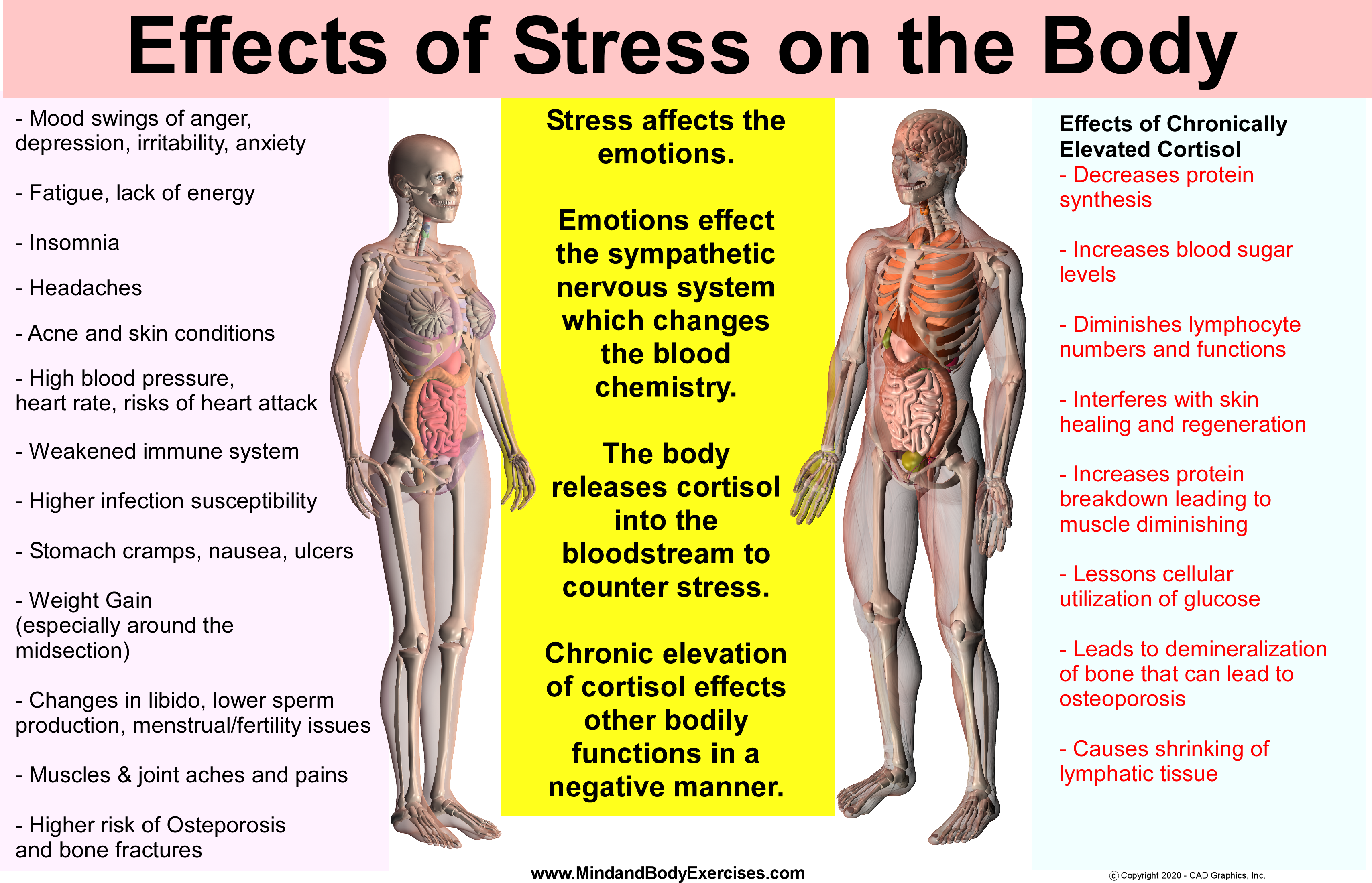
Effects of Stress on the Body

Effects of Stress on the Body

Stress effects the emotions.
Emotions effect the sympathetic nervous system which changes the blood chemistry.
The body releases cortisol into the bloodstream to counter stress.
Chronic elevation of cortisol effects other bodily functions in a negative manner.

Effects of Chronically Elevated Cortisol
– Decreases protein synthesis

– Increases blood sugar levels

– Diminishes lymphocyte numbers and functions

– Interferes with skin healing and regeneration

– Increases protein breakdown leading to muscle diminishing

– Lessons cellular utilization of glucose

– Leads to demineralization of bone that can lead to osteoporosis

– Causes shrinking of lymphatic tissue

Cortisol Side Effects

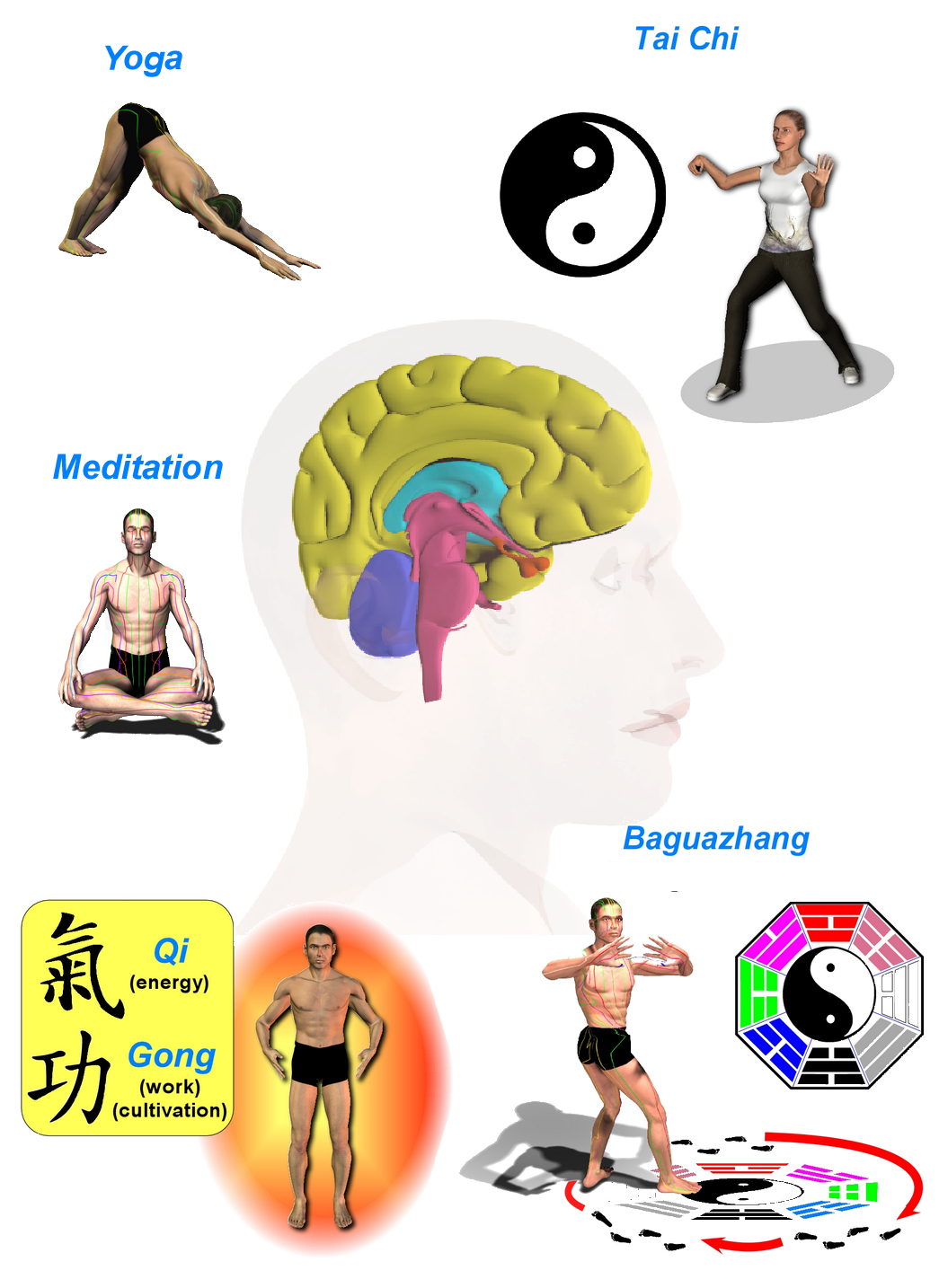
Tai Chi, yoga and qigong are all methods that regulate stress and increase the flow of energy ( and blood flow) within the body improving health and well-being.
Be well, stay healthy, be wise!

Neuroplasticity – Reroute, Rewire, Reorganize Your Brain

The brain has the ability to continuously form, change and relocate new neural connections to different neural networks throughout our lives. This phenomenon is called neourplasticity.
– This occurs at the beginning of life
– After experiencing a brain injury
– When new learning and memories are observed

Neural connections

Benefits of increase neuroplasticity or brain rerouting:
– Enhanced memory abilities
– More effective learning
– Recovery from brain events like strokes
– Recovery from traumatic brain injuries
– Ability to rewire functions in the brain
– Function loss in one area may enhance functions in other areas

Methods


Methods that have been known to enhance neuroplasticity include:

– Dancing, yoga, tai chi and other mind and body practices increases neural connectivity

– Expanding ones vocabulary increase memory processing and the visual and auditory processes

– Quality sleep enhances learning retention through the growth of the dendritic spines that serve as connections between neurons

– Creating artwork enhances the connectivity of the brain at rest which can boost introspection, memory, empathy, attention, and focus

– Occasional fasting can increases synaptic adaptation, promoting neuron growth

– Use of mnemonic devices with memory training can enhance connections in the prefrontal parietal network and help to prevent memory loss

– Learning musical instruments may increase connections between brain regions helping form new neural networks

– Non-dominant hand exercises can form new neural pathways strengthening the connectivity between neurons

– Reading fiction may increase and enhance connectivity in the brain

– Travel exposes the brain to new environments and various stimuli that forms new pathways and brain activity


Be well, stay healthy, be wise!

www.MindAndBodyExercises.com

https://www.facebook.com/MindAndBodyExercises/

https://www.youtube.com/c/MindandBodyExercises

https://mindandbodyexercises.wordpress.com/

Stress & the Benefits of Deep Deliberate Breathing

Most people breathe too shallow and too quickly!

Western medicine has acknowledged in recent years, that stress has an effect on the internal organs and consequently the immune system.

Thoughts-affecting the organs2

When humans are confronted with trauma or extreme stress, the body adjusts with rapid, shallow breathing that changes to the blood chemistry to deal with the tasks at hand. When the “flight or flight response” or the parasympathetic nervous system activates, adrenaline and cortisol dump into the blood stream. Prolonged adrenaline & cortisol in the blood is thought to cause deterioration of the internal organs and systems of the human body.


Much recent research has linked stress to poor breathing habits and consequently many ailments. Many modern chronic conditions can be traced back to insufficient cell oxygenation otherwise known as cell hypoxia.


Lung capacity


Most humans are breathing on the average, with normal activity of standing, sitting, walking, etc. about 12-18 breaths per minute (BPM). This amounts to very shallow breaths, using primary the top 1/3 of the lung’s capacity.

Fitness experts suggest that 6 BPM is optimal for the lungs to properly oxygenate the whole body while also removing toxins. The lungs are responsible for removing 70% of the body’s waste by-products through exhalation. This is best accomplished by mindful breathing patterns through exercises such as mediation, qigong, tai chi and yoga.


Root ProblemShallow chest breathing fills only the upper portion of the lungs. This reduces the ability to effectively oxygenate the circulation system.

This “over-breathing” and “under-inhaling” causes an imbalance in oxygen/carbon dioxide gas exchange. This further leads to a ripple effect of other chemical (and hormonal) imbalances.

Poor oxygenation is linked to many modern chronic conditions such as asthma, COPD, obesity, diabetes, insomnia and cancer.

Faster breathing is necessary when experiencing truly stressful situations, like being chased by an animal, running from a fire or similar life-threatening situations. However, continued breathing at this pace for an extended period of time puts accumulative stress on all of the body’s systems.
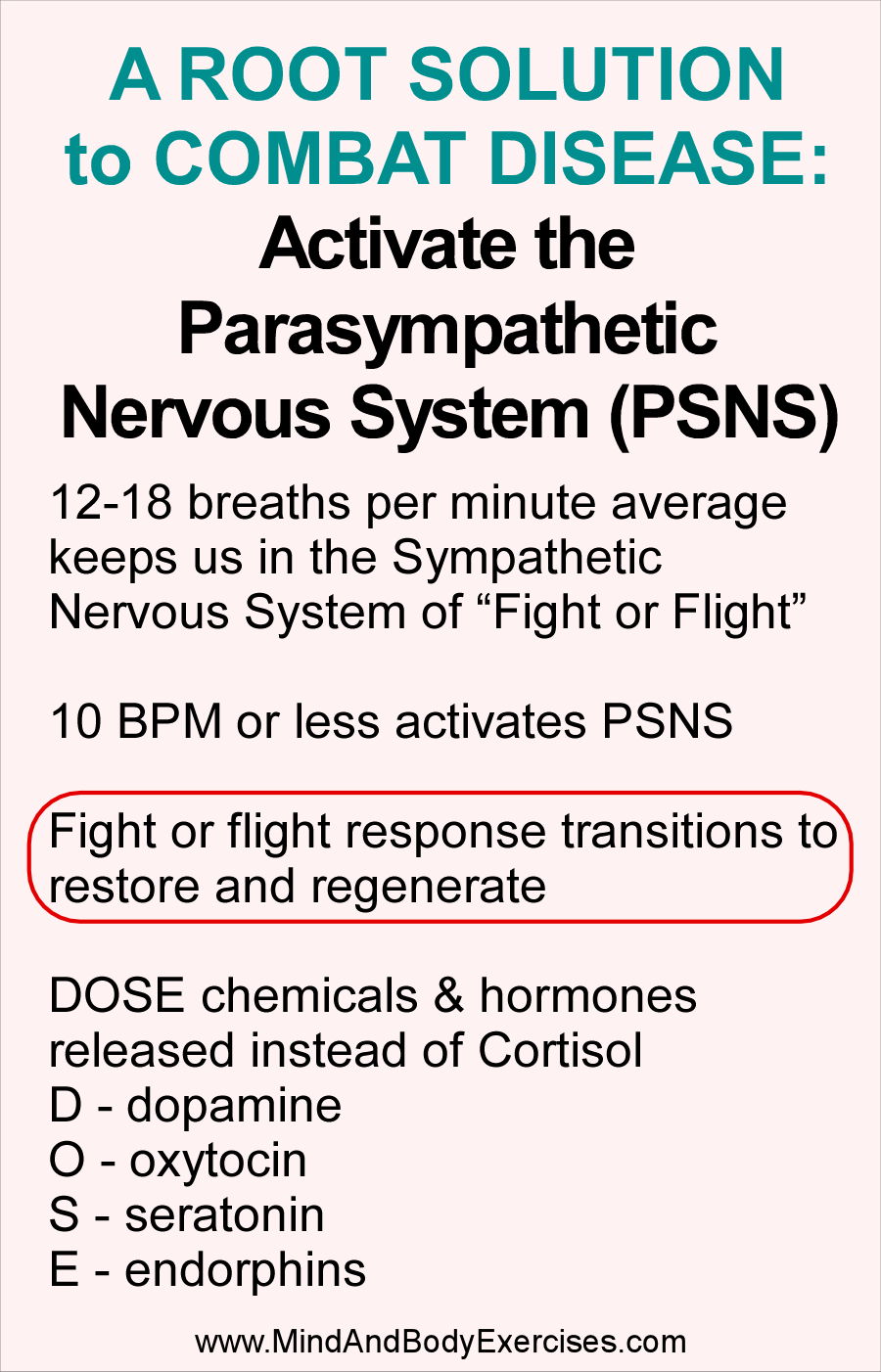
Root Solution


Too much activity within the sympathetic nervous system causes the body to constantly respond as if in the “fight” or flight” mentally eventually deteriorating many body systems.

When respiration slows to 10 breaths per minute or slower, the parasympathetic nervous system is activated. Qigong, tai chi, baguazhang, yoga, etc. are all effective methods of exercise that activate this nervous system.  These techniques have proven the test of time in being an option to remove or manage the inner critical dialogue and learn to regulate the fast-paced modern existence we all experiencing.


Parasympathetic Graphic

Breathing is one of the few bodily rhythms that we can consciously adjust, along with sleep and elimination. All of these rhythms directly affect our body’s delicate blood chemistry. However, our breath is the root power in bringing oxygen (qi) into our body to nourish it down to the cellular level.

Deep breathing encourages pumping of cerebrospinal fluid (fluid around the spinal cord). This increases brain metabolism while promoting feelings of physical and mental well-being, as well as enhanced mental alertness.

When the parasympathetic nervous system is activated, “happy” hormones are released, decreasing heart rate and blood pressure. This relaxes the nervous system, slows and calms all the body systems. This process then promotes regeneration through decreasing metabolic rate at all levels.

Qigong balances breathing and promotes conditions in your body for it to be able to regenerate and heal itself. Qigong does not treat symptoms, but rather solves the problem at its root.

Meditation, tai chi, qigong and yoga are time-proven methods that help regulate thoughts, emotions and the resulting blood chemistry.
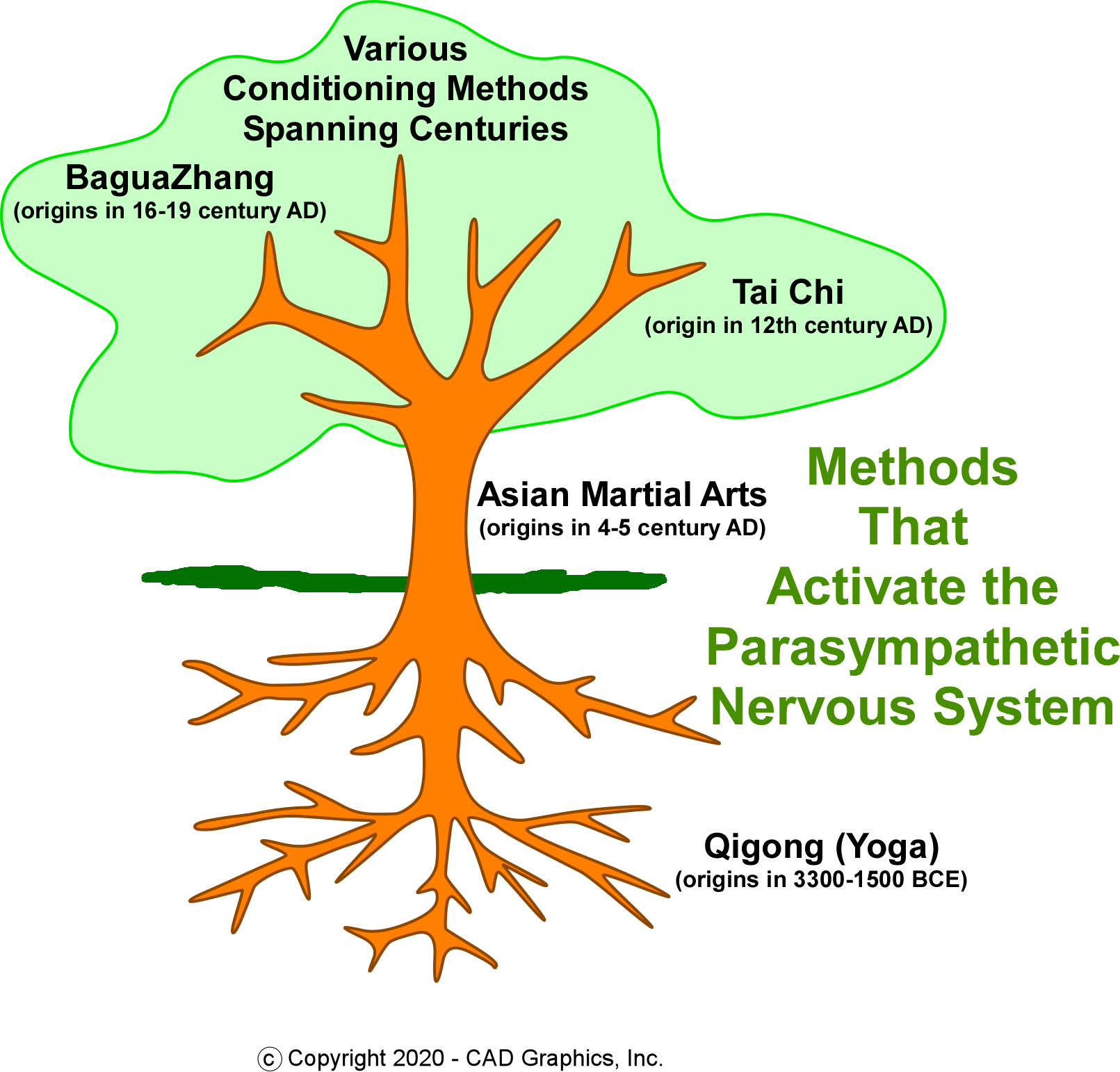
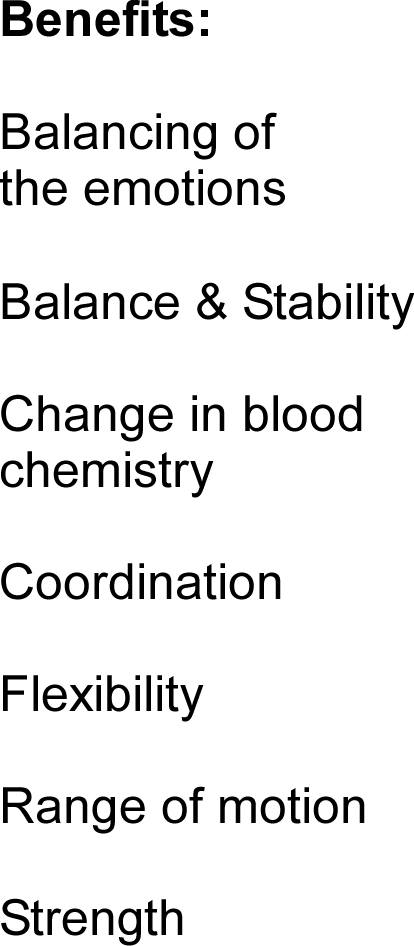
Methods to Slow BreathingBenefits

For more info, contact Jim Moltzan at info@mindandbodyexercises.com, 407-234-0119 or through my site at http://www.mindandbodyexercises.com

 

Jim

vs181006-004cropped-header-image2.jpg

Jim Moltzan started his martial arts training at the age of 16, starting with Korean martial arts and evolving into BaguaZhang, Tai Chi, and Qigong. Jim has been training, studying and teaching for almost 40 years effectively educating hundreds of students.

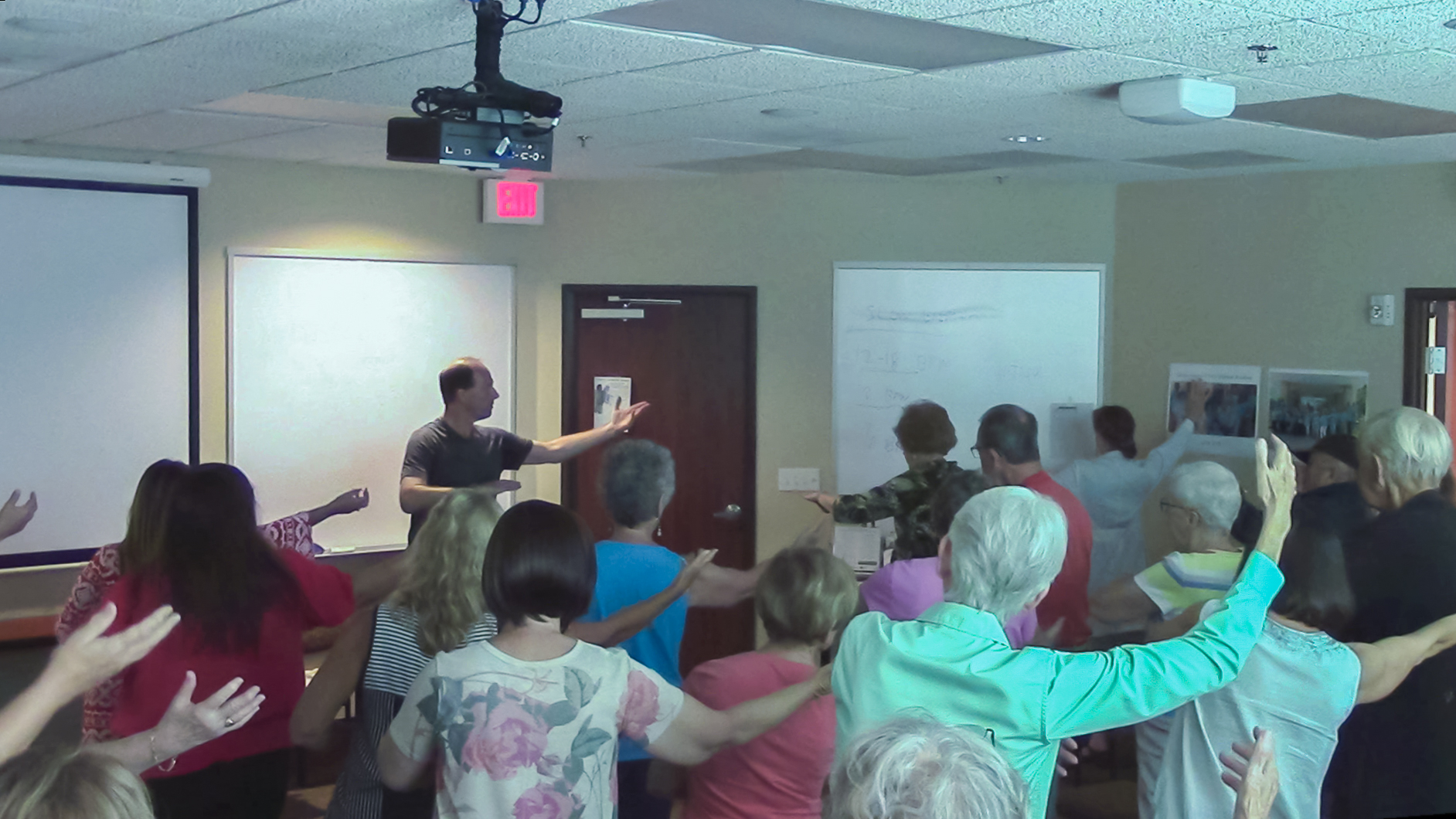
Master Instructor Jim Moltzan has trained with a diverse group of masters and high-level martial arts teachers of many different disciplines. Jim’s specialty is teaching exercises to improve chronic conditions, working with people of all ages, especially senior adults. Offering guidance and instruction, Jim has also worked with Parkinson Disease patients through Florida Hospital. Jim gives regular lectures as requested by AdventHealth (Florida Hospital) regarding the benefits of Eastern practices.

He is the author and graphic artist of numerous journals, graphic charts and study guides relative to the mind and body connection and how it relates to martial arts, fitness and self-improvement.

Jim continues his training and teaching in the Orlando, Florida area conducting classes, seminars and lectures as his schedule allows. He balances his teachings and businesses with his own personal cultivation and time spent with his wife and two teenage kids.

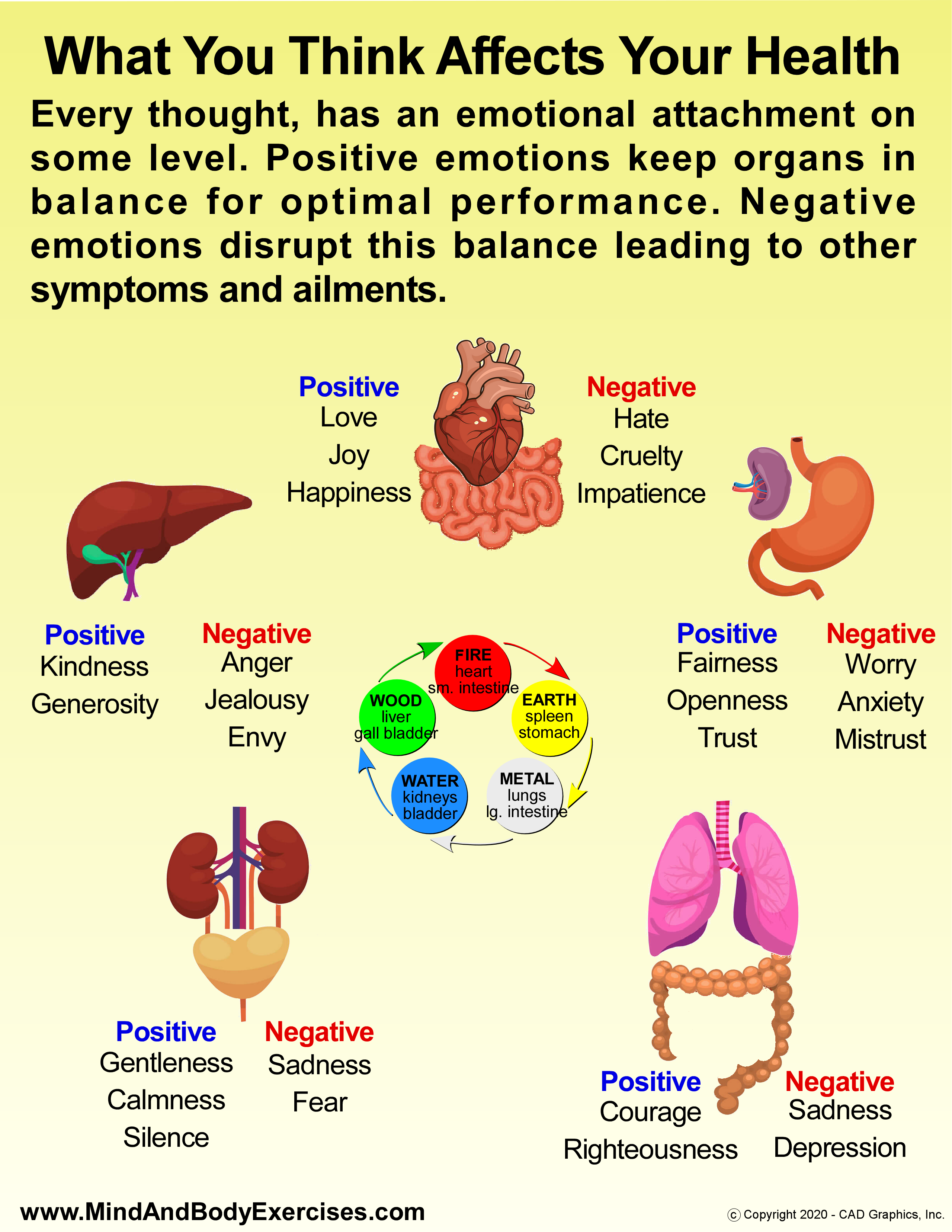
What You Think Affects Your Health

Thoughts-affecting the organs

Many cultures have known this for thousands of years.  Western medicine has acknowledged in recent years, how stress has an effect on the internal organs and consequently the immune system.

When humans are confronted with trauma or extreme stress, the body adjusts with changes to the blood chemistry to deal with the tasks at hand. When the “flight or flight response” or the parasympathetic nervous system activates, adrenaline and cortisol dump into the blood stream.  Prolonged adrenaline & cortisol in the blood is thought to cause deterioration of the internal organs and systems of the human body.

Meditation, tai chi, qigong and yoga are time-proven methods that help regulate thoughts, emotions and the resulting blood chemistry.

For more info, contact Jim Moltzan at info@mindandbodyexercises.com, 407-234-0119 or through my site at http://www.mindandbodyexercises.com