One of the more profound realizations I have experienced since removing myself from a closed or insular social group is recognizing just how many ordinary decisions in life can gradually cease to feel like our own. It is something that I did not fully appreciate while I was immersed in that environment. In fact, it has taken years of distance, additional education, new relationships, different teachers, and simply living outside that structure for me to recognize how much personal sovereignty a person can willingly surrender.
When we think about losing freedom, we often imagine someone forcibly taking it away from us. Yet personal agency can also be surrendered voluntarily, incrementally, and sometimes with the very best of intentions. We may give another person, teacher, organization, philosophy, or community increasing authority over our decisions because we believe we are contributing to something worthwhile. We may believe we are pursuing knowledge, discipline, personal improvement, loyalty, tradition, or perhaps the greater good for everyone involved.
That distinction has become increasingly important to me.
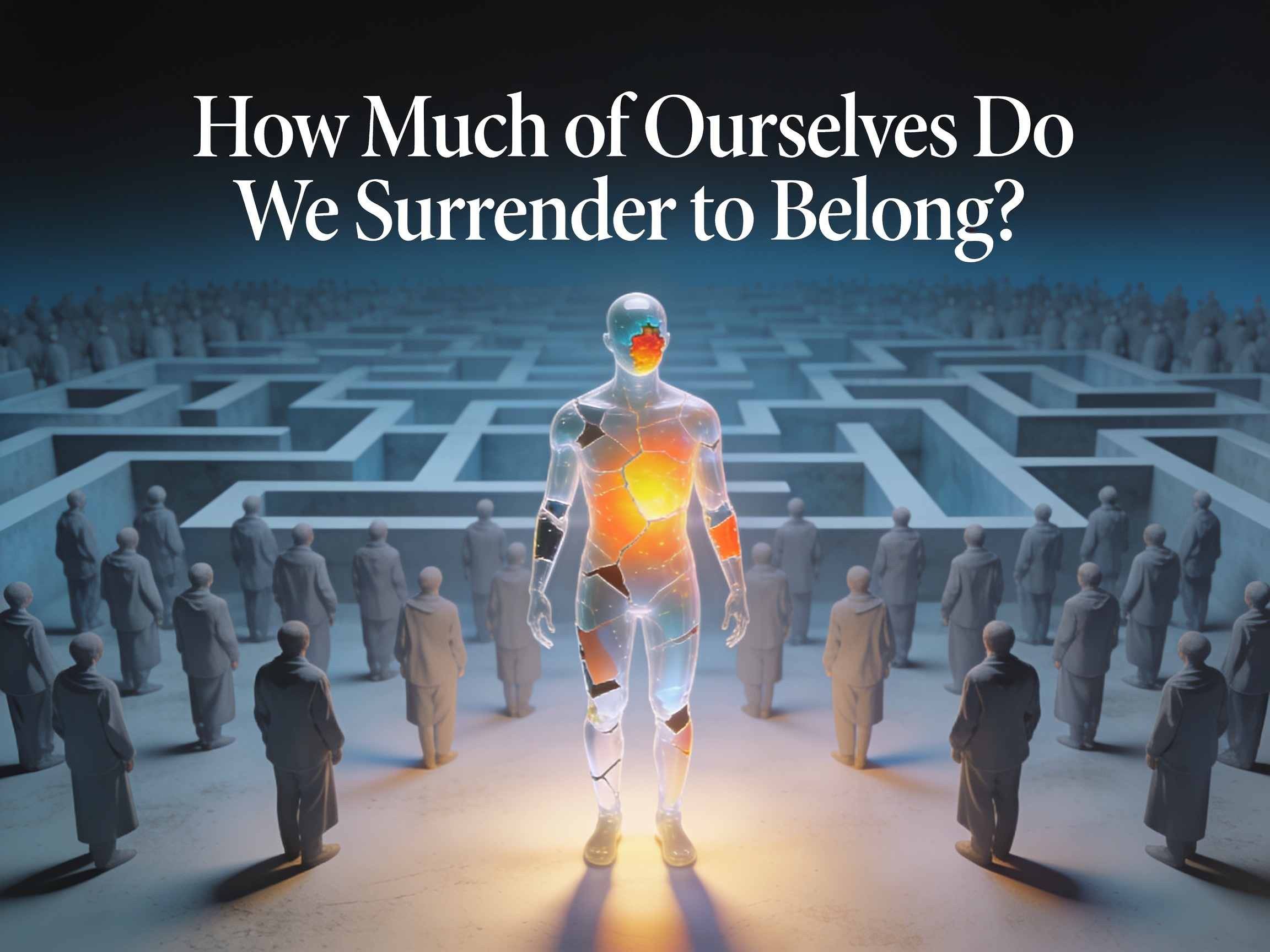
I do not view my own experience simply through the lens of victimization. I made choices. I participated. I believed in much of what I was doing. At various points I accepted restrictions, expectations, and ways of thinking because, within the environment in which I was functioning, they seemed reasonable or necessary. Looking backward decades later is considerably different from looking outward while standing inside the system.
Psychologist and sociologist Janja Lalich (2004) used the term bounded choice to describe how people functioning within highly committed and closed environments may technically continue making choices while the psychological and social boundaries surrounding those choices become increasingly narrow. Decisions that appear unreasonable to outsiders may make considerable sense to the person operating within the group’s worldview. Agency does not necessarily disappear overnight. Sometimes the boundaries around agency simply become smaller.
Personal agency is essentially our ability to act intentionally and make meaningful choices concerning the direction of our lives. Closely related is autonomy, the experience of behaving in ways that are consistent with our own values and considered choices. Self-determination theory, developed extensively by psychologists Richard Ryan and Edward Deci, identifies autonomy, competence, and relatedness as fundamental psychological needs. Environments that support these needs tend to encourage motivation and well-being, while environments that frustrate them can have very different consequences (Ryan & Deci, 2000).
This creates an interesting paradox when considering closed groups. People often enter communities precisely because they provide competence and relatedness. We want to become better at something. We want instruction. We want belonging. We want to associate with other people pursuing similar goals. This is particularly understandable in martial arts, spiritual practices, wellness traditions, religious communities, military organizations, professional associations, and other groups organized around a shared purpose.
There is nothing inherently unhealthy about any of this. Human beings need teachers, mentors, communities, traditions, friendships, and relationships. We learn and depend upon one another. We accomplish things collectively that would be difficult or impossible to accomplish individually. The difficulty begins when belonging gradually becomes dependent upon compliance.
A student may initially recognize that a teacher has considerably more knowledge and experience and therefore reasonably decides to listen and follow instructions. Over time, however, respect for experience can evolve into something quite different. The student may begin assuming that the teacher understands things that the student cannot possibly understand. Eventually, disagreement itself may become evidence that the student simply has not developed enough insight to recognize why the teacher must be correct. These are very different propositions. The first can represent humility. The last can become surrender.
One of the most significant consequences of living within an insular system is that the organization can gradually become the filter through which outside information is evaluated. Who should I learn from? Which books should I read? Which teachers are legitimate? Which martial arts systems are worthwhile? Whose interpretation of history should I trust? Which health practices should I follow? Who should I associate with? What am I allowed to question? What information should remain within the organization? What am I permitted to teach? At some point, we may no longer recognize how many of these questions are being answered for us.
This does not require people within closed systems to be unintelligent, weak, gullible, or incapable of independent thought. Quite the contrary. They may be highly educated, disciplined, motivated, idealistic, hardworking, and sincerely committed to becoming better versions of themselves. Those qualities may actually deepen their involvement because they continually work harder to fulfill the expectations of the system.
This is one reason looking backward can be so illuminating. From outside the structure, we can finally begin to see the structure.
The Freedom to Learn Again
One of the greatest freedoms I have experienced since leaving an insular environment is remarkably simple. I can learn from whomever I choose. That statement might seem insignificant to someone who has always possessed that freedom. To someone who spent many years within a system where outside instruction could be discouraged, dismissed, or interpreted as disloyalty, it can be profound.
Today, if I encounter someone who knows something that I do not, I can listen. I do not first need to determine whether that person belongs to the correct organization, follows the approved lineage, or has somehow received the blessing of someone above me.
I can study tai chi with one teacher, qigong with another, martial applications with someone else, anatomy and physiology through contemporary science, meditation through psychology, and traditional Chinese medicine through experienced practitioners and historical sources. I can compare ideas. I can find similarities and contradictions. I can determine that something I was taught many years ago was useful, partially correct, misunderstood, or perhaps simply wrong.
None of these teachers need to possess the entire truth. Neither do I. That realization itself is liberating. Knowledge does not have to belong to a tribe.
The Freedom to Teach and Share
The same principle applies in the opposite direction. I can teach whomever I choose.
I do not need organizational permission to share something useful with another human being. I do not need to determine whether someone has achieved an appropriate status within a hierarchy before I can help them understand something that might improve their health, movement, breathing, balance, strength, or quality of life. This freedom does not eliminate responsibility. In many ways, it increases it.
Freedom does not mean that anything I say automatically becomes correct simply because it is now my opinion. If I teach something incorrectly, I should correct it. If better evidence becomes available, I should consider it. If something I believed decades ago no longer withstands examination, I should be willing to acknowledge that. I have certainly changed my perspective on teachings and practices that I once accepted with considerable confidence. To me, this is not weakness or disloyalty. It is intellectual maturity.
Healthy autonomy does not mean rejecting instruction, tradition, or expertise. It means integrating information into our developing understanding rather than merely accepting it because an authority has instructed us to do so (Ryan & Deci, 2000).
The same freedom extends to writing and documenting my experiences. I can write about what I have learned. I can examine what worked and what did not. I can revisit teachings that I once accepted and reconsider them through the knowledge and experience I have acquired since. I can document my experiences and distribute those observations as I believe appropriate.
For someone who has spent years within an environment where knowledge may be treated as proprietary, hierarchical, secret, restricted, or reserved for people considered worthy of receiving it, this represents a substantial change in perspective.
I no longer believe that my experiences belong to an organization simply because they occurred while I was part of that organization. They are also part of my life. I can write, analyze, and learn from them. And perhaps someone else can learn from them as well.
This does not mean exposing every private conversation, violating legitimate confidences, or attacking people simply because I now disagree with them. Personal sovereignty still requires ethics, discernment, responsibility, and restraint. Having the freedom to say something does not necessarily mean that saying it is useful or appropriate. But the decision is once again mine to make.
When the Greater Good Requires Too Much
Perhaps one of the more difficult lessons I have learned is recognizing how easily personal autonomy can be surrendered in pursuit of something perceived as greater than ourselves.
Sacrifice itself is not inherently negative. Parents sacrifice for children. Teachers sacrifice time for students. Members of communities help one another. Soldiers depend upon one another. Families and societies could hardly function if every individual placed personal desires above every collective responsibility.
There is considerable virtue in sometimes putting the needs of others ahead of ourselves. But the idea of doing something “for the greater good” can become problematic when it is repeatedly used to prevent individuals from evaluating what they are actually surrendering.
It seldom happens all at once. A little privacy may be surrendered here. A little independence there. Perhaps we give up some control over our time because everyone else is expected to do the same. We may gradually restrict outside associations because people outside the group supposedly do not understand us. We may stop questioning certain teachings because questioning them creates conflict. We may surrender some control over what we teach, what we study, whom we associate with, or how we spend our money because these sacrifices supposedly demonstrate loyalty and commitment.
Each concession may appear relatively insignificant when viewed independently. The accumulation of those concessions can eventually become substantial.
This is why the process can be difficult to recognize while it is happening. Rarely does someone consciously announce, “Today I am going to surrender my intellectual independence.” Instead, we make hundreds of smaller decisions. Each one has a justification. Each one may even appear reasonable at the time. Years later, we may finally recognize what those decisions collectively created.
Leaving Is Not Always the End of Leaving
Physical departure from an organization can occur relatively quickly. Psychological departure can take considerably longer.
A person may leave a group while continuing to carry portions of its structure internally. We may still wonder what former teachers would think. We may hesitate before studying with someone who was previously considered inappropriate. We may feel uncomfortable questioning ideas that once seemed unquestionable. We may censor ourselves even though nobody is censoring us anymore.
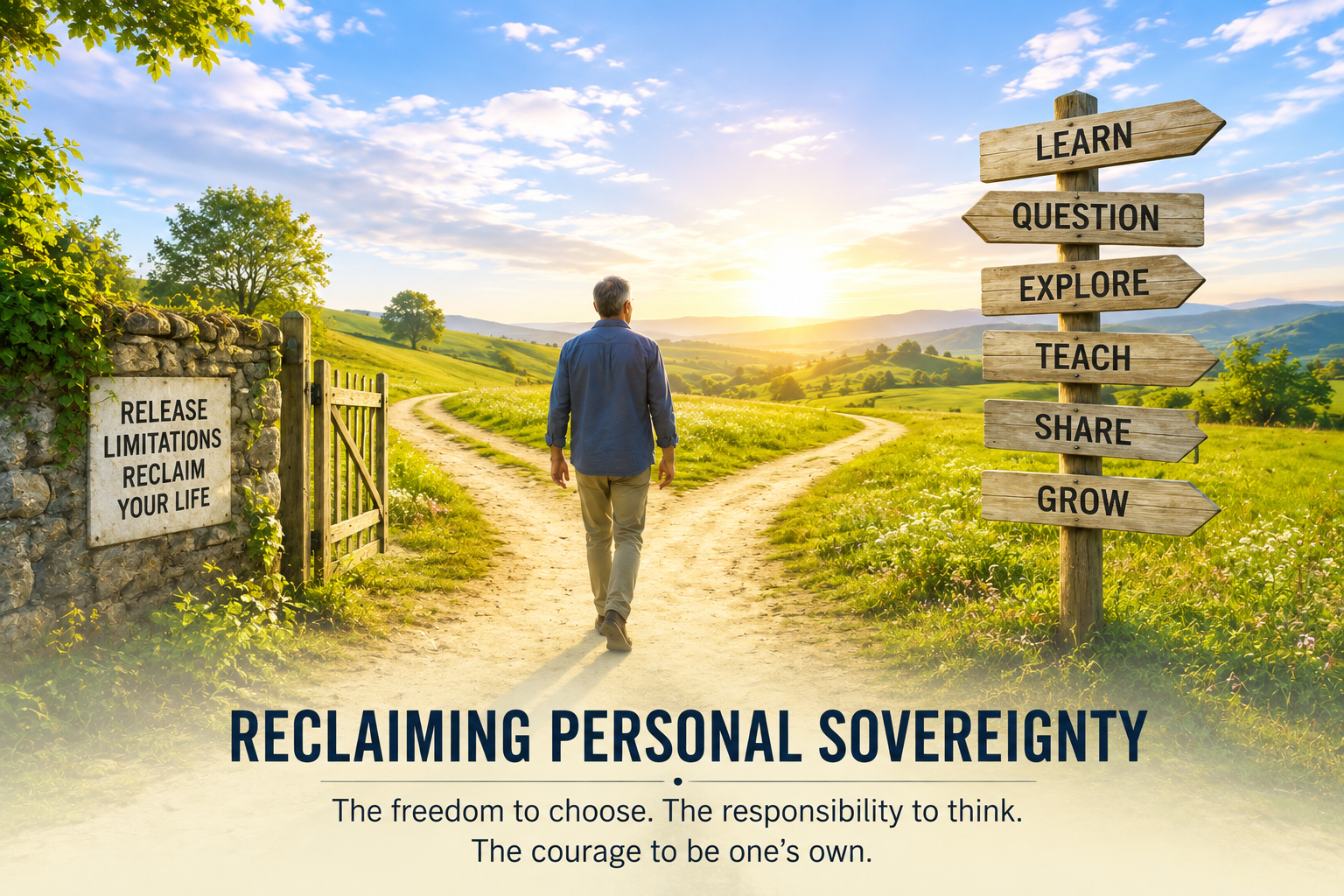
Perhaps most interestingly, we may continue asking permission from people who no longer possess authority over us. The gate may be open long before we realize that we are free to walk through it.
Reclaiming sovereignty therefore involves more than simply rejecting previous authority. It requires developing the ability to evaluate information independently while remaining humble enough to recognize that independence does not make us infallible.
This distinction is important because leaving one closed system only to immediately adopt another closed system is not necessarily liberation. Trading one unquestionable teacher for another does not restore sovereignty. Replacing one ideology with another ideology that cannot be questioned merely changes the scenery.
Critical thinking requires something more difficult. It requires becoming comfortable with uncertainty.
I can respect a teacher without believing everything that teacher says. I can appreciate a tradition without defending every aspect of that tradition. I can disagree with someone without making that person my enemy. I can discover that something I believed for twenty years was incorrect without concluding that those twenty years were completely wasted. Life is considerably more complicated than that.
Sovereignty Does Not Mean Isolation
Personal sovereignty also does not mean that I no longer need anyone. Quite the opposite. I continue to value teachers, colleagues, students, friends, researchers, historians, physicians, therapists, martial artists, traditional practitioners, scientists, philosophers, and ordinary people whose experiences may teach me something. What has changed is my relationship to authority.
I can listen without surrendering my judgment. Respect can be given without worshipping. I can disagree without becoming an enemy. Learning can be accomplished without joining. I can belong without becoming owned. I can teach without demanding unquestioning loyalty. And I can change my mind without interpreting that change as betrayal.
Self-determination theory recognizes both autonomy and relatedness as important psychological needs (Ryan & Deci, 2000). Perhaps the goal, therefore, should not be complete independence from other people. Humans are social creatures, and very few of us would thrive in complete isolation. A healthier goal may be interdependence without surrendering sovereignty.
We can remain connected while retaining our individuality. Participation in communities can be present without giving those communities ownership over our thinking. We can respect expertise while reserving the right to question it. Guidance can be accepted while recognizing that ultimately, we remain responsible for the direction of our own lives.
Looking Back Without Living Backward
It has taken me years to understand some of these distinctions, and I suspect my understanding will continue to evolve. That does not mean that every experience within a closed organization was negative. Nor does it require me to dismiss everything I learned there. Life is rarely that simple.
I learned valuable skills, developed discipline, formed relationships, made mistakes, and taught things that I later reconsidered. I accepted ideas that I now question. I participated willingly in structures that, from my current perspective, sometimes required far more personal sovereignty than I would surrender today. All of those things can be true simultaneously.
Maturity does not require rewriting the past so that everything was either wonderful or terrible. It requires seeing the past more completely.
There is a substantial difference between saying, “Everything was done to me,” and saying, “I now understand more clearly the environment in which I made those choices.” The second perspective allows me to preserve my agency while still examining the social pressures, expectations, relationships, and structures that influenced my decisions. That is an important distinction for me.
I cannot change the choices I made decades ago, nor would I necessarily want to erase the experiences that eventually contributed to who I am today. What I can do is examine them, learn from them, write about them, and perhaps provide another perspective for someone else who finds themselves asking similar questions.
Reclaiming the Steering Wheel
Today I have considerably more control over the direction of my intellectual, professional, and personal life.
Today there is considerably more freedom to determine the direction of my intellectual, professional, and personal life. That freedom extends to choosing what deserves further study, learning from people with different backgrounds and perspectives, and sharing what I have learned with those who may find it useful. Traditions and long-held beliefs can be explored without an obligation to defend them, just as questionable claims can be approached with appropriate skepticism. My experiences can also be documented and shared when I believe they may offer something of value to others. Perhaps most importantly, personal sovereignty includes the freedom to reconsider previous conclusions and change course when experience, reflection, or better information provides a reason to do so. Perhaps that is one of the clearest expressions of sovereignty.
It is not the belief that I finally possess all the answers. It is the freedom to continue asking questions.
After spending years inside an insular environment, personal agency can initially feel almost unfamiliar. Yet over time something remarkable happens. The boundaries begin to expand. Teachers become resources rather than unquestionable authorities. Traditions become subjects worthy of investigation rather than doctrines requiring defense. Experience becomes something we can examine rather than something we must interpret according to an approved narrative.
The world becomes larger again.
Perhaps this is one of the most valuable lessons I have taken from the entire experience. We should cooperate with others. We should sometimes sacrifice for others. We should belong to communities, learn from teachers, respect expertise, honor commitments, and contribute to purposes larger than ourselves. There can be tremendous value in all of these things.
But somewhere within that process, we should occasionally ask ourselves a simple question: How much of myself have I surrendered in order to belong?
The answer may not become apparent immediately. Greater clarity often comes with distance, exposure to different people and perspectives, additional education, and the accumulation of life experience. Only with time may we begin to recognize how much freedom we possessed all along, how gradually some of it was surrendered, and how willingly we may have placed portions of our own agency into someone else’s hands.
References
Lalich, J. (2004). Bounded choice: True believers and charismatic cults. University of California Press. https://doi.org/10.1525/california/9780520231948.001.0001
Ryan, R. M., & Deci, E. L. (2000). Self-determination theory and the facilitation of intrinsic motivation, social development, and well-being. American Psychologist, 55(1), 68–78. https://doi.org/10.1037/0003-066X.55.1.68