Currently, many of us seem to have a lot of extra time on our hands. But we often talk ourselves out of doing things we know need to be done. It is that way. Part of being human is being lazy.
Come on let’s face it, we do often try to find the route of least resistance. We sit when we can stand. We drive when we can walk. We take the elevator instead the stairs. Some even complain they have no time to take care of themselves, but can find time to watch television and check their smartphone throughout the whole day.
My solution to this part of the human condition, is to take baby steps. That’s it! A minute or two, here and there add up throughout your day. Once you get moving it seems easier to keep moving a while longer.
Sir Isaac Newton proposed his First Law of Motion, the law of inertia, in 1687: A body at rest tends to remain at rest. A body in motion tends to stay in motion. Bodies will continue in their current state, whether at rest or in motion, unless acted on by a greater outside force.
Let me know if you need help getting started. I have much information and online classes here and at my other sites.
I made my commitment many years ago to learn, study, practice and teach fitness and well-being. My education came from martial arts and various other Eastern methods rooted in Traditional Chinese Medicine (TCM). I started when I was 16 years old and have never stopped since; 56 now.
I have written journals, produced educational graphics and co-authored a book. I blog often with a WordPress site, writing about the anatomical, physiological and mental benefits of mind and body training. Years back I started recording my classes and lectures, knowing that somewhere down the line, all of this information would be valuable to those who need and desire it.
My YouTube channel has almost 200 videos of FREE classes and other education videos. The goal all along has been to raise the awareness that Tai chi (a martial art), qigong (yoga at its root) and many other Eastern wellness methods, have proven the test of time for maintaining well-being. No gym, no mat, no membership, no special clothes or equipment. Just the individual and their engagement.
Weak or injured knees, back issues (strains & sciatica), stress & anxiety, asthma, arthritis, balance, poor posture – the list is endless. These are all issues that can be improved or overcome by those serious about learning about the mind, body & spirit connection.
When things get back to “normal” I will resume charging for my weekly follow along classes, private lessons and group lectures. Until then I will continue to offer my free online classes via YouTube and some on Facebook.
A Method to Pursue Mind, Body & Spirit Harmony – The 8-Step Path
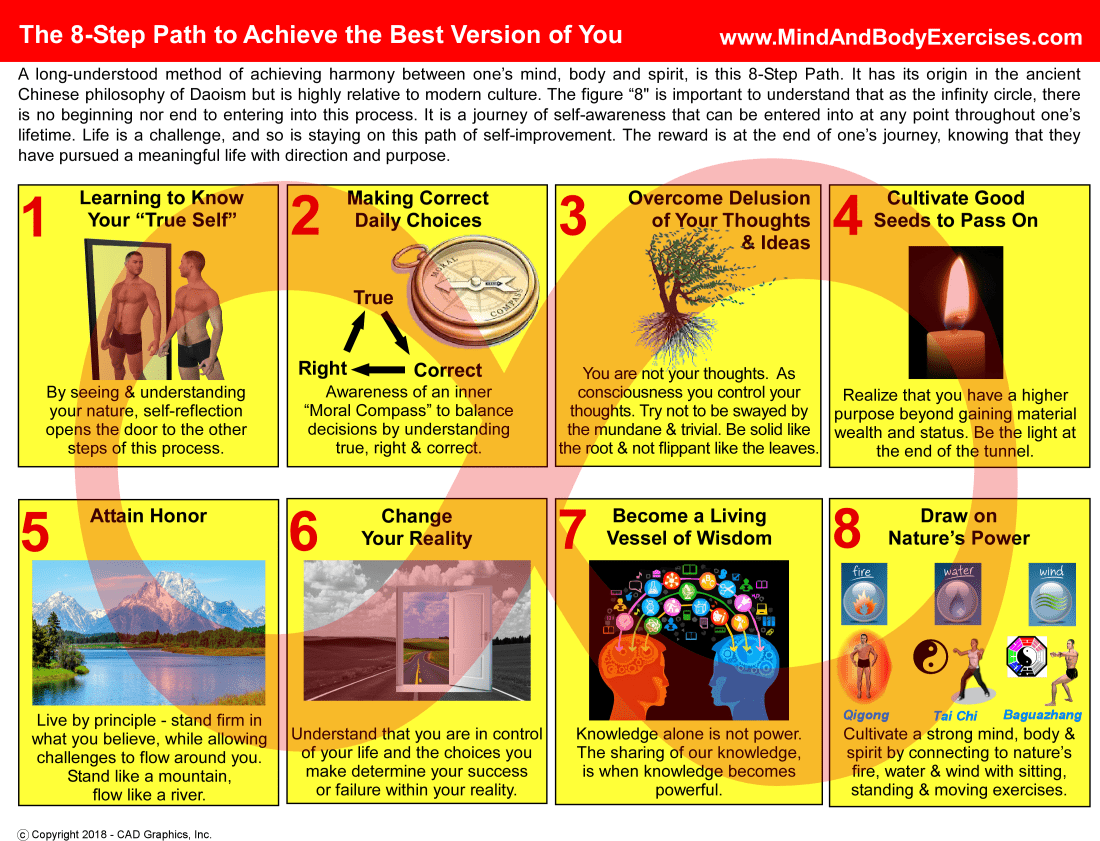
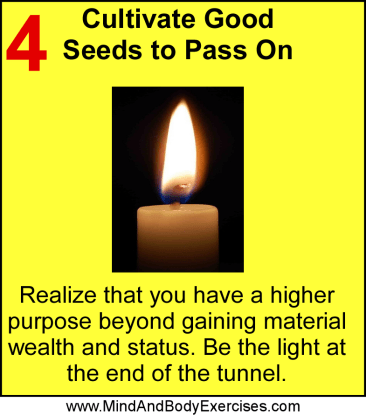
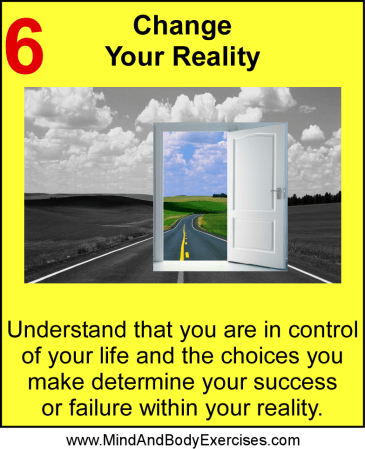
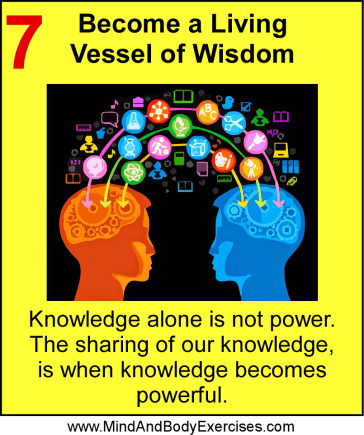
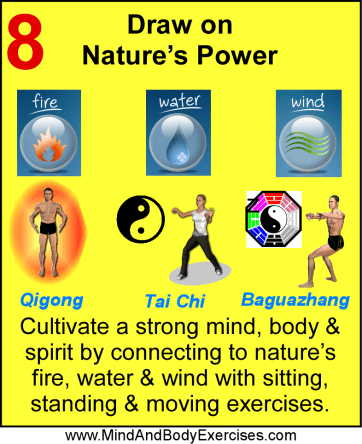
A long-understood method of achieving harmony between one’s mind, body and spirit, is this 8-Step Path. It has its origin in the ancient Chinese philosophy of Daoism but is highly relative to modern culture. The figure “8″ is important to understand that as the infinity circle, there is no beginning nor end to entering into this process. It is a journey of self-awareness that can be entered into at any point throughout one’s lifetime. Life is a challenge, and so is staying on this path of self-improvement. The reward is at the end of one’s journey, knowing that they have pursued a meaningful life with direction and purpose.
Spirituality and religion are often lumped together but have rather distinctly different meanings. So let’s look at spiritually more as a level of self-awareness, purpose and life direction and not necessarily a membership to any particular religion or belief system.
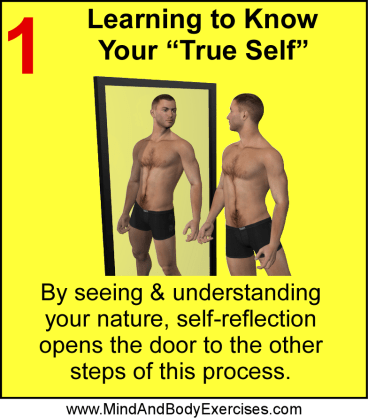
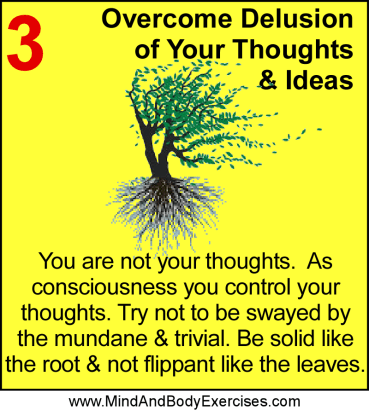
The graphic immediately below shows how the 8 are all interconnected. Below that are the brief descriptions of each of the 8 steps. This is by no means the only method to find this harmony of mind, body and spirit. It is a time-proven method that I have learned and have tried to cultivate for many years.
Qigong, tai chi, baguazhang, and yoga are not the only methods that can be used within this formula but have proven the test of time as methods to cultivate harmony of the mind, body and spirit. These exercise practices offer a wide spectrum of physical wellness benefits, stress relief as well as means of self-awareness. Not all teachers nor students practice these for the same goals.
Jim Moltzan started his martial arts training at the age of 16, starting with Korean martial arts and evolving into BaguaZhang, Tai Chi, and Qigong. Jim has been training, studying and teaching for almost 40 years effectively educating hundreds of students.
Master Instructor Jim Moltzan has trained with a diverse group of masters and high-level martial arts teachers of many different disciplines. Jim’s specialty is teaching exercises to improve chronic conditions, working with people of all ages, especially senior adults. Offering guidance and instruction, Jim has also worked with Parkinson Disease patients through Florida Hospital. Jim gives regular lectures as requested by AdventHealth (Florida Hospital) regarding the benefits of Eastern practices.
He is the author and graphic artist of numerous journals, graphic charts and study guides relative to the mind and body connection and how it relates to martial arts, fitness and self-improvement.
Jim continues his training and teaching in the Orlando, Florida area conducting classes, seminars and lectures as his schedule allows. He balances his teachings and businesses with his own personal cultivation and time spent with his wife and two college-age kids.
Most people in the United States will experience back pain at some time in their lives. Some find relief through options like rest, medications, exercise, stretching, chiropractic, acupuncture, physical therapy and sometimes surgery. Most pain goes away within a few days or weeks only to return at a later date. In many cases, the root cause of back pain is tight hamstring muscles. Excessive sitting or standing can tighten these muscles, as well as lack of proper stretching on a regular basis. Other root causes of back pain are many ranging from poor posture, heavy lifting, sports injuries, career, lack of exercise, congenital and others. Unless the root cause is found and addressed, most treatments only offer temporary relief.
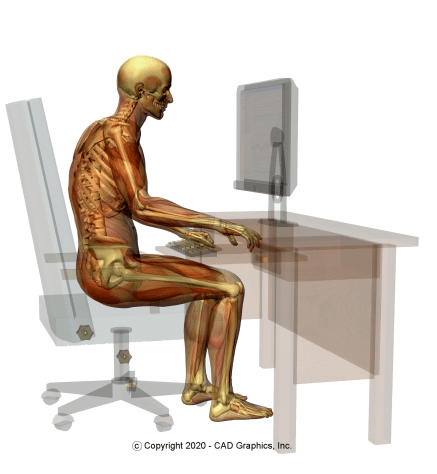
Straining the neck forward to see closer, puts strain on the neck and upper back. This leads to hunching forward of the spine and a gradual realignment of the 3 natural curves.
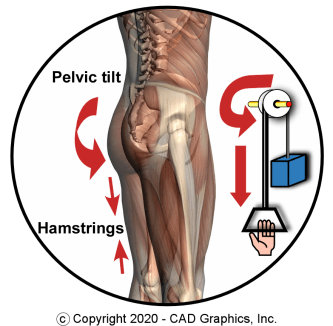
Poor posture, combined with long hours sitting stagnant in a chair cause muscles within the legs to shorten and tighten over time. These muscles, specifically the hamstrings, cause the pelvis to tilt the tailbone forward.
Just like a pulley, the hips rotate towards the tight muscle groups. Tight hamstrings, cause the pelvis to tilt the tailbone forward which put increased tension on lower back muscles.
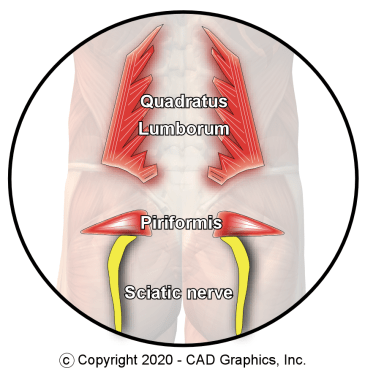
Pelvic tilt also puts strain on the lower back muscles such as the quadratus lumborum. Spasms can occur as the muscles tighten even more to protect the spine from excessive movement. The piriformis muscle attaches the head of the femur to the base of the pelvis. The piriformis can become irritated or tense causing pain to the nearby sciatic nerve. Sciatica can cause pain and numbness down the back of the legs to the heels and toes.
The below set of exercises develop strength and flexibility which can improve posture. Good health of the lower back starts with good posture. Strength in the back, hips and abdomen provide a strong cage that houses the internal organs. Flexibility in these areas helps to maintain good blood circulation to the organs and lower body. Lengthening of the spine while exercising reduces stress and tension on the nervous system. Relax the body into the positions in spite of any tension in the muscles. Deep and relaxed breathing is essential while performing these exercises.
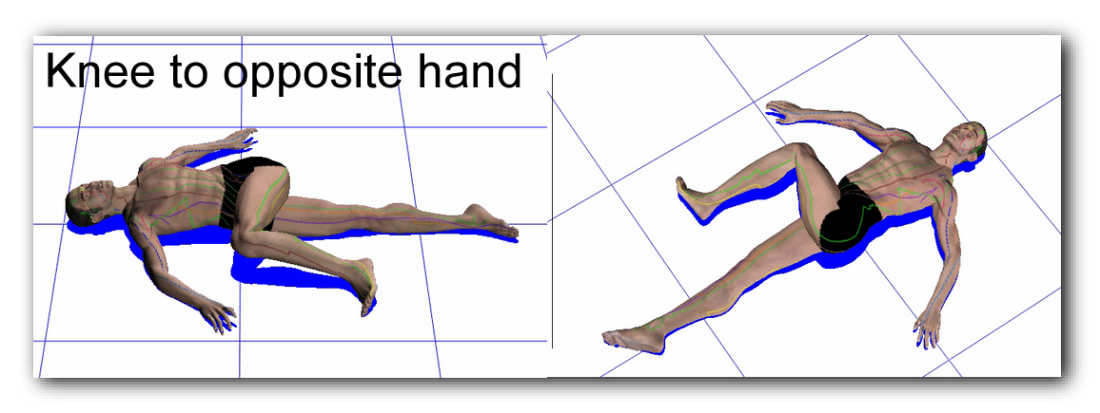
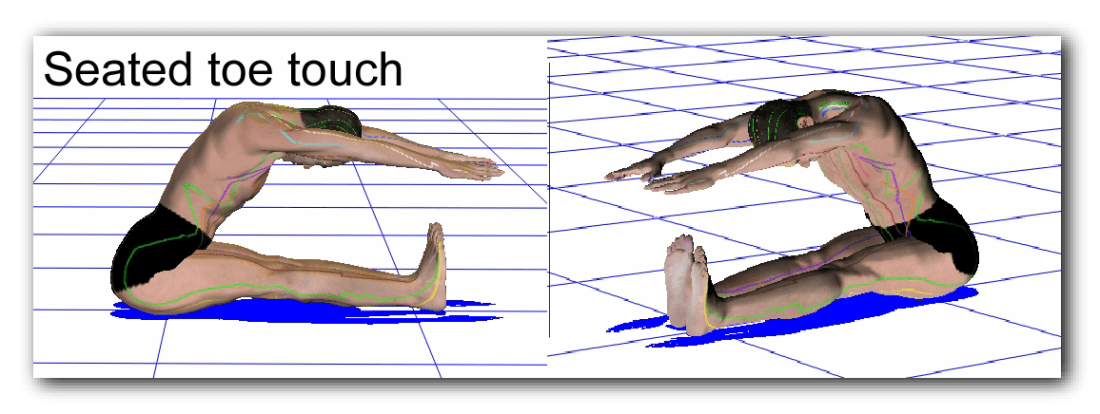
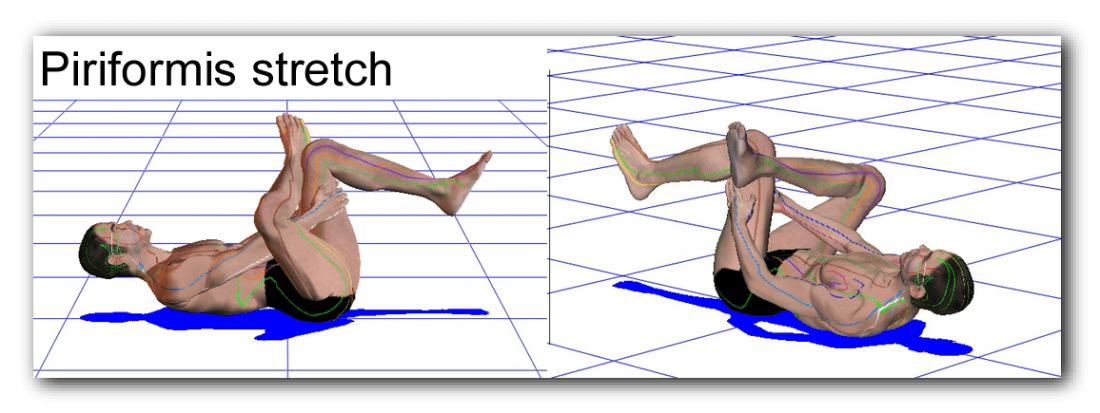
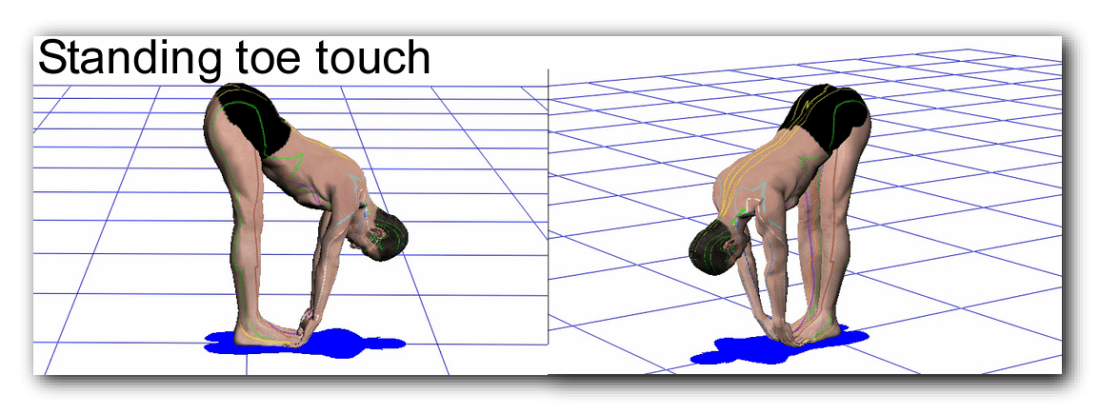
Try to match your body position similar to those as shown below. Don’t be discouraged by not being able to achieve these stretches but rather do what your body is capable of. Stretches can be performed on the floor, on a mattress or even in a swimming pool or hot tub. Try for a few seconds in each position for a total of a few minutes. As your flexibility increases in the hamstrings, less tension will be placed on the lower back muscles. Try to do some of the exercises everyday for at least a few days in a row. As the pain is relieved, try to add more time for each exercise working up to a total of a half-hour or full hour. As less pain is present, try to maintain a regular schedule of performing these exercises to keep the problem from reoccurring. All stretches should be performed on both sides.
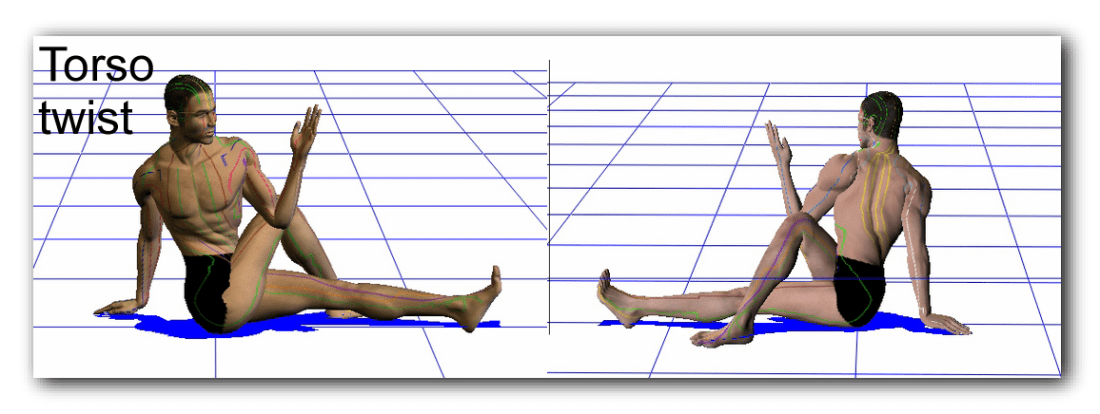
Lay flat on your back, bring a bent knee across the other straight leg. Relax the neck and arms as you feel the lower back stretch to the side.Sit on the buttocks as leaning the upper body forward. Focus more on the torso coming forward than the hands reaching the feet.Lay flat on the back as bending both knees. Try to cross the right foot over the left knee. Pull the left leg towards your face as the right hip stretches.Feet together while bending forward at the waist. Reach as far downward as comfortable.Sit on the buttocks with one leg straight and one leg bent and crossed over the other. Turn the upper body opposite while relaxing the back.
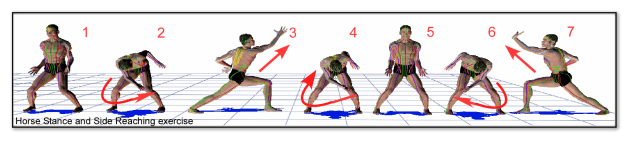
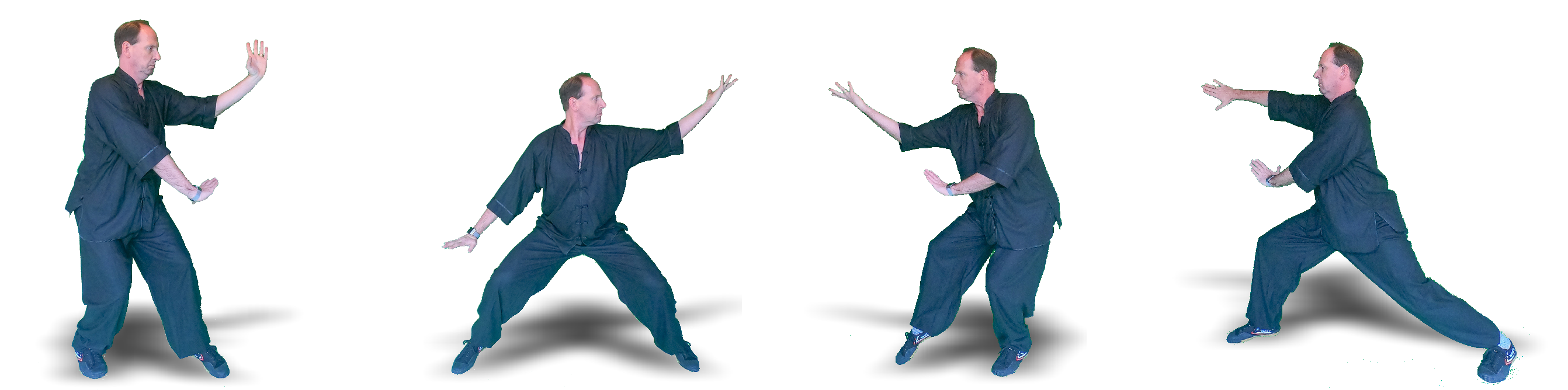
Feet slightly wider than shoulder width, knees bent, hands open positioned next to the hips. Back straight, lower back arched inward as hips sink down. Left Bo stance as opposite arm extends out and away from back heel. Left hand, arm & shoulder twists with the torso towards the left. Sink hips. Alternate on both sides.
Jim Moltzan started his martial arts training at the age of 16, starting with Korean martial arts and evolving into BaguaZhang, Tai Chi, and Qigong. Jim has been training, studying and teaching for almost 40 years effectively educating hundreds of students.
Master Instructor Jim Moltzan has trained with a diverse group of masters and high-level martial arts teachers of many different disciplines. Jim’s specialty is teaching exercises to improve chronic conditions, working with people of all ages, especially senior adults. Offering guidance and instruction, Jim has also worked with Parkinson Disease patients through Florida Hospital. Jim gives regular lectures as requested by AdventHealth (Florida Hospital) regarding the benefits of Eastern practices.
He is the author and graphic artist of numerous journals, graphic charts and study guides relative to the mind and body connection and how it relates to martial arts, fitness and self-improvement.
Jim continues his training and teaching in the Orlando, Florida area conducting classes, seminars and lectures as his schedule allows. He balances his teachings and businesses with his own personal cultivation and time spent with his wife and two college-age kids.
Depending upon your issues, maybe yes to all of the above. Without knowing how serious your injury is, it can be difficult to plot a course to relieve the pain and gain back confidence in your activities. You need to do the homework and research to become educated as to what injuries are typical and what the options are to move forward.
I am not a doctor nor claim to be. However, I have a different health, fitness and well-being background spanning almost 40 years. Starting martial training at the age of 16, I have continued training, studying and teaching ever since. Traditional Chinese medicine and qigong can also be studied within some martial arts lineages, which I have pursued greatly. Martial arts is deeply connected to fitness and health, aside from the obvious self-defense benefits. My fellow students and I were taught that it was easier but not ethical to injure someone unless justified. More honorable was to heal injuries or train and teach to not become injured.
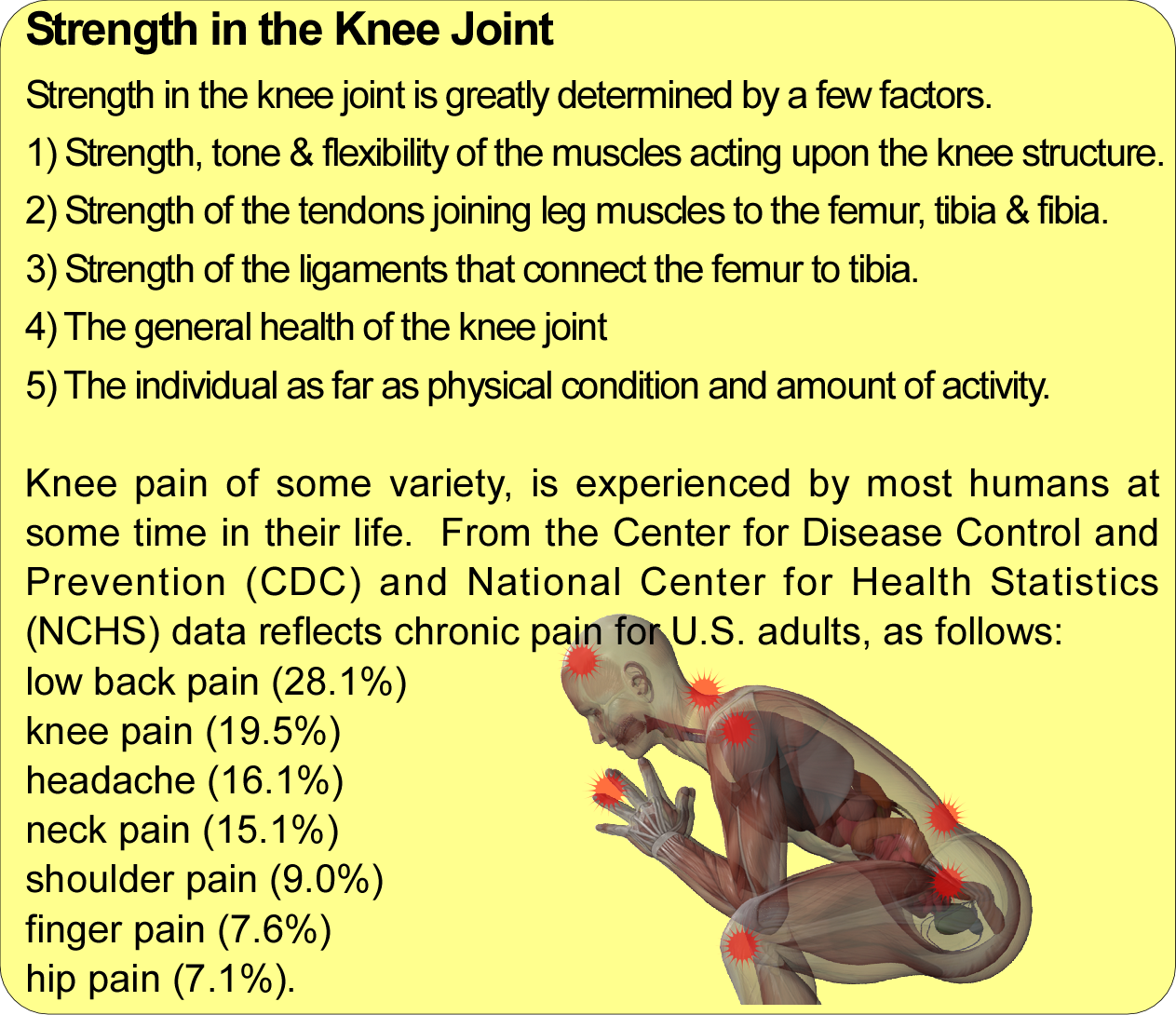
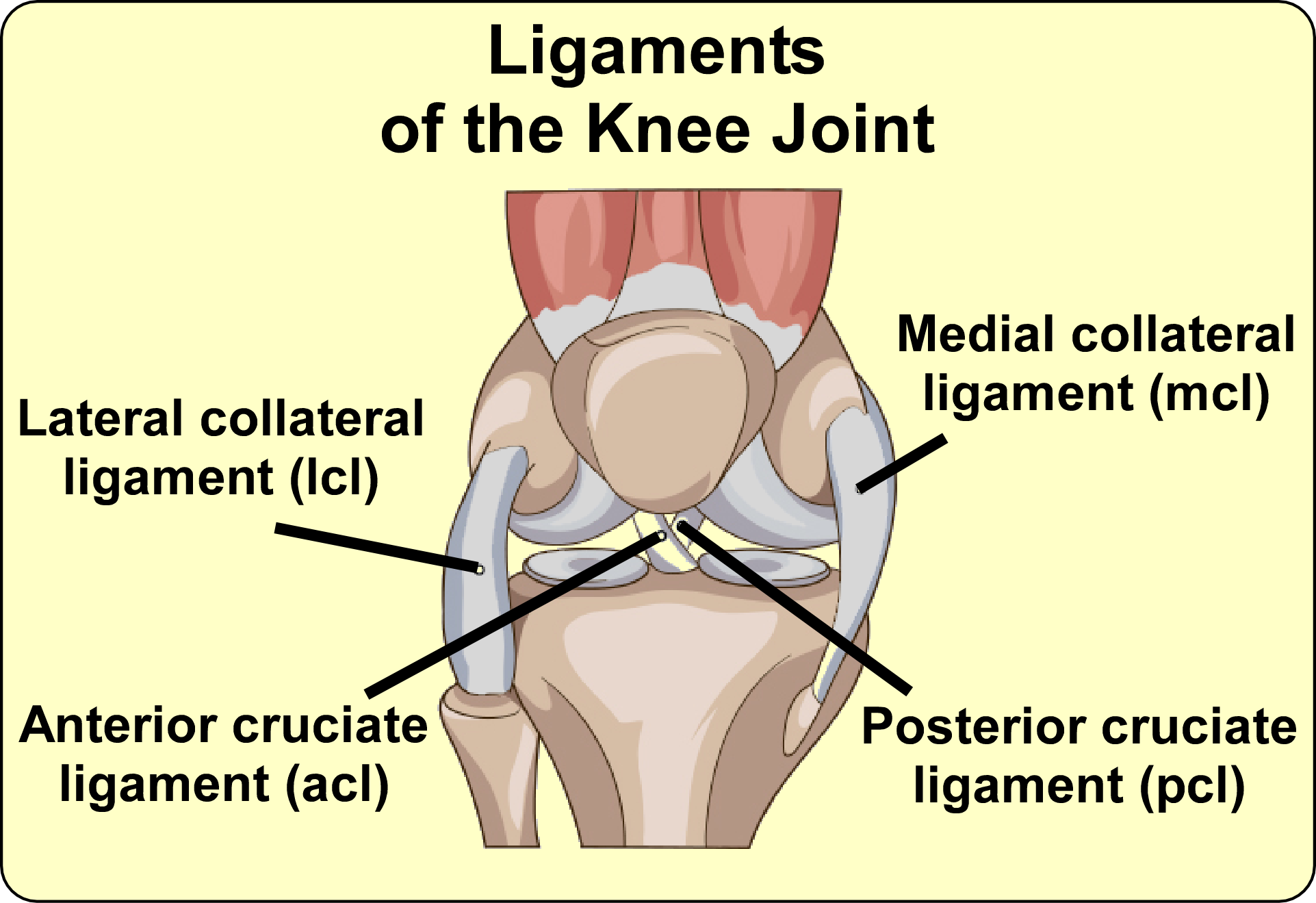
A knee injury when I was 21 woke me up to what the term “torn ACL” meant. So I tore my anterior cruciate ligament (ACL) and learned quickly how painful this type of injury could be. I decided not to go to a doctor but rather go the the “ice, rest and then exercise” route. Using martial arts exercises and qigong (deep breathing exercises as well as yoga-type postures) I was able to rehabilitate my injured knee to 100%. It took about 4-6 months of diligent daily training. Pretty much three exercises, performed 500 repetitions, twice daily. Also, holding a few stationary yoga-type stances for 5 minutes at a time. This is known as medical qigong or qigong therapy. These methods have been used for thousands of years for various injuries and ailments. Anyone can learn and exercise like this, but not everyone cares to put in the work or can make the time to exercise. Surgery is out-patient and physical therapy afterward is about 8-12 weeks. Many choose this route over the time and effort to do the disciplined exercises. Regardless, the individual will end up doing exercises anyway, if they want to resume pre-injury activities.
I have seen and worked with probably hundreds of students over the years that have improved the health of their knees (and other issues) through these specific exercises.
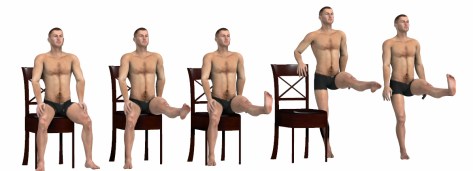
Series of exercises to strengthen the knee joint and surrounding muscles
It was not until years later, that I re-injured the knee and decided to get an MRI just to know what was really injured and how badly. It was with this visit to an orthopedic surgeon that I learned that I had torn my ACL some 25 years earlier. He suggested that whatever I had been doing to strengthen and rehab my knee joint, I should continue because it had given me the much needed muscular stability in the lateral side to side movements. This surgeon also advised me against surgery that might or might not give me better knee stability at the risk of aggravating other issues performing the surgery. If it is not broken, don’t fix it – made perfect sense to me.
Stationary “yoga-type” qigong exercises for strength and stability
In 2002 there was a study by J. Bruce Moseley of the Houston Veterans Affairs Medical Center and his colleagues. They randomly placed 180 osteoarthritis patients into three treatment groups: debridement, lavage, or sham surgery, in which a surgeon would make incisions to the knee, but not cut or remove any cartilage. The patients nor their health care providers knew which group the researchers had placed them in. For two years the patients continued to evaluated their knee pain, while the doctors examined their regular walking and stair-climbing abilities. The results showed that at every point in the investigation, all three groups reported an equal degree of reduction in pain and increase in activity level. Mr. Moseley and his collaborators concluded that the placebo effect can account for the observed improvements; the surgeries did not appear to have any significant effect on the actual physiology of the knee ailment.
The point of this article is not to dissuade anyone from gaining medical treatment. But rather to encourage the acquiring of information and learning what ones options are before committing to a surgical procedure that may or might not improve your current situation. There is always a risk of having a worse set of circumstances after the procedure. There is not much lost nor risk of trying non-impact exercises, other than ones time and effort. If the exercises don’t produce the desired results of pain reduction and knee stability, one can always elect to have the surgical procedure afterwards, which will undoubtedly require pain meds, physically therapy and exercises after surgery anyway. Pay now or pay later – another term often used in the healthcare industry.
Jim Moltzan started his martial arts training at the age of 16, starting with Korean martial arts and evolving into BaguaZhang, Tai Chi, and Qigong. Jim has been training, studying and teaching for almost 40 years effectively educating hundreds of students.
Master Instructor Jim Moltzan has trained with a diverse group of masters and high-level martial arts teachers of many different disciplines. Jim’s specialty is teaching exercises to improve chronic conditions, working with people of all ages, especially senior adults. Offering guidance and instruction, Jim has also worked with Parkinson Disease patients through Florida Hospital. Jim gives regular lectures as requested by AdventHealth (Florida Hospital) regarding the benefits of Eastern practices.
He is the author and graphic artist of numerous journals, graphic charts and study guides relative to the mind and body connection and how it relates to martial arts, fitness and self-improvement.
Jim continues his training and teaching in the Orlando, Florida area conducting classes, seminars and lectures as his schedule allows. He balances his teachings and businesses with his own personal cultivation and time spent with his wife and two college-age kids.







 United Martial Arts Association