The Six Levels of Internal Development in Internal Martial Arts

A Progressive Model of Integration

Level One: Li – Physical Strength

Level Two: Jin – Refined Force

Level Three: Yi – Intention

Level Four: Qi – Energy

Level Five: Shen – Consciousness

Level Six: Kong – Emptiness

The internal martial arts, commonly referred to as Neijia, represent a sophisticated system of human development that integrates body, mind, and consciousness through progressive refinement. The three most widely recognized internal martial arts are Hsing Yi, Tai Chi Chuan and BaguaZhang. Within these traditions, a frequently cited developmental model describes six interrelated levels: Li (力), Jin (勁), Yi (意), Qi (氣), Shen (神), and Kong (空). While not universally standardized across all lineages, this framework reflects a coherent synthesis of classical Chinese martial, medical, and philosophical thought (Yang, 1998; Chen, 2004; Kohn, 2008).

These levels are not discrete stages to be completed and abandoned, but rather nested layers of integration, each refining and reorganizing the preceding level. The progression reflects a shift from gross physical force toward subtle awareness and spontaneous action, paralleling Daoist internal alchemical models such as Jing–Qi–Shen–Xu (emptiness) (Kohn, 2008).

Level One: Li (力) – Physical Strength

Li refers to raw muscular strength and mechanical force, representing the most basic level of martial capacity. At this stage, movement is driven primarily by localized muscle contraction, often resulting in segmented and inefficient force production.

From a biomechanical perspective, Li relies heavily on voluntary muscular activation and leverage, with limited integration across the kinetic chain (McGinnis, 2013). While essential as a foundational attribute, Li is inherently limited. It is expendable, fatigue-prone, and easily countered by superior structure or timing.

Traditional training methods emphasize:

  • Static postures (e.g., horse stance, bo stance, twisted stance, etc.)
  • Repetitive conditioning drills
  • Strength and endurance development

Despite its limitations, Li provides the necessary structural and physiological base upon which higher levels are cultivated.

Level Two: Jin (勁) – Refined Force

Jin represents a qualitative transformation of force, from isolated muscular effort to integrated, whole-body power. It is often described as “trained strength” or “refined force,” characterized by efficient transmission of energy through aligned structure and connective tissues (Yang, 1998).

Biomechanically, Jin reflects:

  • Kinetic chain integration
  • Elastic recoil through fascia and tendons
  • Ground-reaction force transmission

This level corresponds with modern understandings of tensegrity and fascialconnectivity, where force is distributed across the entire body rather than generated locally (Myers, 2014).

Classical expressions of Jin include:

  • Peng (expansive, buoyant force)
  • Lu (yielding and redirecting)
  • Ji (pressing)
  • An (sinking)

The transition from Li to Jin marks a critical threshold in internal training: effort decreases while effectiveness increases.

Level Three: Yi (意) – Intention

Yi, often translated as intention or intentional awareness, serves as the directive principle that organizes movement and force. In classical texts, it is said that “Yi leads Qi, and Qi leads the body” (Yang, 1998).

At this level, movement becomes:

  • Less reliant on conscious muscular control
  • More guided by pre-reflective awareness
  • Increasingly efficient and anticipatory

Neuroscientifically, Yi may be understood as the integration of:

  • Motor planning (premotor cortex)
  • Attentional control networks
  • Sensorimotor prediction

This aligns with research demonstrating that intention and attention significantly influence motor coordination and performance efficiency (Wulf & Lewthwaite, 2016).

The practitioner begins to experience a shift from doing movement to allowing movement to be directed internally.

Level Four: Qi (氣) – Functional Energy

Qi is among the most debated concepts in both Eastern and Western discourse. Rather than interpreting Qi as a mystical substance, contemporary scholarship often frames it as a functional integration of physiological systems, including:

  • Breath and respiratory efficiency
  • Circulation and fluid dynamics
  • Neural signaling and proprioception
  • Fascial continuity

From this perspective, Qi represents the emergent coherence of the organism as a unified system (Chen, 2004; Jahnke, 2002).

Empirical studies on Qigong and Tai Chi suggest improvements in:

  • Cardiovascular regulation
  • Balance and coordination
  • Stress reduction and autonomic balance

These findings support the interpretation of Qi as system-wide functional optimization rather than an isolated energy entity (Wayne & Kaptchuk, 2008).

Level Five: Shen (神) – Consciousness and Presence

Shen refers to consciousness, awareness, and the quality of presence. In both Traditional Chinese Medicine and Daoist philosophy, Shen is associated with the clarity and stability of the mind (Kohn, 2008).

At this level:

  • Perception becomes refined and immediate
  • Emotional reactivity diminishes
  • Action arises from calm awareness rather than impulse

Shen is closely related to constructs studied in modern psychology, such as:

  • Mindfulness
  • Meta-awareness
  • Flow states

Research indicates that such states are associated with enhanced performance, reduced stress, and improved cognitive flexibility (Csikszentmihalyi, 1990; Tang et al., 2015).

In martial application, Shen manifests as timing, sensitivity, and effortless responsiveness.

Level Six: Kong (空) – Emptiness

Kong, often translated as emptiness, represents the culmination of internal development. Rooted in both Daoist and Buddhist philosophy, it does not imply nihilism, but rather freedom from attachment, rigidity, and fixed identity (Kohn, 2008).

At this level:

  • Action is spontaneous and uncontrived
  • There is no separation between intention and execution
  • The practitioner is no longer bound by technique or conceptual frameworks

This state parallels advanced descriptions of:

  • Non-dual awareness
  • Effortless action (wu wei)
  • Self-transcendent experience

From a performance standpoint, Kong reflects complete integration, where body, mind, and environment function as a unified field.

Integrative Perspective: From Force to Emptiness

The progression from Li to Kong reflects a continuum of refinement:

  • Li becomes organized into Jin
  • Jin is directed by Yi
  • Yi mobilizes Qi
  • Qi expresses through Shen
  • Shen dissolves into Kong

Importantly, advanced practitioners do not abandon earlier levels; rather, they embody all levels simultaneously, with each functioning in harmony.

This model closely parallels:

  • Daoist internal alchemy (Jing → Qi → Shen → Xu)
  • Psychophysiological integration models
  • Contemporary frameworks of embodied cognition

Implications for Training and Practice

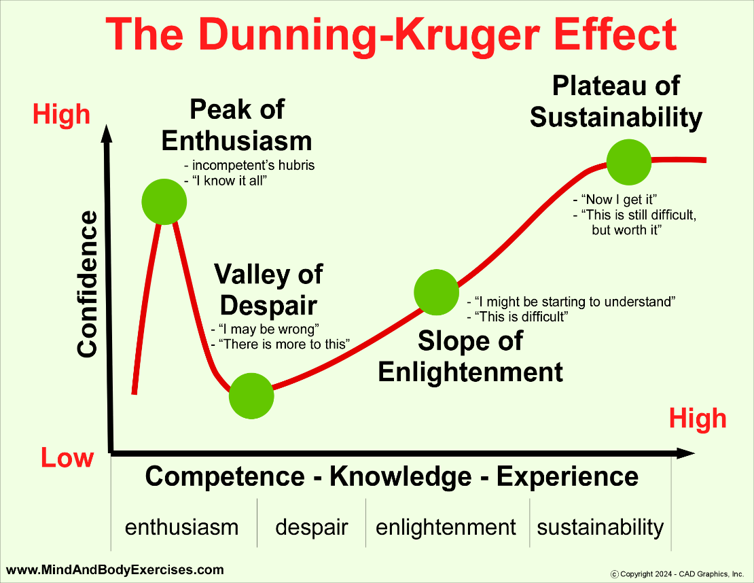
A critical issue in modern practice is the misinterpretation or premature pursuit of higher levels. Many practitioners:

  • Remain at the level of Li while believing they are expressing Jin
  • Seek Qi experiences without structural integrity
  • Conceptualize Yi without embodied application

Effective training requires:

  1. Structural foundation (Li → Jin)
  2. Intentional refinement (Yi)
  3. Physiological integration (Qi)
  4. Conscious awareness (Shen)
  5. Letting go of fixation (Kong)

This progression underscores a central principle of internal arts:

True development is not the accumulation of techniques, but the refinement of the practitioner.

References

Chen, M. (2004). Chen style taijiquan: The source of taiji boxing. New World Press.

Csikszentmihalyi, M. (1990). Flow: the psychology of optimal experience. ResearchGate. https://www.researchgate.net/publication/224927532_Flow_The_Psychology_of_Optimal_Experience

Jahnke, R. (2002). The healing promise of Qi: Creating extraordinary wellness through Qigong and Tai Chi. McGraw-Hill.

Kohn, L. (2008). Chinese Healing Exercises: The Tradition of Daoyin. University of Hawai’i Press. http://www.jstor.org/stable/j.ctt6wqs77

McGinnis, P. M. (2013). Biomechanics of sport and exercise (3rd ed.). Human Kinetics. Biomechanics of Sport and Exercise (3rd Ed)

Myers, T. W. (2014). Anatomy trains: Myofascial meridians for manual and movement therapists (3rd ed.). Elsevier.

Tang, Y. Y., Hölzel, B. K., & Posner, M. I. (2015). The neuroscience of mindfulness meditation. Nature Reviews Neuroscience, 16(4), 213–225. https://doi.org/10.1038/nrn3916

Wayne, P. M., & Kaptchuk, T. J. (2008). Challenges inherent to t’ai chi research: part I–t’ai chi as a complex multicomponent intervention. Journal of alternative and complementary medicine (New York, N.Y.)14(1), 95–102. https://doi.org/10.1089/acm.2007.7170a

Wulf, G., & Lewthwaite, R. (2016). Optimizing performance through intrinsic motivation and attention for learning: The OPTIMAL theory of motor learning. Psychonomic Bulletin & Review, 23(5), 1382–1414. https://doi.org/10.3758/s13423-015-0999-9

Yang, J. M. (1998). The root of Chinese Qigong: Secrets of health, longevity, and enlightenment. YMAA Publication Center.

Time as a Line, a Cycle, and a Spiral

Human beings have long attempted to understand the nature of time, whether it flows as a straight line, repeats in cycles, or unfolds in a multidimensional pattern that transcends simple geometry. In Western scientific thought, time is generally described as linear, moving from past to future along an irreversible path shaped by entropy. In contrast, many spiritual, philosophical, and cosmological traditions propose a cyclical or spiral nature of time, suggesting that events, patterns, and developmental processes recur, yet do so at progressively different states of complexity or awareness. Contemporary neuroscience, psychology, cosmology, and systems theory increasingly support a hybrid view: time may appear linear to conscious perception, operate cyclically in biological and cosmic rhythms, and unfold in a spiral structure in terms of human growth and the evolution of systems. This essay integrates scientific, philosophical, and esoteric perspectives to show that time is not exclusively linear or cyclical; rather, it behaves as both, a dynamic spiral that unites forward motion with recurrent patterns.

Linear Time: Direction, Causality, and Human Perception

The most straightforward model of time is linear: a sequence of moments extending from a defined past into an open future. Physicists often rely on this model to describe causality, entropy, and the “arrow of time,” the direction in which disorder or entropy increases in closed systems (Carroll, 2010). From this standpoint, time’s linearity is a consequence of thermodynamic laws, which dictate that systems naturally evolve from ordered states toward greater randomness. This thermodynamic arrow establishes an irreversible progression from past to present to future (Price, 1996).

Human perception reinforces this linear model. Cognitive scientists note that our subjective experience of time is constructed through temporal sequencing, or the ability to arrange events in a coherent narrative (Eagleman, 2009). Memory also structures time linearly: we recall past events but cannot access future ones. Developmental psychology further reinforces linearity through observable life stages of infancy, adolescence, adulthood, and aging, each building upon previous phases (Baltes, Lindenberger, & Staudinger, 2006). Because of this subjective and biological structure, humans tend to equate time with unidirectional progress.

Yet, although linear time is practical for navigation, memory, and survival, it does not fully capture the repetitive, rhythmic, or transformational aspects found in nature or human consciousness. For this reason, linear time is best viewed as one dimension of a larger temporal structure.

Cyclical Time: Biological Rhythms, Cosmic Patterns, and Ancient Traditions

Cyclical models of time are found across ancient and modern systems. Many cultures including Hindu, Taoist, Mayan, and Indigenous traditions—describe time as repeating cycles of creation, decay, and renewal (Eliade, 1954). Cycles are embedded everywhere in the natural world: the phases of the moon, the oscillation of the seasons, tidal rhythms, hormonal cycles, and circadian patterns all express a temporal circularity that is intrinsic to life (Foster & Kreitzman, 2014).

Biology offers some of the most compelling evidence for cyclical temporality. The human circadian rhythm, governed by the suprachiasmatic nucleus, follows a daily 24-hour cycle that regulates sleep, hormone release, cellular repair, and cognitive functioning (Hastings, Maywood, & Brancaccio, 2019). These processes repeat with remarkable precision, yet each cycle subtly differs based on environmental cues and internal conditions. Similarly, the brain undergoes rhythmic oscillations during wakefulness and sleep, replaying and reorganizing memories in repeated neural cycles (Buzsáki, 2006).

Cyclical time is also central to psychology. Emotional narratives, behavioral patterns, and relationship dynamics often repeat, albeit in varying intensities or contexts. Carl Jung argued that archetypes and symbols recur throughout history and individual development, reflecting cyclical patterns in the collective unconscious (Jung, 1959). In Taoist philosophy, the interplay of yin and yang illustrates cycles of expansion and contraction, activity and rest, growth and decay, each phase necessary for the next (Kohn, 2001). These traditions echo the idea that cycles do not merely repeat but evolve as they recur.

Although cycles appear circular, life does not return to the exact same point. Instead, patterns reemerge within a dynamic system that is constantly changing. This suggests that time may not be strictly circular but may instead follow a spiral trajectory.

Spiral Time: A Synthesis of Linearity and Cyclicality

A spiral model of time integrates the linear and cyclical frameworks into a more accurate representation of temporal reality. A spiral advances forward (like a line) while simultaneously looping through recurring phases (like a cycle). This pattern describes many natural systems, including galaxies, weather formations, and biological structures such as DNA, which is itself a double helix—a spiral encoding the evolution of life (Watson & Berry, 2003).

Spiral time also aligns with developmental and psychological models in which human beings revisit earlier stages but with greater depth, insight, or capacity. In transformative learning theory, individuals repeatedly encounter challenges that mirror previous experiences, yet their responses become more sophisticated as consciousness evolves (Mezirow, 2000). Similarly, trauma recovery often follows a spiral pattern in which emotions resurface periodically but with increasing resilience and understanding, a process known as post-traumatic growth (Calhoun & Tedeschi, 2014).

In Taoist internal alchemy (Nei Dan), spiritual development is explicitly described as cyclical refinement along an ascending path. Practitioners repeat meditative, energetic, and behavioral cycles to refine jing (essence), qi (vital energy), and shen (spirit or consciousness), not in perfect loops but in spiraling transformations that gradually elevate awareness (Larre & Rochat de la Vallée, 1996).

Likewise, in cosmology, some theoretical models propose that cosmic evolution may involve oscillatory processes occurring along an expanding trajectory, an interplay of expansion, contraction, and entropy-driven change that resembles a spiral rather than a straight line or a closed loop (Steinhardt & Turok, 2002).

Thus, the spiral becomes a unifying symbol for the multidimensional nature of time: forward motion built upon recurring yet transforming cycles.

The Human Experience of Time as Spiral Evolution

Human consciousness experiences time in a way that closely matches the spiral model. While daily rhythms repeat, no two days are identical. We revisit emotional and psychological patterns, but with new insights. Practices such as meditation, qigong, tai chi, and introspection also reveal the spiral nature of personal development. Repetition is not redundancy; it is refinement.

In martial arts, the practitioner endlessly repeats foundational forms, but each iteration deepens physical mastery, energetic sensitivity, and mental focus. Over years of practice, the same movement is performed thousands of times, yet with evolving meaning and embodiment. This is the essence of spiral time: returning to familiar territory but from a higher vantage point.

Likewise, personal growth follows a spiral trajectory. Challenges resurface, but each cycle presents an opportunity to integrate previous lessons, leading to new capacities, perspectives, and states of consciousness. The spiral is not only a temporal model but a developmental one that mirrors the complexity of human life.

Time cannot be adequately captured by a single geometric metaphor. Although scientific models emphasize linearity through entropy and causality, the rhythms of the natural world and the recurrences within human psychology demonstrate cyclical qualities. Yet neither framework alone is sufficient. A more holistic perspective recognizes that time advances while simultaneously repeating patterns, creating a structure that is best understood as a spiral, with a synthesis of forward progression and cyclical recurrence.

This spiral model aligns with biological rhythms, cosmological theories, psychological development, and spiritual traditions such as Taoist internal alchemy. It also describes the lived experience of human growth, in which individuals revisit patterns with increasing depth and awareness. Ultimately, time is not merely a straight line we travel or a circle we repeat; it is a spiral we ascend, evolving through iterative cycles of experience, learning, and transformation.

 (Historical Infographics: Into the Depth of Time, 2021)

References:

Baltes, P. B., Lindenberger, U., & Staudinger, U. M. (2006). Life-span theory in developmental psychology. In R. M. Lerner & W. Damon (Eds.), Handbook of child psychology: Vol. 1. Theoretical models of human development (6th ed., pp. 569–664). Wiley.

Buzsáki, G. (2006). Rhythms of the brain. Oxford University Press.

Calhoun, L. G., & Tedeschi, R. G. (2014). Handbook of posttraumatic growth: Research and practice. Psychology Press.

Carroll, S. (2010). From eternity to here: The quest for the ultimate theory of time. Dutton.

Eagleman, D. (2009). Brain time: The temporal dimension of consciousness. In M. Gazzaniga (Ed.), The cognitive neurosciences (4th ed., pp. 659–666). MIT Press.

Eliade, M. (1954). The myth of the eternal return: Cosmos and history. Princeton University Press.

Foster, R., & Kreitzman, L. (2014). The rhythms of life: The biological clocks that control the daily lives of every living thing. Yale University Press.

Hastings, M.H., Maywood, E.S. & Brancaccio, M. Generation of circadian rhythms in the suprachiasmatic nucleus. Nat Rev Neurosci 19, 453–469 (2018). https://doi.org/10.1038/s41583-018-0026-z

Historical infographics: Into the depth of time. (2021, July 25). https://sandrarendgen.wordpress.com/2017/10/30/data-trails-the-geological-time-spiral-1975/

Jung, C. G. (1959). The archetypes and the collective unconscious. Princeton University Press.

Kohn, L. (2001). Daoism and Chinese culture (2nd ed.). Three Pines Press.

Larre, C., & Rochat de la Vallée, E. (1996). The seven emotions: Psychology and health in ancient China. Monkey Press.

Mezirow, J. (2000). Learning as transformation: Critical perspectives on a theory in progress. Jossey-Bass.

Morrill, D. (2022). The difference between linear time and circular time | Debra Morrill. https://debramorrill.com/the-difference-between-linear-time-and-circular-time

Price, H. (1996). Time’s arrow and Archimedes’ point. Oxford University Press.

Steinhardt, P. J., & Turok, N. (2002). A cyclic model of the universe. Science, 296(5572), 1436–1439. https://doi.org/10.1126/science.1070462

Watson, J. D., & Berry, A. (2003). DNA: The secret of life. Knopf.

Embodied Discipline and the Path to Self-Mastery

Throughout human history, disciplined movement has served as more than a means to physical fitness. It has been a gateway to moral, psychological, and spiritual development. Systems such as Yoga, Qigong, Tai Chi Chuan, Baguazhang, and Xing Yi Quan all share a common philosophical core:

The body becomes both the field and the instrument of transformation. Through sustained discipline, these arts cultivate awareness, moral rectitude, and self-regulation that extend beyond the training hall into all aspects of life.

The Body as a Mirror of the Mind

Ancient Eastern traditions view the body and mind as inseparable. In Yoga, the concept of asana (postures) is not merely a stretch but a condition for the stilling of the mind (Yoga Sutras 1.2). Similarly, in Chinese internal arts, the cultivation of qi through structured movement harmonizes the physical form (xing), the energetic field (qi), and the consciousness (shen). Each posture, breath, and intention becomes a reflection of one’s internal state. Thus, disciplining the body becomes a way to reveal and reshape the contents of the mind (Kleinman, 2023).

The process of consciously adjusting and fine-tuning the body’s components of its joints, spine, breath, and balance points, serves as a living metaphor for the refinement of one’s inner world. Each alignment demands the practitioner’s full attention, creating a bridge between external structure and internal awareness. This deliberate somatic calibration teaches the mind to observe without judgment and to respond with precision rather than impulse. Through this practice, bodily alignment becomes a mirror for mental alignment, cultivating stability and composure that extend into one’s emotional life.

In this sense, the act of refining posture, balance, and breath becomes a direct method for managing the subtle movements of thought and emotion, which are often more complex and volatile than the body itself. As the practitioner learns to coordinate intention with structure, thoughts become organized, and emotions are diffused through awareness rather than suppressed. Over time, these micro-adjustments train the nervous system to shift from reactivity to responsiveness, an embodied mindfulness that transforms self-regulation into second nature.

Practitioners quickly learn that the body resists tension, imbalance, and rigidity exposing internal conflict or emotional strain. As posture corrects, breathing deepens, and awareness refines, inner stillness and integrity naturally follow. The principle “as within, so without” is not poetic but experiential: mastery of motion becomes mastery of emotion.

Qigong, Tai Chi, and the Internal Alchemy of Transformation

Qigong and Tai Chi are expressions of Daoist alchemy, using the body as a crucible for transformation. The triad of jing–qi–shen (essence–energy–spirit) describes a process of refining vital substance into consciousness. Through slow, deliberate movement, practitioners develop song (relaxed awareness), dissolving mechanical tension and egoic striving. This cultivates balance between yin and yang, seen in aspects such as yielding and firmness, rest and action, all mirroring the Daoist understanding of harmony with nature (Wile, 1996).

Similarly, Baguazhang employs circular walking and “palm changes” or transitional exercises, as a metaphor for the ever-changing cycles of life. The practitioner learns adaptability, humility, and responsiveness. The external circle mirrors the internal one: thoughts orbit awareness, but do not dominate it. Xing Yi Quan, in contrast, channels focused, linear intent (yi) through structured forms or sets of exercises linked together. The simplicity of its five-element theory trains directness, sincerity, and willpower, qualities of both combative efficiency and moral integrity.

These arts embody an essential truth:

By repeating forms that express balance, alignment, and flow, practitioners literally encode these virtues into their nervous systems.

Yoga and the Integration of Body, Mind, and Spirit

Yoga’s physical discipline (hatha) was historically conceived as preparation for spiritual awakening (raja yoga). By mastering the breath (pranayama), the practitioner learns to govern the subtle forces of life, taming desire and restlessness. The practice builds tapas, a purifying inner heat of discipline that burns away impurities of character. In this sense, asana and breathwork are tools of ethical refinement (Feuerstein, 1998).

Moreover, the “eight limbs of yoga” outline a sequential refinement process: moral precepts (yama and niyama), physical posture, breath control, sensory withdrawal, concentration, meditation, and ultimately absorption (samadhi). Each step disciplines a different layer of being, ensuring that bodily control is never divorced from ethical self-cultivation.

From Discipline to Transformation

Discipline in these traditions is not punishment, but rather it is a path toward liberation through self-regulation. Through repetition and perseverance, one transcends laziness, fear, and egoic fragmentation. Neuroscientific research supports this: consistent somatic mindfulness modifies neural pathways associated with emotion regulation, empathy, and resilience (Davidson & McEwen, 2012). In effect, the physical arts train meta-awareness, or the capacity to observe one’s impulses and choose conscious response over reactivity.

True mastery, therefore, is not domination of the body but integration of the self. The martial artist, yogi, or qigong practitioner becomes calm yet alert, strong yet supple, humble yet confident. The disciplined body becomes a ritual language through which character is silently expressed.

The body is the gateway to transformation because it is the most immediate expression of consciousness. By cultivating precise movement, rhythm, and stillness, disciplines such as Yoga, Qigong, Tai Chi, Baguazhang, and Xing Yi transform instinct into intention, effort into grace, and discipline into virtue. They embody the timeless principle found across Taoist, Confucian, and Yogic traditions: that self-mastery begins with mastery of the vessel through which spirit acts. The practitioner who polishes the body as one polishes the sword finds that, in the end, it is the soul itself that shines.

References:

Davidson, R. J., & McEwen, B. S. (2012). Social influences on neuroplasticity: Stress and interventions to promote well-being. Nature Neuroscience, 15(5), 689–695. https://doi.org/10.1038/nn.3093

Feuerstein, G. (1998). The Yoga Tradition: Its History, Literature, Philosophy and Practice. Hohm Press. https://archive.org/details/yogatraditionits0000feue

Kleinman, A. (2023). Patients and healers in the context of culture. https://doi.org/10.2307/jj.2711689

Wile, D. (1996). Lost T’ai-chi Classics from the Late Ch’ing Dynasty. State University of New York Press. https://doi.org/10.2307/jj.18255579

The Threefold Way: Society, Nature, and Self in Chinese Philosophy

For centuries, Chinese culture has been shaped by a triad of the philosophical systems of Confucianism, Taoism, and Buddhism. Though distinct in their teachings, they are often seen as complementary threads that weave together a balanced and meaningful life. Each offers a unique focus: Confucianism emphasizes harmony in society, Taoism seeks unity with nature, and Buddhism turns inward to liberate the self from suffering (Yao, 2000).

Confucianism: The Order of Society

Founded by Confucius (Kong Fuzi) around the 5th century BCE, Confucianism centers on ethics, duty, and the cultivation of virtuous behavior within a structured society. It promotes familial piety (xiao), respect for hierarchy, and the importance of education and ritual (li) (Sontag, 1974). A Confucian life is guided by the roles of the parent, child, ruler, subject, and the fulfillment of these roles builds a just and orderly world. It teaches that virtue in leadership trickles down to the moral development of the people (Yao, 2000).

Taoism: Flowing with Nature

Rooted in the Tao Te Ching by Laozi, Taoism (or Daoism) champions spontaneity, simplicity, and harmony with the Tao, or the ineffable force that flows through all things (Laozi, trans. Mitchell, 1988). Rather than striving to control or fix the world, the Taoist seeks to align with the natural order through non-resistance (wu wei), letting go of ego, and observing the rhythms of nature. Taoism speaks to the middle-aged soul, or one who questions structure and seeks authenticity and fluidity in life (Kirkland, 2004).

Buddhism: Awakening the Inner Self

Brought to China from India around the 1st century CE, Buddhism introduced a new inwardness, emphasizing meditation, compassion, and release from suffering through the Eightfold Path (Harvey, 2013). The Buddhist focus is not on society or external alignment but on awakening. It teaches that all phenomena are impermanent, and that liberation comes not from control or flow, but from transcending attachment entirely (Mitchell, 2002). In this way, Buddhism serves the aging soul by contemplating, detaching, and seeking ultimate freedom.

Integration: A Balanced Life

In traditional Chinese thought, these three paths were not meant to compete but to complete one another. A person might live as:

  • a Confucian in the office
  • a Taoist in the garden
  • a Buddhist in solitude (Yao, 2000).

Together, they offer a map to live wisely with integrity in society, harmony in nature, and peace within the soul.

References

Sontag, F. (1974). Herbert Fingarette. Confucius—the Secular as Sacred. (Harper and Row, New York, 1972.). Religious Studies, 10(2), 245–246. https://doi.org/10.1017/s0034412500007514

Harvey, P. (2012). An introduction to Buddhism. https://doi.org/10.1017/cbo9781139050531

Taoism: the Enduring tradition. (n.d.). Routledge & CRC Press. https://www.routledge.com/Taoism-The-Enduring-Tradition/Kirkland/p/book/9780415263221?utm_source=cjaffiliates&utm_medium=affiliates&cjevent=eeb2c6c93e3c11f083ff00cf0a82b820

Mitchell, S. (1988). Tao Te Ching. In HARPERPERENNIAL MODERNCLASSICS. HARPERPERENNIAL MODERNCLASSICS. https://ia800904.us.archive.org/20/items/taoteching-Stephen-Mitchell-translation-v9deoq/taoteching-Stephen-Mitchell-translation-v9deoq_text.pdf

Mitchell, D. W. (2002). Buddhism: Introducing the Buddhist experience. Oxford University Press.

Yao, X. (2000). An introduction to confucianism. https://doi.org/10.1017/cbo9780511800887

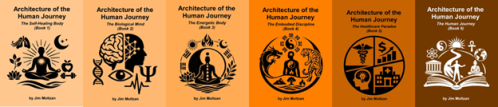
Introducing a New Series: The Architecture of the Human Journey

In a world saturated with fragmented advice on health, fitness, and personal development, there remains a need for something more complete, structured, integrated, and grounded in both lived experience and timeless principles.

Over the course of several decades of study, practice, and teaching across the fields of holistic health, martial arts, and human development, a unifying framework has gradually taken shape. This framework does not isolate the body from the mind, nor the mind from the spirit. Instead, it recognizes that human growth unfolds through the dynamic interaction of multiple systems of physical, biological, energetic, behavioral, and philosophical.

It is from this perspective that a new six-part book series emerges:

The Architecture of the Human Journey

This series is not simply a collection of books. It is a structured exploration of what it means to develop as a human being: physically, mentally, energetically, and ethically within the realities of modern life.

Each volume builds upon the others, forming a progressive pathway toward greater awareness, resilience, and self-mastery.

Book 1: The Self-Healing Body

The journey begins with the body—not as a machine to be pushed or punished, but as a living system designed for adaptation, repair, and resilience.

The Self-Healing Body explores the foundational principles of movement, posture, breathing, and recovery. It challenges the modern tendency toward inactivity and over-reliance on external interventions, instead emphasizing the body’s innate capacity to restore balance when given the proper conditions.

Readers are guided toward a deeper understanding of how daily habits of sitting, standing, walking, breathing shape long-term health outcomes. The message is clear: the body is not broken; it is often simply underused, misused, or misunderstood.

Book 2: The Biological Mind

If the body is the foundation, the mind is the regulator.

The Biological Mind examines how thoughts, emotions, stress responses, and neurological patterns influence both behavior and physiology. Rather than viewing the mind as something abstract or separate, this book presents it as a biological system, deeply connected to the nervous system, hormones, and physical health.

Topics include stress conditioning, attention, perception, and the ways in which modern environments can dysregulate natural mental processes. Readers are encouraged to recognize how their internal dialogue and external inputs shape their lived experience.

Book 3: The Energetic Body

Beyond the physical and biological lies a more subtle, yet equally important dimension: the energetic system.

The Energetic Body draws from Traditional Chinese Medicine, Daoist practices, and internal martial arts to explore concepts such as qi, meridians, breath, and internal flow. While often overlooked in Western models, these systems have guided health and movement practices for thousands of years.

This volume bridges the gap between ancient insight and modern understanding, offering practical ways to cultivate energy through breathwork, posture, and intentional movement.

Book 4: Embodied Discipline

Knowledge without application remains incomplete.

Embodied Discipline focuses on the integration of body, mind, and energy through consistent practice. It is here that theory becomes lived experience. Discipline is reframed not as rigid control, but as the steady cultivation of habits that align with one’s values and goals.

Drawing from martial arts training, this book explores how structure, repetition, and intentional challenges build not only physical capacity, but mental clarity and emotional resilience.

Book 5: The Healthcare Paradox

Modern healthcare offers remarkable advancements, yet widespread chronic illness continues to rise.

The Healthcare Paradox examines this contradiction. It explores how systems designed to treat disease often overlook the foundational behaviors that prevent it. Nutrition, movement, stress, environment, and personal responsibility all play a role, yet are frequently underemphasized.

This book does not reject modern medicine but rather places it within a broader context. One that encourages individuals to become active participants in their own health rather than passive recipients of care.

Book 6: The Human Journey

The final volume steps back to consider the broader question: What is all of this for?

The Human Journey explores meaning, purpose, relationships, and the realities of growth over a lifetime. It integrates the lessons of the previous volumes into a larger philosophical perspective, drawing from both Eastern and Western traditions.

It recognizes that strength, clarity, and health are not ends in themselves, but tools that support a more meaningful and connected life.

A Complete Framework for Modern Living

Taken together, these six books form a cohesive system:

  • The body provides structure
  • The mind provides direction
  • The energy system provides flow
  • Discipline provides integration
  • Awareness of systems provides context
  • Meaning provides purpose

This is the architecture – not of a building, but of a life.

In a time when information is abundant, but wisdom is scattered, The Architecture of the Human Journey offers a way to reconnect the pieces. It invites readers not just to learn, but to observe, reflect, and ultimately take responsibility for their own development.

This is not a quick fix or a temporary program. It is a long-term approach to living with greater awareness, strength, and integrity.

The journey is ongoing. The architecture is yours to build.