I think we have all thought at some point that it would be nice to be able to read someone else’s mind or know what someone is thinking just by looking at them. It has been the subject of many movies, television shows and comic books. However, with the inception of social media over the last two decades, some feel that we don’t really need to read someone’s mind, when we can just look at their profile and posts on Facebook, Twitter (X), Tik Tok or other platforms. A majority of people surveyed felt that they are concerned over having little control over companies collecting their personal data (Conerly, 2021). In spite of this some people post very personal and intimate information not only about themselves, but also their loved ones and friends.
I find it very ironic that almost daily there are discussions on news coming from Washington and legislators regarding our privacy rights, when so many people willfully offer up their private information on public forums. As artificial intelligence (AI) is advancing by the second, and becoming integrated within some social media platforms, there are many more opportunities becoming available for abuse and crimes. Online identity theft is making it more difficult to know if someone is actually posting their own words and images. With access to photographs, video footage and a few spoken words, software programs can re-construct this information into “deep fakes” where posts can be made available without permission from the person whose identity has been stolen (What the Heck Is a Deepfake? | UVA Information Security, n.d.). These issues will not be going away anytime soon, as culture and society constantly evolves and reacts in order to keep up with the ripple effects coming from new technologies.
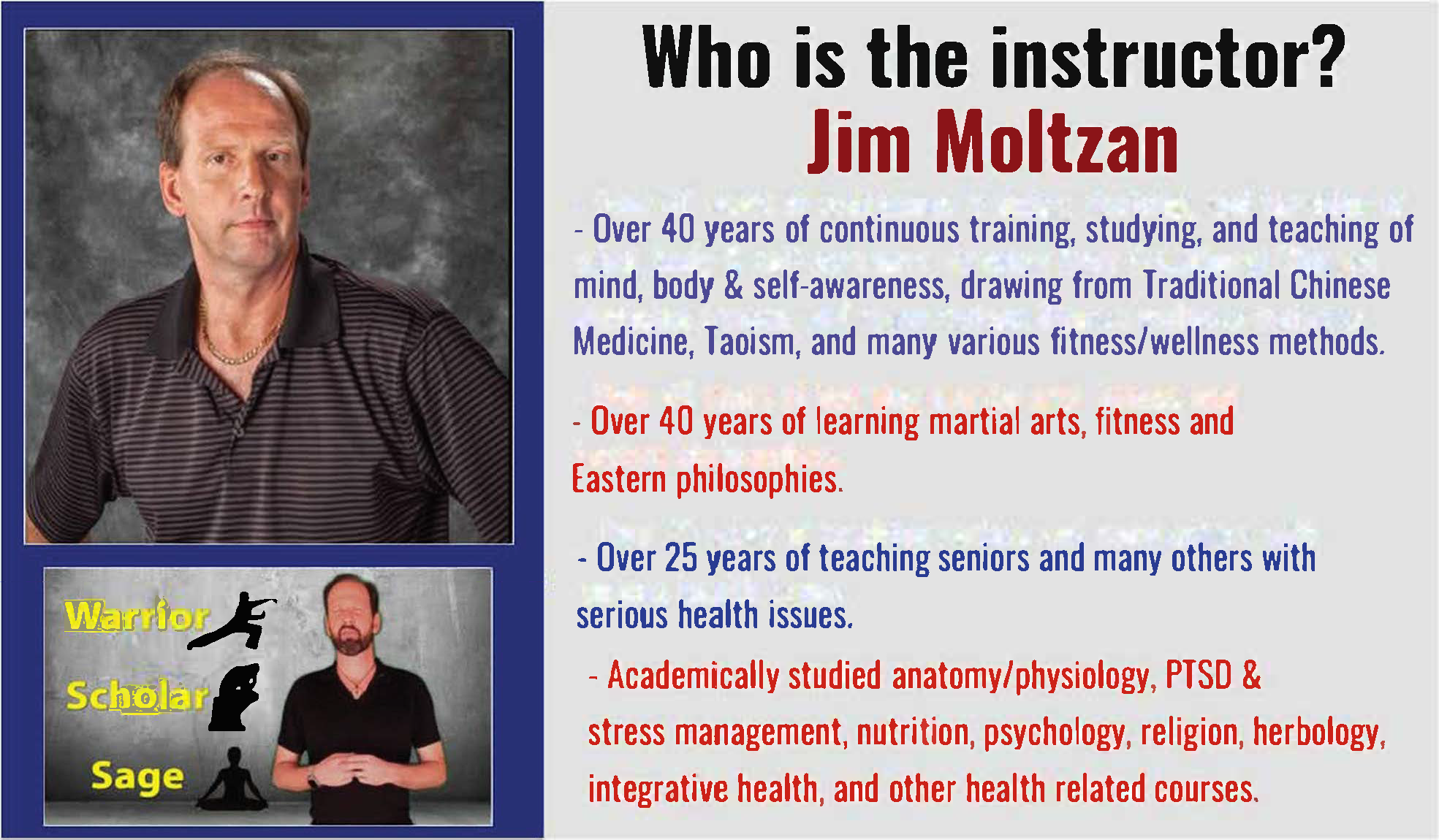
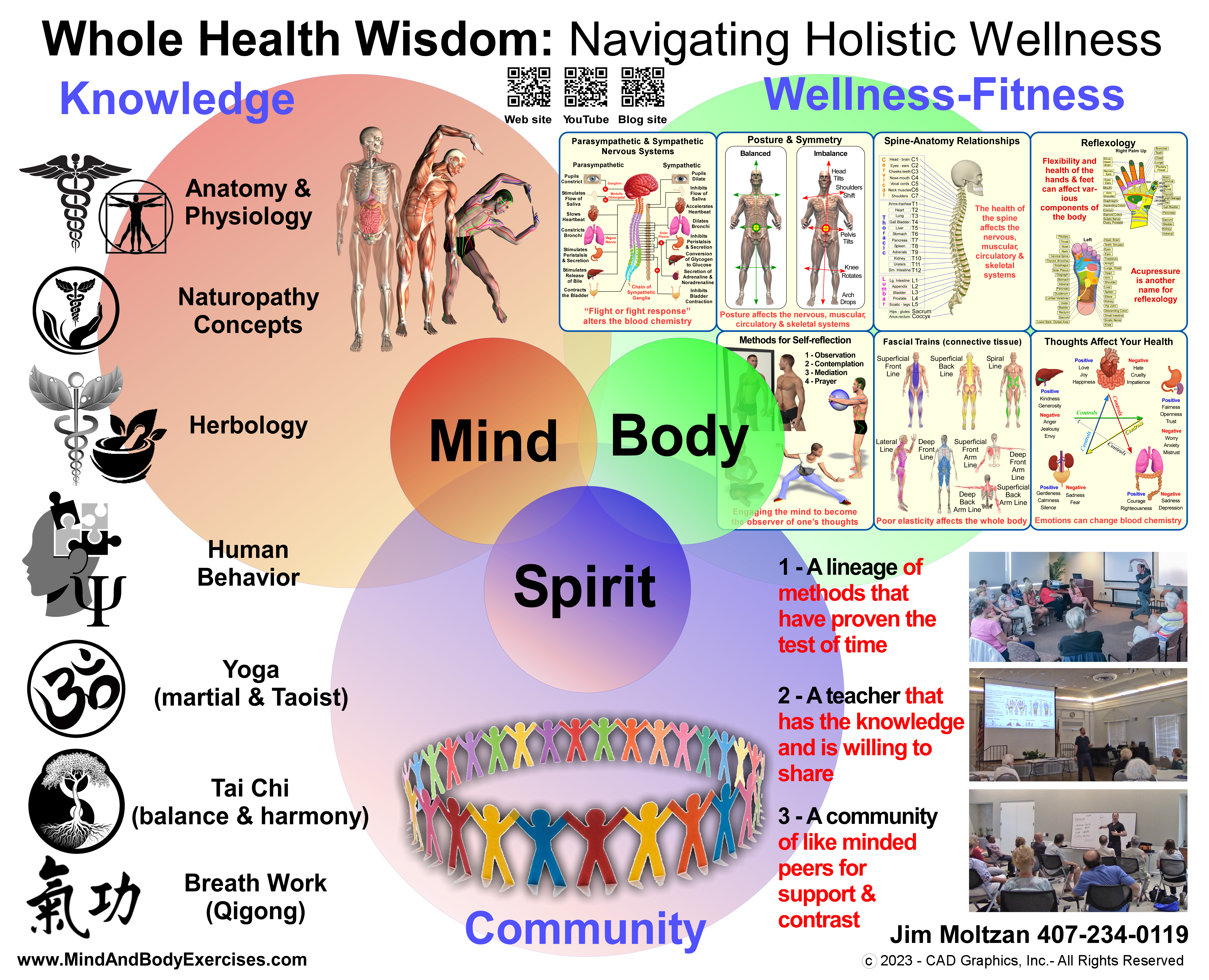
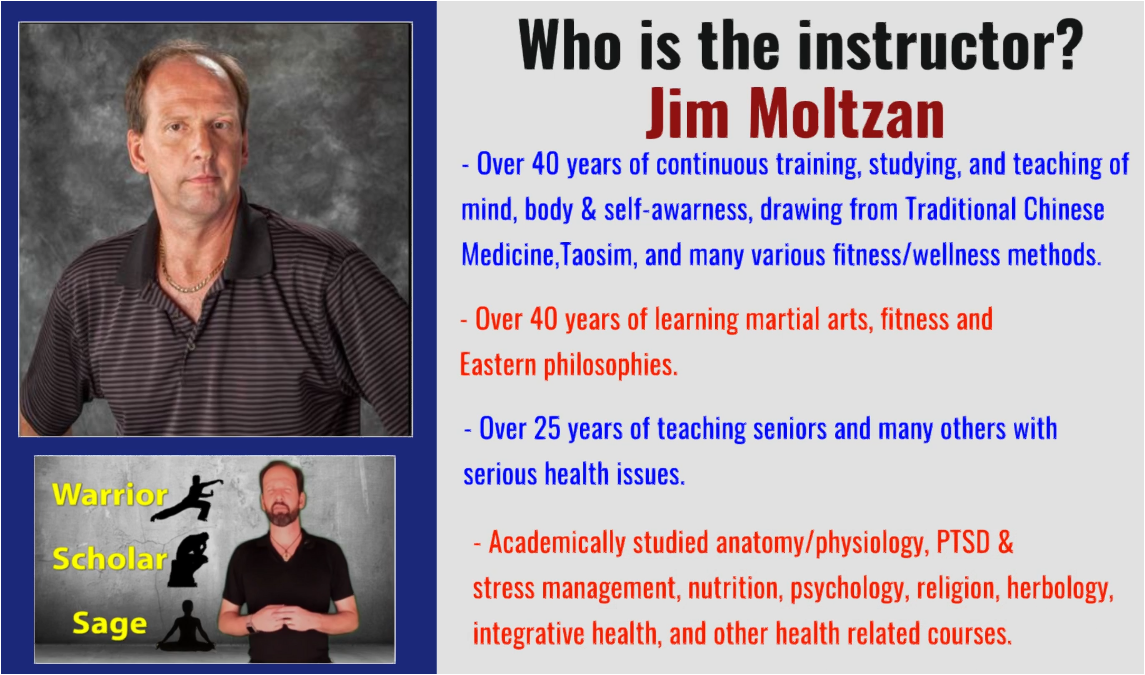
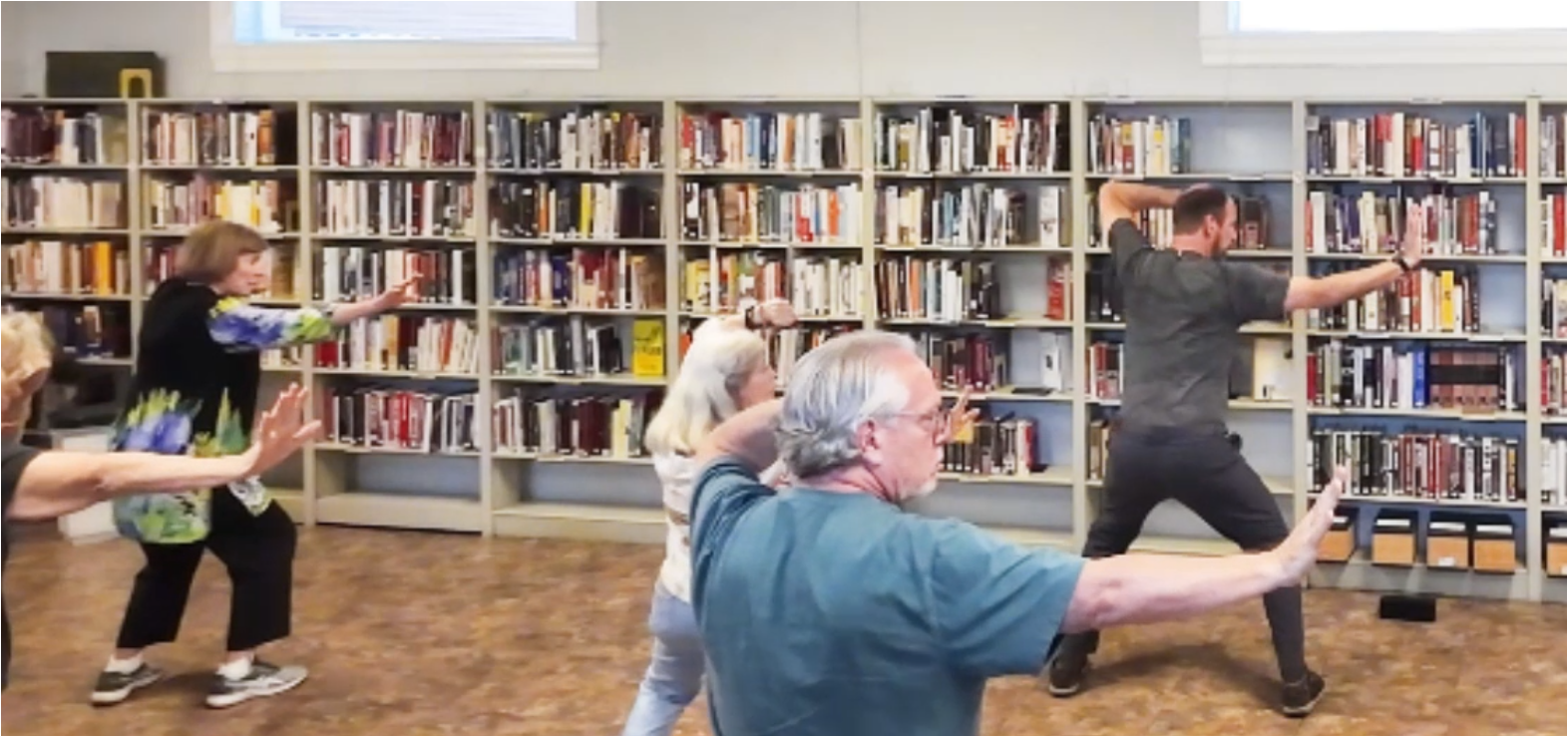
I teach and offer lectures about holistic health, stress management, qigong, tai chi, baguazhang, meditation, phytotherapy (herbs), music for healing, self-massage, and Daoyin (yoga).
I look forward to further sharing more of my message by partnering with hospitals, wellness centers, VA centers, schools on all levels, businesses and individuals that see the value in building a stronger nation through building a healthier population. I also have hundreds of FREE education video classes, lectures and seminars available on my YouTube channel at:
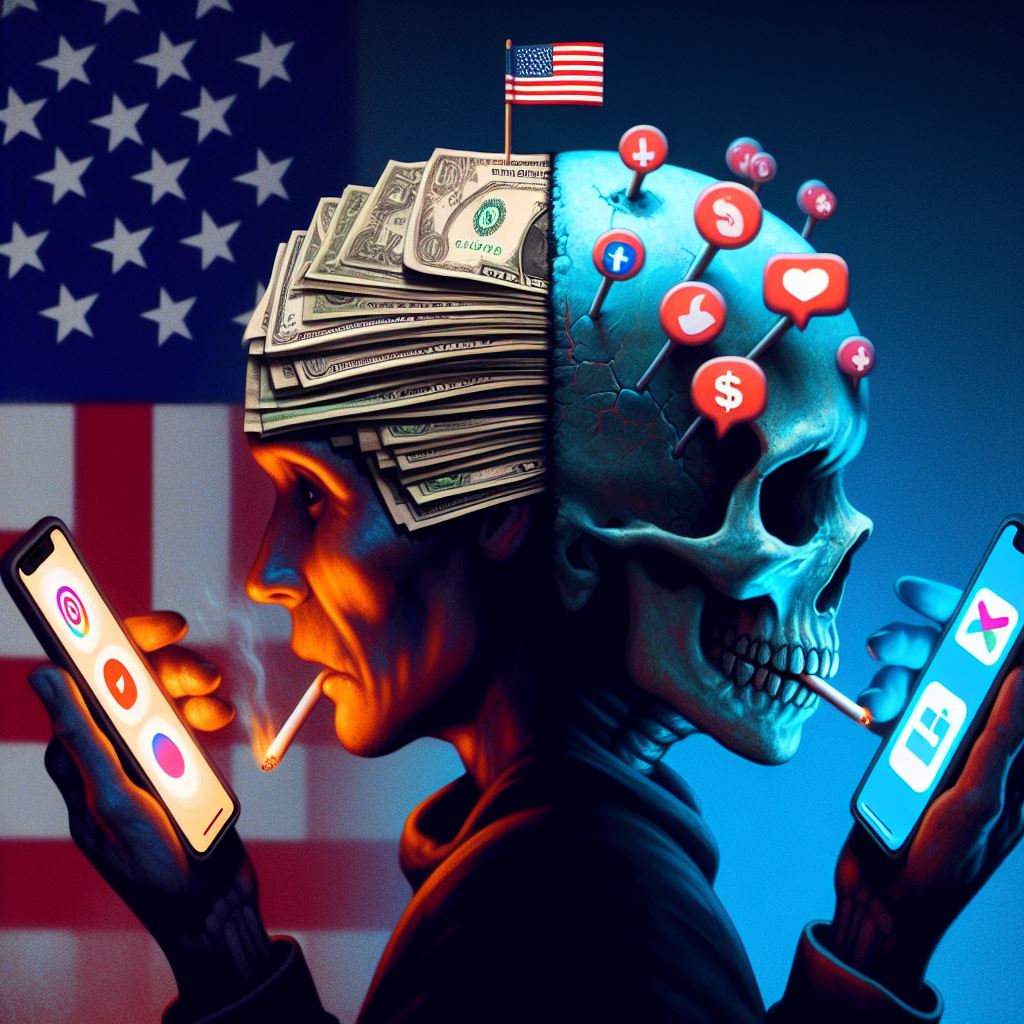
American people seem to finally be waking up to the fact that over-usage of smartphones and more specifically constant engagement in social media platforms, are detrimental to health and well-being. Social media addiction is the 2024 version of crack cocaine, where many people appear to be unable to go for more than a few minutes without their “fix” or dopamine dump from checking their phone for new messages, likes and other notifications. The Social Dilemma is a 2020 Netflix documentary that interviews many former software designers, investors, executives, and other insider occupations at social media platforms, such as Facebook, and Twitter(X). I did view this film back when it first aired but thought it would be insightful to watch and critique it more in detail today, as much has changed and/or advanced with most of these platforms, in the last fours years and even more recently.
This documentary offers insights into the beginning stages of social media, and most specifically on how Facebook started out in 2004 as something totally different than what it is today. Social media and its widespread availability and popularity are a good example of an “evolutionary model of technological change” (Conerly, 2021a), where society has moved away from telephones being used merely for verbal communication. Smartphones have evolved to cameras, video recorders, email/text messaging devices and other uses way beyond telephones of years past. Most of those interviewed participated in the documentary because their experiences, hindsight and conscious has led them to think that such platforms purposefully manipulate a user’s attention and relative behavior. In doing so, users often develop a level of dopamine addiction when staying constantly engaged in interaction with social media either through smartphones, personal computers, or other electronic devices. Most of those interviewed see social media as neither inherently good nor bad, but rather as a tool to be used wisely as there exists a strong potential for addiction and abuse. They are careful to highlight the positive aspects of social media, such as offering ways for people to connect, re-connect, and stay abreast of current events and activities of friends and family.
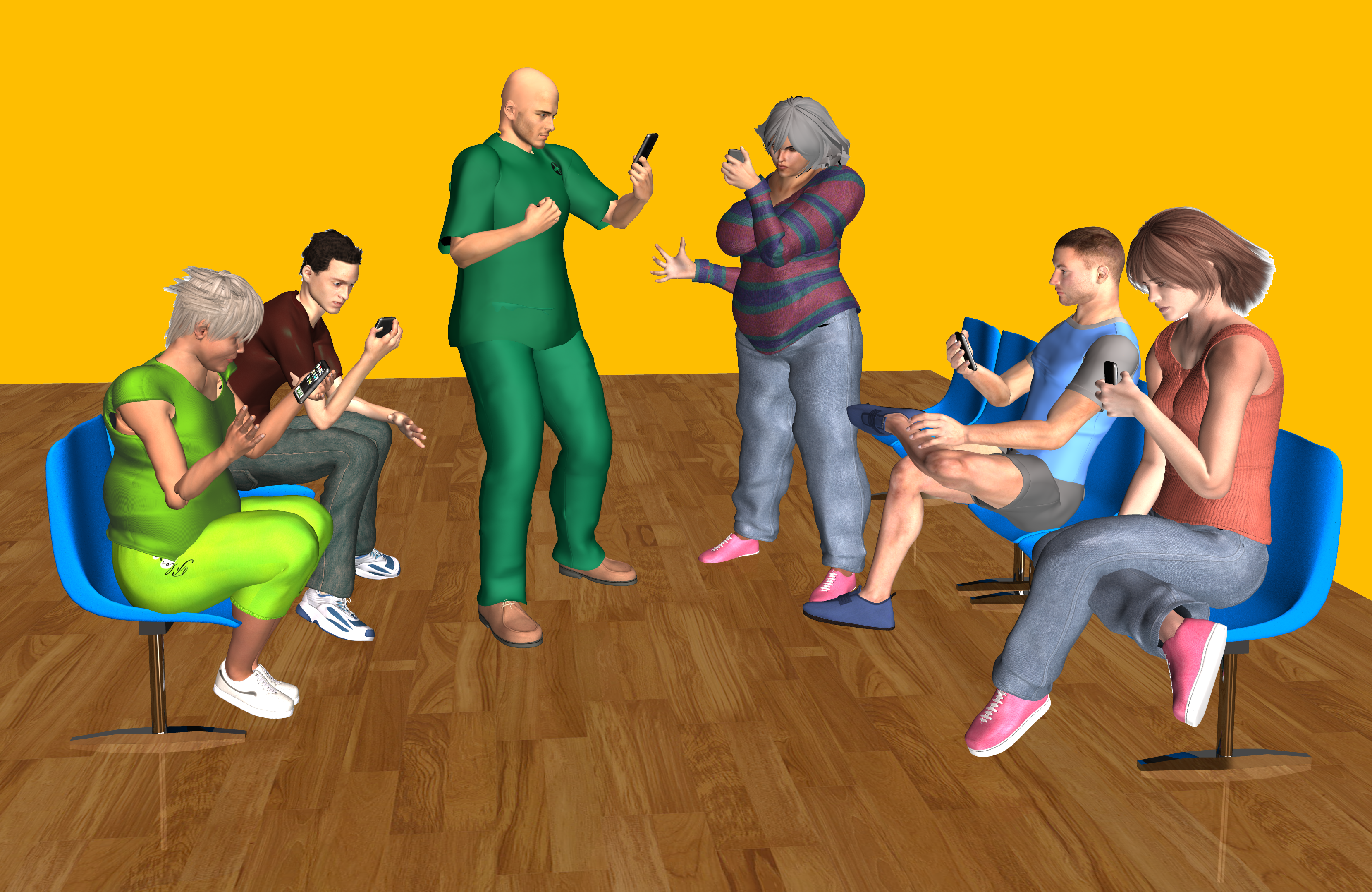
However, it is the opposite side of these benefits that have gained attention. Specifically, the view that for a whole generation of people, online social media connections have become their primary group (Conerly, 2021b), or their most important and significant others in their circle of influence. Or as these insiders see them, as a generation that has been raised to form their self-worth and identity through social media technology and its manipulation (Watch the Social Dilemma | Netflix Official Site, 2020). They feel that young people have been gradually losing their ability to socialize in person, while having difficulty in occupying themselves without social media interaction. I am old enough to have seen this evolution transform, seemingly right before my eyes. In years past before the explosion of social media, I used to be able to stop in a restaurant, coffee shop, bar or other public venue and see young (and older) people interacting with one another through conversation, facial and hand gestures, and other forms of outward communication. Now it is most common to see people of all ages and walks of life, immersed in staring into their smartphone, seemingly oblivious to time and those around them. Young people today seem more anxious, fragile, depressed, less likely to take positive risks, drive less, and date less. More scientific evidence has been gathered, where many are believing that social media is a psychological, cultural, and sociological experiment on a large scale also referred to as a “contagion experiment.” The documentary states depression in youths spiked in 2011 with an increase of 62% for preteens, and 189% with teenagers and suicide increasing 70% for preteens and 151% with teenagers (Watch the Social Dilemma | Netflix Official Site, 2020).
The original innovators and designers had no true inclination of how technology would advance so quickly and exponentially, while the human brain cannot physiologically keep up. The expansion of these platforms has become quite profitable for companies that manage the information made available through social media. This is often seen as “gatekeeping” where those people in charge of the media can decide what the viewing public is exposed to (Conerly, 2021c). and people begin to not know what to believe as true or otherwise. These companies have become an“oligopoly,” where only a few firms dominate a marketplace (Conerly, 2021d). Social media addiction and abuse have been brought to the attention of congressional hearings where government leaders are asking the social media oligopoly CEOs how to make these platforms safer for all, but especially with the youth in the US (Associated Press, 2024). I do not think that the platforms will change their methods and policies on their own, for the betterment of the people. However, I do understand that all actions have consequences, whether deemed as good or bad. The consequences from years of rampant growth and manipulation of data and uses, have brought us to this point where members of congress are basically trying to reverse the legislation from years past and specifically something called Section 230. This law was passed in the earlier days of the internet and social media expansion (around 1996) that granted immunity to these companies from being sued by its users for unforeseen circumstances. The supreme court ruled in 2023 to keep the immunity in place, as it seems to fall under the freedom of speech (DEPARTMENT OF JUSTICE’S REVIEW OF SECTION 230 OF THE COMMUNICATIONS DECENCY ACT OF 1996, 2023). Congress members are now pushing for the tide to turn and have social media platforms able to be brought to trial for related injuries, deaths and other detrimental side effects. I think things will change dramatically if this happens, hopefully, for the better. But as with most things we don’t know or see the true results until time has passed.
Overall, I do feel The Social Dilemma is still very relevant to modern society, as these issues of addiction and abuse will not diminish on their own. With the rise of artificial intelligence (AI) and the daily increase in fake news and misinformation, I feel it is of the upmost importance that social media platforms and their leaders take actions that are based on mental health, rather than their stockholders and profits.
I teach and offer lectures about holistic health, stress management, qigong, tai chi, baguazhang, meditation, phytotherapy (herbs), music for healing, self-massage, and Daoyin (yoga).
I look forward to further sharing more of my message by partnering with hospitals, wellness centers, VA centers, schools on all levels, businesses and individuals that see the value in building a stronger nation through building a healthier population. I also have hundreds of FREE education video classes, lectures and seminars available on my YouTube channel at:
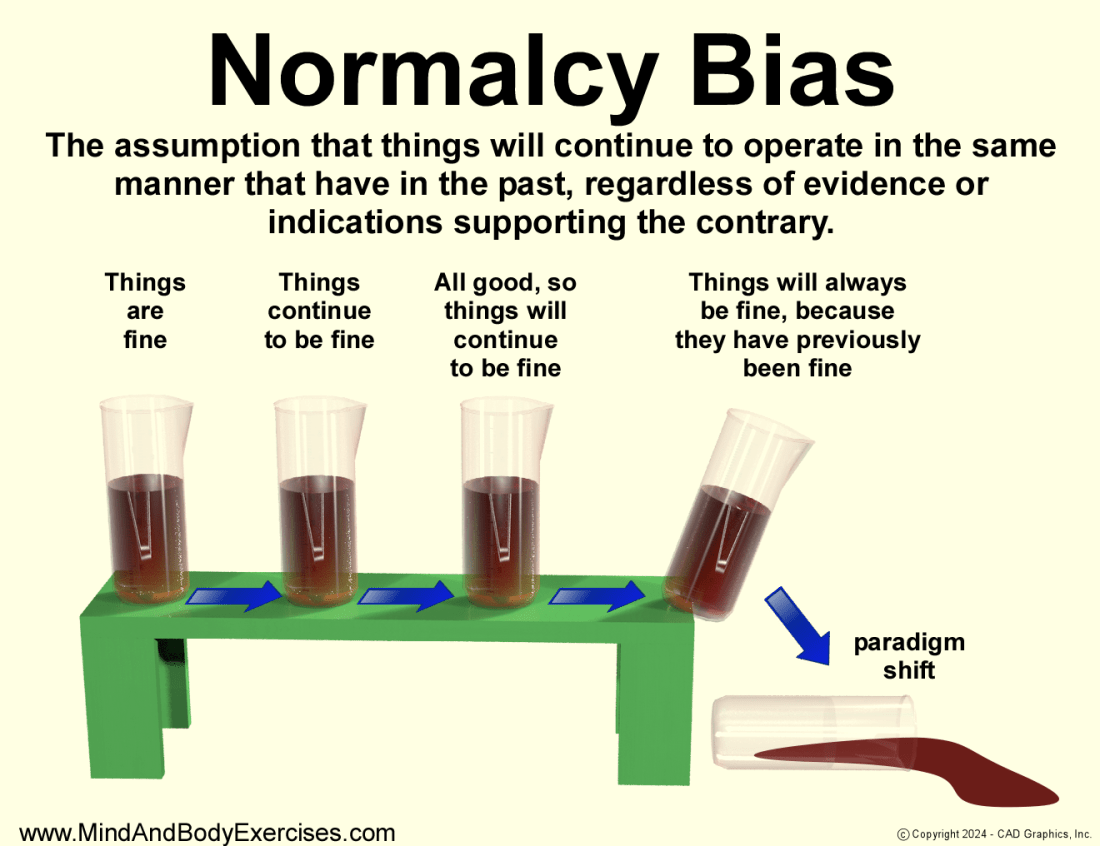
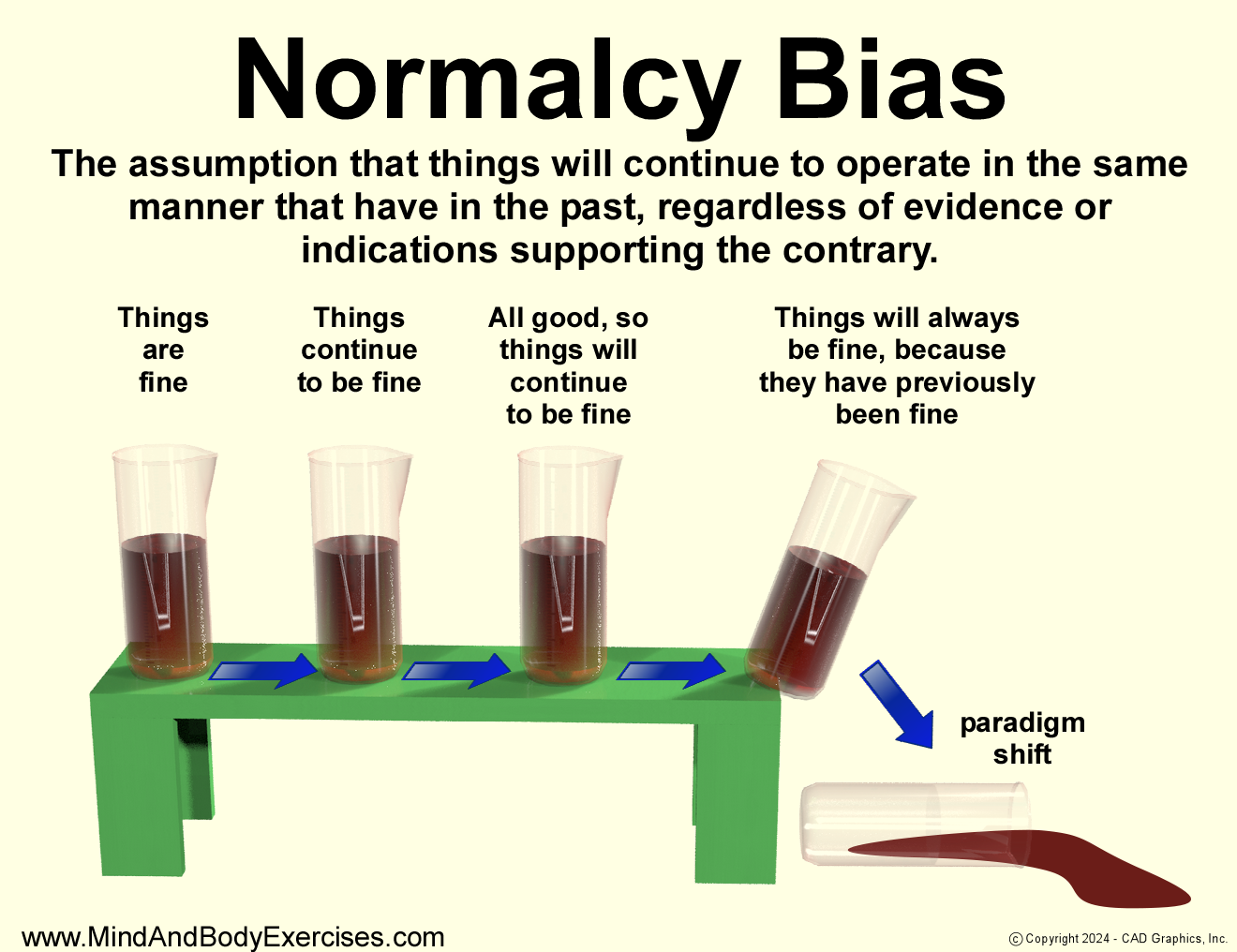
Normalcy bias is a cognitive behavior where a person has a propensity to underestimate the likelihood of a significant negative event or disaster occurring, as well as dismissing potential impacts if the event were to happen. This bias is based in the assumption that things will continue to operate in the same manner that have in the past, regardless of evidence or indications supporting the contrary.
Typical characteristics of normalcy bias include:
Optimistic Bias is often linked to normalcy bias, where an individual is so optimistic that they may believe that they are not as likely to encounter negative events than that of others. Too much of this optimism may lead to a lack of preparedness.
A Reluctance to Take Action – People that are influenced by normalcy bias may resist taking proactive actions or preparations towards high-impact events that might not happen. This reluctance can be rooted in a belief that relative events are improbable.
Over Dependence upon Familiar Patterns – Individuals with normalcy bias may rely upon familiar patterns or cycles, thinking that the future events will repeat similarly to the past, influencing their ability to adapt to changing circumstances.
Minimizing Perception of a Threat – People with normalcy bias often have a tendency to simplify the importance of potential threats or risks. They may think that because a threat has never come about, it is not likely to occur in the future.
Desire to Maintain a Sense of Normality – Individuals prone to experiencing normalcy bias often gravitate toward keeping a sense of normality and routine, even when faced with eminent dangers or threats. This may influence inadequate or delayed responses to warnings of impending negative events.
Examples of normalcy bias:
Living in an earthquake-prone area, regardless of warnings and historical evidence of seismic activity. Belief that a major earthquake is unlikely to occur because it hasn’t happened recently. This bias can lead to lack of awareness, preparedness and relative response in the event of an actual earthquake. Other natural disaster-prone areas also apply (hurricanes, tornadoes, flooding, etc.).
Those in financial distress, will just somehow get by in spite of their spending budget showing otherwise.
During World War II in Nazi Germany, many Jews hoped and believed that things would return to normal.
Up until the terrorist attacks on the US of 9/11, many Americans thought that there would never be an attack on US soil. A paradigm shift ensued, leading us to where we are today with heightened awareness, fear, anxiety, TSA and many other adjustments to our society that have been the new normal.
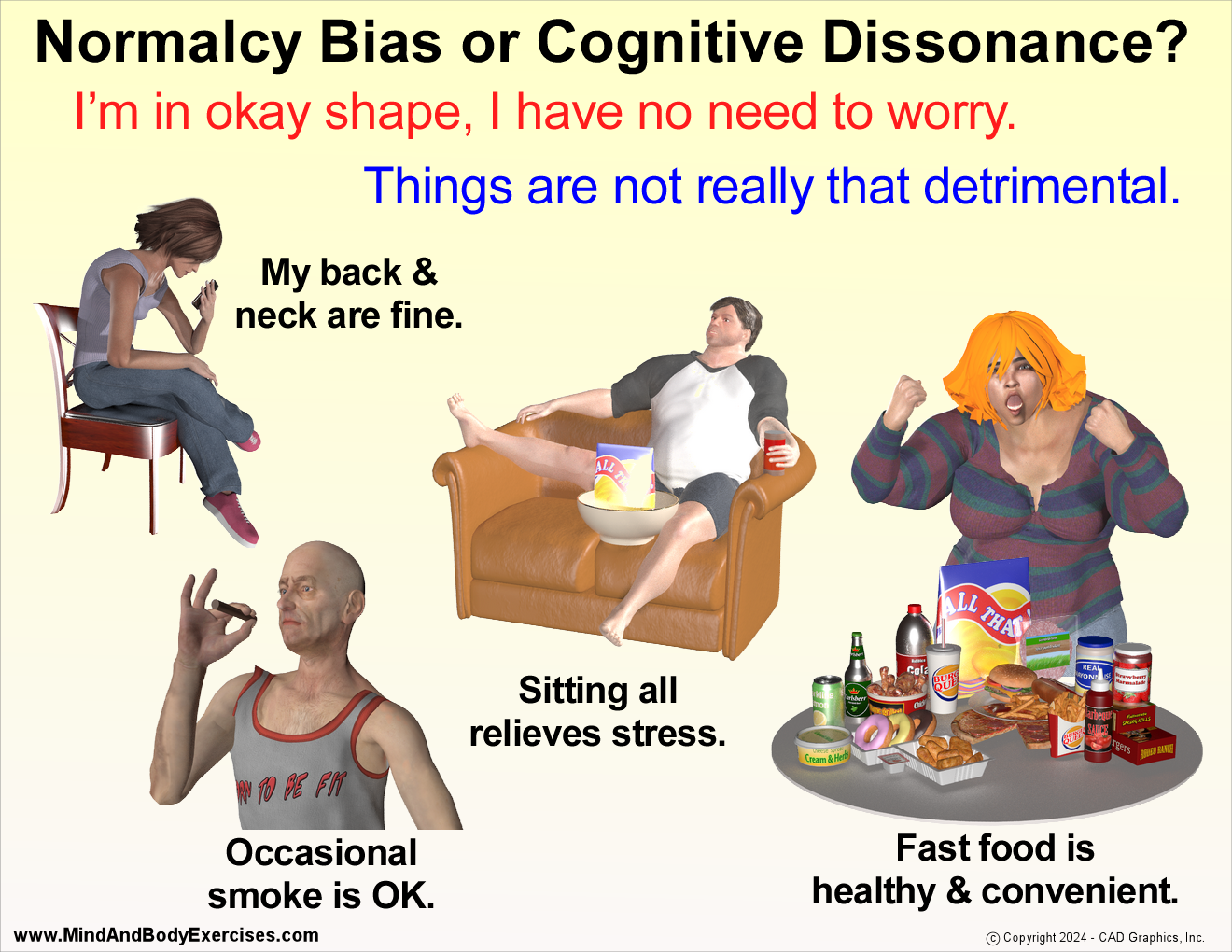
People in relatively fine health, believe that because they haven’t been seriously ill, sick or injured, that their health will continue to be healthy despite other factors and circumstances. This has been evident over many years with people smoking of tobacco, alcohol consumption and poor diet.
From a fitness perspective, people often don’t realize how much of their strength, flexibility, coordination, and balance that they may lose as they age. A simple fall or injury may create a paradigm shift in how an individual views their well-being.
Criminals, illegal drug dealers/user, tax cheats, reckless drivers and others may also fall into the normalcy bias, where they see themselves never being caught, as normal so therefore in their thoughts they will never get caught.
Normalcy bias and cognitive dissonance are two similar but different terms defining psychological behaviors. Normalcy bias is more focused on downplaying the possibility or significance of negative events. Cognitive dissonance is more broad concept associated with the unease caused by conflicting beliefs. Both concepts involve cognitive processes, but pertain to different aspects of cognition and behavior.
In conclusion, normalcy biased can often lead to lack of, or delay of appropriate mental and physical preparedness for potential future events and relative circumstances. Nobody wants to live in fear or anxiety of events that may or may not come about. However, becoming adequately educated and/or informed may help to better manage an individual’s thoughts and relative actions concerning any particular potentially negative event.
__________________________
I teach and offer lectures about holistic health, stress management, qigong, tai chi, baguazhang, meditation, phytotherapy (herbs), music for healing, self-massage, and Daoyin (yoga).
I look forward to further sharing more of my message by partnering with hospitals, wellness centers, VA centers, schools on all levels, businesses and individuals that see the value in building a stronger nation through building a healthier population. I also have hundreds of FREE education video classes, lectures and seminars available on my YouTube channel at:
I think yes, definitely. Severe trauma mentally or physically can trigger a “hard reset” where an individual is so affected that they are basically a different person(ality) after such events. See the soldier who returns home and can no longer relate to their friends and family due to what they have seen and experienced during war. Or the person who survives cancer or some type of near-death event, where they promise to make drastic changes to their lives once they recover. It is these types of events that shock an individual into what is truly most important to them, often being their own health, and the people around them that they hold dear.
I have come to understand that there are basically two paths to ego death. The first is what I have just been describing, through the trauma of pain and suffering. It often comes unannounced and free of a monetary charge. The second path to ego death is through self-cultivation, through prayer, meditation, skillful means, and perhaps other methods that inspire self-reflection. This path is most often deliberately pursued and usually comes with costs of time, sacrifice and resources whether monetary or otherwise.
______________
I teach and offer lectures about holistic health, stress management, qigong, tai chi, baguazhang, meditation, phytotherapy (herbs), music for healing, self-massage, and Daoyin (yoga).
I look forward to further sharing more of my message by partnering with hospitals, wellness centers, VA centers, schools on all levels, businesses and individuals that see the value in building a stronger nation through building a healthier population. I also have hundreds of FREE education video classes, lectures and seminars available on my YouTube channel at:
I fear not. We may hope to see everything as good, positive, beautiful or whatever the “good” is in anything, there must exist the opposite, corresponding or dependence upon the other in order to offer contrast to both. This is the balance that holds everything to together. Literature professor Joseph Campbell spoke of it often in his documentaries, referring to this concept as the duality in all things. Taoist philosophy of yin and yang, sees this polarization as part of the birth of creation itself. Without the contrast we cannot ask the question of how “good” or how “evil” someone or something is, as these concepts are not absolute and are almost always determined in relation to time and circumstances.
A soldier may be good for their particular country, but evil to the enemy. A child may see their parent(s) as evil because they took their electronics away for whatever reason, when the parent was trying to be a good influence. Natural disasters may kill off human, animal, and plant life. Would we consider nature evil? The sun brings us life on so many levels. Too much sun can bring other issues of cancer, drought, and other climatic imbalances. So, is the sun good or bad? All things are relative and connected to one another in various amounts, shades, and levels. Without this contrast, neither good nor evil can exist.
_________________
I teach and offer lectures about holistic health, stress management, qigong, tai chi, baguazhang, meditation, phytotherapy (herbs), music for healing, self-massage, and Daoyin (yoga).
I look forward to further sharing more of my message by partnering with hospitals, wellness centers, VA centers, schools on all levels, businesses and individuals that see the value in building a stronger nation through building a healthier population. I also have hundreds of FREE education video classes, lectures and seminars available on my YouTube channel at:





 United Martial Arts Association